


python中计算点突变的数目
001、直接比较计算
[root@PC1 test01]# ls
a.fa  b.fa  test.py
[root@PC1 test01]# cat a.fa     ## 测试dna序列
GAGCCTACTAACGGGAT
[root@PC1 test01]# cat b.fa     ## 测试dna序列
CATCGTAATGACGGCCT
[root@PC1 test01]# cat test.py  ## 计算程序
#!/usr/bin/env python
# -*- coding: utf-8 -*-

in_file1 = open("a.fa", "r")
in_file2 = open("b.fa", "r")
file1 = in_file1.read().strip()
file2 = in_file2.read().strip()
in_file1.close()
in_file2.close()

count = 0
for i in range(len(file1)):
        if file1[i] != file2[i]:
                count += 1
print(count)
[root@PC1 test01]# python3 test.py   ## 计算结果
7

002、利用函数结构计算
[root@PC1 test01]# ls
a.fa  b.fa  test.py
[root@PC1 test01]# cat a.fa            ## 测试dna序列
GAGCCTACTAACGGGAT
[root@PC1 test01]# cat b.fa            ## 测试dna序列
CATCGTAATGACGGCCT
[root@PC1 test01]# cat test.py         ## 计算程序
#!/usr/bin/env python
# -*- coding: utf-8 -*-

in_file1 = open("a.fa", "r")
in_file2 = open("b.fa", "r")
file1 = in_file1.read().strip()
file2 = in_file2.read().strip()

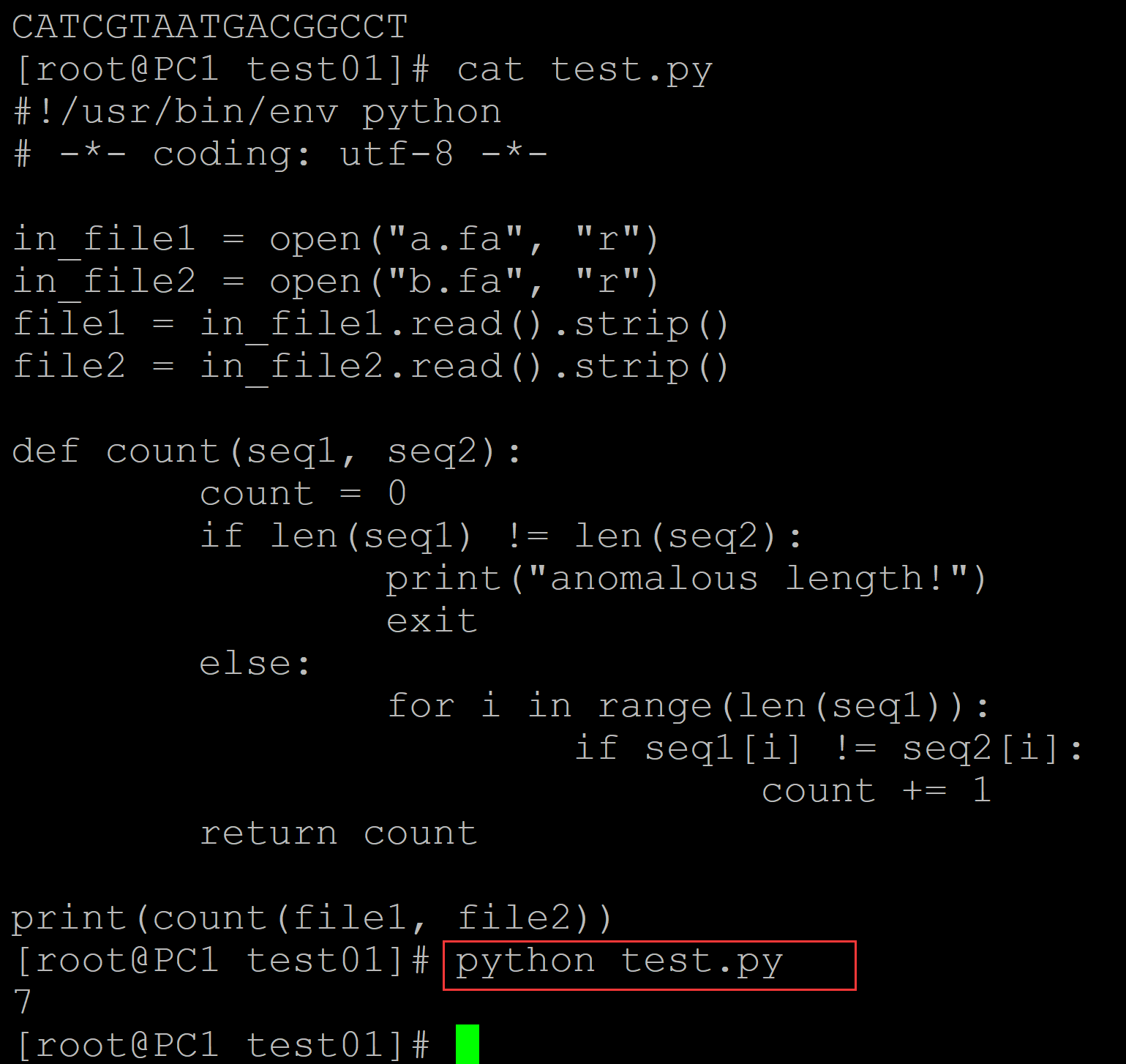
def count(seq1, seq2):
        count = 0
        if len(seq1) != len(seq2):
                print("anomalous length!")
                exit
        else:
                for i in range(len(seq1)):
                        if seq1[i] != seq2[i]:
                                count += 1
        return count

print(count(file1, file2))
[root@PC1 test01]# python test.py        ## 计算结果
7
003、借助zip实现
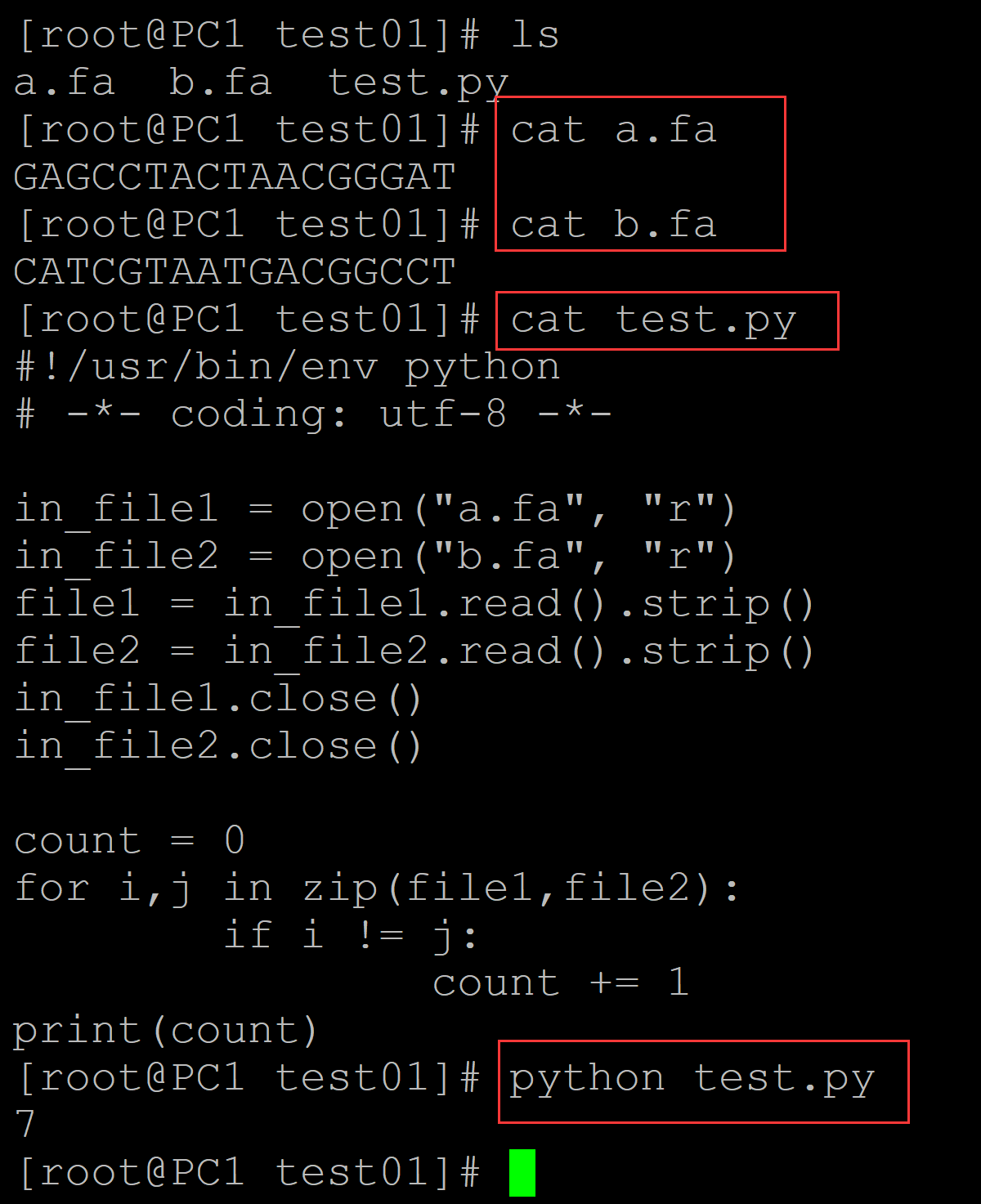
[root@PC1 test01]# ls
a.fa  b.fa  test.py
[root@PC1 test01]# cat a.fa
GAGCCTACTAACGGGAT
[root@PC1 test01]# cat b.fa
CATCGTAATGACGGCCT
[root@PC1 test01]# cat test.py     ## 计数程序
#!/usr/bin/env python
# -*- coding: utf-8 -*-

in_file1 = open("a.fa", "r")
in_file2 = open("b.fa", "r")
file1 = in_file1.read().strip()
file2 = in_file2.read().strip()
in_file1.close()
in_file2.close()

count = 0
for i,j in zip(file1,file2):
        if i != j:
                count += 1
print(count)
[root@PC1 test01]# python test.py    ## 点突变结果
7
004、函数实现
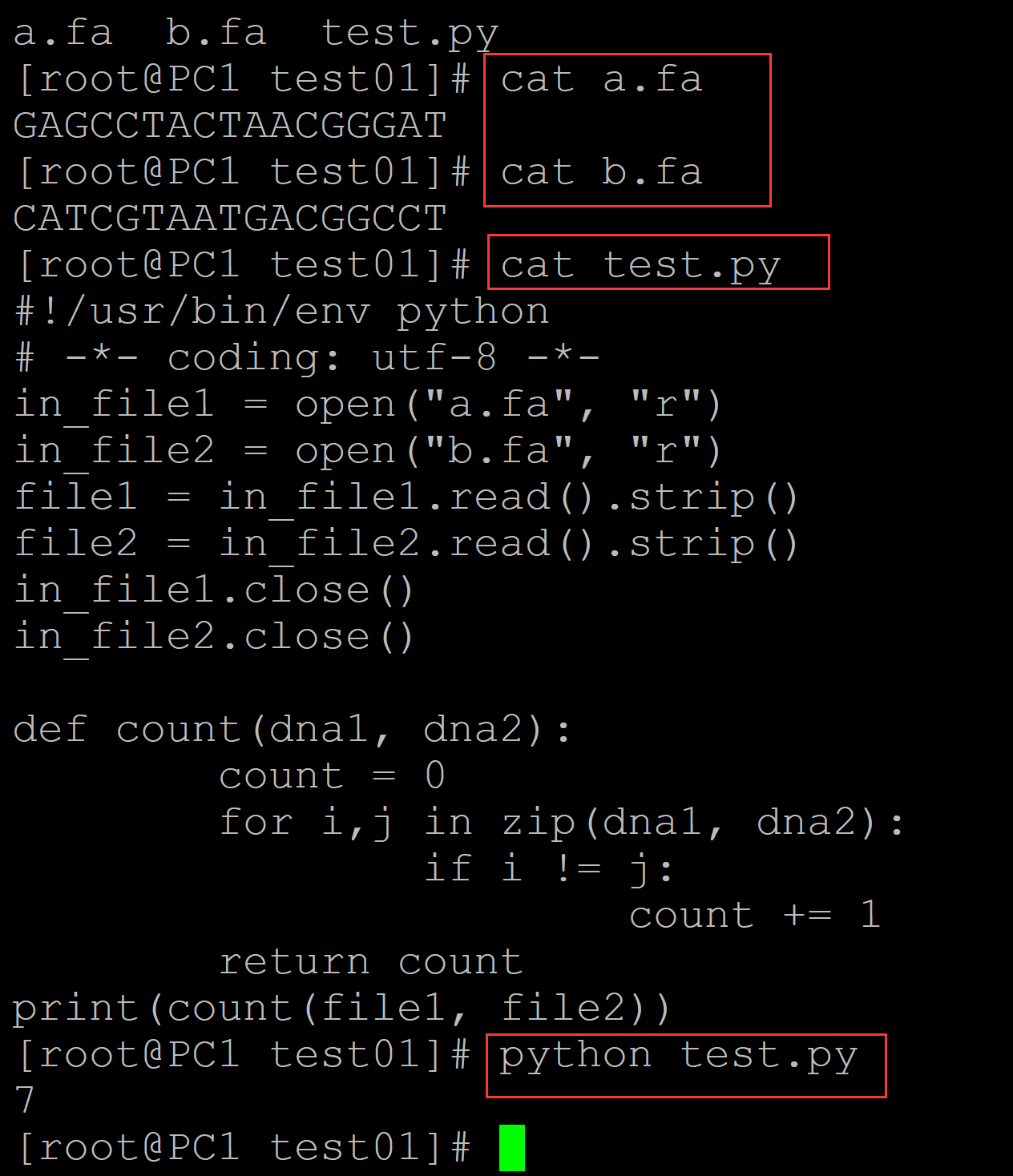
[root@PC1 test01]# ls
a.fa  b.fa  test.py
[root@PC1 test01]# cat a.fa
GAGCCTACTAACGGGAT
[root@PC1 test01]# cat b.fa
CATCGTAATGACGGCCT
[root@PC1 test01]# cat test.py        ## 计数程序
#!/usr/bin/env python
# -*- coding: utf-8 -*-
in_file1 = open("a.fa", "r")
in_file2 = open("b.fa", "r")
file1 = in_file1.read().strip()
file2 = in_file2.read().strip()
in_file1.close()
in_file2.close()

def count(dna1, dna2):
        count = 0
        for i,j in zip(dna1, dna2):
                if i != j:
                        count += 1
        return count
print(count(file1, file2))
[root@PC1 test01]# python test.py   ## 计数结果
7
。

 浙公网安备 33010602011771号