
实验三
实验任务一
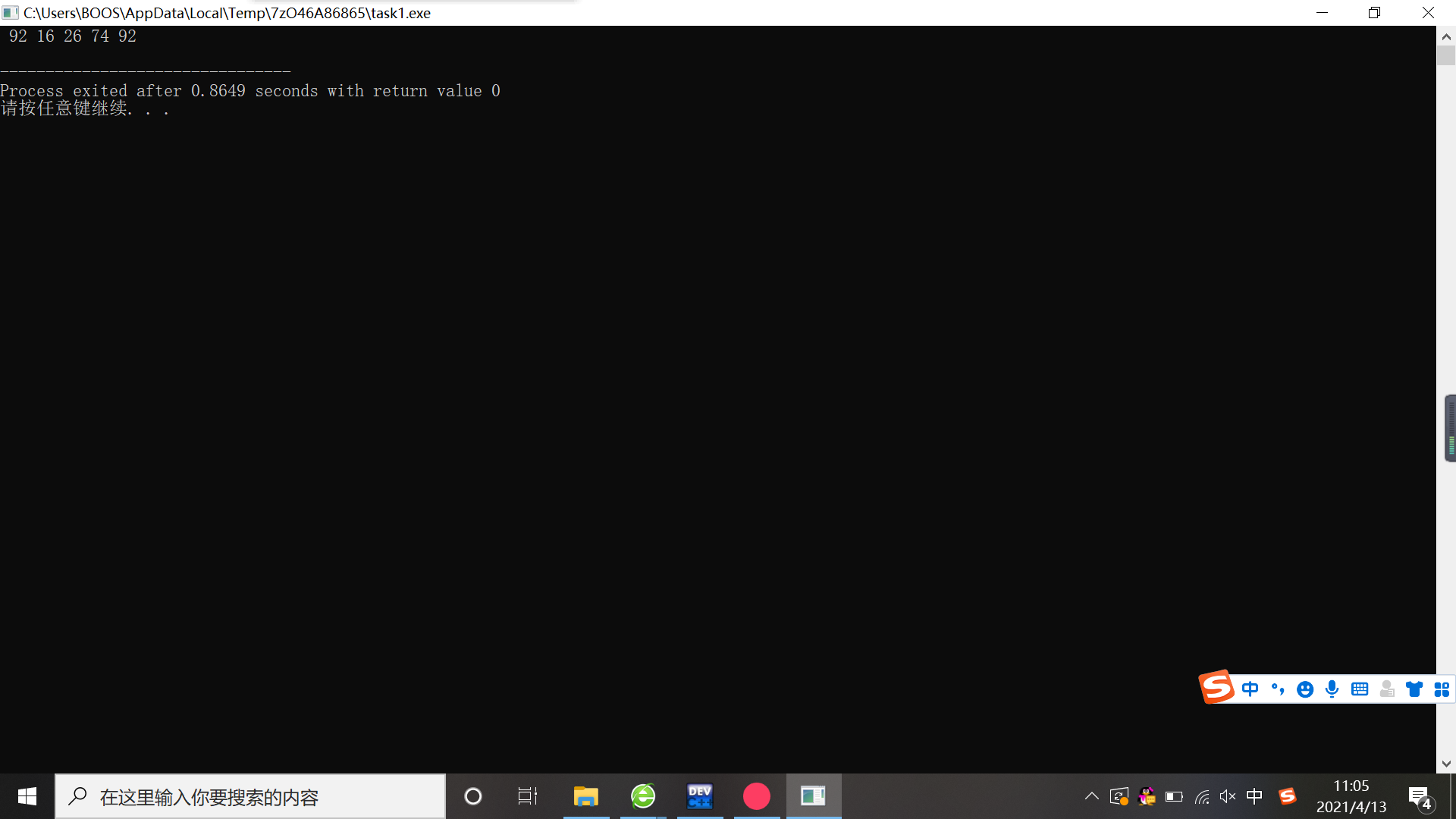
①
// 生成N个0~99之间的随机整数,并打印输出
#include <stdio.h>
#include <stdlib.h>
#include <time.h>
#define N 5

int main() {
    int x, n;

    srand(time(0));  // 以当前系统时间作为随机种子

    for(n=1; n<=N; n++) {
        x = rand() % 100;  // 生成一个0~99之间的随机整数
        printf("%3d", x);
    }

    printf("\n");

    return 0;
}
②
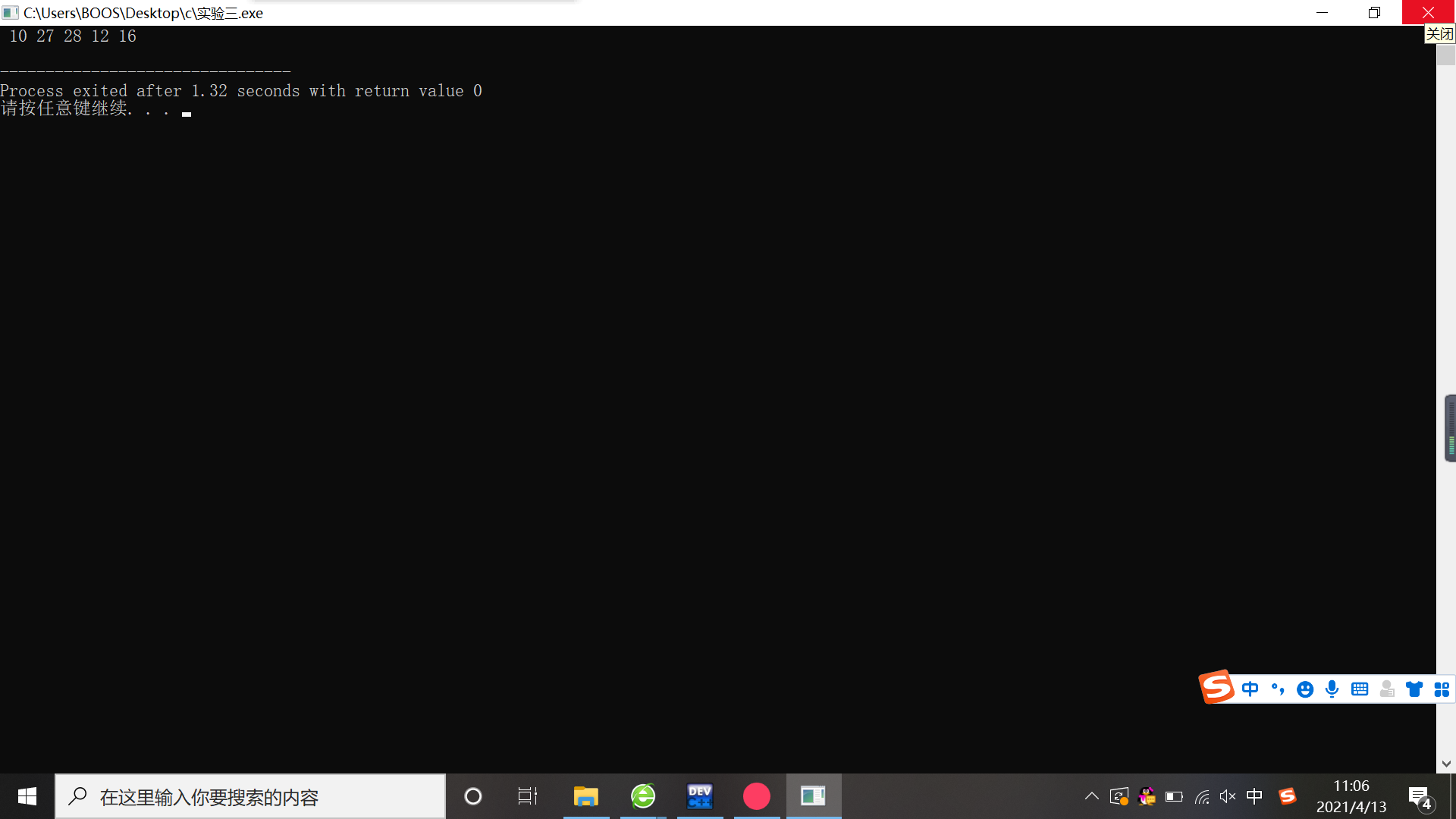
// 生成N个1~31之间的随机整数,并打印输出
#include <stdio.h>
#include <stdlib.h>
#include <time.h>
#define N 5

int main() {
    int x, n;

    srand(time(0));  // 以当前系统时间作为随机种子

    for(n=1; n<=N; n++) {
        x = 1+rand() % 31;  // 生成一个0~99之间的随机整数
        printf("%3d", x);
    }

    printf("\n");

    return 0;
}
实验任务二
①
#include<stdio.h>
#include<stdlib.h>
#include<time.h>
int main()
{
    int x,n,i;
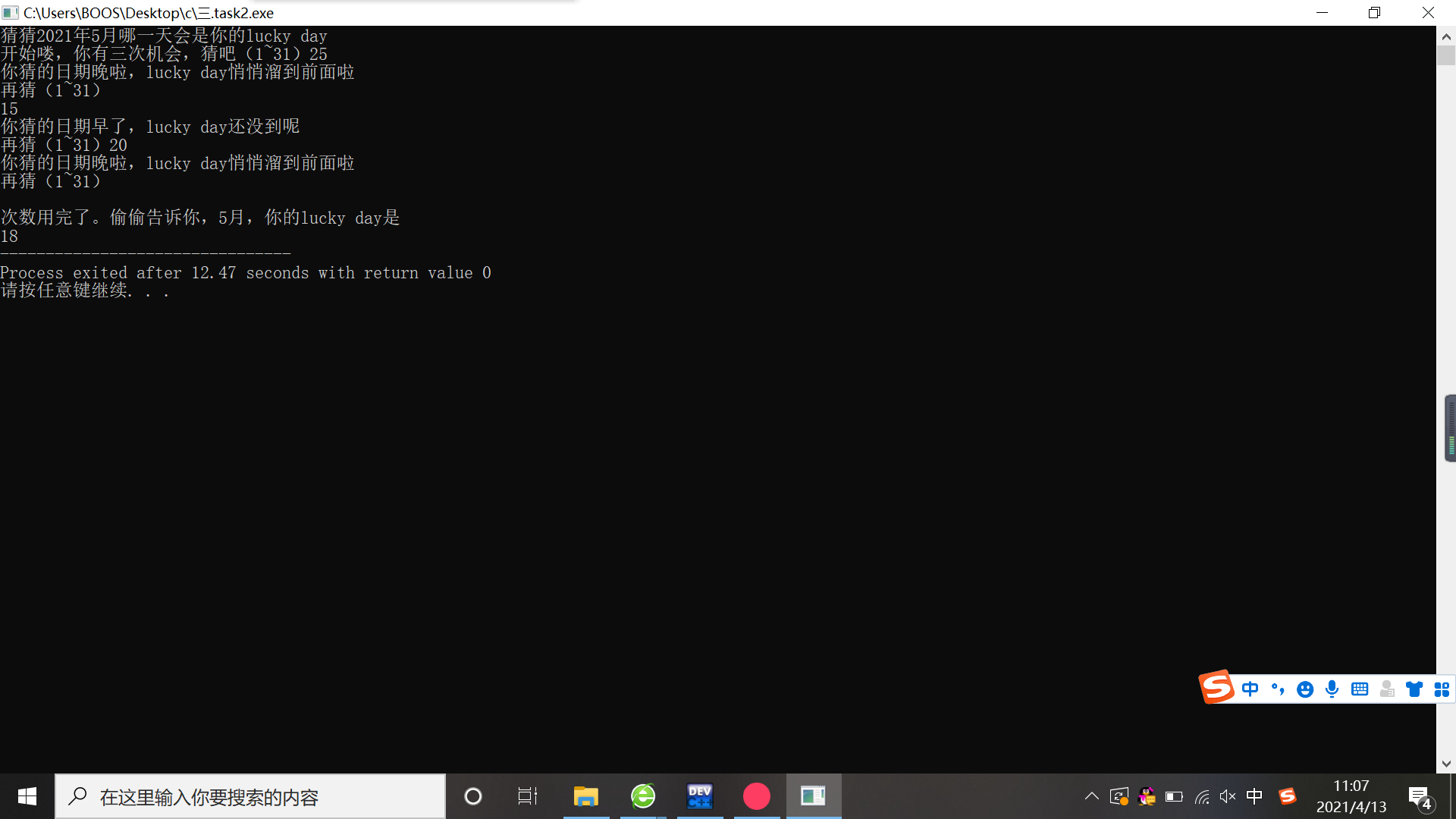
    printf("猜猜2021年5月哪一天会是你的lucky day\n开始喽,你有三次机会,猜吧(1~31)");
    srand(time(0));
    x = 1+rand()%31;

    for(i=1;i<=3;i++)
    {
    scanf("%d",&n);
    if(n>x)
    {printf("你猜的日期晚啦,lucky day悄悄溜到前面啦\n");
    printf("再猜(1~31)\n");
    }
    if(n<x)
    {printf("你猜的日期早了,lucky day还没到呢\n");
    printf("再猜(1~31)") ;
    }

   }
   printf("\n");
     printf("次数用完了。偷偷告诉你,5月,你的lucky day是\n");
     printf("%d",x);

    return 0;
}
实验任务三
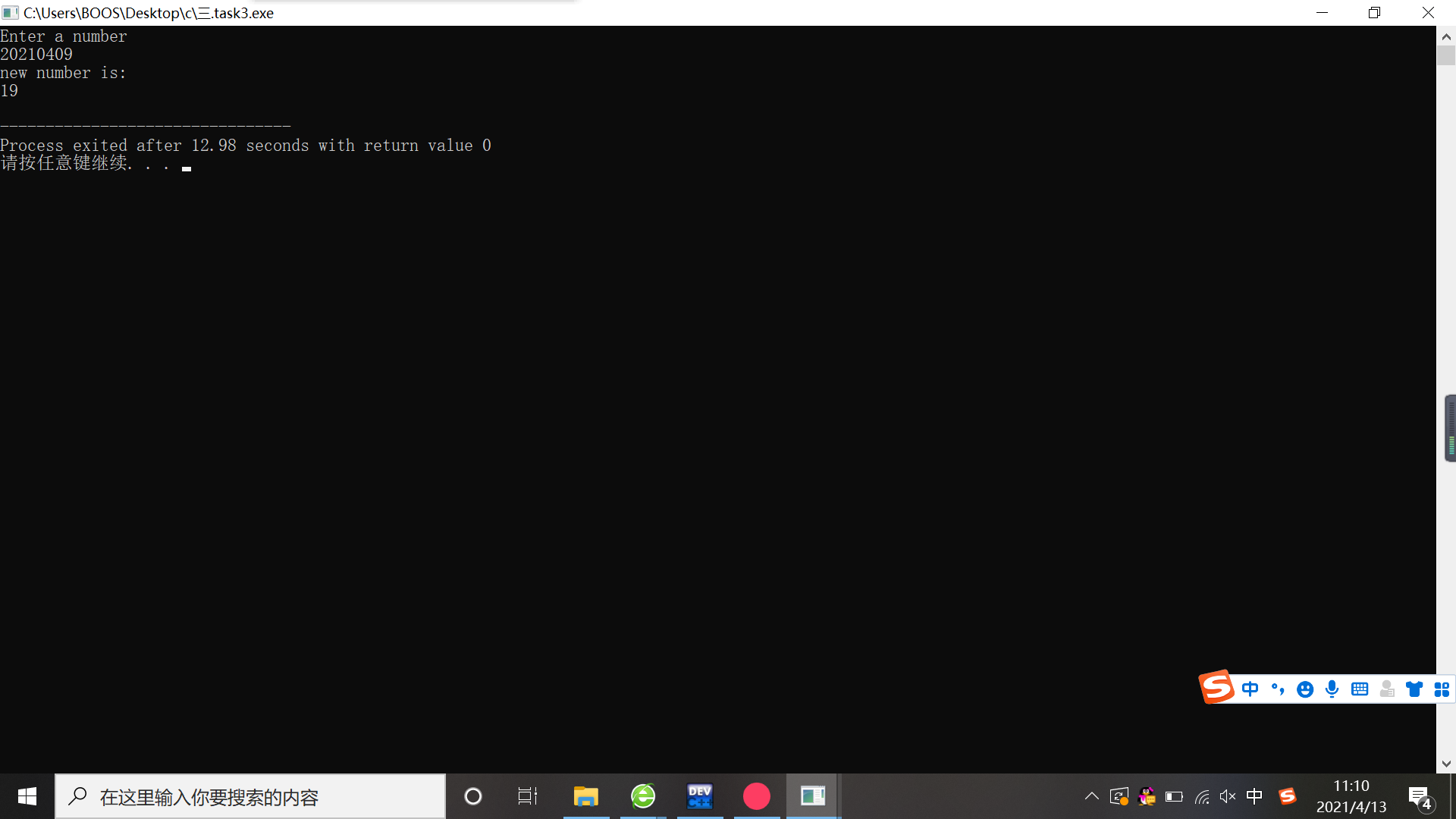
//实现将一个长整型数上的奇数依次取出来//
#include<stdio.h>
#include<stdlib.h>
int main()
{
    int m,n,t,x,y;
    t=0;
    printf("Enter a number\n");
    scanf("%d",&n);


for(;n!=0;n=n/10)
    {
    m=n%10;
    if(m==1||m==3||m==5||m==7||m==9)
    t=t*10+m;
    if(m==0||m==2||m==4||m==6||m==8)
    t=t ;
    }
    for(y=0;t!=0;)
    {x=t%10;
    y=y*10+x;
    t=t/10;
    }


    printf("new number is:\n");
    printf("%d\n",y);
    return 0;
}
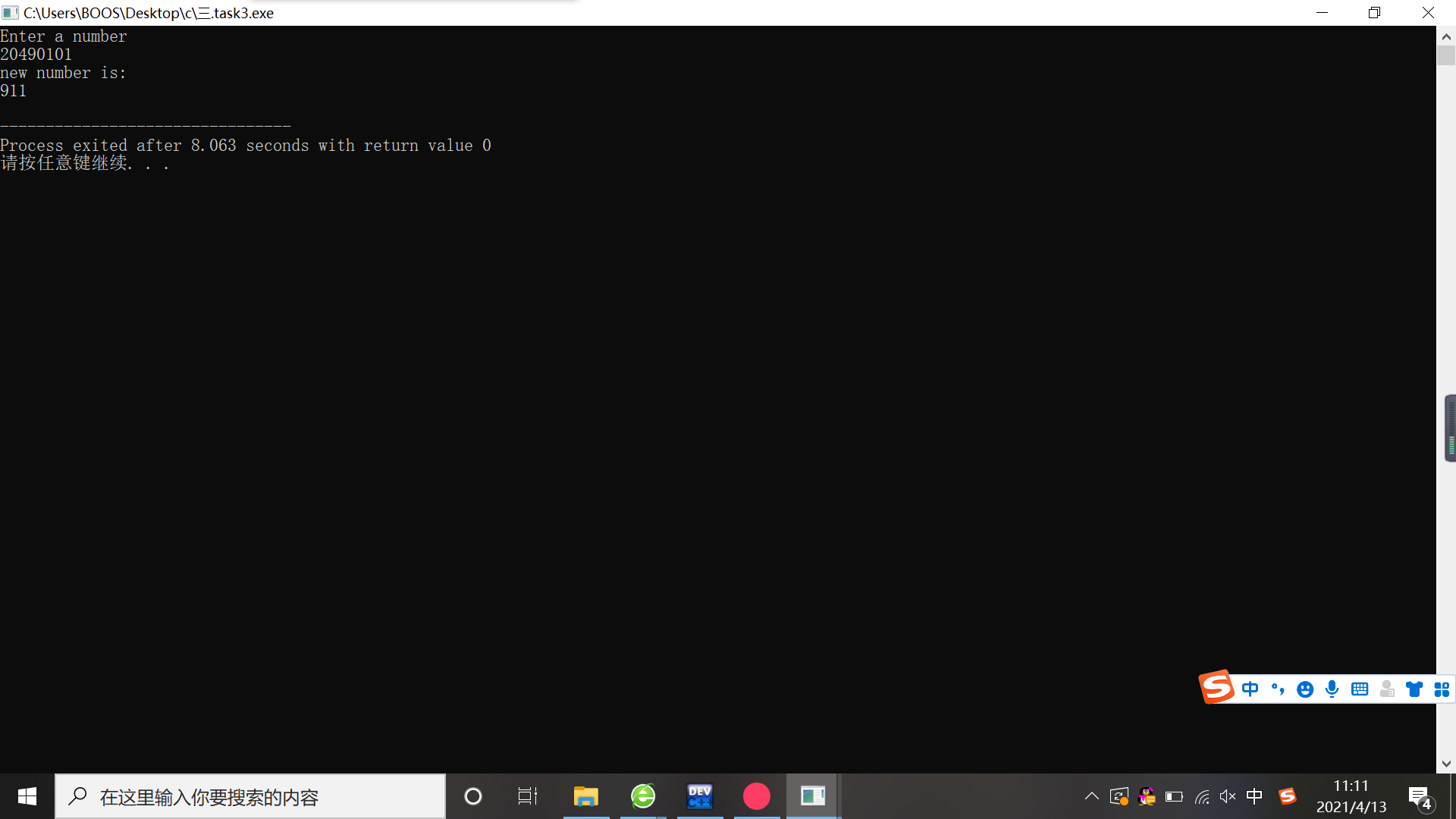
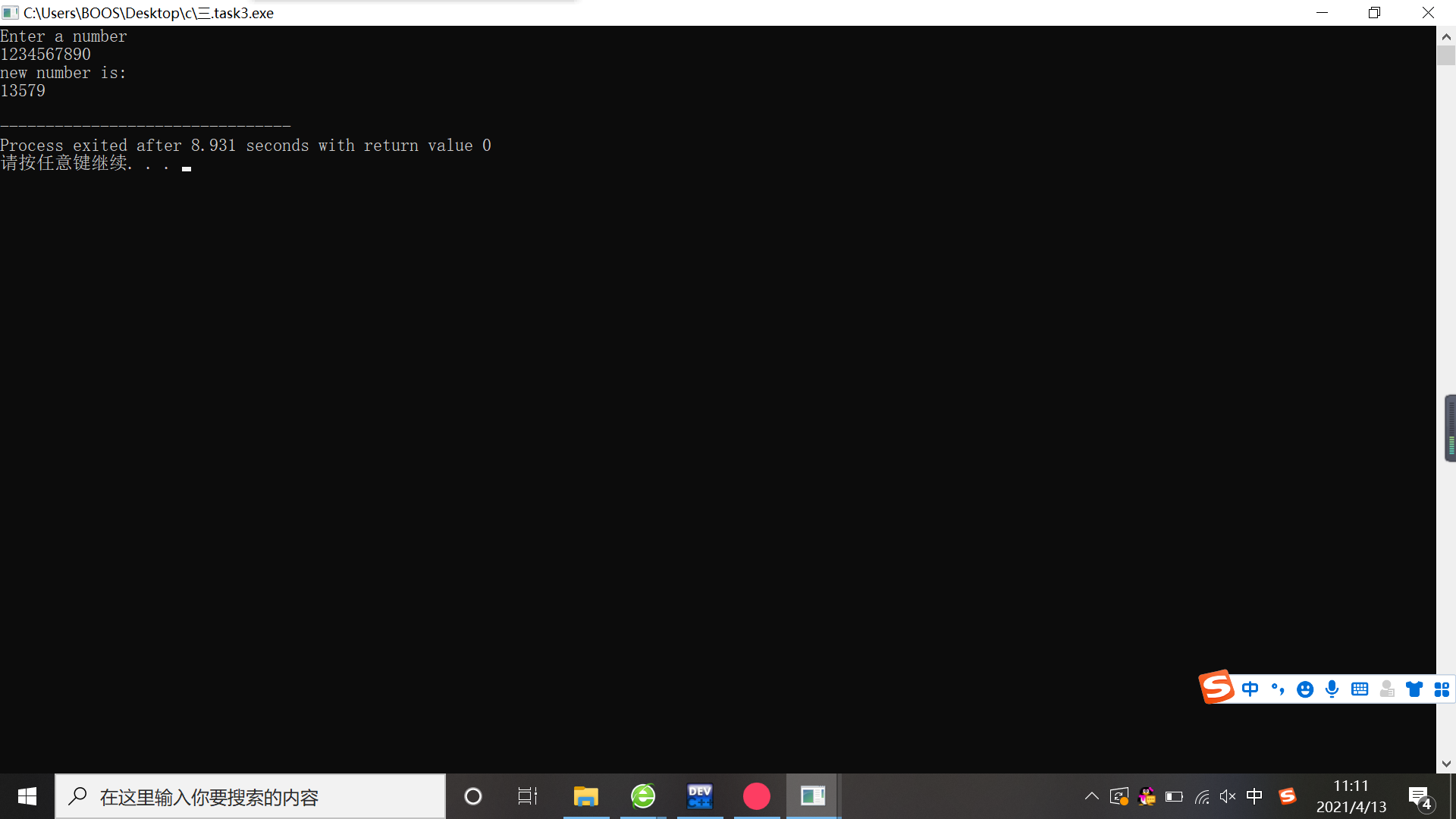
实验任务四
// 一元二次方程求解(函数实现方式)
// 重复执行, 直到按下Ctrl+Z结束

#include <math.h>
#include <stdio.h>

// 函数声明
void solve(double a, double b, double c);

// 主函数
int main() {
    double a, b, c;

    printf("Enter a, b, c: ");
    while(scanf("%lf%lf%lf", &a, &b, &c) != EOF) {
        solve(a, b, c);  // 函数调用
        printf("Enter a, b, c: ");
    }

    return 0;
}

// 函数定义
// 功能:求解一元二次方程,打印输出结果
// 形式参数:a,b,c为一元二次方程系数
void solve(double a, double b, double c) {
    double x1, x2;
    double delta, real, imag;

    if(a == 0)
        printf("not quadratic equation.\n");
    else {
        delta = b*b - 4*a*c;

        if(delta >= 0) {
            x1 = (-b + sqrt(delta)) / (2*a);
            x2 = (-b - sqrt(delta)) / (2*a);
            printf("x1 = %.2f, x2 = %.2f\n", x1, x2);
        }
        else {
            real = -b/(2*a);
            imag = sqrt(-delta) / (2*a);
            printf("x1 = %.2f + %.2fi, x2 = %.2f - %.2fi\n", real, imag, real, imag);
        }
    }
}
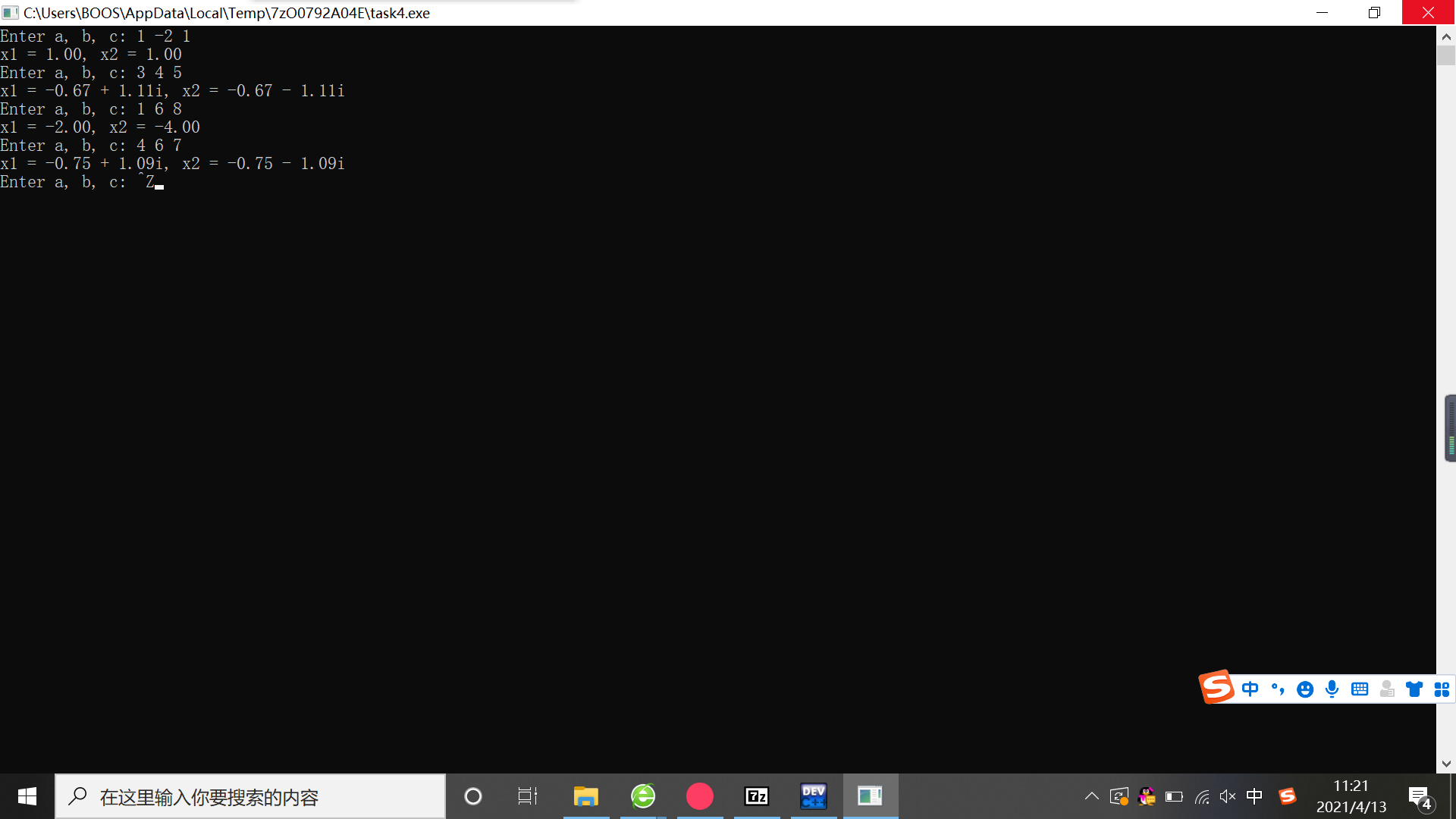
思考:否,函数有两个根,无法同时返回两个值。
实验五
#include<stdio.h>
#include<math.h>
double  fun(int n);//函数声明
int main()
{
    int n;
    double s;
    printf("Enter n(1~10):");
    while(scanf("%d",&n)!= EOF)
    {
        s=fun(n);    //函数调用
        printf("n=%d, s=%f\n\n",n,s);
        printf("Enter n(1~10):");
    }
    return 0;
}

//函数定义
double fun(int n)
{
    int p=1;
    double s=0;
    int i;
    for(i=1; i<=n;i++)
    {
    p=p*i; //求阶乘
    s=s+pow(-1,i-1)*1/p;  //求和
    }

    return s;
}
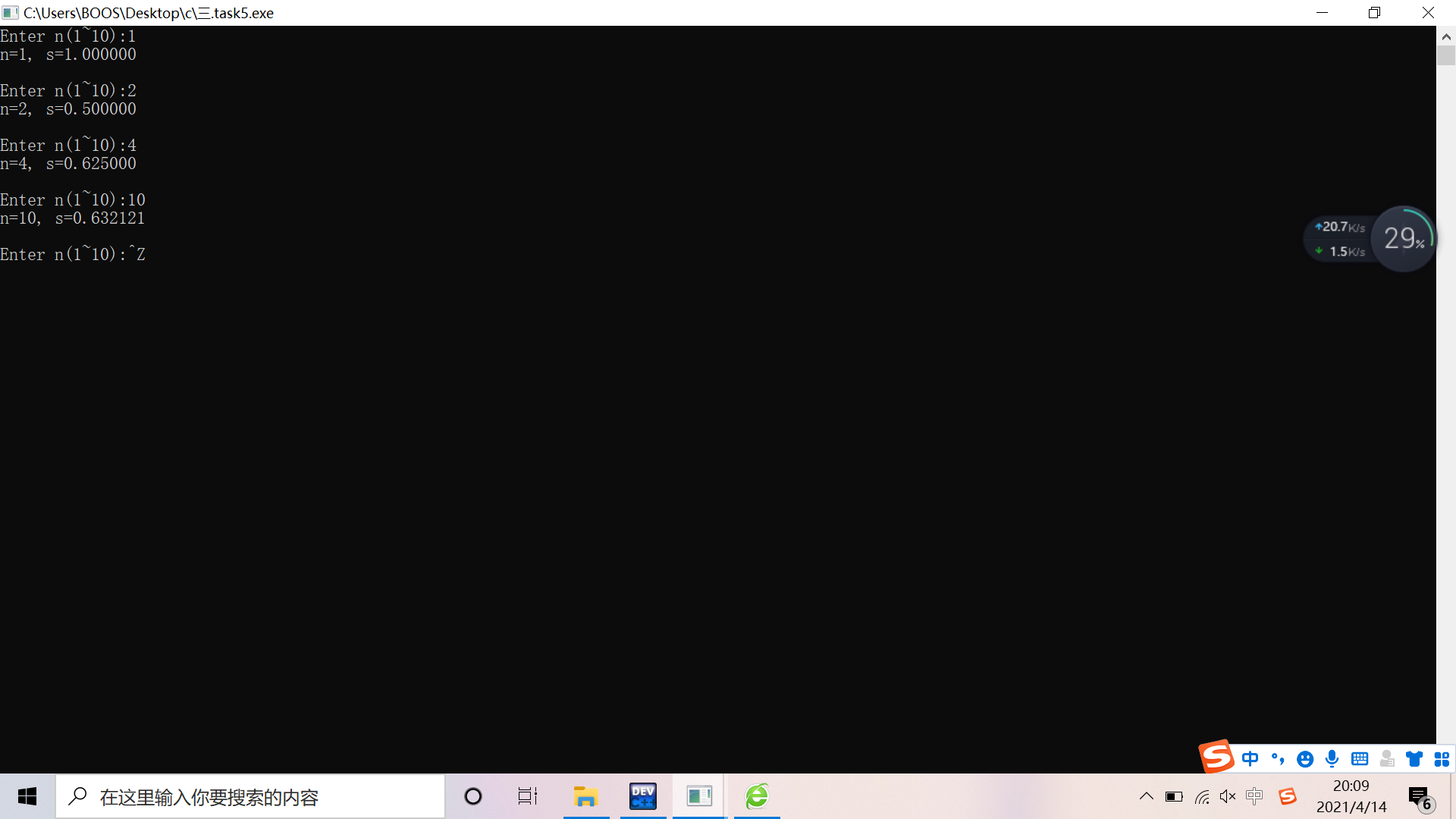
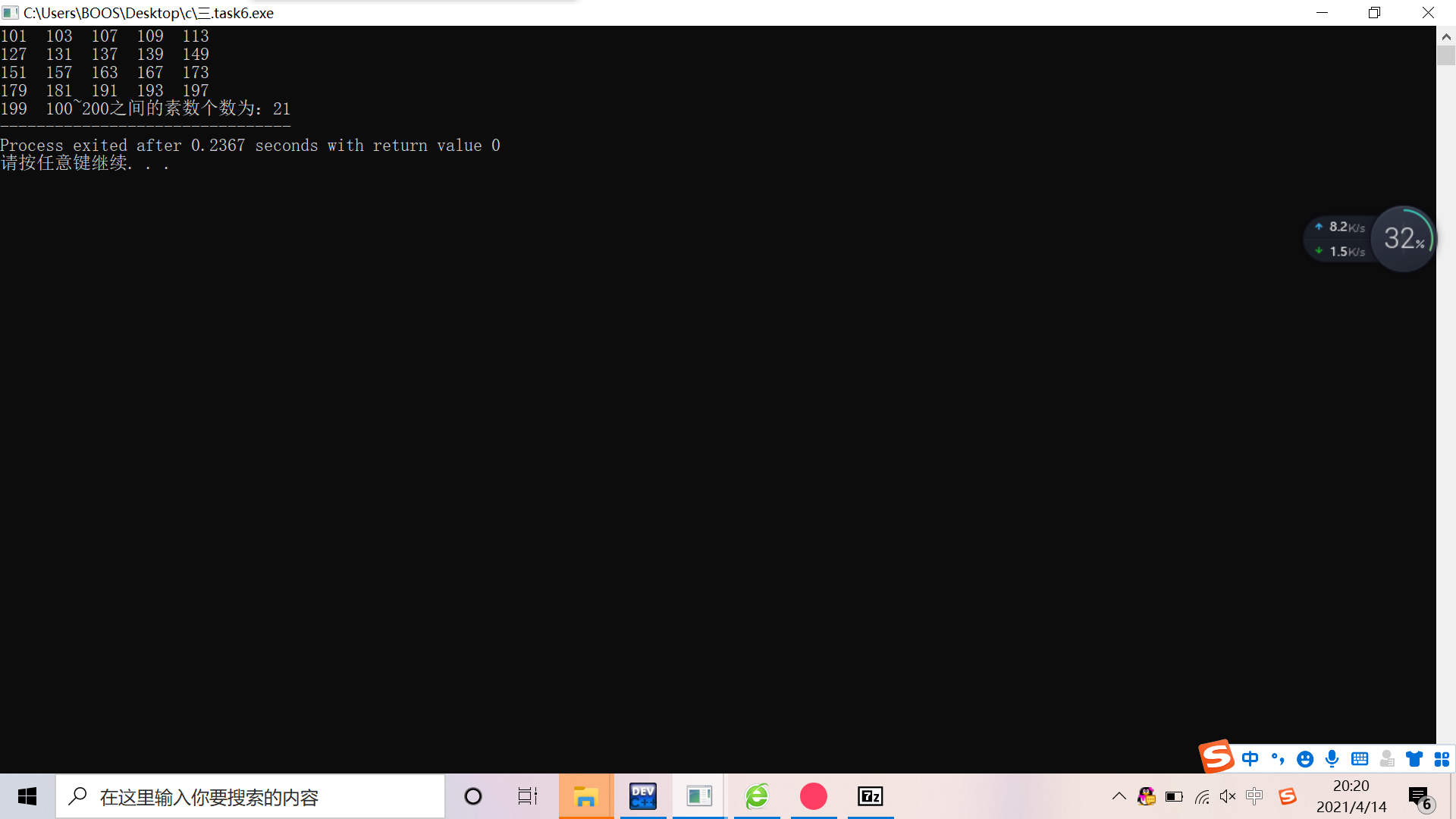
实验任务六
#include<stdio.h>
#include<math.h>
int isprime(int);  //函数声明
int main()
{ int x,y,col=0,sum;

   for(x=101;x<200;x++)
   {
   y=isprime(x);
    if(y>=101)
    { printf("%d  ",y);
  col++;
  sum++;
  if(col%5==0)
    printf("\n");}

   }
   printf("100~200之间的素数个数为:%d",sum);
    return 0;

}

 浙公网安备 33010602011771号