
Ros2 学习日志
Node
节点是 Ros2 控制机器人的底层部分。
通过节点间的通讯,来实现机器人的不同功能并封装,实现功能包。
New_Node
class my_node : public rclcpp :: Node {
// 使用类继承的方法定义一个新节点类,rclcpp :: Node 是 Ros2 里已经给我们提供好的一个类
    public:
        // 构造函数,有一个参数为节点名称
        Niluo_Node (std :: string name) : Node (name) {
            name = "niluo";
            RCLCPP_INFO (this -> get_logger (), "大家好,我是 %s", name.c_str ());
            // this 指代当前类,get_logger 表示获取一个与 “特定实体(通常是节点)绑定的日志器实例”
            // 通过获取该日志来保证日志输出的节点级一致性。
        }


    private: // empty
};

int main (int argc, char **argv) {
/*
argc,argv 是 mian 函数的命令行参数载体。
argc:代表启动程序时传入的参数总数量
argv:储存了具体运行参数。

有例:./my_node --ros-args -r __node:=new_talker
则有 argc = 4(因为参数有 ./my_node、--ros-args、-r、__node:=new_talker,共 4 个);
argv[0] = "./my_node"(程序路径);
argv[1] = "--ros-args"(ROS2 的命令行参数标识);
argv[2] = "-r"(ROS2 参数重映射的标识);
argv[3] = "__node:=new_talker"(将节点名重命名为 new_talker)。
*/
    rclcpp :: init (argc, argv);
    auto node = std :: make_shared <my_node> ("node");
    // 使用 make_shared 共享指针定义一个节点
    rclcpp :: spin (node);
    // 让任务保持运行,知道检测到有 ctrl+c 输入
    rclcpp :: shutdown ();
    // 关闭任务
    return 0;
}
顺便在这里记录一些编译相关指令。
ros2 pkg create [the name of the package] --build-type ament_cmake --dependencies rclcpp
// 用 ros2 建包;ament_cmake 是一种常见类型;并且声明对 rclcpp 已有功能包的依赖
colcon build --packages-select [the name of the package]
// 查询某个目录进行指定编译
colcon build
// 编译工作空间下的所有文件
rm -rf build install log
// 删除当前工作空间下的编译环境(可用于处理环境污染,清空工作空间)
source install/setup.bash
// 用于加载编译环境变量
ros2 run [the name of the package] [the name of the code]
// 执行某个功能包下的特定任务代码。
以及典型文件结构。
. // 工作空间
└── src // 源文件
    └── my_node // 一个功能包
        ├── CMakeLists.txt // CMake 编译助手
        ├── include
        │   └── my_node
        ├── package.xml // 建包助手
        └── src
            └── my_node.cpp // 代码源文件

5 directories, 3 files
其中 CMakeLists.txt 和 package.xml 有他们特殊的语法结构,掌握以下基础部分即可。
这两部分结构往往会在报错提示里提醒你,无需过于在意。
add_executable (node src/my_node.cpp) // 结合源代码文件可执行节点文件
ament_target_dependencies (node rclcpp) // 为 node(示例节点)添加 rclcpp 功能包依赖
install (TARGETS
  my_node
  DESTINATION lib/${PROJECT_NAME}
)
// 表示安装可执行文件 my_node
<depend>rclcpp</depend> // 申明依赖
<depend>std_msgs</depend>
Topic
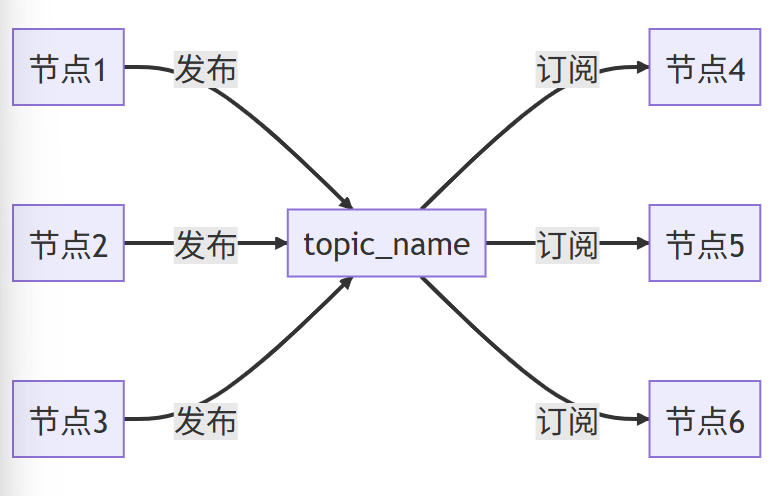
创建一个社区话题,创作者发布作品,粉丝接受作品。作品具有统一格式,也就是 ros2 定义的消息接口。
Niluo_Node
#include "rclcpp/rclcpp.hpp"
#include "std_msgs/msg/string.hpp" // 消息接口包头文件,调用前需声明依赖

class Niluo_Node : public rclcpp :: Node {
    public:
        Niluo_Node (std :: string name) : Node (name) {
            name = "niluo";
            RCLCPP_INFO (this -> get_logger (), "大家好,我是 %s", name.c_str ());
            // 打个招呼吧
            publisher_ = this -> create_publisher <std_msgs :: msg :: String> ("mingyue", 10);
            // 创建发布者,这里是一个 msg 接口包里自带的 String 类型接口,话题名字为 mingyue
            timer_ = this -> create_wall_timer (
                std :: chrono :: milliseconds (5000),
                std :: bind (&Niluo_Node :: timer_callback, this)
            );
            // 创建定时器,5000ms 为周期,定时发布
            // bind 的作用是捆绑,在传参传入回调函数时需要捆绑一个指针。
        }


    private:
        void timer_callback () {
            // 定时器回调函数
            static int Tot = 1;
            std_msgs :: msg :: String message;
            message.data = "我上了第 " + std :: to_string (Tot++) + " 节工程设计";
            RCLCPP_INFO (this -> get_logger (), "%s", message.data.c_str ());
            // 日志打印,始终牢记日志和节点的相关性
            publisher_ -> publish (message);
            // 使用内置函数发布消息
        }
        rclcpp :: TimerBase :: SharedPtr timer_;
        // 声名定时器指针
        rclcpp :: Publisher <std_msgs :: msg :: String> :: SharedPtr publisher_;
        // 声明话题发布者指针
};

int main (int argc, char **argv) {
    rclcpp :: init (argc, argv);
    auto node = std :: make_shared <Niluo_Node> ("Niluo_Node");
    rclcpp :: spin (node);
    rclcpp :: shutdown ();
    return 0;
}
Student_Node
#include "rclcpp/rclcpp.hpp"
#include "std_msgs/msg/string.hpp"

class Student_Node : public rclcpp :: Node {
    public:
        // 构造函数,有一个参数为节点名称
        Student_Node (std :: string name) : Node (name) {
            name = "waya";
            RCLCPP_INFO (this -> get_logger (), "大家好,我是 %s", name.c_str ());
            subscribe_ = this -> create_subscription <std_msgs :: msg :: String> (
                "mingyue",
                10,
                std :: bind (&Student_Node :: receive_callback, this, std :: placeholders :: _1)
            );
            // 订阅名为 mingyue 的 string 类型话题,且绑定一个回调函数。
            // 其中的数字 10 表示 qos,指消息缓存长度(最多可以缓存十条消息)
        }


    private:
        void receive_callback (const std_msgs :: msg :: String :: SharedPtr msg) {
            // 收到话题数据的回调函数,可以在这里对收到的话题信息进行一些处理
        }
        rclcpp :: Subscription <std_msgs :: msg :: String> :: SharedPtr subscribe_;
        // 声明话题订阅者指针
};

int main (int argc, char **argv) {
    rclcpp :: init (argc, argv);
    auto node = std :: make_shared <Student_Node> ("Student_Node");
    rclcpp :: spin (node);
    rclcpp :: shutdown ();
    return 0;
}
Service
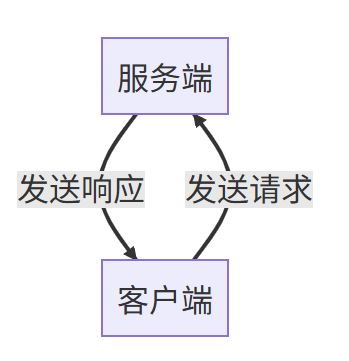
一个服务端提供服务,多个客户端享受服务,这或许是大部分应用程序的使用模式。
注意到上一部分的 Topic 是单向的通信方式,我们无法得知在消息给出后,接收端做出了怎样的行为,又有怎样的反馈。
而 Service 就是用来构建这样的请求-反馈机制
在这里使用了一个自定义 srv 类型接口,以如下结构进行编写。在编译后调用方式就和 ros2 自带接口一样。
└── lr_interfaces // 接口功能包
    ├── CMakeLists.txt // CMake 编译助手
    ├── package.xml // 建包助手
    └── srv
        └── Climb.srv // 接口定义文件
float64 target_height
---
float64 current_height
int32 days
用分割线隔开 Request 和 Response 两种信息。
Service
#include "rclcpp/rclcpp.hpp"
#include "lr_interfaces/srv/climb.hpp" // 声明我们的自定义接口

using std :: placeholders :: _1;
using std :: placeholders :: _2;
// 提前定义占位符

class CarService : public rclcpp :: Node {
// ros2 的大部分功能都是基于节点实现的,故而都需要先定义节点的继承类
    public:
        CarService () : Node ("car_service") {
            service_ = this -> create_service <lr_interfaces :: srv :: Climb> (
                "car_climb",
                std :: bind (&CarService :: handle_service, this, _1, _2)
            );
            // 创建一个服务端,名字叫 car_climb
            RCLCPP_INFO (this -> get_logger (), "Car Climb Service is ready.");
        }

    private:
        rclcpp :: Service <lr_interfaces :: srv :: Climb> :: SharedPtr service_;
        // 声明一个服务端

        void handle_service (
            const std :: shared_ptr <lr_interfaces :: srv :: Climb :: Request> request,
            std :: shared_ptr <lr_interfaces :: srv :: Climb :: Response> response) {
            // 处理收到的服务请求,传入参数为请求、回应两个类型
            // 后面是机器人运动逻辑
            double target = request -> target_height, current = 0;
            int days = 0;
            RCLCPP_INFO (this -> get_logger (), "Received target height: %.2f", target);

            while (current < target) {
                current += 3.0;
                days++;
                RCLCPP_INFO (this -> get_logger (), "Day %d: Current height = %.2f", days, current);
            }

            response -> days = days;
            response -> current_height = current;
            RCLCPP_INFO (this -> get_logger (), "Climb completed in %d days to reach height %.2f", days, current);
        }
};

int main (int argc, char ** argv) {
    rclcpp :: init (argc, argv);
    rclcpp :: spin (std :: make_shared <CarService> ());
    rclcpp :: shutdown ();
    return 0;
}
Client
#include "rclcpp/rclcpp.hpp"
#include "lr_interfaces/srv/climb.hpp"
#include <chrono>
#include <cstdlib>
#include <iostream>

using namespace std :: chrono_literals;

class CarClient : public rclcpp :: Node {
    public:
        CarClient () : Node ("car_client") {
            client_ = this -> create_client <lr_interfaces :: srv :: Climb> ("car_climb");
            // 创建一个客户端
            while (!client_ -> wait_for_service (1s)) {
                // 需要等待服务端上线再进行后续使用
                if (!rclcpp :: ok ()) {
                    // 服务端出现问题,这个 ok 会返回 false,此时服务过程中断
                    RCLCPP_INFO (this -> get_logger (), "Client interrupted while waiting for service. Exiting.");
                    return ;
                }
                RCLCPP_INFO (this -> get_logger (), "Service not available, waiting again...");
            }
            RCLCPP_INFO (this -> get_logger (), "Service is available.");
        }

        void send_request (double target_height) {
            // 发送一个请求
            auto request = std :: make_shared <lr_interfaces :: srv :: Climb :: Request> ();
            request -> target_height = target_height;

            RCLCPP_INFO (this -> get_logger (), "Sending request with target height: %.2f", target_height);
            auto result_future = client_ -> async_send_request (
                request,
                std :: bind (&CarClient :: response_callback, this, std :: placeholders :: _1)
            );
            /*
            简单区分一下同步发送和异步发送,表格嵌于代码后
            */
            rclcpp :: spin_until_future_complete (this -> get_node_base_interface (), result_future);
            // 挂起直到任务完成
        }

    private:
        rclcpp :: Client <lr_interfaces :: srv :: Climb> :: SharedPtr client_;

        void response_callback (rclcpp :: Client <lr_interfaces :: srv :: Climb> :: SharedFuture future) {
            auto response = future.get ();
            RCLCPP_INFO (
                this -> get_logger (),
                "Climb completed in %d days, reached height %.2f",
                response -> days, response -> current_height
            );
            // 收取服务端的回复,从异步发送的 future 中调取
        }
};

int main (int argc, char ** argv) {
    rclcpp :: init (argc, argv);
    auto node = std :: make_shared <CarClient> ();

    double target_height;
    std :: cout << "Enter target height for the car to climb: ";
    std :: cin >> target_height;

    node -> send_request (target_height);

    rclcpp :: shutdown ();
    return 0;
}
| 维度 | 同步发送 | 异步发送 |
|---|---|---|
| 阻塞性 | 会阻塞当前线程(代码“卡”在发送处) | 不阻塞当前线程(发送后直接走后续逻辑) |
| 执行流程 | 发送 → 等结果 → 执行后续代码 | 发送 → 直接执行后续代码 → 结果回来后再处理 |
| 结果获取 | 直接拿到最终结果(比如服务响应) | 先拿到“未决结果(future)”,后续再取结果 |
| 适用场景 | 需要立即用结果的场景(比如依赖响应做下一步操作) | 不着急要结果、不想卡线程的场景(比如高频率任务、UI 线程) |
Action
Robot_Action
#include "Robot/robot.h"
#include "rclcpp/rclcpp.hpp"
#include "rclcpp_action/rclcpp_action.hpp"
#include "lr_interfaces/action/move.hpp"

#include <mutex> // 用于线程安全地保护共享变量。
#include <thread>  // 用于创建独立线程,实现并行执行动作。
#include <memory>  // 用于智能指针
#include <atomic>  // 提供原子变量(?)适合跨线程控制标志,避免竞争条件。

class Action : public rclcpp :: Node {
    public:
        using move_robot = lr_interfaces :: action :: Move;
        using GoalHandleMove = rclcpp_action :: ServerGoalHandle <move_robot>;
        // 表示一个 Goal 的句柄,用于操作当前目标,比如取消、发布反馈、成功/失败等。

        Action (std :: string name) : Node (name) {
            RCLCPP_INFO (this -> get_logger (), "Action %s Node has been started", name.c_str ());
            using std :: placeholders :: _1;
            using std :: placeholders :: _2;

            robot_ = std :: make_shared <Robot> ();
            // 初始化一个 Robot 智能指针,保证全局只有一个 Robot 对象,状态会在抢占或取消时保持当前位置。

            this -> action_server_ = rclcpp_action :: create_server <move_robot> (
                this,
                "move_robot",
                std :: bind (&Action :: handle_goal, this, _1, _2),
                std :: bind (&Action :: handle_cancel, this, _1),
                std :: bind (&Action :: handle_accepted, this, _1)
            );
        }

        // 析构函数,确保资源清理(将停止当前执行线程)
        ~ Action () {
            std :: lock_guard <std :: mutex> lock (goal_mutex_);
            // lock_guard:自动加锁并在作用域结束解锁,保护 active_ctx_。
            // 这是 C++ 提供的一个线程同步工具,用来保护共享资源,防止多个线程同时访问导致的数据竞争。
            if (active_ctx_) {
                // 设定停止标志以通知执行线程退出
                active_ctx_ -> stop_flag -> store (true);
                active_ctx_.reset ();
            }
        }

    private:
        rclcpp_action :: Server <move_robot> :: SharedPtr action_server_;
        std :: mutex goal_mutex_; // 作用在当前域里的互斥锁,保护 active_ctx_

        // 使用 ExecutionContext 存放 handle + stop_flag
        struct ExecutionContext {
            std :: shared_ptr <GoalHandleMove> handle;
            std :: shared_ptr <std :: atomic_bool> stop_flag;
            /*
            原子变量是一种多线程安全的变量类型。任何对原子变量的读写操作都是原子操作,即:
            不可分割:操作不会被线程切换打断。
            立即可见:写操作对其他线程立刻可见。

            相比于互斥锁,原子变量是针对于单个变量的。
            */
        };
        std :: shared_ptr <ExecutionContext> active_ctx_;

        std :: shared_ptr <std :: thread> execution_thread_;
        // 记录当前执行线程(保持但不强制 join)。
        // join:阻塞主线程直到分线程运行完毕。通常是用于防止主线程提前结束。

        std :: shared_ptr <Robot> robot_;
        // 声明智能指针。

        rclcpp_action :: GoalResponse handle_goal (
            const rclcpp_action :: GoalUUID & uuid,
            std :: shared_ptr <const move_robot :: Goal> goal) {
            // 当客户端发送目标时调用。
            // GoalResponse::ACCEPT_AND_EXECUTE:接受并执行 Goal。
            // uuid 是 Goal 唯一 ID,可以用来区分不同请求。
            RCLCPP_INFO (this -> get_logger (), "Received goal request with target position (%.2f, %.2f)", goal -> target_position.x, goal -> target_position.y);
            (void)uuid;
            return rclcpp_action :: GoalResponse :: ACCEPT_AND_EXECUTE;
        }

        rclcpp_action :: CancelResponse handle_cancel (
            const std :: shared_ptr <GoalHandleMove> goal_handle) {
            RCLCPP_INFO (this -> get_logger (), "Received request to cancel goal");
            // 当客户端请求取消 Goal 时调用。
            // 使用 ExecutionContext 检查是否是当前活跃的 goal。
            std :: lock_guard <std :: mutex> lock (goal_mutex_);
            if (active_ctx_ && active_ctx_ -> handle && active_ctx_ -> handle -> get_goal_id () == goal_handle -> get_goal_id ()) {
                // 标记停止,这样执行线程会检测到并处理取消
                active_ctx_ -> stop_flag -> store (true);
                return rclcpp_action :: CancelResponse :: ACCEPT;
            }
            return rclcpp_action :: CancelResponse :: REJECT;
        }

        // execute_move 接受 ExecutionContext,让一个 flag 绑定 handle
        void execute_move (std :: shared_ptr <ExecutionContext> ctx) {
            auto robot = robot_;
            // 不再创建新的 Robot,继承使用全局 Robot,但不修改。

            auto goal_handle = ctx -> handle;
            const auto goal = goal_handle -> get_goal ();
            RCLCPP_INFO (this -> get_logger (), "Executing goal to move to (%.2f, %.2f)", goal -> target_position.x, goal -> target_position.y);
            auto result = std :: make_shared <move_robot :: Result> ();
            rclcpp :: Rate rate = rclcpp :: Rate (2); // 控制循环频率
            robot -> set_goal (goal -> target_position);

            while (rclcpp :: ok () && !robot -> close_goal ()) {
                // 先检查是否该线程被要求停止(即被抢断)
                if (ctx -> stop_flag -> load ()) {
                    RCLCPP_INFO (this -> get_logger (), "Goal preempted. Stopping this goal's execution.");
                    result -> final_position = robot -> get_current_pos ();
                    goal_handle -> abort (result);
                    return ;
                }

                // 检查是否被客户端取消
                if (goal_handle -> is_canceling ()) {
                    robot -> stop ();
                    result -> final_position = robot -> get_current_pos ();
                    result -> total_time_sec = robot -> get_tim ();
                    goal_handle -> canceled (result);
                    RCLCPP_INFO (this -> get_logger (), "Goal canceled");
                    return ;
                }

                robot -> move_step ();
                auto feedback = std :: make_shared <move_robot :: Feedback> ();
                feedback -> current_position = robot -> get_current_pos ();
                feedback -> current_velocity = robot -> get_current_vel ();
                feedback -> distance_to_target = robot -> get_dist ();
                goal_handle -> publish_feedback (feedback);

                RCLCPP_INFO (this -> get_logger (), "Publish Feedback");
                rate.sleep ();
            }

            // 完成前再次检查 stop_flag(防止刚完成时被抢断)
            if (ctx -> stop_flag -> load ()) {
                RCLCPP_INFO (this -> get_logger (), "Goal completed but was preempted. Aborting.");
                result -> final_position = robot -> get_current_pos ();
                goal_handle -> abort (result);
                return ;
            }

            result -> final_position = robot -> get_current_pos ();
            goal_handle -> succeed (result);
            RCLCPP_INFO (this -> get_logger (), "Goal succeeded");

            // 清理当前活跃上下文(如果仍是该上下文)
            std :: lock_guard <std :: mutex> lock (goal_mutex_);
            if (active_ctx_ && active_ctx_ -> handle == goal_handle)
                active_ctx_.reset ();
        }

        void handle_accepted (const std :: shared_ptr <GoalHandleMove> goal_handle) {
            // 当 Goal 被接受时调用。
            // 如果已有活跃 Goal,则抢占(设置 stop_flag)。
            std :: lock_guard <std :: mutex> lock (goal_mutex_);
            if (active_ctx_) {
                RCLCPP_INFO (this -> get_logger (), "Preempting old goal for new goal");
                active_ctx_ -> stop_flag -> store (true);
            }

            auto ctx = std :: make_shared <ExecutionContext> ();
            ctx -> handle = goal_handle;
            ctx -> stop_flag = std :: make_shared <std :: atomic_bool> (false);

            active_ctx_ = ctx;

            std :: thread ([this, ctx] () {
                this -> execute_move (ctx);
            }).detach (); // detach 让线程独立运行,不需要 join。
        }
};

int main (int argc, char **argv) {
    rclcpp :: init (argc, argv);
    auto action_server = std :: make_shared <Action> ("Action_Robot");
    rclcpp :: spin (action_server);
    rclcpp :: shutdown ();
    return 0;
}

/*
source install/setup.bash
ros2 action send_goal /move_robot lr_interfaces/action/Move "{target_position: {x: -10.0, y: -10.0}}"
ros2 action send_goal /move_robot lr_interfaces/action/Move "{target_position: {x: 20.0, y: 20.0}}"
*/
Robot_Control
#include "rclcpp/rclcpp.hpp"
#include "rclcpp_action/rclcpp_action.hpp"
#include "lr_interfaces/action/move.hpp"

class Control : public rclcpp :: Node {
    public:
        using move_robot = lr_interfaces :: action :: Move;
        using GoalHandleMove = rclcpp_action :: ClientGoalHandle <move_robot>;

        Control (
            std :: string name,
            const rclcpp :: NodeOptions& node_opt = rclcpp :: NodeOptions ()) : Node (name, node_opt) {

            RCLCPP_INFO (this -> get_logger (), "Control %s Node has been started", name.c_str ());
            this -> client_ptr = rclcpp_action :: create_client <move_robot> (this, "move_robot");
            this -> timer = this -> create_wall_timer (
                std :: chrono :: milliseconds (500),
                std :: bind (&Control :: send_goal, this)
            );
        }

        void send_goal () {
            using namespace std :: placeholders;
            this -> timer -> cancel ();
            if (!this -> client_ptr -> wait_for_action_server (std :: chrono :: seconds (10))) {
                RCLCPP_ERROR (this -> get_logger (), "Action server not available after waiting");
                rclcpp :: shutdown ();
                return;
            }

            auto goal_msg = move_robot :: Goal ();
            goal_msg.target_position.x = 10.0;
            goal_msg.target_position.y = 10.0;

            RCLCPP_INFO (this -> get_logger (), "Sending goal request to move to (%.2f, %.2f)", goal_msg.target_position.x, goal_msg.target_position.y);

            auto send_goal_options = rclcpp_action :: Client <move_robot> :: SendGoalOptions ();
            send_goal_options.goal_response_callback = std :: bind (&Control :: goal_response_callback, this, _1);
            send_goal_options.feedback_callback = std :: bind (&Control :: feedback_callback, this, _1, _2);
            send_goal_options.result_callback = std :: bind (&Control :: result_callback, this, _1);
            this -> client_ptr -> async_send_goal (goal_msg, send_goal_options);
        }

    private:
        rclcpp_action :: Client <move_robot> :: SharedPtr client_ptr;
        rclcpp :: TimerBase :: SharedPtr timer;

        void goal_response_callback (const GoalHandleMove :: SharedPtr goal_handle) {
            if (!goal_handle)
                RCLCPP_ERROR (this -> get_logger (), "Goal was rejected by server");
            else
                RCLCPP_INFO (this -> get_logger (), "Goal accepted by server, waiting for result");
        }

        void feedback_callback (
            GoalHandleMove :: SharedPtr,
            const std :: shared_ptr <const move_robot :: Feedback> feedback) {

            RCLCPP_INFO (this -> get_logger (), "Current Position: (%.2f, %.2f), Current Velocity: (%.2f, %.2f), Distance to Target: %.2f",
                feedback -> current_position.x,
                feedback -> current_position.y,
                feedback -> current_velocity.x,
                feedback -> current_velocity.y,
                feedback -> distance_to_target
            );
        }

        void result_callback (const GoalHandleMove :: WrappedResult & result) {
            switch (result.code) {
                case rclcpp_action :: ResultCode :: SUCCEEDED:
                    RCLCPP_INFO (this -> get_logger (), "Goal succeeded!");
                    break;
                case rclcpp_action :: ResultCode :: ABORTED:
                    RCLCPP_ERROR (this -> get_logger (), "Goal was aborted");
                    return;
                case rclcpp_action :: ResultCode :: CANCELED:
                    RCLCPP_ERROR (this -> get_logger (), "Goal was canceled");
                    return;
                default:
                    RCLCPP_ERROR (this -> get_logger (), "Unknown result code");
                    return;
            }
            RCLCPP_INFO (this -> get_logger (), "Final Position: (%.2f, %.2f), Total Time: %.2f sec",
                result.result -> final_position.x,
                result.result -> final_position.y,
                result.result -> total_time_sec
            );
        }
};

int main (int argc, char **argv) {
    rclcpp :: init (argc, argv);
    auto control_node = std :: make_shared <Control> ("Control_Robot");
    rclcpp :: spin (control_node);
    rclcpp :: shutdown ();
    return 0;
}
Robot.h
/*
copyright
*/
#ifndef EXAMPLE_ACTIONI_RCLCPP_ROBOT_H_
#define EXAMPLE_ACTIONI_RCLCPP_ROBOT_H_
#include "rclcpp/rclcpp.hpp"
#include "lr_interfaces/action/move.hpp"

class Robot {
    public:
        using move_robot = lr_interfaces :: action :: Move;
        Robot () = default;
        ~Robot () = default;
        geometry_msgs :: msg :: Point move_step ();
        bool set_goal (geometry_msgs :: msg :: Point dist);
        geometry_msgs :: msg :: Point get_current_pos ();
        geometry_msgs :: msg :: Vector3 get_current_vel ();
        float get_dist ();
        float get_tim ();
        int get_status ();
        bool close_goal ();
        void stop ();
        void init_tim ();

    private:

        // PID
        struct {
            float Kp = 2.0;
            float Ki = 0.0;
            float Kd = 0.8;
            float dt = 0.1;
            float max_speed = 5.0;
            float I_max = 20.0;
            float integral_x = 0.0, integral_y = 0.0;
            float prev_error_x = 0.0, prev_error_y = 0.0;
        } pid_;

        geometry_msgs :: msg :: Point current_position {}
        , goal_position {}
        , step {};
        geometry_msgs :: msg :: Vector3 current_velocity {};
        float distance_to_target {0.0}
        , total_step {0.0};
        std :: atomic <bool> cancel_flag {false};
};

#endif  // EXAMPLE_ACTIONI_RCLCPP_ROBOT_H_
Robot
#include "Robot/robot.h"

geometry_msgs :: msg :: Point Robot :: move_step () {
    float error_x = goal_position.x - current_position.x;
    float error_y = goal_position.y - current_position.y;

    float derivative_x = (error_x - pid_.prev_error_x) / pid_.dt;
    float derivative_y = (error_y - pid_.prev_error_y) / pid_.dt;

    pid_.prev_error_x = error_x;
    pid_.prev_error_y = error_y;

    float provisional_x = pid_.Kp * error_x + pid_.Kd * derivative_x;
    float provisional_y = pid_.Kp * error_y + pid_.Kd * derivative_y;

    if (fabs (provisional_x) < pid_.max_speed)
        pid_.integral_x += error_x * pid_.dt;
    if (fabs (provisional_y) < pid_.max_speed)
        pid_.integral_y += error_y * pid_.dt;

    if (pid_.integral_x > pid_.I_max)
        pid_.integral_x = pid_.I_max;
    if (pid_.integral_x < -pid_.I_max)
        pid_.integral_x = -pid_.I_max;
    if (pid_.integral_y > pid_.I_max)
        pid_.integral_y = pid_.I_max;
    if (pid_.integral_y < -pid_.I_max)
        pid_.integral_y = -pid_.I_max;

    float control_x = pid_.Kp * error_x + pid_.Ki * pid_.integral_x + pid_.Kd * derivative_x;
    float control_y = pid_.Kp * error_y + pid_.Ki * pid_.integral_y + pid_.Kd * derivative_y;
    if (fabs (control_x) > pid_.max_speed)
        control_x = (control_x > 0 ? pid_.max_speed : -pid_.max_speed);
    if (fabs (control_y) > pid_.max_speed)
        control_y = (control_y > 0 ? pid_.max_speed : -pid_.max_speed);

    current_position.x += control_x * pid_.dt;
    current_position.y += control_y * pid_.dt;
    current_velocity.x = control_x;
    current_velocity.y = control_y;
    distance_to_target = std :: sqrt (error_x * error_x + error_y * error_y);
    total_step++;

    std :: cout
        << "Robot moving to ("
        << current_position.x << ", "
        << current_position.y << "), vel = ("
        << current_velocity.x << ","
        << current_velocity.y << ")"
        << std :: endl;

    geometry_msgs :: msg :: Point step;
    step.x = control_x * pid_.dt;
    step.y = control_y * pid_.dt;
    return step;
}

bool Robot :: set_goal (geometry_msgs :: msg :: Point dist) {
    goal_position = dist;
    if (close_goal ())
        return false;
    return true;
}

geometry_msgs :: msg :: Point Robot :: get_current_pos () { return current_position; }

geometry_msgs :: msg :: Vector3 Robot :: get_current_vel () { return current_velocity; }

void Robot :: init_tim () { total_step = 0; }

float Robot :: get_tim () { return total_step; }

float Robot :: get_dist () { return distance_to_target; }

bool Robot :: close_goal () {
    float distance = sqrt (pow (goal_position.x - current_position.x, 2) + pow (goal_position.y - current_position.y, 2));
    if (distance < 0.1)
        return true;
    return false;
}

void Robot :: stop () {
    std :: cout << "Robot has stopped at (" << current_position.x << ", " << current_position.y << ")" << std :: endl;
}
Parameter
其实就是让我们的节点绑定上特定参数。
可以在节点任务里进行调用,也可以外部修改这个参数。
Parameter
#include "rclcpp/rclcpp.hpp"
#include "rclcpp_action/rclcpp_action.hpp"
#include "lr_interfaces/action/move.hpp"
using std :: placeholders :: _1;
using std :: placeholders :: _2;
class Control : public rclcpp :: Node {
public:
using move_robot = lr_interfaces :: action :: Move;
using GoalHandleMove = rclcpp_action :: ClientGoalHandle <move_robot>;
Control (
std :: string name,
const rclcpp :: NodeOptions& node_opt = rclcpp :: NodeOptions ()) : Node (name, node_opt) {
RCLCPP_INFO (this -> get_logger (), "Control %s Node has been started", name.c_str ());
this -> client_ptr = rclcpp_action :: create_client <move_robot> (this, "move_robot");
this -> timer = this -> create_wall_timer (
std :: chrono :: milliseconds (500),
std :: bind (&Control :: init_goal, this)
);
this -> update_timer = this -> create_wall_timer (
std :: chrono :: milliseconds (50),
std :: bind (&Control :: Check, this)
);
// 声明中间参数 next_target
this -> declare_parameter ("next_target.x", 10.0);
this -> declare_parameter ("next_target.y", 10.0);
// 参数变更回调
param_callback_handle_ =
this -> add_on_set_parameters_callback (
std :: bind (&Control :: param_callback, this, std :: placeholders :: _1)
);
}
void init_goal () {
this -> timer -> cancel ();
if (!this -> client_ptr -> wait_for_action_server (std :: chrono :: seconds (10))) {
RCLCPP_ERROR (this -> get_logger (), "Action server not available after waiting");
rclcpp :: shutdown ();
return;
}
send_goal ();
}
void send_goal () {
auto goal_msg = move_robot :: Goal ();
goal_msg.target_position.x = this -> get_parameter ("next_target.x").as_double ();
goal_msg.target_position.y = this -> get_parameter ("next_target.y").as_double ();
RCLCPP_INFO (this -> get_logger (),
"Sending goal request to move to (%.2f, %.2f)",
goal_msg.target_position.x, goal_msg.target_position.y
);
auto send_goal_options = rclcpp_action :: Client <move_robot> :: SendGoalOptions ();
send_goal_options.goal_response_callback = std :: bind (&Control :: goal_response_callback, this, _1);
send_goal_options.feedback_callback = std :: bind (&Control :: feedback_callback, this, _1, _2);
send_goal_options.result_callback = std :: bind (&Control :: result_callback, this, _1);
this -> client_ptr -> async_send_goal (goal_msg, send_goal_options);
}
private:
bool updated_x_ = false;
bool updated_y_ = false;
rcl_interfaces :: msg :: SetParametersResult
param_callback (const std :: vector <rclcpp :: Parameter> ¶ms) {
for (auto &p : params) {
if (p.get_name () == "next_target.x")
updated_x_ = true;
if (p.get_name () == "next_target.y")
updated_y_ = true;
}
rcl_interfaces :: msg :: SetParametersResult result;
result.successful = true;
return result;
}
// 用一个定时器一直刷,看是否参数完整更新
void Check () {
if (updated_x_ && updated_y_) {
this -> send_goal ();
updated_x_ = false, updated_y_ = false;
}
return ;
}
rclcpp_action :: Client <move_robot> :: SharedPtr client_ptr;
rclcpp :: TimerBase :: SharedPtr timer;
rclcpp :: TimerBase :: SharedPtr update_timer;
OnSetParametersCallbackHandle::SharedPtr param_callback_handle_;
void goal_response_callback (const GoalHandleMove :: SharedPtr goal_handle) {
if (!goal_handle)
RCLCPP_ERROR (this -> get_logger (), "Goal was rejected by server");
else
RCLCPP_INFO (this -> get_logger (), "Goal accepted by server, waiting for result");
}
void feedback_callback (
GoalHandleMove :: SharedPtr,
const std :: shared_ptr <const move_robot :: Feedback> feedback) {
RCLCPP_INFO (this -> get_logger (), "Current Position: (%.2f, %.2f), Current Velocity: (%.2f, %.2f), Distance to Target: %.2f",
feedback -> current_position.x,
feedback -> current_position.y,
feedback -> current_velocity.x,
feedback -> current_velocity.y,
feedback -> distance_to_target
);
}
void result_callback (const GoalHandleMove :: WrappedResult & result) {
switch (result.code) {
case rclcpp_action :: ResultCode :: SUCCEEDED:
RCLCPP_INFO (this -> get_logger (), "Goal succeeded!");
break;
case rclcpp_action :: ResultCode :: ABORTED:
RCLCPP_ERROR (this -> get_logger (), "Goal was aborted");
return;
case rclcpp_action :: ResultCode :: CANCELED:
RCLCPP_ERROR (this -> get_logger (), "Goal was canceled");
return;
default:
RCLCPP_ERROR (this -> get_logger (), "Unknown result code");
return;
}
RCLCPP_INFO (this -> get_logger (), "Final Position: (%.2f, %.2f), Total Steps: %.0f Steps.",
result.result -> final_position.x,
result.result -> final_position.y,
result.result -> total_time_sec
);
}
};
int main (int argc, char **argv) {
rclcpp :: init (argc, argv);
auto control_node = std :: make_shared <Control> ("Control_Robot");
rclcpp :: spin (control_node);
rclcpp :: shutdown ();
return 0;
}

 浙公网安备 33010602011771号