
用雪花算法就不会产生重复的ID?
前言
今天想和大家聊聊分布式系统中常用的雪花算法(Snowflake)——这个看似完美的ID生成方案,实际上暗藏玄机。
有些小伙伴在工作中一提到分布式ID,第一个想到的就是雪花算法。
确实,它简单、高效、趋势递增,但你知道吗?
雪花算法的隐蔽的坑不少。
今天这篇文章跟大家一起聊聊雪花算法的5大坑,希望对你会有所帮助。
一、雪花算法:美丽的陷阱
先简单回顾一下雪花算法的结构。
标准的雪花算法ID由64位组成:
// 典型的雪花算法结构
public class SnowflakeId {
    // 64位ID结构
    // 1位符号位(始终为0) +
    // 41位时间戳(毫秒级) +
    // 10位机器ID +
    // 12位序列号

    private long timestampBits = 41;  // 时间戳占41位
    private long workerIdBits = 10;   // 机器ID占10位
    private long sequenceBits = 12;   // 序列号占12位

    // 最大支持值
    private long maxWorkerId = -1L ^ (-1L << workerIdBits);  // 1023
    private long maxSequence = -1L ^ (-1L << sequenceBits);  // 4095

    // 偏移量
    private long timestampShift = sequenceBits + workerIdBits;  // 22
    private long workerIdShift = sequenceBits;                  // 12
}
看起来很美,对吧?
但美丽的背后,是五个需要警惕的深坑:
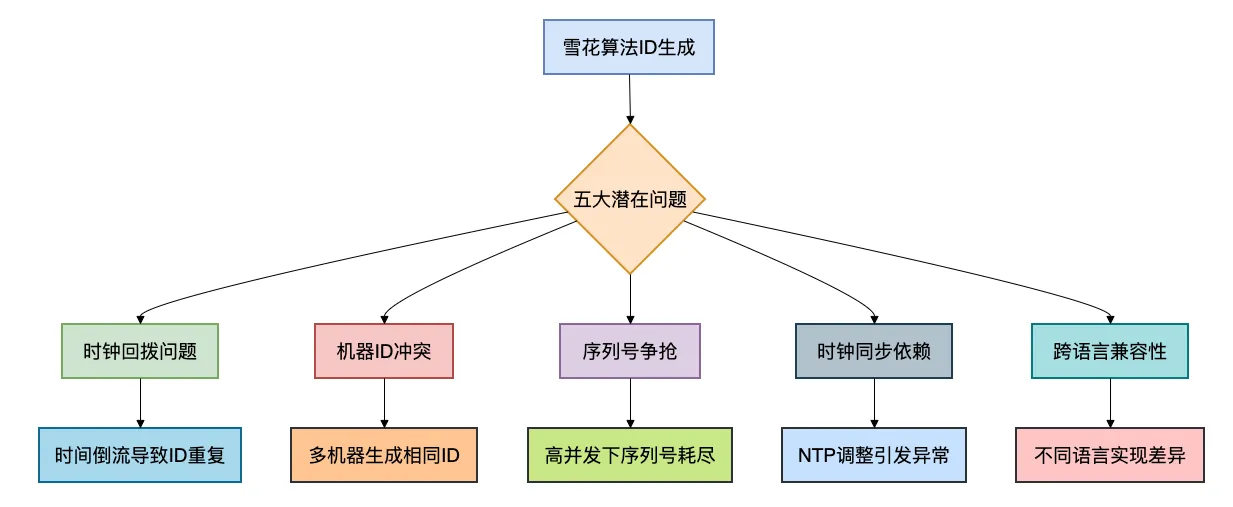
接下来,我们逐一深入分析这五个坑。
二、坑一:时钟回拨——最致命的陷阱
问题现象
有一天,我们线上订单系统突然出现大量重复ID。
排查后发现,有一台服务器的时间被NTP服务自动校准,时钟回拨了2秒钟。
// 有问题的雪花算法实现
public synchronized long nextId() {
    long currentTimestamp = timeGen();

    // 问题代码:如果发现时钟回拨,直接抛异常
    if (currentTimestamp < lastTimestamp) {
        throw new RuntimeException("时钟回拨异常");
    }

    // ... 生成ID的逻辑
}
结果就是:时钟回拨的那台服务器完全不可用,所有请求都失败。
深度剖析
时钟为什么会回拨?
- NTP自动校准:网络时间协议会自动同步时间
- 人工误操作:运维手动调整了服务器时间
- 虚拟机暂停/恢复:虚拟机暂停后恢复,时钟可能跳跃
- 闰秒调整:UTC闰秒可能导致时钟回拨
在分布式系统中,你无法保证所有服务器时钟完全一致,这是物理限制。
解决方案
方案1:等待时钟追上来(推荐)
public class SnowflakeIdWorker {
    private long lastTimestamp = -1L;
    private long sequence = 0L;

    public synchronized long nextId() {
        long timestamp = timeGen();

        // 处理时钟回拨
        if (timestamp < lastTimestamp) {
            long offset = lastTimestamp - timestamp;

            // 如果回拨时间较小(比如5毫秒内),等待
            if (offset <= 5) {
                try {
                    wait(offset << 1);  // 等待两倍时间
                    timestamp = timeGen();
                    if (timestamp < lastTimestamp) {
                        throw new RuntimeException("时钟回拨过大");
                    }
                } catch (InterruptedException e) {
                    Thread.currentThread().interrupt();
                    throw new RuntimeException("等待时钟同步被中断");
                }
            } else {
                // 回拨过大,抛出异常
                throw new RuntimeException("时钟回拨过大: " + offset + "ms");
            }
        }

        // 正常生成ID的逻辑
        if (lastTimestamp == timestamp) {
            sequence = (sequence + 1) & maxSequence;
            if (sequence == 0) {
                timestamp = tilNextMillis(lastTimestamp);
            }
        } else {
            sequence = 0L;
        }

        lastTimestamp = timestamp;

        return ((timestamp - twepoch) << timestampShift) |
                (workerId << workerIdShift) |
                sequence;
    }

    // 等待下一个毫秒
    private long tilNextMillis(long lastTimestamp) {
        long timestamp = timeGen();
        while (timestamp <= lastTimestamp) {
            timestamp = timeGen();
        }
        return timestamp;
    }
}
方案2:使用扩展的workerId位
// 将部分workerId位用作回拨计数器
public class SnowflakeWithBackward {
    // 调整位分配:39位时间戳 + 13位机器ID + 3位回拨计数 + 9位序列号
    private static final long BACKWARD_BITS = 3L;  // 支持最多7次回拨

    private long backwardCounter = 0L;  // 回拨计数器

    public synchronized long nextId() {
        long timestamp = timeGen();

        if (timestamp < lastTimestamp) {
            // 时钟回拨,增加回拨计数器
            backwardCounter = (backwardCounter + 1) & ((1 << BACKWARD_BITS) - 1);

            if (backwardCounter == 0) {
                // 回拨计数器溢出,抛出异常
                throw new RuntimeException("时钟回拨次数过多");
            }

            // 使用上次的时间戳,但带上回拨标记
            timestamp = lastTimestamp;
        } else {
            // 时钟正常,重置回拨计数器
            backwardCounter = 0L;
        }

        // ... 生成ID,将backwardCounter也编码进去
    }
}
方案3:兜底方案——随机数填充
public class SnowflakeWithFallback {
    // 当时钟回拨过大时,使用随机数生成器兜底
    private final Random random = new Random();

    public long nextId() {
        try {
            return snowflakeNextId();
        } catch (ClockBackwardException e) {
            // 当时钟回拨无法处理时,使用随机ID兜底
            log.warn("时钟回拨,使用随机ID兜底", e);
            return generateRandomId();
        }
    }

    private long generateRandomId() {
        // 生成一个基于随机数的ID,但保证不会与正常ID冲突
        // 方法:最高位置1,标识这是兜底ID
        long randomId = random.nextLong() & Long.MAX_VALUE;
        return randomId | (1L << 63);  // 最高位置1
    }
}
方案对比
| 方案 | 优点 | 缺点 | 适用场景 |
|---|---|---|---|
| 等待时钟 | 保持ID连续性 | 可能阻塞线程 | 回拨小的场景(<5ms) |
| 回拨计数器 | 不阻塞线程 | ID不连续 | 频繁小回拨场景 |
| 随机数兜底 | 保证可用性 | ID可能重复 | 紧急情况备用 |
三、坑二:机器ID分配难题
问题现象
假如公司有300多台服务器,但雪花算法只支持1024个机器ID。
更糟糕的是,有次扩容时,两台机器配了相同的workerId,导致生成的ID大量重复。
深度剖析
机器ID分配为什么难?
- 数量限制:10位最多1024个ID
- 分配冲突:人工配置容易出错
- 动态伸缩:容器化环境下IP变动频繁
- ID回收:机器下线后ID何时可重用
解决方案
方案1:基于数据库分配
@Component
public class WorkerIdAssigner {

    @Autowired
    private JdbcTemplate jdbcTemplate;

    private Long workerId;

    @PostConstruct
    public void init() {
        // 尝试获取或分配workerId
        this.workerId = assignWorkerId();
    }

    private Long assignWorkerId() {
        String hostname = getHostname();
        String ip = getLocalIp();

        // 查询是否已分配
        String sql = "SELECT worker_id FROM worker_assign WHERE hostname = ? OR ip = ?";
        List<Long> existingIds = jdbcTemplate.queryForList(sql, Long.class, hostname, ip);

        if (!existingIds.isEmpty()) {
            return existingIds.get(0);
        }

        // 分配新的workerId
        for (int i = 0; i < 1024; i++) {
            try {
                sql = "INSERT INTO worker_assign (worker_id, hostname, ip, created_time) VALUES (?, ?, ?, NOW())";
                int updated = jdbcTemplate.update(sql, i, hostname, ip);
                if (updated > 0) {
                    log.info("分配workerId成功: {} -> {}:{}", i, hostname, ip);
                    return (long) i;
                }
            } catch (DuplicateKeyException e) {
                // workerId已被占用,尝试下一个
                continue;
            }
        }

        throw new RuntimeException("没有可用的workerId");
    }

    // 心跳保活
    @Scheduled(fixedDelay = 30000)
    public void keepAlive() {
        if (workerId != null) {
            String sql = "UPDATE worker_assign SET last_heartbeat = NOW() WHERE worker_id = ?";
            jdbcTemplate.update(sql, workerId);
        }
    }

    @PreDestroy
    public void cleanup() {
        // 应用关闭时释放workerId(可选)
        if (workerId != null) {
            String sql = "DELETE FROM worker_assign WHERE worker_id = ?";
            jdbcTemplate.update(sql, workerId);
        }
    }
}
方案2:基于ZK/Etcd分配
public class ZkWorkerIdAssigner {

    private CuratorFramework client;
    private String workerPath = "/snowflake/workers";
    private Long workerId;

    public Long assignWorkerId() throws Exception {
        // 创建持久化节点
        client.create().creatingParentsIfNeeded().forPath(workerPath);

        // 创建临时顺序节点
        String sequentialPath = client.create()
            .withMode(CreateMode.EPHEMERAL_SEQUENTIAL)
            .forPath(workerPath + "/worker-");

        // 提取序号作为workerId
        String sequenceStr = sequentialPath.substring(sequentialPath.lastIndexOf('-') + 1);
        long sequence = Long.parseLong(sequenceStr);

        // 序号对1024取模得到workerId
        this.workerId = sequence % 1024;

        // 监听节点变化,如果连接断开自动释放
        client.getConnectionStateListenable().addListener((curator, newState) -> {
            if (newState == ConnectionState.LOST || newState == ConnectionState.SUSPENDED) {
                log.warn("ZK连接异常,workerId可能失效: {}", workerId);
            }
        });

        return workerId;
    }
}
方案3:IP地址自动计算(推荐)
public class IpBasedWorkerIdAssigner {

    // 10位workerId,可以拆分为:3位机房 + 7位机器
    private static final long DATACENTER_BITS = 3L;
    private static final long WORKER_BITS = 7L;

    public long getWorkerId() {
        try {
            String ip = getLocalIp();
            String[] segments = ip.split("\\.");

            // 使用IP后两段计算workerId
            int third = Integer.parseInt(segments[2]);  // 0-255
            int fourth = Integer.parseInt(segments[3]); // 0-255

            // 机房ID:取第三段的低3位 (0-7)
            long datacenterId = third & ((1 << DATACENTER_BITS) - 1);

            // 机器ID:取第四段的低7位 (0-127)
            long workerId = fourth & ((1 << WORKER_BITS) - 1);

            // 合并:3位机房 + 7位机器 = 10位workerId
            return (datacenterId << WORKER_BITS) | workerId;

        } catch (Exception e) {
            // 降级方案:使用随机数,但设置标志位
            log.warn("IP计算workerId失败,使用随机数", e);
            return new Random().nextInt(1024) | (1L << 9); // 最高位置1表示随机
        }
    }
}
方案对比
| 方案 | 优点 | 缺点 | 适用场景 |
|---|---|---|---|
| 数据库分配 | 精确控制 | 依赖DB,有单点风险 | 中小规模固定集群 |
| ZK分配 | 自动故障转移 | 依赖ZK,复杂度高 | 大规模动态集群 |
| IP计算 | 简单无依赖 | IP可能冲突 | 网络规划规范的场景 |
四、坑三:序列号争抢与耗尽
问题现象
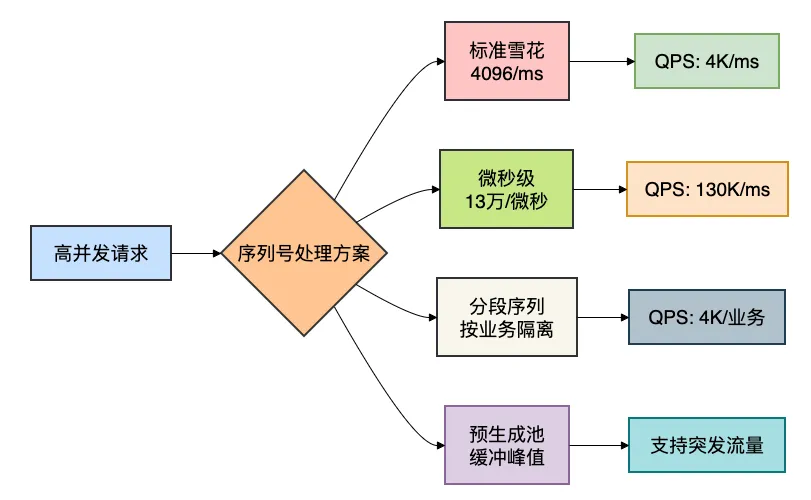
我们的订单服务在促销期间,单机QPS达到5万,经常出现“序列号耗尽”的警告日志。
虽然雪花算法理论上支持4096/ms的序列号,但实际使用中发现,在高并发下还是可能不够用。
深度剖析
序列号为什么可能耗尽?
- 时间戳粒度:毫秒级时间戳,1ms内最多4096个ID
- 突发流量:秒杀场景下,1ms可能收到上万请求
- 时钟偏差:多台机器时钟不完全同步
- 序列号重置:每毫秒序列号从0开始
解决方案
方案1:减少时间戳粒度(微秒级)
public class MicrosecondSnowflake {
    // 调整位分配:使用微秒级时间戳
    // 1位符号位 + 36位微秒时间戳 + 10位机器ID + 17位序列号

    private static final long TIMESTAMP_BITS = 36L;  // 微秒时间戳
    private static final long SEQUENCE_BITS = 17L;   // 13万/微秒

    private long lastMicroTimestamp = -1L;
    private long sequence = 0L;

    public synchronized long nextId() {
        long currentMicros = getCurrentMicroseconds();

        if (currentMicros < lastMicroTimestamp) {
            // 处理时钟回拨
            throw new RuntimeException("时钟回拨");
        }

        if (currentMicros == lastMicroTimestamp) {
            sequence = (sequence + 1) & ((1 << SEQUENCE_BITS) - 1);
            if (sequence == 0) {
                // 等待下一个微秒
                currentMicros = waitNextMicros(lastMicroTimestamp);
            }
        } else {
            sequence = 0L;
        }

        lastMicroTimestamp = currentMicros;

        return ((currentMicros) << (SEQUENCE_BITS + WORKER_BITS)) |
               (workerId << SEQUENCE_BITS) |
               sequence;
    }

    private long getCurrentMicroseconds() {
        // 获取微秒级时间戳
        return System.currentTimeMillis() * 1000 +
               (System.nanoTime() / 1000 % 1000);
    }
}
方案2:分段序列号
public class SegmentedSequenceSnowflake {
    // 为不同的业务类型分配不同的序列号段
    private Map<String, Long> sequenceMap = new ConcurrentHashMap<>();

    public long nextId(String businessType) {
        long timestamp = System.currentTimeMillis();

        // 获取该业务类型的序列号
        Long lastTimestamp = sequenceMap.get(businessType + "_ts");
        Long sequence = sequenceMap.get(businessType);

        if (lastTimestamp == null || lastTimestamp != timestamp) {
            // 新的毫秒,重置序列号
            sequence = 0L;
            sequenceMap.put(businessType + "_ts", timestamp);
        } else {
            // 同一毫秒内,递增序列号
            sequence = sequence + 1;
            if (sequence >= 4096) {
                // 等待下一个毫秒
                timestamp = waitNextMillis(timestamp);
                sequence = 0L;
                sequenceMap.put(businessType + "_ts", timestamp);
            }
        }

        sequenceMap.put(businessType, sequence);

        // 将业务类型编码到workerId中
        long businessWorkerId = encodeBusinessType(workerId, businessType);

        return ((timestamp - twepoch) << timestampShift) |
                (businessWorkerId << workerIdShift) |
                sequence;
    }

    private long encodeBusinessType(long baseWorkerId, String businessType) {
        // 使用workerId的高几位表示业务类型
        int typeCode = businessType.hashCode() & 0x1F;  // 5位,32种业务
        return (typeCode << 5) | (baseWorkerId & 0x1F);
    }
}
方案3:预生成ID池
public class IdPoolSnowflake {
    // 预生成ID池,缓解瞬时压力
    private BlockingQueue<Long> idQueue = new LinkedBlockingQueue<>(10000);
    private volatile boolean isGenerating = false;

    // 后台线程预生成ID
    private Thread generatorThread = new Thread(() -> {
        while (!Thread.currentThread().isInterrupted()) {
            try {
                if (idQueue.size() < 5000 && !isGenerating) {
                    isGenerating = true;
                    generateBatchIds(1000);
                    isGenerating = false;
                }
                Thread.sleep(1);  // 短暂休眠
            } catch (InterruptedException e) {
                Thread.currentThread().interrupt();
            }
        }
    });

    public IdPoolSnowflake() {
        generatorThread.setDaemon(true);
        generatorThread.start();
    }

    public long nextId() {
        try {
            // 从队列中获取预生成的ID
            Long id = idQueue.poll(10, TimeUnit.MILLISECONDS);
            if (id != null) {
                return id;
            }

            // 队列为空,同步生成
            log.warn("ID队列空,同步生成ID");
            return snowflake.nextId();
        } catch (InterruptedException e) {
            Thread.currentThread().interrupt();
            return snowflake.nextId();
        }
    }

    private void generateBatchIds(int count) {
        for (int i = 0; i < count; i++) {
            try {
                idQueue.put(snowflake.nextId());
            } catch (InterruptedException e) {
                Thread.currentThread().interrupt();
                break;
            }
        }
    }
}
性能优化对比
五、坑四:时间戳溢出危机
问题现象
雪花算法的41位时间戳能表示多少时间?
2^41 / 1000 / 60 / 60 / 24 / 365 ≈ 69年
看起来很长?
但这里有个大坑:起始时间的选择。
如果起始时间设置不当,系统可能很快就面临时间戳溢出问题。
深度剖析
时间戳为什么可能溢出?
- 起始时间过早:比如从1970年开始,到2039年就溢出
- 时间戳位数不足:41位在微秒级下很快耗尽
- 系统运行时间超预期:很多系统需要运行几十年
解决方案
方案1:选择合适的起始时间
public class SnowflakeWithCustomEpoch {
    // 自定义起始时间:2020-01-01 00:00:00
    private static final long CUSTOM_EPOCH = 1577836800000L;  // 2020-01-01

    // 计算剩余可用时间
    public void checkRemainingTime() {
        long maxTimestamp = (1L << 41) - 1;  // 41位最大时间戳
        long currentTime = System.currentTimeMillis();

        long elapsed = currentTime - CUSTOM_EPOCH;
        long remaining = maxTimestamp - elapsed;

        long remainingYears = remaining / 1000 / 60 / 60 / 24 / 365;

        log.info("雪花算法剩余可用时间: {}年 ({}毫秒)",
                remainingYears, remaining);

        if (remainingYears < 5) {
            log.warn("雪花算法将在{}年后溢出,请准备升级方案", remainingYears);
        }
    }

    public long nextId() {
        long timestamp = System.currentTimeMillis() - CUSTOM_EPOCH;

        if (timestamp > maxTimestamp) {
            throw new RuntimeException("时间戳溢出,请升级ID生成方案");
        }

        // ... 生成ID
        return (timestamp << timestampShift) |
               (workerId << workerIdShift) |
               sequence;
    }
}
方案2:时间戳扩展方案
public class ExtendedSnowflake {
    // 扩展方案:使用两个字段表示时间
    // 高32位:秒级时间戳(可表示到2106年)
    // 低32位:毫秒内序列 + workerId

    private static final long SECONDS_SHIFT = 32;

    public long nextId() {
        long seconds = System.currentTimeMillis() / 1000;
        long milliseconds = System.currentTimeMillis() % 1000;

        // 将毫秒、workerId、序列号编码到低32位
        long lowerBits = ((milliseconds & 0x3FF) << 22) |  // 10位毫秒(0-999)
                        ((workerId & 0x3FF) << 12) |      // 10位workerId
                        (sequence & 0xFFF);               // 12位序列号

        return (seconds << SECONDS_SHIFT) | lowerBits;
    }

    public void parseId(long id) {
        long seconds = id >>> SECONDS_SHIFT;
        long lowerBits = id & 0xFFFFFFFFL;

        long milliseconds = (lowerBits >>> 22) & 0x3FF;
        long workerId = (lowerBits >>> 12) & 0x3FF;
        long sequence = lowerBits & 0xFFF;

        long timestamp = seconds * 1000 + milliseconds;

        log.info("解析ID: 时间={}, workerId={}, 序列号={}",
                new Date(timestamp), workerId, sequence);
    }
}
方案3:动态位分配
public class DynamicBitsSnowflake {
    // 根据时间动态调整位分配
    private long timestampBits = 41L;
    private long sequenceBits = 12L;

    @PostConstruct
    public void init() {
        // 根据已用时间调整位数
        long elapsed = System.currentTimeMillis() - twepoch;
        long maxTimestamp = (1L << timestampBits) - 1;

        // 如果已用超过80%,准备减少时间戳位数,增加序列号位数
        if (elapsed > maxTimestamp * 0.8) {
            log.warn("时间戳使用超过80%,准备调整位分配");
            adjustBitsAllocation();
        }
    }

    private void adjustBitsAllocation() {
        // 减少1位时间戳,增加1位序列号
        timestampBits = 40L;
        sequenceBits = 13L;  // 序列号从4096增加到8192

        log.info("调整位分配: 时间戳={}位, 序列号={}位",
                timestampBits, sequenceBits);

        // 重新计算偏移量
        timestampShift = sequenceBits + workerIdBits;

        // 通知集群其他节点(需要分布式协调)
        notifyOtherNodes();
    }

    // 为了兼容性,提供版本号
    public long nextIdWithVersion() {
        long version = 1L;  // 版本号,标识位分配方案

        long id = nextId();

        // 将版本号编码到最高几位
        return (version << 60) | (id & 0x0FFFFFFFFFFFFFFFL);
    }
}
六、坑五:跨语言与跨系统兼容性
问题现象
假如在微服务架构中,Java服务生成的ID传给Python服务,Python服务再传给Go服务。
结果发现:不同语言对长整型的处理方式不同,导致ID在传输过程中被修改。
深度剖析
跨语言兼容性为什么难?
- 有符号与无符号:Java只有有符号long,其他语言有无符号
- JSON序列化:大整数可能被转换为字符串
- 前端精度丢失:JavaScript的Number类型精度只有53位
- 数据库存储:不同数据库对bigint的处理不同
解决方案
方案1:字符串化传输
public class SnowflakeIdWrapper {

    // 生成ID时同时生成字符串形式
    public IdPair nextIdPair() {
        long id = snowflake.nextId();
        String idStr = Long.toString(id);

        // 对于可能溢出的前端,提供分段字符串
        String safeStr = convertToSafeString(id);

        return new IdPair(id, idStr, safeStr);
    }

    private String convertToSafeString(long id) {
        // 将64位ID转换为两个32位数字的字符串表示
        // 避免JavaScript精度丢失

        int high = (int) (id >>> 32);
        int low = (int) (id & 0xFFFFFFFFL);

        // 格式:高32位-低32位
        return high + "-" + low;
    }

    // 解析前端传回的字符串ID
    public long parseFromString(String idStr) {
        if (idStr.contains("-")) {
            // 处理分段字符串
            String[] parts = idStr.split("-");
            long high = Long.parseLong(parts[0]);
            long low = Long.parseLong(parts[1]);

            return (high << 32) | low;
        } else {
            return Long.parseLong(idStr);
        }
    }
}

// 统一的ID响应对象
@Data
@AllArgsConstructor
class IdPair {
    private long id;          // 原始long型,用于Java内部
    private String idStr;     // 字符串型,用于JSON传输
    private String safeStr;   // 安全字符串,用于前端
}
方案2:自定义JSON序列化器
public class SnowflakeIdSerializer extends JsonSerializer<Long> {

    @Override
    public void serialize(Long value, JsonGenerator gen, SerializerProvider provider)
            throws IOException {

        // 对于雪花算法ID(通常大于2^53),转换为字符串
        if (value != null && value > 9007199254740992L) {  // 2^53
            gen.writeString(value.toString());
        } else {
            gen.writeNumber(value);
        }
    }
}

// 在实体类中使用
@Data
public class Order {
    @JsonSerialize(using = SnowflakeIdSerializer.class)
    private Long id;

    private String orderNo;
    private BigDecimal amount;
}
方案3:中间件统一转换
@RestControllerAdvice
public class SnowflakeIdResponseAdvice implements ResponseBodyAdvice<Object> {

    @Override
    public boolean supports(MethodParameter returnType,
                           Class<? extends HttpMessageConverter<?>> converterType) {
        return true;
    }

    @Override
    public Object beforeBodyWrite(Object body, MethodParameter returnType,
                                 MediaType selectedContentType,
                                 Class<? extends HttpMessageConverter<?>> selectedConverterType,
                                 ServerHttpRequest request, ServerHttpResponse response) {

        if (body == null) {
            return null;
        }

        // 递归处理所有Long类型字段
        return convertSnowflakeIds(body);
    }

    private Object convertSnowflakeIds(Object obj) {
        if (obj instanceof Long) {
            Long id = (Long) obj;
            // 如果是雪花算法ID(根据特征判断),转换为字符串
            if (isSnowflakeId(id)) {
                return new IdWrapper(id);
            }
            return obj;
        }

        if (obj instanceof Map) {
            Map<?, ?> map = (Map<?, ?>) obj;
            Map<Object, Object> newMap = new LinkedHashMap<>();
            for (Map.Entry<?, ?> entry : map.entrySet()) {
                newMap.put(entry.getKey(), convertSnowflakeIds(entry.getValue()));
            }
            return newMap;
        }

        if (obj instanceof Collection) {
            Collection<?> collection = (Collection<?>) obj;
            List<Object> newList = new ArrayList<>();
            for (Object item : collection) {
                newList.add(convertSnowflakeIds(item));
            }
            return newList;
        }

        // 普通对象,反射处理字段
        if (obj != null && !isPrimitive(obj.getClass())) {
            try {
                Object newObj = obj.getClass().newInstance();
                // 使用反射复制并转换字段(简化版)
                return convertObjectFields(obj, newObj);
            } catch (Exception e) {
                return obj;
            }
        }

        return obj;
    }

    private boolean isSnowflakeId(long id) {
        // 判断是否为雪花算法ID:时间戳部分在合理范围内
        long timestamp = (id >> 22) + twepoch;  // 假设标准雪花算法
        long current = System.currentTimeMillis();

        // 时间戳应该在最近几年内
        return timestamp > current - (365L * 24 * 60 * 60 * 1000 * 5) &&
               timestamp < current + 1000;
    }
}

// ID包装器,用于JSON序列化
@Data
@AllArgsConstructor
class IdWrapper {
    @JsonProperty("id")
    private String stringId;

    @JsonProperty("raw")
    private long rawId;

    public IdWrapper(long id) {
        this.rawId = id;
        this.stringId = Long.toString(id);
    }
}
跨语言兼容性测试表
| 语言/环境 | 最大安全整数 | 处理方案 | 示例 |
|---|---|---|---|
| JavaScript | 2^53 (9e15) | 字符串化 | "12345678901234567" |
| Python | 无限制 | 直接使用 | 12345678901234567 |
| Java | 2^63-1 | 直接使用 | 12345678901234567L |
| MySQL BIGINT | 2^63-1 | 直接存储 | 12345678901234567 |
| JSON传输 | 2^53 | 大数转字符串 | {"id": "12345678901234567"} |
总结
1. 时钟问题:必须处理的现实
最佳实践:
- 使用
waitNextMillis处理小范围回拨(<5ms) - 记录回拨日志,监控回拨频率
- 准备随机数兜底方案
// 综合方案
public long nextId() {
    try {
        return snowflake.nextId();
    } catch (ClockBackwardException e) {
        if (e.getBackwardMs() < 5) {
            waitAndRetry(e.getBackwardMs());
            return snowflake.nextId();
        } else {
            log.error("严重时钟回拨", e);
            return fallbackIdGenerator.nextId();
        }
    }
}
2. 机器ID:自动分配优于手动配置
最佳实践:
- 使用IP计算 + ZK持久化的混合方案
- 实现workerId心跳保活
- 支持workerId动态回收
public class WorkerIdManager {
    // IP计算为主,ZK注册为辅
    public long getWorkerId() {
        long ipBasedId = ipCalculator.getWorkerId();

        // 在ZK注册,如果冲突则重新计算
        boolean registered = zkRegistrar.register(ipBasedId);

        if (registered) {
            return ipBasedId;
        } else {
            // 冲突,使用ZK分配的ID
            return zkRegistrar.assignWorkerId();
        }
    }
}
3. 并发性能:预留足够余量
最佳实践:
- 监控序列号使用率
- 为突发流量预留buffer(如使用80%容量预警)
- 考虑升级到微秒级时间戳
public class SnowflakeMonitor {
    @Scheduled(fixedRate = 60000)  // 每分钟检查
    public void monitorSequenceUsage() {
        double usageRate = sequenceCounter.getUsageRate();

        if (usageRate > 0.8) {
            log.warn("序列号使用率过高: {}%", usageRate * 100);
            alertService.sendAlert("SNOWFLAKE_HIGH_USAGE",
                "序列号使用率: " + usageRate);

            // 自动扩容:调整时间戳粒度
            if (usageRate > 0.9) {
                upgradeToMicrosecond();
            }
        }
    }
}
4. 时间戳溢出:早做规划
最佳实践:
- 选择合理的起始时间(如项目启动时间)
- 定期检查剩余时间
- 准备升级方案(如扩展位数)
public class SnowflakeHealthCheck {
    public Health check() {
        long remainingYears = getRemainingYears();

        if (remainingYears < 1) {
            return Health.down()
                .withDetail("error", "时间戳即将溢出")
                .withDetail("remainingYears", remainingYears)
                .build();
        } else if (remainingYears < 5) {
            return Health.outOfService()
                .withDetail("warning", "时间戳将在5年内溢出")
                .withDetail("remainingYears", remainingYears)
                .build();
        } else {
            return Health.up()
                .withDetail("remainingYears", remainingYears)
                .build();
        }
    }
}
5. 跨系统兼容:设计时就考虑
最佳实践:
- ID对象包含多种表示形式
- API响应统一使用字符串ID
- 提供ID转换工具类
// 最终的雪花算法ID对象
@Data
@Builder
public class DistributedId {
    // 核心字段
    private long rawId;
    private String stringId;

    // 元数据
    private long timestamp;
    private long workerId;
    private long sequence;
    private long version;

    // 工厂方法
    public static DistributedId generate() {
        long id = snowflake.nextId();

        return DistributedId.builder()
            .rawId(id)
            .stringId(Long.toString(id))
            .timestamp(extractTimestamp(id))
            .workerId(extractWorkerId(id))
            .sequence(extractSequence(id))
            .version(1)
            .build();
    }

    // 序列化
    public String toJson() {
        return "{\"id\":\"" + stringId + "\"," +
               "\"timestamp\":" + timestamp + "," +
               "\"workerId\":" + workerId + "}";
    }
}
最后的建议
雪花算法虽然优雅,但它不是银弹。
在选择ID生成方案时,需要考虑:
- 业务规模:小系统用UUID更简单,大系统才需要雪花算法
- 团队能力:能处理好时钟回拨等复杂问题吗?
- 未来规划:系统要运行多少年?需要迁移方案吗?
如果决定使用雪花算法,建议:
- 使用成熟的开源实现(如Twitter的官方版)
- 完善监控和告警
- 准备降级和迁移方案
记住:技术选型不是寻找完美方案,而是管理复杂度的艺术。
雪花算法有坑,但只要我们知道坑在哪里,就能安全地跨过去。
如果你在雪花算法使用中遇到其他问题,欢迎留言讨论。
最后说一句(求关注,别白嫖我)
如果这篇文章对您有所帮助,或者有所启发的话,帮忙关注一下我的同名公众号:苏三说技术,您的支持是我坚持写作最大的动力。
求一键三连:点赞、转发、在看。
关注公众号:【苏三说技术】,在公众号中回复:进大厂,可以免费获取我最近整理的10万字的面试宝典,好多小伙伴靠这个宝典拿到了多家大厂的offer。
更多项目实战在我的技术网站:http://www.susan.net.cn/project

 浙公网安备 33010602011771号