
232. Implement Queue using Stacks(栈实现队列)
请你仅使用两个栈实现先入先出队列。队列应当支持一般队列支持的所有操作(push、pop、peek、empty):
实现 MyQueue 类:
void push(int x) 将元素 x 推到队列的末尾
int pop() 从队列的开头移除并返回元素
int peek() 返回队列开头的元素
boolean empty() 如果队列为空,返回 true ;否则,返回 false
说明:
你只能使用标准的栈操作 —— 也就是只有 push to top, peek/pop from top, size, 和 is empty 操作是合法的。
你所使用的语言也许不支持栈。你可以使用 list 或者 deque(双端队列)来模拟一个栈,只要是标准的栈操作即可。
class MyQueue:

    def __init__(self):
        self.A, self.B = [], []

    def push(self, x: int) -> None:
        self.A.append(x)

    def pop(self) -> int:
        peek = self.peek()
        self.B.pop()
        return peek

    def peek(self) -> int:
        if self.B: return self.B[-1]
        if not self.A: return -1
        # 将栈 A 的元素依次移动至栈 B
        while self.A:
            self.B.append(self.A.pop())
        return self.B[-1]

    def empty(self) -> bool:
        return not self.A and not self.B
class MyQueue:

    def __init__(self):
        self.stack1 = []
        self.stack2 = []

    def push(self, x: int) -> None:
        #push
        self.stack1.append(x)

    def pop(self) -> int:
        while len(self.stack1) != 0:
            self.stack2.append(self.stack1.pop())
        top = self.stack2.pop()

        while len(self.stack2) != 0:
            self.stack1.append(self.stack2.pop())
        return top
    def peek(self) -> int:
        while len(self.stack1) != 0:
            self.stack2.append(self.stack1.pop())
        top = self.stack2[-1]
        while len(self.stack2) != 0:
            self.stack1.append(self.stack2.pop())
        return top

    def empty(self) -> bool:
        return len(self.stack1) == 0


# Your MyQueue object will be instantiated and called as such:
# obj = MyQueue()
# obj.push(x)
# param_2 = obj.pop()
# param_3 = obj.peek()
# param_4 = obj.empty()
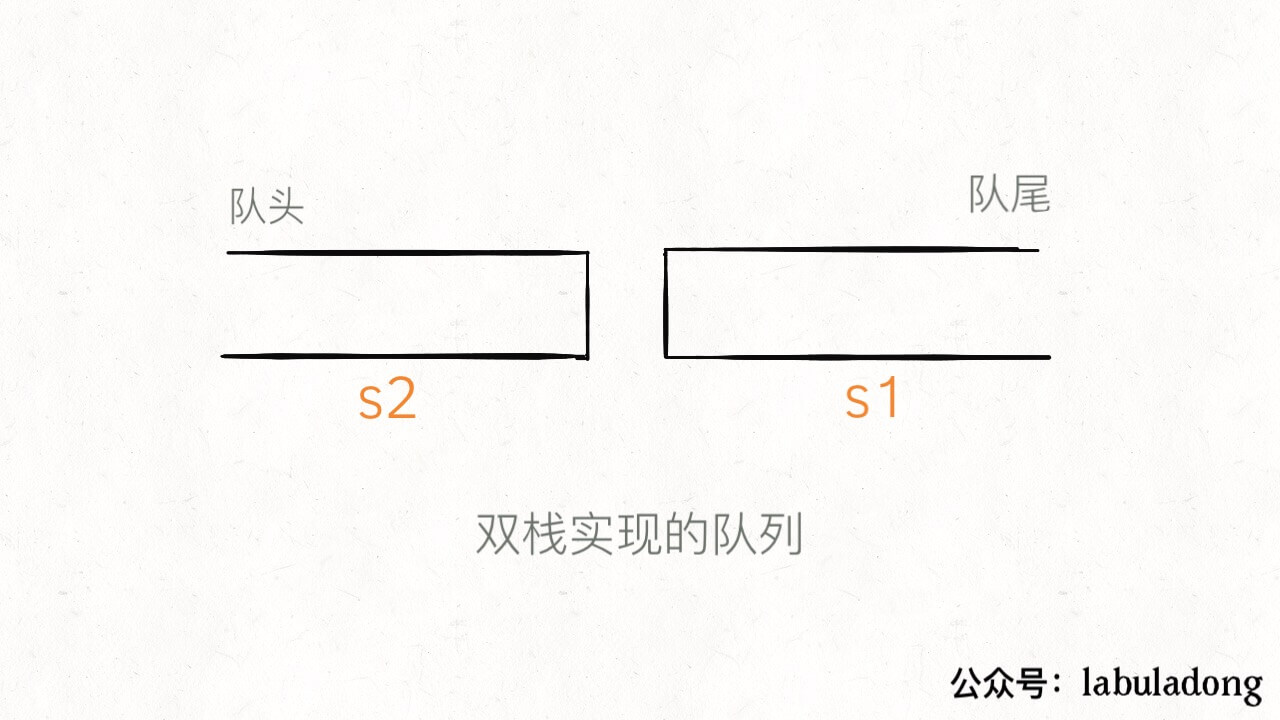
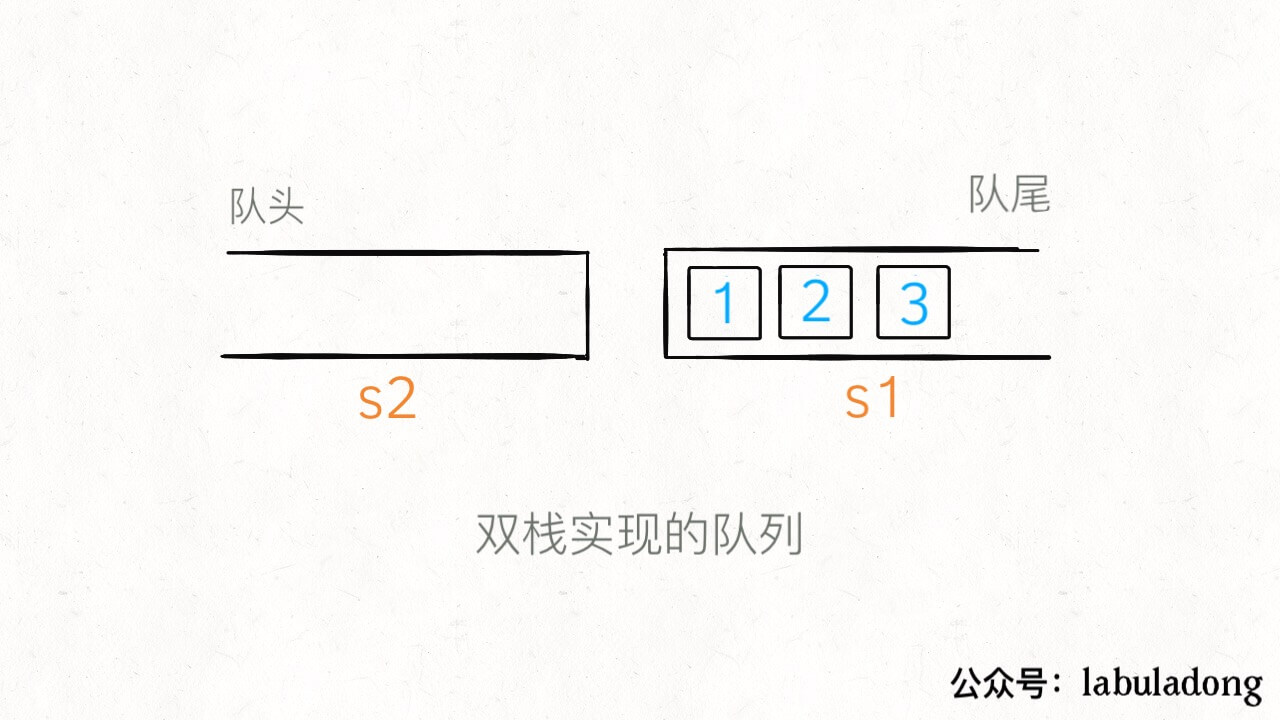
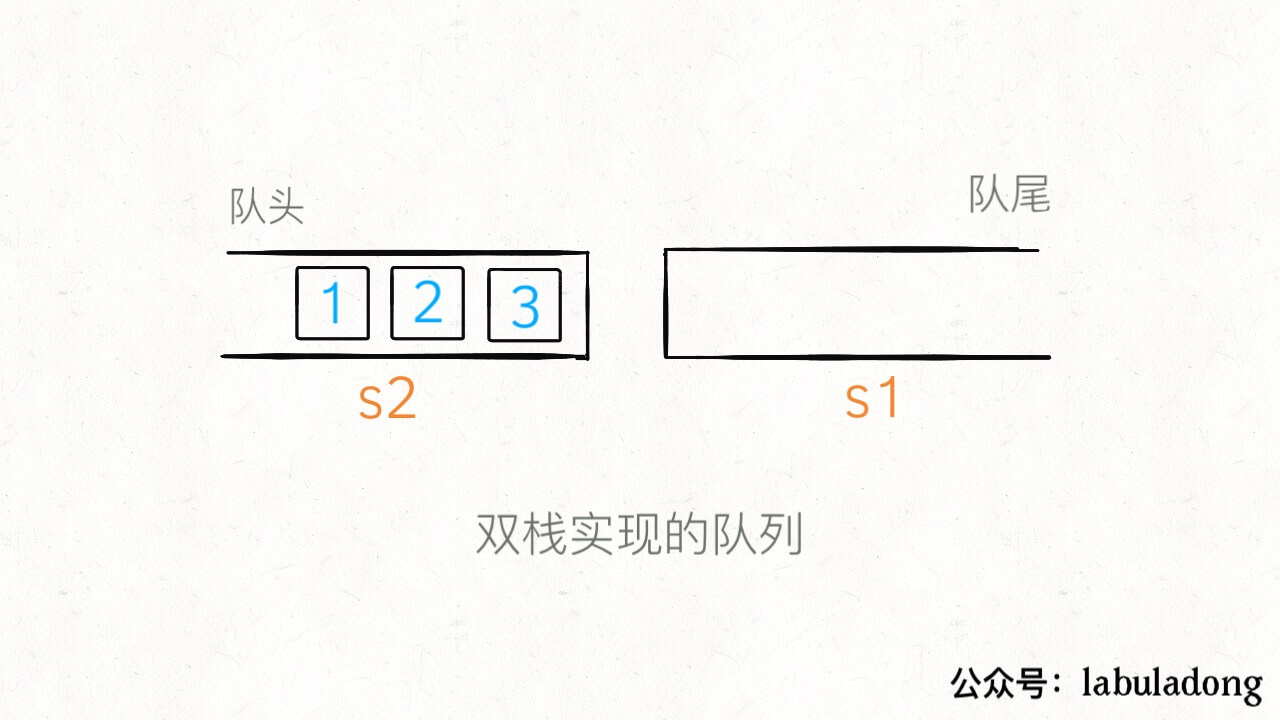
 1 class MyQueue {
 2 private:
 3     stack<int> s1;
 4     stack<int> s2;
 5 public:
 6     /** Initialize your data structure here. */
 7     MyQueue() {
 8
 9     }
10
11     /** Push element x to the back of queue. */
12     void push(int x) {
13         s2.push(x);
14     }
15
16     /** Removes the element from in front of queue and returns that element. */
17     int pop() {
18         int v = peek();
19         s1.pop();
20         return v;
21     }
22
23     /** Get the front element. */
24     int peek() {
25         if(s1.empty()) {
26             while(!s2.empty()) {
27                 s1.push(s2.top());
28                 s2.pop();
29             }
30         }
31         return s1.top();
32     }
33
34     /** Returns whether the queue is empty. */
35     bool empty() {
36         return s1.empty() && s2.empty();
37     }
38 };
39
40 /**
41  * Your MyQueue object will be instantiated and called as such:
42  * MyQueue* obj = new MyQueue();
43  * obj->push(x);
44  * int param_2 = obj->pop();
45  * int param_3 = obj->peek();
46  * bool param_4 = obj->empty();
47  */

 浙公网安备 33010602011771号