SpringMVC执行原理
图解流程图
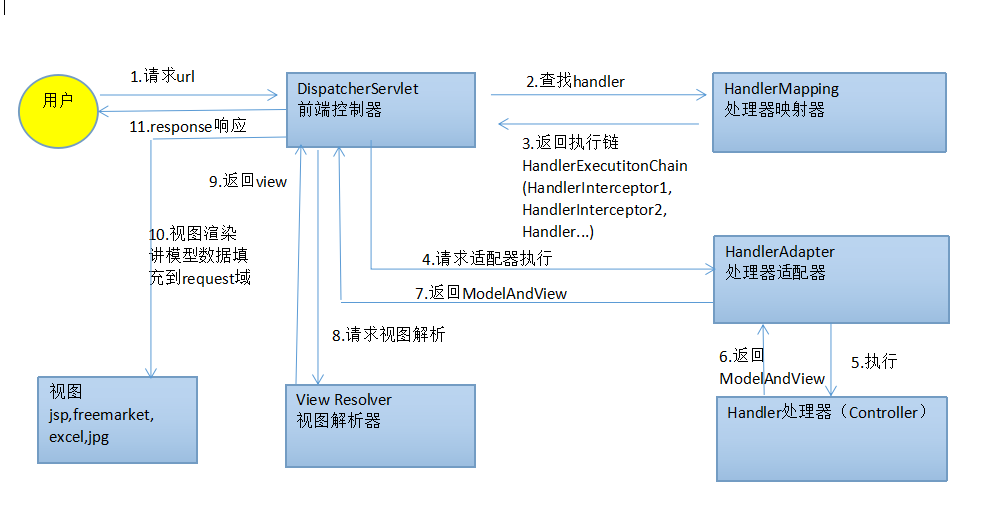
SpringMVC执行流程
- 用户发送请求至前端控制器 DispatcherServlet
- DispatcherServlet 收到请求调用处理器映射器 HandlerMapping。
- 处理器映射器根据请求url找到具体的处理器,生成处理器执行链 HandlerExecutionChain(包括处理器对象和处理器拦截器)一并返回给 DispatcherServlet。
- DispatcherServlet 根据处理器 Handler 获取处理器适配器 HandlerAdapter 执行 HandlerAdapter 处理一系列的操作,如:参数封装,数据格式转换,数据验证等操作
- 执行处理器 Handler(Controller,也叫页面控制器)。
- Handler 执行完成返回 ModelAndView
- HandlerAdapter 将 Handler 执行结果 ModelAndView 返回到 DispatcherServlet
- DispatcherServlet 将 ModelAndView 传给 ViewReslover 视图解析器
- ViewReslover 解析后返回具体View
- DispatcherServlet 对View进行渲染视图(即将模型数据model填充至视图中)。
- DispatcherServle t响应用户。
其他说法
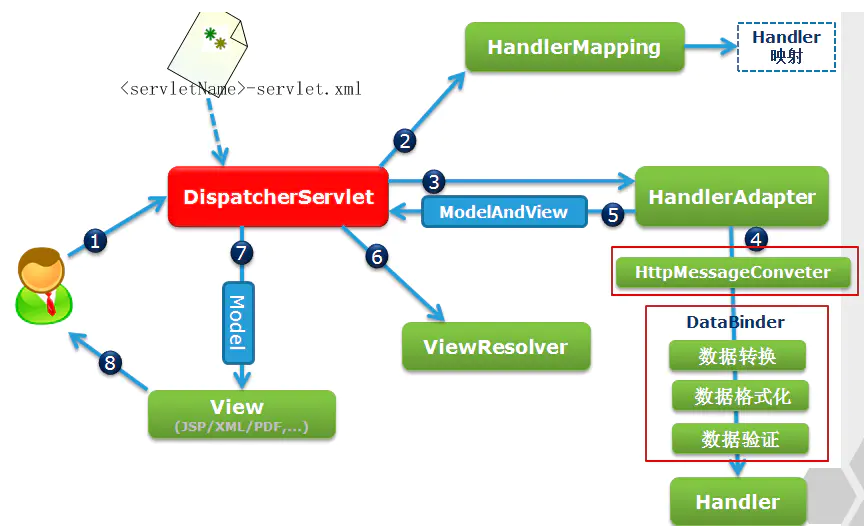

常用的组件
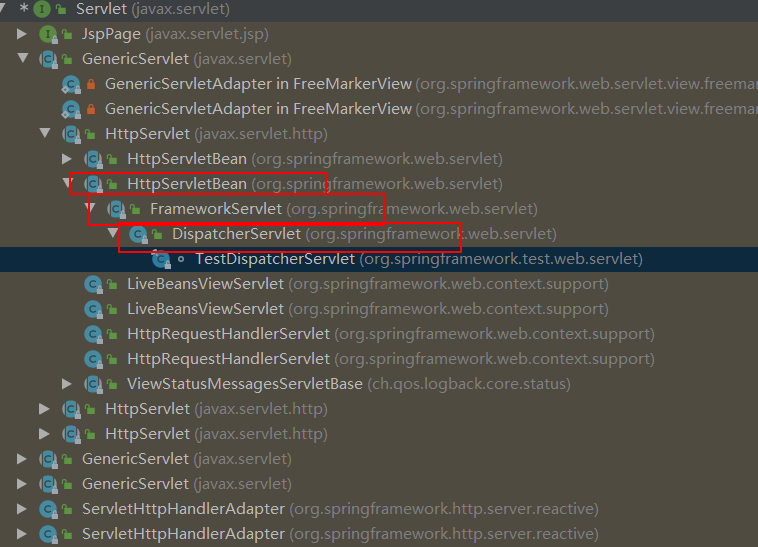
- SpringMVC中的Servlet一共有三个层次,分别是HttpServletBean、FrameworkServlet和 DispatcherServlet。
- HttpServletBean直接继承自java的HttpServlet,其作用是将Servlet中配置的参数设置到相应的属性;
1. HandlerMapping
- 是用来查找Handler的。在SpringMVC中会有很多请求,每个请求都需要一个Handler处理,具体接收到一个请求之后使用哪个Handler进行处理呢?这就是HandlerMapping需要做的事。
2. HandlerAdapter
- 从名字上看,它就是一个适配器。因为SpringMVC中的Handler可以是任意的形式,只要能处理请求就ok,但是Servlet需要的处理方法的结构却是固定的,都是以request和response为参数的方法。如何让固定的Servlet处理方法调用灵活的Handler来进行处理呢?这就是HandlerAdapter要做的事情。
小结:Handler是用来干活的工具;HandlerMapping用于根据需要干的活找到相应的工具;HandlerAdapter是使用工具干活的人。
3. HandlerExceptionResolver
- 其它组件都是用来干活的。在干活的过程中难免会出现问题,出问题后怎么办呢?这就需要有一个专门的角色对异常情况进行处理,在SpringMVC中就是HandlerExceptionResolver。具体来说,此组件的作用是根据异常设置ModelAndView,之后再交给render方法进行渲染。
4. ViewResolver
- ViewResolver用来将String类型的视图名和Locale解析为View类型的视图。View是用来渲染页面的,也就是将程序返回的参数填入模板里,生成html(也可能是其它类型)文件。这里就有两个关键问题:使用哪个模板?用什么技术(规则)填入参数?这其实是ViewResolver主要要做的工作,ViewResolver需要找到渲染所用的模板和所用的技术(也就是视图的类型)进行渲染,具体的渲染过程则交由不同的视图自己完成。
5. RequestToViewNameTranslator
- ViewName是根据ViewName查找View,但有的Handler处理完后并没有设置View也没有设置ViewName,这时就需要从request获取ViewName了,如何从request中获取ViewName就是RequestToViewNameTranslator要做的事情了。RequestToViewNameTranslator在Spring MVC容器里只可以配置一个,所以所有request到ViewName的转换规则都要在一个Translator里面全部实现。
6. LocaleResolver
- 解析视图需要两个参数:一是视图名,另一个是Locale。视图名是处理器返回的,Locale是从哪里来的?这就是LocaleResolver要做的事情。LocaleResolver用于从request解析出Locale,Locale就是zh-cn之类,表示一个区域,有了这个就可以对不同区域的用户显示不同的结果。SpringMVC主要有两个地方用到了Locale:一是ViewResolver视图解析的时候;二是用到国际化资源或者主题的时候。
7. ThemeResolver
- 用于解析主题。SpringMVC中一个主题对应一个properties文件,里面存放着跟当前主题相关的所有资源、如图片、css样式等。SpringMVC的主题也支持国际化,同一个主题不同区域也可以显示不同的风格。SpringMVC中跟主题相关的类有 ThemeResolver、ThemeSource和Theme。主题是通过一系列资源来具体体现的,要得到一个主题的资源,首先要得到资源的名称,这是ThemeResolver的工作。然后通过主题名称找到对应的主题(可以理解为一个配置)文件,这是ThemeSource的工作。最后从主题中获取资源就可以了。
8. MultipartResolver
- 用于处理上传请求。处理方法是将普通的request包装成MultipartHttpServletRequest,后者可以直接调用getFile方法获取File,如果上传多个文件,还可以调用getFileMap得到FileName->File结构的Map。此组件中一共有三个方法,作用分别是判断是不是上传请求,将request包装成MultipartHttpServletRequest、处理完后清理上传过程中产生的临时资源。
9. FlashMapManager
- 用来管理FlashMap的,FlashMap主要用在redirect中传递参数。
SpringMVC执行流程
DispatcherServlet初始化过程
- DispatcherServlet 本质上是一个 Servlet,所以天然的遵循 Servlet 的生命周期。所以宏观上是 Servlet 生命周期来进行调度。

a>初始化WebApplicationContext
- 所在类:org.springframework.web.servlet.FrameworkServlet
protected WebApplicationContext initWebApplicationContext() {
    WebApplicationContext rootContext =
        WebApplicationContextUtils.getWebApplicationContext(getServletContext());
    WebApplicationContext wac = null;

    if (this.webApplicationContext != null) {
        // A context instance was injected at construction time -> use it
        wac = this.webApplicationContext;
        if (wac instanceof ConfigurableWebApplicationContext) {
            ConfigurableWebApplicationContext cwac = (ConfigurableWebApplicationContext) wac;
            if (!cwac.isActive()) {
                // The context has not yet been refreshed -> provide services such as
                // setting the parent context, setting the application context id, etc
                if (cwac.getParent() == null) {
                    // The context instance was injected without an explicit parent -> set
                    // the root application context (if any; may be null) as the parent
                    cwac.setParent(rootContext);
                }
                configureAndRefreshWebApplicationContext(cwac);
            }
        }
    }
    if (wac == null) {
        // No context instance was injected at construction time -> see if one
        // has been registered in the servlet context. If one exists, it is assumed
        // that the parent context (if any) has already been set and that the
        // user has performed any initialization such as setting the context id
        wac = findWebApplicationContext();
    }
    if (wac == null) {
        // No context instance is defined for this servlet -> create a local one
        // 创建WebApplicationContext
        wac = createWebApplicationContext(rootContext);
    }

    if (!this.refreshEventReceived) {
        // Either the context is not a ConfigurableApplicationContext with refresh
        // support or the context injected at construction time had already been
        // refreshed -> trigger initial onRefresh manually here.
        synchronized (this.onRefreshMonitor) {
            // 刷新WebApplicationContext
            onRefresh(wac);
        }
    }

    if (this.publishContext) {
        // Publish the context as a servlet context attribute.
        // 将IOC容器在应用域共享
        String attrName = getServletContextAttributeName();
        getServletContext().setAttribute(attrName, wac);
    }

    return wac;
}
b> 创建WebApplicationContext
- 所在类:org.springframework.web.servlet.FrameworkServlet
protected WebApplicationContext createWebApplicationContext(@Nullable ApplicationContext parent) {
    Class<?> contextClass = getContextClass();
    if (!ConfigurableWebApplicationContext.class.isAssignableFrom(contextClass)) {
        throw new ApplicationContextException(
            "Fatal initialization error in servlet with name '" + getServletName() +
            "': custom WebApplicationContext class [" + contextClass.getName() +
            "] is not of type ConfigurableWebApplicationContext");
    }
    // 通过反射创建 IOC 容器对象
    ConfigurableWebApplicationContext wac =
        (ConfigurableWebApplicationContext) BeanUtils.instantiateClass(contextClass);

    wac.setEnvironment(getEnvironment());
    // 设置父容器
    wac.setParent(parent);
    String configLocation = getContextConfigLocation();
    if (configLocation != null) {
        wac.setConfigLocation(configLocation);
    }
    configureAndRefreshWebApplicationContext(wac);

    return wac;
}
c> DispatcherServlet初始化策略
-
FrameworkServlet创建WebApplicationContext后,刷新容器,调用onRefresh(wac),此方法在DispatcherServlet中进行了重写,调用了initStrategies(context)方法,初始化策略,即初始化DispatcherServlet的各个组件
-
所在类:org.springframework.web.servlet.DispatcherServlet
protected void initStrategies(ApplicationContext context) {
   initMultipartResolver(context);
   initLocaleResolver(context);
   initThemeResolver(context);
   initHandlerMappings(context); //找控制器的
   initHandlerAdapters(context); //找到控制器来调用控制器的
   initHandlerExceptionResolvers(context);  //如果有异常处理异常
   initRequestToViewNameTranslator(context);
   initViewResolvers(context); //当我们请求处理完成之后,我们返回的视图名称要被视图解析器解析,然后找到对应的视图渲染
   initFlashMapManager(context);
}
DispatcherServlet 调用组件处理请求
a>processRequest()
- FrameworkServlet重写HttpServlet中的service()和doXxx(),这些方法中调用了processRequest(request, response)
- 所在类:org.springframework.web.servlet.FrameworkServlet
protected final void processRequest(HttpServletRequest request, HttpServletResponse response)
    throws ServletException, IOException {

    long startTime = System.currentTimeMillis();
    Throwable failureCause = null;

    LocaleContext previousLocaleContext = LocaleContextHolder.getLocaleContext();
    LocaleContext localeContext = buildLocaleContext(request);

    RequestAttributes previousAttributes = RequestContextHolder.getRequestAttributes();
    ServletRequestAttributes requestAttributes = buildRequestAttributes(request, response, previousAttributes);

    WebAsyncManager asyncManager = WebAsyncUtils.getAsyncManager(request);
    asyncManager.registerCallableInterceptor(FrameworkServlet.class.getName(), new RequestBindingInterceptor());

    initContextHolders(request, localeContext, requestAttributes);

    try {
		// 执行服务,doService()是一个抽象方法,在DispatcherServlet中进行了重写
        doService(request, response);
    }
    catch (ServletException | IOException ex) {
        failureCause = ex;
        throw ex;
    }
    catch (Throwable ex) {
        failureCause = ex;
        throw new NestedServletException("Request processing failed", ex);
    }

    finally {
        resetContextHolders(request, previousLocaleContext, previousAttributes);
        if (requestAttributes != null) {
            requestAttributes.requestCompleted();
        }
        logResult(request, response, failureCause, asyncManager);
        publishRequestHandledEvent(request, response, startTime, failureCause);
    }
}
b> doService()
@Override
protected void doService(HttpServletRequest request, HttpServletResponse response) throws Exception {
    logRequest(request);

    // Keep a snapshot of the request attributes in case of an include,
    // to be able to restore the original attributes after the include.
    Map<String, Object> attributesSnapshot = null;
    if (WebUtils.isIncludeRequest(request)) {
        attributesSnapshot = new HashMap<>();
        Enumeration<?> attrNames = request.getAttributeNames();
        while (attrNames.hasMoreElements()) {
            String attrName = (String) attrNames.nextElement();
            if (this.cleanupAfterInclude || attrName.startsWith(DEFAULT_STRATEGIES_PREFIX)) {
                attributesSnapshot.put(attrName, request.getAttribute(attrName));
            }
        }
    }

    // Make framework objects available to handlers and view objects.
    request.setAttribute(WEB_APPLICATION_CONTEXT_ATTRIBUTE, getWebApplicationContext());
    request.setAttribute(LOCALE_RESOLVER_ATTRIBUTE, this.localeResolver);
    request.setAttribute(THEME_RESOLVER_ATTRIBUTE, this.themeResolver);
    request.setAttribute(THEME_SOURCE_ATTRIBUTE, getThemeSource());

    if (this.flashMapManager != null) {
        FlashMap inputFlashMap = this.flashMapManager.retrieveAndUpdate(request, response);
        if (inputFlashMap != null) {
            request.setAttribute(INPUT_FLASH_MAP_ATTRIBUTE, Collections.unmodifiableMap(inputFlashMap));
        }
        request.setAttribute(OUTPUT_FLASH_MAP_ATTRIBUTE, new FlashMap());
        request.setAttribute(FLASH_MAP_MANAGER_ATTRIBUTE, this.flashMapManager);
    }

    RequestPath requestPath = null;
    if (this.parseRequestPath && !ServletRequestPathUtils.hasParsedRequestPath(request)) {
        requestPath = ServletRequestPathUtils.parseAndCache(request);
    }

    try {
        // 处理请求和响应
        doDispatch(request, response);
    }
    finally {
        if (!WebAsyncUtils.getAsyncManager(request).isConcurrentHandlingStarted()) {
            // Restore the original attribute snapshot, in case of an include.
            if (attributesSnapshot != null) {
                restoreAttributesAfterInclude(request, attributesSnapshot);
            }
        }
        if (requestPath != null) {
            ServletRequestPathUtils.clearParsedRequestPath(request);
        }
    }
}
c> doDispatche()
- 所在类:org.springframework.web.servlet.DispatcherServlet
protected void doDispatch(HttpServletRequest request, HttpServletResponse response) throws Exception {
    HttpServletRequest processedRequest = request;
    HandlerExecutionChain mappedHandler = null;
    boolean multipartRequestParsed = false;

    WebAsyncManager asyncManager = WebAsyncUtils.getAsyncManager(request);

    try {
        ModelAndView mv = null;
        Exception dispatchException = null;

        try {
            processedRequest = checkMultipart(request);
            multipartRequestParsed = (processedRequest != request);

            // Determine handler for the current request.
            /*
            	mappedHandler:调用链
                包含handler、interceptorList、interceptorIndex
            	handler:浏览器发送的请求所匹配的控制器方法
            	interceptorList:处理控制器方法的所有拦截器集合
            	interceptorIndex:拦截器索引,控制拦截器afterCompletion()的执行
            */
            mappedHandler = getHandler(processedRequest);
            if (mappedHandler == null) {
                noHandlerFound(processedRequest, response);
                return;
            }

            // Determine handler adapter for the current request.
           	// 通过控制器方法创建相应的处理器适配器,调用所对应的控制器方法
            HandlerAdapter ha = getHandlerAdapter(mappedHandler.getHandler());

            // Process last-modified header, if supported by the handler.
            String method = request.getMethod();
            boolean isGet = "GET".equals(method);
            if (isGet || "HEAD".equals(method)) {
                long lastModified = ha.getLastModified(request, mappedHandler.getHandler());
                if (new ServletWebRequest(request, response).checkNotModified(lastModified) && isGet) {
                    return;
                }
            }

            // 调用拦截器的preHandle()
            if (!mappedHandler.applyPreHandle(processedRequest, response)) {
                return;
            }

            // Actually invoke the handler.
            // 由处理器适配器调用具体的控制器方法,最终获得ModelAndView对象
            mv = ha.handle(processedRequest, response, mappedHandler.getHandler());

            if (asyncManager.isConcurrentHandlingStarted()) {
                return;
            }

            applyDefaultViewName(processedRequest, mv);
            // 调用拦截器的postHandle()
            mappedHandler.applyPostHandle(processedRequest, response, mv);
        }
        catch (Exception ex) {
            dispatchException = ex;
        }
        catch (Throwable err) {
            // As of 4.3, we're processing Errors thrown from handler methods as well,
            // making them available for @ExceptionHandler methods and other scenarios.
            dispatchException = new NestedServletException("Handler dispatch failed", err);
        }
        // 后续处理:处理模型数据和渲染视图
        processDispatchResult(processedRequest, response, mappedHandler, mv, dispatchException);
    }
    catch (Exception ex) {
        triggerAfterCompletion(processedRequest, response, mappedHandler, ex);
    }
    catch (Throwable err) {
        triggerAfterCompletion(processedRequest, response, mappedHandler,
                               new NestedServletException("Handler processing failed", err));
    }
    finally {
        if (asyncManager.isConcurrentHandlingStarted()) {
            // Instead of postHandle and afterCompletion
            if (mappedHandler != null) {
                mappedHandler.applyAfterConcurrentHandlingStarted(processedRequest, response);
            }
        }
        else {
            // Clean up any resources used by a multipart request.
            if (multipartRequestParsed) {
                cleanupMultipart(processedRequest);
            }
        }
    }
}
d> processDispatchResult()
- 所在类:org.springframework.web.servlet.DispatcherServlet
private void processDispatchResult(HttpServletRequest request, HttpServletResponse response,
                                   @Nullable HandlerExecutionChain mappedHandler, @Nullable ModelAndView mv,
                                   @Nullable Exception exception) throws Exception {

    boolean errorView = false;

    if (exception != null) {
        if (exception instanceof ModelAndViewDefiningException) {
            logger.debug("ModelAndViewDefiningException encountered", exception);
            mv = ((ModelAndViewDefiningException) exception).getModelAndView();
        }
        else {
            Object handler = (mappedHandler != null ? mappedHandler.getHandler() : null);
            mv = processHandlerException(request, response, handler, exception);
            errorView = (mv != null);
        }
    }

    // Did the handler return a view to render?
    if (mv != null && !mv.wasCleared()) {
        // 处理模型数据和渲染视图
        render(mv, request, response);
        if (errorView) {
            WebUtils.clearErrorRequestAttributes(request);
        }
    }
    else {
        if (logger.isTraceEnabled()) {
            logger.trace("No view rendering, null ModelAndView returned.");
        }
    }

    if (WebAsyncUtils.getAsyncManager(request).isConcurrentHandlingStarted()) {
        // Concurrent handling started during a forward
        return;
    }

    if (mappedHandler != null) {
        // Exception (if any) is already handled..
        // 调用拦截器的afterCompletion()
        mappedHandler.triggerAfterCompletion(request, response, null);
    }
}
其他流程看另外一篇笔记

 浙公网安备 33010602011771号