Pgpool-II + PostgreSQL 一主两备源码编译环境搭建
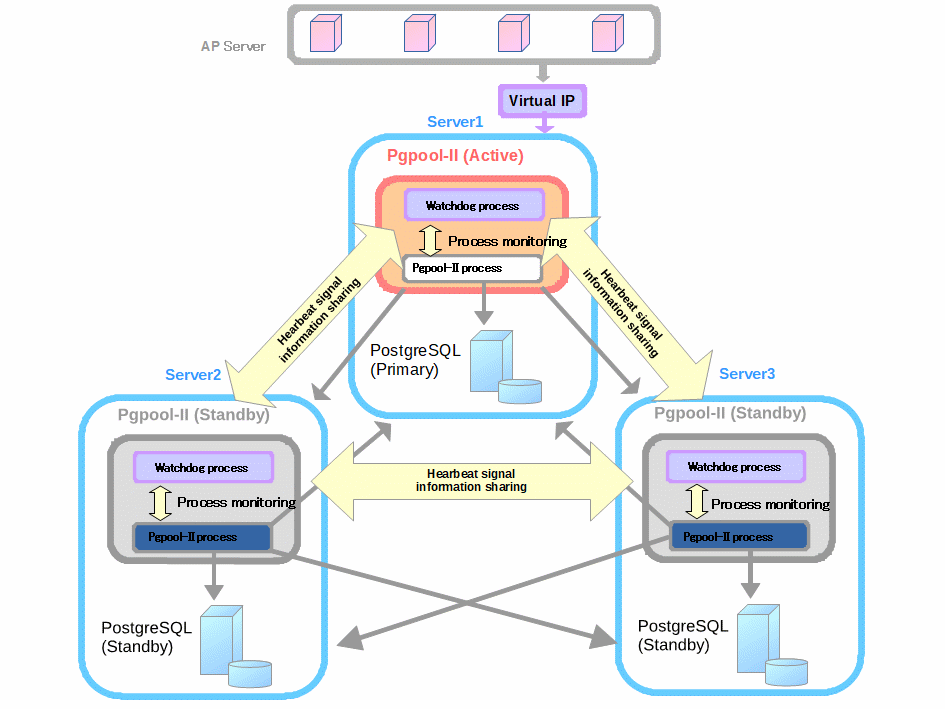


主机IP虚拟IP
server1 192.168.222.141 192.168.222.200
server2 192.168.222.142  
server3 192.168.222.143  
ItemValueDetail
PostgreSQL 版本 10.10  
安装路径 /opt/PG-10.10  
端口 5432  
$PGDATA /opt/PG-10.10/data  
Archive mode on /opt/PG-10.10/archivedir
开机自启 Disable  
     
Pgpool-II Version 4.0.6  
安装路径 /opt/pgpool-406  
端口 9999 Pgpool 连接端口
端口 9898 PCP 端口
端口 9000 watchdog 端口
端口 9694 Watchdog 心跳
主配置文件 /opt/pgpool-406/etc/pgpool.conf  
Pgpool 启动用户 root 可以实现非root运行
运行模式 streaming replication mode  
Watchdog on  
开机自启 Disable  

一、所有节点配置

三节点关闭防火墙(或打开需要使用的端口):
    systemctl stop firewalld.service 
    systemctl disable firewalld.service 
    
三节点创建用户:
    adduser postgres && passwd postgres

1、编译安装数据库与pgpool

# pg
./configure --prefix=/opt/PG-10.10 --enable-debug
make && make install && cd contrib && make && make install && cd ..

# pgpool
export PATH=/opt/PG-10.10/bin:$PATH
./configure --prefix=/opt/pgpool-406
make && make install
cd pgpool-II-4.0.6/src/sql/pgpool-recovery
make && make install
# /etc/profile 文件配置全局环境变量
export PATH=/opt/pgpool-406/bin:/opt/PG-10.10/bin:$PATH

# root 用户执行使其生效
source /etc/profile

2、三节点互信(各个节点都要执行一遍)

# root
ssh-keygen -t rsa
ssh-copy-id -i  .ssh/id_rsa.pub root@192.168.222.141
ssh-copy-id -i  .ssh/id_rsa.pub root@192.168.222.142
ssh-copy-id -i  .ssh/id_rsa.pub root@192.168.222.143
ssh-copy-id -i  .ssh/id_rsa.pub postgres@192.168.222.141
ssh-copy-id -i  .ssh/id_rsa.pub postgres@192.168.222.142
ssh-copy-id -i  .ssh/id_rsa.pub postgres@192.168.222.143

# postgres
ssh-keygen -t rsa
ssh-copy-id -i  .ssh/id_rsa.pub postgres@192.168.222.141
ssh-copy-id -i  .ssh/id_rsa.pub postgres@192.168.222.142
ssh-copy-id -i  .ssh/id_rsa.pub postgres@192.168.222.143

2、用户主目录创建密码文件,实现免密访问

# postgres 用户
su - postgres
echo "192.168.222.141:5432:replication:repl:123456" >> ~/.pgpass
echo "192.168.222.142:5432:replication:repl:123456" >> ~/.pgpass
echo "192.168.222.143:5432:replication:repl:123456" >> ~/.pgpass
chmod 600 ~/.pgpass

scp /home/postgres/.pgpass postgres@192.168.222.142:/home/postgres/
scp /home/postgres/.pgpass postgres@192.168.222.143:/home/postgres/

# --------------------------------------------------------------
# root 用户
echo 'localhost:9898:pgpool:pgpool' > ~/.pcppass
chmod 600 ~/.pcppass

scp /root/.pcppass root@192.168.222.142:/root/
scp /root/.pcppass root@192.168.222.143:/root/

3、创建相关目录

# root
chmod 777 /opt/PG-10.10/
mkdir /opt/pgpool-406/log/ && touch /opt/pgpool-406/log/pgpool.log

ssh root@192.168.222.142 "chmod 777 /opt/PG-10.10/ && mkdir /opt/pgpool-406/log/ && touch /opt/pgpool-406/log/pgpool.log"
ssh root@192.168.222.143 "chmod 777 /opt/PG-10.10/ && mkdir /opt/pgpool-406/log/ && touch /opt/pgpool-406/log/pgpool.log"

# postgres
su - postgres
mkdir /opt/PG-10.10/archivedir
ssh postgres@192.168.222.142 "mkdir /opt/PG-10.10/archivedir"
ssh postgres@192.168.222.143 "mkdir /opt/PG-10.10/archivedir"

二、PRIMARY 主节点配置

1、数据库配置

初始化

su - postgres
/opt/PG-10.10/bin/initdb /opt/PG-10.10/data

vim /opt/PG-10.10/data/postgresql.conf

listen_addresses = '*'
archive_mode = on
archive_command = 'cp "%p" "/opt/PG-10.10/archivedir"'
max_wal_senders = 10
max_replication_slots = 10
wal_level = replica

启动数据库

su - postgres 
/opt/PG-10.10/bin/pg_ctl -D /opt/PG-10.10/data start

主库修改 postgres 的密码、创建流复制用户 repl

ALTER USER postgres WITH PASSWORD '123456';
CREATE ROLE pgpool WITH PASSWORD '123456' LOGIN;
CREATE ROLE repl WITH PASSWORD '123456' REPLICATION LOGIN;

创建测试表 tb_pgpool

CREATE TABLE tb_pgpool (id serial,age bigint,insertTime timestamp default now());
insert into tb_pgpool (age) values (1);

/opt/PG-10.10/data/pg_hba.conf

echo "host    all             all             192.168.222.0/24            trust" >> /opt/PG-10.10/data/pg_hba.conf
echo "host    replication     all             192.168.222.0/24            trust" >> /opt/PG-10.10/data/pg_hba.conf

启动主库

pg_ctl -D /opt/PG-10.10/data restart

#可以查询主备库情况
psql -U postgres -c 'select * from pg_is_in_recovery();'  
2、pgpool配置
cp /opt/pgpool-406/etc/pgpool.conf.sample-stream /opt/pgpool-406/etc/pgpool.conf
listen_addresses = '*'

sr_check_user = 'pgpool'
sr_check_password = ''

health_check_period = 5
health_check_timeout = 30
health_check_user = 'pgpool'
health_check_password = ''
health_check_max_retries = 3

backend_hostname0 = '192.168.222.141'
backend_port0 = 5432
backend_weight0 = 1
backend_data_directory0 = '/opt/PG-10.10/data'
backend_flag0 = 'ALLOW_TO_FAILOVER'

backend_hostname1 = '192.168.222.142'
backend_port1 = 5432
backend_weight1 = 1
backend_data_directory1 = '/opt/PG-10.10/data'
backend_flag1 = 'ALLOW_TO_FAILOVER'

backend_hostname2 = '192.168.222.143'
backend_port2 = 5432
backend_weight2 = 1
backend_data_directory2 = '/opt/PG-10.10/data'
backend_flag2 = 'ALLOW_TO_FAILOVER'

failover_command = '/opt/pgpool-406/etc/failover.sh %d %h %p %D %m %H %M %P %r %R'
follow_master_command = '/opt/pgpool-406/etc/follow_master.sh %d %h %p %D %m %M %H %P %r %R'

recovery_user = 'postgres'
recovery_password = ''
recovery_1st_stage_command = 'recovery_1st_stage'

enable_pool_hba = on

use_watchdog = on
delegate_IP = '192.168.222.200'

if_up_cmd = 'ip addr add $_IP_$/24 dev ens33 label ens33:0'
if_down_cmd = 'ip addr del $_IP_$/24 dev ens33'
arping_cmd = 'arping -U $_IP_$ -w 1 -I ens33'

if_cmd_path = '/sbin'
arping_path = '/usr/sbin'

wd_hostname = '192.168.222.141'
wd_port = 9000

other_pgpool_hostname0 = '192.168.222.142'
other_pgpool_port0 = 9999
other_wd_port0 = 9000
other_pgpool_hostname1 = '192.168.222.143'
other_pgpool_port1 = 9999
other_wd_port1 = 9000

heartbeat_destination0 = '192.168.222.142'
heartbeat_destination_port0 = 9694
heartbeat_device0 = ''
heartbeat_destination1 = '192.168.222.143'
heartbeat_destination_port1 = 9694
heartbeat_device1 = ''

log_destination = 'stderr,syslog'
syslog_facility = 'LOCAL1'

pid_file_name = '/opt/pgpool-406/pgpool.pid'
memqcache_oiddir = '/opt/pgpool-406/log/pgpool/oiddir'

创建脚本(详见附录)

# root
vim /opt/pgpool-406/etc/failover.sh
vim /opt/pgpool-406/etc/follow_master.sh
chmod +x /opt/pgpool-406/etc/{failover.sh,follow_master.sh}
scp /opt/pgpool-406/etc/failover.sh /opt/pgpool-406/etc/follow_master.sh root@192.168.222.142:/opt/pgpool-406/etc/
scp /opt/pgpool-406/etc/failover.sh /opt/pgpool-406/etc/follow_master.sh root@192.168.222.143:/opt/pgpool-406/etc/

# postgres
su - postgres
vim /opt/PG-10.10/data/recovery_1st_stage
vim /opt/PG-10.10/data/pgpool_remote_start
chmod +x /opt/PG-10.10/data/{recovery_1st_stage,pgpool_remote_start}

PRIMARY 主节点创建扩展

psql template1 -c "CREATE EXTENSION pgpool_recovery"

/opt/pgpool-406/etc/pool_hba.conf
(cp /opt/pgpool-406/etc/pool_hba.conf.sample /opt/pgpool-406/etc/pool_hba.conf)

host    all         pgpool           0.0.0.0/0          md5
host    all         postgres         0.0.0.0/0          md5

/opt/pgpool-406/etc/pool_passwd

# root
pg_md5 -p -m -u postgres
pg_md5 -p -m -u pgpool
cat /opt/pgpool-406/etc/pool_passwd

/opt/pgpool-406/etc/pcp.conf
(cp /opt/pgpool-406/etc/pcp.conf.sample /opt/pgpool-406/etc/pcp.conf)

pg_md5 123456 # 生成加密文本

echo "postgres:e10adc3949ba59abbe56e057f20f883e" >> /opt/pgpool-406/etc/pcp.conf
echo "pgpool:e10adc3949ba59abbe56e057f20f883e" >> /opt/pgpool-406/etc/pcp.conf

各配置文件发送到备节点

cd /opt/pgpool-406/etc/
scp pcp.conf pgpool.conf pool_passwd pool_hba.conf root@192.168.222.142:/opt/pgpool-406/etc/
scp pcp.conf pgpool.conf pool_passwd pool_hba.conf root@192.168.222.143:/opt/pgpool-406/etc/

三、备节点配置

1、standby01配置pgpool-Ⅱ

在主节点发送过来的配置文件基础上,修改 pgpool.conf 部分参数,如下

wd_hostname = '192.168.222.142' #本机
wd_port = 9000

other_pgpool_hostname0 = '192.168.222.141' # 节点1
other_pgpool_port0 = 9999
other_wd_port0 = 9000
other_pgpool_hostname1 = '192.168.222.143' # 节点3
other_pgpool_port1 = 9999
other_wd_port1 = 9000

heartbeat_destination0 = '192.168.222.141' # 节点1
heartbeat_destination_port0 = 9694
heartbeat_device0 = ''
heartbeat_destination1 = '192.168.222.143' # 节点3
heartbeat_destination_port1 = 9694
heartbeat_device1 = ''

2、standby02配置pgpool-Ⅱ

在主节点发送过来的配置文件基础上,修改 pgpool.conf 部分参数,如下

wd_hostname = '192.168.222.143' #本机
wd_port = 9000

other_pgpool_hostname0 = '192.168.222.141' # 节点1
other_pgpool_port0 = 9999
other_wd_port0 = 9000
other_pgpool_hostname1 = '192.168.222.142' # 节点2
other_pgpool_port1 = 9999
other_wd_port1 = 9000

heartbeat_destination0 = '192.168.222.141' # 节点1
heartbeat_destination_port0 = 9694
heartbeat_device0 = ''
heartbeat_destination1 = '192.168.222.142' # 节点2
heartbeat_destination_port1 = 9694
heartbeat_device1 = ''

四、使用

1、启动、关闭

启动:
    1、先启动数据库服务
    2、启动pgpool服务:
    	/opt/pgpool-406/bin/pgpool -n -d
    3、先主后从
    
关闭:
    1、启关闭pgpool服务:
    	/opt/pgpool-406/bin/pgpool stop
    2、关闭数据库服务
    3、先从后主

2、设置备件点

pcp_recovery_node -h 192.168.222.200 -p 9898 -U pgpool -n 1
pcp_recovery_node -h 192.168.222.200 -p 9898 -U pgpool -n 2

3、查看节点

psql -h 192.168.222.200 -p 9999 -U pgpool postgres -c "show pool_nodes"

4、查看 watchdog

pcp_watchdog_info -h 192.168.222.200 -p 9898 -U pgpool

5、故障转移测试

pg_ctl -D /opt/PG-10.10/data -m immediate stop # 主节点关闭数据库,模拟故障

psql -h 192.168.222.200 -p 9999 -U pgpool postgres -c "show pool_nodes" # 查看状态

6、节点恢复

pcp_recovery_node -h 192.168.222.200 -p 9898 -U pgpool -n 0

附件:

1、/opt/pgpool-406/etc/pgpool.conf 完整文件
# ----------------------------
# pgPool-II configuration file
# ----------------------------
#
# This file consists of lines of the form:
#
#   name = value
#
# Whitespace may be used.  Comments are introduced with "#" anywhere on a line.
# The complete list of parameter names and allowed values can be found in the
# pgPool-II documentation.
#
# This file is read on server startup and when the server receives a SIGHUP
# signal.  If you edit the file on a running system, you have to SIGHUP the
# server for the changes to take effect, or use "pgpool reload".  Some
# parameters, which are marked below, require a server shutdown and restart to
# take effect.
#


#------------------------------------------------------------------------------
# CONNECTIONS
#------------------------------------------------------------------------------

# - pgpool Connection Settings -

listen_addresses = '*'
                                   # Host name or IP address to listen on:
                                   # '*' for all, '' for no TCP/IP connections
                                   # (change requires restart)
port = 9999
                                   # Port number
                                   # (change requires restart)
socket_dir = '/tmp'
                                   # Unix domain socket path
                                   # The Debian package defaults to
                                   # /var/run/postgresql
                                   # (change requires restart)


# - pgpool Communication Manager Connection Settings -

pcp_listen_addresses = '*'
                                   # Host name or IP address for pcp process to listen on:
                                   # '*' for all, '' for no TCP/IP connections
                                   # (change requires restart)
pcp_port = 9898
                                   # Port number for pcp
                                   # (change requires restart)
pcp_socket_dir = '/tmp'
                                   # Unix domain socket path for pcp
                                   # The Debian package defaults to
                                   # /var/run/postgresql
                                   # (change requires restart)
listen_backlog_multiplier = 2
                                   # Set the backlog parameter of listen(2) to
                                   # num_init_children * listen_backlog_multiplier.
                                   # (change requires restart)
serialize_accept = off
                                   # whether to serialize accept() call to avoid thundering herd problem
                                   # (change requires restart)

# - Backend Connection Settings -

backend_hostname0 = '192.168.222.141'
                                   # Host name or IP address to connect to for backend 0
backend_port0 = 5432
                                   # Port number for backend 0
backend_weight0 = 1
                                   # Weight for backend 0 (only in load balancing mode)
backend_data_directory0 = '/opt/PG-10.10/data'
                                   # Data directory for backend 0
backend_flag0 = 'ALLOW_TO_FAILOVER'
                                   # Controls various backend behavior
                                   # ALLOW_TO_FAILOVER, DISALLOW_TO_FAILOVER
                                   # or ALWAYS_MASTER
backend_hostname1 = '192.168.222.142'
backend_port1 = 5432
backend_weight1 = 1
backend_data_directory1 = '/opt/PG-10.10/data'
backend_flag1 = 'ALLOW_TO_FAILOVER'

backend_hostname2 = '192.168.222.143'
backend_port2 = 5432
backend_weight2 = 1
backend_data_directory2 = '/opt/PG-10.10/data'
backend_flag2 = 'ALLOW_TO_FAILOVER'

# - Authentication -

enable_pool_hba = on
                                   # Use pool_hba.conf for client authentication
pool_passwd = 'pool_passwd'
                                   # File name of pool_passwd for md5 authentication.
                                   # "" disables pool_passwd.
                                   # (change requires restart)
authentication_timeout = 60
                                   # Delay in seconds to complete client authentication
                                   # 0 means no timeout.

allow_clear_text_frontend_auth = off
                                   # Allow Pgpool-II to use clear text password authentication
                                   # with clients, when pool_passwd does not
                                   # contain the user password

# - SSL Connections -

ssl = off
                                   # Enable SSL support
                                   # (change requires restart)
#ssl_key = './server.key'
                                   # Path to the SSL private key file
                                   # (change requires restart)
#ssl_cert = './server.cert'
                                   # Path to the SSL public certificate file
                                   # (change requires restart)
#ssl_ca_cert = ''
                                   # Path to a single PEM format file
                                   # containing CA root certificate(s)
                                   # (change requires restart)
#ssl_ca_cert_dir = ''
                                   # Directory containing CA root certificate(s)
                                   # (change requires restart)

ssl_ciphers = 'HIGH:MEDIUM:+3DES:!aNULL'
                                   # Allowed SSL ciphers
                                   # (change requires restart)
ssl_prefer_server_ciphers = off
                                   # Use server's SSL cipher preferences,
                                   # rather than the client's
                                   # (change requires restart)
#------------------------------------------------------------------------------
# POOLS
#------------------------------------------------------------------------------

# - Concurrent session and pool size -

num_init_children = 32
                                   # Number of concurrent sessions allowed
                                   # (change requires restart)
max_pool = 4
                                   # Number of connection pool caches per connection
                                   # (change requires restart)

# - Life time -

child_life_time = 300
                                   # Pool exits after being idle for this many seconds
child_max_connections = 0
                                   # Pool exits after receiving that many connections
                                   # 0 means no exit
connection_life_time = 0
                                   # Connection to backend closes after being idle for this many seconds
                                   # 0 means no close
client_idle_limit = 0
                                   # Client is disconnected after being idle for that many seconds
                                   # (even inside an explicit transactions!)
                                   # 0 means no disconnection


#------------------------------------------------------------------------------
# LOGS
#------------------------------------------------------------------------------

# - Where to log -

log_destination = 'stderr,syslog'
                                   # Where to log
                                   # Valid values are combinations of stderr,
                                   # and syslog. Default to stderr.

# - What to log -

log_line_prefix = '%t: pid %p: '   # printf-style string to output at beginning of each log line.

log_connections = off
                                   # Log connections
log_hostname = off
                                   # Hostname will be shown in ps status
                                   # and in logs if connections are logged
log_statement = off
                                   # Log all statements
log_per_node_statement = off
                                   # Log all statements
                                   # with node and backend informations
log_client_messages = off
                                   # Log any client messages
log_standby_delay = 'if_over_threshold'
                                   # Log standby delay
                                   # Valid values are combinations of always,
                                   # if_over_threshold, none

# - Syslog specific -

syslog_facility = 'LOCAL1'
                                   # Syslog local facility. Default to LOCAL0
syslog_ident = 'pgpool'
                                   # Syslog program identification string
                                   # Default to 'pgpool'

# - Debug -

#log_error_verbosity = default          # terse, default, or verbose messages

#client_min_messages = notice           # values in order of decreasing detail:
                                        #   debug5
                                        #   debug4
                                        #   debug3
                                        #   debug2
                                        #   debug1
                                        #   log
                                        #   notice
                                        #   warning
                                        #   error

#log_min_messages = warning             # values in order of decreasing detail:
                                        #   debug5
                                        #   debug4
                                        #   debug3
                                        #   debug2
                                        #   debug1
                                        #   info
                                        #   notice
                                        #   warning
                                        #   error
                                        #   log
                                        #   fatal
                                        #   panic

#------------------------------------------------------------------------------
# FILE LOCATIONS
#------------------------------------------------------------------------------

pid_file_name = '/opt/pgpool-406/pgpool.pid'
                                   # PID file name
                                   # Can be specified as relative to the"
                                   # location of pgpool.conf file or
                                   # as an absolute path
                                   # (change requires restart)
logdir = '/tmp'
                                   # Directory of pgPool status file
                                   # (change requires restart)


#------------------------------------------------------------------------------
# CONNECTION POOLING
#------------------------------------------------------------------------------

connection_cache = on
                                   # Activate connection pools
                                   # (change requires restart)

                                   # Semicolon separated list of queries
                                   # to be issued at the end of a session
                                   # The default is for 8.3 and later
reset_query_list = 'ABORT; DISCARD ALL'
                                   # The following one is for 8.2 and before
#reset_query_list = 'ABORT; RESET ALL; SET SESSION AUTHORIZATION DEFAULT'


#------------------------------------------------------------------------------
# REPLICATION MODE
#------------------------------------------------------------------------------

replication_mode = off
                                   # Activate replication mode
                                   # (change requires restart)
replicate_select = off
                                   # Replicate SELECT statements
                                   # when in replication mode
                                   # replicate_select is higher priority than
                                   # load_balance_mode.

insert_lock = off
                                   # Automatically locks a dummy row or a table
                                   # with INSERT statements to keep SERIAL data
                                   # consistency
                                   # Without SERIAL, no lock will be issued
lobj_lock_table = ''
                                   # When rewriting lo_creat command in
                                   # replication mode, specify table name to
                                   # lock

# - Degenerate handling -

replication_stop_on_mismatch = off
                                   # On disagreement with the packet kind
                                   # sent from backend, degenerate the node
                                   # which is most likely "minority"
                                   # If off, just force to exit this session

failover_if_affected_tuples_mismatch = off
                                   # On disagreement with the number of affected
                                   # tuples in UPDATE/DELETE queries, then
                                   # degenerate the node which is most likely
                                   # "minority".
                                   # If off, just abort the transaction to
                                   # keep the consistency


#------------------------------------------------------------------------------
# LOAD BALANCING MODE
#------------------------------------------------------------------------------

load_balance_mode = on
                                   # Activate load balancing mode
                                   # (change requires restart)
ignore_leading_white_space = on
                                   # Ignore leading white spaces of each query
white_function_list = ''
                                   # Comma separated list of function names
                                   # that don't write to database
                                   # Regexp are accepted
black_function_list = 'currval,lastval,nextval,setval'
                                   # Comma separated list of function names
                                   # that write to database
                                   # Regexp are accepted

black_query_pattern_list = ''
                                   # Semicolon separated list of query patterns
                                   # that should be sent to primary node
                                   # Regexp are accepted
                                   # valid for streaming replicaton mode only.

database_redirect_preference_list = ''
                                   # comma separated list of pairs of database and node id.
                                   # example: postgres:primary,mydb[0-4]:1,mydb[5-9]:2'
                                   # valid for streaming replicaton mode only.

app_name_redirect_preference_list = ''
                                   # comma separated list of pairs of app name and node id.
                                   # example: 'psql:primary,myapp[0-4]:1,myapp[5-9]:standby'
                                   # valid for streaming replicaton mode only.
allow_sql_comments = off
                                   # if on, ignore SQL comments when judging if load balance or
                                   # query cache is possible.
                                   # If off, SQL comments effectively prevent the judgment
                                   # (pre 3.4 behavior).

disable_load_balance_on_write = 'transaction'
                                   # Load balance behavior when write query is issued
                                   # in an explicit transaction.
                                   # Note that any query not in an explicit transaction
                                   # is not affected by the parameter.
                                   # 'transaction' (the default): if a write query is issued,
                                   # subsequent read queries will not be load balanced
                                   # until the transaction ends.
                                   # 'trans_transaction': if a write query is issued,
                                   # subsequent read queries in an explicit transaction
                                   # will not be load balanced until the session ends.
                                   # 'always': if a write query is issued, read queries will
                                   # not be load balanced until the session ends.

#------------------------------------------------------------------------------
# MASTER/SLAVE MODE
#------------------------------------------------------------------------------

master_slave_mode = on
                                   # Activate master/slave mode
                                   # (change requires restart)
master_slave_sub_mode = 'stream'
                                   # Master/slave sub mode
                                   # Valid values are combinations stream, slony
                                   # or logical. Default is stream.
                                   # (change requires restart)

# - Streaming -

sr_check_period = 10
                                   # Streaming replication check period
                                   # Disabled (0) by default
sr_check_user = 'pgpool'
                                   # Streaming replication check user
                                   # This is neccessary even if you disable streaming
                                   # replication delay check by sr_check_period = 0
sr_check_password = ''
                                   # Password for streaming replication check user
                                   # Leaving it empty will make Pgpool-II to first look for the
                                   # Password in pool_passwd file before using the empty password

sr_check_database = 'postgres'
                                   # Database name for streaming replication check
delay_threshold = 10000000
                                   # Threshold before not dispatching query to standby node
                                   # Unit is in bytes
                                   # Disabled (0) by default

# - Special commands -

follow_master_command = '/opt/pgpool-406/etc/follow_master.sh %d %h %p %D %m %M %H %P %r %R'
                                   # Executes this command after master failover
                                   # Special values:
                                   #   %d = node id
                                   #   %h = host name
                                   #   %p = port number
                                   #   %D = database cluster path
                                   #   %m = new master node id
                                   #   %H = hostname of the new master node
                                   #   %M = old master node id
                                   #   %P = old primary node id
                                   #   %r = new master port number
                                   #   %R = new master database cluster path
                                   #   %% = '%' character

#------------------------------------------------------------------------------
# HEALTH CHECK GLOBAL PARAMETERS
#------------------------------------------------------------------------------

health_check_period = 5
                                   # Health check period
                                   # Disabled (0) by default
health_check_timeout = 30
                                   # Health check timeout
                                   # 0 means no timeout
health_check_user = 'pgpool'
                                   # Health check user
health_check_password = ''
                                   # Password for health check user
                                   # Leaving it empty will make Pgpool-II to first look for the
                                   # Password in pool_passwd file before using the empty password

health_check_database = ''
                                   # Database name for health check. If '', tries 'postgres' frist, 
health_check_max_retries = 3
                                   # Maximum number of times to retry a failed health check before giving up.
health_check_retry_delay = 1
                                   # Amount of time to wait (in seconds) between retries.
connect_timeout = 10000
                                   # Timeout value in milliseconds before giving up to connect to backend.
                                   # Default is 10000 ms (10 second). Flaky network user may want to increase
                                   # the value. 0 means no timeout.
                                   # Note that this value is not only used for health check,
                                   # but also for ordinary conection to backend.

#------------------------------------------------------------------------------
# HEALTH CHECK PER NODE PARAMETERS (OPTIONAL)
#------------------------------------------------------------------------------
#health_check_period0 = 0
#health_check_timeout0 = 20
#health_check_user0 = 'nobody'
#health_check_password0 = ''
#health_check_database0 = ''
#health_check_max_retries0 = 0
#health_check_retry_delay0 = 1
#connect_timeout0 = 10000

#------------------------------------------------------------------------------
# FAILOVER AND FAILBACK
#------------------------------------------------------------------------------

failover_command = '/opt/pgpool-406/etc/failover.sh %d %h %p %D %m %H %M %P %r %R'
                                   # Executes this command at failover
                                   # Special values:
                                   #   %d = node id
                                   #   %h = host name
                                   #   %p = port number
                                   #   %D = database cluster path
                                   #   %m = new master node id
                                   #   %H = hostname of the new master node
                                   #   %M = old master node id
                                   #   %P = old primary node id
                                   #   %r = new master port number
                                   #   %R = new master database cluster path
                                   #   %% = '%' character
failback_command = ''
                                   # Executes this command at failback.
                                   # Special values:
                                   #   %d = node id
                                   #   %h = host name
                                   #   %p = port number
                                   #   %D = database cluster path
                                   #   %m = new master node id
                                   #   %H = hostname of the new master node
                                   #   %M = old master node id
                                   #   %P = old primary node id
                                   #   %r = new master port number
                                   #   %R = new master database cluster path
                                   #   %% = '%' character

failover_on_backend_error = on
                                   # Initiates failover when reading/writing to the
                                   # backend communication socket fails
                                   # If set to off, pgpool will report an
                                   # error and disconnect the session.

detach_false_primary = off
                                   # Detach false primary if on. Only
                                   # valid in streaming replicaton
                                   # mode and with PostgreSQL 9.6 or
                                   # after.

search_primary_node_timeout = 300
                                   # Timeout in seconds to search for the
                                   # primary node when a failover occurs.
                                   # 0 means no timeout, keep searching
                                   # for a primary node forever.

#------------------------------------------------------------------------------
# ONLINE RECOVERY
#------------------------------------------------------------------------------

recovery_user = 'postgres'
                                   # Online recovery user
recovery_password = ''
                                   # Online recovery password
                                   # Leaving it empty will make Pgpool-II to first look for the
                                   # Password in pool_passwd file before using the empty password

recovery_1st_stage_command = 'recovery_1st_stage'
                                   # Executes a command in first stage
recovery_2nd_stage_command = ''
                                   # Executes a command in second stage
recovery_timeout = 90
                                   # Timeout in seconds to wait for the
                                   # recovering node's postmaster to start up
                                   # 0 means no wait
client_idle_limit_in_recovery = 0
                                   # Client is disconnected after being idle
                                   # for that many seconds in the second stage
                                   # of online recovery
                                   # 0 means no disconnection
                                   # -1 means immediate disconnection


#------------------------------------------------------------------------------
# WATCHDOG
#------------------------------------------------------------------------------

# - Enabling -

use_watchdog = on
                                    # Activates watchdog
                                    # (change requires restart)

# -Connection to up stream servers -

trusted_servers = ''
                                    # trusted server list which are used
                                    # to confirm network connection
                                    # (hostA,hostB,hostC,...)
                                    # (change requires restart)
ping_path = '/bin'
                                    # ping command path
                                    # (change requires restart)

# - Watchdog communication Settings -

wd_hostname = '192.168.222.141'
                                    # Host name or IP address of this watchdog
                                    # (change requires restart)
wd_port = 9000
                                    # port number for watchdog service
                                    # (change requires restart)
wd_priority = 1
                                    # priority of this watchdog in leader election
                                    # (change requires restart)

wd_authkey = ''
                                    # Authentication key for watchdog communication
                                    # (change requires restart)

wd_ipc_socket_dir = '/tmp'
                                    # Unix domain socket path for watchdog IPC socket
                                    # The Debian package defaults to
                                    # /var/run/postgresql
                                    # (change requires restart)


# - Virtual IP control Setting -

delegate_IP = '192.168.222.200'
                                    # delegate IP address
                                    # If this is empty, virtual IP never bring up. 
                                    # (change requires restart)
if_cmd_path = '/sbin'
                                    # path to the directory where if_up/down_cmd exists 
                                    # (change requires restart)
if_up_cmd = 'ip addr add $_IP_$/24 dev ens33 label ens33:0'
                                    # startup delegate IP command
                                    # (change requires restart)
if_down_cmd = 'ip addr del $_IP_$/24 dev ens33'
                                    # shutdown delegate IP command
                                    # (change requires restart)
arping_path = '/usr/sbin'
                                    # arping command path
                                    # (change requires restart)
arping_cmd = 'arping -U $_IP_$ -w 1 -I ens33'
                                    # arping command
                                    # (change requires restart)

# - Behaivor on escalation Setting -

clear_memqcache_on_escalation = on
                                    # Clear all the query cache on shared memory
                                    # when standby pgpool escalate to active pgpool
                                    # (= virtual IP holder).
                                    # This should be off if client connects to pgpool
                                    # not using virtual IP.
                                    # (change requires restart)
wd_escalation_command = ''
                                    # Executes this command at escalation on new active pgpool.
                                    # (change requires restart)
wd_de_escalation_command = ''
                                    # Executes this command when master pgpool resigns from being master.
                                    # (change requires restart)

# - Watchdog consensus settings for failover -

failover_when_quorum_exists = on
                                    # Only perform backend node failover
                                    # when the watchdog cluster holds the quorum
                                    # (change requires restart)

failover_require_consensus = on
                                    # Perform failover when majority of Pgpool-II nodes
                                    # aggrees on the backend node status change
                                    # (change requires restart)

allow_multiple_failover_requests_from_node = off
                                    # A Pgpool-II node can cast multiple votes
                                    # for building the consensus on failover
                                    # (change requires restart)


# - Lifecheck Setting -

# -- common --

wd_monitoring_interfaces_list = ''  # Comma separated list of interfaces names to monitor.
                                    # if any interface from the list is active the watchdog will
                                    # consider the network is fine
                                    # 'any' to enable monitoring on all interfaces except loopback
                                    # '' to disable monitoring
                                    # (change requires restart)

wd_lifecheck_method = 'heartbeat'
                                    # Method of watchdog lifecheck ('heartbeat' or 'query' or 'external')
                                    # (change requires restart)
wd_interval = 10
                                    # lifecheck interval (sec) > 0
                                    # (change requires restart)

# -- heartbeat mode --

wd_heartbeat_port = 9694
                                    # Port number for receiving heartbeat signal
                                    # (change requires restart)
wd_heartbeat_keepalive = 2
                                    # Interval time of sending heartbeat signal (sec)
                                    # (change requires restart)
wd_heartbeat_deadtime = 30
                                    # Deadtime interval for heartbeat signal (sec)
                                    # (change requires restart)
heartbeat_destination0 = '192.168.222.142'
                                    # Host name or IP address of destination 0
                                    # for sending heartbeat signal.
                                    # (change requires restart)
heartbeat_destination_port0 = 9694 
                                    # Port number of destination 0 for sending
                                    # heartbeat signal. Usually this is the
                                    # same as wd_heartbeat_port.
                                    # (change requires restart)
heartbeat_device0 = ''
                                    # Name of NIC device (such like 'eth0')
                                    # used for sending/receiving heartbeat
                                    # signal to/from destination 0.
                                    # This works only when this is not empty
                                    # and pgpool has root privilege.
                                    # (change requires restart)

heartbeat_destination1 = '192.168.222.143'
heartbeat_destination_port1 = 9694
heartbeat_device1 = ''

# -- query mode --

wd_life_point = 3
                                    # lifecheck retry times
                                    # (change requires restart)
wd_lifecheck_query = 'SELECT 1'
                                    # lifecheck query to pgpool from watchdog
                                    # (change requires restart)
wd_lifecheck_dbname = 'template1'
                                    # Database name connected for lifecheck
                                    # (change requires restart)
wd_lifecheck_user = 'nobody'
                                    # watchdog user monitoring pgpools in lifecheck
                                    # (change requires restart)
wd_lifecheck_password = ''
                                    # Password for watchdog user in lifecheck
                                    # Leaving it empty will make Pgpool-II to first look for the
                                    # Password in pool_passwd file before using the empty password
                                    # (change requires restart)

# - Other pgpool Connection Settings -

other_pgpool_hostname0 = '192.168.222.142'
                                    # Host name or IP address to connect to for other pgpool 0
                                    # (change requires restart)
other_pgpool_port0 = 9999
                                    # Port number for other pgpool 0
                                    # (change requires restart)
other_wd_port0 = 9000
                                    # Port number for other watchdog 0
                                    # (change requires restart)
other_pgpool_hostname1 = '192.168.222.143'
other_pgpool_port1 = 9999
other_wd_port1 = 9000


#------------------------------------------------------------------------------
# OTHERS
#------------------------------------------------------------------------------
relcache_expire = 0
                                   # Life time of relation cache in seconds.
                                   # 0 means no cache expiration(the default).
                                   # The relation cache is used for cache the
                                   # query result against PostgreSQL system
                                   # catalog to obtain various information
                                   # including table structures or if it's a
                                   # temporary table or not. The cache is
                                   # maintained in a pgpool child local memory
                                   # and being kept as long as it survives.
                                   # If someone modify the table by using
                                   # ALTER TABLE or some such, the relcache is
                                   # not consistent anymore.
                                   # For this purpose, cache_expiration
                                   # controls the life time of the cache.
relcache_size = 256
                                   # Number of relation cache
                                   # entry. If you see frequently:
                                   # "pool_search_relcache: cache replacement happend"
                                   # in the pgpool log, you might want to increate this number.

check_temp_table = on
                                   # If on, enable temporary table check in SELECT statements.
                                   # This initiates queries against system catalog of primary/master
                                   # thus increases load of master.
                                   # If you are absolutely sure that your system never uses temporary tables
                                   # and you want to save access to primary/master, you could turn this off.
                                   # Default is on.

check_unlogged_table = on
                                   # If on, enable unlogged table check in SELECT statements.
                                   # This initiates queries against system catalog of primary/master
                                   # thus increases load of master.
                                   # If you are absolutely sure that your system never uses unlogged tables
                                   # and you want to save access to primary/master, you could turn this off.
                                   # Default is on.

#------------------------------------------------------------------------------
# IN MEMORY QUERY MEMORY CACHE
#------------------------------------------------------------------------------
memory_cache_enabled = off
                                   # If on, use the memory cache functionality, off by default
                                   # (change requires restart)
memqcache_method = 'shmem'
                                   # Cache storage method. either 'shmem'(shared memory) or
                                   # 'memcached'. 'shmem' by default
                                   # (change requires restart)
memqcache_memcached_host = 'localhost'
                                   # Memcached host name or IP address. Mandatory if
                                   # memqcache_method = 'memcached'.
                                   # Defaults to localhost.
                                   # (change requires restart)
memqcache_memcached_port = 11211
                                   # Memcached port number. Mondatory if memqcache_method = 'memcached'.
                                   # Defaults to 11211.
                                   # (change requires restart)
memqcache_total_size = 67108864
                                   # Total memory size in bytes for storing memory cache.
                                   # Mandatory if memqcache_method = 'shmem'.
                                   # Defaults to 64MB.
                                   # (change requires restart)
memqcache_max_num_cache = 1000000
                                   # Total number of cache entries. Mandatory
                                   # if memqcache_method = 'shmem'.
                                   # Each cache entry consumes 48 bytes on shared memory.
                                   # Defaults to 1,000,000(45.8MB).
                                   # (change requires restart)
memqcache_expire = 0
                                   # Memory cache entry life time specified in seconds.
                                   # 0 means infinite life time. 0 by default.
                                   # (change requires restart)
memqcache_auto_cache_invalidation = on
                                   # If on, invalidation of query cache is triggered by corresponding
                                   # DDL/DML/DCL(and memqcache_expire).  If off, it is only triggered
                                   # by memqcache_expire.  on by default.
                                   # (change requires restart)
memqcache_maxcache = 409600
                                   # Maximum SELECT result size in bytes.
                                   # Must be smaller than memqcache_cache_block_size. Defaults to 400KB.
                                   # (change requires restart)
memqcache_cache_block_size = 1048576
                                   # Cache block size in bytes. Mandatory if memqcache_method = 'shmem'.
                                   # Defaults to 1MB.
                                   # (change requires restart)
memqcache_oiddir = '/opt/pgpool-406/log/pgpool/oiddir'
                                   # Temporary work directory to record table oids
                                   # (change requires restart)
white_memqcache_table_list = ''
                                   # Comma separated list of table names to memcache
                                   # that don't write to database
                                   # Regexp are accepted
black_memqcache_table_list = ''
                                   # Comma separated list of table names not to memcache
                                   # that don't write to database
                                   # Regexp are accepted
2、/opt/pgpool-406/etc/failover.sh
#!/bin/bash
# This script is run by failover_command.

set -o xtrace
exec > >(logger -i -p local1.info) 2>&1

# Special values:
#   %d = node id
#   %h = host name
#   %p = port number
#   %D = database cluster path
#   %m = new master node id
#   %H = hostname of the new master node
#   %M = old master node id
#   %P = old primary node id
#   %r = new master port number
#   %R = new master database cluster path
#   %% = '%' character

FAILED_NODE_ID="$1"
FAILED_NODE_HOST="$2"
FAILED_NODE_PORT="$3"
FAILED_NODE_PGDATA="$4"
NEW_MASTER_NODE_ID="$5"
NEW_MASTER_NODE_HOST="$6"
OLD_MASTER_NODE_ID="$7"
OLD_PRIMARY_NODE_ID="$8"
NEW_MASTER_NODE_PORT="$9"
NEW_MASTER_NODE_PGDATA="${10}"

PGHOME=/opt/PG-10.10

logger -i -p local1.info failover.sh: start: failed_node_id=${FAILED_NODE_ID} old_primary_node_id=${OLD_PRIMARY_NODE_ID} \
    failed_host=${FAILED_NODE_HOST} new_master_host=${NEW_MASTER_NODE_HOST}

## Test passwrodless SSH
ssh -T -o StrictHostKeyChecking=no -o UserKnownHostsFile=/dev/null postgres@${NEW_MASTER_NODE_HOST} -i ~/.ssh/id_rsa ls /tmp > /dev/null

if [ $? -ne 0 ]; then
    logger -i -p local1.error failover.sh: passwrodless SSH to postgres@${NEW_MASTER_NODE_HOST} failed. Please setup passwrodless SSH.
    exit 1
fi

# If standby node is down, skip failover.
if [ ${FAILED_NODE_ID} -ne ${OLD_PRIMARY_NODE_ID} ]; then
    logger -i -p local1.info failover.sh: Standby node is down. Skipping failover.
    exit 0
fi

# Promote standby node.
logger -i -p local1.info failover.sh: Primary node is down, promote standby node PostgreSQL@${NEW_MASTER_NODE_HOST}.

ssh -T -o StrictHostKeyChecking=no -o UserKnownHostsFile=/dev/null \
postgres@${NEW_MASTER_NODE_HOST} -i ~/.ssh/id_rsa ${PGHOME}/bin/pg_ctl -D ${NEW_MASTER_NODE_PGDATA} -w promote


if [ $? -ne 0 ]; then
    logger -i -p local1.error failover.sh: new_master_host=${NEW_MASTER_NODE_HOST} promote failed
    exit 1
fi

logger -i -p local1.info failover.sh: end: new_master_node_id=$NEW_MASTER_NODE_ID started as the primary node
exit 0
3、/opt/pgpool-406/etc/follow_master.sh
#!/bin/bash
# This script is run after failover_command to synchronize the Standby with the new Primary.

set -o xtrace
exec > >(logger -i -p local1.info) 2>&1

# special values:  %d = node id
#                  %h = host name
#                  %p = port number
#                  %D = database cluster path
#                  %m = new master node id
#                  %M = old master node id
#                  %H = new master node host name
#                  %P = old primary node id
#                  %R = new master database cluster path
#                  %r = new master port number
#                  %% = '%' character
FAILED_NODE_ID="$1"
FAILED_NODE_HOST="$2"
FAILED_NODE_PORT="$3"
FAILED_NODE_PGDATA="$4"
NEW_MASTER_NODE_ID="$5"
OLD_MASTER_NODE_ID="$6"
NEW_MASTER_NODE_HOST="$7"
OLD_PRIMARY_NODE_ID="$8"
NEW_MASTER_NODE_PORT="$9"
NEW_MASTER_NODE_PGDATA="${10}"

PGHOME=/opt/PG-10.10
ARCHIVEDIR=/opt/PG-10.10/archivedir
REPL_USER=repl
PCP_USER=pgpool
PGPOOL_PATH=/opt/pgpool-406/bin
PCP_PORT=9898


# Recovery the slave from the new primary
logger -i -p local1.info follow_master.sh: start: synchronize the Standby node PostgreSQL@${FAILED_NODE_HOST} with the new Primary node PostgreSQL@${NEW_MASTER_NODE_HOST}

## Test passwrodless SSH
ssh -T -o StrictHostKeyChecking=no -o UserKnownHostsFile=/dev/null postgres@${NEW_MASTER_NODE_HOST} -i ~/.ssh/id_rsa ls /tmp > /dev/null

if [ $? -ne 0 ]; then
    logger -i -p local1.error follow_master.sh: passwrodless SSH to postgres@${NEW_MASTER_NODE_HOST} failed. Please setup passwrodless SSH.
    exit 1
fi

## Get PostgreSQL major version
PGVERSION=`${PGHOME}/bin/initdb -V | awk '{print $3}' | sed 's/\..*//' | sed 's/\([0-9]*\)[a-zA-Z].*/\1/'`

if [ ${PGVERSION} -ge 12 ]; then
    RECOVERYCONF=${FAILED_NODE_PGDATA}/myrecovery.conf
else
    RECOVERYCONF=${FAILED_NODE_PGDATA}/recovery.conf
fi

# Check the status of standby
ssh -T -o StrictHostKeyChecking=no -o UserKnownHostsFile=/dev/null \
    postgres@${FAILED_NODE_HOST} -i ~/.ssh/id_rsa ${PGHOME}/bin/pg_ctl -w -D ${FAILED_NODE_PGDATA} status

## If Standby is running, run pg_basebackup.
if [ $? -eq 0 ]; then

    # Execute pg_basebackup
    ssh -T -o StrictHostKeyChecking=no -o UserKnownHostsFile=/dev/null postgres@${FAILED_NODE_HOST} -i ~/.ssh/id_rsa "

        set -o errexit
        ${PGHOME}/bin/pg_ctl -w -m f -D ${FAILED_NODE_PGDATA} stop

        rm -rf ${FAILED_NODE_PGDATA}
        rm -rf ${ARCHIVEDIR}/*

        ${PGHOME}/bin/pg_basebackup -h ${NEW_MASTER_NODE_HOST} -U ${REPL_USER} -p ${NEW_MASTER_NODE_PORT} -D ${FAILED_NODE_PGDATA} -X stream

        if [ ${PGVERSION} -ge 12 ]; then
            sed -i -e \"\\\$ainclude_if_exists = '$(echo ${RECOVERYCONF} | sed -e 's/\//\\\//g')'\" \
                   -e \"/^include_if_exists = '$(echo ${RECOVERYCONF} | sed -e 's/\//\\\//g')'/d\" ${FAILED_NODE_PGDATA}/postgresql.conf
        fi
      
        cat > ${RECOVERYCONF} << EOT
primary_conninfo = 'host=${NEW_MASTER_NODE_HOST} port=${NEW_MASTER_NODE_PORT} user=${REPL_USER} passfile=''/home/postgres/.pgpass'''
recovery_target_timeline = 'latest'
restore_command = 'scp ${NEW_MASTER_NODE_HOST}:${ARCHIVEDIR}/%f %p'
EOT

        if [ ${PGVERSION} -ge 12 ]; then
            touch ${FAILED_NODE_PGDATA}/standby.signal
        else
            echo \"standby_mode = 'on'\" >> ${RECOVERYCONF}
        fi
    "

    if [ $? -ne 0 ]; then
        logger -i -p local1.error follow_master.sh: end: pg_basebackup failed
        exit 1
    fi

    # start Standby node on ${FAILED_NODE_HOST}
    ssh -T -o StrictHostKeyChecking=no -o UserKnownHostsFile=/dev/null \
            postgres@${FAILED_NODE_HOST} -i ~/.ssh/id_rsa $PGHOME/bin/pg_ctl -l /dev/null -w -D ${FAILED_NODE_PGDATA} start

    # If start Standby successfully, attach this node
    if [ $? -eq 0 ]; then

        # Run pcp_attact_node to attach Standby node to Pgpool-II.
        ${PGPOOL_PATH}/pcp_attach_node -w -h localhost -U $PCP_USER -p ${PCP_PORT} -n ${FAILED_NODE_ID}

        if [ $? -ne 0 ]; then
            logger -i -p local1.error follow_master.sh: end: pcp_attach_node failed
            exit 1
        fi

    # If start Standby failed, drop replication slot "${FAILED_NODE_HOST}"
    else
        logger -i -p local1.error follow_master.sh: end: follow master command failed
        exit 1
    fi

else
    logger -i -p local1.info follow_master.sh: failed_nod_id=${FAILED_NODE_ID} is not running. skipping follow master command
    exit 0
fi

logger -i -p local1.info follow_master.sh: end: follow master command complete
exit 0
4、/opt/PG-10.10/data/recovery_1st_stage
#!/bin/bash
# This script is executed by "recovery_1st_stage" to recovery a Standby node.

set -o xtrace
exec > >(logger -i -p local1.info) 2>&1

PRIMARY_NODE_PGDATA="$1"
DEST_NODE_HOST="$2"
DEST_NODE_PGDATA="$3"
PRIMARY_NODE_PORT="$4"
DEST_NODE_PORT=5432

source /etc/profile
PRIMARY_NODE_HOST=`ifconfig ens33 | grep "inet " | awk '{print $2}'`
PGHOME=/opt/PG-10.10
ARCHIVEDIR=/opt/PG-10.10/archivedir
REPL_USER=repl

logger -i -p local1.info recovery_1st_stage: start: pg_basebackup for Standby node PostgreSQL@{$DEST_NODE_HOST}

## Test passwrodless SSH
ssh -T -o StrictHostKeyChecking=no -o UserKnownHostsFile=/dev/null postgres@${DEST_NODE_HOST} -i ~/.ssh/id_rsa ls /tmp > /dev/null

if [ $? -ne 0 ]; then
    logger -i -p local1.error recovery_1st_stage: passwrodless SSH to postgres@${DEST_NODE_HOST} failed. Please setup passwrodless SSH.
    exit 1
fi

## Get PostgreSQL major version
PGVERSION=`${PGHOME}/bin/initdb -V | awk '{print $3}' | sed 's/\..*//' | sed 's/\([0-9]*\)[a-zA-Z].*/\1/'`
if [ $PGVERSION -ge 12 ]; then
    RECOVERYCONF=${DEST_NODE_PGDATA}/myrecovery.conf
else
    RECOVERYCONF=${DEST_NODE_PGDATA}/recovery.conf
fi

## Execute pg_basebackup to recovery Standby node
ssh -T -o StrictHostKeyChecking=no -o UserKnownHostsFile=/dev/null postgres@$DEST_NODE_HOST -i ~/.ssh/id_rsa "

    set -o errexit

    rm -rf $DEST_NODE_PGDATA
    rm -rf $ARCHIVEDIR/*

    ${PGHOME}/bin/pg_basebackup -h ${PRIMARY_NODE_HOST} -U ${REPL_USER} -p ${PRIMARY_NODE_PORT} -D ${DEST_NODE_PGDATA} -X stream

    if [ ${PGVERSION} -ge 12 ]; then
        sed -i -e \"\\\$ainclude_if_exists = '$(echo ${RECOVERYCONF} | sed -e 's/\//\\\//g')'\" \
               -e \"/^include_if_exists = '$(echo ${RECOVERYCONF} | sed -e 's/\//\\\//g')'/d\" ${DEST_NODE_PGDATA}/postgresql.conf
    fi

    cat > ${RECOVERYCONF} << EOT
primary_conninfo = 'host=${PRIMARY_NODE_HOST} port=${PRIMARY_NODE_PORT} user=${REPL_USER} passfile=''/var/lib/pgsql/.pgpass'''
recovery_target_timeline = 'latest'
restore_command = 'scp ${PRIMARY_NODE_HOST}:${ARCHIVEDIR}/%f %p'
EOT

    if [ ${PGVERSION} -ge 12 ]; then
        touch ${DEST_NODE_PGDATA}/standby.signal
    else
        echo \"standby_mode = 'on'\" >> ${RECOVERYCONF}
    fi

    sed -i \"s/#*port = .*/port = ${DEST_NODE_PORT}/\" ${DEST_NODE_PGDATA}/postgresql.conf
"

if [ $? -ne 0 ]; then
    logger -i -p local1.error recovery_1st_stage: end: pg_basebackup failed. online recovery failed
    exit 1
fi

logger -i -p local1.info recovery_1st_stage: end: recovery_1st_stage complete
exit 0
5、/opt/PG-10.10/data/pgpool_remote_start
#!/bin/bash
# This script is run after recovery_1st_stage to start Standby node.

set -o xtrace
exec > >(logger -i -p local1.info) 2>&1

PGHOME=/opt/PG-10.10
DEST_NODE_HOST="$1"
DEST_NODE_PGDATA="$2"


logger -i -p local1.info pgpool_remote_start: start: remote start Standby node PostgreSQL@$DEST_NODE_HOST

## Test passwrodless SSH
ssh -T -o StrictHostKeyChecking=no -o UserKnownHostsFile=/dev/null postgres@${DEST_NODE_HOST} -i ~/.ssh/id_rsa ls /tmp > /dev/null

if [ $? -ne 0 ]; then
    logger -i -p local1.error pgpool_remote_start: passwrodless SSH to postgres@${DEST_NODE_HOST} failed. Please setup passwrodless SSH.
    exit 1
fi

## Start Standby node
ssh -T -o StrictHostKeyChecking=no -o UserKnownHostsFile=/dev/null postgres@$DEST_NODE_HOST -i ~/.ssh/id_rsa "
    $PGHOME/bin/pg_ctl -l /dev/null -w -D $DEST_NODE_PGDATA start
"

if [ $? -ne 0 ]; then
    logger -i -p local1.error pgpool_remote_start: PostgreSQL@$DEST_NODE_HOST start failed.
    exit 1
fi

logger -i -p local1.info pgpool_remote_start: end: PostgreSQL@$DEST_NODE_HOST started successfully.
exit 0

posted on 2019-12-19 11:09  andyAngelo  阅读(469)  评论(0)    收藏  举报