【salesforce技术积累】-REST CALLOUT处理
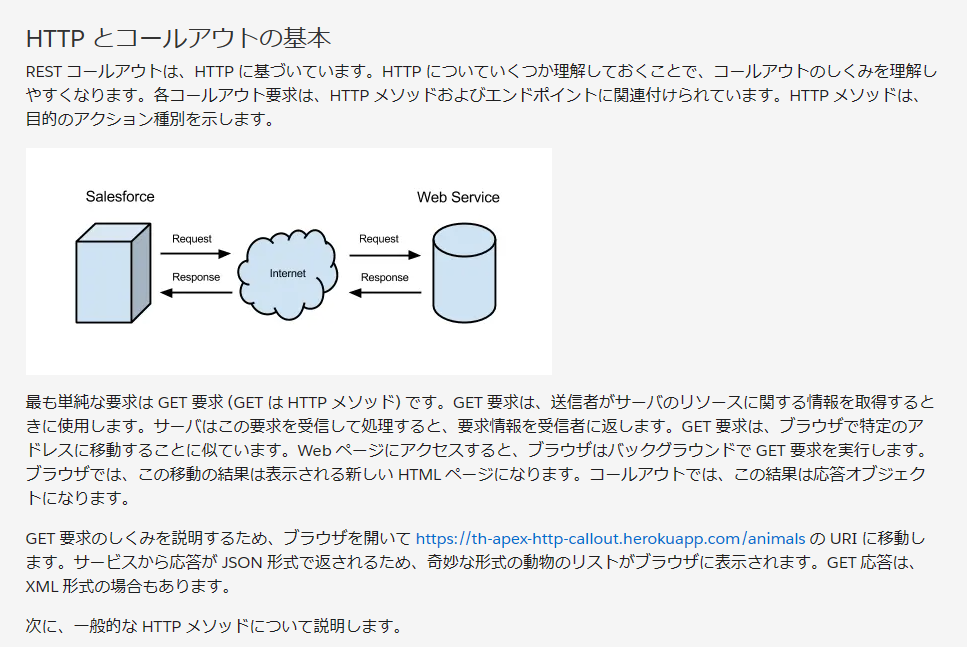
1.HTTP 和 callout基本
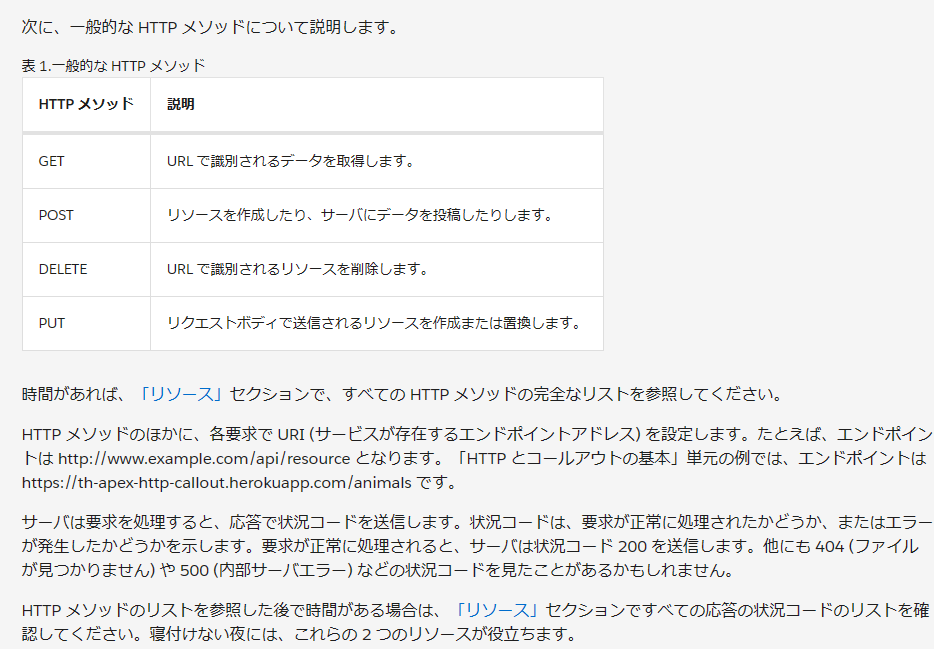
・Rest CallOut 是基于HTTP的,一般的HTTP函数有以下几种。
①:GET ➡ 用于获取指定数据
②:POST ➡ 用于做成数据
③:DELETE ➡ 用于删除数据
④:PUT ➡ 用于更新数据
2.具体事例
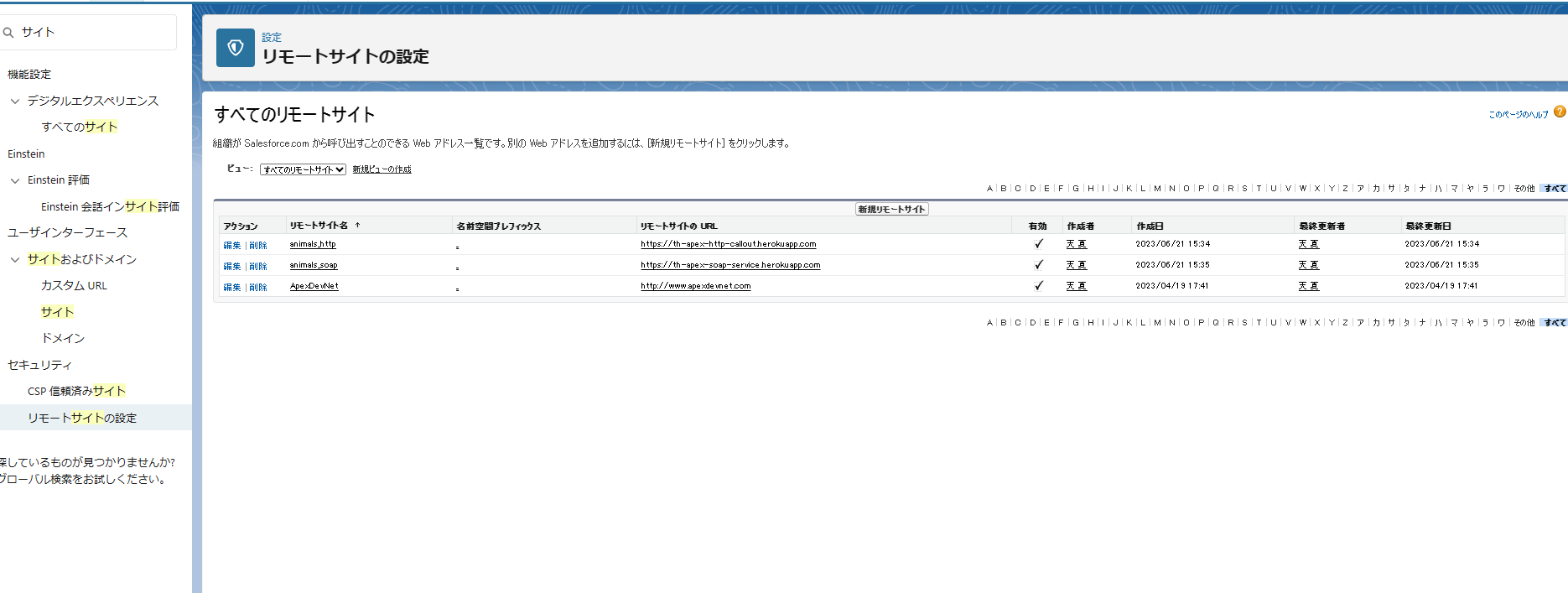
・リモートサイト的设定
代码演示:
public class AnimalsCallouts {
    public static HttpResponse makeGetCallout() {
        Http http = new Http();
        HttpRequest request = new HttpRequest();
        request.setEndpoint('https://th-apex-http-callout.herokuapp.com/animals');
        request.setMethod('GET');
        HttpResponse response = http.send(request);
        // If the request is successful, parse the JSON response.
        if(response.getStatusCode() == 200) {
            // Deserializes the JSON string into collections of primitive data types.
            Map<String, Object> results = (Map<String, Object>) JSON.deserializeUntyped(response.getBody());
            // Cast the values in the 'animals' key as a list
            List<Object> animals = (List<Object>) results.get('animals');
            System.debug('Received the following animals:');
            for(Object animal: animals) {
                System.debug(animal);
            }
        }
        return response;
    }
    public static HttpResponse makePostCallout() {
        Http http = new Http();
        HttpRequest request = new HttpRequest();
        request.setEndpoint('https://th-apex-http-callout.herokuapp.com/animals');
        request.setMethod('POST');
        request.setHeader('Content-Type', 'application/json;charset=UTF-8');
        request.setBody('{"name":"mighty moose"}');
        HttpResponse response = http.send(request);
        // Parse the JSON response
        if(response.getStatusCode() != 201) {
            System.debug('The status code returned was not expected: ' +
                response.getStatusCode() + ' ' + response.getStatus());
        } else {
            System.debug(response.getBody());
        }
        return response;
    }
}
对于CALLOUT的测试,需要使用模拟送信,有2种,一种是使用静态代码(StaticResourceCalloutMock),一种是使用HttpCalloutMock。
・StaticResourceCalloutMock的测试代码
①:需要先设定静态源码(假设被测试的代码正方终了后该有的结果)
②:测试代码
@isTest
private class AnimalsCalloutsTest {
    @isTest static  void testGetCallout() {
        // Create the mock response based on a static resource
        StaticResourceCalloutMock mock = new StaticResourceCalloutMock();
        mock.setStaticResource('GetAnimalResource');
        mock.setStatusCode(200);
        mock.setHeader('Content-Type', 'application/json;charset=UTF-8');
        // Associate the callout with a mock response
        Test.setMock(HttpCalloutMock.class, mock);
        // Call method to test
        HttpResponse result = AnimalsCallouts.makeGetCallout();
        // Verify mock response is not null
        System.assertNotEquals(null,result, 'The callout returned a null response.');
        // Verify status code
        System.assertEquals(200,result.getStatusCode(), 'The status code is not 200.');
        // Verify content type
        System.assertEquals('application/json;charset=UTF-8',
          result.getHeader('Content-Type'),
          'The content type value is not expected.');
        // Verify the array contains 3 items
        Map<String, Object> results = (Map<String, Object>)
            JSON.deserializeUntyped(result.getBody());
        List<Object> animals = (List<Object>) results.get('animals');
        System.assertEquals(3, animals.size(), 'The array should only contain 3 items.');
    }
}
・HttpCalloutMock的测试代码
需要实现HttpCalloutMock接口,重写里面的respond函数。
@isTest
global class AnimalsHttpCalloutMock implements HttpCalloutMock {
    // Implement this interface method
    global HTTPResponse respond(HTTPRequest request) {
        // Create a fake response
        HttpResponse response = new HttpResponse();
        response.setHeader('Content-Type', 'application/json');
        response.setBody('{"animals": ["majestic badger", "fluffy bunny", "scary bear", "chicken", "mighty moose"]}');
        response.setStatusCode(200);
        return response;
    }
}
下面是具体的测试
@isTest
static void testPostCallout() {
    // Set mock callout class
    Test.setMock(HttpCalloutMock.class, new AnimalsHttpCalloutMock());
    // This causes a fake response to be sent
    // from the class that implements HttpCalloutMock.
    HttpResponse response = AnimalsCallouts.makePostCallout();
    // Verify that the response received contains fake values
    String contentType = response.getHeader('Content-Type');
    System.assert(contentType == 'application/json');
    String actualValue = response.getBody();
    System.debug(response.getBody());
    String expectedValue = '{"animals": ["majestic badger", "fluffy bunny", "scary bear", "chicken", "mighty moose"]}';
    System.assertEquals(expectedValue, actualValue);
    System.assertEquals(200, response.getStatusCode());
}

 浙公网安备 33010602011771号