一、知识
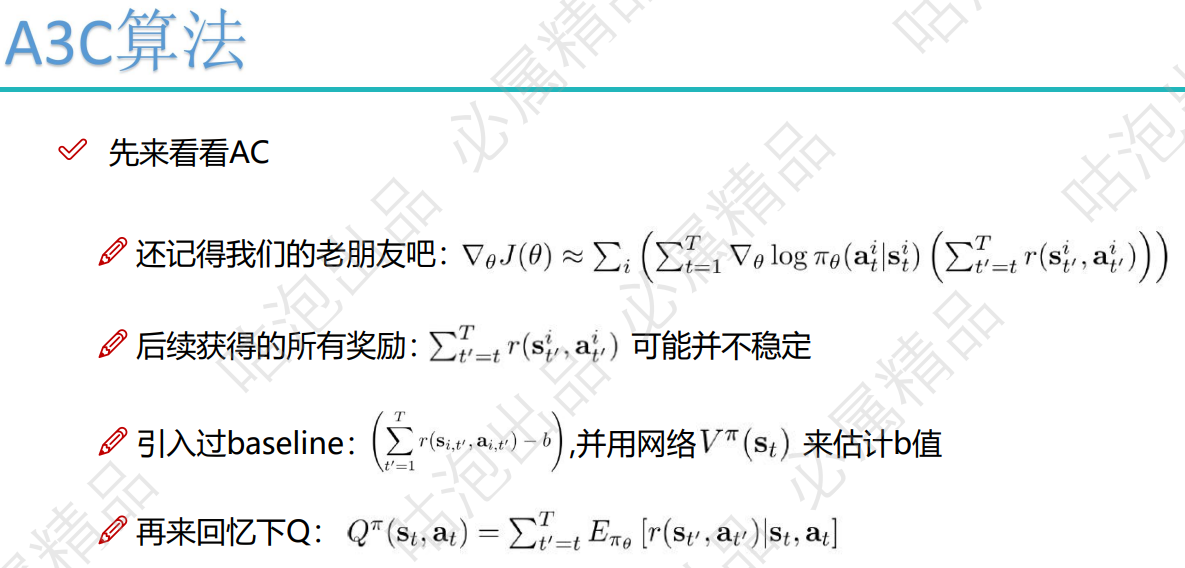
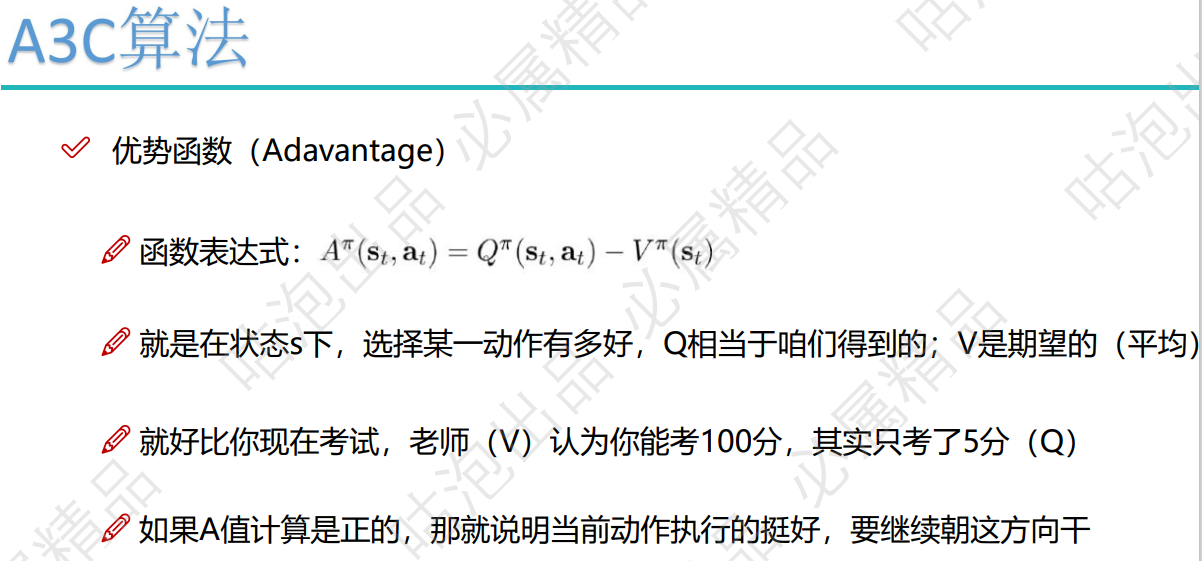
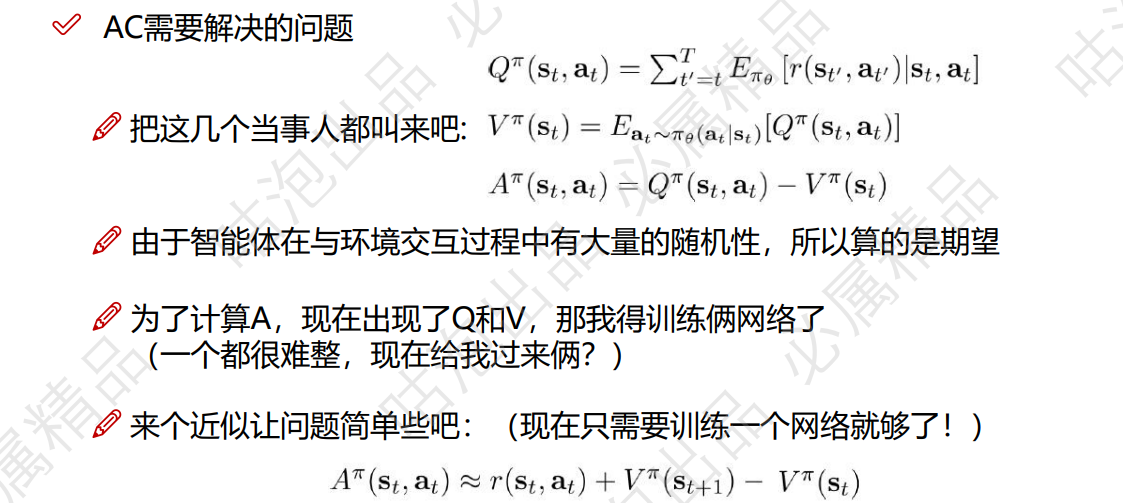
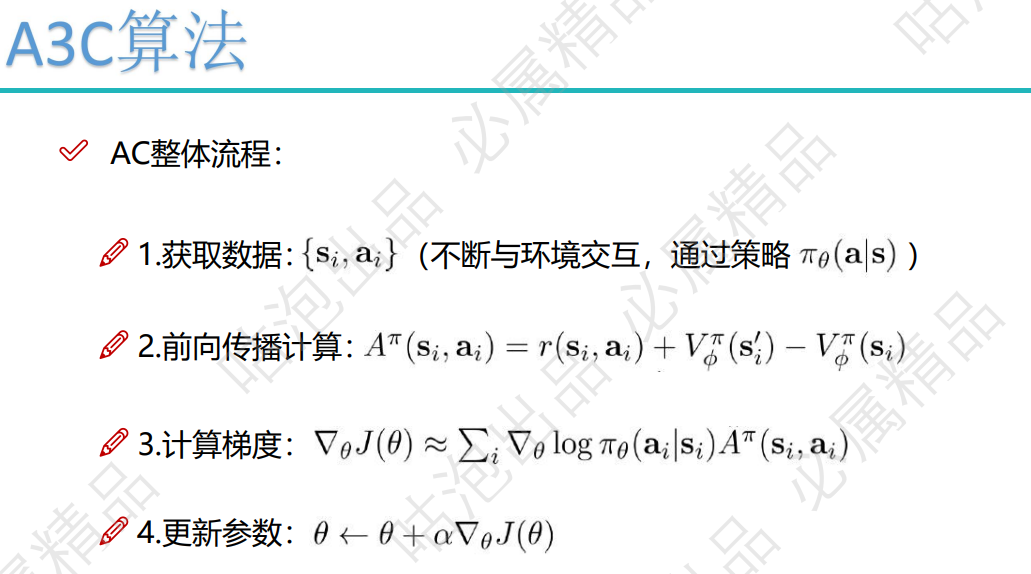
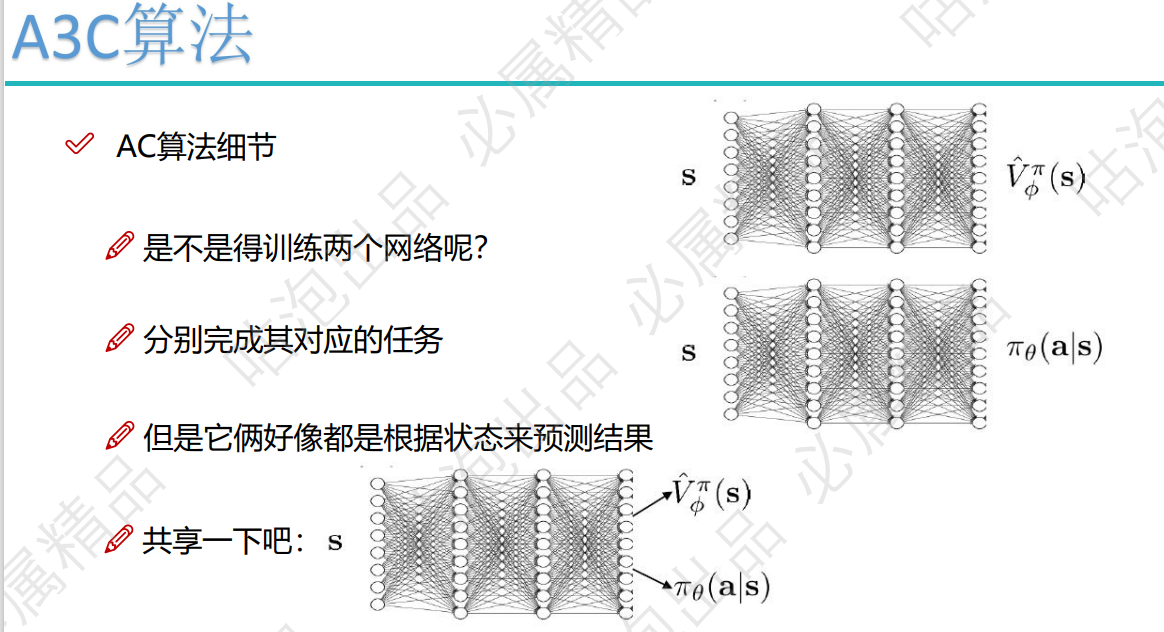
![]()
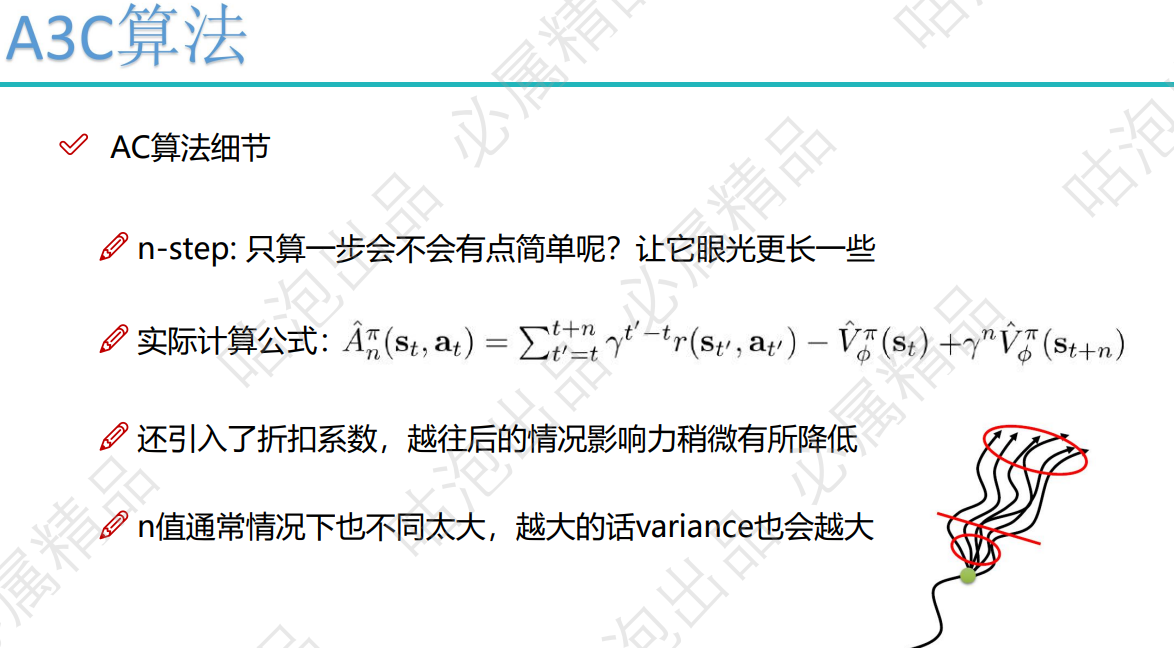
![]()
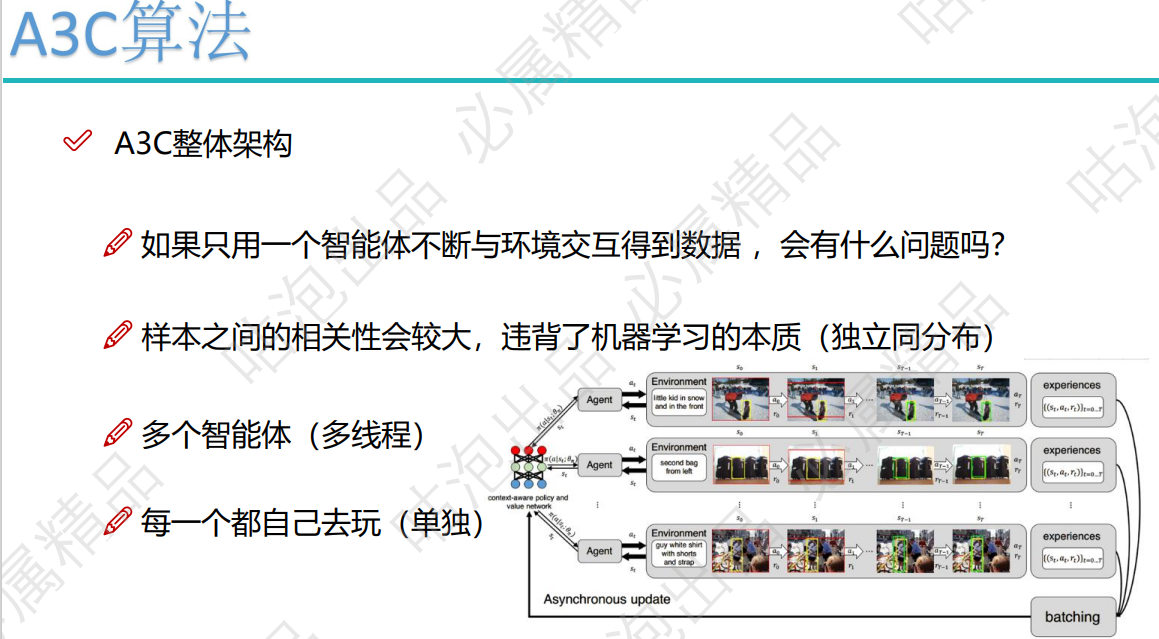
![]()
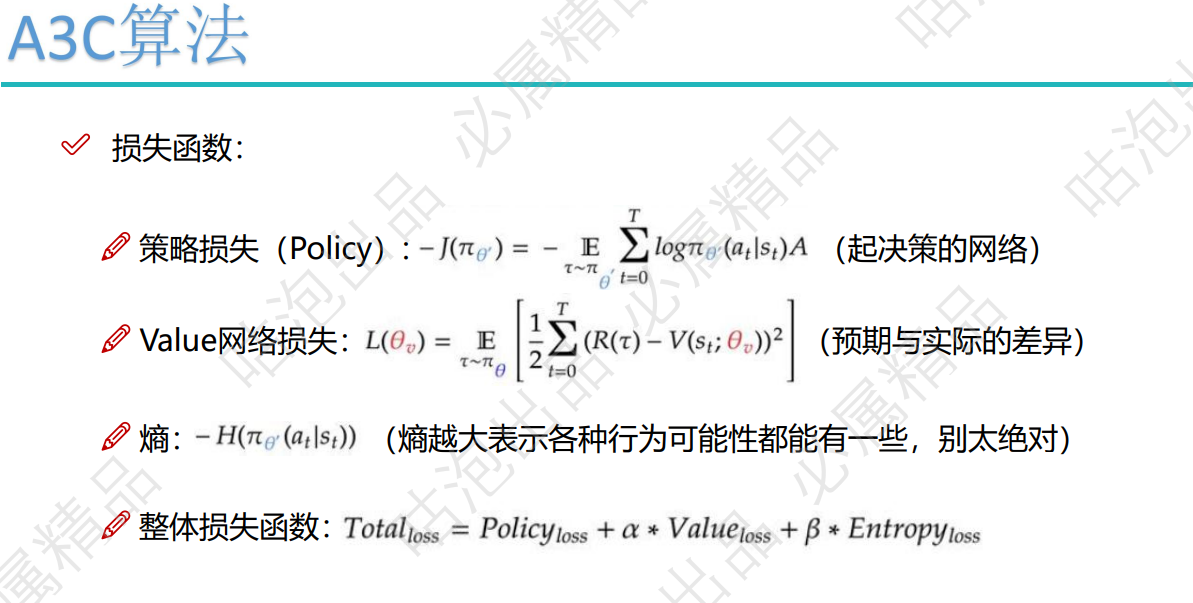
![]()
![]()
![]()
![]()
![]()
![]()
二、代码
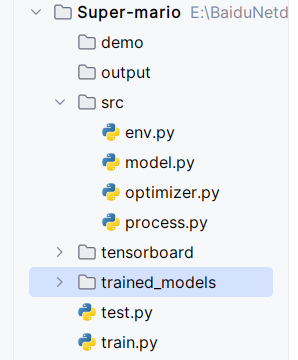
1、6个py文件
![]()
2、train.py
import os
os.environ['OMP_NUM_THREADS'] = '1'
import argparse
import torch
from src.env import create_train_env
from src.model import ActorCritic
from src.optimizer import GlobalAdam
from src.process import local_train, local_test
import torch.multiprocessing as _mp
import shutil
# pip install gym_super_mario_bros


def get_args():
    parser = argparse.ArgumentParser(
        """Implementation of model described in the paper: Asynchronous Methods for Deep Reinforcement Learning for Super Mario Bros""")
    parser.add_argument("--world", type=int, default=1)
    parser.add_argument("--stage", type=int, default=1)
    parser.add_argument("--action_type", type=str, default="complex")
    parser.add_argument('--lr', type=float, default=1e-4)
    parser.add_argument('--gamma', type=float, default=0.9, help='discount factor for rewards')
    parser.add_argument('--tau', type=float, default=1.0, help='parameter for GAE')
    parser.add_argument('--beta', type=float, default=0.01, help='entropy coefficient')
    parser.add_argument("--num_local_steps", type=int, default=50)
    parser.add_argument("--num_global_steps", type=int, default=5e6)
    parser.add_argument("--num_processes", type=int, default=6)
    parser.add_argument("--save_interval", type=int, default=500, help="Number of steps between savings")
    parser.add_argument("--max_actions", type=int, default=200, help="Maximum repetition steps in test phase")
    parser.add_argument("--log_path", type=str, default="tensorboard/a3c_super_mario_bros")
    parser.add_argument("--saved_path", type=str, default="trained_models")
    parser.add_argument("--load_from_previous_stage", type=bool, default=False,
                        help="Load weight from previous trained stage")
    parser.add_argument("--use_gpu", type=bool, default=True)
    args = parser.parse_args()
    return args


def train(opt):
    torch.manual_seed(123)
    if os.path.isdir(opt.log_path):
        shutil.rmtree(opt.log_path)
    os.makedirs(opt.log_path)
    if not os.path.isdir(opt.saved_path):
        os.makedirs(opt.saved_path)
    mp = _mp.get_context("spawn")
    #world大关,stage小关
    env, num_states, num_actions = create_train_env(opt.world, opt.stage, opt.action_type)#游戏环境配置
    global_model = ActorCritic(num_states, num_actions)
    if opt.use_gpu:
        global_model.cuda()
    global_model.share_memory()
    if opt.load_from_previous_stage:
        if opt.stage == 1:
            previous_world = opt.world - 1
            previous_stage = 4
        else:
            previous_world = opt.world
            previous_stage = opt.stage - 1
        file_ = "{}/a3c_super_mario_bros_{}_{}".format(opt.saved_path, previous_world, previous_stage)
        if os.path.isfile(file_):
            global_model.load_state_dict(torch.load(file_))

    optimizer = GlobalAdam(global_model.parameters(), lr=opt.lr)

    # local_train(0, opt, global_model, optimizer, True)
    # local_test(opt.num_processes, opt, global_model)

    processes = []
    for index in range(opt.num_processes):
        if index == 0:
            process = mp.Process(target=local_train, args=(index, opt, global_model, optimizer, True))
        else:
            process = mp.Process(target=local_train, args=(index, opt, global_model, optimizer))
        process.start()
        processes.append(process)
    process = mp.Process(target=local_test, args=(opt.num_processes, opt, global_model))
    process.start()
    processes.append(process)
    for process in processes:
        process.join()


if __name__ == "__main__":
    opt = get_args()
    train(opt)
2、test.py
import os

os.environ['OMP_NUM_THREADS'] = '1'
import argparse
import torch
from src.env import create_train_env
from src.model import ActorCritic
import torch.nn.functional as F


def get_args():
    parser = argparse.ArgumentParser(
        """Implementation of model described in the paper: Asynchronous Methods for Deep Reinforcement Learning for Super Mario Bros""")
    parser.add_argument("--world", type=int, default=4)
    parser.add_argument("--stage", type=int, default=1)
    parser.add_argument("--action_type", type=str, default="complex")
    parser.add_argument("--saved_path", type=str, default="trained_models")
    parser.add_argument("--output_path", type=str, default="output")
    args = parser.parse_args()
    return args


def test(opt):
    torch.manual_seed(123)
    env, num_states, num_actions = create_train_env(opt.world, opt.stage, opt.action_type,
                                                    "{}/video_{}_{}.mp4".format(opt.output_path, opt.world, opt.stage))
    model = ActorCritic(num_states, num_actions)
    if torch.cuda.is_available():
        model.load_state_dict(torch.load("{}/a3c_super_mario_bros_{}_{}".format(opt.saved_path, opt.world, opt.stage)))
        model.cuda()
    else:
        model.load_state_dict(torch.load("{}/a3c_super_mario_bros_{}_{}".format(opt.saved_path, opt.world, opt.stage),
                                         map_location=lambda storage, loc: storage))
    model.eval()
    state = torch.from_numpy(env.reset())
    done = True
    while True:
        if done:
            h_0 = torch.zeros((1, 512), dtype=torch.float)
            c_0 = torch.zeros((1, 512), dtype=torch.float)
            env.reset()
        else:
            h_0 = h_0.detach()
            c_0 = c_0.detach()
        if torch.cuda.is_available():
            h_0 = h_0.cuda()
            c_0 = c_0.cuda()
            state = state.cuda()

        logits, value, h_0, c_0 = model(state, h_0, c_0)
        policy = F.softmax(logits, dim=1)
        action = torch.argmax(policy).item()
        action = int(action)
        state, reward, done, info = env.step(action)
        state = torch.from_numpy(state)
        env.render()
        if info["flag_get"]:
            print("World {} stage {} completed".format(opt.world, opt.stage))
            break


if __name__ == "__main__":
    opt = get_args()
    test(opt)
3、env.py
import gym_super_mario_bros
from gym.spaces import Box
from gym import Wrapper
#from nes_py.wrappers import BinarySpaceToDiscreteSpaceEnv
from gym.wrappers import JoypadSpace
from gym_super_mario_bros.actions import SIMPLE_MOVEMENT, COMPLEX_MOVEMENT, RIGHT_ONLY
import cv2
import numpy as np
import subprocess as sp


class Monitor:
    def __init__(self, width, height, saved_path):

        self.command = ["ffmpeg", "-y", "-f", "rawvideo", "-vcodec", "rawvideo", "-s", "{}X{}".format(width, height),
                        "-pix_fmt", "rgb24", "-r", "80", "-i", "-", "-an", "-vcodec", "mpeg4", saved_path]
        try:
            self.pipe = sp.Popen(self.command, stdin=sp.PIPE, stderr=sp.PIPE)
        except FileNotFoundError:
            pass

    def record(self, image_array):
        self.pipe.stdin.write(image_array.tostring())


def process_frame(frame):
    if frame is not None:
        frame = cv2.cvtColor(frame, cv2.COLOR_RGB2GRAY)
        frame = cv2.resize(frame, (84, 84))[None, :, :] / 255.
        return frame
    else:
        return np.zeros((1, 84, 84))


class CustomReward(Wrapper):
    def __init__(self, env=None, monitor=None):
        super(CustomReward, self).__init__(env)
        self.observation_space = Box(low=0, high=255, shape=(1, 84, 84))
        self.curr_score = 0
        if monitor:
            self.monitor = monitor
        else:
            self.monitor = None

    def step(self, action):
        state, reward, done, info = self.env.step(action)
        if self.monitor:
            self.monitor.record(state)
        state = process_frame(state)
        reward += (info["score"] - self.curr_score) / 40.
        self.curr_score = info["score"]
        if done:
            if info["flag_get"]:
                reward += 50
            else:
                reward -= 50
        return state, reward / 10., done, info

    def reset(self):
        self.curr_score = 0
        return process_frame(self.env.reset())


class CustomSkipFrame(Wrapper):
    def __init__(self, env, skip=4):
        super(CustomSkipFrame, self).__init__(env)
        self.observation_space = Box(low=0, high=255, shape=(4, 84, 84))
        self.skip = skip

    def step(self, action):
        total_reward = 0
        states = []
        state, reward, done, info = self.env.step(action)
        for i in range(self.skip):
            if not done:
                state, reward, done, info = self.env.step(action)
                total_reward += reward
                states.append(state)
            else:
                states.append(state)
        states = np.concatenate(states, 0)[None, :, :, :]
        return states.astype(np.float32), reward, done, info

    def reset(self):
        state = self.env.reset()
        states = np.concatenate([state for _ in range(self.skip)], 0)[None, :, :, :]
        return states.astype(np.float32)


def create_train_env(world, stage, action_type, output_path=None):
    env = gym_super_mario_bros.make("SuperMarioBros-{}-{}-v0".format(world, stage))
    if output_path:
        monitor = Monitor(256, 240, output_path)
    else:
        monitor = None
    if action_type == "right":
        actions = RIGHT_ONLY
    elif action_type == "simple":
        actions = SIMPLE_MOVEMENT
    else:
        actions = COMPLEX_MOVEMENT
    env = JoypadSpace(env, actions)
    env = CustomReward(env, monitor)
    env = CustomSkipFrame(env)
    return env, env.observation_space.shape[0], len(actions)
4、model
import torch.nn as nn
import torch.nn.functional as F


class ActorCritic(nn.Module):
    def __init__(self, num_inputs, num_actions):
        super(ActorCritic, self).__init__()
        self.conv1 = nn.Conv2d(num_inputs, 32, 3, stride=2, padding=1)
        self.conv2 = nn.Conv2d(32, 32, 3, stride=2, padding=1)
        self.conv3 = nn.Conv2d(32, 32, 3, stride=2, padding=1)
        self.conv4 = nn.Conv2d(32, 32, 3, stride=2, padding=1)
        self.lstm = nn.LSTMCell(32 * 6 * 6, 512)
        self.critic_linear = nn.Linear(512, 1)
        self.actor_linear = nn.Linear(512, num_actions)
        self._initialize_weights()

    def _initialize_weights(self):
        for module in self.modules():
            if isinstance(module, nn.Conv2d) or isinstance(module, nn.Linear):
                nn.init.xavier_uniform_(module.weight)
                # nn.init.kaiming_uniform_(module.weight)
                nn.init.constant_(module.bias, 0)
            elif isinstance(module, nn.LSTMCell):
                nn.init.constant_(module.bias_ih, 0)
                nn.init.constant_(module.bias_hh, 0)

    def forward(self, x, hx, cx):
        x = F.relu(self.conv1(x))
        x = F.relu(self.conv2(x))
        x = F.relu(self.conv3(x))
        x = F.relu(self.conv4(x))
        hx, cx = self.lstm(x.view(x.size(0), -1), (hx, cx))
        return self.actor_linear(hx), self.critic_linear(hx), hx, cx#隐层和记忆单元
5、optimal.py
import torch

class GlobalAdam(torch.optim.Adam):
    def __init__(self, params, lr):
        super(GlobalAdam, self).__init__(params, lr=lr)
        for group in self.param_groups:
            for p in group['params']:
                state = self.state[p]
                state['step'] = 0
                state['exp_avg'] = torch.zeros_like(p.data)
                state['exp_avg_sq'] = torch.zeros_like(p.data)

                state['exp_avg'].share_memory_()
                state['exp_avg_sq'].share_memory_()
6、process.py
import torc
from src.env import create_train_env
from src.model import ActorCritic
import torch.nn.functional as F
from torch.distributions import Categorical
from collections import deque
from tensorboardX import SummaryWriter
import timeit


def local_train(index, opt, global_model, optimizer, save=False):
    torch.manual_seed(123 + index)
    if save:
        start_time = timeit.default_timer()
    writer = SummaryWriter(opt.log_path)
    env, num_states, num_actions = create_train_env(opt.world, opt.stage, opt.action_type)#单独玩
    local_model = ActorCritic(num_states, num_actions)
    if opt.use_gpu:
        local_model.cuda()
    local_model.train()
    state = torch.from_numpy(env.reset())
    if opt.use_gpu:
        state = state.cuda()
    done = True
    curr_step = 0
    curr_episode = 0
    while True:
        if save:
            if curr_episode % opt.save_interval == 0 and curr_episode > 0:
                torch.save(global_model.state_dict(),
                           "{}/a3c_super_mario_bros_{}_{}".format(opt.saved_path, opt.world, opt.stage))
            print("Process {}. Episode {}".format(index, curr_episode))
        curr_episode += 1
        local_model.load_state_dict(global_model.state_dict())
        if done:
            h_0 = torch.zeros((1, 512), dtype=torch.float)
            c_0 = torch.zeros((1, 512), dtype=torch.float)
        else:
            h_0 = h_0.detach()
            c_0 = c_0.detach()
        if opt.use_gpu:
            h_0 = h_0.cuda()
            c_0 = c_0.cuda()

        log_policies = []
        values = []
        rewards = []
        entropies = []

        for _ in range(opt.num_local_steps):
            curr_step += 1
            logits, value, h_0, c_0 = local_model(state, h_0, c_0)#return self.actor_linear(hx), self.critic_linear(hx), hx, cx#隐层和记忆单元
            policy = F.softmax(logits, dim=1)
            log_policy = F.log_softmax(logits, dim=1)
            entropy = -(policy * log_policy).sum(1, keepdim=True)#计算当前熵值

            m = Categorical(policy)#采样
            action = m.sample().item()

            state, reward, done, _ = env.step(action)
            state = torch.from_numpy(state)
            if opt.use_gpu:
                state = state.cuda()
            if curr_step > opt.num_global_steps:
                done = True

            if done:
                curr_step = 0
                state = torch.from_numpy(env.reset())
                if opt.use_gpu:
                    state = state.cuda()

            values.append(value)
            log_policies.append(log_policy[0, action])
            rewards.append(reward)
            entropies.append(entropy)

            if done:
                break

        R = torch.zeros((1, 1), dtype=torch.float)
        if opt.use_gpu:
            R = R.cuda()
        if not done:
            _, R, _, _ = local_model(state, h_0, c_0)#这个R相当于最后一次的V值,第二个返回值是critic网络的

        gae = torch.zeros((1, 1), dtype=torch.float)#额外的处理,为了减小variance
        if opt.use_gpu:
            gae = gae.cuda()
        actor_loss = 0
        critic_loss = 0
        entropy_loss = 0
        next_value = R

        for value, log_policy, reward, entropy in list(zip(values, log_policies, rewards, entropies))[::-1]:
            gae = gae * opt.gamma * opt.tau
            gae = gae + reward + opt.gamma * next_value.detach() - value.detach()#Generalized Advantage Estimator 带权重的折扣项,V(s+1)-V(s)
            next_value = value
            actor_loss = actor_loss + log_policy * gae
            R = R * opt.gamma + reward
            critic_loss = critic_loss + (R - value) ** 2 / 2
            entropy_loss = entropy_loss + entropy

        total_loss = -actor_loss + critic_loss - opt.beta * entropy_loss
        writer.add_scalar("Train_{}/Loss".format(index), total_loss, curr_episode)
        optimizer.zero_grad()
        total_loss.backward()

        for local_param, global_param in zip(local_model.parameters(), global_model.parameters()):
            if global_param.grad is not None:
                break
            global_param._grad = local_param.grad

        optimizer.step()

        if curr_episode == int(opt.num_global_steps / opt.num_local_steps):
            print("Training process {} terminated".format(index))
            if save:
                end_time = timeit.default_timer()
                print('The code runs for %.2f s ' % (end_time - start_time))
            return


def local_test(index, opt, global_model):
    torch.manual_seed(123 + index)
    env, num_states, num_actions = create_train_env(opt.world, opt.stage, opt.action_type)
    local_model = ActorCritic(num_states, num_actions)
    local_model.eval()
    state = torch.from_numpy(env.reset())
    done = True
    curr_step = 0
    actions = deque(maxlen=opt.max_actions)
    while True:
        curr_step += 1
        if done:
            local_model.load_state_dict(global_model.state_dict())
        with torch.no_grad():
            if done:
                h_0 = torch.zeros((1, 512), dtype=torch.float)
                c_0 = torch.zeros((1, 512), dtype=torch.float)
            else:
                h_0 = h_0.detach()
                c_0 = c_0.detach()

        logits, value, h_0, c_0 = local_model(state, h_0, c_0)
        policy = F.softmax(logits, dim=1)
        action = torch.argmax(policy).item()
        state, reward, done, _ = env.step(action)
        env.render()
        actions.append(action)
        if curr_step > opt.num_global_steps or actions.count(actions[0]) == actions.maxlen:
            done = True
        if done:
            curr_step = 0
            actions.clear()
            state = env.reset()
        state = torch.from_numpy(state)



 浙公网安备 33010602011771号