
关于MatConvNet的反向传播原理及源码解析
关于MatConvNet的反向传播原理及源码解析
MatConvNet深度学习库的反向传播原理如下图所示:
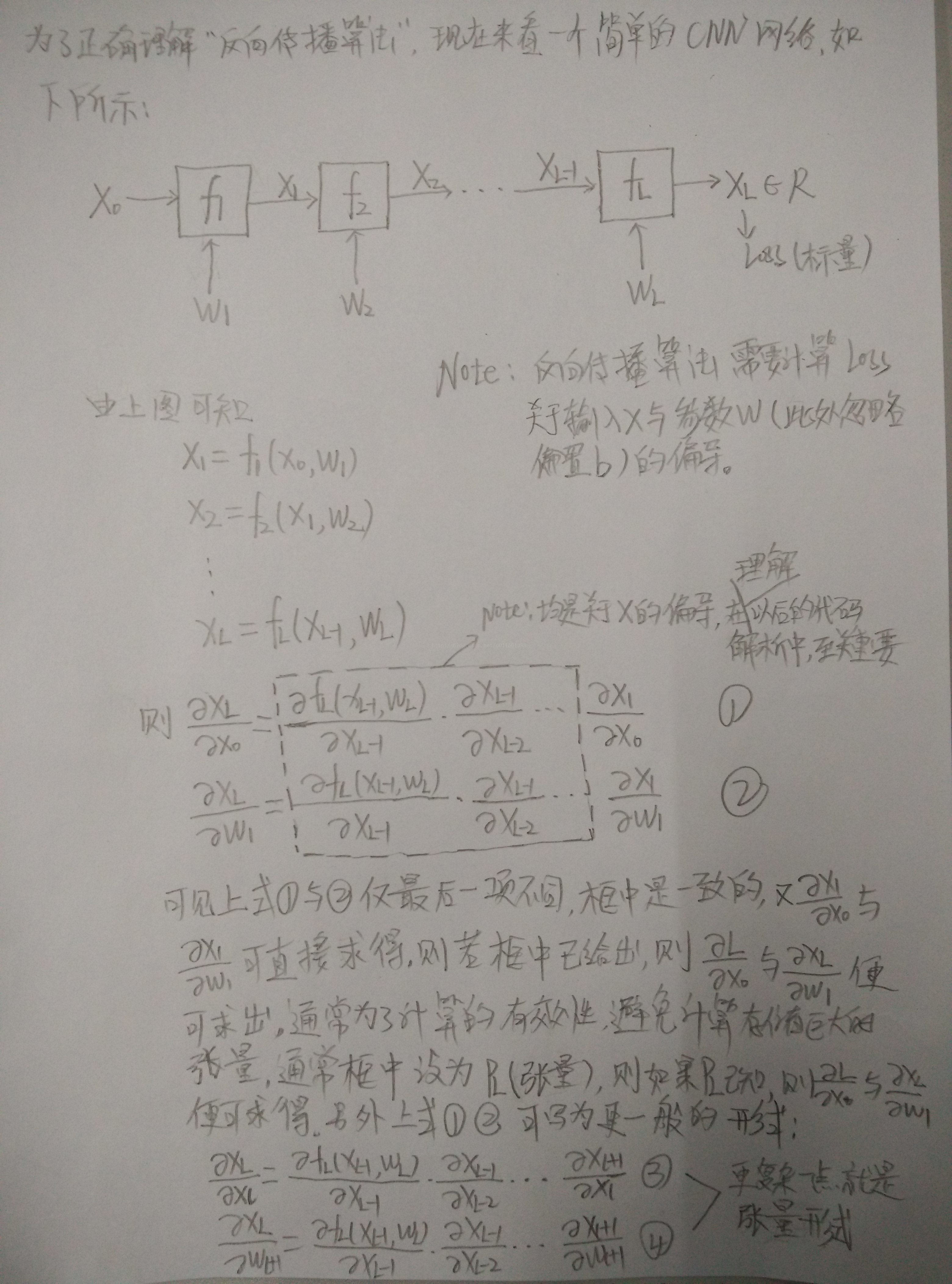
上图是简化版的反向传播原理推导,具体的张量表示法参考相关手册。
为了方便对比及具体详尽的原理推导,在手册中,关于反向传播的推导部分截图如下:
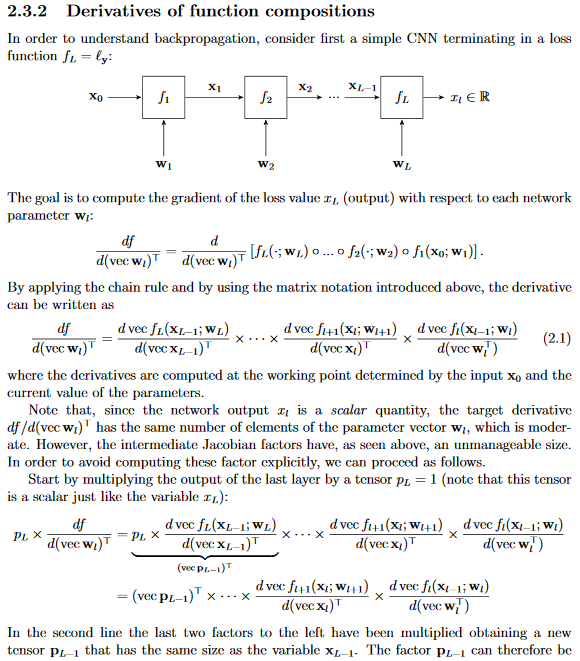
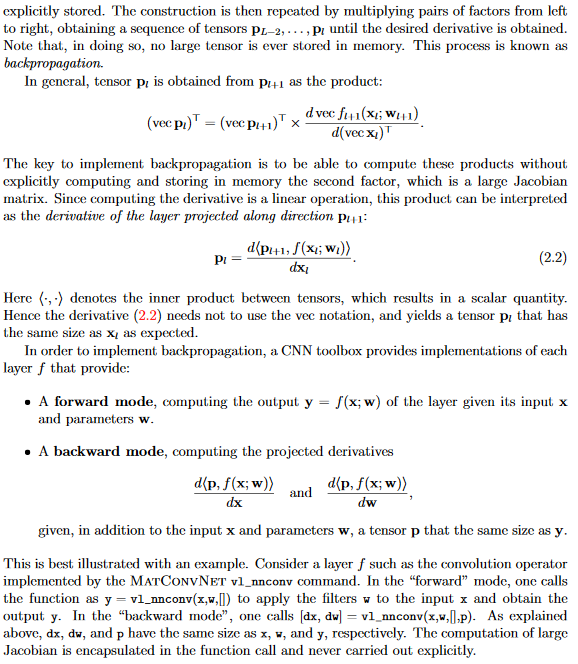
其中在上图中,重点注意的地方就是式(2.2),它只是关于x的导数。为了引起重视,下面有一个练习:
- %下面实现一个由一个卷积层和ReLU层构成的两层卷积网络的反向传播实现示例
- %前向模式:计算卷积和卷积后的ReLU输出
- y = vl_nnconv(x, w, []) ;
- z = vl_nnrelu(y) ;
- %初始化一个随机投影张量
- p = randn(size(z), 'single') ;
- %反向传播模式:映射偏导
- dy = vl_nnrelu(z, p) ;
- [dx,dw] = vl_nnconv(x, w, [], dy) ;
下面进行反向传播的MatConvNet的反向传播实现方式:
- res = struct(...
- 'x', cell(1,n+1), ...
- 'dzdx', cell(1,n+1), ...
- 'dzdw', cell(1,n+1), ...
- 'aux', cell(1,n+1), ...
- 'stats', cell(1,n+1), ...
- 'time', num2cell(zeros(1,n+1)), ...
- 'backwardTime', num2cell(zeros(1,n+1))) ;
- % -------------------------------------------------------------------------
- % Backward pass
- % -------------------------------------------------------------------------
- if doder
- res(n+1).dzdx = dzdy ;
- for i=n:-1:backPropLim
- l = net.layers{i} ;
- res(i).backwardTime = tic ;
- switch l.type
- case 'conv'
- [res(i).dzdx, dzdw{1}, dzdw{2}] = ...
- vl_nnconv(res(i).x, l.weights{1}, l.weights{2}, res(i+1).dzdx, ...
- 'pad', l.pad, ...
- 'stride', l.stride, ...
- 'dilate', l.dilate, ...
- l.opts{:}, ...
- cudnn{:}) ;
- case 'convt'
- [res(i).dzdx, dzdw{1}, dzdw{2}] = ...
- vl_nnconvt(res(i).x, l.weights{1}, l.weights{2}, res(i+1).dzdx, ...
- 'crop', l.crop, ...
- 'upsample', l.upsample, ...
- 'numGroups', l.numGroups, ...
- l.opts{:}, ...
- cudnn{:}) ;
- case 'pool'
- res(i).dzdx = vl_nnpool(res(i).x, l.pool, res(i+1).dzdx, ...
- 'pad', l.pad, 'stride', l.stride, ...
- 'method', l.method, ...
- l.opts{:}, ...
- cudnn{:}) ;
- case {'normalize', 'lrn'}
- res(i).dzdx = vl_nnnormalize(res(i).x, l.param, res(i+1).dzdx) ;
- case 'softmax'
- res(i).dzdx = vl_nnsoftmax(res(i).x, res(i+1).dzdx) ;
- case 'loss'
- res(i).dzdx = vl_nnloss(res(i).x, l.class, res(i+1).dzdx) ;
- case 'softmaxloss'
- res(i).dzdx = vl_nnsoftmaxloss(res(i).x, l.class, res(i+1).dzdx) ;
- case 'relu'
- if l.leak > 0, leak = {'leak', l.leak} ; else leak = {} ; end
- if ~isempty(res(i).x)
- res(i).dzdx = vl_nnrelu(res(i).x, res(i+1).dzdx, leak{:}) ;
- else
- % if res(i).x is empty, it has been optimized away, so we use this
- % hack (which works only for ReLU):
- res(i).dzdx = vl_nnrelu(res(i+1).x, res(i+1).dzdx, leak{:}) ;
- end
- case 'sigmoid'
- res(i).dzdx = vl_nnsigmoid(res(i).x, res(i+1).dzdx) ;
- case 'noffset'
- res(i).dzdx = vl_nnnoffset(res(i).x, l.param, res(i+1).dzdx) ;
- case 'spnorm'
- res(i).dzdx = vl_nnspnorm(res(i).x, l.param, res(i+1).dzdx) ;
- case 'dropout'
- if testMode
- res(i).dzdx = res(i+1).dzdx ;
- else
- res(i).dzdx = vl_nndropout(res(i).x, res(i+1).dzdx, ...
- 'mask', res(i+1).aux) ;
- end
- case 'bnorm'
- [res(i).dzdx, dzdw{1}, dzdw{2}, dzdw{3}] = ...
- vl_nnbnorm(res(i).x, l.weights{1}, l.weights{2}, res(i+1).dzdx, ...
- 'epsilon', l.epsilon, ...
- bnormCudnn{:}) ;
- % multiply the moments update by the number of images in the batch
- % this is required to make the update additive for subbatches
- % and will eventually be normalized away
- dzdw{3} = dzdw{3} * size(res(i).x,4) ;
- case 'pdist'
- res(i).dzdx = vl_nnpdist(res(i).x, l.class, ...
- l.p, res(i+1).dzdx, ...
- 'noRoot', l.noRoot, ...
- 'epsilon', l.epsilon, ...
- 'aggregate', l.aggregate, ...
- 'instanceWeights', l.instanceWeights) ;
- case 'custom'
- res(i) = l.backward(l, res(i), res(i+1)) ;
- end % layers
- switch l.type
- case {'conv', 'convt', 'bnorm'}
- if ~opts.accumulate
- res(i).dzdw = dzdw ;
- else
- for j=1:numel(dzdw)
- res(i).dzdw{j} = res(i).dzdw{j} + dzdw{j} ;
- end
- end
- dzdw = [] ;
- if ~isempty(opts.parameterServer) && ~opts.holdOn
- for j = 1:numel(res(i).dzdw)
- opts.parameterServer.push(sprintf('l%d_%d',i,j),res(i).dzdw{j}) ;
- res(i).dzdw{j} = [] ;
- end
- end
- end
- if opts.conserveMemory && ~net.layers{i}.precious && i ~= n
- res(i+1).dzdx = [] ;
- res(i+1).x = [] ;
- end
- if gpuMode && opts.sync
- wait(gpuDevice) ;
- end
- res(i).backwardTime = toc(res(i).backwardTime) ;
- end
- if i > 1 && i == backPropLim && opts.conserveMemory && ~net.layers{i}.precious
- res(i).dzdx = [] ;
- res(i).x = [] ;
- end
- end
由上述实现方式,练习题的参考答案如下:
- %下面实现一个由Conv+ReLU+Conv构成的三层卷积网络的反向传播实现示例
- %前向模式:计算卷积和卷积后的ReLU输出
- y = vl_nnconv(x, w, []) ;
- z = vl_nnrelu(y) ;
- y1=vl_nnconv(z,w,[]);
- %初始化一个随机投影张量
- p = randn(size(y1), 'single') ;
- %反向传播模式:映射偏导
- [dz,dw]=vl_nnconv(z,w,[],p);
- dy = vl_nnrelu(y, dz) ;
- [dx,dw] = vl_nnconv(x, w, [], dy) ;
版权声明:本文为博主原创文章,未经博主允许不得转载。 https://blog.csdn.net/u011501388/article/details/79381773

 浙公网安备 33010602011771号