
shardingsphere5.1.0看源码记录
一、前言
shardingsphere整体处理流程为解析->路由->改写->执行->归并,以查询为例:
1.建立数据库连接
2.初始化statement,包括解析过程(在ShardingSpherePreparedStatement.java初始化中)。
3.建立执行上下文(createExecutionContext),包括路由``改写``执行过程(在ShardingSpherePreparedStatement.javaexecute()中)
4.归并结果
具体源码跟踪:
mybaits的SimpleExecutor执行doQuery:
public <E> List<E> doQuery(MappedStatement ms, Object parameter, RowBounds rowBounds, ResultHandler resultHandler, BoundSql boundSql) throws SQLException {
    Statement stmt = null;

    List var9;
    try {
        Configuration configuration = ms.getConfiguration();
        StatementHandler handler = configuration.newStatementHandler(this.wrapper, ms, parameter, rowBounds, resultHandler, boundSql);
        stmt = this.prepareStatement(handler, ms.getStatementLog());
        var9 = handler.query(stmt, resultHandler);
    } finally {
        this.closeStatement(stmt);
    }

    return var9;
}
执行prepareStatement:
private Statement prepareStatement(StatementHandler handler, Log statementLog) throws SQLException {
    Connection connection = this.getConnection(statementLog);
    Statement stmt = handler.prepare(connection, this.transaction.getTimeout());
    handler.parameterize(stmt);
    return stmt;
}
首先getConnection建立连接,mybatis的BaseExecutor执行getConnection方法建立数据库连接。
handler.prepare即为初始化ShardingSpherePreparedStatement,进行解析流程。
handler.parameterize(stmt)简单理解为将ShardingSpherePreparedStatement设置为参数流程。
prepareStatement执行完后返回执行var9 = handler.query(stmt, resultHandler);,调用PreparedStatementHandler的query方法:
public <E> List<E> query(Statement statement, ResultHandler resultHandler) throws SQLException {
  PreparedStatement ps = (PreparedStatement)statement;
  ps.execute();
  return this.resultSetHandler.handleResultSets(ps);
}
ps即为ShardingSpherePreparedStatement:
public boolean execute() throws SQLException {
    boolean var1;
    try {
        if (!this.statementsCacheable || this.statements.isEmpty()) {
            this.clearPrevious();
            LogicSQL logicSQL = this.createLogicSQL();
            this.trafficContext = this.getTrafficContext(logicSQL);
            boolean var3;
            if (this.trafficContext.isMatchTraffic()) {
                JDBCExecutionUnit executionUnit = this.createTrafficExecutionUnit(this.trafficContext);
                var3 = (Boolean)this.executor.getTrafficExecutor().execute(executionUnit, (statement, sql) -> {
                    return ((PreparedStatement)statement).execute();
                });
                return var3;
            }

            this.executionContext = this.createExecutionContext(logicSQL);//路由+改写
            if (this.metaDataContexts.getMetaData(this.connection.getSchema()).getRuleMetaData().getRules().stream().anyMatch((each) -> {
                return each instanceof RawExecutionRule;
            })) {
                Collection<ExecuteResult> executeResults = this.executor.getRawExecutor().execute(this.createRawExecutionGroupContext(), this.executionContext.getLogicSQL(), new RawSQLExecutorCallback());
                var3 = executeResults.iterator().next() instanceof QueryResult;
                return var3;
            }

            if (this.executionContext.getRouteContext().isFederated()) {
                ResultSet resultSet = this.executeFederationQuery(logicSQL);
                var3 = null != resultSet;
                return var3;
            }

            ExecutionGroupContext<JDBCExecutionUnit> executionGroupContext = this.createExecutionGroupContext();
            this.cacheStatements(executionGroupContext.getInputGroups());
            var3 = this.executor.getRegularExecutor().execute(executionGroupContext, this.executionContext.getLogicSQL(), this.executionContext.getRouteContext().getRouteUnits(), this.createExecuteCallback());//执行
            return var3;
        }

        this.resetParameters();
        var1 = ((PreparedStatement)this.statements.iterator().next()).execute();
    } finally {
        this.clearBatch();
    }

    return var1;
  }
其中this.createExecutionContext方法如下:
private ExecutionContext createExecutionContext(LogicSQL logicSQL) {
    SQLCheckEngine.check(logicSQL.getSqlStatementContext().getSqlStatement(), logicSQL.getParameters(), this.metaDataContexts.getMetaData(this.connection.getSchema()).getRuleMetaData().getRules(), this.connection.getSchema(), this.metaDataContexts.getMetaDataMap(), (Grantee)null);
    ExecutionContext result = this.kernelProcessor.generateExecutionContext(logicSQL, this.metaDataContexts.getMetaData(this.connection.getSchema()), this.metaDataContexts.getProps());//路由+改写
    this.findGeneratedKey(result).ifPresent((generatedKey) -> {
        this.generatedValues.addAll(generatedKey.getGeneratedValues());
    });
    return result;
}
其中this.kernelProcessor.generateExecutionContext方法如下:
public ExecutionContext generateExecutionContext(LogicSQL logicSQL, ShardingSphereMetaData metaData, ConfigurationProperties props) {
    RouteContext routeContext = this.route(logicSQL, metaData, props);//路由
    SQLRewriteResult rewriteResult = this.rewrite(logicSQL, metaData, props, routeContext);//改写
    ExecutionContext result = this.createExecutionContext(logicSQL, metaData, routeContext, rewriteResult);
    this.logSQL(logicSQL, props, result);
    return result;
}
在执行this.resultSetHandler.handleResultSets(ps)时由mybatis的DefaultResultSetHandler处理结果集并返回。
其handleResultSets方法如下:
public List<Object> handleResultSets(Statement stmt) throws SQLException {
        ErrorContext.instance().activity("handling results").object(this.mappedStatement.getId());
        List<Object> multipleResults = new ArrayList();
        int resultSetCount = 0;
        ResultSetWrapper rsw = this.getFirstResultSet(stmt);//
        List<ResultMap> resultMaps = this.mappedStatement.getResultMaps();
        int resultMapCount = resultMaps.size();
        this.validateResultMapsCount(rsw, resultMapCount);

        while(rsw != null && resultMapCount > resultSetCount) {
            ResultMap resultMap = (ResultMap)resultMaps.get(resultSetCount);
            this.handleResultSet(rsw, resultMap, multipleResults, (ResultMapping)null);
            rsw = this.getNextResultSet(stmt);
            this.cleanUpAfterHandlingResultSet();
            ++resultSetCount;
        }

        String[] resultSets = this.mappedStatement.getResultSets();
        if (resultSets != null) {
            while(rsw != null && resultSetCount < resultSets.length) {
                ResultMapping parentMapping = (ResultMapping)this.nextResultMaps.get(resultSets[resultSetCount]);
                if (parentMapping != null) {
                    String nestedResultMapId = parentMapping.getNestedResultMapId();
                    ResultMap resultMap = this.configuration.getResultMap(nestedResultMapId);
                    this.handleResultSet(rsw, resultMap, (List)null, parentMapping);
                }

                rsw = this.getNextResultSet(stmt);
                this.cleanUpAfterHandlingResultSet();
                ++resultSetCount;
            }
        }

        return this.collapseSingleResultList(multipleResults);
    }
其中this.getFirstResultSet(stmt)方法如下:
private ResultSetWrapper getFirstResultSet(Statement stmt) throws SQLException {
    ResultSet rs = stmt.getResultSet();//调用ShardingSpherePreparedStatement的getResultSet方法

    while(rs == null) {
        if (stmt.getMoreResults()) {
            rs = stmt.getResultSet();
        } else if (stmt.getUpdateCount() == -1) {
            break;
        }
    }

    return rs != null ? new ResultSetWrapper(rs, this.configuration) : null;
}
ShardingSpherePreparedStatement的getResultSet方法如下:
public ResultSet getResultSet() throws SQLException {
    if (null != this.currentResultSet) {
        return this.currentResultSet;
    } else if (this.trafficContext.isMatchTraffic()) {
        return this.executor.getTrafficExecutor().getResultSet();
    } else if (this.executionContext.getRouteContext().isFederated()) {
        return this.executor.getFederationExecutor().getResultSet();
    } else {
        if (this.executionContext.getSqlStatementContext() instanceof SelectStatementContext || this.executionContext.getSqlStatementContext().getSqlStatement() instanceof DALStatement) {
            List<ResultSet> resultSets = this.getResultSets();
            MergedResult mergedResult = this.mergeQuery(this.getQueryResults(resultSets));//合并结果集
            this.currentResultSet = new ShardingSphereResultSet(resultSets, mergedResult, this, this.executionContext);
        }

        return this.currentResultSet;
    }
}
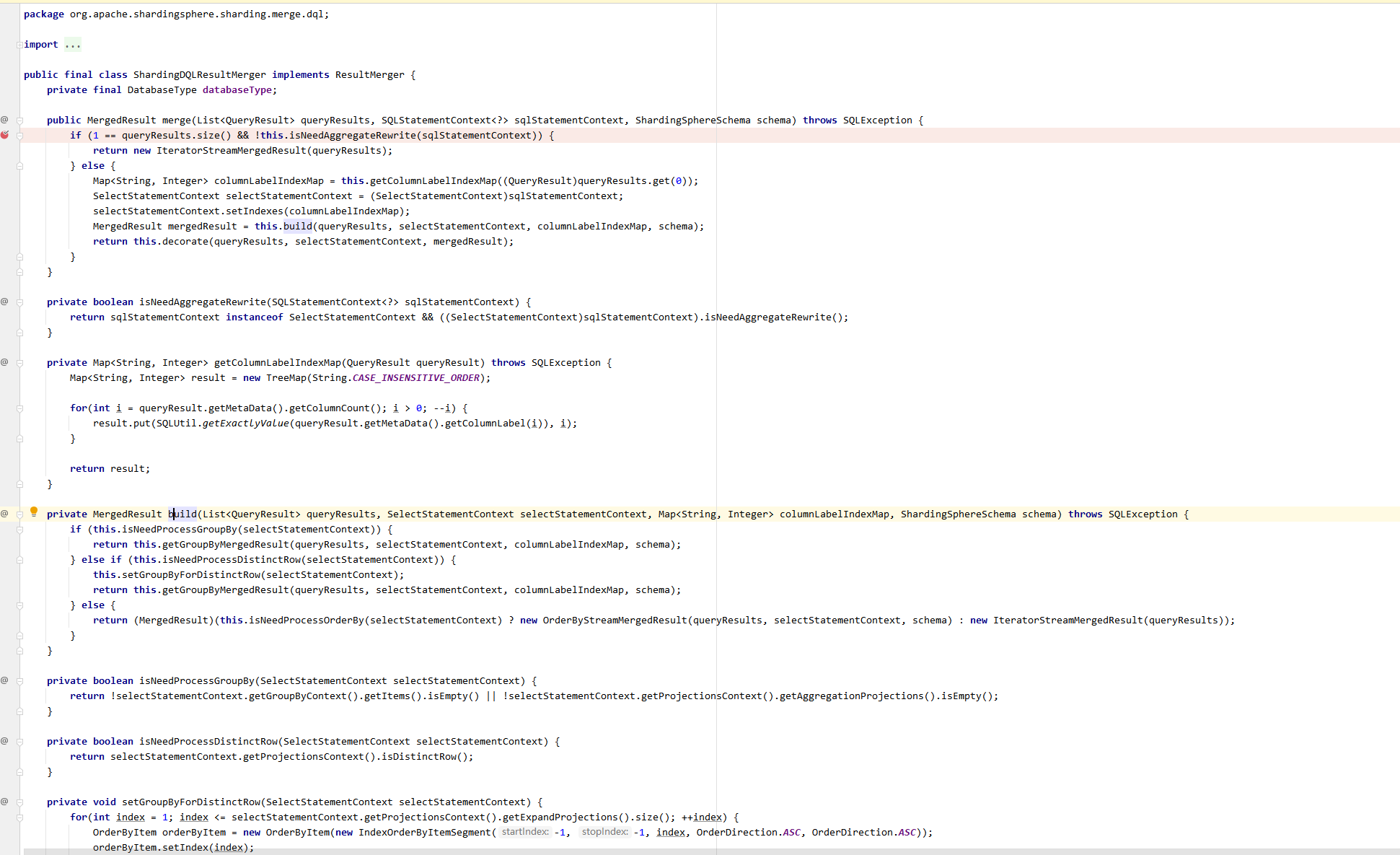
其中this.mergeQuery中调用归并引擎合并结果集合:
private MergedResult mergeQuery(List<QueryResult> queryResults) throws SQLException {
    ShardingSphereMetaData metaData = this.metaDataContexts.getMetaData(this.connection.getSchema());
    MergeEngine mergeEngine = new MergeEngine(this.connection.getSchema(), metaData.getResource().getDatabaseType(), metaData.getSchema(), this.metaDataContexts.getProps(), metaData.getRuleMetaData().getRules());//归并引擎
    return mergeEngine.merge(queryResults, this.executionContext.getSqlStatementContext());
}
二、源码
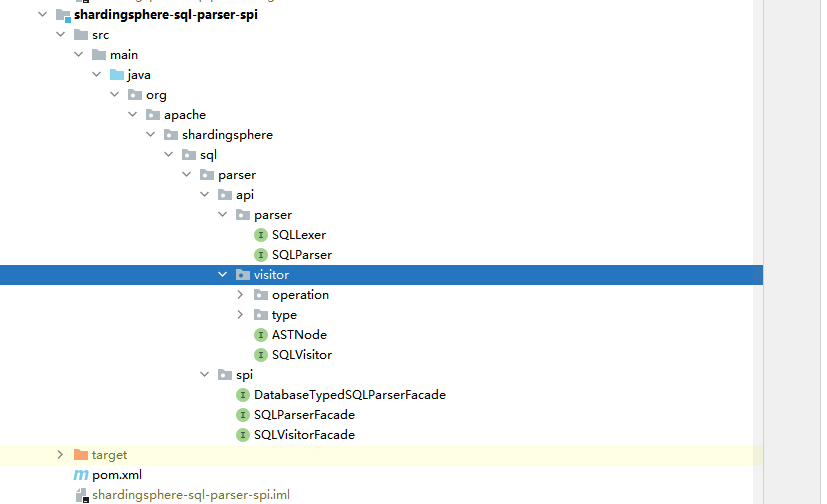
解析,获取sqlStatement
由antlr生成,包括lexer、parser、vistor,支持扩展。
路由
包shardingsphere-infra-route和org.apache.shardingsphere.sharding.route.engine
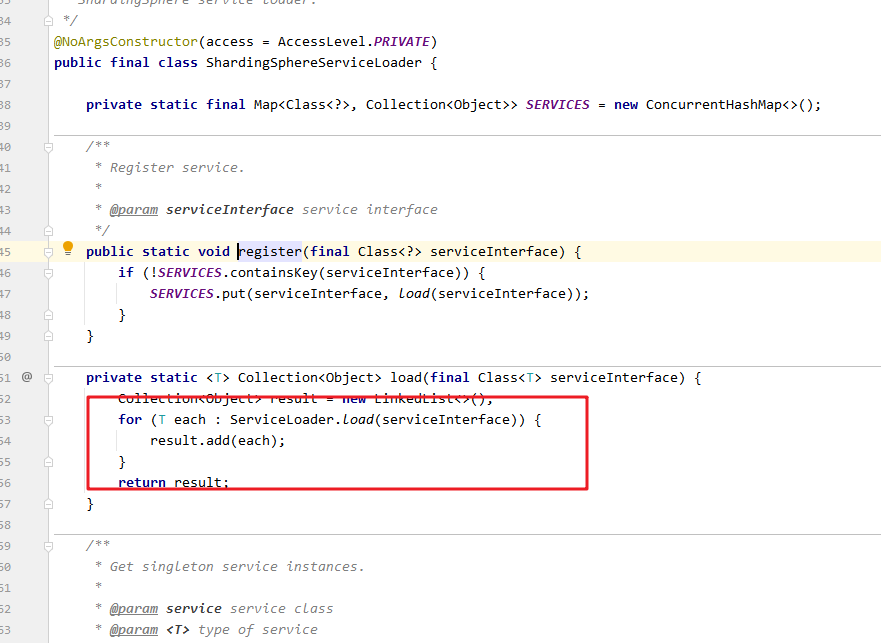
两种路由执行器AllSQLRouteExecutor和PartialSQLRouteExecutor,执行器支持spi扩展。

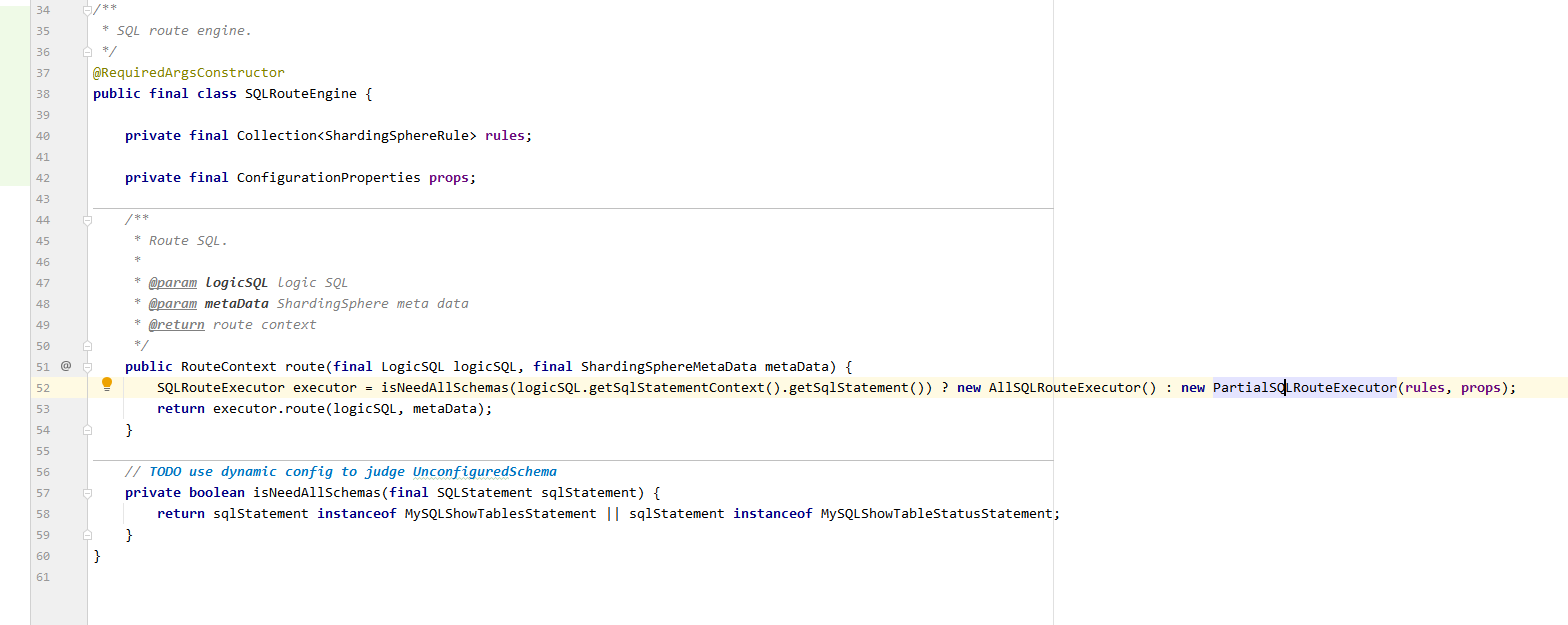
由路由引擎根据sqlstatement类型判断使用AllSQLRouteExecutor还是PartialSQLRouteExecutor
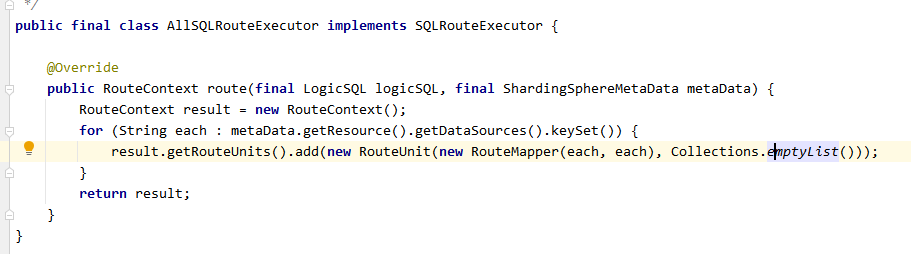
AllSQLRouteExecutor为不添加任何规则的直接路由
PartialSQLRouteExecutor首先判断是否是Hint强制路由,如果是则获取数据源直接返回,否则逐个添加路由规则。最后判断如果没有规则被添加,数据源唯一,则直接获取数据源返回。
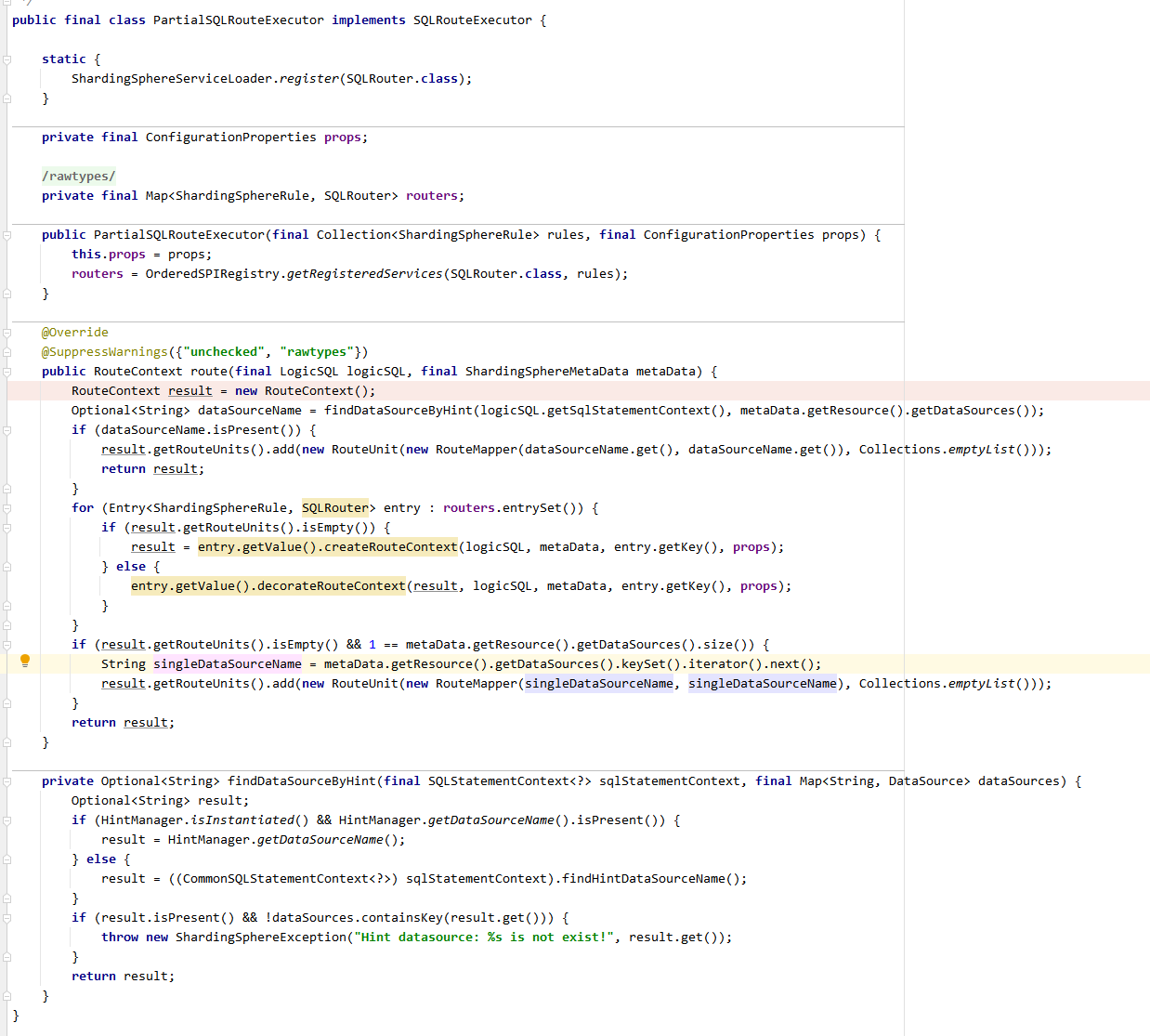
以查询,分片规则为例,构建RouteContext过程如下:
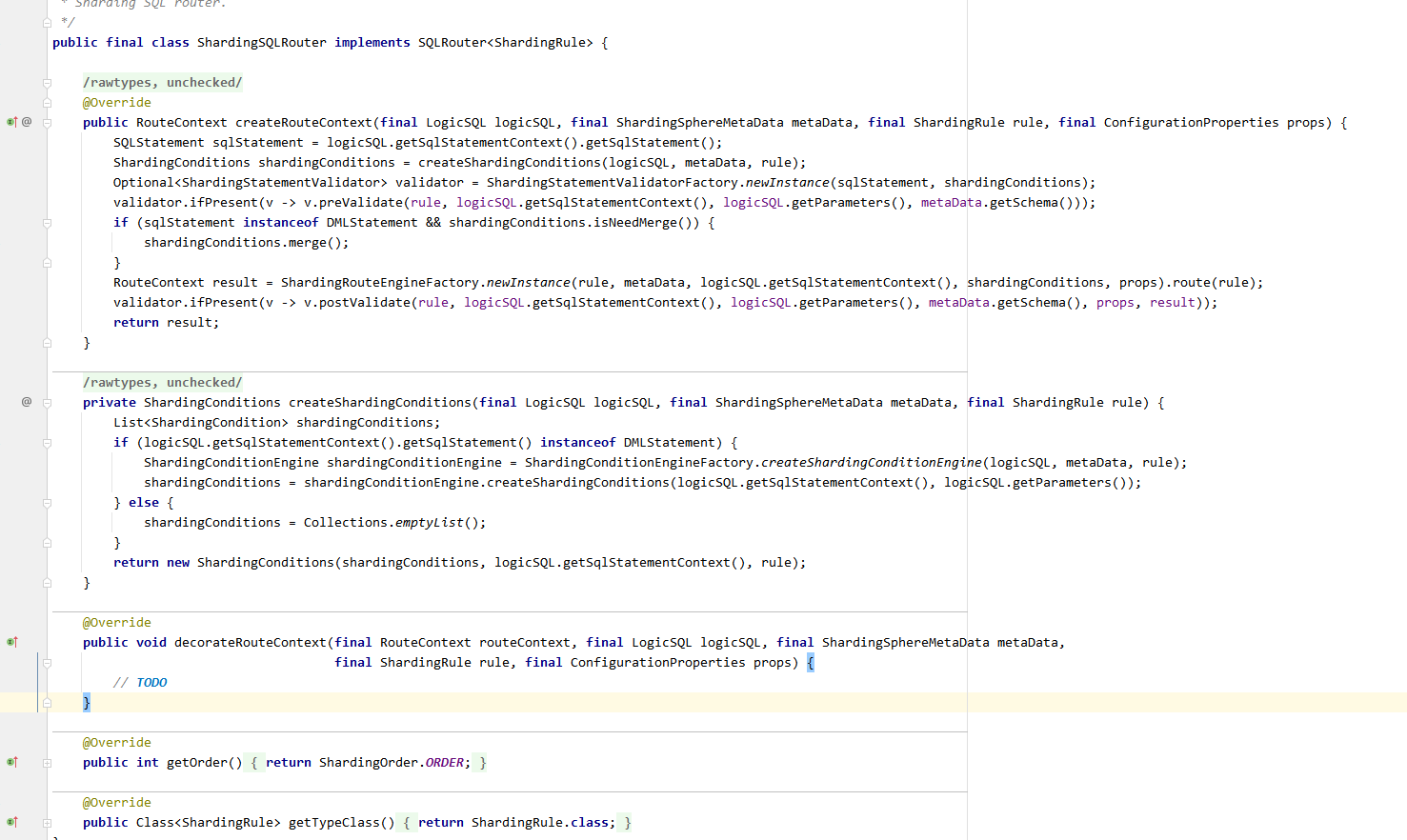
处理 WHERE子句分片条件后处理分库分表条件
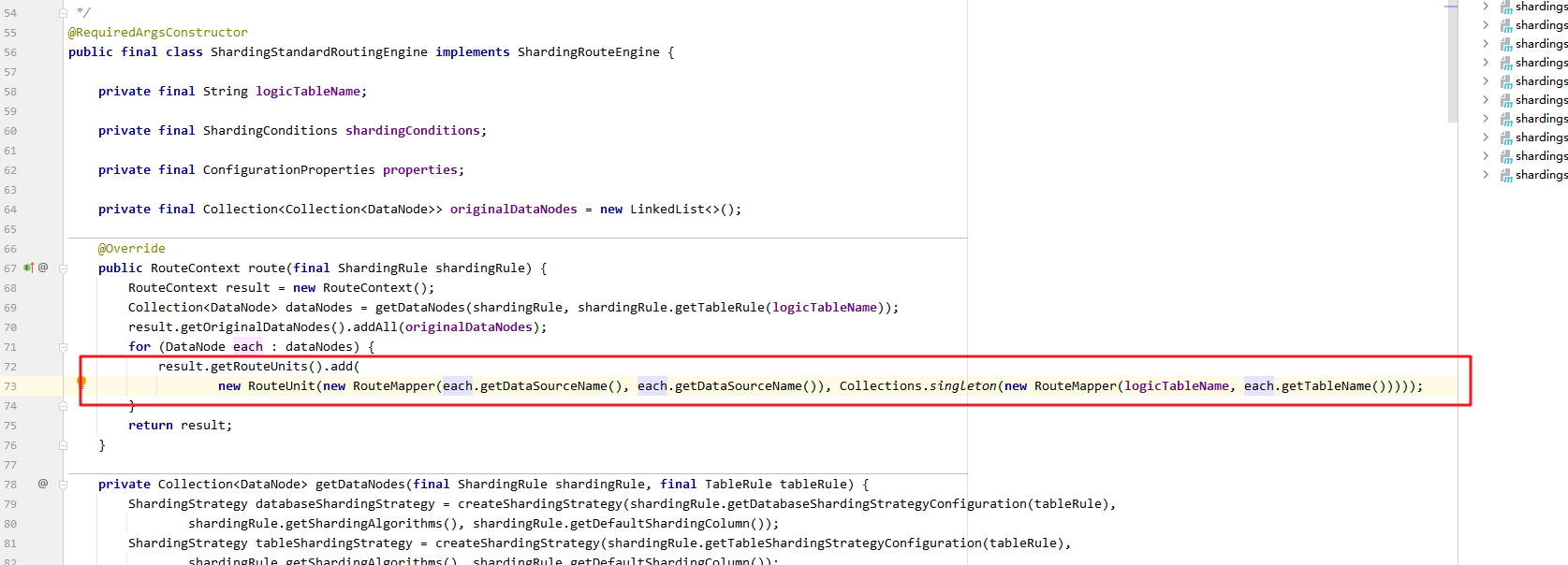
在获取每个实际数据节点后将每个实际数据节点加入RouteContext
改写
包org.apache.shardingsphere.infra.rewrite据路由结果对原始 SQL 进行改写,生成最终要执行的 SQL 和参数集合。
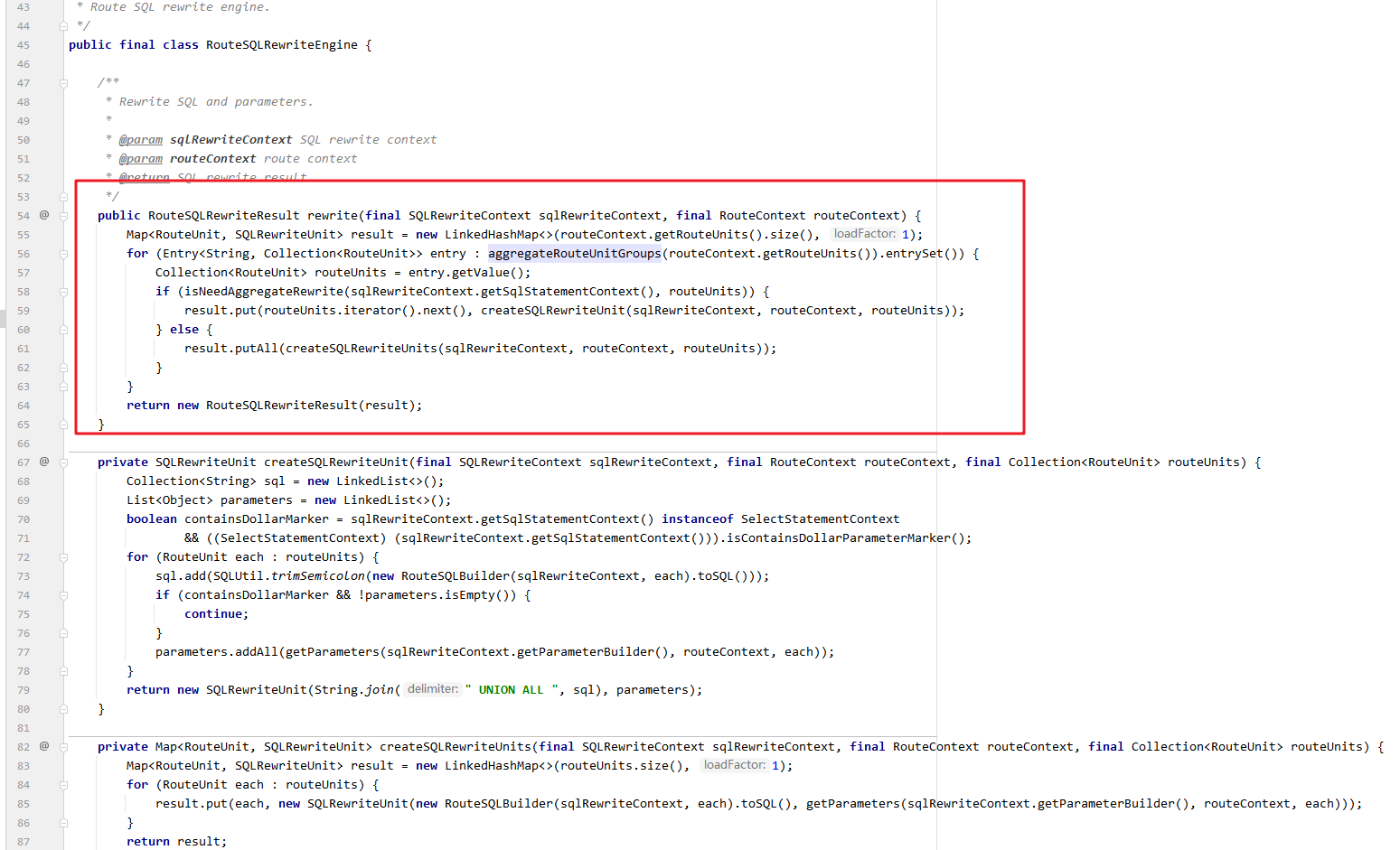
首先按数据源分组路由单元,接着判断是否需要聚合改写(UNION ALL),然后根据判断结果选择不同的重写策略,最后返回包含所有路由单元重写结果的对象
具体转sql代码如下:
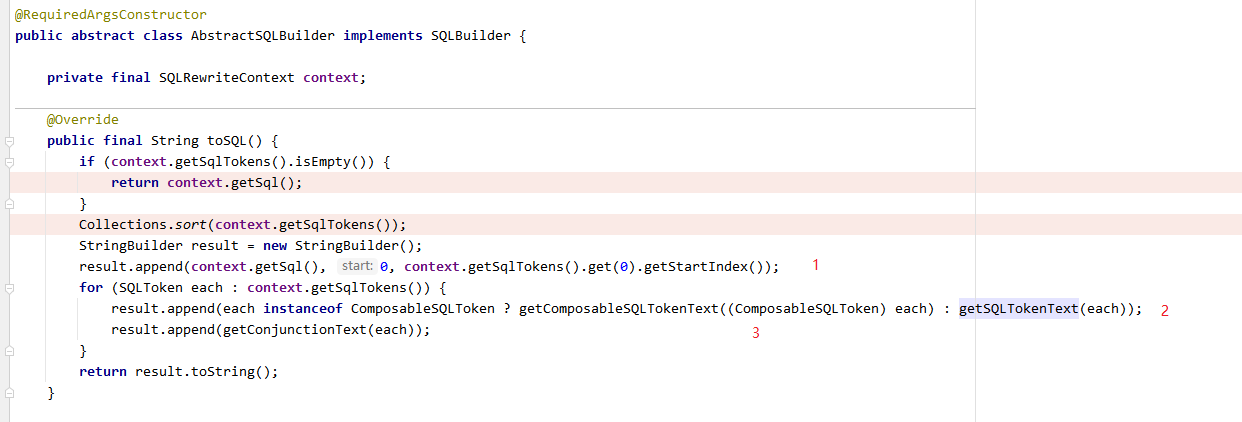
例如逻辑a表有a_0、a_1、a_2实际表,则select xx from a where xxx=xxx;拼接流程为第一步截取select xx from ,第二步拼接实际表名,第三步拼接末尾条件。
执行
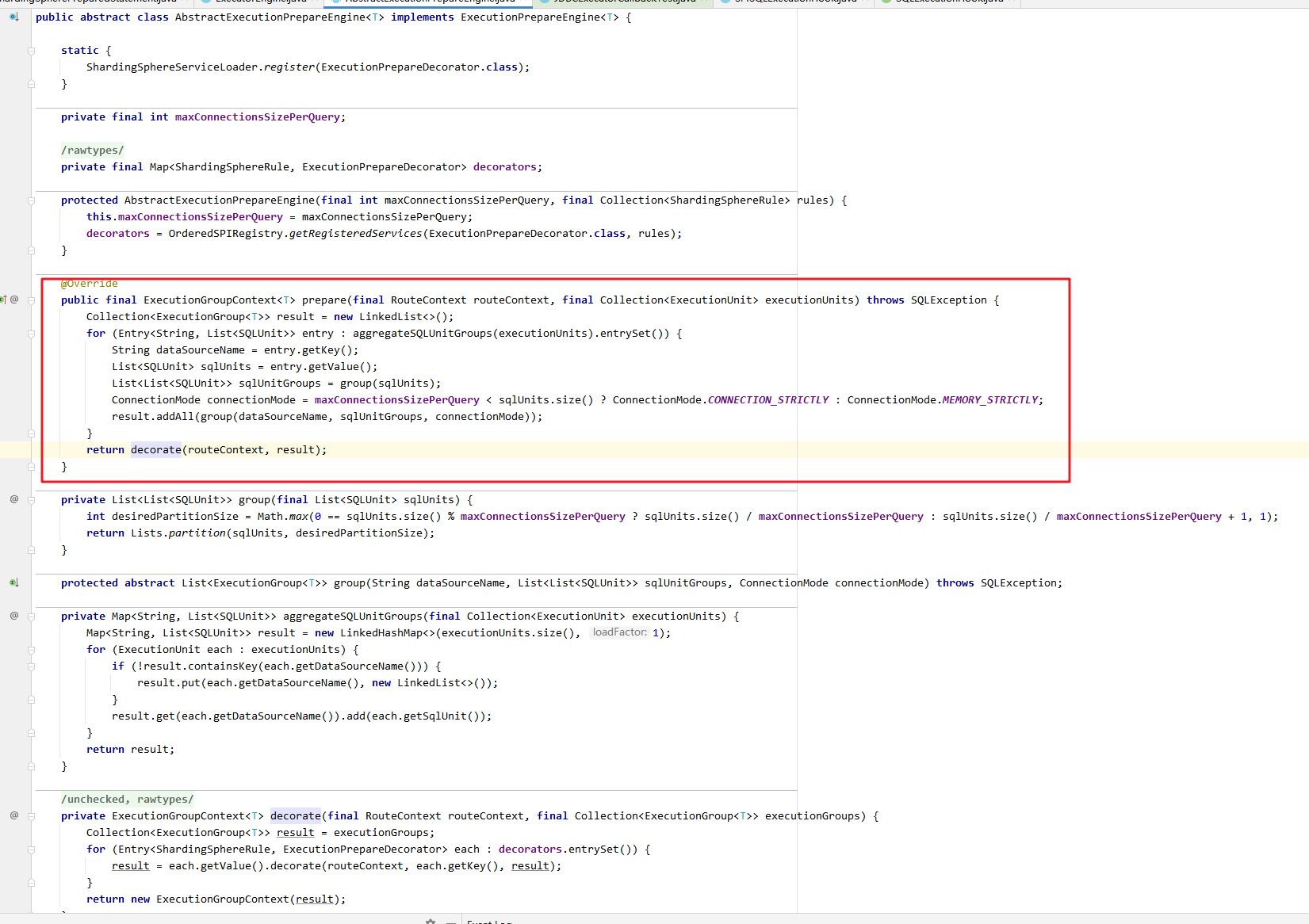
在执行前,ExecutionGroupContext<JDBCExecutionUnit> executionGroupContext = createExecutionGroupContext();里通过ExecutionPrepareEngine对需要执行的实际sql进行分组(根据maxConnectionsSizePerQuery),对连接模式进行选择(maxConnectionsSizePerQuery),并提供spi扩展支持规则特定的执行准备逻辑。
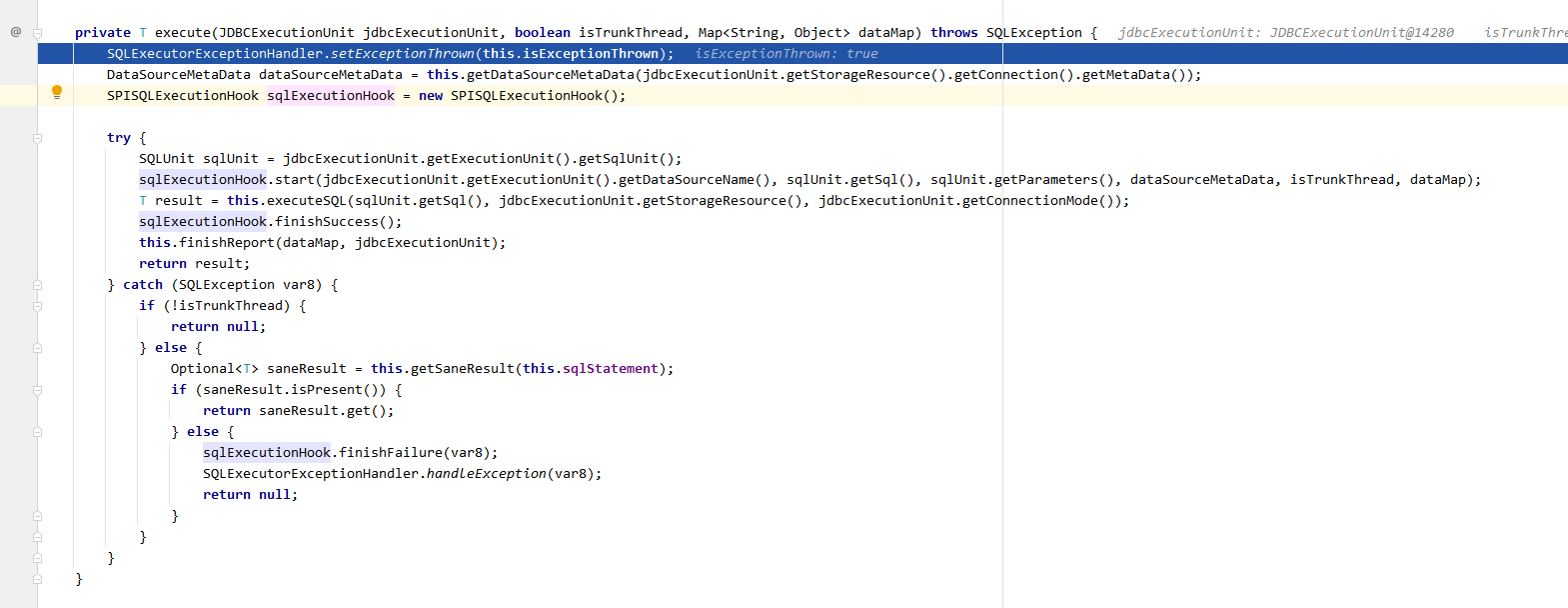
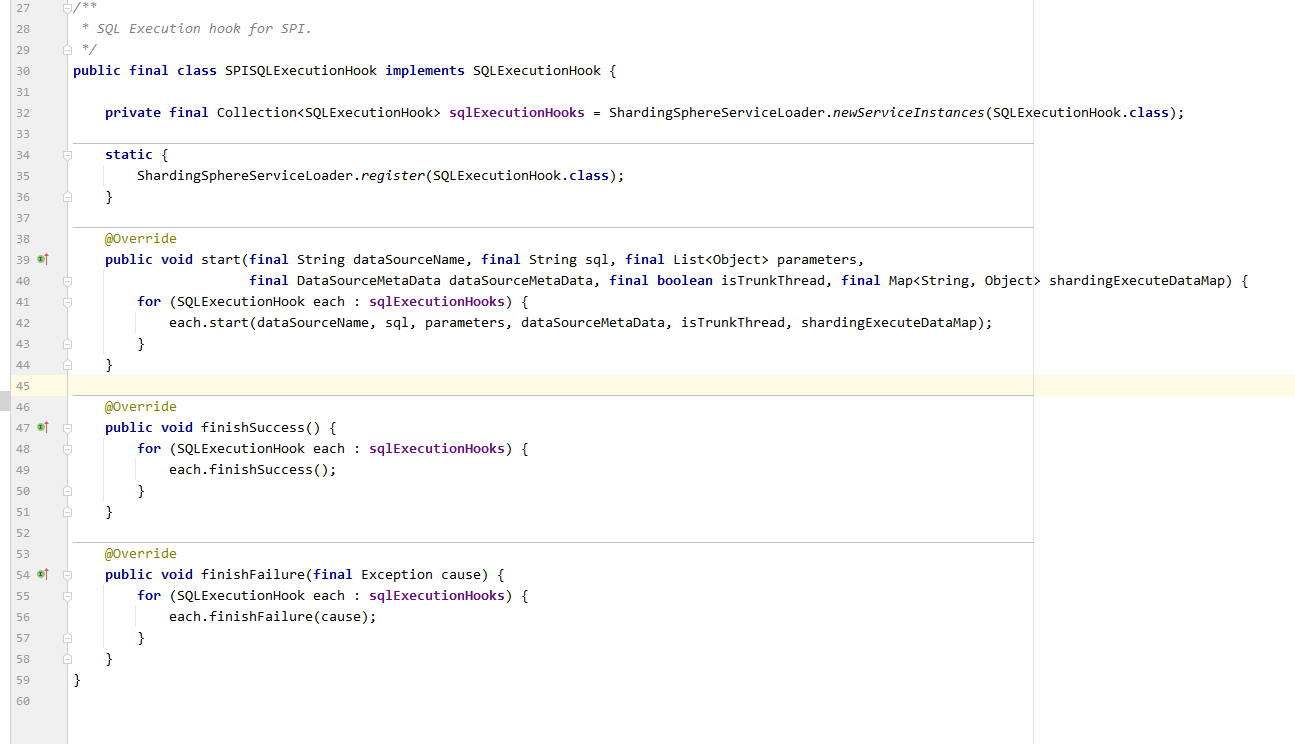
在sql执行前,提供了可扩展的钩子方法
结果归并

 浙公网安备 33010602011771号