
nowcoder-oj【面试高频TOP榜单-简单难度(5)5道】
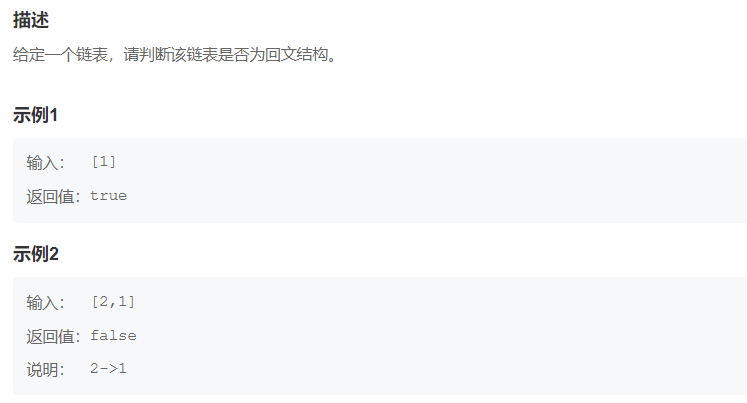
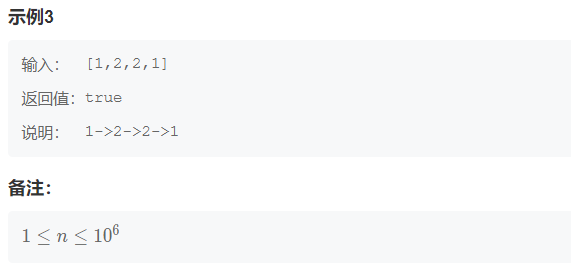
1、NC96 判断一个链表是否为回文结构
import java.util.*;

/*
 * public class ListNode {
 *   int val;
 *   ListNode next = null;
 * }
 */

public class Solution {
    /**
     *
     * @param head ListNode类 the head
     * @return bool布尔型
     */
    public boolean isPail (ListNode head) {
        // write code here
    }
}
实现
/*
 * public class ListNode {
 *   int val;
 *   ListNode next = null;
 * }
 */

import java.util.*;

public class Solution {
    /**
     *
     * @param head ListNode类 the head
     * @return bool布尔型
     */

    //未完成:11/13 组用例通过
    public boolean isPail (ListNode head) {
        if(head == null){
            return false;
        }
        if(head.next == null){
            return true;
        }
        //思路:遍历单链表,将所有节点的数据存入一个数组/列表,遍历前一半列表,对比后一半中对应位置的数值是否一致
        ArrayList<Integer> list = new ArrayList<>();
        while(head != null){
            list.add(head.val);
            head = head.next;
        }
        int len = list.size();
//         if(len % 2 == 0){ //偶数个元素
//         }else{ //奇数个元素(中间元素不需要参与遍历对比)
//         }
        //经过推导发现:以下遍历可以解决奇偶数问题(即i<len/2可以避开奇数列表中的最中间元素)
        for(int i=0; i<len/2; i++){
                if(list.get(i) != list.get(len-i-1)){ //推导出后半段回文对应位置下标为len-i-1
                    return false;
                }
        }
        return true;
    }

}
参考
【数据结构和算法】判断回文链表,图文详解_牛客博客 (nowcoder.net)

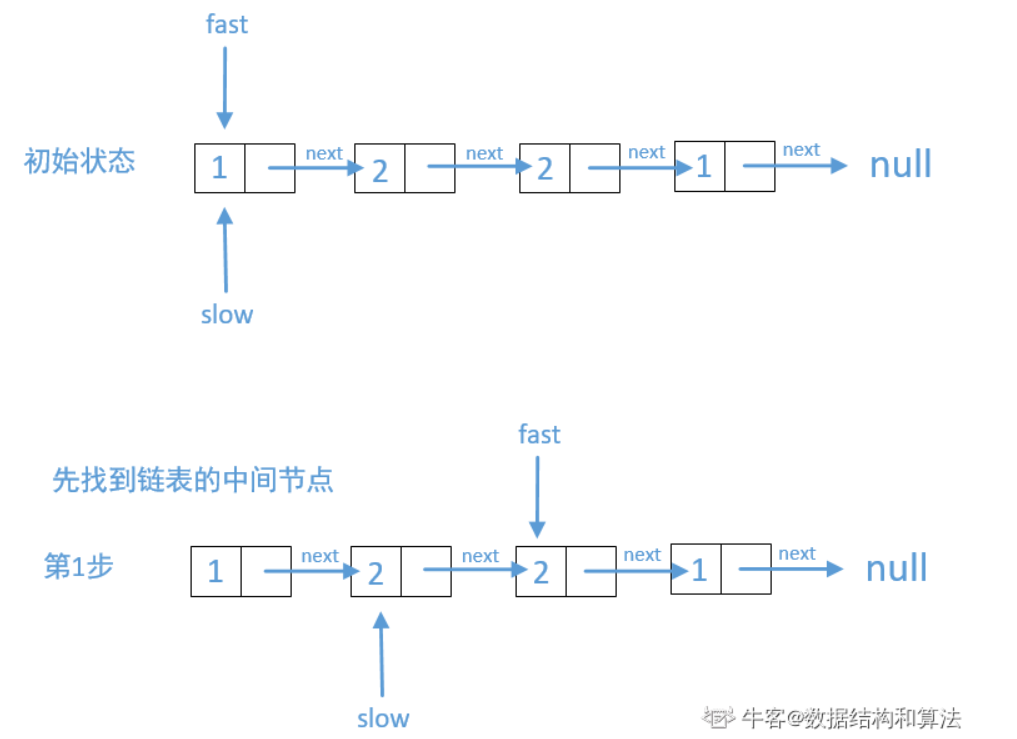
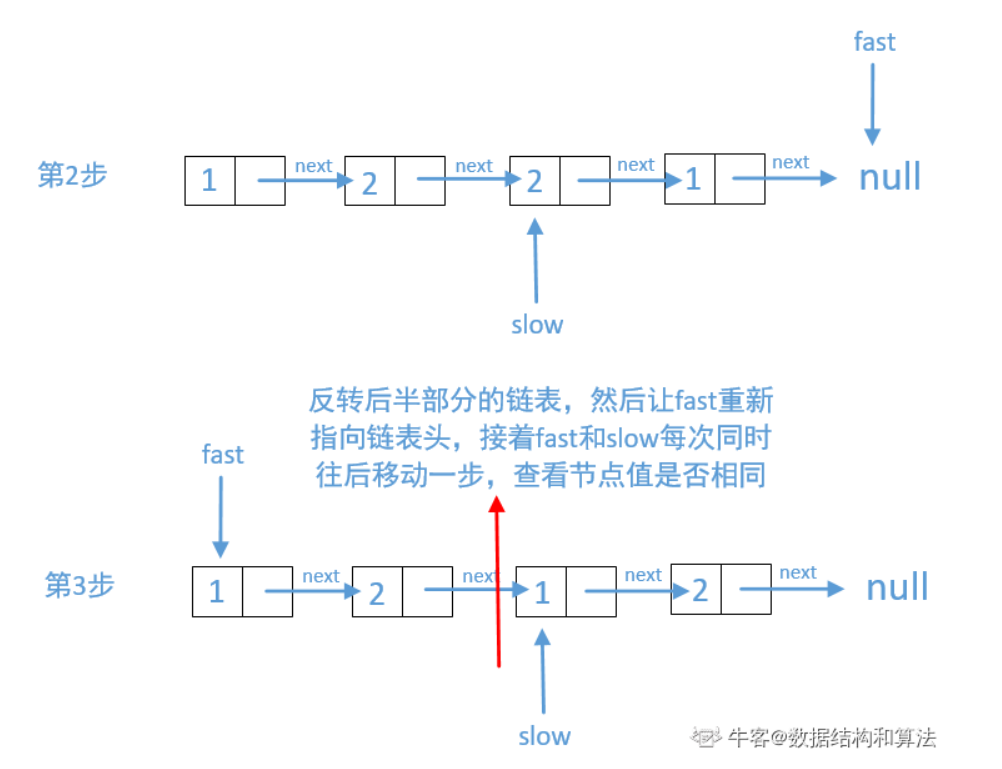
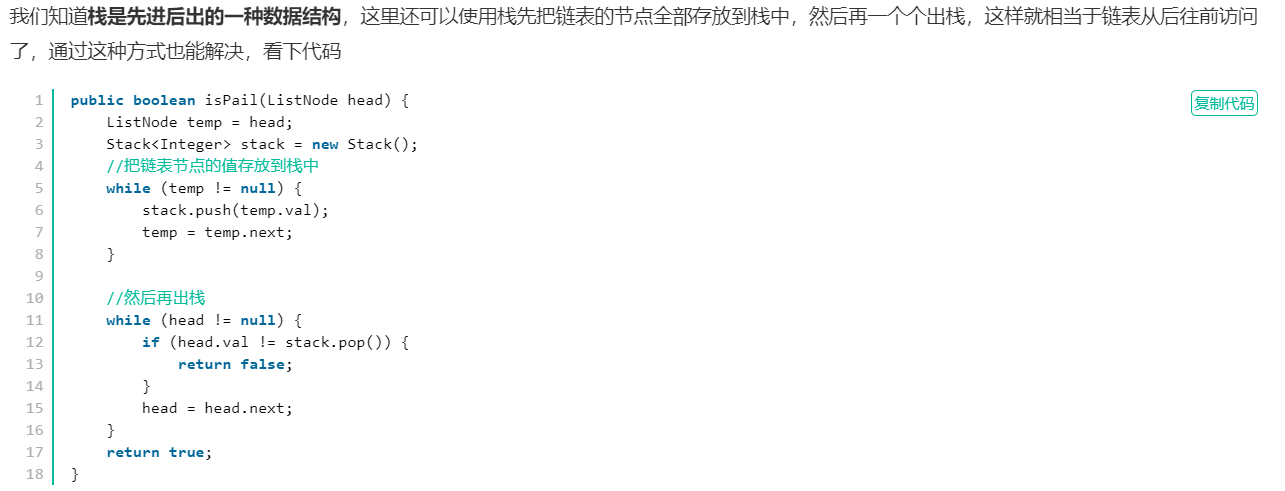
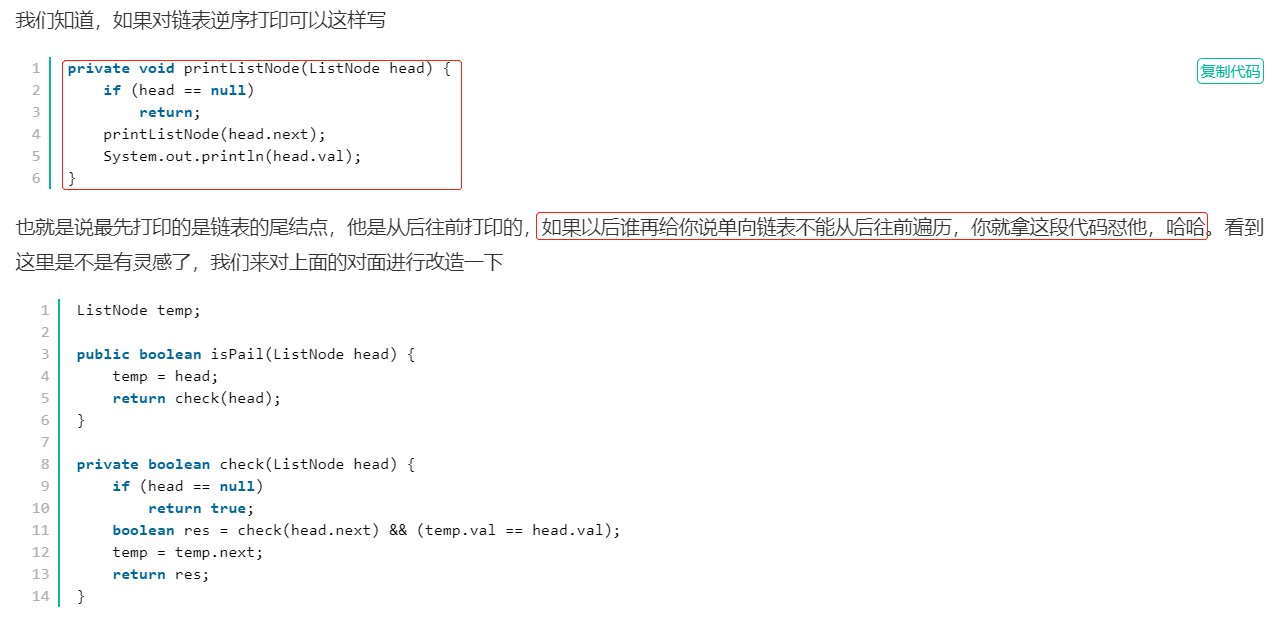
//思路:快慢指针找到单链表的“中间节点”,反转后半部分链表,同步遍历两个小链表,对比对应节点的值
import java.util.*;
public class Solution {

    public boolean isPail (ListNode head) {
        //通过快慢指针找到中点
        ListNode fast = head, slow = head;
        while(fast != null && fast.next != null){
            fast = fast.next.next;
            slow = slow.next;
        }
        //如果fast不为空,说明链表的长度是奇数个
        if(fast != null){
            slow = slow.next;
        }
        //反转后半部分链表
        slow = reverse(slow);
        //前半小链表(逻辑上是两个小链表,其实fast还是原链表但我们只需要其前一半,后半部分是名副其实的反转构造的小链表)
        fast = head;
        //遍历,比较对应节点值是否相等
        while(slow != null){
            if(fast.val != slow.val){
                return false;
            }else{
                fast = fast.next;
                slow = slow.next;
            }
        }
        return true;
    }

    public ListNode reverse(ListNode head) {
        ListNode prev = null;
        while (head != null) {
            ListNode temp = head.next;
            head.next = prev;
            prev = head;
            head = temp;
        }
        return prev;
    }

}
2、NC34 求路径
import java.util.*;


public class Solution {
    /**
     *
     * @param m int整型
     * @param n int整型
     * @return int整型
     */
    public int uniquePaths (int m, int n) {
        // write code here
    }
}
参考
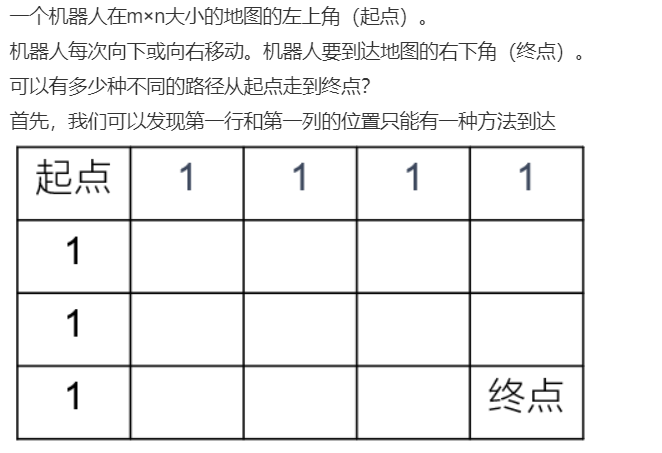
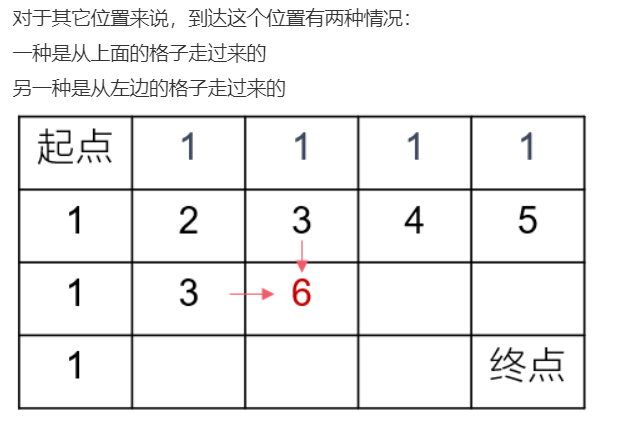
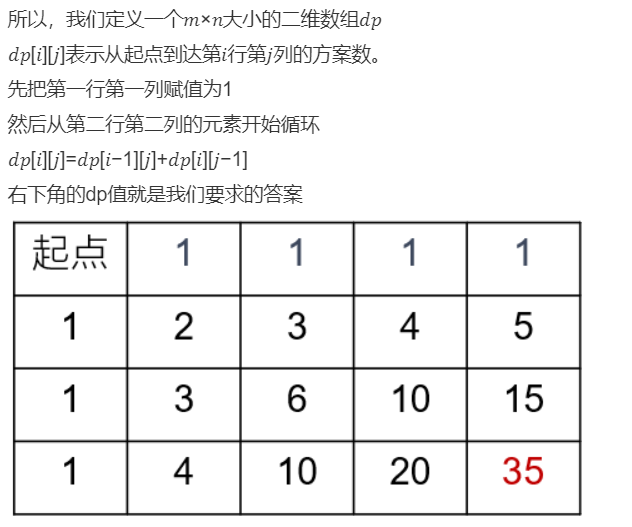
    //参考1
    public int uniquePaths (int m, int n) {

        int[][] dp = new int[m+1][n+1];
        for(int i=1; i<=m; i++){
            //第一列赋值为1
            dp[i][1] = 1;
        }
        for(int j=1; j<=n; j++){
            //第一行赋值为1
            dp[1][j] = 1;
        }
        for(int i=2; i<=m; i++){
            for(int j=2; j<=n; j++){
                dp[i][j] = dp[i-1][j] + dp[i][j-1];
            }
        }
        return dp[m][n];
    }

    //参考2
    public int uniquePaths (int m, int n) {
        int N = n+m-2;
        int K = n-1;
        double num = 1.0;
        for(int i=1; i<=K; i++){
            num = num * (N-K+i) / i;
        }
        return (int)num;
    }
3、NC57 反转数字

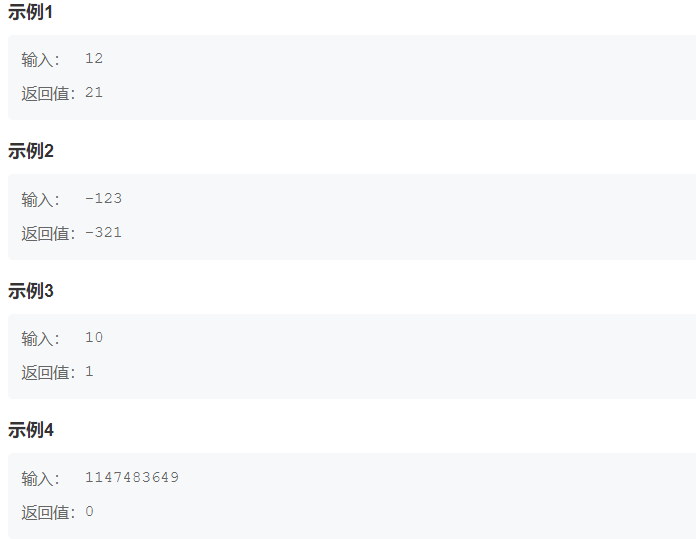
import java.util.*;


public class Solution {
    /**
     *
     * @param x int整型
     * @return int整型
     */
    public int reverse (int x) {
        // write code here
    }
}
实现
    //19/20 组用例通过
    //java.lang.NumberFormatException: For input string: "9876543212"
    public int reverse (int x) {
        boolean flag;
        if(x < 0){
            flag = false;
        }else{
            flag = true;
        }
        if(!flag){
            x = -x;
        } //不论原始输入的x是正数还是负数,此时x是正数

        String strX = String.valueOf(x);
        StringBuffer sb = new StringBuffer(strX);
        String revStrX = sb.reverse().toString();
        int res = Integer.parseInt(revStrX);

        if(!flag){
            res = -res;
        }

        //左移:num << n,相当于num乘以2的n次方
        //右移:num >> n,相当于num除以2的n次方
        //2的32次方,相当于32个2相乘,就是1乘以32个2,1<<32
//         int temp = 1 << 32; //1,没生效??
        if(res < -Math.pow(2,31) || res > Math.pow(2,31)-1){
            return 0;
        }
        return res;
    }
参考
【数据结构和算法】反转数字,图文详解_牛客博客 (nowcoder.net)
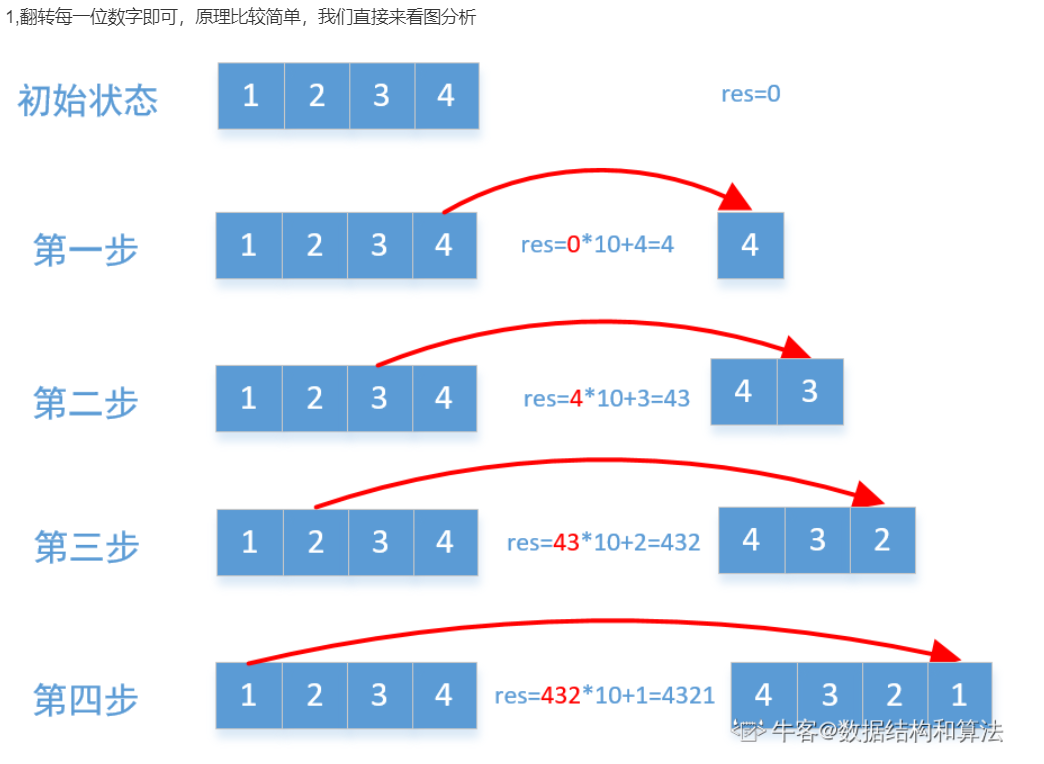
    public int reverse(int x) {
        int res = 0;
        while (x != 0) {
            int t = x % 10;
            int newRes = res * 10 + t;
            //如果数字溢出,直接返回0
            if ((newRes - t) / 10 != res)
                return 0;
            res = newRes;
            x = x / 10;
        }
        return res;
    }

    public int reverse(int x) {
        long res = 0;
        while (x != 0) {
            res = res * 10 + x % 10;
            x /= 10;
        }
        return (int) res == res ? (int) res : 0;
    }
4、NC16 判断二叉树是否对称
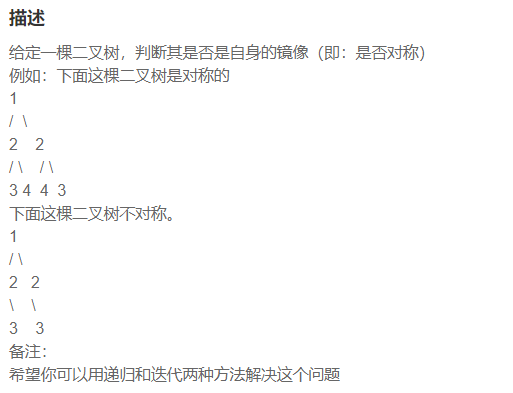
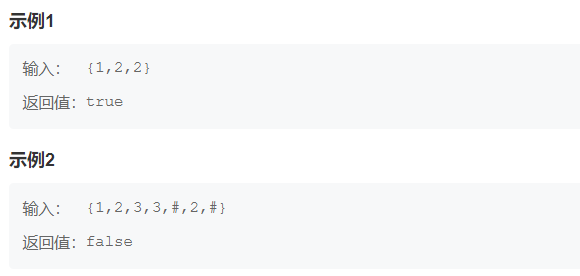
import java.util.*;

/*
 * public class TreeNode {
 *   int val = 0;
 *   TreeNode left = null;
 *   TreeNode right = null;
 * }
 */

public class Solution {
    /**
     *
     * @param root TreeNode类
     * @return bool布尔型
     */
    public boolean isSymmetric (TreeNode root) {
        // write code here
    }
}
参考1
判断二叉树是否对称【递归】【迭代】详解!_牛客博客 (nowcoder.net)

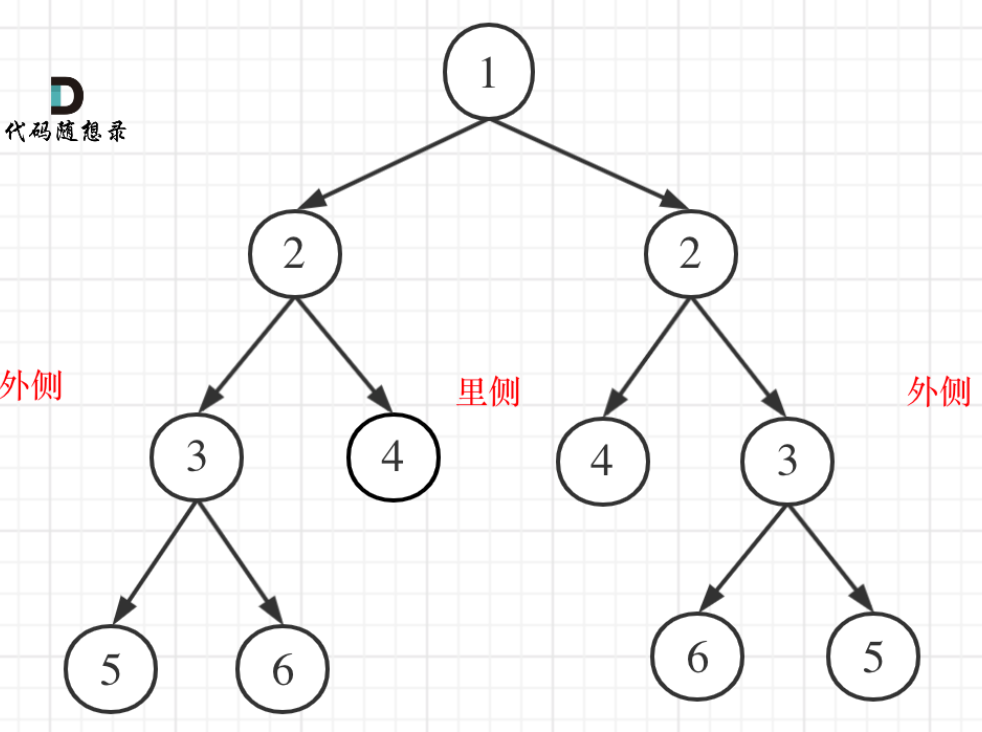

参考2
【数据结构和算法】递归和非递归两种方式解决_牛客博客 (nowcoder.net)
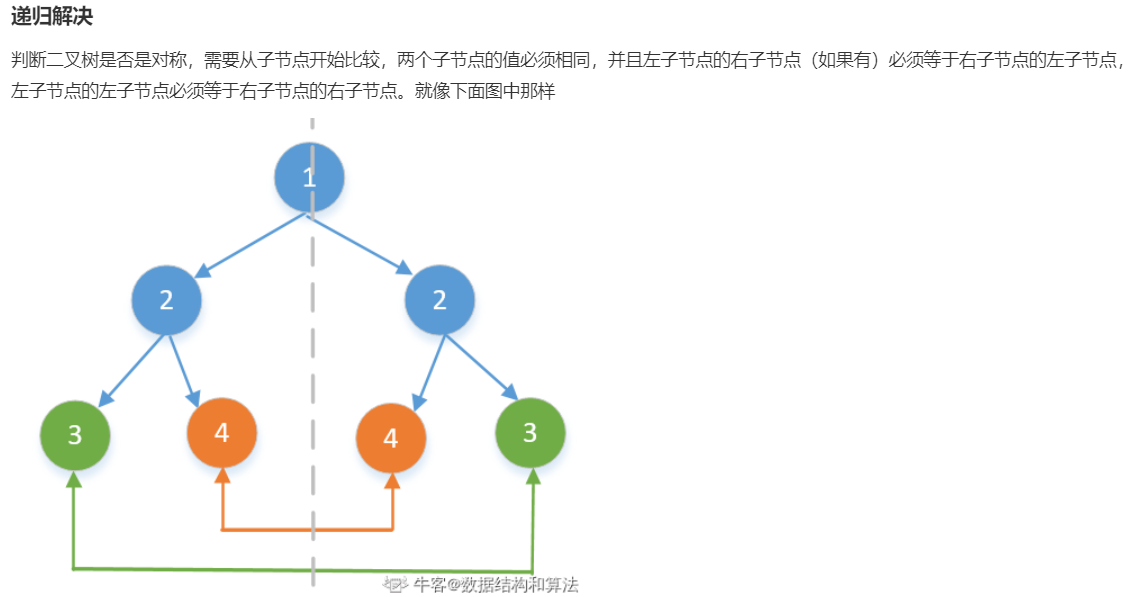
import java.util.*;
public class Solution {

     public boolean isSymmetric (TreeNode root) {
         if (root == null){
             return true;
         }
         return isSymmetricHelper(root.left, root.right); //从两个子节点开始判断
     }

    public boolean isSymmetricHelper(TreeNode leftTree, TreeNode rightTree) {
        if (leftTree == null && rightTree == null){
            //如果左右子节点都为空,说明当前节点是叶子节点,返回true
            return true;
        }
        if (leftTree == null || rightTree == null || leftTree.val != rightTree.val){
            //如果当前节点只有一个子节点或者有两个子节点,但两个子节点的值不相同,直接返回false
            return false;
        }
        //然后左子节点的左子节点和右子节点的右子节点比较,左子节点的右子节点和右子节点的左子节点比较
        return isSymmetricHelper(leftTree.left, rightTree.right)
            && isSymmetricHelper(leftTree.right, rightTree.left);
    }

}

import java.util.*;
public class Solution {

     public boolean isSymmetric (TreeNode root) {
        if (root == null){
             return true;
        }
        Queue<TreeNode> queue = new LinkedList<>(); //队列
        //左子节点和右子节点同时入队
        queue.add(root.left);
        queue.add(root.right);
        //如果队列不为空就继续循环
        while (!queue.isEmpty()) {
            //每两个出队
            TreeNode left = queue.poll(), right = queue.poll();
            //如果都为空继续循环
            if (left == null && right == null){
                continue;
            }
            //如果一个为空一个不为空,说明不是对称的,直接返回false
            if (left == null ^ right == null){
                return false;
            }
            //如果这两个值不相同,也不是对称的,直接返回false
            if (left.val != right.val){
                return false;
            }
            //这里要记住入队的顺序,他会每两个两个的出队。
            //左子节点的左子节点和右子节点的右子节点同时
            //入队,因为他俩会同时比较。
            //左子节点的右子节点和右子节点的左子节点同时入队,
            //因为他俩会同时比较
            queue.add(left.left);
            queue.add(right.right);
            queue.add(left.right);
            queue.add(right.left);
        }
        return true;
    }

}

5、NC25 删除有序链表中重复的元素
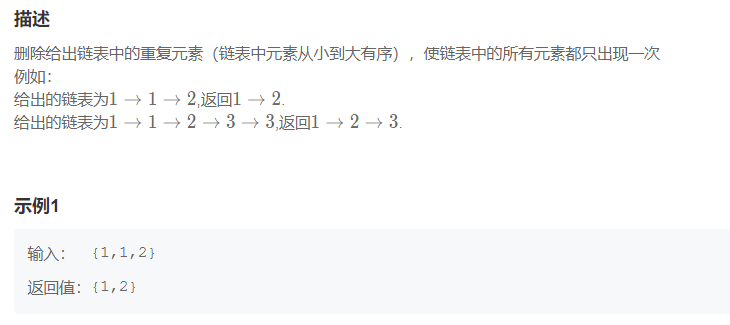
import java.util.*;

/*
 * public class ListNode {
 *   int val;
 *   ListNode next = null;
 * }
 */

public class Solution {
    /**
     *
     * @param head ListNode类
     * @return ListNode类
     */
    public ListNode deleteDuplicates (ListNode head) {
        // write code here
    }
}
实现
import java.util.*;
public class Solution {
    public ListNode deleteDuplicates (ListNode head) {
        if(head == null || head.next == null){
            return head;
        }
        TreeSet<Integer> set = new TreeSet<>();
        while(head != null){
            set.add(head.val);
            head = head.next;
        }
        ListNode res = new ListNode(-1); //头结点不能为空,因为null.next报空指针,-1不属于结果仅占位用
        ListNode move = res;
        for(int num: set){
            ListNode temp = new ListNode(num);
            move.next = temp;
            move = move.next;
        }
        return res.next;

    }
}
其他1
import java.util.*;
public class Solution {
    public ListNode deleteDuplicates (ListNode head) {
        if (head == null){
            return head;
        }
        // a-b-c,三个位置使用三个指针
        // 如果 b=c,删除b就可以
        // 创建一个虚拟头部
        ListNode visual = new ListNode(-1);
        visual.next = head;

        ListNode first = visual;
        ListNode second = head;
        ListNode third = head.next;

        while (third!=null){
            //相等就进行处理
            if (second.val == third.val){
                first.next = third;
                second = third;
                third = third.next;
            } else {
                // 不相等就继续遍历
                first = second;
                second = third;
                third = third.next;
            }
        }
        return visual.next;
    }
}
其他2
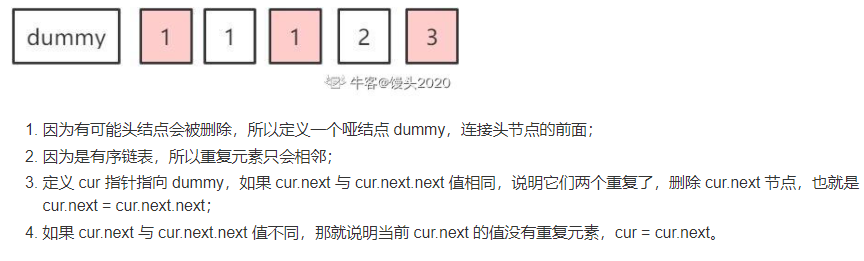
import java.util.*;
class Solution {
    public ListNode deleteDuplicates(ListNode head) {
        ListNode dummy = new ListNode(Integer.MAX_VALUE);
        dummy.next = head;
        ListNode cur = dummy;
        while (cur.next != null && cur.next.next != null) {
            if (cur.next.val == cur.next.next.val) {
                cur.next = cur.next.next;
            } else {
                cur = cur.next;
            }
        }
        return dummy.next;
    }
}

 浙公网安备 33010602011771号