 1 package day4.haifei03;
 2
 3 /*
 4 3 异常
 5
 6 3.1异常就是程序出现了不正常的情况
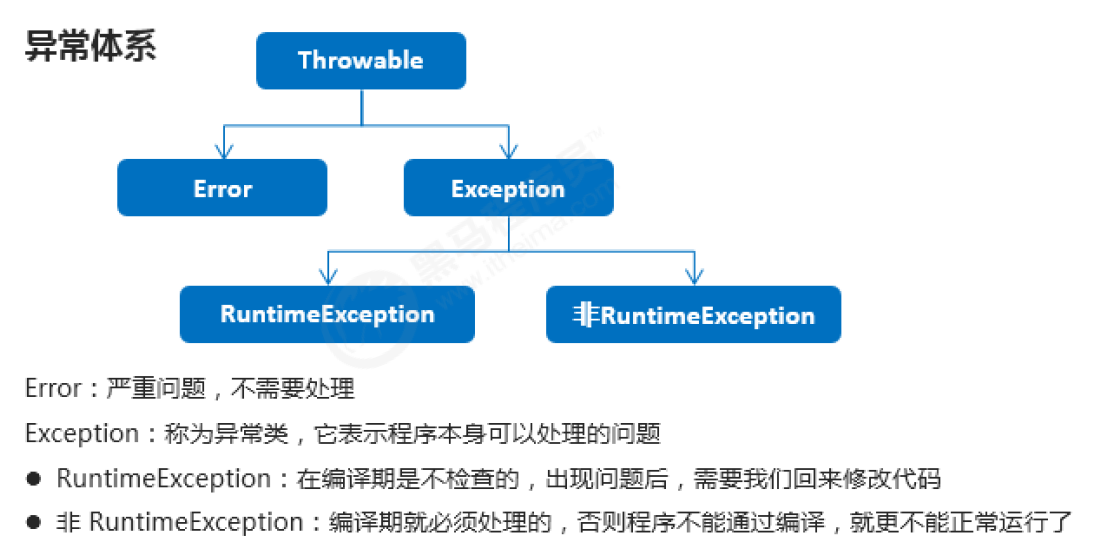
 7     异常体系-图
 8
 9 3.2JVM默认处理异常的方式
10     如果程序出现了问题,我们没有做任何处理,最终JVM 会做默认的处理,处理方式有如下两个步骤:
11     把异常的名称,错误原因及异常出现的位置等信息输出在了控制台
12     程序停止执行
13
14 3.3try-catch方式处理异常
15     格式
16         try {
17             可能出现异常的代码;
18         } catch(异常类名 变量名) {
19             异常的处理代码;
20         }
21     流程
22         程序从 try 里面的代码开始执行
23         出现异常,就会跳转到对应的 catch 里面去执行
24             出现异常时会自动生成一个异常类对象,该对象被提交给Java运行时系统
25             Java运行时系统收到该对象时,会到catch中找到匹配的异常类然后处理
26         执行完毕之后,程序还可以继续往下执行
27
28  */
29 public class ExceptionDemo1 {
30
31     public static void main(String[] args) {
32         System.out.println("begin");
33         method();
34         System.out.println("end"); //未try-catch时不执行,try-catch时执行
35     }
36
37     /*public static void method(){
38         int[] arr = {1, 2, 3};
39         System.out.println(arr[1]); //ok
40         System.out.println(arr[3]); //ArrayIndexOutOfBoundsException
41     }*/
42
43     public static void method(){
44         try {
45             int[] arr = {1, 2, 3};
46             System.out.println(arr[1]);
47             System.out.println(arr[3]); //new ArrayIndexOutOfBoundsException();
48         }catch (ArrayIndexOutOfBoundsException e){
49 //            System.out.println("你访问的数组索引不存在");
50             e.printStackTrace();
51         }
52     }
53
54 }


 浙公网安备 33010602011771号