![]()
from collections import deque

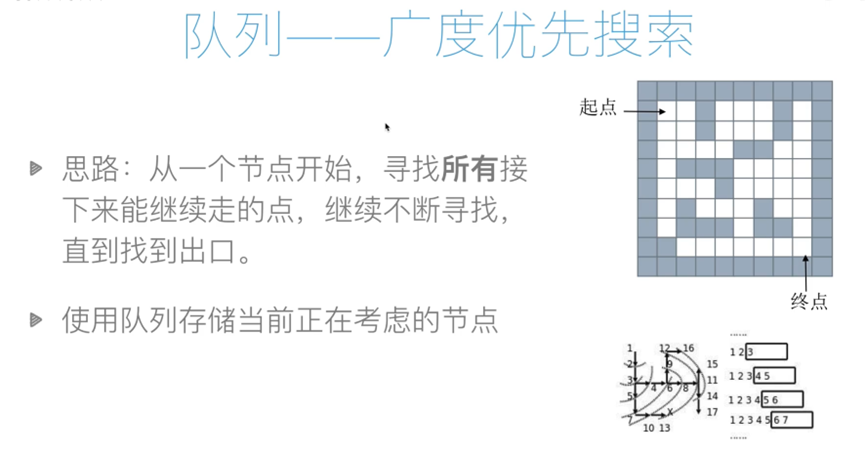
maze = [
    [1, 1, 1, 1, 1, 1, 1, 1, 1, 1],
    [1, 0, 1, 1, 1, 1, 0, 1, 1, 1],
    [1, 0, 1, 1, 1, 1, 0, 1, 0, 1],
    [1, 0, 1, 0, 0, 0, 0, 0, 0, 1],
    [1, 0, 0, 0, 1, 0, 1, 1, 0, 1],
    [1, 0, 1, 0, 1, 0, 1, 1, 0, 1],
    [1, 1, 1, 1, 1, 0, 0, 0, 0, 1],
    [1, 1, 1, 1, 1, 1, 1, 1, 1, 1],
]

# 封装四个方向
dirs = [
    lambda x, y: (x + 1, y),
    lambda x, y: (x - 1, y),
    lambda x, y: (x, y - 1),
    lambda x, y: (x, y + 1)
]


def print_r(path):
    curNode = path[-1]
    realpath = []
    while curNode[2] != -1:
        realpath.append(curNode[0:2])
        curNode = path[curNode[2]]

    realpath.append(curNode[0:2])  # 起点
    realpath.reverse()
    for node in realpath:
        print(node)


def maze_path_queue(x1, y1, x2, y2):
    queue = deque()
    queue.append((x1, y1, -1))
    path = []
    while len(queue) > 0:
        curNode = queue.popleft()
        path.append(curNode)
        if curNode[0] == x2 and curNode[1] == y2:
            # 终点
            print_r(path)
            return True
        for dir in dirs:
            nextNode = dir(curNode[0], curNode[1])
            if maze[nextNode[0]][nextNode[1]] == 0:
                queue.append((nextNode[0], nextNode[1], len(path) - 1))  # 后续节点进队,记录哪个节点带他来的
                maze[nextNode[0]][nextNode[1]] = 2  # 标记为已经走过
    else:
        print("没路")
        return False


maze_path_queue(1, 1, 6, 8)



 浙公网安备 33010602011771号