
使用c语言扩展python第一篇,返回不同类型
项目目录结构:
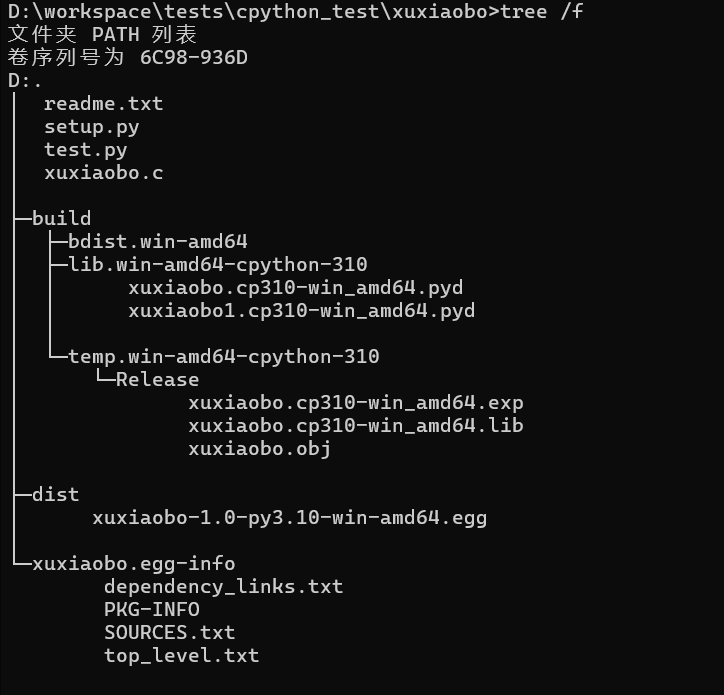
xuxiaobo.c内容:
#include <Python.h>
#include <stdio.h>
#include <stdlib.h>
#include <string.h>
int count_substrings(const char *str, const char *delim) {
int count = 0;
char *token = strtok((char *)str, delim); // 注意这里的强制类型转换
while (token != NULL) {
count++;
token = strtok(NULL, delim); // 继续分割剩余的字符串
}
return count;
}
//定义打招呼函数
static PyObject* xuxiaobo_hello(PyObject* self, PyObject* args) {
char *name;
char *dest = malloc(1024);
if (!PyArg_ParseTuple(args, "s", &name)) {
return NULL;
}
/*
strcpy(dest, "");
strcat(dest, "hello, ");
strcat(dest, name);
strcat(dest, "!");
*/
sprintf(dest, "你好, %s!", name);
return Py_BuildValue("s", dest);
}
//定义计算平方函数
static PyObject* xuxiaobo_square(PyObject* self, PyObject* args) {
int num;
if (!PyArg_ParseTuple(args, "i", &num)) {
return NULL;
}
return Py_BuildValue("i", num * num);
}
//定义计算立方函数
static PyObject* xuxiaobo_cube(PyObject* self, PyObject* args) {
double num;
if (!PyArg_ParseTuple(args, "d:xuxiaobo_cube", &num)) {
return NULL;
}
return Py_BuildValue("d", num * num * num);
}
//定义解析url参数函数
static PyObject* xuxiaobo_parse_url(PyObject* self, PyObject* args) {
char *params_str;
char *delim = "=&,. ";
PyObject* pDict = PyDict_New();
if (!PyArg_ParseTuple(args, "s", ¶ms_str)) {
return NULL;
}
int i = 0;
char *token = strtok(params_str, delim);
while (token != NULL) {
char key[1024];
char value[1024];
if(i%2 == 0){
strcpy(key, token);
//printf("debug key=>%s\n", key);
} else{
strcpy(value, token);
//printf("debug value=>%s\n", value);
PyDict_SetItemString(pDict, key, Py_BuildValue("s", value));
}
token = strtok(NULL, delim);
i++;
}
//printf("i=>%d\n", i);
return pDict;
}
//定义字符串切分函数,返回list
static PyObject* xuxiaobo_split_str_list(PyObject* self, PyObject* args) {
char *params_str;
char *delim = "&,. ";
PyObject* plist = PyList_New(0);
if (!PyArg_ParseTuple(args, "s", ¶ms_str)) {
return NULL;
}
char *token = strtok(params_str, delim);
while (token != NULL) {
PyList_Append(plist, Py_BuildValue("s", token));
token = strtok(NULL, delim);
}
return plist;
}
//定义字符串切分函数,返回tuple
static PyObject* xuxiaobo_split_str_tuple(PyObject* self, PyObject* args) {
char *delim = "&,. ";
char *params_str;
char params_str_tmp[1024];
if (!PyArg_ParseTuple(args, "s", ¶ms_str)) {
return NULL;
}
strcpy(params_str_tmp, params_str);
int max = count_substrings(params_str_tmp, delim);
PyObject* ptuple = PyTuple_New(max);
int i = 0;
char *token = strtok(params_str, delim);
while (token != NULL && i < max) {
//printf("[%d]debug=>%s\n", i, token);
PyTuple_SetItem(ptuple, i, Py_BuildValue("s", token));
token = strtok(NULL, delim);
i++;
}
return ptuple;
}
//定义字符串切分函数,返回set
static PyObject* xuxiaobo_split_str_set(PyObject* self, PyObject* args) {
char *delim = "&,. ";
char *params_str;
PyObject* pset = PySet_New(NULL);
if (!PyArg_ParseTuple(args, "s", ¶ms_str)) {
return NULL;
}
int i = 0;
char *token = strtok(params_str, delim);
while (token != NULL) {
//printf("[%d]debug=>%s\n", i, token);
if(PySet_Add(pset, Py_BuildValue("s", token)) == -1){
Py_DECREF(pset);
return NULL;
}
token = strtok(NULL, delim);
i++;
}
return pset;
}
//定义季节检测函数,返回bool
static PyObject* xuxiaobo_is_season(PyObject* self, PyObject* args) {
char *params_str;
char params_str_tmp[1024];
if (!PyArg_ParseTuple(args, "s", ¶ms_str)) {
return NULL;
}
strcpy(params_str_tmp, params_str);
if(strcmp(params_str_tmp, "春") == 0 ||
strcmp(params_str_tmp, "夏") == 0 ||
strcmp(params_str_tmp, "秋") == 0 ||
strcmp(params_str_tmp, "东") == 0){
return PyBool_FromLong(1);
}
return PyBool_FromLong(0);
}
static PyMethodDef XuxiaoboMethods[] = {
{"hello", xuxiaobo_hello, METH_VARARGS, NULL},
{"square", xuxiaobo_square, METH_VARARGS, NULL},
{"cube", xuxiaobo_cube, METH_VARARGS, NULL},
{"parse_url", xuxiaobo_parse_url, METH_VARARGS, NULL},
{"split_str_list", xuxiaobo_split_str_list, METH_VARARGS, NULL},
{"split_str_tuple", xuxiaobo_split_str_tuple, METH_VARARGS, NULL},
{"split_str_set", xuxiaobo_split_str_set, METH_VARARGS, NULL},
{"is_season", xuxiaobo_is_season, METH_VARARGS, NULL},
{NULL, NULL, 0, NULL}
};
static struct PyModuleDef xuxiaobomodule = {
PyModuleDef_HEAD_INIT,
"xuxiaobo",
NULL,
-1,
XuxiaoboMethods
};
PyMODINIT_FUNC PyInit_xuxiaobo(void) {
return PyModule_Create(&xuxiaobomodule);
}
setup.py内容:
from setuptools import setup, Extension

'''
程序源码中有中文,可以指定cl.exe 参数
'''
my_module = Extension('xuxiaobo', sources=['xuxiaobo.c'], extra_compile_args=['/source-charset:utf-8', '/execution-charset:utf-8'])

setup(
    name='xuxiaobo',
    version='1.0',
    description='徐小波测试使用c语言扩展python',
    ext_modules=[my_module],
)
test.py内容:
#coding=utf-8

from xuxiaobo import *


my_str = hello("徐小波")
print(type(my_str))
print(my_str)
print()

my_square = square(3)
print(type(my_square))
print(my_square)
print()

my_cube = cube(3.0)
print(type(my_cube))
print(my_cube)
print()

my_dict = parse_url("a=1&b=2&c=3&d=我爱北京天安门")
print(type(my_dict))
print(my_dict)
print()

my_list = split_str_list("河.北.大.学.徐,小 波")
print(type(my_list))
print(my_list)
print()

my_tuple = split_str_tuple("河.北.大.学.徐,小.波 啊")
print(type(my_tuple))
print(my_tuple)
print()

my_set = split_str_set("河.北.大 学.河.北.大 学 河.北.大 学")
print(type(my_set))
print(my_set)
print()

my_bool = is_season("夏")
print(type(my_bool))
print(my_bool)
print()
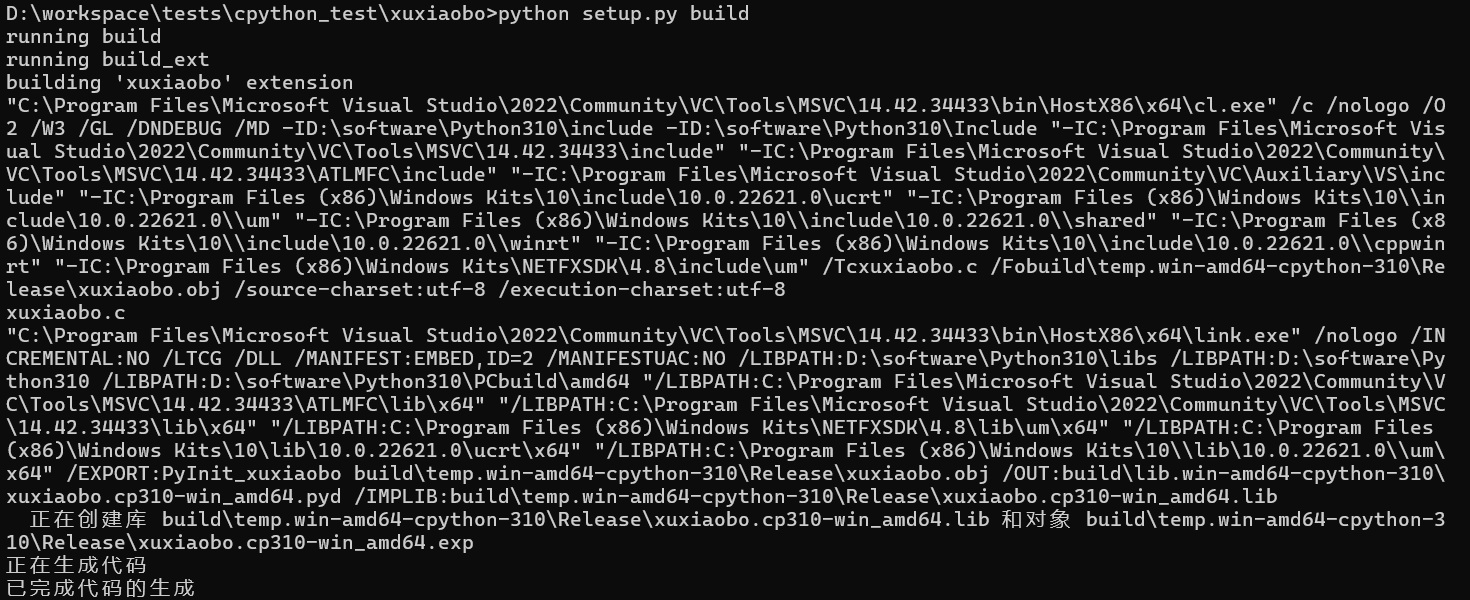
编译模块
python setup.py build
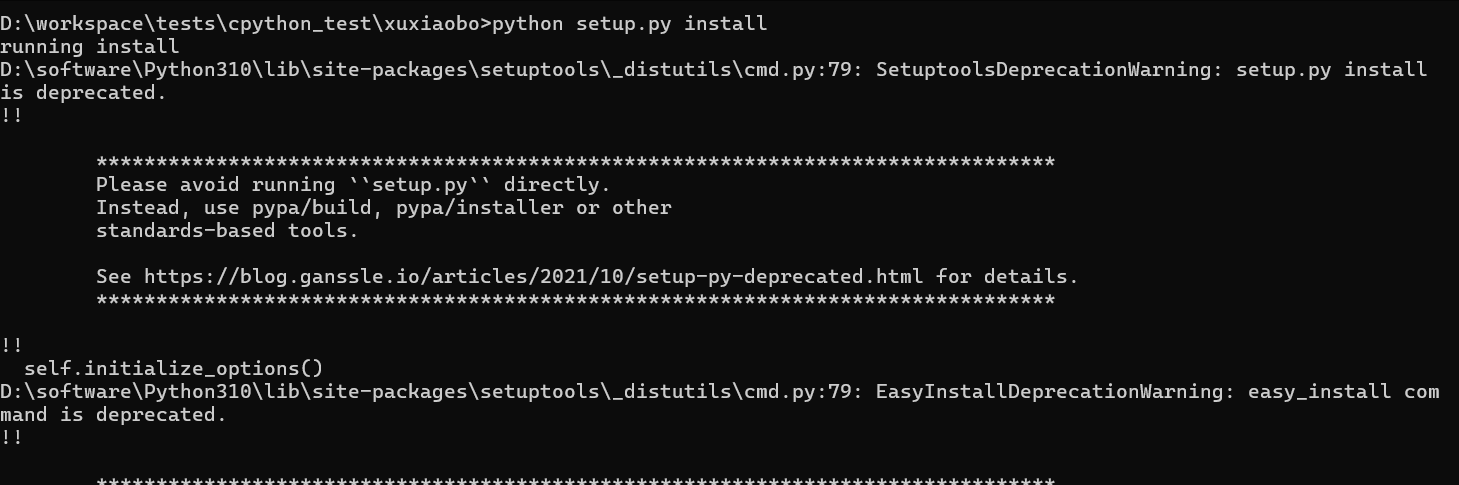
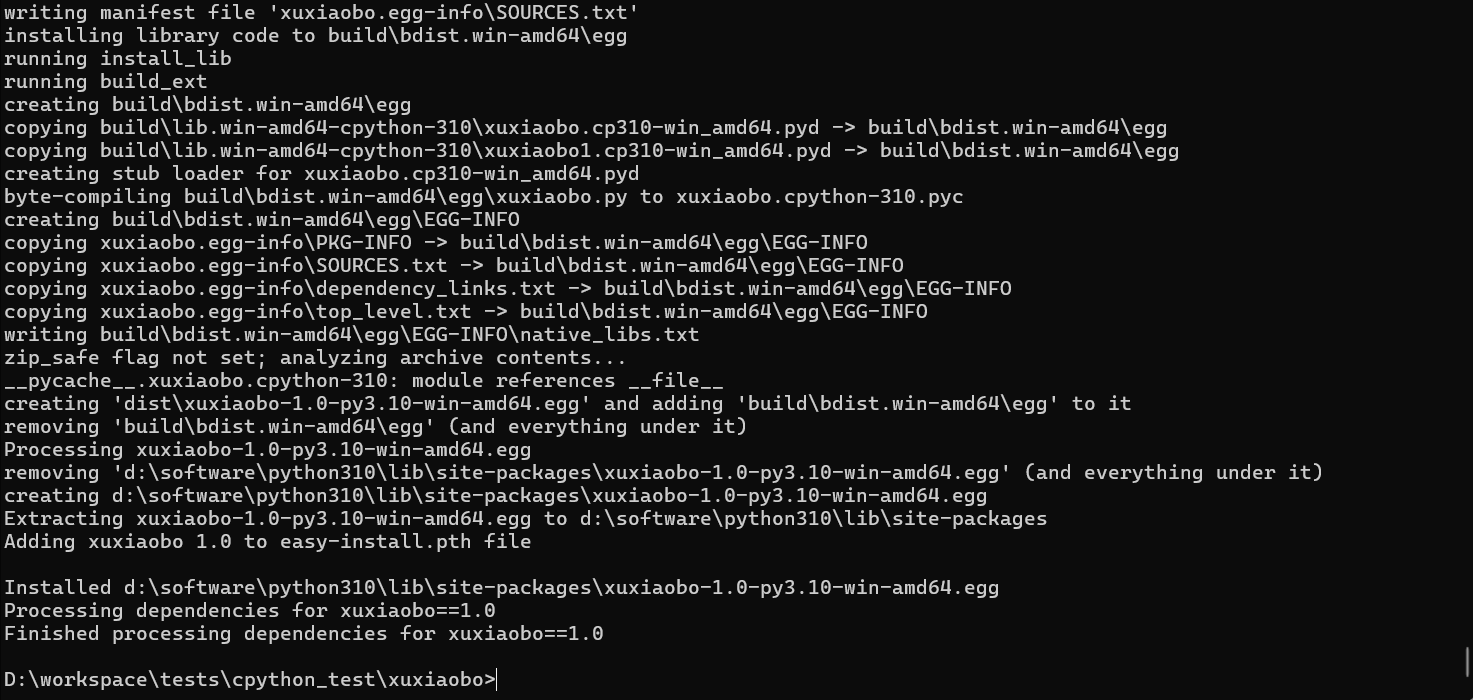
安装模块
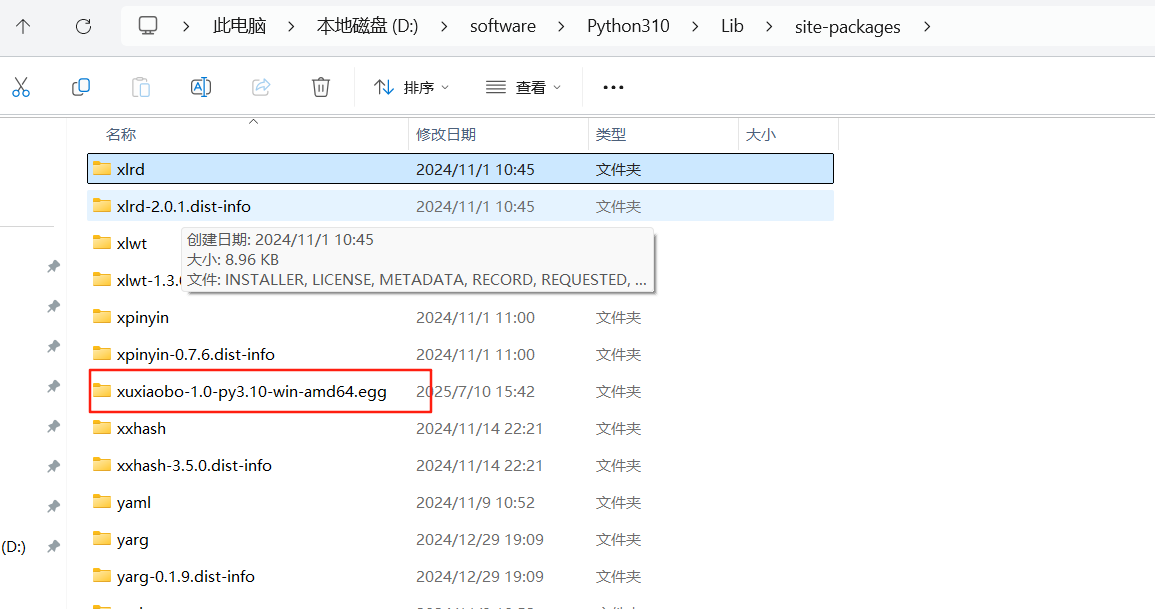
python setup.py install
测试结果:
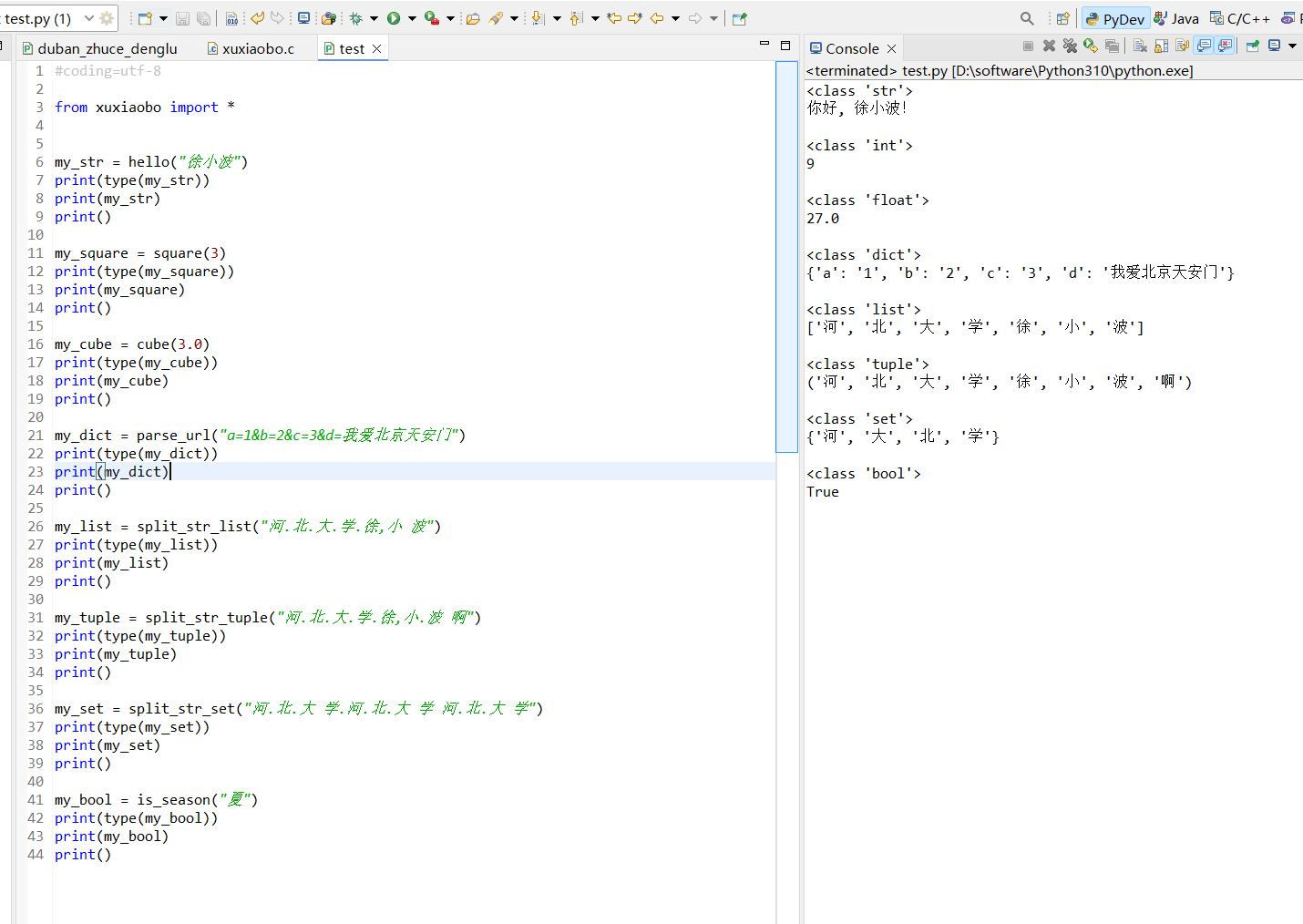
此例旨在对各种数据类型的输出实践一遍。
本文来自博客园,作者:河北大学-徐小波,转载请注明原文链接:https://www.cnblogs.com/xuxiaobo/p/18975472


 浙公网安备 33010602011771号