
Java_集合之三
1.1概述【理解】
-
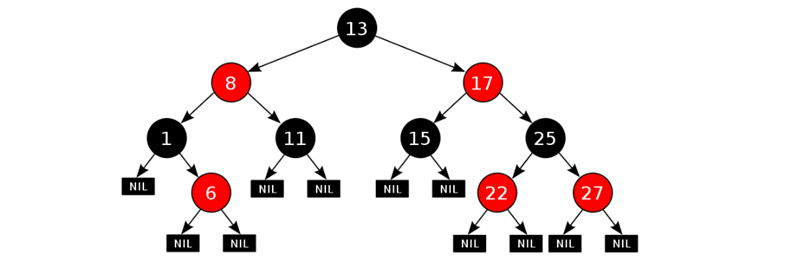
红黑树的特点
-
平衡二叉B树
-
每一个节点可以是红或者黑
-
红黑树不是高度平衡的,它的平衡是通过"自己的红黑规则"进行实现的
-
-
红黑树的红黑规则有哪些
-
-
根节点必须是黑色
-
如果一个节点没有子节点或者父节点,则该节点相应的指针属性值为Nil,这些Nil视为叶节点,每个叶节点(Nil)是黑色的
-
如果某一个节点是红色,那么它的子节点必须是黑色(不能出现两个红色节点相连 的情况)
-
对每一个节点,从该节点到其所有后代叶节点的简单路径上,均包含相同数目的黑色节点
-
-
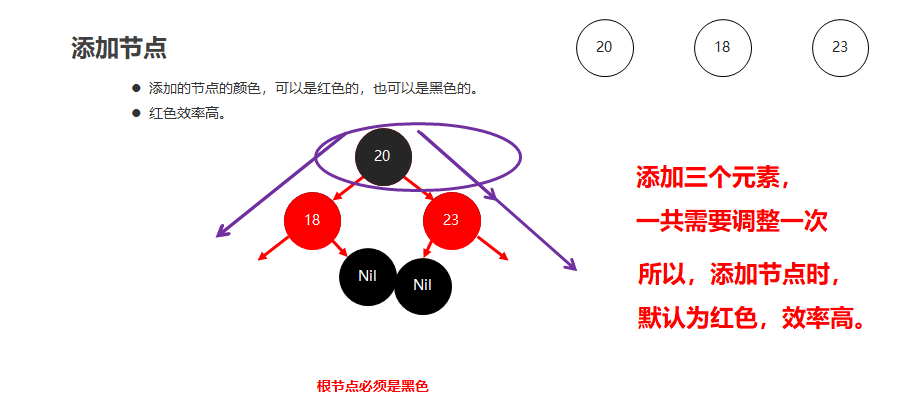
红黑树添加节点的默认颜色
-
添加节点时,默认为红色,效率高
-
-
红黑树添加节点后如何保持红黑规则
-
根节点位置
-
直接变为黑色
-
-
非根节点位置
-
父节点为黑色
-
不需要任何操作,默认红色即可
-
-
父节点为红色
-
叔叔节点为红色
-
将"父节点"设为黑色,将"叔叔节点"设为黑色
-
将"祖父节点"设为红色
-
如果"祖父节点"为根节点,则将根节点再次变成黑色
-
-
叔叔节点为黑色
-
将"父节点"设为黑色
-
将"祖父节点"设为红色
-
以"祖父节点"为支点进行旋转
-
-
-
-
1.2成绩排序案例【应用】
-
案例需求
-
用TreeSet集合存储多个学生信息(姓名,语文成绩,数学成绩,英语成绩),并遍历该集合
-
要求: 按照总分从高到低出现
-
-
代码实现
学生类
1 public class Student implements Comparable<Student> { 2 private String name; 3 private int chinese; 4 private int math; 5 private int english; 6 7 public Student() { 8 } 9 10 public Student(String name, int chinese, int math, int english) { 11 this.name = name; 12 this.chinese = chinese; 13 this.math = math; 14 this.english = english; 15 } 16 17 public String getName() { 18 return name; 19 } 20 21 public void setName(String name) { 22 this.name = name; 23 } 24 25 public int getChinese() { 26 return chinese; 27 } 28 29 public void setChinese(int chinese) { 30 this.chinese = chinese; 31 } 32 33 public int getMath() { 34 return math; 35 } 36 37 public void setMath(int math) { 38 this.math = math; 39 } 40 41 public int getEnglish() { 42 return english; 43 } 44 45 public void setEnglish(int english) { 46 this.english = english; 47 } 48 49 public int getSum() { 50 return this.chinese + this.math + this.english; 51 } 52 53 @Override 54 public int compareTo(Student o) { 55 // 主要条件: 按照总分进行排序 56 int result = o.getSum() - this.getSum(); 57 // 次要条件: 如果总分一样,就按照语文成绩排序 58 result = result == 0 ? o.getChinese() - this.getChinese() : result; 59 // 如果语文成绩也一样,就按照数学成绩排序 60 result = result == 0 ? o.getMath() - this.getMath() : result; 61 // 如果总分一样,各科成绩也都一样,就按照姓名排序 62 result = result == 0 ? o.getName().compareTo(this.getName()) : result; 63 return result; 64 } 65 }
测试类
1 public class TreeSetDemo { 2 public static void main(String[] args) { 3 //创建TreeSet集合对象,通过比较器排序进行排序 4 TreeSet<Student> ts = new TreeSet<Student>(); 5 //创建学生对象 6 Student s1 = new Student("jack", 98, 100, 95); 7 Student s2 = new Student("rose", 95, 95, 95); 8 Student s3 = new Student("sam", 100, 93, 98); 9 //把学生对象添加到集合 10 ts.add(s1); 11 ts.add(s2); 12 ts.add(s3); 13 14 //遍历集合 15 for (Student s : ts) { 16 System.out.println(s.getName() + "," + s.getChinese() + "," + s.getMath() + "," + s.getEnglish() + "," + s.getSum()); 17 } 18 } 19 }
2.HashSet集合
2.1HashSet集合概述和特点【应用】
-
底层数据结构是哈希表
-
存取无序
-
不可以存储重复元素
-
没有索引,不能使用普通for循环遍历
2.2HashSet集合的基本应用【应用】
存储字符串并遍历
1 public class HashSetDemo { 2 public static void main(String[] args) { 3 //创建集合对象 4 HashSet<String> set = new HashSet<String>(); 5 6 //添加元素 7 set.add("hello"); 8 set.add("world"); 9 set.add("java"); 10 //不包含重复元素的集合 11 set.add("world"); 12 13 //遍历 14 for(String s : set) { 15 System.out.println(s); 16 } 17 } 18 }
2.3哈希值【理解】
-
哈希值简介
是JDK根据对象的地址或者字符串或者数字算出来的int类型的数值
-
如何获取哈希值
Object类中的public int hashCode():返回对象的哈希码值
-
哈希值的特点
-
同一个对象多次调用hashCode()方法返回的哈希值是相同的
-
默认情况下,不同对象的哈希值是不同的。而重写hashCode()方法,可以实现让不同对象的哈希值相同
-
2.4哈希表结构【理解】
-
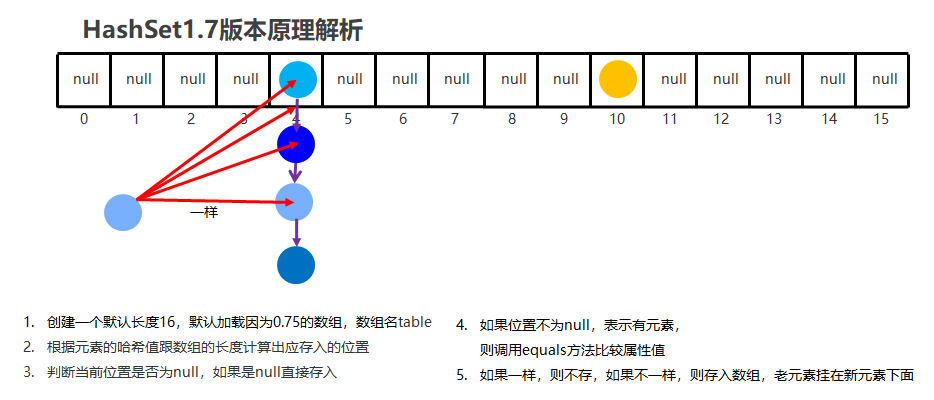
JDK1.8以前
数组 + 链表
-
JDK1.8以后
-
节点个数少于等于8个
数组 + 链表
-
节点个数多于8个
数组 + 红黑树

-
2.5HashSet集合存储学生对象并遍历【应用】
-
案例需求
-
创建一个存储学生对象的集合,存储多个学生对象,使用程序实现在控制台遍历该集合
-
要求:学生对象的成员变量值相同,我们就认为是同一个对象
-
-
代码实现
学生类
1 public class Student { 2 private String name; 3 private int age; 4 5 public Student() { 6 } 7 8 public Student(String name, int age) { 9 this.name = name; 10 this.age = age; 11 } 12 13 public String getName() { 14 return name; 15 } 16 17 public void setName(String name) { 18 this.name = name; 19 } 20 21 public int getAge() { 22 return age; 23 } 24 25 public void setAge(int age) { 26 this.age = age; 27 } 28 29 @Override 30 public boolean equals(Object o) { 31 if (this == o) return true; 32 if (o == null || getClass() != o.getClass()) return false; 33 34 Student student = (Student) o; 35 36 if (age != student.age) return false; 37 return name != null ? name.equals(student.name) : student.name == null; 38 } 39 40 @Override 41 public int hashCode() { 42 int result = name != null ? name.hashCode() : 0; 43 result = 31 * result + age; 44 return result; 45 } 46 }
测试类
1 public class HashSetDemo02 { 2 public static void main(String[] args) { 3 //创建HashSet集合对象 4 HashSet<Student> hs = new HashSet<Student>(); 5 6 //创建学生对象 7 Student s1 = new Student("林青霞", 30); 8 Student s2 = new Student("张曼玉", 35); 9 Student s3 = new Student("王祖贤", 33); 10 11 Student s4 = new Student("王祖贤", 33); 12 13 //把学生添加到集合 14 hs.add(s1); 15 hs.add(s2); 16 hs.add(s3); 17 hs.add(s4); 18 19 //遍历集合(增强for) 20 for (Student s : hs) { 21 System.out.println(s.getName() + "," + s.getAge()); 22 } 23 } 24 }
-
总结
HashSet集合存储自定义类型元素,要想实现元素的唯一,要求必须重写hashCode方法和equals方法
3.Map集合
3.1Map集合概述和特点【理解】
-
Map集合概述
interface Map<K,V> K:键的类型;V:值的类型 -
Map集合的特点
-
双列集合,一个键对应一个值
-
键不可以重复,值可以重复
-
-
Map集合的基本使用
1 public class MapDemo01 { 2 public static void main(String[] args) { 3 //创建集合对象 4 Map<String,String> map = new HashMap<String,String>(); 5 6 //V put(K key, V value) 将指定的值与该映射中的指定键相关联 7 map.put("itheima001","林青霞"); 8 map.put("itheima002","张曼玉"); 9 map.put("itheima003","王祖贤"); 10 map.put("itheima003","柳岩"); 11 12 //输出集合对象 13 System.out.println(map); 14 } 15 }
3.2Map集合的基本功能【应用】
-
方法介绍
方法名 说明 V put(K key,V value) 添加元素 V remove(Object key) 根据键删除键值对元素 void clear() 移除所有的键值对元素 boolean containsKey(Object key) 判断集合是否包含指定的键 boolean containsValue(Object value) 判断集合是否包含指定的值 boolean isEmpty() 判断集合是否为空 int size() 集合的长度,也就是集合中键值对的个数 -
示例代码
1 public class MapDemo02 { 2 public static void main(String[] args) { 3 //创建集合对象 4 Map<String,String> map = new HashMap<String,String>(); 5 6 //V put(K key,V value):添加元素 7 map.put("张无忌","赵敏"); 8 map.put("郭靖","黄蓉"); 9 map.put("杨过","小龙女"); 10 11 //V remove(Object key):根据键删除键值对元素 12 // System.out.println(map.remove("郭靖")); 13 // System.out.println(map.remove("郭襄")); 14 15 //void clear():移除所有的键值对元素 16 // map.clear(); 17 18 //boolean containsKey(Object key):判断集合是否包含指定的键 19 // System.out.println(map.containsKey("郭靖")); 20 // System.out.println(map.containsKey("郭襄")); 21 22 //boolean isEmpty():判断集合是否为空 23 // System.out.println(map.isEmpty()); 24 25 //int size():集合的长度,也就是集合中键值对的个数 26 System.out.println(map.size()); 27 28 //输出集合对象 29 System.out.println(map); 30 } 31 }
3.3Map集合的获取功能【应用】
-
方法介绍
方法名 说明 V get(Object key) 根据键获取值 Set<K> keySet() 获取所有键的集合 Collection<V> values() 获取所有值的集合 Set<Map.Entry<K,V>> entrySet() 获取所有键值对对象的集合 -
示例代码
 1 public class MapDemo03 {
 2     public static void main(String[] args) {
 3         //创建集合对象
 4         Map<String, String> map = new HashMap<String, String>();
 5
 6         //添加元素
 7         map.put("张无忌", "赵敏");
 8         map.put("郭靖", "黄蓉");
 9         map.put("杨过", "小龙女");
10
11         //V get(Object key):根据键获取值
12 //        System.out.println(map.get("张无忌"));
13 //        System.out.println(map.get("张三丰"));
14
15         //Set<K> keySet():获取所有键的集合
16 //        Set<String> keySet = map.keySet();
17 //        for(String key : keySet) {
18 //            System.out.println(key);
19 //        }
20
21         //Collection<V> values():获取所有值的集合
22         Collection<String> values = map.values();
23         for(String value : values) {
24             System.out.println(value);
25         }
26     }
27 }
3.4Map集合的遍历(方式1)【应用】
-
遍历思路
-
我们刚才存储的元素都是成对出现的,所以我们把Map看成是一个夫妻对的集合
-
把所有的丈夫给集中起来
-
遍历丈夫的集合,获取到每一个丈夫
-
根据丈夫去找对应的妻子
-
-
-
步骤分析
-
获取所有键的集合。用keySet()方法实现
-
遍历键的集合,获取到每一个键。用增强for实现
-
根据键去找值。用get(Object key)方法实现
-
-
代码实现
 1 public class MapDemo01 {
 2     public static void main(String[] args) {
 3         //创建集合对象
 4         Map<String, String> map = new HashMap<String, String>();
 5
 6         //添加元素
 7         map.put("张无忌", "赵敏");
 8         map.put("郭靖", "黄蓉");
 9         map.put("杨过", "小龙女");
10
11         //获取所有键的集合。用keySet()方法实现
12         Set<String> keySet = map.keySet();
13         //遍历键的集合,获取到每一个键。用增强for实现
14         for (String key : keySet) {
15             //根据键去找值。用get(Object key)方法实现
16             String value = map.get(key);
17             System.out.println(key + "," + value);
18         }
19     }
20 }
3.5Map集合的遍历(方式2)【应用】
-
遍历思路
-
我们刚才存储的元素都是成对出现的,所以我们把Map看成是一个夫妻对的集合
-
获取所有结婚证的集合
-
遍历结婚证的集合,得到每一个结婚证
-
根据结婚证获取丈夫和妻子
-
-
-
步骤分析
-
获取所有键值对对象的集合
-
Set<Map.Entry<K,V>> entrySet():获取所有键值对对象的集合
-
-
遍历键值对对象的集合,得到每一个键值对对象
-
用增强for实现,得到每一个Map.Entry
-
-
根据键值对对象获取键和值
-
用getKey()得到键
-
用getValue()得到值
-
-
-
代码实现
 1 public class MapDemo02 {
 2     public static void main(String[] args) {
 3         //创建集合对象
 4         Map<String, String> map = new HashMap<String, String>();
 5
 6         //添加元素
 7         map.put("张无忌", "赵敏");
 8         map.put("郭靖", "黄蓉");
 9         map.put("杨过", "小龙女");
10
11         //获取所有键值对对象的集合
12         Set<Map.Entry<String, String>> entrySet = map.entrySet();
13         //遍历键值对对象的集合,得到每一个键值对对象
14         for (Map.Entry<String, String> me : entrySet) {
15             //根据键值对对象获取键和值
16             String key = me.getKey();
17             String value = me.getValue();
18             System.out.println(key + "," + value);
19         }
20     }
21 }
4.HashMap集合
4.1HashMap集合概述和特点【理解】
-
HashMap底层是哈希表结构的
-
依赖hashCode方法和equals方法保证键的唯一
-
如果键要存储的是自定义对象,需要重写hashCode和equals方法
4.2HashMap集合应用案例【应用】
-
案例需求
-
创建一个HashMap集合,键是学生对象(Student),值是居住地 (String)。存储多个元素,并遍历。
-
要求保证键的唯一性:如果学生对象的成员变量值相同,我们就认为是同一个对象
-
-
代码实现
学生类
 1 public class Student {
 2     private String name;
 3     private int age;
 4
 5     public Student() {
 6     }
 7
 8     public Student(String name, int age) {
 9         this.name = name;
10         this.age = age;
11     }
12
13     public String getName() {
14         return name;
15     }
16
17     public void setName(String name) {
18         this.name = name;
19     }
20
21     public int getAge() {
22         return age;
23     }
24
25     public void setAge(int age) {
26         this.age = age;
27     }
28
29     @Override
30     public boolean equals(Object o) {
31         if (this == o) return true;
32         if (o == null || getClass() != o.getClass()) return false;
33
34         Student student = (Student) o;
35
36         if (age != student.age) return false;
37         return name != null ? name.equals(student.name) : student.name == null;
38     }
39
40     @Override
41     public int hashCode() {
42         int result = name != null ? name.hashCode() : 0;
43         result = 31 * result + age;
44         return result;
45     }
46 }
测试类
 1 public class HashMapDemo {
 2     public static void main(String[] args) {
 3         //创建HashMap集合对象
 4         HashMap<Student, String> hm = new HashMap<Student, String>();
 5
 6         //创建学生对象
 7         Student s1 = new Student("林青霞", 30);
 8         Student s2 = new Student("张曼玉", 35);
 9         Student s3 = new Student("王祖贤", 33);
10         Student s4 = new Student("王祖贤", 33);
11
12         //把学生添加到集合
13         hm.put(s1, "西安");
14         hm.put(s2, "武汉");
15         hm.put(s3, "郑州");
16         hm.put(s4, "北京");
17
18         //遍历集合
19         Set<Student> keySet = hm.keySet();
20         for (Student key : keySet) {
21             String value = hm.get(key);
22             System.out.println(key.getName() + "," + key.getAge() + "," + value);
23         }
24     }
25 }
5.TreeMap集合
5.1TreeMap集合概述和特点【理解】
-
TreeMap底层是红黑树结构
-
依赖自然排序或者比较器排序,对键进行排序
-
如果键存储的是自定义对象,需要实现Comparable接口或者在创建TreeMap对象时候给出比较器排序规则
5.2TreeMap集合应用案例【应用】
-
案例需求
-
创建一个TreeMap集合,键是学生对象(Student),值是籍贯(String),学生属性姓名和年龄,按照年龄进行排序并遍历
-
要求按照学生的年龄进行排序,如果年龄相同则按照姓名进行排序
-
-
代码实现
学生类
 1 public class Student implements Comparable<Student>{
 2     private String name;
 3     private int age;
 4
 5     public Student() {
 6     }
 7
 8     public Student(String name, int age) {
 9         this.name = name;
10         this.age = age;
11     }
12
13     public String getName() {
14         return name;
15     }
16
17     public void setName(String name) {
18         this.name = name;
19     }
20
21     public int getAge() {
22         return age;
23     }
24
25     public void setAge(int age) {
26         this.age = age;
27     }
28
29     @Override
30     public String toString() {
31         return "Student{" +
32                 "name='" + name + '\'' +
33                 ", age=" + age +
34                 '}';
35     }
36
37     @Override
38     public int compareTo(Student o) {
39         //按照年龄进行排序
40         int result = o.getAge() - this.getAge();
41         //次要条件,按照姓名排序。
42         result = result == 0 ? o.getName().compareTo(this.getName()) : result;
43         return result;
44     }
45 }
测试类
 1 public class Test1 {
 2     public static void main(String[] args) {
 3           // 创建TreeMap集合对象
 4         TreeMap<Student,String> tm = new TreeMap<>();
 5
 6         // 创建学生对象
 7         Student s1 = new Student("xiaohei",23);
 8         Student s2 = new Student("dapang",22);
 9         Student s3 = new Student("xiaomei",22);
10
11         // 将学生对象添加到TreeMap集合中
12         tm.put(s1,"江苏");
13         tm.put(s2,"北京");
14         tm.put(s3,"天津");
15
16         // 遍历TreeMap集合,打印每个学生的信息
17         tm.forEach(
18                 (Student key, String value)->{
19                     System.out.println(key + "---" + value);
20                 }
21         );
22     }
23 }
-

 浙公网安备 33010602011771号