

Collection集合常用功能以及Iterator接口介绍
Collection集合
单列集合的体系结构:
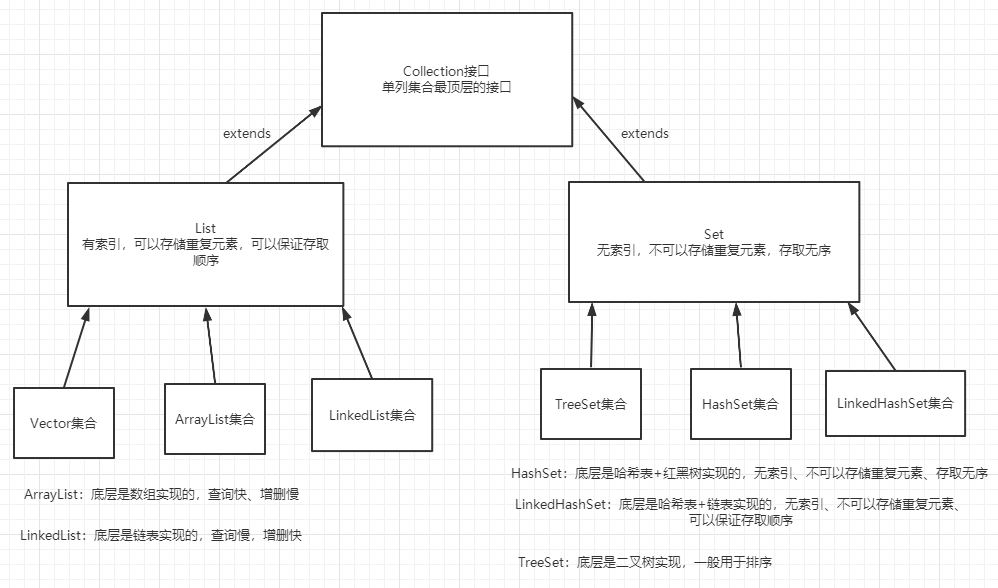
Collection集合常用的方法
boolean add(E e); 向集合中添加元素
boolean remove(E e); 删除集合中的某个元素
void clear(); 清空集合所有的元素
boolean contains(E e) 判断集合中是否包含某个元素
boolean isEmpty(); 判断集合是否为空
int size(); 获取集合的长度
Object[] toArray(); 将集合转成一个数组
    public static void main(String[] args) {
        Collection<String> coll = new ArrayList<>();
//        boolean add(E e); 向集合中添加元素
        coll.add("Hello");
        coll.add("World");
        coll.add("张三");
        coll.add("李四");
        System.out.println(coll);

//        boolean remove(E e); 删除集合中的某个元素
//        boolean remove = coll.remove("张三");
//        System.out.println(remove);
//        System.out.println(coll);

//        void clear(); 清空集合所有的元素
//        coll.clear();
//        System.out.println(coll);

//        boolean contains(E e) 判断集合中是否包含某个元素
        boolean world = coll.contains("World");
        System.out.println(world);
//        boolean isEmpty(); 判断集合是否为空
        boolean empty = coll.isEmpty();
        System.out.println(empty);
//        int size(); 获取集合的长度
        int size = coll.size();
        System.out.println(size);
//        Object[] toArray(); 将集合转成一个数组
        Object[] objects = coll.toArray();
        for (int i = 0; i < objects.length; i++) {
            System.out.println(objects[i]);
        }
    }
Iterator接口介绍
迭代:即Collection集合元素的通用获取方式,在取元素之前先要判断集合中有没有元素,
如果有,就把这个元素取出来继续判断,如果还有就再取出来。已知把集合中的所有元素全部取出。
Iterator接口的常用方法:
public E next():返回迭代的下一个元素。
public boolean hashNext():如果仍有元素可以迭代,则返回true。
迭代器的使用步骤:
1.使用集合中的方法iterator()获取迭代器的实现类对象,使用Iterator接口接收(多态)
2.使用Iterator接口中的方法hasNext判断还有没有下一个元素
3.使用Iterator接口中的方法next取出集合中的下一个元素

 浙公网安备 33010602011771号