


第十六话-Java注解和反射
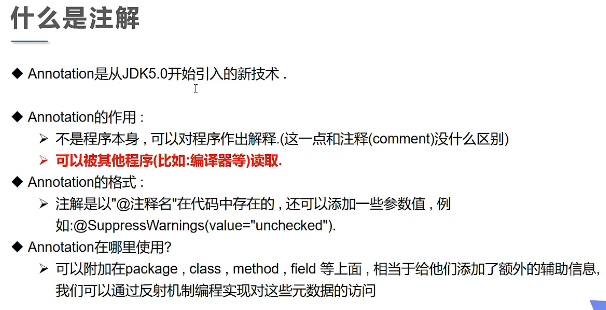
什么是注解
内置注解
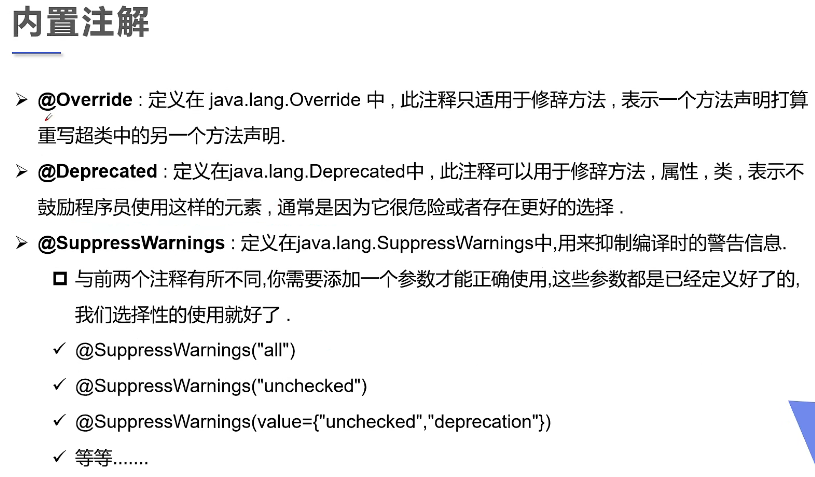
package com.xie.annotation;

import java.util.ArrayList;
import java.util.List;

@SuppressWarnings("all")
public class Test01 {
    @Deprecated
    public static void test(){
        System.out.println("Deprecated");
    }

    public void test2(){
        List list = new ArrayList<String >();
    }
    public static void main(String[] args) {
        test();
    }
}
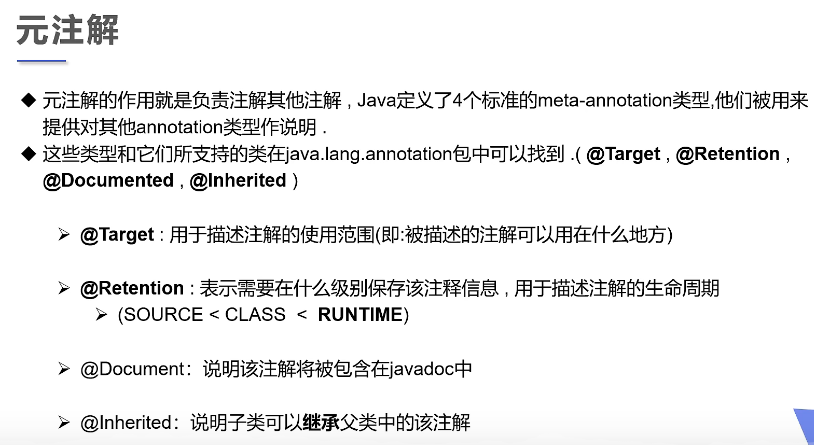
元注解
自定义注解
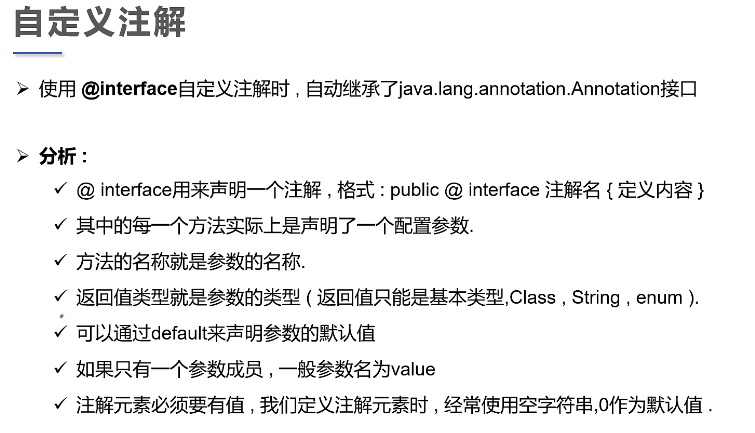
package com.xie.annotation;

import java.lang.annotation.ElementType;
import java.lang.annotation.Retention;
import java.lang.annotation.RetentionPolicy;
import java.lang.annotation.Target;

public class Test2 {
    @MyAnnotation(age = 18,name = "xiexieyc")
    @MyAnnotation2("ceshi")
    public void test(){}
}

@Target({ElementType.TYPE,ElementType.METHOD})
@Retention(RetentionPolicy.RUNTIME)
@interface MyAnnotation{
    //注解的参数: 参数类型 + 参数名()
    String name() default "";
    int age();
    int id() default -1;  //如果默认值为-1,则代表不存在
    String[] schools() default {"清华大学","西电"};
}

@Target({ElementType.TYPE,ElementType.METHOD})
@Retention(RetentionPolicy.RUNTIME)
@interface MyAnnotation2{
    String value();
}
反射概述
动态语言和静态语言
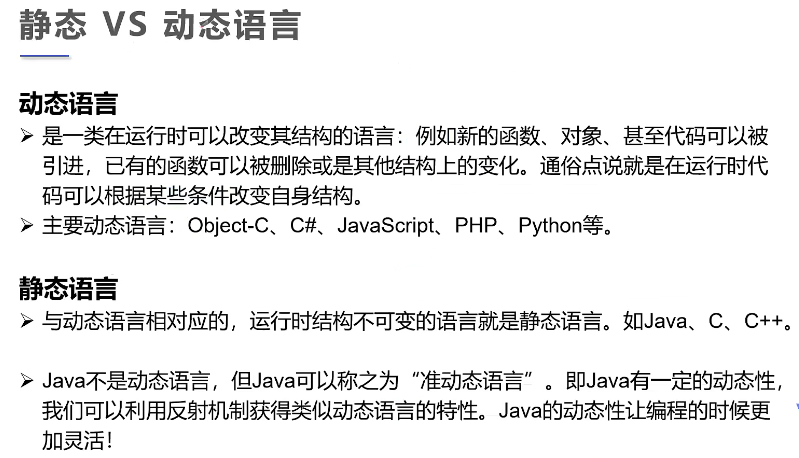
反射定义
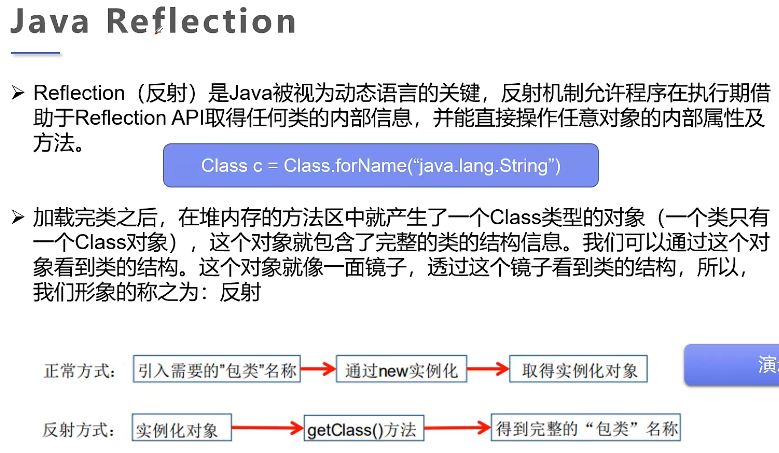
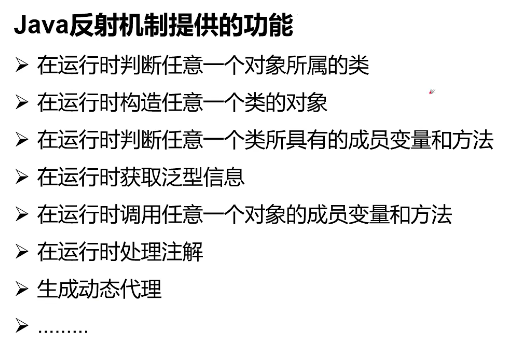
反射机制提供的功能
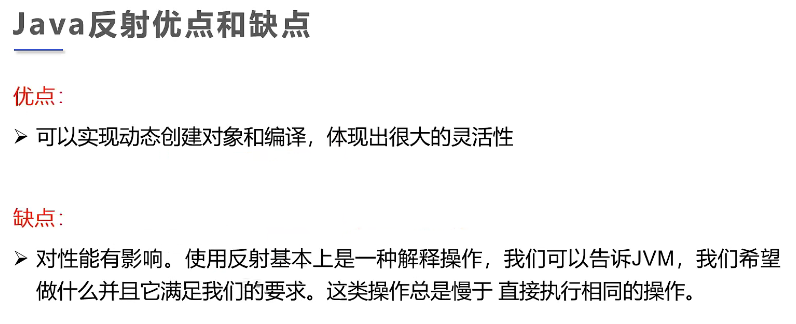
反射优缺点
获得反射对象
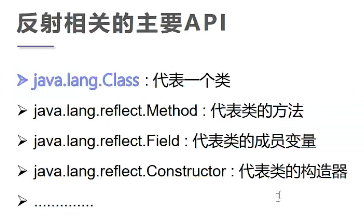
反射相关的主要API
package com.xie.reflection;

public class Test1 {
    public static void main(String[] args) throws ClassNotFoundException {
        //通过反射获取类的Class对象
        Class c1 = Class.forName("com.xie.reflection.User");
        System.out.println(c1);
        Class c2 = Class.forName("com.xie.reflection.User");
        Class c3 = Class.forName("com.xie.reflection.User");
        Class c4 = Class.forName("com.xie.reflection.User");
        //一个类在内存中只有一个Class对象
        //一个类被加载后,类的整个结构都会被封装在Class对象中
        System.out.println(c2.hashCode());
        System.out.println(c3.hashCode());
        System.out.println(c4.hashCode());
    }
}
//实体类: pojo、entity
class User{
    String name;
    int age;
    int id;

    public User() {
    }

    public User(String name, int age, int id) {
        this.name = name;
        this.age = age;
        this.id = id;
    }

    public String getName() {
        return name;
    }

    public void setName(String name) {
        this.name = name;
    }

    public int getAge() {
        return age;
    }

    public void setAge(int age) {
        this.age = age;
    }

    public int getId() {
        return id;
    }

    public void setId(int id) {
        this.id = id;
    }

    @Override
    public String toString() {
        return "User{" +
                "name='" + name + '\'' +
                ", age=" + age +
                ", id=" + id +
                '}';
    }
}
得到Class类的几种方式
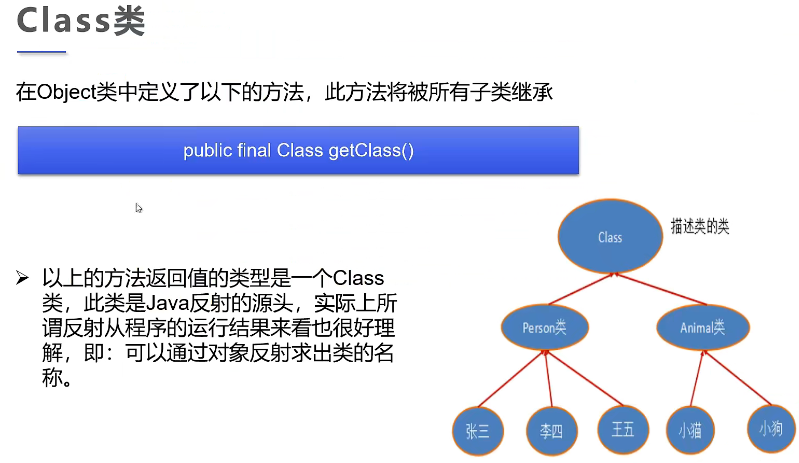
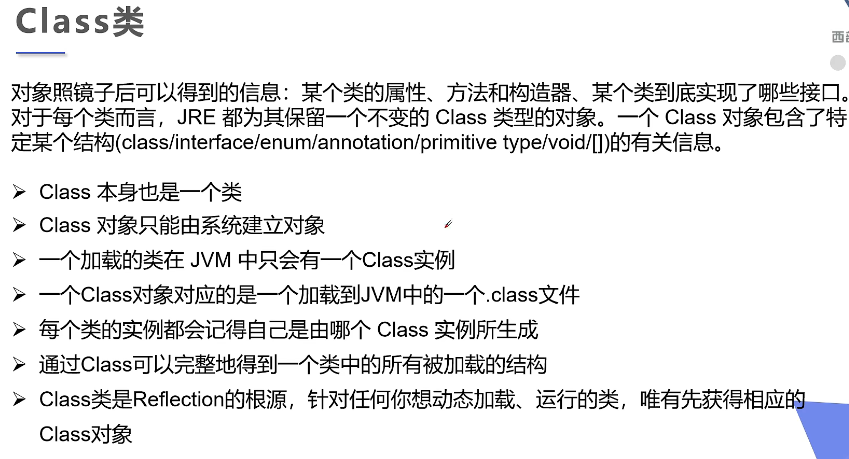
Class类
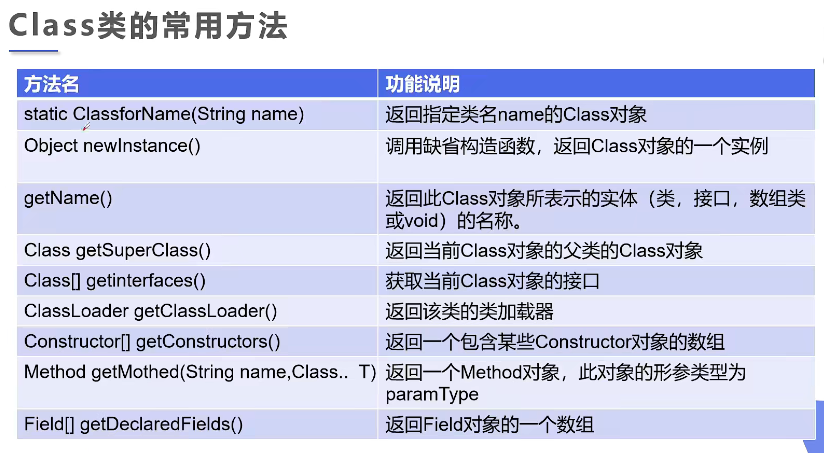
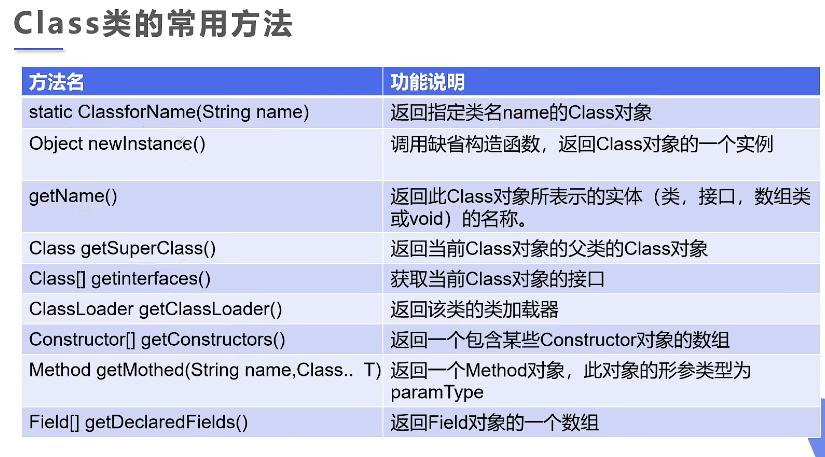
Class类的常用方法
获得class类的实例
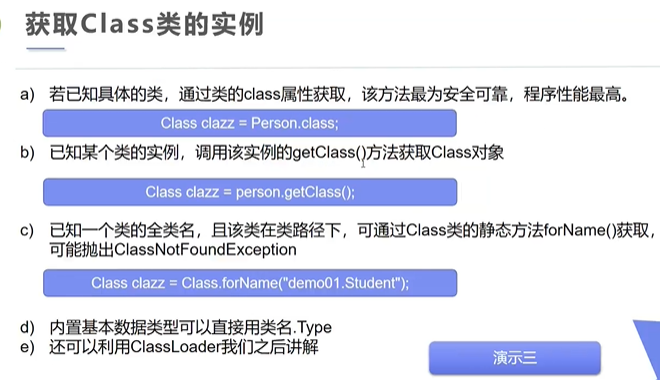
package com.xie.reflection;

public class Test03 {
    public static void main(String[] args) throws ClassNotFoundException {
        Person person = new Student();
        System.out.println("这个人是:"+person.name);
        //方式一:通过对象获取
        Class c1 = person.getClass();
        System.out.println(c1.hashCode());
        //方式二:forname获取
        Class c2 = Class.forName("com.xie.reflection.Student");
        System.out.println(c2.hashCode());
        //方式三:通过类名.class获取
        Class c3 = Student.class;
        System.out.println(c3.hashCode());
        //方式四:基本内置类型的包装类都有一个TYPE属性
        Class c4 = Integer.TYPE;
        System.out.println(c4);
        //获得父类类型
        Class c5 = c1.getSuperclass();
        System.out.println(c5);
    }
}

class Person{
    public String name;

    public Person() {
    }

    public Person(String name) {
        this.name = name;
    }

    @Override
    public String toString() {
        return "Person{" +
                "name='" + name + '\'' +
                '}';
    }
}
class Student extends Person{
    public Student(){
        this.name = "学生";
    }
}
class Teacher extends Person{
    public Teacher() {
        this.name = "老师";
    }
}
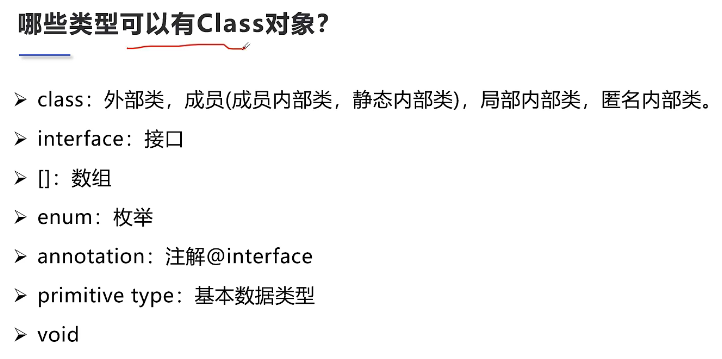
哪些类型可以有Class对象
获取类的运行时结构
package com.xie.reflection;

import java.lang.reflect.Constructor;
import java.lang.reflect.Field;
import java.lang.reflect.Method;

public class Test08 {
    public static void main(String[] args) throws ClassNotFoundException, NoSuchFieldException, NoSuchMethodException {
        Class c1 = Class.forName("com.xie.reflection.User");
        //获得类的名字
        System.out.println(c1.getName());
        System.out.println(c1.getSimpleName());

        //获得类的属性
        System.out.println("---------------");
        Field[] fields = c1.getFields();//只能找到public属性
        fields = c1.getDeclaredFields();//找到全部属性
        for (Field field : fields) {
            System.out.println(field);
        }
        //获得指定的属性
        Field name = c1.getDeclaredField("name");
        System.out.println(name);
        //获得类的方法
        System.out.println("=================");
        Method[] methods = c1.getMethods();//本类及父类所有public方法
        for (Method method : methods) {
            System.out.println("public修饰的方法:"+method);
        }
        methods = c1.getDeclaredMethods();//本类的所有方法
        for (Method method : methods) {
            System.out.println("本类的方法:"+method);
        }
        //获得指定方法
        Method getName = c1.getMethod("getName",null);
        Method setName = c1.getMethod("setName", String.class);
        System.out.println(getName);
        System.out.println(setName);

        //获得构造器
        Constructor[] constructors = c1.getConstructors();
        for (Constructor constructor : constructors) {
            System.out.println(constructor);
        }
        constructors = c1.getDeclaredConstructors();
        for (Constructor constructor : constructors) {
            System.out.println(constructor);
        }
        //获得指定的构造器
        Constructor declaredConstructor = c1.getDeclaredConstructor(String.class, int.class, int.class);
        System.out.println(declaredConstructor);
    }
}
动态创建对象执行方法
package com.xie.reflection;

import java.lang.reflect.Constructor;
import java.lang.reflect.Field;
import java.lang.reflect.InvocationTargetException;
import java.lang.reflect.Method;

public class Test09 {
    public static void main(String[] args) throws ClassNotFoundException, InstantiationException, IllegalAccessException, NoSuchMethodException, InvocationTargetException, NoSuchFieldException {
        //获得Class对象
        Class c1 = Class.forName("com.xie.reflection.User");
        //构造一个对象
        User user = (User) c1.newInstance();
        System.out.println(user);
        //通过构造器创建对象
        Constructor constructor = c1.getDeclaredConstructor(String.class,int.class,int.class);
        user = (User)constructor.newInstance("xie",11,12);
        System.out.println(user);

        //通过反射调用普通方法
        Method setName = c1.getDeclaredMethod("setName", String.class);
        //invoke:激活(对象,方法的参数值)
        setName.invoke(user,"xie2");
        System.out.println(user);

        //通过反射操作属性
        System.out.println("===================");
        Field name = c1.getDeclaredField("name");
        //不能直接操作私有属性,需要先关闭程序的安全检测,属性或方法的setAccessible(true)
        name.setAccessible(true);
        name.set(user,"xie3");
        System.out.println(user);
    }
}
性能对比
package com.xie.reflection;

import java.lang.reflect.InvocationTargetException;
import java.lang.reflect.Method;

public class Test10 {
    //普通方法调用
    public static void test01(){
        User user = new User();
        long startTime = System.currentTimeMillis();
        for (int i = 0; i < 1000000000; i++) {
            user.getName();
        }
        long endTime = System.currentTimeMillis();
        System.out.println((endTime-startTime)+"ms");
    }
    //反射方法调用
    public static void test02() throws NoSuchMethodException, InvocationTargetException, IllegalAccessException {
        User user = new User();
        Class c1 = user.getClass();
        Method getName = c1.getDeclaredMethod("getName",null);
        long startTime = System.currentTimeMillis();
        for (int i = 0; i < 1000000000; i++) {
            getName.invoke(user,null);
        }
        long endTime = System.currentTimeMillis();
        System.out.println((endTime-startTime)+"ms");
    }
    //反射方法调用,关闭检测
    public static void test03() throws NoSuchMethodException, InvocationTargetException, IllegalAccessException {
        User user = new User();
        Class c1 = user.getClass();
        Method getName = c1.getDeclaredMethod("getName",null);
        getName.setAccessible(true);
        long startTime = System.currentTimeMillis();
        for (int i = 0; i < 1000000000; i++) {
            getName.invoke(user,null);
        }
        long endTime = System.currentTimeMillis();
        System.out.println((endTime-startTime)+"ms");
    }

    public static void main(String[] args) throws InvocationTargetException, NoSuchMethodException, IllegalAccessException {
        test01();
        test02();
        test03();
    }
}
获取泛型信息
package com.xie.reflection;

import java.lang.reflect.Method;
import java.lang.reflect.ParameterizedType;
import java.lang.reflect.Type;
import java.util.List;
import java.util.Map;

public class Test11 {
    public void test01(Map<String ,User> map, List<User> list){
        System.out.println("test01");
    }

    public Map<String,User> test02(){
        System.out.println("test02");
        return null;
    }
    public static void main(String[] args) throws NoSuchMethodException {
        Method test01 = Test11.class.getDeclaredMethod("test01", Map.class, List.class);
        Type[] genericParameterTypes = test01.getGenericParameterTypes();
        for (Type genericParameterType : genericParameterTypes) {
            System.out.println("#"+genericParameterType);
            if(genericParameterType instanceof ParameterizedType){
                Type[] actualTypeArguments = ((ParameterizedType) genericParameterType).getActualTypeArguments();
                for (Type actualTypeArgument : actualTypeArguments) {
                    System.out.println(actualTypeArgument);
                }
            }
        }
        System.out.println("==============");
        Method test02 = Test11.class.getDeclaredMethod("test02", null);
        Type genericReturnType = test02.getGenericReturnType();
        System.out.println(genericReturnType);
        if(genericReturnType instanceof ParameterizedType){
            Type[] actualTypeArguments = ((ParameterizedType) genericReturnType).getActualTypeArguments();
            for (Type actualTypeArgument : actualTypeArguments) {
                System.out.println(actualTypeArgument);
            }
        }
    }
}
获取注解信息
package com.xie.reflection;

import java.lang.annotation.*;
import java.lang.reflect.Field;

public class Test12 {
    public static void main(String[] args) throws ClassNotFoundException, NoSuchFieldException {
        Class c1 = Class.forName("com.xie.reflection.Student2");
        //通过反射获取注解
        Annotation[] annotations = c1.getAnnotations();
        for (Annotation annotation : annotations) {
            System.out.println(annotation);
        }
        //获得注解的value值
        TableXie tableXie = (TableXie) c1.getAnnotation(TableXie.class);
        String value = tableXie.value();
        System.out.println(value);
        //获得类指定的注解
        Field name = c1.getDeclaredField("name");
        FieldXie annotation = name.getAnnotation(FieldXie.class);
        System.out.println(annotation.columnName());
        System.out.println(annotation.type());
        System.out.println(annotation.length());
    }
}
@TableXie("db_student")
class Student2{
    @FieldXie(columnName = "db_id",type = "int",length = 10)
    private int id;
    @FieldXie(columnName = "db_name",type = "varchar",length = 255)
    private String name;

    public Student2() {
    }

    public Student2(int id, String name) {
        this.id = id;
        this.name = name;
    }

    public int getId() {
        return id;
    }

    public void setId(int id) {
        this.id = id;
    }

    public String getName() {
        return name;
    }

    public void setName(String name) {
        this.name = name;
    }

    @Override
    public String toString() {
        return "Student2{" +
                "id=" + id +
                ", name='" + name + '\'' +
                '}';
    }
}
//类名的注解
@Target(ElementType.TYPE)
@Retention(RetentionPolicy.RUNTIME)
@interface TableXie{
    String value();
}
//属性的注解
@Target(ElementType.FIELD)
@Retention(RetentionPolicy.RUNTIME)
@interface FieldXie{
    String columnName();
    String type();
    int length();
}
以上仅供参考,如有疑问,留言联系

 浙公网安备 33010602011771号