
移除元素
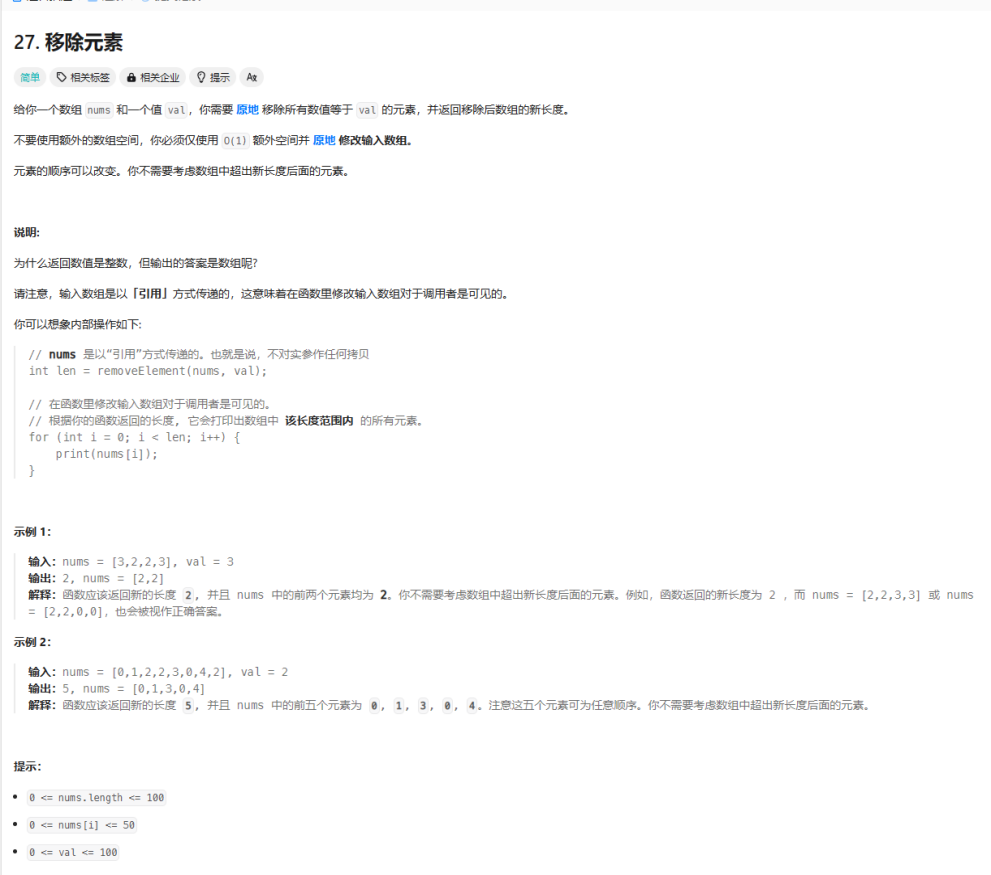
第一个想法就是利用两个for循环暴力解决
#include <iostream>
#include <vector>

using namespace std;

class Solution {
public:
    int removeElement(vector<int>& nums, int val) {
        int size = nums.size();
        int writeIndex = 0; // 用来记录当前应该写入的索引位置
        for (int readIndex = 0; readIndex < size; readIndex++) {
            if (nums[readIndex] != val) { // 发现不需要移除的元素,则写入到当前位置
                nums[writeIndex] = nums[readIndex];
                writeIndex++; // 写入位置后移
            }
        }
        return writeIndex; // 返回新的数组大小
    }
};

int main() {
    // 示例输入
    vector<int> nums = {3, 2, 2, 3};
    int val = 3;

    // 创建Solution对象并调用removeElement函数
    Solution solution;
    int newLength = solution.removeElement(nums, val);

    // 输出结果
    cout << "New array size: " << newLength << endl;
    cout << "New array: ";
    for (int i = 0; i < newLength; i++) {
        cout << nums[i] << " ";
    }
    cout << endl;

    return 0;
}
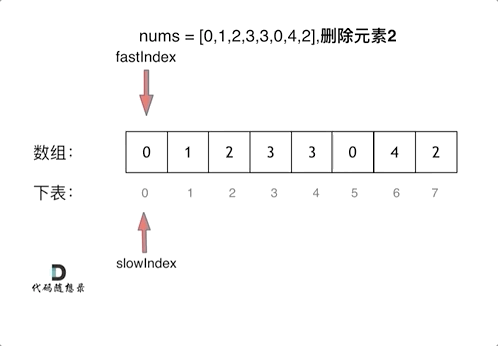
第二个双指针法(快慢指针法): 通过一个快指针和慢指针在一个for循环下完成两个for循环的工作。
定义快慢指针
快指针:寻找新数组的元素 ,新数组就是不含有目标元素的数组
慢指针:指向更新 新数组下标的位置
#include <stdio.h>

int removeElement(int* nums, int numsSize, int val) {
    int i = 0; // 指向当前有效元素的下一个位置
    for (int j = 0; j < numsSize; j++) {
        if (nums[j] != val) {
            nums[i] = nums[j]; // 将不等于val的元素移到前面
            i++; // 有效元素个数增加
        }
    }
    return i; // 返回新数组的长度
}

int main() {
    int nums[] = {3, 2, 2, 3};
    int val = 3;
    int numsSize = sizeof(nums) / sizeof(nums[0]);

    int newLength = removeElement(nums, numsSize, val);

    printf("新的数组长度为: %d\n", newLength);
    for (int i = 0; i < newLength; i++) {
        printf("%d ", nums[i]);
    }
    printf("\n");

    return 0;
}

 浙公网安备 33010602011771号