

python study 02
入门知识拾遗
一、变量作用域
对于变量的作用域,执行声明并在内存中存在,该变量就可以在下面的代码中使用。
if 1: name = 'gxw'print name下面的结论对吗?
外层变量,可以被内层变量使用内层变量,无法被外层变量使用结论:以上结论,对于其他语言适用,对于python 不适用
- ** 记住:python,只要内存里存在,则就能适用 (栈 )
二、三元运算
result = 值1 if 条件 else 值2
如果条件为真:result = 值1
如果条件为假:result = 值2
三、进制
- 二进制,01
- 八进制,01234567
- 十进制,0123456789
- 十六进制,0123456789ABCDEF
Python基础
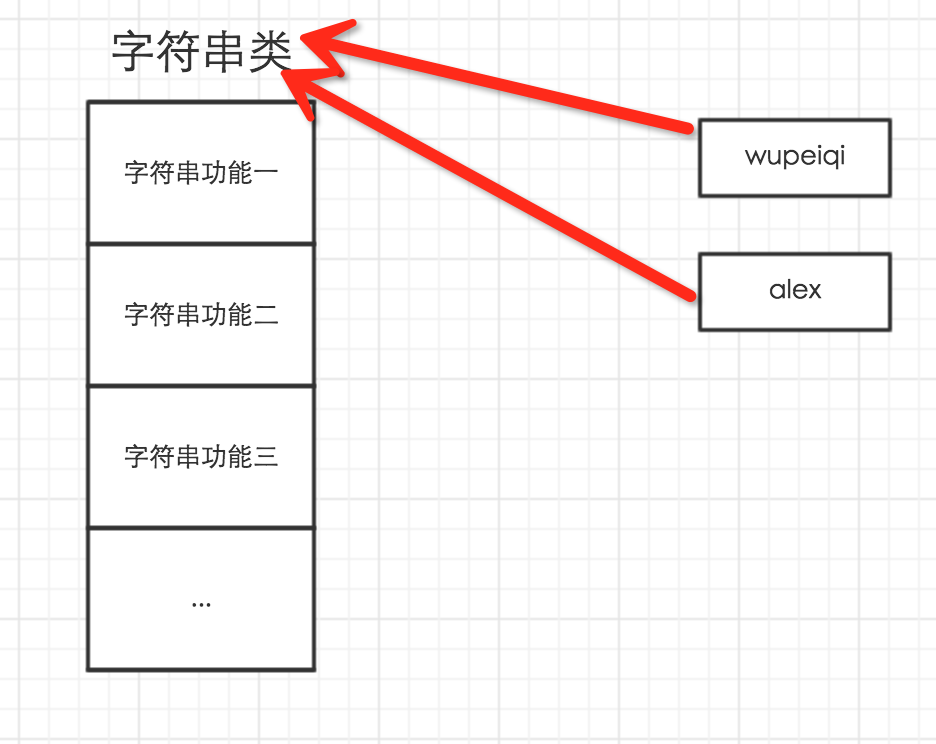
对于Python,一切事物都是对象,对象基于类创建
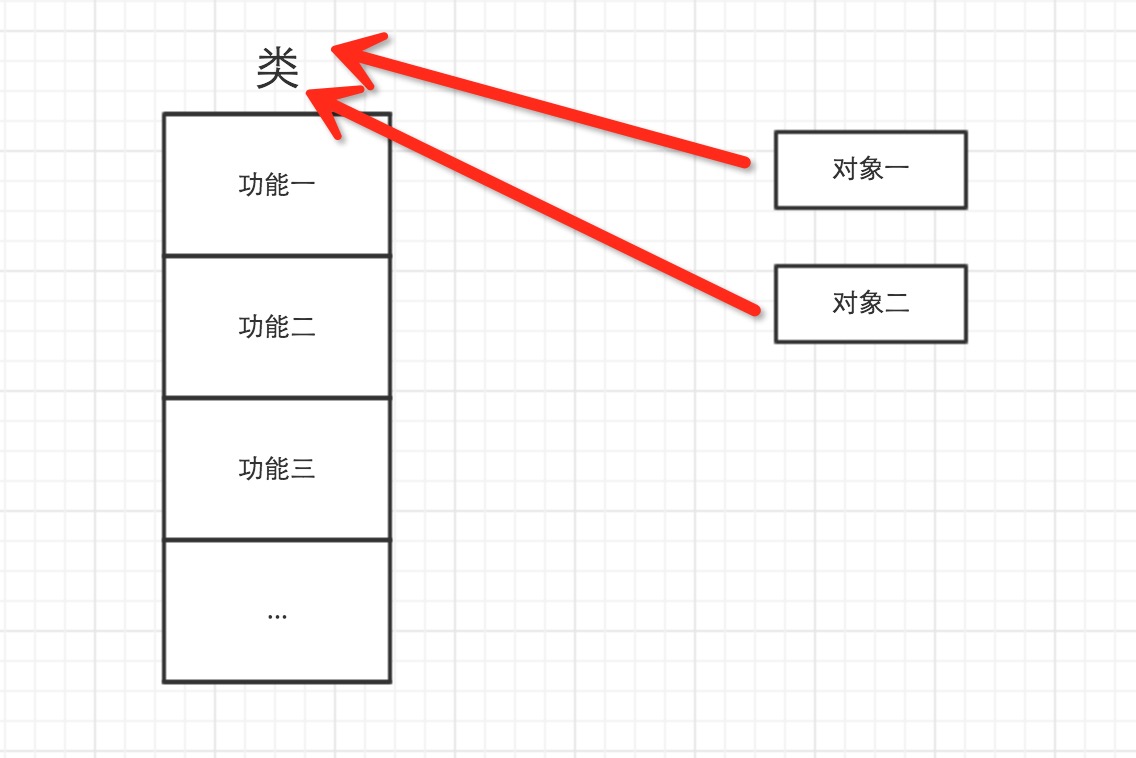
所以,以下这些值都是对象: "wupeiqi"、38、['北京', '上海', '深圳'],并且是根据不同的类生成的对象。


学会查看帮助:
type(类型名) 查看对象的类型
dir(类型名) 查看类中提供的所有功能
help(类型名) 查看类中所有详细的功能
help( 类型名.功能名) 查看类中某功能的详细
内置方法,非内置方法
一、整数
如: 18、73、84
每一个整数都具备如下功能:
class int(object):
    """
    int(x=0) -> int or long
    int(x, base=10) -> int or long

    Convert a number or string to an integer, or return 0 if no arguments
    are given.  If x is floating point, the conversion truncates towards zero.
    If x is outside the integer range, the function returns a long instead.

    If x is not a number or if base is given, then x must be a string or
    Unicode object representing an integer literal in the given base.  The
    literal can be preceded by '+' or '-' and be surrounded by whitespace.
    The base defaults to 10.  Valid bases are 0 and 2-36.  Base 0 means to
    interpret the base from the string as an integer literal.
    >>> int('0b100', base=0)
    4
    """
    def bit_length(self):
        """ 返回表示该数字的时占用的最少位数 """
        """
        int.bit_length() -> int

        Number of bits necessary to represent self in binary.
        >>> bin(37)
        '0b100101'
        >>> (37).bit_length()
        6
        """
        return 0

    def conjugate(self, *args, **kwargs): # real signature unknown
        """ 返回该复数的共轭复数 """
        """ Returns self, the complex conjugate of any int. """
        pass

    def __abs__(self):
        """ 返回绝对值 """
        """ x.__abs__() <==> abs(x) """
        pass

    def __add__(self, y):
        """ x.__add__(y) <==> x+y """
        pass

    def __and__(self, y):
        """ x.__and__(y) <==> x&y """
        pass

    def __cmp__(self, y):
        """ 比较两个数大小 """
        """ x.__cmp__(y) <==> cmp(x,y) """
        pass

    def __coerce__(self, y):
        """ 强制生成一个元组 """
        """ x.__coerce__(y) <==> coerce(x, y) """
        pass

    def __divmod__(self, y):
        """ 相除,得到商和余数组成的元组 """
        """ x.__divmod__(y) <==> divmod(x, y) """
        pass

    def __div__(self, y):
        """ x.__div__(y) <==> x/y """
        pass

    def __float__(self):
        """ 转换为浮点类型 """
        """ x.__float__() <==> float(x) """
        pass

    def __floordiv__(self, y):
        """ x.__floordiv__(y) <==> x//y """
        pass

    def __format__(self, *args, **kwargs): # real signature unknown
        pass

    def __getattribute__(self, name):
        """ x.__getattribute__('name') <==> x.name """
        pass

    def __getnewargs__(self, *args, **kwargs): # real signature unknown
        """ 内部调用 __new__方法或创建对象时传入参数使用 """
        pass

    def __hash__(self):
        """如果对象object为哈希表类型,返回对象object的哈希值。哈希值为整数。在字典查找中,哈希值用于快速比较字典的键。两个数值如果相等,则哈希值也相等。"""
        """ x.__hash__() <==> hash(x) """
        pass

    def __hex__(self):
        """ 返回当前数的 十六进制 表示 """
        """ x.__hex__() <==> hex(x) """
        pass

    def __index__(self):
        """ 用于切片,数字无意义 """
        """ x[y:z] <==> x[y.__index__():z.__index__()] """
        pass

    def __init__(self, x, base=10): # known special case of int.__init__
        """ 构造方法,执行 x = 123 或 x = int(10) 时,自动调用,暂时忽略 """
        """
        int(x=0) -> int or long
        int(x, base=10) -> int or long

        Convert a number or string to an integer, or return 0 if no arguments
        are given.  If x is floating point, the conversion truncates towards zero.
        If x is outside the integer range, the function returns a long instead.

        If x is not a number or if base is given, then x must be a string or
        Unicode object representing an integer literal in the given base.  The
        literal can be preceded by '+' or '-' and be surrounded by whitespace.
        The base defaults to 10.  Valid bases are 0 and 2-36.  Base 0 means to
        interpret the base from the string as an integer literal.
        >>> int('0b100', base=0)
        4
        # (copied from class doc)
        """
        pass

    def __int__(self):
        """ 转换为整数 """
        """ x.__int__() <==> int(x) """
        pass

    def __invert__(self):
        """ x.__invert__() <==> ~x """
        pass

    def __long__(self):
        """ 转换为长整数 """
        """ x.__long__() <==> long(x) """
        pass

    def __lshift__(self, y):
        """ x.__lshift__(y) <==> x<<y """
        pass

    def __mod__(self, y):
        """ x.__mod__(y) <==> x%y """
        pass

    def __mul__(self, y):
        """ x.__mul__(y) <==> x*y """
        pass

    def __neg__(self):
        """ x.__neg__() <==> -x """
        pass

    @staticmethod # known case of __new__
    def __new__(S, *more):
        """ T.__new__(S, ...) -> a new object with type S, a subtype of T """
        pass

    def __nonzero__(self):
        """ x.__nonzero__() <==> x != 0 """
        pass

    def __oct__(self):
        """ 返回改值的 八进制 表示 """
        """ x.__oct__() <==> oct(x) """
        pass

    def __or__(self, y):
        """ x.__or__(y) <==> x|y """
        pass

    def __pos__(self):
        """ x.__pos__() <==> +x """
        pass

    def __pow__(self, y, z=None):
        """ 幂,次方 """
        """ x.__pow__(y[, z]) <==> pow(x, y[, z]) """
        pass

    def __radd__(self, y):
        """ x.__radd__(y) <==> y+x """
        pass

    def __rand__(self, y):
        """ x.__rand__(y) <==> y&x """
        pass

    def __rdivmod__(self, y):
        """ x.__rdivmod__(y) <==> divmod(y, x) """
        pass

    def __rdiv__(self, y):
        """ x.__rdiv__(y) <==> y/x """
        pass

    def __repr__(self):
        """转化为解释器可读取的形式 """
        """ x.__repr__() <==> repr(x) """
        pass

    def __str__(self):
        """转换为人阅读的形式,如果没有适于人阅读的解释形式的话,则返回解释器课阅读的形式"""
        """ x.__str__() <==> str(x) """
        pass

    def __rfloordiv__(self, y):
        """ x.__rfloordiv__(y) <==> y//x """
        pass

    def __rlshift__(self, y):
        """ x.__rlshift__(y) <==> y<<x """
        pass

    def __rmod__(self, y):
        """ x.__rmod__(y) <==> y%x """
        pass

    def __rmul__(self, y):
        """ x.__rmul__(y) <==> y*x """
        pass

    def __ror__(self, y):
        """ x.__ror__(y) <==> y|x """
        pass

    def __rpow__(self, x, z=None):
        """ y.__rpow__(x[, z]) <==> pow(x, y[, z]) """
        pass

    def __rrshift__(self, y):
        """ x.__rrshift__(y) <==> y>>x """
        pass

    def __rshift__(self, y):
        """ x.__rshift__(y) <==> x>>y """
        pass

    def __rsub__(self, y):
        """ x.__rsub__(y) <==> y-x """
        pass

    def __rtruediv__(self, y):
        """ x.__rtruediv__(y) <==> y/x """
        pass

    def __rxor__(self, y):
        """ x.__rxor__(y) <==> y^x """
        pass

    def __sub__(self, y):
        """ x.__sub__(y) <==> x-y """
        pass

    def __truediv__(self, y):
        """ x.__truediv__(y) <==> x/y """
        pass

    def __trunc__(self, *args, **kwargs):
        """ 返回数值被截取为整形的值,在整形中无意义 """
        pass

    def __xor__(self, y):
        """ x.__xor__(y) <==> x^y """
        pass

    denominator = property(lambda self: object(), lambda self, v: None, lambda self: None)  # default
    """ 分母 = 1 """
    """the denominator of a rational number in lowest terms"""

    imag = property(lambda self: object(), lambda self, v: None, lambda self: None)  # default
    """ 虚数,无意义 """
    """the imaginary part of a complex number"""

    numerator = property(lambda self: object(), lambda self, v: None, lambda self: None)  # default
    """ 分子 = 数字大小 """
    """the numerator of a rational number in lowest terms"""

    real = property(lambda self: object(), lambda self, v: None, lambda self: None)  # default
    """ 实属,无意义 """
    """the real part of a complex number"""
二、长整型
可能如:2147483649、9223372036854775807
每个长整型都具备如下功能:
class long(object):
    """
    long(x=0) -> long
    long(x, base=10) -> long

    Convert a number or string to a long integer, or return 0L if no arguments
    are given.  If x is floating point, the conversion truncates towards zero.

    If x is not a number or if base is given, then x must be a string or
    Unicode object representing an integer literal in the given base.  The
    literal can be preceded by '+' or '-' and be surrounded by whitespace.
    The base defaults to 10.  Valid bases are 0 and 2-36.  Base 0 means to
    interpret the base from the string as an integer literal.
    >>> int('0b100', base=0)
    4L
    """
    def bit_length(self): # real signature unknown; restored from __doc__
        """
        long.bit_length() -> int or long

        Number of bits necessary to represent self in binary.
        >>> bin(37L)
        '0b100101'
        >>> (37L).bit_length()
        6
        """
        return 0

    def conjugate(self, *args, **kwargs): # real signature unknown
        """ Returns self, the complex conjugate of any long. """
        pass

    def __abs__(self): # real signature unknown; restored from __doc__
        """ x.__abs__() <==> abs(x) """
        pass

    def __add__(self, y): # real signature unknown; restored from __doc__
        """ x.__add__(y) <==> x+y """
        pass

    def __and__(self, y): # real signature unknown; restored from __doc__
        """ x.__and__(y) <==> x&y """
        pass

    def __cmp__(self, y): # real signature unknown; restored from __doc__
        """ x.__cmp__(y) <==> cmp(x,y) """
        pass

    def __coerce__(self, y): # real signature unknown; restored from __doc__
        """ x.__coerce__(y) <==> coerce(x, y) """
        pass

    def __divmod__(self, y): # real signature unknown; restored from __doc__
        """ x.__divmod__(y) <==> divmod(x, y) """
        pass

    def __div__(self, y): # real signature unknown; restored from __doc__
        """ x.__div__(y) <==> x/y """
        pass

    def __float__(self): # real signature unknown; restored from __doc__
        """ x.__float__() <==> float(x) """
        pass

    def __floordiv__(self, y): # real signature unknown; restored from __doc__
        """ x.__floordiv__(y) <==> x//y """
        pass

    def __format__(self, *args, **kwargs): # real signature unknown
        pass

    def __getattribute__(self, name): # real signature unknown; restored from __doc__
        """ x.__getattribute__('name') <==> x.name """
        pass

    def __getnewargs__(self, *args, **kwargs): # real signature unknown
        pass

    def __hash__(self): # real signature unknown; restored from __doc__
        """ x.__hash__() <==> hash(x) """
        pass

    def __hex__(self): # real signature unknown; restored from __doc__
        """ x.__hex__() <==> hex(x) """
        pass

    def __index__(self): # real signature unknown; restored from __doc__
        """ x[y:z] <==> x[y.__index__():z.__index__()] """
        pass

    def __init__(self, x=0): # real signature unknown; restored from __doc__
        pass

    def __int__(self): # real signature unknown; restored from __doc__
        """ x.__int__() <==> int(x) """
        pass

    def __invert__(self): # real signature unknown; restored from __doc__
        """ x.__invert__() <==> ~x """
        pass

    def __long__(self): # real signature unknown; restored from __doc__
        """ x.__long__() <==> long(x) """
        pass

    def __lshift__(self, y): # real signature unknown; restored from __doc__
        """ x.__lshift__(y) <==> x<<y """
        pass

    def __mod__(self, y): # real signature unknown; restored from __doc__
        """ x.__mod__(y) <==> x%y """
        pass

    def __mul__(self, y): # real signature unknown; restored from __doc__
        """ x.__mul__(y) <==> x*y """
        pass

    def __neg__(self): # real signature unknown; restored from __doc__
        """ x.__neg__() <==> -x """
        pass

    @staticmethod # known case of __new__
    def __new__(S, *more): # real signature unknown; restored from __doc__
        """ T.__new__(S, ...) -> a new object with type S, a subtype of T """
        pass

    def __nonzero__(self): # real signature unknown; restored from __doc__
        """ x.__nonzero__() <==> x != 0 """
        pass

    def __oct__(self): # real signature unknown; restored from __doc__
        """ x.__oct__() <==> oct(x) """
        pass

    def __or__(self, y): # real signature unknown; restored from __doc__
        """ x.__or__(y) <==> x|y """
        pass

    def __pos__(self): # real signature unknown; restored from __doc__
        """ x.__pos__() <==> +x """
        pass

    def __pow__(self, y, z=None): # real signature unknown; restored from __doc__
        """ x.__pow__(y[, z]) <==> pow(x, y[, z]) """
        pass

    def __radd__(self, y): # real signature unknown; restored from __doc__
        """ x.__radd__(y) <==> y+x """
        pass

    def __rand__(self, y): # real signature unknown; restored from __doc__
        """ x.__rand__(y) <==> y&x """
        pass

    def __rdivmod__(self, y): # real signature unknown; restored from __doc__
        """ x.__rdivmod__(y) <==> divmod(y, x) """
        pass

    def __rdiv__(self, y): # real signature unknown; restored from __doc__
        """ x.__rdiv__(y) <==> y/x """
        pass

    def __repr__(self): # real signature unknown; restored from __doc__
        """ x.__repr__() <==> repr(x) """
        pass

    def __rfloordiv__(self, y): # real signature unknown; restored from __doc__
        """ x.__rfloordiv__(y) <==> y//x """
        pass

    def __rlshift__(self, y): # real signature unknown; restored from __doc__
        """ x.__rlshift__(y) <==> y<<x """
        pass

    def __rmod__(self, y): # real signature unknown; restored from __doc__
        """ x.__rmod__(y) <==> y%x """
        pass

    def __rmul__(self, y): # real signature unknown; restored from __doc__
        """ x.__rmul__(y) <==> y*x """
        pass

    def __ror__(self, y): # real signature unknown; restored from __doc__
        """ x.__ror__(y) <==> y|x """
        pass

    def __rpow__(self, x, z=None): # real signature unknown; restored from __doc__
        """ y.__rpow__(x[, z]) <==> pow(x, y[, z]) """
        pass

    def __rrshift__(self, y): # real signature unknown; restored from __doc__
        """ x.__rrshift__(y) <==> y>>x """
        pass

    def __rshift__(self, y): # real signature unknown; restored from __doc__
        """ x.__rshift__(y) <==> x>>y """
        pass

    def __rsub__(self, y): # real signature unknown; restored from __doc__
        """ x.__rsub__(y) <==> y-x """
        pass

    def __rtruediv__(self, y): # real signature unknown; restored from __doc__
        """ x.__rtruediv__(y) <==> y/x """
        pass

    def __rxor__(self, y): # real signature unknown; restored from __doc__
        """ x.__rxor__(y) <==> y^x """
        pass

    def __sizeof__(self, *args, **kwargs): # real signature unknown
        """ Returns size in memory, in bytes """
        pass

    def __str__(self): # real signature unknown; restored from __doc__
        """ x.__str__() <==> str(x) """
        pass

    def __sub__(self, y): # real signature unknown; restored from __doc__
        """ x.__sub__(y) <==> x-y """
        pass

    def __truediv__(self, y): # real signature unknown; restored from __doc__
        """ x.__truediv__(y) <==> x/y """
        pass

    def __trunc__(self, *args, **kwargs): # real signature unknown
        """ Truncating an Integral returns itself. """
        pass

    def __xor__(self, y): # real signature unknown; restored from __doc__
        """ x.__xor__(y) <==> x^y """
        pass

    denominator = property(lambda self: object(), lambda self, v: None, lambda self: None)  # default
    """the denominator of a rational number in lowest terms"""

    imag = property(lambda self: object(), lambda self, v: None, lambda self: None)  # default
    """the imaginary part of a complex number"""

    numerator = property(lambda self: object(), lambda self, v: None, lambda self: None)  # default
    """the numerator of a rational number in lowest terms"""

    real = property(lambda self: object(), lambda self, v: None, lambda self: None)  # default
    """the real part of a complex number"""
三、浮点型
如:3.14、2.88
每个浮点型都具备如下功能:
class float(object):
    """
    float(x) -> floating point number

    Convert a string or number to a floating point number, if possible.
    """
    def as_integer_ratio(self):
        """ 获取改值的最简比 """
        """
        float.as_integer_ratio() -> (int, int)

        Return a pair of integers, whose ratio is exactly equal to the original
        float and with a positive denominator.
        Raise OverflowError on infinities and a ValueError on NaNs.

        >>> (10.0).as_integer_ratio()
        (10, 1)
        >>> (0.0).as_integer_ratio()
        (0, 1)
        >>> (-.25).as_integer_ratio()
        (-1, 4)
        """
        pass

    def conjugate(self, *args, **kwargs): # real signature unknown
        """ Return self, the complex conjugate of any float. """
        pass

    def fromhex(self, string):
        """ 将十六进制字符串转换成浮点型 """
        """
        float.fromhex(string) -> float

        Create a floating-point number from a hexadecimal string.
        >>> float.fromhex('0x1.ffffp10')
        2047.984375
        >>> float.fromhex('-0x1p-1074')
        -4.9406564584124654e-324
        """
        return 0.0

    def hex(self):
        """ 返回当前值的 16 进制表示 """
        """
        float.hex() -> string

        Return a hexadecimal representation of a floating-point number.
        >>> (-0.1).hex()
        '-0x1.999999999999ap-4'
        >>> 3.14159.hex()
        '0x1.921f9f01b866ep+1'
        """
        return ""

    def is_integer(self, *args, **kwargs): # real signature unknown
        """ Return True if the float is an integer. """
        pass

    def __abs__(self):
        """ x.__abs__() <==> abs(x) """
        pass

    def __add__(self, y):
        """ x.__add__(y) <==> x+y """
        pass

    def __coerce__(self, y):
        """ x.__coerce__(y) <==> coerce(x, y) """
        pass

    def __divmod__(self, y):
        """ x.__divmod__(y) <==> divmod(x, y) """
        pass

    def __div__(self, y):
        """ x.__div__(y) <==> x/y """
        pass

    def __eq__(self, y):
        """ x.__eq__(y) <==> x==y """
        pass

    def __float__(self):
        """ x.__float__() <==> float(x) """
        pass

    def __floordiv__(self, y):
        """ x.__floordiv__(y) <==> x//y """
        pass

    def __format__(self, format_spec):
        """
        float.__format__(format_spec) -> string

        Formats the float according to format_spec.
        """
        return ""

    def __getattribute__(self, name):
        """ x.__getattribute__('name') <==> x.name """
        pass

    def __getformat__(self, typestr):
        """
        float.__getformat__(typestr) -> string

        You probably don't want to use this function.  It exists mainly to be
        used in Python's test suite.

        typestr must be 'double' or 'float'.  This function returns whichever of
        'unknown', 'IEEE, big-endian' or 'IEEE, little-endian' best describes the
        format of floating point numbers used by the C type named by typestr.
        """
        return ""

    def __getnewargs__(self, *args, **kwargs): # real signature unknown
        pass

    def __ge__(self, y):
        """ x.__ge__(y) <==> x>=y """
        pass

    def __gt__(self, y):
        """ x.__gt__(y) <==> x>y """
        pass

    def __hash__(self):
        """ x.__hash__() <==> hash(x) """
        pass

    def __init__(self, x):
        pass

    def __int__(self):
        """ x.__int__() <==> int(x) """
        pass

    def __le__(self, y):
        """ x.__le__(y) <==> x<=y """
        pass

    def __long__(self):
        """ x.__long__() <==> long(x) """
        pass

    def __lt__(self, y):
        """ x.__lt__(y) <==> x<y """
        pass

    def __mod__(self, y):
        """ x.__mod__(y) <==> x%y """
        pass

    def __mul__(self, y):
        """ x.__mul__(y) <==> x*y """
        pass

    def __neg__(self):
        """ x.__neg__() <==> -x """
        pass

    @staticmethod # known case of __new__
    def __new__(S, *more):
        """ T.__new__(S, ...) -> a new object with type S, a subtype of T """
        pass

    def __ne__(self, y):
        """ x.__ne__(y) <==> x!=y """
        pass

    def __nonzero__(self):
        """ x.__nonzero__() <==> x != 0 """
        pass

    def __pos__(self):
        """ x.__pos__() <==> +x """
        pass

    def __pow__(self, y, z=None):
        """ x.__pow__(y[, z]) <==> pow(x, y[, z]) """
        pass

    def __radd__(self, y):
        """ x.__radd__(y) <==> y+x """
        pass

    def __rdivmod__(self, y):
        """ x.__rdivmod__(y) <==> divmod(y, x) """
        pass

    def __rdiv__(self, y):
        """ x.__rdiv__(y) <==> y/x """
        pass

    def __repr__(self):
        """ x.__repr__() <==> repr(x) """
        pass

    def __rfloordiv__(self, y):
        """ x.__rfloordiv__(y) <==> y//x """
        pass

    def __rmod__(self, y):
        """ x.__rmod__(y) <==> y%x """
        pass

    def __rmul__(self, y):
        """ x.__rmul__(y) <==> y*x """
        pass

    def __rpow__(self, x, z=None):
        """ y.__rpow__(x[, z]) <==> pow(x, y[, z]) """
        pass

    def __rsub__(self, y):
        """ x.__rsub__(y) <==> y-x """
        pass

    def __rtruediv__(self, y):
        """ x.__rtruediv__(y) <==> y/x """
        pass

    def __setformat__(self, typestr, fmt):
        """
        float.__setformat__(typestr, fmt) -> None

        You probably don't want to use this function.  It exists mainly to be
        used in Python's test suite.

        typestr must be 'double' or 'float'.  fmt must be one of 'unknown',
        'IEEE, big-endian' or 'IEEE, little-endian', and in addition can only be
        one of the latter two if it appears to match the underlying C reality.

        Override the automatic determination of C-level floating point type.
        This affects how floats are converted to and from binary strings.
        """
        pass

    def __str__(self):
        """ x.__str__() <==> str(x) """
        pass

    def __sub__(self, y):
        """ x.__sub__(y) <==> x-y """
        pass

    def __truediv__(self, y):
        """ x.__truediv__(y) <==> x/y """
        pass

    def __trunc__(self, *args, **kwargs): # real signature unknown
        """ Return the Integral closest to x between 0 and x. """
        pass

    imag = property(lambda self: object(), lambda self, v: None, lambda self: None)  # default
    """the imaginary part of a complex number"""

    real = property(lambda self: object(), lambda self, v: None, lambda self: None)  # default
    """the real part of a complex number"""
***数值类型的方法汇总:
add:求和
>>> n2 = 2
>>> n1 + n2
3
>>> n1.__add__(n2)
3

abs 求绝对值
>>> n1 = -8
>>> n1.__abs__()返回绝对值
8
>>> abs(-9)
9

int:整型转换:
>>> i = '10'
>>> i = int(10)
>>> i
10
>>> i = int("10",base=2)
>>> i
2
>>> i = int("11",base=2)  (2代表二进制)
>>> i
3
>>> i = int("F",base=16)
>>> i
15

cmp:两个数比较:
>>> age = 20
>>> age.__cmp__(18) 比较两个数大小
1
>>> age.__cmp__(22)
-1
>>> cmp(18,20)
-1
>>> cmp(22,20)
1

coerce:商和余数,强制生成一个元组:
>>> i1 = 10
>>> i1.__coerce__(2)
(10, 2)  (强制生成一个元组)

divmod:分页,相除,得到商和余数组成的元组
>>> a = 98
>>> a.__divmod__(10)
(9, 8) #相除,得到商和余数组成的数组,这个一定要会

float:转换为浮点类型
>>> type(a)
<type 'int'>
>>> float(a)  转换为浮点类型
98.0
>>> a.__float__()
98.0

floordiv :地板浮点型
>>> 5 /2
2
>>> 5 // 2
2
>>> 5.0/2
2.5
>>> 5.0//2
2.0

hash:
如果对象object为哈希表类型,返回对象object的哈希值。哈希值为整数。在字典查找中,哈希值用于快速比较字典的键。两个数值如果相等,则哈希值也相等。
>>> ha = "Allen"
>>> ha.__hash__()
85081331482274937
>>> h1 = 18
>>> h1.__hash__()
18

hex:16进制表示
>>> age = 18
>>> age.__hex__()
‘0x12'

oct:返回8进制表示:
>>> age = 18
>>> age.__oct__()
'022'

  int:转换为整型
  >>> a = "2"
  >>> type(a)
  <type 'str'>
   >>> a = int(a)
   >>> type(a)
   <type 'int'>

  pow:幂次方:
  >>> pow(2,4)
  16
四、字符串
如:'student'、'guo'
每个字符串都具备如下功能:
class str(basestring):
    """
    str(object='') -> string

    Return a nice string representation of the object.
    If the argument is a string, the return value is the same object.
    """
    def capitalize(self):
        """ 首字母变大写 """
        """
        S.capitalize() -> string

        Return a copy of the string S with only its first character
        capitalized.
        """
        return ""

    def center(self, width, fillchar=None):
        """ 内容居中,width:总长度;fillchar:空白处填充内容,默认无 """
     """name.center(20)"""
        """
        S.center(width[, fillchar]) -> string

        Return S centered in a string of length width. Padding is
        done using the specified fill character (default is a space)
        """
        return ""

    def count(self, sub, start=None, end=None):
        """ 子序列个数 """
        """
        S.count(sub[, start[, end]]) -> int

        Return the number of non-overlapping occurrences of substring sub in
        string S[start:end].  Optional arguments start and end are interpreted
        as in slice notation.
        """
        return 0

    def decode(self, encoding=None, errors=None):
        """ 解码 """
        """
        S.decode([encoding[,errors]]) -> object

        Decodes S using the codec registered for encoding. encoding defaults
        to the default encoding. errors may be given to set a different error
        handling scheme. Default is 'strict' meaning that encoding errors raise
        a UnicodeDecodeError. Other possible values are 'ignore' and 'replace'
        as well as any other name registered with codecs.register_error that is
        able to handle UnicodeDecodeErrors.
        """
        return object()

    def encode(self, encoding=None, errors=None):
        """ 编码,针对unicode """
        """
        S.encode([encoding[,errors]]) -> object

        Encodes S using the codec registered for encoding. encoding defaults
        to the default encoding. errors may be given to set a different error
        handling scheme. Default is 'strict' meaning that encoding errors raise
        a UnicodeEncodeError. Other possible values are 'ignore', 'replace' and
        'xmlcharrefreplace' as well as any other name registered with
        codecs.register_error that is able to handle UnicodeEncodeErrors.
        """
        return object()

    def endswith(self, suffix, start=None, end=None):
        """ 是否以 xxx 结束 """
        """
        S.endswith(suffix[, start[, end]]) -> bool

        Return True if S ends with the specified suffix, False otherwise.
        With optional start, test S beginning at that position.
        With optional end, stop comparing S at that position.
        suffix can also be a tuple of strings to try.
        """
        return False

    def expandtabs(self, tabsize=None):
        """ 将tab转换成空格,默认一个tab转换成8个空格 """
        """
        S.expandtabs([tabsize]) -> string

        Return a copy of S where all tab characters are expanded using spaces.
        If tabsize is not given, a tab size of 8 characters is assumed.
        """
        return ""

    def find(self, sub, start=None, end=None):
        """ 寻找子序列位置,如果没找到,返回 -1 """
        """
        S.find(sub [,start [,end]]) -> int

        Return the lowest index in S where substring sub is found,
        such that sub is contained within S[start:end].  Optional
        arguments start and end are interpreted as in slice notation.

        Return -1 on failure.
        """
        return 0

    def format(*args, **kwargs): # known special case of str.format
        """ 字符串格式化,动态参数,将函数式编程时细说 """
        """
        S.format(*args, **kwargs) -> string

        Return a formatted version of S, using substitutions from args and kwargs.
        The substitutions are identified by braces ('{' and '}').
        """
        pass

    def index(self, sub, start=None, end=None):
        """ 子序列位置,如果没找到,报错 """
        S.index(sub [,start [,end]]) -> int

        Like S.find() but raise ValueError when the substring is not found.
        """
        return 0

    def isalnum(self):
        """ 是否是字母和数字 """
        """
        S.isalnum() -> bool

        Return True if all characters in S are alphanumeric
        and there is at least one character in S, False otherwise.
        """
        return False

    def isalpha(self):
        """ 是否是字母 """
        """
        S.isalpha() -> bool

        Return True if all characters in S are alphabetic
        and there is at least one character in S, False otherwise.
        """
        return False

    def isdigit(self):
        """ 是否是数字 """
        """
        S.isdigit() -> bool

        Return True if all characters in S are digits
        and there is at least one character in S, False otherwise.
        """
        return False

    def islower(self):
        """ 是否小写 """
        """
        S.islower() -> bool

        Return True if all cased characters in S are lowercase and there is
        at least one cased character in S, False otherwise.
        """
        return False

    def isspace(self):
     """是否是空格"""
        """
        S.isspace() -> bool

        Return True if all characters in S are whitespace
        and there is at least one character in S, False otherwise.
        """
        return False

    def istitle(self):
     """是否是title模式(所有单词首字母大写)"""
        """
        S.istitle() -> bool

        Return True if S is a titlecased string and there is at least one
        character in S, i.e. uppercase characters may only follow uncased
        characters and lowercase characters only cased ones. Return False
        otherwise.
        """
        return False

    def isupper(self):
        """
        S.isupper() -> bool

        Return True if all cased characters in S are uppercase and there is
        at least one cased character in S, False otherwise.
        """
        return False

    def join(self, iterable):
        """ 连接 """
        """
        S.join(iterable) -> string

        Return a string which is the concatenation of the strings in the
        iterable.  The separator between elements is S.
        """
        return ""

    def ljust(self, width, fillchar=None):
        """ 内容左对齐,右侧填充 """
        """
        S.ljust(width[, fillchar]) -> string

        Return S left-justified in a string of length width. Padding is
        done using the specified fill character (default is a space).
        """
        return ""

    def lower(self):
        """ 转变小写 """
        """
        S.lower() -> string

        Return a copy of the string S converted to lowercase.
        """
        return ""

    def lstrip(self, chars=None):
        """ 移除左侧空白 """
        """
        S.lstrip([chars]) -> string or unicode

        Return a copy of the string S with leading whitespace removed.
        If chars is given and not None, remove characters in chars instead.
        If chars is unicode, S will be converted to unicode before stripping
        """
        return ""

    def partition(self, sep):
        """ 分割,前,中,后三部分 """
        """
        S.partition(sep) -> (head, sep, tail)

        Search for the separator sep in S, and return the part before it,
        the separator itself, and the part after it.  If the separator is not
        found, return S and two empty strings.
        """
        pass

    def replace(self, old, new, count=None):
        """ 替换 """
        """
        S.replace(old, new[, count]) -> string

        Return a copy of string S with all occurrences of substring
        old replaced by new.  If the optional argument count is
        given, only the first count occurrences are replaced.
        """
        return ""

    def rfind(self, sub, start=None, end=None):
        """
        S.rfind(sub [,start [,end]]) -> int

        Return the highest index in S where substring sub is found,
        such that sub is contained within S[start:end].  Optional
        arguments start and end are interpreted as in slice notation.

        Return -1 on failure.
        """
        return 0

    def rindex(self, sub, start=None, end=None):
        """
        S.rindex(sub [,start [,end]]) -> int

        Like S.rfind() but raise ValueError when the substring is not found.
        """
        return 0

    def rjust(self, width, fillchar=None):
        """
        S.rjust(width[, fillchar]) -> string

        Return S right-justified in a string of length width. Padding is
        done using the specified fill character (default is a space)
        """
        return ""

    def rpartition(self, sep):
        """
        S.rpartition(sep) -> (head, sep, tail)

        Search for the separator sep in S, starting at the end of S, and return
        the part before it, the separator itself, and the part after it.  If the
        separator is not found, return two empty strings and S.
        """
        pass

    def rsplit(self, sep=None, maxsplit=None):
        """
        S.rsplit([sep [,maxsplit]]) -> list of strings

        Return a list of the words in the string S, using sep as the
        delimiter string, starting at the end of the string and working
        to the front.  If maxsplit is given, at most maxsplit splits are
        done. If sep is not specified or is None, any whitespace string
        is a separator.
        """
        return []

    def rstrip(self, chars=None):
        """
        S.rstrip([chars]) -> string or unicode

        Return a copy of the string S with trailing whitespace removed.
        If chars is given and not None, remove characters in chars instead.
        If chars is unicode, S will be converted to unicode before stripping
        """
        return ""

    def split(self, sep=None, maxsplit=None):
        """ 分割, maxsplit最多分割几次 """
        """
        S.split([sep [,maxsplit]]) -> list of strings

        Return a list of the words in the string S, using sep as the
        delimiter string.  If maxsplit is given, at most maxsplit
        splits are done. If sep is not specified or is None, any
        whitespace string is a separator and empty strings are removed
        from the result.
        """
        return []

    def splitlines(self, keepends=False):
        """ 根据换行分割 """
        """
        S.splitlines(keepends=False) -> list of strings

        Return a list of the lines in S, breaking at line boundaries.
        Line breaks are not included in the resulting list unless keepends
        is given and true.
        """
        return []

    def startswith(self, prefix, start=None, end=None):
        """ 是否起始 """
        """
        S.startswith(prefix[, start[, end]]) -> bool

        Return True if S starts with the specified prefix, False otherwise.
        With optional start, test S beginning at that position.
        With optional end, stop comparing S at that position.
        prefix can also be a tuple of strings to try.
        """
        return False

    def strip(self, chars=None):
        """ 移除两端空白 """
        """
        S.strip([chars]) -> string or unicode

        Return a copy of the string S with leading and trailing
        whitespace removed.
        If chars is given and not None, remove characters in chars instead.
        If chars is unicode, S will be converted to unicode before stripping
        """
        return ""

    def swapcase(self):
        """ 大写变小写,小写变大写 """
        """
        S.swapcase() -> string

        Return a copy of the string S with uppercase characters
        converted to lowercase and vice versa.
        """
        return ""

    def title(self):
        """
        S.title() -> string

        Return a titlecased version of S, i.e. words start with uppercase
        characters, all remaining cased characters have lowercase.
        """
        return ""

    def translate(self, table, deletechars=None):
        """
        转换,需要先做一个对应表,最后一个表示删除字符集合
        intab = "aeiou"
        outtab = "12345"
        trantab = maketrans(intab, outtab)
        str = "this is string example....wow!!!"
        print str.translate(trantab, 'xm')
        """

        """
        S.translate(table [,deletechars]) -> string

        Return a copy of the string S, where all characters occurring
        in the optional argument deletechars are removed, and the
        remaining characters have been mapped through the given
        translation table, which must be a string of length 256 or None.
        If the table argument is None, no translation is applied and
        the operation simply removes the characters in deletechars.
        """
        return ""

    def upper(self):
     """转换为大写"""
        """
        S.upper() -> string

        Return a copy of the string S converted to uppercase.
        """
        return ""

    def zfill(self, width):
        """方法返回指定长度的字符串,原字符串右对齐,前面填充0。"""
        """
        S.zfill(width) -> string

        Pad a numeric string S with zeros on the left, to fill a field
        of the specified width.  The string S is never truncated.
        """
        return ""
注:编码转换逻辑图:

编码转换:
解码:

>>> str2 = “好"
>>> str2
'\xe5\xa5\xbd’

>>> print str2.decode('utf-8')
好
>>> print str2.decode('utf-8').encode('gbk')
五、列表
如:[11,22,33]、['ggg', 'aaa']
每个列表都具备如下功能:
class list(object):
    """
    list() -> new empty list
    list(iterable) -> new list initialized from iterable's items
    """
    def append(self, p_object): # real signature unknown; restored from __doc__
        """ L.append(object) -- append object to end """
        pass

    def count(self, value): # real signature unknown; restored from __doc__
        """ L.count(value) -> integer -- return number of occurrences of value """
        return 0

    def extend(self, iterable): # real signature unknown; restored from __doc__
        """ L.extend(iterable) -- extend list by appending elements from the iterable """
        pass

    def index(self, value, start=None, stop=None): # real signature unknown; restored from __doc__
        """
        L.index(value, [start, [stop]]) -> integer -- return first index of value.
        Raises ValueError if the value is not present.
        """
        return 0

    def insert(self, index, p_object): # real signature unknown; restored from __doc__
        """ L.insert(index, object) -- insert object before index """
        pass

    def pop(self, index=None): # real signature unknown; restored from __doc__
        """
        L.pop([index]) -> item -- remove and return item at index (default last).
        Raises IndexError if list is empty or index is out of range.
        """
        pass

    def remove(self, value): # real signature unknown; restored from __doc__
        """
        L.remove(value) -- remove first occurrence of value.
        Raises ValueError if the value is not present.
        """
        pass

    def reverse(self): # real signature unknown; restored from __doc__
        """ L.reverse() -- reverse *IN PLACE* """
        pass
注:排序;
六、元组
如:(11,22,33)、('ggg', 'aaa')
每个元组都具备如下功能:
class tuple(object):
    """
    tuple() -> empty tuple
    tuple(iterable) -> tuple initialized from iterable's items

    If the argument is a tuple, the return value is the same object.
    """
    def count(self, value): # real signature unknown; restored from __doc__
        """ T.count(value) -> integer -- return number of occurrences of value """
        return 0

    def index(self, value, start=None, stop=None): # real signature unknown; restored from __doc__
        """
        T.index(value, [start, [stop]]) -> integer -- return first index of value.
        Raises ValueError if the value is not present.
        """
        return 0
七、字典
如:{'name': 'gxw', 'age': 18} 、{'host': '2.2.2.2', 'port': 80]}
ps:循环时,默认循环key
每个字典都具备如下功能:
class dict(object):
    """
    dict() -> new empty dictionary
    dict(mapping) -> new dictionary initialized from a mapping object's
        (key, value) pairs
    dict(iterable) -> new dictionary initialized as if via:
        d = {}
        for k, v in iterable:
            d[k] = v
    dict(**kwargs) -> new dictionary initialized with the name=value pairs
        in the keyword argument list.  For example:  dict(one=1, two=2)
    """

    def clear(self): # real signature unknown; restored from __doc__
        """ 清除内容 """
        """ D.clear() -> None.  Remove all items from D. """
        pass

    def copy(self): # real signature unknown; restored from __doc__
        """ 浅拷贝 """
        """ D.copy() -> a shallow copy of D """
        pass

    @staticmethod # known case
    def fromkeys(S, v=None): # real signature unknown; restored from __doc__
        """
        dict.fromkeys(S[,v]) -> New dict with keys from S and values equal to v.
        v defaults to None.
        """
        pass

    def get(self, k, d=None): # real signature unknown; restored from __doc__
        """ 根据key获取值,d是默认值 """
        """ D.get(k[,d]) -> D[k] if k in D, else d.  d defaults to None. """
        pass

    def has_key(self, k): # real signature unknown; restored from __doc__
        """ 是否有key """
        """ D.has_key(k) -> True if D has a key k, else False """
        return False

    def items(self): # real signature unknown; restored from __doc__
        """ 所有项的列表形式 """
        """ D.items() -> list of D's (key, value) pairs, as 2-tuples """
        return []

    def iteritems(self): # real signature unknown; restored from __doc__
        """ 项可迭代 """
        """ D.iteritems() -> an iterator over the (key, value) items of D """
        pass

    def iterkeys(self): # real signature unknown; restored from __doc__
        """ key可迭代 """
        """ D.iterkeys() -> an iterator over the keys of D """
        pass

    def itervalues(self): # real signature unknown; restored from __doc__
        """ value可迭代 """
        """ D.itervalues() -> an iterator over the values of D """
        pass

    def keys(self): # real signature unknown; restored from __doc__
        """ 所有的key列表 """
        """ D.keys() -> list of D's keys """
        return []

    def pop(self, k, d=None): # real signature unknown; restored from __doc__
        """ 获取并在字典中移除 """
        """
        D.pop(k[,d]) -> v, remove specified key and return the corresponding value.
        If key is not found, d is returned if given, otherwise KeyError is raised
        """
        pass

    def popitem(self): # real signature unknown; restored from __doc__
        """ 获取并在字典中移除 """
        """
        D.popitem() -> (k, v), remove and return some (key, value) pair as a
        2-tuple; but raise KeyError if D is empty.
        """
        pass

    def setdefault(self, k, d=None): # real signature unknown; restored from __doc__
        """ 如果key不存在,则创建,如果存在,则返回已存在的值且不修改 """
        """ D.setdefault(k[,d]) -> D.get(k,d), also set D[k]=d if k not in D """
        pass

    def update(self, E=None, **F): # known special case of dict.update
        """ 更新
            {'name':'alex', 'age': 18000}
            [('name','sbsbsb'),]
        """
        """
        D.update([E, ]**F) -> None.  Update D from dict/iterable E and F.
        If E present and has a .keys() method, does:     for k in E: D[k] = E[k]
        If E present and lacks .keys() method, does:     for (k, v) in E: D[k] = v
        In either case, this is followed by: for k in F: D[k] = F[k]
        """
        pass

    def values(self): # real signature unknown; restored from __doc__
        """ 所有的值 """
        """ D.values() -> list of D's values """
        return []

    def viewitems(self): # real signature unknown; restored from __doc__
        """ 所有项,只是将内容保存至view对象中 """
        """ D.viewitems() -> a set-like object providing a view on D's items """
        pass

    def viewkeys(self): # real signature unknown; restored from __doc__
        """ D.viewkeys() -> a set-like object providing a view on D's keys """
        pass

    def viewvalues(self): # real signature unknown; restored from __doc__
        """ D.viewvalues() -> an object providing a view on D's values """
        pass
练习:元素分类
有如下值集合 [11,22,33,44,55,66,77,88,99,90...],将所有大于 66 的值保存至字典的第一个key中,将小于 66 的值保存至第二个key的值中。
即: {'k1': 大于66 , 'k2': 小于66}
八、set集合
set是一个无序且不重复的元素集合
class set(object):
    """
    set() -> new empty set object
    set(iterable) -> new set object

    Build an unordered collection of unique elements.
    """
    def add(self, *args, **kwargs): # real signature unknown
        """ 添加 """
        """
        Add an element to a set.

        This has no effect if the element is already present.
        """
        pass

    def clear(self, *args, **kwargs): # real signature unknown
        """ Remove all elements from this set. """
        pass

    def copy(self, *args, **kwargs): # real signature unknown
        """ Return a shallow copy of a set. """
        pass

    def difference(self, *args, **kwargs): # real signature unknown
        """
        Return the difference of two or more sets as a new set.

        (i.e. all elements that are in this set but not the others.)
        """
        pass

    def difference_update(self, *args, **kwargs): # real signature unknown
        """ 删除当前set中的所有包含在 new set 里的元素 """
        """ Remove all elements of another set from this set. """
        pass

    def discard(self, *args, **kwargs): # real signature unknown
        """ 移除元素 """
        """
        Remove an element from a set if it is a member.

        If the element is not a member, do nothing.
        """
        pass

    def intersection(self, *args, **kwargs): # real signature unknown
        """ 取交集,新创建一个set """
        """
        Return the intersection of two or more sets as a new set.

        (i.e. elements that are common to all of the sets.)
        """
        pass

    def intersection_update(self, *args, **kwargs): # real signature unknown
        """ 取交集,修改原来set """
        """ Update a set with the intersection of itself and another. """
        pass

    def isdisjoint(self, *args, **kwargs): # real signature unknown
        """ 如果没有交集,返回true  """
        """ Return True if two sets have a null intersection. """
        pass

    def issubset(self, *args, **kwargs): # real signature unknown
        """ 是否是子集 """
        """ Report whether another set contains this set. """
        pass

    def issuperset(self, *args, **kwargs): # real signature unknown
        """ 是否是父集 """
        """ Report whether this set contains another set. """
        pass

    def pop(self, *args, **kwargs): # real signature unknown
        """ 移除 """
        """
        Remove and return an arbitrary set element.
        Raises KeyError if the set is empty.
        """
        pass

    def remove(self, *args, **kwargs): # real signature unknown
        """ 移除 """
        """
        Remove an element from a set; it must be a member.

        If the element is not a member, raise a KeyError.
        """
        pass

    def symmetric_difference(self, *args, **kwargs): # real signature unknown
        """ 差集,创建新对象"""
        """
        Return the symmetric difference of two sets as a new set.

        (i.e. all elements that are in exactly one of the sets.)
        """
        pass

    def symmetric_difference_update(self, *args, **kwargs): # real signature unknown
        """ 差集,改变原来 """
        """ Update a set with the symmetric difference of itself and another. """
        pass

    def union(self, *args, **kwargs): # real signature unknown
        """ 并集 """
        """
        Return the union of sets as a new set.

        (i.e. all elements that are in either set.)
        """
        pass

    def update(self, *args, **kwargs): # real signature unknown
        """ 更新 """
        """ Update a set with the union of itself and others. """
        pass
练习:寻找差异
# 数据库中原有old_dict = { "#1":{ 'hostname':c1, 'cpu_count': 2, 'mem_capicity': 80 }, "#2":{ 'hostname':c1, 'cpu_count': 2, 'mem_capicity': 80 } "#3":{ 'hostname':c1, 'cpu_count': 2, 'mem_capicity': 80 }}# cmdb 新汇报的数据new_dict = { "#1":{ 'hostname':c1, 'cpu_count': 2, 'mem_capicity': 800 }, "#3":{ 'hostname':c1, 'cpu_count': 2, 'mem_capicity': 80 } "#4":{ 'hostname':c2, 'cpu_count': 2, 'mem_capicity': 80 }}需要删除:?需要新建:?需要更新:? 注意:无需考虑内部元素是否改变,只要原来存在,新汇报也存在,就是需要更新


 1 old_set = set(old_dict.keys())
 2 update_list = list(old_set.intersection(new_dict.keys()))
 3
 4 new_list = []
 5 del_list = []
 6
 7 for i in new_dict.keys():
 8     if i not in update_list:
 9         new_list.append(i)
10
11 for i in old_dict.keys():
12     if i not in update_list:
13         del_list.append(i)
14
15 print update_list,new_list,del_list
九、collection系列
1、计数器(counter)
Counter是对字典类型的补充,用于追踪值的出现次数。
ps:具备字典的所有功能 + 自己的功能
c =Counter('abcdeabcdabcaba')printc输出:Counter({'a': 5, 'b': 4, 'c': 3, 'd': 2, 'e': 1})
  1 ########################################################################
  2 ###  Counter
  3 ########################################################################
  4
  5 class Counter(dict):
  6     '''Dict subclass for counting hashable items.  Sometimes called a bag
  7     or multiset.  Elements are stored as dictionary keys and their counts
  8     are stored as dictionary values.
  9
 10     >>> c = Counter('abcdeabcdabcaba')  # count elements from a string
 11
 12     >>> c.most_common(3)                # three most common elements
 13     [('a', 5), ('b', 4), ('c', 3)]
 14     >>> sorted(c)                       # list all unique elements
 15     ['a', 'b', 'c', 'd', 'e']
 16     >>> ''.join(sorted(c.elements()))   # list elements with repetitions
 17     'aaaaabbbbcccdde'
 18     >>> sum(c.values())                 # total of all counts
 19
 20     >>> c['a']                          # count of letter 'a'
 21     >>> for elem in 'shazam':           # update counts from an iterable
 22     ...     c[elem] += 1                # by adding 1 to each element's count
 23     >>> c['a']                          # now there are seven 'a'
 24     >>> del c['b']                      # remove all 'b'
 25     >>> c['b']                          # now there are zero 'b'
 26
 27     >>> d = Counter('simsalabim')       # make another counter
 28     >>> c.update(d)                     # add in the second counter
 29     >>> c['a']                          # now there are nine 'a'
 30
 31     >>> c.clear()                       # empty the counter
 32     >>> c
 33     Counter()
 34
 35     Note:  If a count is set to zero or reduced to zero, it will remain
 36     in the counter until the entry is deleted or the counter is cleared:
 37
 38     >>> c = Counter('aaabbc')
 39     >>> c['b'] -= 2                     # reduce the count of 'b' by two
 40     >>> c.most_common()                 # 'b' is still in, but its count is zero
 41     [('a', 3), ('c', 1), ('b', 0)]
 42
 43     '''
 44     # References:
 45     #   http://en.wikipedia.org/wiki/Multiset
 46     #   http://www.gnu.org/software/smalltalk/manual-base/html_node/Bag.html
 47     #   http://www.demo2s.com/Tutorial/Cpp/0380__set-multiset/Catalog0380__set-multiset.htm
 48     #   http://code.activestate.com/recipes/259174/
 49     #   Knuth, TAOCP Vol. II section 4.6.3
 50
 51     def __init__(self, iterable=None, **kwds):
 52         '''Create a new, empty Counter object.  And if given, count elements
 53         from an input iterable.  Or, initialize the count from another mapping
 54         of elements to their counts.
 55
 56         >>> c = Counter()                           # a new, empty counter
 57         >>> c = Counter('gallahad')                 # a new counter from an iterable
 58         >>> c = Counter({'a': 4, 'b': 2})           # a new counter from a mapping
 59         >>> c = Counter(a=4, b=2)                   # a new counter from keyword args
 60
 61         '''
 62         super(Counter, self).__init__()
 63         self.update(iterable, **kwds)
 64
 65     def __missing__(self, key):
 66         """ 对于不存在的元素,返回计数器为0 """
 67         'The count of elements not in the Counter is zero.'
 68         # Needed so that self[missing_item] does not raise KeyError
 69         return 0
 70
 71     def most_common(self, n=None):
 72         """ 数量大于等n的所有元素和计数器 """
 73         '''List the n most common elements and their counts from the most
 74         common to the least.  If n is None, then list all element counts.
 75
 76         >>> Counter('abcdeabcdabcaba').most_common(3)
 77         [('a', 5), ('b', 4), ('c', 3)]
 78
 79         '''
 80         # Emulate Bag.sortedByCount from Smalltalk
 81         if n is None:
 82             return sorted(self.iteritems(), key=_itemgetter(1), reverse=True)
 83         return _heapq.nlargest(n, self.iteritems(), key=_itemgetter(1))
 84
 85     def elements(self):
 86         """ 计数器中的所有元素,注:此处非所有元素集合,而是包含所有元素集合的迭代器 """
 87         '''Iterator over elements repeating each as many times as its count.
 88
 89         >>> c = Counter('ABCABC')
 90         >>> sorted(c.elements())
 91         ['A', 'A', 'B', 'B', 'C', 'C']
 92
 93         # Knuth's example for prime factors of 1836:  2**2 * 3**3 * 17**1
 94         >>> prime_factors = Counter({2: 2, 3: 3, 17: 1})
 95         >>> product = 1
 96         >>> for factor in prime_factors.elements():     # loop over factors
 97         ...     product *= factor                       # and multiply them
 98         >>> product
 99
100         Note, if an element's count has been set to zero or is a negative
101         number, elements() will ignore it.
102
103         '''
104         # Emulate Bag.do from Smalltalk and Multiset.begin from C++.
105         return _chain.from_iterable(_starmap(_repeat, self.iteritems()))
106
107     # Override dict methods where necessary
108
109     @classmethod
110     def fromkeys(cls, iterable, v=None):
111         # There is no equivalent method for counters because setting v=1
112         # means that no element can have a count greater than one.
113         raise NotImplementedError(
114             'Counter.fromkeys() is undefined.  Use Counter(iterable) instead.')
115
116     def update(self, iterable=None, **kwds):
117         """ 更新计数器,其实就是增加;如果原来没有,则新建,如果有则加一 """
118         '''Like dict.update() but add counts instead of replacing them.
119
120         Source can be an iterable, a dictionary, or another Counter instance.
121
122         >>> c = Counter('which')
123         >>> c.update('witch')           # add elements from another iterable
124         >>> d = Counter('watch')
125         >>> c.update(d)                 # add elements from another counter
126         >>> c['h']                      # four 'h' in which, witch, and watch
127
128         '''
129         # The regular dict.update() operation makes no sense here because the
130         # replace behavior results in the some of original untouched counts
131         # being mixed-in with all of the other counts for a mismash that
132         # doesn't have a straight-forward interpretation in most counting
133         # contexts.  Instead, we implement straight-addition.  Both the inputs
134         # and outputs are allowed to contain zero and negative counts.
135
136         if iterable is not None:
137             if isinstance(iterable, Mapping):
138                 if self:
139                     self_get = self.get
140                     for elem, count in iterable.iteritems():
141                         self[elem] = self_get(elem, 0) + count
142                 else:
143                     super(Counter, self).update(iterable) # fast path when counter is empty
144             else:
145                 self_get = self.get
146                 for elem in iterable:
147                     self[elem] = self_get(elem, 0) + 1
148         if kwds:
149             self.update(kwds)
150
151     def subtract(self, iterable=None, **kwds):
152         """ 相减,原来的计数器中的每一个元素的数量减去后添加的元素的数量 """
153         '''Like dict.update() but subtracts counts instead of replacing them.
154         Counts can be reduced below zero.  Both the inputs and outputs are
155         allowed to contain zero and negative counts.
156
157         Source can be an iterable, a dictionary, or another Counter instance.
158
159         >>> c = Counter('which')
160         >>> c.subtract('witch')             # subtract elements from another iterable
161         >>> c.subtract(Counter('watch'))    # subtract elements from another counter
162         >>> c['h']                          # 2 in which, minus 1 in witch, minus 1 in watch
163         >>> c['w']                          # 1 in which, minus 1 in witch, minus 1 in watch
164         -1
165
166         '''
167         if iterable is not None:
168             self_get = self.get
169             if isinstance(iterable, Mapping):
170                 for elem, count in iterable.items():
171                     self[elem] = self_get(elem, 0) - count
172             else:
173                 for elem in iterable:
174                     self[elem] = self_get(elem, 0) - 1
175         if kwds:
176             self.subtract(kwds)
177
178     def copy(self):
179         """ 拷贝 """
180         'Return a shallow copy.'
181         return self.__class__(self)
182
183     def __reduce__(self):
184         """ 返回一个元组(类型,元组) """
185         return self.__class__, (dict(self),)
186
187     def __delitem__(self, elem):
188         """ 删除元素 """
189         'Like dict.__delitem__() but does not raise KeyError for missing values.'
190         if elem in self:
191             super(Counter, self).__delitem__(elem)
192
193     def __repr__(self):
194         if not self:
195             return '%s()' % self.__class__.__name__
196         items = ', '.join(map('%r: %r'.__mod__, self.most_common()))
197         return '%s({%s})' % (self.__class__.__name__, items)
198
199     # Multiset-style mathematical operations discussed in:
200     #       Knuth TAOCP Volume II section 4.6.3 exercise 19
201     #       and at http://en.wikipedia.org/wiki/Multiset
202     #
203     # Outputs guaranteed to only include positive counts.
204     #
205     # To strip negative and zero counts, add-in an empty counter:
206     #       c += Counter()
207
208     def __add__(self, other):
209         '''Add counts from two counters.
210
211         >>> Counter('abbb') + Counter('bcc')
212         Counter({'b': 4, 'c': 2, 'a': 1})
213
214         '''
215         if not isinstance(other, Counter):
216             return NotImplemented
217         result = Counter()
218         for elem, count in self.items():
219             newcount = count + other[elem]
220             if newcount > 0:
221                 result[elem] = newcount
222         for elem, count in other.items():
223             if elem not in self and count > 0:
224                 result[elem] = count
225         return result
226
227     def __sub__(self, other):
228         ''' Subtract count, but keep only results with positive counts.
229
230         >>> Counter('abbbc') - Counter('bccd')
231         Counter({'b': 2, 'a': 1})
232
233         '''
234         if not isinstance(other, Counter):
235             return NotImplemented
236         result = Counter()
237         for elem, count in self.items():
238             newcount = count - other[elem]
239             if newcount > 0:
240                 result[elem] = newcount
241         for elem, count in other.items():
242             if elem not in self and count < 0:
243                 result[elem] = 0 - count
244         return result
245
246     def __or__(self, other):
247         '''Union is the maximum of value in either of the input counters.
248
249         >>> Counter('abbb') | Counter('bcc')
250         Counter({'b': 3, 'c': 2, 'a': 1})
251
252         '''
253         if not isinstance(other, Counter):
254             return NotImplemented
255         result = Counter()
256         for elem, count in self.items():
257             other_count = other[elem]
258             newcount = other_count if count < other_count else count
259             if newcount > 0:
260                 result[elem] = newcount
261         for elem, count in other.items():
262             if elem not in self and count > 0:
263                 result[elem] = count
264         return result
265
266     def __and__(self, other):
267         ''' Intersection is the minimum of corresponding counts.
268
269         >>> Counter('abbb') & Counter('bcc')
270         Counter({'b': 1})
271
272         '''
273         if not isinstance(other, Counter):
274             return NotImplemented
275         result = Counter()
276         for elem, count in self.items():
277             other_count = other[elem]
278             newcount = count if count < other_count else other_count
279             if newcount > 0:
280                 result[elem] = newcount
281         return result
282
283 Counter
2、有序字典(orderedDict )
orderdDict是对字典类型的补充,他记住了字典元素添加的顺序
  1 class OrderedDict(dict):
  2     'Dictionary that remembers insertion order'
  3     # An inherited dict maps keys to values.
  4     # The inherited dict provides __getitem__, __len__, __contains__, and get.
  5     # The remaining methods are order-aware.
  6     # Big-O running times for all methods are the same as regular dictionaries.
  7
  8     # The internal self.__map dict maps keys to links in a doubly linked list.
  9     # The circular doubly linked list starts and ends with a sentinel element.
 10     # The sentinel element never gets deleted (this simplifies the algorithm).
 11     # Each link is stored as a list of length three:  [PREV, NEXT, KEY].
 12
 13     def __init__(self, *args, **kwds):
 14         '''Initialize an ordered dictionary.  The signature is the same as
 15         regular dictionaries, but keyword arguments are not recommended because
 16         their insertion order is arbitrary.
 17
 18         '''
 19         if len(args) > 1:
 20             raise TypeError('expected at most 1 arguments, got %d' % len(args))
 21         try:
 22             self.__root
 23         except AttributeError:
 24             self.__root = root = []                     # sentinel node
 25             root[:] = [root, root, None]
 26             self.__map = {}
 27         self.__update(*args, **kwds)
 28
 29     def __setitem__(self, key, value, dict_setitem=dict.__setitem__):
 30         'od.__setitem__(i, y) <==> od[i]=y'
 31         # Setting a new item creates a new link at the end of the linked list,
 32         # and the inherited dictionary is updated with the new key/value pair.
 33         if key not in self:
 34             root = self.__root
 35             last = root[0]
 36             last[1] = root[0] = self.__map[key] = [last, root, key]
 37         return dict_setitem(self, key, value)
 38
 39     def __delitem__(self, key, dict_delitem=dict.__delitem__):
 40         'od.__delitem__(y) <==> del od[y]'
 41         # Deleting an existing item uses self.__map to find the link which gets
 42         # removed by updating the links in the predecessor and successor nodes.
 43         dict_delitem(self, key)
 44         link_prev, link_next, _ = self.__map.pop(key)
 45         link_prev[1] = link_next                        # update link_prev[NEXT]
 46         link_next[0] = link_prev                        # update link_next[PREV]
 47
 48     def __iter__(self):
 49         'od.__iter__() <==> iter(od)'
 50         # Traverse the linked list in order.
 51         root = self.__root
 52         curr = root[1]                                  # start at the first node
 53         while curr is not root:
 54             yield curr[2]                               # yield the curr[KEY]
 55             curr = curr[1]                              # move to next node
 56
 57     def __reversed__(self):
 58         'od.__reversed__() <==> reversed(od)'
 59         # Traverse the linked list in reverse order.
 60         root = self.__root
 61         curr = root[0]                                  # start at the last node
 62         while curr is not root:
 63             yield curr[2]                               # yield the curr[KEY]
 64             curr = curr[0]                              # move to previous node
 65
 66     def clear(self):
 67         'od.clear() -> None.  Remove all items from od.'
 68         root = self.__root
 69         root[:] = [root, root, None]
 70         self.__map.clear()
 71         dict.clear(self)
 72
 73     # -- the following methods do not depend on the internal structure --
 74
 75     def keys(self):
 76         'od.keys() -> list of keys in od'
 77         return list(self)
 78
 79     def values(self):
 80         'od.values() -> list of values in od'
 81         return [self[key] for key in self]
 82
 83     def items(self):
 84         'od.items() -> list of (key, value) pairs in od'
 85         return [(key, self[key]) for key in self]
 86
 87     def iterkeys(self):
 88         'od.iterkeys() -> an iterator over the keys in od'
 89         return iter(self)
 90
 91     def itervalues(self):
 92         'od.itervalues -> an iterator over the values in od'
 93         for k in self:
 94             yield self[k]
 95
 96     def iteritems(self):
 97         'od.iteritems -> an iterator over the (key, value) pairs in od'
 98         for k in self:
 99             yield (k, self[k])
100
101     update = MutableMapping.update
102
103     __update = update # let subclasses override update without breaking __init__
104
105     __marker = object()
106
107     def pop(self, key, default=__marker):
108         '''od.pop(k[,d]) -> v, remove specified key and return the corresponding
109         value.  If key is not found, d is returned if given, otherwise KeyError
110         is raised.
111
112         '''
113         if key in self:
114             result = self[key]
115             del self[key]
116             return result
117         if default is self.__marker:
118             raise KeyError(key)
119         return default
120
121     def setdefault(self, key, default=None):
122         'od.setdefault(k[,d]) -> od.get(k,d), also set od[k]=d if k not in od'
123         if key in self:
124             return self[key]
125         self[key] = default
126         return default
127
128     def popitem(self, last=True):
129         '''od.popitem() -> (k, v), return and remove a (key, value) pair.
130         Pairs are returned in LIFO order if last is true or FIFO order if false.
131
132         '''
133         if not self:
134             raise KeyError('dictionary is empty')
135         key = next(reversed(self) if last else iter(self))
136         value = self.pop(key)
137         return key, value
138
139     def __repr__(self, _repr_running={}):
140         'od.__repr__() <==> repr(od)'
141         call_key = id(self), _get_ident()
142         if call_key in _repr_running:
143             return '...'
144         _repr_running[call_key] = 1
145         try:
146             if not self:
147                 return '%s()' % (self.__class__.__name__,)
148             return '%s(%r)' % (self.__class__.__name__, self.items())
149         finally:
150             del _repr_running[call_key]
151
152     def __reduce__(self):
153         'Return state information for pickling'
154         items = [[k, self[k]] for k in self]
155         inst_dict = vars(self).copy()
156         for k in vars(OrderedDict()):
157             inst_dict.pop(k, None)
158         if inst_dict:
159             return (self.__class__, (items,), inst_dict)
160         return self.__class__, (items,)
161
162     def copy(self):
163         'od.copy() -> a shallow copy of od'
164         return self.__class__(self)
165
166     @classmethod
167     def fromkeys(cls, iterable, value=None):
168         '''OD.fromkeys(S[, v]) -> New ordered dictionary with keys from S.
169         If not specified, the value defaults to None.
170
171         '''
172         self = cls()
173         for key in iterable:
174             self[key] = value
175         return self
176
177     def __eq__(self, other):
178         '''od.__eq__(y) <==> od==y.  Comparison to another OD is order-sensitive
179         while comparison to a regular mapping is order-insensitive.
180
181         '''
182         if isinstance(other, OrderedDict):
183             return dict.__eq__(self, other) and all(_imap(_eq, self, other))
184         return dict.__eq__(self, other)
185
186     def __ne__(self, other):
187         'od.__ne__(y) <==> od!=y'
188         return not self == other
189
190     # -- the following methods support python 3.x style dictionary views --
191
192     def viewkeys(self):
193         "od.viewkeys() -> a set-like object providing a view on od's keys"
194         return KeysView(self)
195
196     def viewvalues(self):
197         "od.viewvalues() -> an object providing a view on od's values"
198         return ValuesView(self)
199
200     def viewitems(self):
201         "od.viewitems() -> a set-like object providing a view on od's items"
202         return ItemsView(self)
3、默认字典(defaultdict)
学前需求:
有如下值集合 [11,22,33,44,55,66,77,88,99,90...],将所有大于 66的值保存至字典的第一个key中,将小于 66的值保存至第二个key的值中。即: {'k1': 大于66, 'k2': 小于66}
 1 values = [11, 22, 33,44,55,66,77,88,99,90]
 2
 3 my_dict = {}
 4
 5 for value in  values:
 6     if value>66:
 7         if my_dict.has_key('k1'):
 8             my_dict['k1'].append(value)
 9         else:
10             my_dict['k1'] = [value]
11     else:
12         if my_dict.has_key('k2'):
13             my_dict['k2'].append(value)
14         else:
15             my_dict['k2'] = [value]
 1 from collections import defaultdict
 2
 3 values = [11, 22, 33,44,55,66,77,88,99,90]
 4
 5 my_dict = defaultdict(list)
 6
 7 for value in  values:
 8     if value>66:
 9         my_dict['k1'].append(value)
10     else:
11         my_dict['k2'].append(value)
defaultdict是对字典的类型的补充,他默认给字典的值设置了一个类型。
 1 class defaultdict(dict):
 2     """
 3     defaultdict(default_factory[, ...]) --> dict with default factory
 4
 5     The default factory is called without arguments to produce
 6     a new value when a key is not present, in __getitem__ only.
 7     A defaultdict compares equal to a dict with the same items.
 8     All remaining arguments are treated the same as if they were
 9     passed to the dict constructor, including keyword arguments.
10     """
11     def copy(self): # real signature unknown; restored from __doc__
12         """ D.copy() -> a shallow copy of D. """
13         pass
14
15     def __copy__(self, *args, **kwargs): # real signature unknown
16         """ D.copy() -> a shallow copy of D. """
17         pass
18
19     def __getattribute__(self, name): # real signature unknown; restored from __doc__
20         """ x.__getattribute__('name') <==> x.name """
21         pass
22
23     def __init__(self, default_factory=None, **kwargs): # known case of _collections.defaultdict.__init__
24         """
25         defaultdict(default_factory[, ...]) --> dict with default factory
26
27         The default factory is called without arguments to produce
28         a new value when a key is not present, in __getitem__ only.
29         A defaultdict compares equal to a dict with the same items.
30         All remaining arguments are treated the same as if they were
31         passed to the dict constructor, including keyword arguments.
32
33         # (copied from class doc)
34         """
35         pass
36
37     def __missing__(self, key): # real signature unknown; restored from __doc__
38         """
39         __missing__(key) # Called by __getitem__ for missing key; pseudo-code:
40           if self.default_factory is None: raise KeyError((key,))
41           self[key] = value = self.default_factory()
42           return value
43         """
44         pass
45
46     def __reduce__(self, *args, **kwargs): # real signature unknown
47         """ Return state information for pickling. """
48         pass
49
50     def __repr__(self): # real signature unknown; restored from __doc__
51         """ x.__repr__() <==> repr(x) """
52         pass
53
54     default_factory = property(lambda self: object(), lambda self, v: None, lambda self: None)  # default
55     """Factory for default value called by __missing__()."""
4、可命名元组(namedtuple)
根据nametuple可以创建一个包含tuple所有功能以及其他功能的类型。
importcollectionsMytuple =collections.namedtuple('Mytuple',['x', 'y', 'z'])
  1 class Mytuple(__builtin__.tuple)
  2  |  Mytuple(x, y)
  3  |
  4  |  Method resolution order:
  5  |      Mytuple
  6  |      __builtin__.tuple
  7  |      __builtin__.object
  8  |
  9  |  Methods defined here:
 10  |
 11  |  __getnewargs__(self)
 12  |      Return self as a plain tuple.  Used by copy and pickle.
 13  |
 14  |  __getstate__(self)
 15  |      Exclude the OrderedDict from pickling
 16  |
 17  |  __repr__(self)
 18  |      Return a nicely formatted representation string
 19  |
 20  |  _asdict(self)
 21  |      Return a new OrderedDict which maps field names to their values
 22  |
 23  |  _replace(_self, **kwds)
 24  |      Return a new Mytuple object replacing specified fields with new values
 25  |
 26  |  ----------------------------------------------------------------------
 27  |  Class methods defined here:
 28  |
 29  |  _make(cls, iterable, new=<built-in method __new__ of type object>, len=<built-in function len>) from __builtin__.type
 30  |      Make a new Mytuple object from a sequence or iterable
 31  |
 32  |  ----------------------------------------------------------------------
 33  |  Static methods defined here:
 34  |
 35  |  __new__(_cls, x, y)
 36  |      Create new instance of Mytuple(x, y)
 37  |
 38  |  ----------------------------------------------------------------------
 39  |  Data descriptors defined here:
 40  |
 41  |  __dict__
 42  |      Return a new OrderedDict which maps field names to their values
 43  |
 44  |  x
 45  |      Alias for field number 0
 46  |
 47  |  y
 48  |      Alias for field number 1
 49  |
 50  |  ----------------------------------------------------------------------
 51  |  Data and other attributes defined here:
 52  |
 53  |  _fields = ('x', 'y')
 54  |
 55  |  ----------------------------------------------------------------------
 56  |  Methods inherited from __builtin__.tuple:
 57  |
 58  |  __add__(...)
 59  |      x.__add__(y) <==> x+y
 60  |
 61  |  __contains__(...)
 62  |      x.__contains__(y) <==> y in x
 63  |
 64  |  __eq__(...)
 65  |      x.__eq__(y) <==> x==y
 66  |
 67  |  __ge__(...)
 68  |      x.__ge__(y) <==> x>=y
 69  |
 70  |  __getattribute__(...)
 71  |      x.__getattribute__('name') <==> x.name
 72  |
 73  |  __getitem__(...)
 74  |      x.__getitem__(y) <==> x[y]
 75  |
 76  |  __getslice__(...)
 77  |      x.__getslice__(i, j) <==> x[i:j]
 78  |
 79  |      Use of negative indices is not supported.
 80  |
 81  |  __gt__(...)
 82  |      x.__gt__(y) <==> x>y
 83  |
 84  |  __hash__(...)
 85  |      x.__hash__() <==> hash(x)
 86  |
 87  |  __iter__(...)
 88  |      x.__iter__() <==> iter(x)
 89  |
 90  |  __le__(...)
 91  |      x.__le__(y) <==> x<=y
 92  |
 93  |  __len__(...)
 94  |      x.__len__() <==> len(x)
 95  |
 96  |  __lt__(...)
 97  |      x.__lt__(y) <==> x<y
 98  |
 99  |  __mul__(...)
100  |      x.__mul__(n) <==> x*n
101  |
102  |  __ne__(...)
103  |      x.__ne__(y) <==> x!=y
104  |
105  |  __rmul__(...)
106  |      x.__rmul__(n) <==> n*x
107  |
108  |  __sizeof__(...)
109  |      T.__sizeof__() -- size of T in memory, in bytes
110  |
111  |  count(...)
112  |      T.count(value) -> integer -- return number of occurrences of value
113  |
114  |  index(...)
115  |      T.index(value, [start, [stop]]) -> integer -- return first index of value.
116  |      Raises ValueError if the value is not present.
117
118 Mytuple
5、双向队列(deque)
一个线程安全的双向队列
  1 class deque(object):
  2     """
  3     deque([iterable[, maxlen]]) --> deque object
  4
  5     Build an ordered collection with optimized access from its endpoints.
  6     """
  7     def append(self, *args, **kwargs): # real signature unknown
  8         """ Add an element to the right side of the deque. """
  9         pass
 10
 11     def appendleft(self, *args, **kwargs): # real signature unknown
 12         """ Add an element to the left side of the deque. """
 13         pass
 14
 15     def clear(self, *args, **kwargs): # real signature unknown
 16         """ Remove all elements from the deque. """
 17         pass
 18
 19     def count(self, value): # real signature unknown; restored from __doc__
 20         """ D.count(value) -> integer -- return number of occurrences of value """
 21         return 0
 22
 23     def extend(self, *args, **kwargs): # real signature unknown
 24         """ Extend the right side of the deque with elements from the iterable """
 25         pass
 26
 27     def extendleft(self, *args, **kwargs): # real signature unknown
 28         """ Extend the left side of the deque with elements from the iterable """
 29         pass
 30
 31     def pop(self, *args, **kwargs): # real signature unknown
 32         """ Remove and return the rightmost element. """
 33         pass
 34
 35     def popleft(self, *args, **kwargs): # real signature unknown
 36         """ Remove and return the leftmost element. """
 37         pass
 38
 39     def remove(self, value): # real signature unknown; restored from __doc__
 40         """ D.remove(value) -- remove first occurrence of value. """
 41         pass
 42
 43     def reverse(self): # real signature unknown; restored from __doc__
 44         """ D.reverse() -- reverse *IN PLACE* """
 45         pass
 46
 47     def rotate(self, *args, **kwargs): # real signature unknown
 48         """ Rotate the deque n steps to the right (default n=1).  If n is negative, rotates left. """
 49         pass
 50
 51     def __copy__(self, *args, **kwargs): # real signature unknown
 52         """ Return a shallow copy of a deque. """
 53         pass
 54
 55     def __delitem__(self, y): # real signature unknown; restored from __doc__
 56         """ x.__delitem__(y) <==> del x[y] """
 57         pass
 58
 59     def __eq__(self, y): # real signature unknown; restored from __doc__
 60         """ x.__eq__(y) <==> x==y """
 61         pass
 62
 63     def __getattribute__(self, name): # real signature unknown; restored from __doc__
 64         """ x.__getattribute__('name') <==> x.name """
 65         pass
 66
 67     def __getitem__(self, y): # real signature unknown; restored from __doc__
 68         """ x.__getitem__(y) <==> x[y] """
 69         pass
 70
 71     def __ge__(self, y): # real signature unknown; restored from __doc__
 72         """ x.__ge__(y) <==> x>=y """
 73         pass
 74
 75     def __gt__(self, y): # real signature unknown; restored from __doc__
 76         """ x.__gt__(y) <==> x>y """
 77         pass
 78
 79     def __iadd__(self, y): # real signature unknown; restored from __doc__
 80         """ x.__iadd__(y) <==> x+=y """
 81         pass
 82
 83     def __init__(self, iterable=(), maxlen=None): # known case of _collections.deque.__init__
 84         """
 85         deque([iterable[, maxlen]]) --> deque object
 86
 87         Build an ordered collection with optimized access from its endpoints.
 88         # (copied from class doc)
 89         """
 90         pass
 91
 92     def __iter__(self): # real signature unknown; restored from __doc__
 93         """ x.__iter__() <==> iter(x) """
 94         pass
 95
 96     def __len__(self): # real signature unknown; restored from __doc__
 97         """ x.__len__() <==> len(x) """
 98         pass
 99
100     def __le__(self, y): # real signature unknown; restored from __doc__
101         """ x.__le__(y) <==> x<=y """
102         pass
103
104     def __lt__(self, y): # real signature unknown; restored from __doc__
105         """ x.__lt__(y) <==> x<y """
106         pass
107
108     @staticmethod # known case of __new__
109     def __new__(S, *more): # real signature unknown; restored from __doc__
110         """ T.__new__(S, ...) -> a new object with type S, a subtype of T """
111         pass
112
113     def __ne__(self, y): # real signature unknown; restored from __doc__
114         """ x.__ne__(y) <==> x!=y """
115         pass
116
117     def __reduce__(self, *args, **kwargs): # real signature unknown
118         """ Return state information for pickling. """
119         pass
120
121     def __repr__(self): # real signature unknown; restored from __doc__
122         """ x.__repr__() <==> repr(x) """
123         pass
124
125     def __reversed__(self): # real signature unknown; restored from __doc__
126         """ D.__reversed__() -- return a reverse iterator over the deque """
127         pass
128
129     def __setitem__(self, i, y): # real signature unknown; restored from __doc__
130         """ x.__setitem__(i, y) <==> x[i]=y """
131         pass
132
133     def __sizeof__(self): # real signature unknown; restored from __doc__
134         """ D.__sizeof__() -- size of D in memory, in bytes """
135         pass
136
137     maxlen = property(lambda self: object(), lambda self, v: None, lambda self: None)  # default
138     """maximum size of a deque or None if unbounded"""
139
140
141     __hash__ = None
注:既然有双向队列,也有单项队列(先进先出 FIFO )
  1 class Queue:
  2     """Create a queue object with a given maximum size.
  3
  4     If maxsize is <= 0, the queue size is infinite.
  5     """
  6     def __init__(self, maxsize=0):
  7         self.maxsize = maxsize
  8         self._init(maxsize)
  9         # mutex must be held whenever the queue is mutating.  All methods
 10         # that acquire mutex must release it before returning.  mutex
 11         # is shared between the three conditions, so acquiring and
 12         # releasing the conditions also acquires and releases mutex.
 13         self.mutex = _threading.Lock()
 14         # Notify not_empty whenever an item is added to the queue; a
 15         # thread waiting to get is notified then.
 16         self.not_empty = _threading.Condition(self.mutex)
 17         # Notify not_full whenever an item is removed from the queue;
 18         # a thread waiting to put is notified then.
 19         self.not_full = _threading.Condition(self.mutex)
 20         # Notify all_tasks_done whenever the number of unfinished tasks
 21         # drops to zero; thread waiting to join() is notified to resume
 22         self.all_tasks_done = _threading.Condition(self.mutex)
 23         self.unfinished_tasks = 0
 24
 25     def task_done(self):
 26         """Indicate that a formerly enqueued task is complete.
 27
 28         Used by Queue consumer threads.  For each get() used to fetch a task,
 29         a subsequent call to task_done() tells the queue that the processing
 30         on the task is complete.
 31
 32         If a join() is currently blocking, it will resume when all items
 33         have been processed (meaning that a task_done() call was received
 34         for every item that had been put() into the queue).
 35
 36         Raises a ValueError if called more times than there were items
 37         placed in the queue.
 38         """
 39         self.all_tasks_done.acquire()
 40         try:
 41             unfinished = self.unfinished_tasks - 1
 42             if unfinished <= 0:
 43                 if unfinished < 0:
 44                     raise ValueError('task_done() called too many times')
 45                 self.all_tasks_done.notify_all()
 46             self.unfinished_tasks = unfinished
 47         finally:
 48             self.all_tasks_done.release()
 49
 50     def join(self):
 51         """Blocks until all items in the Queue have been gotten and processed.
 52
 53         The count of unfinished tasks goes up whenever an item is added to the
 54         queue. The count goes down whenever a consumer thread calls task_done()
 55         to indicate the item was retrieved and all work on it is complete.
 56
 57         When the count of unfinished tasks drops to zero, join() unblocks.
 58         """
 59         self.all_tasks_done.acquire()
 60         try:
 61             while self.unfinished_tasks:
 62                 self.all_tasks_done.wait()
 63         finally:
 64             self.all_tasks_done.release()
 65
 66     def qsize(self):
 67         """Return the approximate size of the queue (not reliable!)."""
 68         self.mutex.acquire()
 69         n = self._qsize()
 70         self.mutex.release()
 71         return n
 72
 73     def empty(self):
 74         """Return True if the queue is empty, False otherwise (not reliable!)."""
 75         self.mutex.acquire()
 76         n = not self._qsize()
 77         self.mutex.release()
 78         return n
 79
 80     def full(self):
 81         """Return True if the queue is full, False otherwise (not reliable!)."""
 82         self.mutex.acquire()
 83         n = 0 < self.maxsize == self._qsize()
 84         self.mutex.release()
 85         return n
 86
 87     def put(self, item, block=True, timeout=None):
 88         """Put an item into the queue.
 89
 90         If optional args 'block' is true and 'timeout' is None (the default),
 91         block if necessary until a free slot is available. If 'timeout' is
 92         a non-negative number, it blocks at most 'timeout' seconds and raises
 93         the Full exception if no free slot was available within that time.
 94         Otherwise ('block' is false), put an item on the queue if a free slot
 95         is immediately available, else raise the Full exception ('timeout'
 96         is ignored in that case).
 97         """
 98         self.not_full.acquire()
 99         try:
100             if self.maxsize > 0:
101                 if not block:
102                     if self._qsize() == self.maxsize:
103                         raise Full
104                 elif timeout is None:
105                     while self._qsize() == self.maxsize:
106                         self.not_full.wait()
107                 elif timeout < 0:
108                     raise ValueError("'timeout' must be a non-negative number")
109                 else:
110                     endtime = _time() + timeout
111                     while self._qsize() == self.maxsize:
112                         remaining = endtime - _time()
113                         if remaining <= 0.0:
114                             raise Full
115                         self.not_full.wait(remaining)
116             self._put(item)
117             self.unfinished_tasks += 1
118             self.not_empty.notify()
119         finally:
120             self.not_full.release()
121
122     def put_nowait(self, item):
123         """Put an item into the queue without blocking.
124
125         Only enqueue the item if a free slot is immediately available.
126         Otherwise raise the Full exception.
127         """
128         return self.put(item, False)
129
130     def get(self, block=True, timeout=None):
131         """Remove and return an item from the queue.
132
133         If optional args 'block' is true and 'timeout' is None (the default),
134         block if necessary until an item is available. If 'timeout' is
135         a non-negative number, it blocks at most 'timeout' seconds and raises
136         the Empty exception if no item was available within that time.
137         Otherwise ('block' is false), return an item if one is immediately
138         available, else raise the Empty exception ('timeout' is ignored
139         in that case).
140         """
141         self.not_empty.acquire()
142         try:
143             if not block:
144                 if not self._qsize():
145                     raise Empty
146             elif timeout is None:
147                 while not self._qsize():
148                     self.not_empty.wait()
149             elif timeout < 0:
150                 raise ValueError("'timeout' must be a non-negative number")
151             else:
152                 endtime = _time() + timeout
153                 while not self._qsize():
154                     remaining = endtime - _time()
155                     if remaining <= 0.0:
156                         raise Empty
157                     self.not_empty.wait(remaining)
158             item = self._get()
159             self.not_full.notify()
160             return item
161         finally:
162             self.not_empty.release()
163
164     def get_nowait(self):
165         """Remove and return an item from the queue without blocking.
166
167         Only get an item if one is immediately available. Otherwise
168         raise the Empty exception.
169         """
170         return self.get(False)
171
172     # Override these methods to implement other queue organizations
173     # (e.g. stack or priority queue).
174     # These will only be called with appropriate locks held
175
176     # Initialize the queue representation
177     def _init(self, maxsize):
178         self.queue = deque()
179
180     def _qsize(self, len=len):
181         return len(self.queue)
182
183     # Put a new item in the queue
184     def _put(self, item):
185         self.queue.append(item)
186
187     # Get an item from the queue
188     def _get(self):
189         return self.queue.popleft()
迭代器和生成器
一、迭代器
对于Python 列表的 for 循环,他的内部原理:查看下一个元素是否存在,如果存在,则取出,如果不存在,则报异常 StopIteration。(python内部对异常已处理)
 1 class listiterator(object)
 2  |  Methods defined here:
 3  |
 4  |  __getattribute__(...)
 5  |      x.__getattribute__('name') <==> x.name
 6  |
 7  |  __iter__(...)
 8  |      x.__iter__() <==> iter(x)
 9  |
10  |  __length_hint__(...)
11  |      Private method returning an estimate of len(list(it)).
12  |
13  |  next(...)
14  |      x.next() -> the next value, or raise StopIteration
二、生成器
range不是生成器 和 xrange 是生成器
readlines不是生成器 和 xreadlines 是生成器
>>> print range(10)[0, 1, 2, 3, 4, 5, 6, 7, 8, 9]>>> print xrange(10)xrange(10)生成器内部基于yield创建,即:对于生成器只有使用时才创建,从而不避免内存浪费
练习:<br>有如下列表: [13, 22, 6, 99, 11]请按照一下规则计算:13 和 22 比较,将大的值放在右侧,即:[13, 22, 6, 99, 11]22 和 6 比较,将大的值放在右侧,即:[13, 6, 22, 99, 11]22 和 99 比较,将大的值放在右侧,即:[13, 6, 22, 99, 11]99 和 42 比较,将大的值放在右侧,即:[13, 6, 22, 11, 99,]13 和 6 比较,将大的值放在右侧,即:[6, 13, 22, 11, 99,]
li = [13, 22, 6, 99, 11]

for m in range(len(li)-1):

    for n in range(m+1, len(li)):
        if li[m]> li[n]:
            temp = li[n]
            li[n] = li[m]
            li[m] = temp

print li
深浅拷贝
为什么要拷贝?
数字字符串 和 集合 在修改时的差异? (深浅拷贝不同的终极原因)
在修改数据时: 数字字符串:在内存中新建一份数据 集合:修改内存中的同一份数据对于集合,如何保留其修改前和修改后的数据?
对于集合,如何拷贝其n层元素同时拷贝?

 浙公网安备 33010602011771号