
jdk动态代理
一、Class.forName的作用
class c = Class.forName(“com.xxx.Example”); 返回的是一个类的实例
factory = (ExampleInterface)c.newInstance(); newInstance之前必须保证类被加载了
jvm在装载类时会执行类的静态代码段,要记住静态代码是和class绑定的,class装载成功就表示执行了你的静态代码了,而且以后不会再执行这段静态代码了。
Class.forName(xxx.xx.xx)的作用是要求JVM查找并加载指定的类,也就是说JVM会执行该类的静态代码段。
通过过new 方式会直接加载类
二、源码分析(参考)
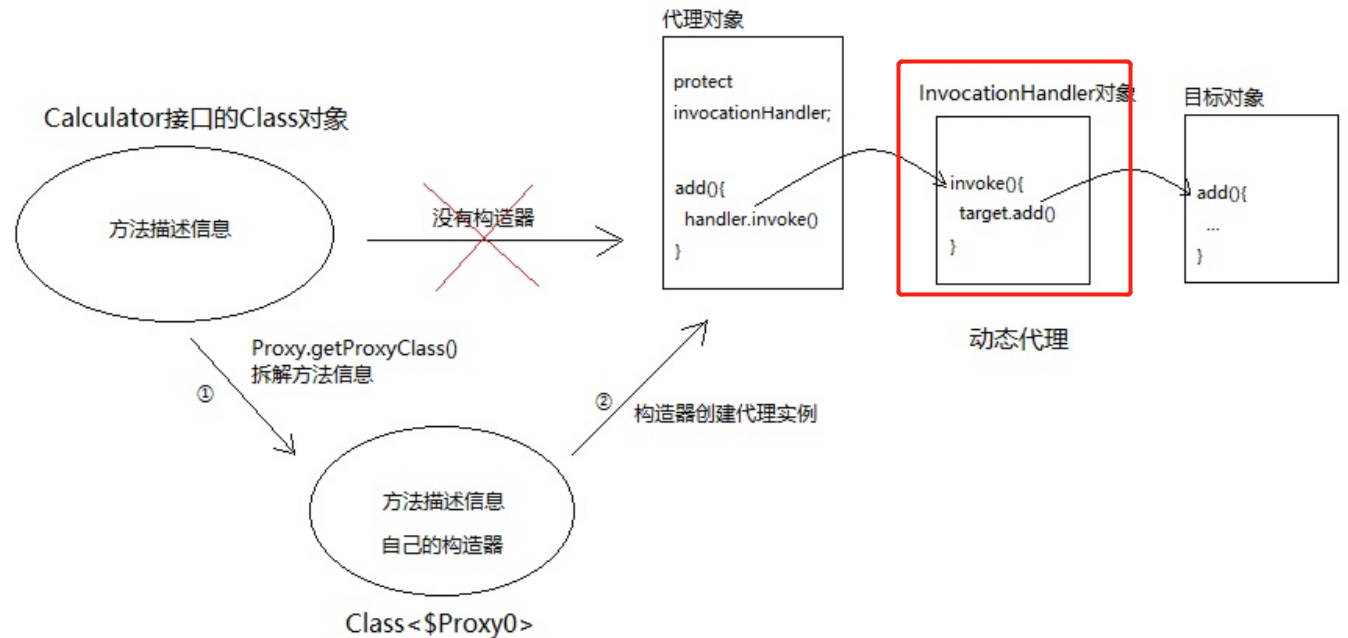
自己实现InvocationHander接口,里边的invoke方法,实际调用目标对象的时候,前后想加啥就加啥
(1条消息) 从源码角度解读JDK动态代理_程序员李哈的博客-CSDN博客
@CallerSensitive
    public static Class<?> getProxyClass(ClassLoader loader,
                                         Class<?>... interfaces)
        throws IllegalArgumentException
    {
        // 根据接口克隆一份
        final Class<?>[] intfs = interfaces.clone();
        final SecurityManager sm = System.getSecurityManager();
        if (sm != null) {
            checkProxyAccess(Reflection.getCallerClass(), loader, intfs);
        }

        return getProxyClass0(loader, intfs); 继续走
    }
private static Class<?> getProxyClass0(ClassLoader loader,
                                           Class<?>... interfaces) {
        if (interfaces.length > 65535) {
            throw new IllegalArgumentException("interface limit exceeded");
        }

        // If the proxy class defined by the given loader implementing
        // the given interfaces exists, this will simply return the cached copy;
        // otherwise, it will create the proxy class via the ProxyClassFactory
        return proxyClassCache.get(loader, interfaces); 继续走,其中get方法里边有个apply方法
    }
@Override
        public Class<?> apply(ClassLoader loader, Class<?>[] interfaces) {

            Map<Class<?>, Boolean> interfaceSet = new IdentityHashMap<>(interfaces.length);
            for (Class<?> intf : interfaces) {
                /*
                 * Verify that the class loader resolves the name of this
                 * interface to the same Class object.
                 */
                Class<?> interfaceClass = null;
                try {
                    // 通过类
                    interfaceClass = Class.forName(intf.getName(), false, loader);
                } catch (ClassNotFoundException e) {
                }
                if (interfaceClass != intf) {
                    throw new IllegalArgumentException(
                        intf + " is not visible from class loader");
                }
                /*
                 * Verify that the Class object actually represents an
                 * interface.
                 */
                if (!interfaceClass.isInterface()) {
                    throw new IllegalArgumentException(
                        interfaceClass.getName() + " is not an interface");
                }
                /*
                 * Verify that this interface is not a duplicate.
                 */
                if (interfaceSet.put(interfaceClass, Boolean.TRUE) != null) {
                    throw new IllegalArgumentException(
                        "repeated interface: " + interfaceClass.getName());
                }
            }

            String proxyPkg = null;     // package to define proxy class in
            int accessFlags = Modifier.PUBLIC | Modifier.FINAL;

            /*
             * Record the package of a non-public proxy interface so that the
             * proxy class will be defined in the same package.  Verify that
             * all non-public proxy interfaces are in the same package.
             */
            for (Class<?> intf : interfaces) {
                int flags = intf.getModifiers();
                if (!Modifier.isPublic(flags)) {
                    accessFlags = Modifier.FINAL;
                    String name = intf.getName();
                    int n = name.lastIndexOf('.');
                    String pkg = ((n == -1) ? "" : name.substring(0, n + 1));
                    if (proxyPkg == null) {
                        proxyPkg = pkg;
                    } else if (!pkg.equals(proxyPkg)) {
                        throw new IllegalArgumentException(
                            "non-public interfaces from different packages");
                    }
                }
            }

            if (proxyPkg == null) {
                // if no non-public proxy interfaces, use com.sun.proxy package
                proxyPkg = ReflectUtil.PROXY_PACKAGE + ".";
            }

            /*
             * Choose a name for the proxy class to generate.
             */
            long num = nextUniqueNumber.getAndIncrement();
            生成类名
            String proxyName = proxyPkg + proxyClassNamePrefix + num;

            /*
             * Generate the specified proxy class.
             */
             // 生成字节流
            byte[] proxyClassFile = ProxyGenerator.generateProxyClass(
                proxyName, interfaces, accessFlags);
            try {
                // 生成class对象,native方法
                return defineClass0(loader, proxyName,
                                    proxyClassFile, 0, proxyClassFile.length);
            } catch (ClassFormatError e) {
                /*
                 * A ClassFormatError here means that (barring bugs in the
                 * proxy class generation code) there was some other
                 * invalid aspect of the arguments supplied to the proxy
                 * class creation (such as virtual machine limitations
                 * exceeded).
                 */
                throw new IllegalArgumentException(e.toString());
            }
        }
    }

 浙公网安备 33010602011771号