
线程协作
线程协作
线程通信
应用场景:生产者和消费者问题
问题描述:
- 假设仓库只能存放一件产品,生产者将生产出来的产品放入仓库,消费者将仓库中的产品取走消费
- 如果仓库中没有产品,则生产者将产品放入仓库,然后停止生产并等待,直到仓库中的产品被消费者取走
- 如果仓库中放有产品,这消费者可以将产品取走消费,否则停止消费并等待
- wait():表示线程一直等待,直到其他线程通知,与sleep不同,会释放锁
- wait(long timeout):指定等待的毫秒数
- notify():唤醒一个处于等待的线程
- notifyAll():唤醒同一对象上所有调用wait()方法的线程,优先级别高的线程优先调度
管程法
package com.highlevel;


//测试:s生产者消费者模型-->利用缓冲区:管程法

//生产者、消费者、产品、缓冲区
public class TestPc {

    public static void main(String[] args) {
        SynContainer container = new SynContainer();

        new Producer(container).start();
        new Consumer(container).start();


    }

}

//生产者
class Producer extends Thread {
    SynContainer container;

    public Producer(SynContainer container) {
        this.container = container;
    }


    //生产
    @Override
    public void run() {
        for (int i = 0; i < 100; i++) {
            System.out.println("生产了" + i + "只鸡");
            container.push(new Chicken(i));
        }
    }
}

//消费者
class Consumer extends Thread {
    SynContainer container;

    public Consumer(SynContainer container) {
        this.container = container;
    }

    //消费

    @Override
    public void run() {
        for (int i = 0; i < 100; i++) {
            System.out.println("消费了--->" + container.pop().id + "只鸡");
        }
    }
}

//产品
class Chicken {
    int id;//产品编号

    public Chicken(int id) {
        this.id = id;
    }
}

//缓冲区
class SynContainer {

    //需要一个容器大小
    Chicken[] chickens = new Chicken[10];
    //容器计数器
    int count = 0;

    //生产者放入产品
    public synchronized void push(Chicken chicken) {
        //如果容器满了,就需要等待消费者消费
        if (count == chickens.length) {
            //通知消费者消费,生产者等待
            try {
                this.wait();
            } catch (InterruptedException e) {
                e.printStackTrace();
            }
        }

        //如果容器没满,就需要放入产品
        chickens[count] = chicken;
        count++;
        this.notifyAll();

    }


    //消费者消费产品
    public synchronized Chicken pop() {
        //判断能否消费
        if (count == 0) {
            //等待生产者生产,消费者等待

            try {
                this.wait();
            } catch (InterruptedException e) {
                e.printStackTrace();
            }
        }

        //如果可以消费
        count--;
        Chicken chicken = chickens[count];

        //消费了,通知生产者生产
        this.notifyAll();
        return chicken;
    }
}
信号灯法
package com.highlevel;


import sun.nio.cs.ext.TIS_620;

//测试生产者消费者问题:信号灯法,标志位解决
public class TestPC02 {

    public static void main(String[] args) {
        TV tv = new TV();

        new Player(tv).start();
        new Watcher(tv).start();
    }
}


//生产者--->演员
class Player extends Thread {
    TV tv;

    public Player(TV tv) {
        this.tv = tv;
    }

    @Override
    public void run() {
        for (int i = 0; i < 20; i++) {
            if (i % 2 == 0) {
                this.tv.play("快乐大本营播放中");
            } else {
                this.tv.play("抖音,记录美好生活");
            }
        }
    }
}


//消费者--->观众
class Watcher extends Thread {
    TV tv;

    public Watcher(TV tv) {
        this.tv = tv;
    }

    @Override
    public void run() {
        for (int i = 0; i < 20; i++) {
            tv.watch();
        }
    }
}


//产品--->节目
class TV {
    //演员表演,观众等待 T
    //观众观看,演员等待 F
    String voice;//表演的节目
    boolean flag = true;


    //表演
    public synchronized void play(String voice) {

        if (!flag) {
            try {
                this.wait();
            } catch (InterruptedException e) {
                e.printStackTrace();
            }
        }

        System.out.println("演员表演了:" + voice);
        //通知观众观看
        this.notifyAll();//通知唤醒
        this.voice = voice;
        this.flag = !this.flag;

    }

    //观看
    public synchronized void watch() {
        if (flag) {
            try {
                this.wait();
            } catch (InterruptedException e) {
                e.printStackTrace();
            }
        }
        System.out.println("观众观看了" + voice);

        //通知演员表演
        this.notifyAll();
        this.flag = !this.flag;
    }

}
线程池
-
背景:经常创建和销毁、使用量特别大的资源,比如并发情况下的线程,对性能影响很大
-
思路:提前创建好多个线程,放入线程池中,使用时直接获取,用完后放回池子中,避免频繁创建销毁,实现重复利用
-
好处:
- 提高响应速度
- 降低资源消耗
- 便于线程管理
-
参数:
- corePoolSize:核心池的大小
- maximumPoolSize:最大线程数
- keepAliveTime:线程没有任务时会保持多长时间后终止
-
相关API:ExecutorService和Executors
实现代码:
package com.highlevel;


import java.util.concurrent.ExecutorService;
import java.util.concurrent.Executors;

//测试线程池
public class TestPool {

    public static void main(String[] args) {

        //1、创建线程池
        ExecutorService service = Executors.newFixedThreadPool(10);

        //执行
        service.execute(new MyThread());
        service.execute(new MyThread());
        service.execute(new MyThread());
        service.execute(new MyThread());

        //关闭连接
        service.shutdown();

    }
}


class MyThread implements Runnable {


    @Override
    public void run() {

        System.out.println(Thread.currentThread().getName());

    }
}
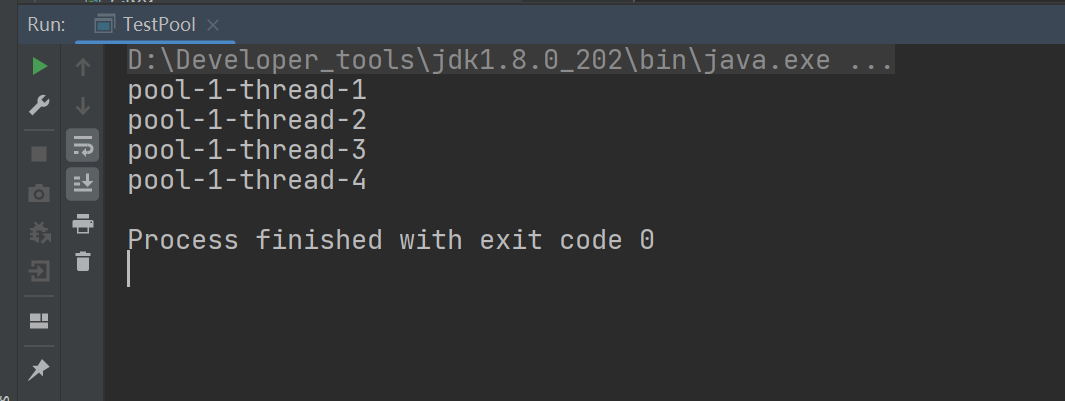
运行结果:
创建线程总结
package com.highlevel;

import java.util.concurrent.Callable;
import java.util.concurrent.ExecutionException;
import java.util.concurrent.FutureTask;

//总结线程的创建
public class ThreadNew {

    public static void main(String[] args) {

        new MyThread01().start();

        new Thread(new MyThread02()).start();

        FutureTask<Integer> futureTask = new FutureTask<Integer>(new NyThread03());
        new Thread(futureTask).start();

        try {
            Integer integer = futureTask.get();
            System.out.println(integer);
        } catch (InterruptedException e) {
            e.printStackTrace();
        } catch (ExecutionException e) {
            e.printStackTrace();
        }

    }

}

//1、继承Thread类
class MyThread01 extends Thread {
    @Override
    public void run() {
        System.out.println("MyThread01");
    }
}


//2、实现Runnable接口
class MyThread02 implements Runnable {

    @Override
    public void run() {
        System.out.println("MyThread02");
    }
}

//3、实现Callable接口
class NyThread03 implements Callable<Integer> {

    @Override
    public Integer call() throws Exception {
        System.out.println("MyThread03");
        return 100;
    }
}

 浙公网安备 33010602011771号