

SQL的case when then else end语句的用法
 1     SELECT a.managecom,
 2            a.subtype,
 3            count(*) loadsucc,
 4            sum(case when a.state in  ('4', '5', '6', '7', '8', '9') then 1 else 0 end) recogsucc,
 5            sum(case when a.state in  ('3', '12', '13') then 1 else 0 end) recogfail,
 6            sum(case when a.state in  ('1', '2') then 1 else 0 end) waitrecog
 7       FROM ocr_docdetail a, ocr_loaddetail c
 8      WHERE 1 = 1
 9        and a.managecom like '86%'
10        and a.managecom = c.managecom
11        and a.bussno = c.bussno
12        and a.subtype = c.subtype
13        and c.loadstate = 0
14        and c.scandate >= date '2012-07-29'
15        and c.scandate <= date '2013-01-07'
16      group by a.managecom, a.subtype
17      order by a.managecom, a.subtype;
case具有两种格式。简单case函数和case搜索函数。
--简单case函数
            case sex

      when '1' then '男'

            when '2' then '女'

            else '其他' end
--case搜索函数
            case when sex = '1' then '男'

            when sex = '2' then '女'

            else '其他' end
这两种方式,可以实现相同的功能。简单case函数的写法相对比较简洁,但是和case搜索函数相比,功能方面会有些限制,比如写判定式。
还有一个需要注重的问题,case函数只返回第一个符合条件的值,剩下的case部分将会被自动忽略。
--比如说,下面这段sql,你永远无法得到“第二类”这个结果
            case when col_1 in ( 'a', 'b') then'第一类'

            when col_1 in ('a')       then '第二类'

            else '其他' end
下面我们来看一下,使用case函数都能做些什么事情。
一,已知数据按照另外一种方式进行分组,分析。
有如下数据:(为了看得更清楚,我并没有使用国家代码,而是直接用国家名作为primary key)
|
国家(country) |
人口(population) |
|
中国 |
600 |
|
美国 |
100 |
|
加拿大 |
100 |
|
英国 |
200 |
|
法国 |
300 |
|
日本 |
250 |
|
德国 |
200 |
|
墨西哥 |
50 |
|
印度 |
250 |
根据这个国家人口数据,统计亚洲和北美洲的人口数量。应该得到下面这个结果。
|
洲 |
人口 |
|
亚洲 |
1100 |
|
北美洲 |
250 |
|
其他 |
700 |
想要解决这个问题,你会怎么做?生成一个带有洲code的view,是一个解决方法,但是这样很难动态的改变统计的方式。
假如使用case函数,sql代码如下:
select sum(population),

      case country

      when '中国'     then'亚洲'

            when '印度'     then'亚洲'

            when '日本'     then'亚洲'

            when '美国'     then'北美洲'

            when '加拿大'  then'北美洲'

            when '墨西哥'  then'北美洲'

            else '其他' end

            from   table_a

      group by case country

      when '中国'     then'亚洲'

            when '印度'     then'亚洲'

            when '日本'     then'亚洲'

            when '美国'     then'北美洲'

            when '加拿大'  then'北美洲'

            when '墨西哥'  then'北美洲'

            else '其他' end;
注:
在上面这个例子中,其实select 了两个字段:sum(population), case country;
country 字段里面原来有很多值,有“中国,美国,日本,加拿大...”等等,select后的case when then else end其实就是相当于把country的值分为三类:"亚洲,北美洲,其他";
其实没有from后面的case when语句,其结果集是这样的,sum得到的是人口population的总数,所以需要将population分组,就有了后面的group by:
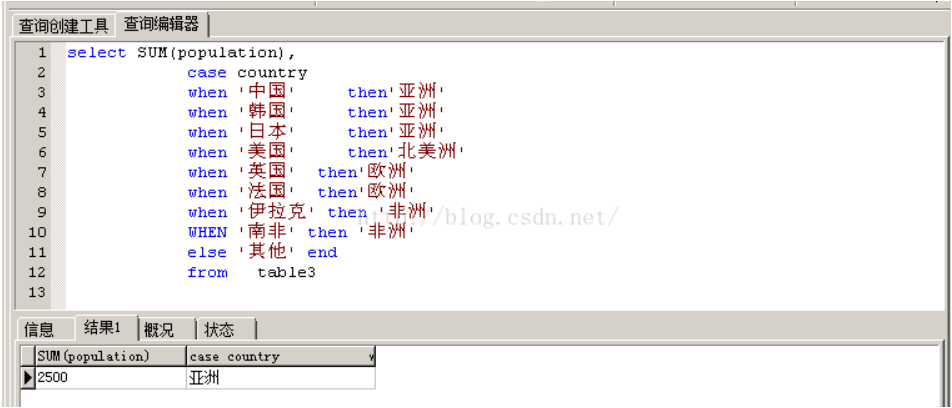
后面的case when语句,其实是将前面查询的字段case country进行分组,分成三组:"亚洲,北美洲,其他",然后就能得出结果来
同样的,我们也可以用这个方法来判定工资的等级,并统计每一等级的人数。sql代码如下;
select

            case when salary <= 500 then '1'

            when salary > 500 and salary <= 600  then '2'

            when salary > 600 and salary <= 800  then '3'

            when salary > 800 and salary <= 1000 then '4'

            else null end salary_class,

      count(*)

      from   table_a

      group by

            case when salary <= 500 then '1'

            when salary > 500 and salary <= 600  then '2'

            when salary > 600 and salary <= 800  then '3'

            when salary > 800 and salary <= 1000 then '4'

            else null end;
二,用一个sql语句完成不同条件的分组。
有如下数据
|
国家(country) |
性别(sex) |
人口(population) |
|
中国 |
1 |
340 |
|
中国 |
2 |
260 |
|
美国 |
1 |
45 |
|
美国 |
2 |
55 |
|
加拿大 |
1 |
51 |
|
加拿大 |
2 |
49 |
|
英国 |
1 |
40 |
|
英国 |
2 |
60 |
按照国家和性别进行分组,得出结果如下
|
国家 |
男 |
女 |
|
中国 |
340 |
260 |
|
美国 |
45 |
55 |
|
加拿大 |
51 |
49 |
|
英国 |
40 |
60 |
普通情况下,用union也可以实现用一条语句进行查询。但是那样增加消耗(两个select部分),而且sql语句会比较长。
下面是一个是用case函数来完成这个功能的例子
select country,

      sum( case when sex = '1' then

      population else 0 end),  --男性人口

            sum( case when sex = '2' then

      population else 0 end)   --女性人口

            from table_a

      group by country;
这样我们使用select,完成对二维表的输出形式,充分显示了case函数的强大。
三,在check中使用case函数。
在check中使用case函数在很多情况下都是非常不错的解决方法。可能有很多人根本就不用check,那么我建议你在看过下面的例子之后也尝试一下在sql中使用check。
下面我们来举个例子
公司a,这个公司有个规定,女职员的工资必须高于1000块。假如用check和case来表现的话,如下所示
constraint check_salary check

     ( case when sex = '2'

            then case when salary > 1000

            then 1 else 0 end

            else 1 end = 1 )
假如单纯使用check,如下所示
constraint check_salary check

          ( sex = '2' and salary > 1000 )
女职员的条件倒是符合了,男职员就无法输入了。
转自原作者:http://blog.csdn.net/xuxurui007/article/details/8479953

 浙公网安备 33010602011771号