
破环单例模式
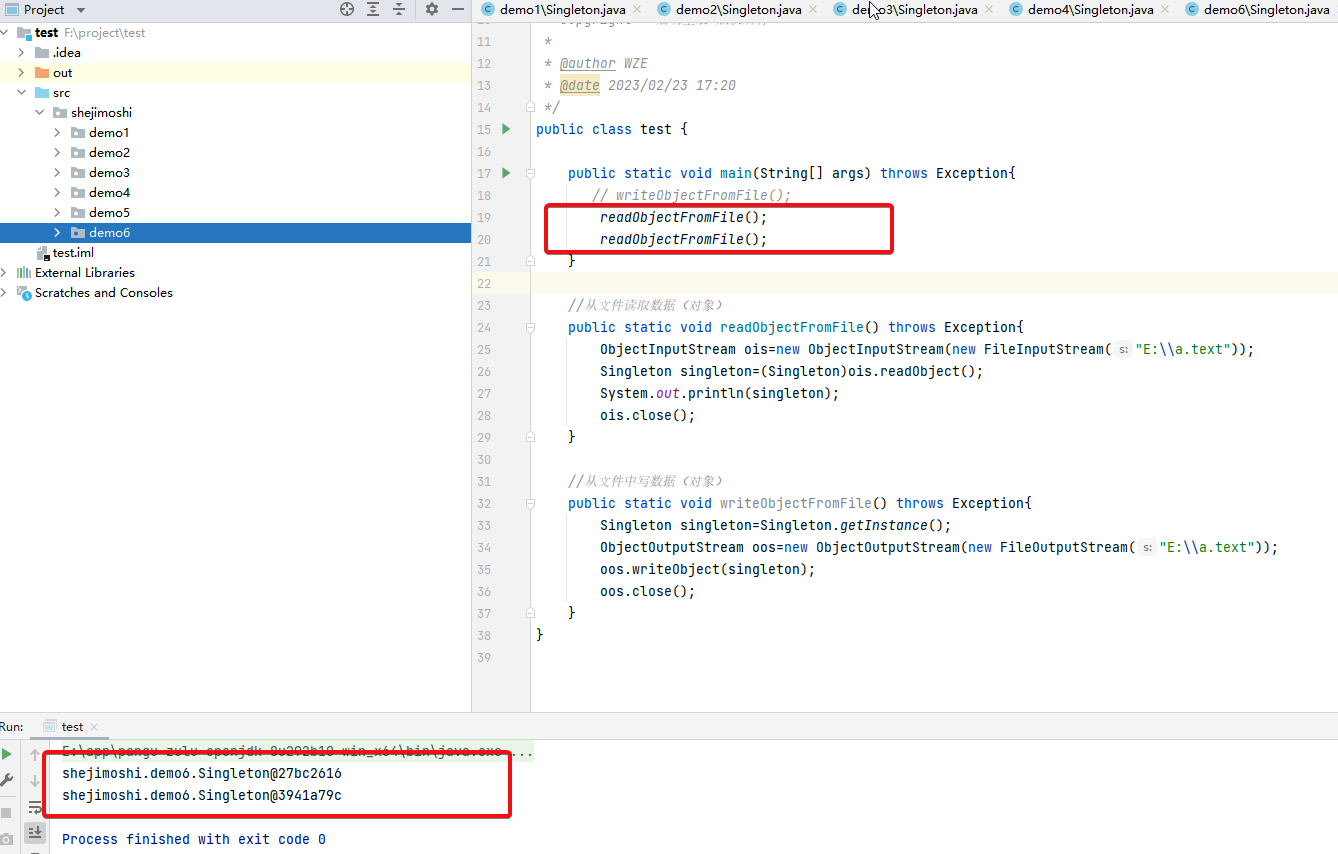
方式一:序列化
public class test {

    public static void main(String[] args) throws Exception{
       // writeObjectFromFile();
        readObjectFromFile();
        readObjectFromFile();
    }

    //从文件读取数据(对象)
    public static void readObjectFromFile() throws Exception{
        ObjectInputStream ois=new ObjectInputStream(new FileInputStream("E:\\a.text"));
        Singleton singleton=(Singleton)ois.readObject();
        System.out.println(singleton);
        ois.close();
    }

    //从文件中写数据(对象)
    public static void writeObjectFromFile() throws Exception{
        Singleton singleton=Singleton.getInstance();
        ObjectOutputStream oos=new ObjectOutputStream(new FileOutputStream("E:\\a.text"));
        oos.writeObject(singleton);
        oos.close();
    }
}
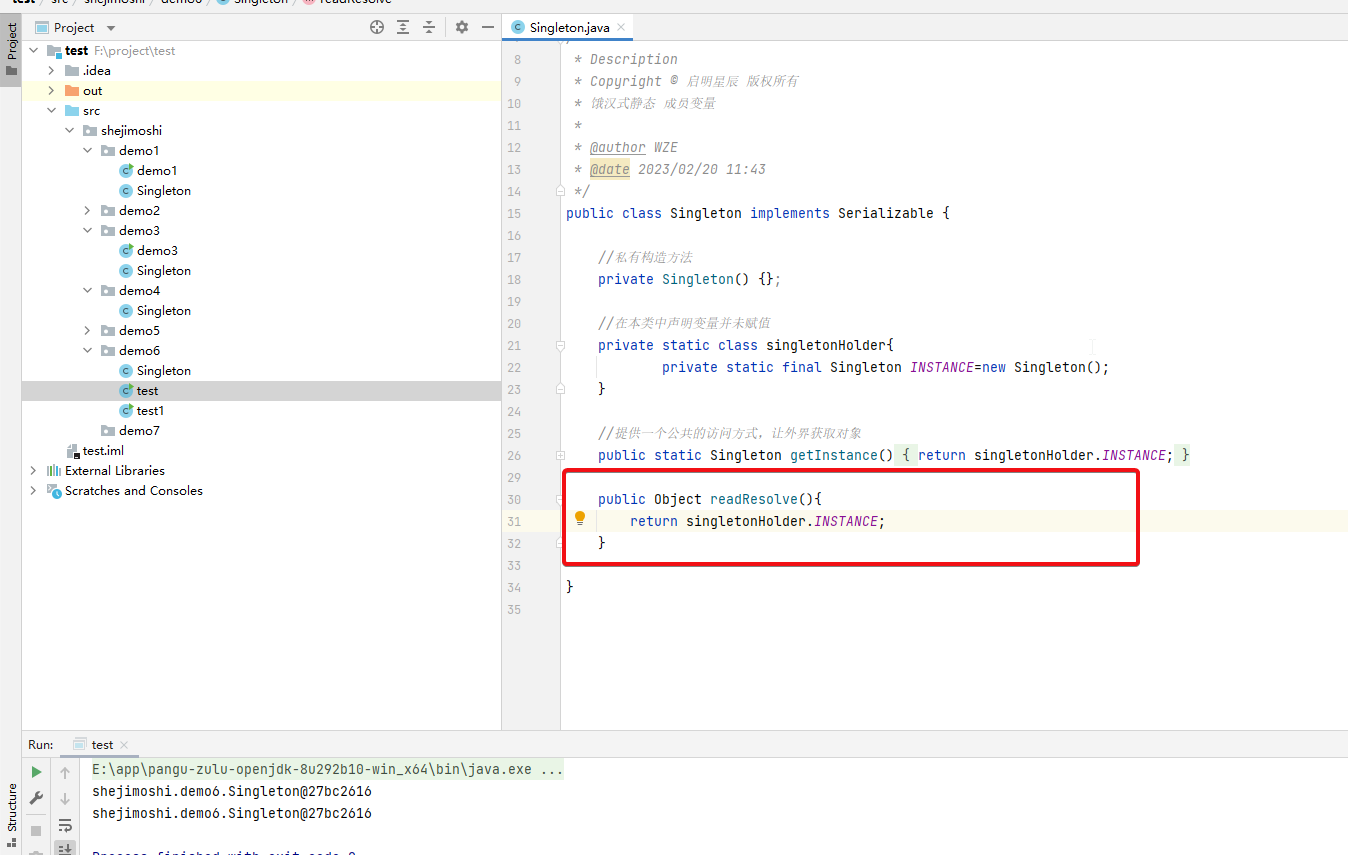
解决方案
public class Singleton implements Serializable {

    //私有构造方法
    private Singleton() {};

    //在本类中声明变量并未赋值
    private static class singletonHolder{
            private static final Singleton INSTANCE=new Singleton();
    }

    //提供一个公共的访问方式,让外界获取对象
    public static Singleton getInstance() {
            return singletonHolder.INSTANCE;
    }

    public Object readResolve(){
        return singletonHolder.INSTANCE;
    }

}
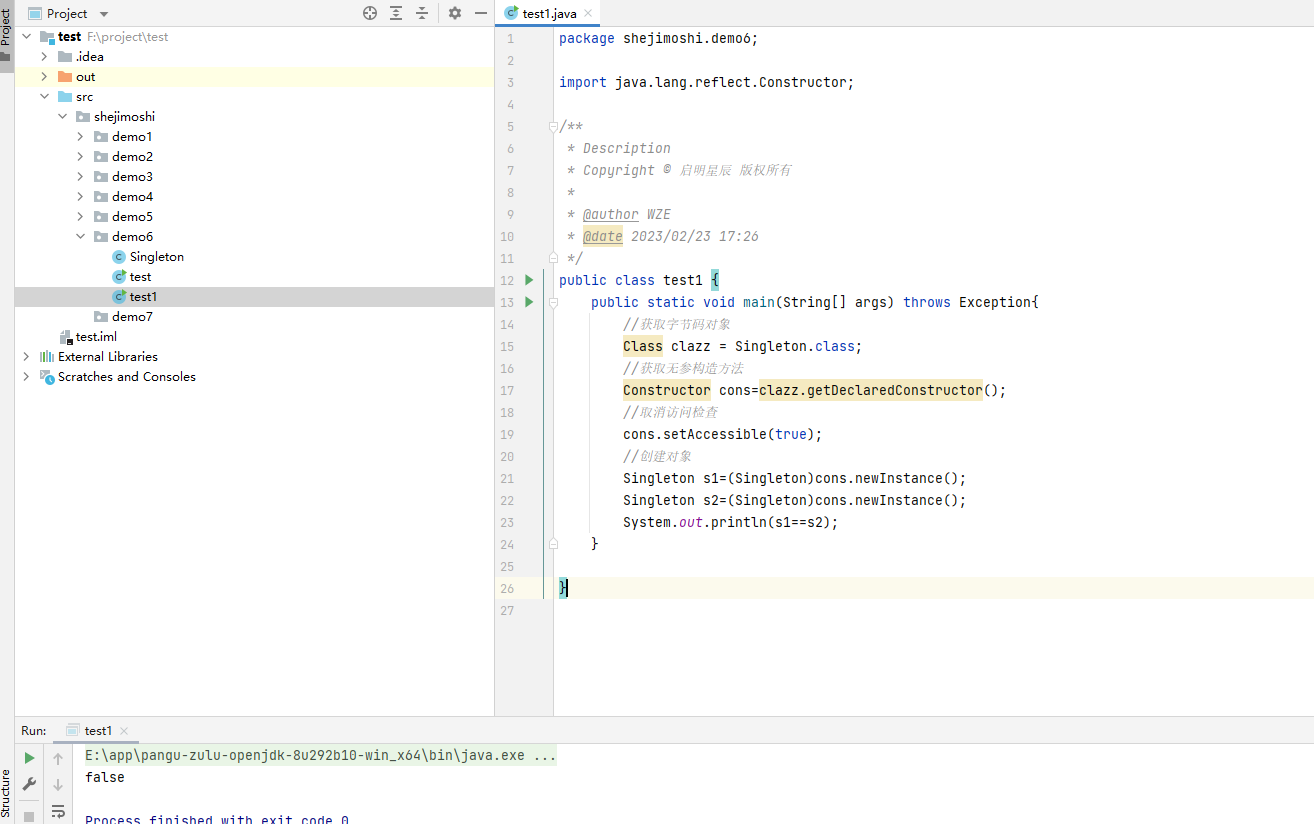
方式二:反射
public class test1 {
    public static void main(String[] args) throws Exception{
        //获取字节码对象
        Class clazz = Singleton.class;
        //获取无参构造方法
        Constructor cons=clazz.getDeclaredConstructor();
        //取消访问检查
        cons.setAccessible(true);
        //创建对象
        Singleton s1=(Singleton)cons.newInstance();
        Singleton s2=(Singleton)cons.newInstance();
        System.out.println(s1==s2);
    }

}
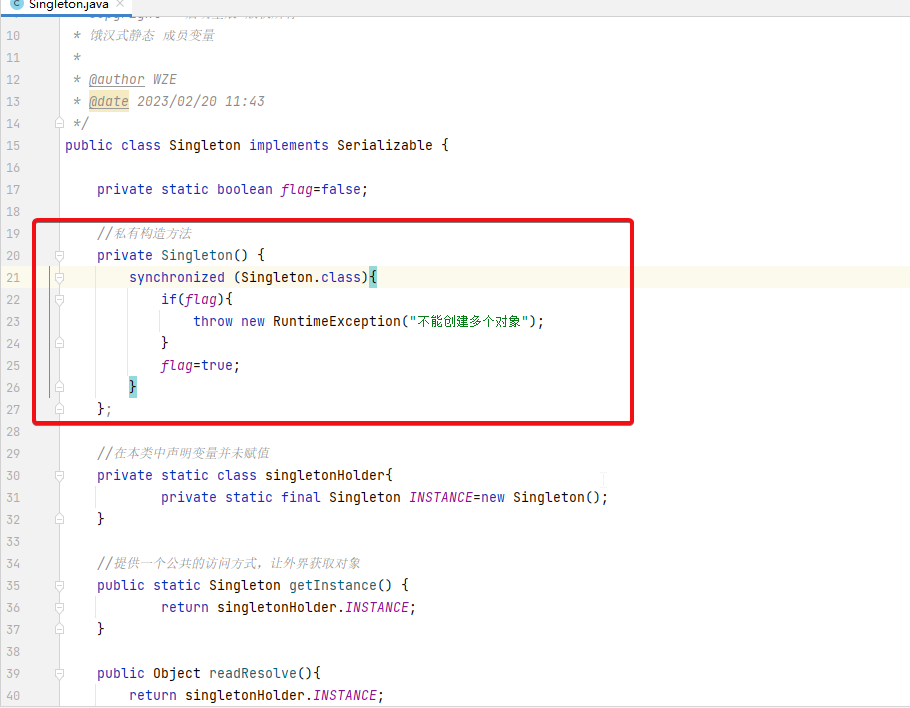
解决方案
public class Singleton implements Serializable {

    private static boolean flag=false;

    //私有构造方法
    private Singleton() {
        synchronized (Singleton.class){
            if(flag){
                throw new RuntimeException("不能创建多个对象");
            }
            flag=true;
        }
    };

    //在本类中声明变量并未赋值
    private static class singletonHolder{
            private static final Singleton INSTANCE=new Singleton();
    }

    //提供一个公共的访问方式,让外界获取对象
    public static Singleton getInstance() {
            return singletonHolder.INSTANCE;
    }

    public Object readResolve(){
        return singletonHolder.INSTANCE;
    }

}

 浙公网安备 33010602011771号