

vue将地区以对象、数组的格式传给后端
项目涉及到了一个地区筛选,同时省市区三级不进行关联,后端要求以对象包数组的格式传参,完整代码
1、先拿到接口返回的地区数据
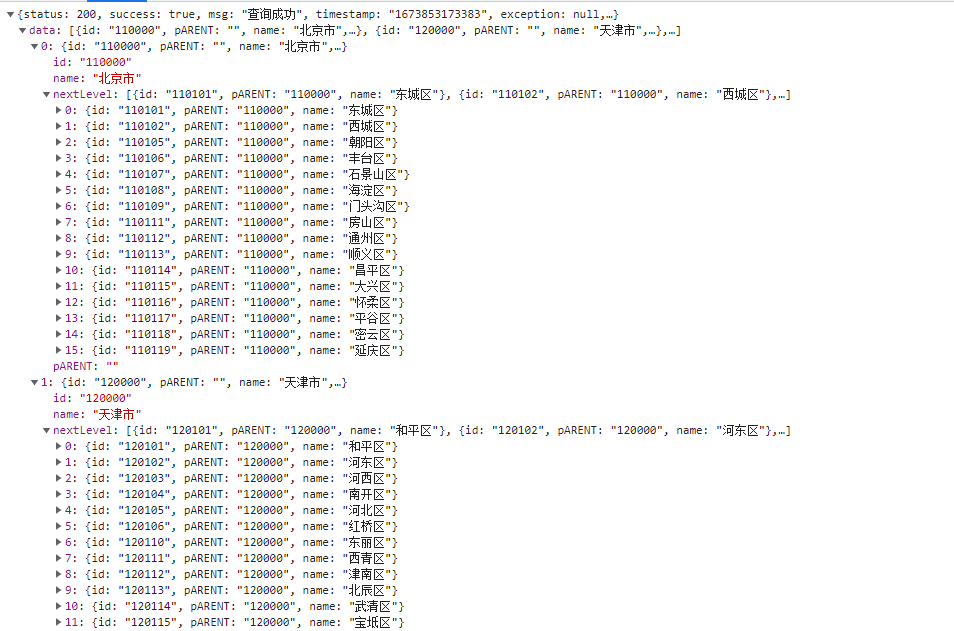
对数据进行处理,拿到想要的格式
this.provinceOption =res.data.map((item) => {
          let name = '';
          if (item.name.includes('内蒙古') || item.name.includes('黑龙江')) {
            name = item.name.slice(0, 3);
          } else {
            name = item.name;
          }
          return {
            ...item,
            name,
          };
        });
2、vue用element级联选择器插件渲染
<el-cascader v-model="search.area" placeholder="请选择" @change="areaChange" @visible-change="enpVisibleChange"
        :options="provinceOption" filterable clearable collapse-tags :props="{
          multiple: true,
          checkStrictly: true,
          label: 'name',
          value: 'name',
          expandTrigger: 'hover',
          children: 'nextLevel',
        }" size="midium">
</el-cascader>
重点来了,将插件返回的数据进行处理
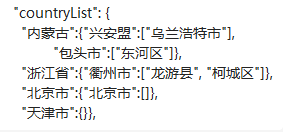
思路:先将每个数组的第一项存起来,将他们转为对象的key,然后再将数组的第二项作为对象中的key,第三项存到对应的数组中

3、将选中的地区返回的数据进行处理,改成接口需要的参数格式
areaChange() {
      const countryArray = [];
      const countryList = {}
      this.search.area.forEach(item => {
        if (!countryArray.includes(item[0])) {
          countryArray.push(item[0])
        }
      })
      if (countryArray.length > 0) {
        countryArray.forEach(item => {
          countryList[item] = {}
          if (item.includes('市')) {
            countryList[item][item] = []
          }
          this.search.area.forEach(areaItem => {
            if (areaItem.length === 2 && areaItem[0].includes('市')) {
              if (item === areaItem[0]) {
                areaItem.forEach(areaItemChild => {
                  if (item !== areaItemChild && !countryList[item][item].includes(areaItemChild)) {
                    countryList[item][item].push(areaItemChild)
                  }
                })
              }
            } else if (areaItem.length >= 2 && item === areaItem[0]) {
              if (!countryList[item][areaItem[1]]) {
                countryList[item][areaItem[1]] = []
              }
              areaItem.forEach(areaItemChild => {
                if (item !== areaItemChild && !countryList[item][areaItem[1]].includes(areaItemChild) && areaItem[1] !== areaItemChild) {
                  countryList[item][areaItem[1]].push(areaItemChild)
                }
              })
            }
          })
        })
      }
      this.search.countryList = countryList;
      if (!this.enpVisible) {
        this.policySearchList();
      }
    },
以上就是完整的代码和步骤

 浙公网安备 33010602011771号