


线程《二:线程的状态---生命六周期》
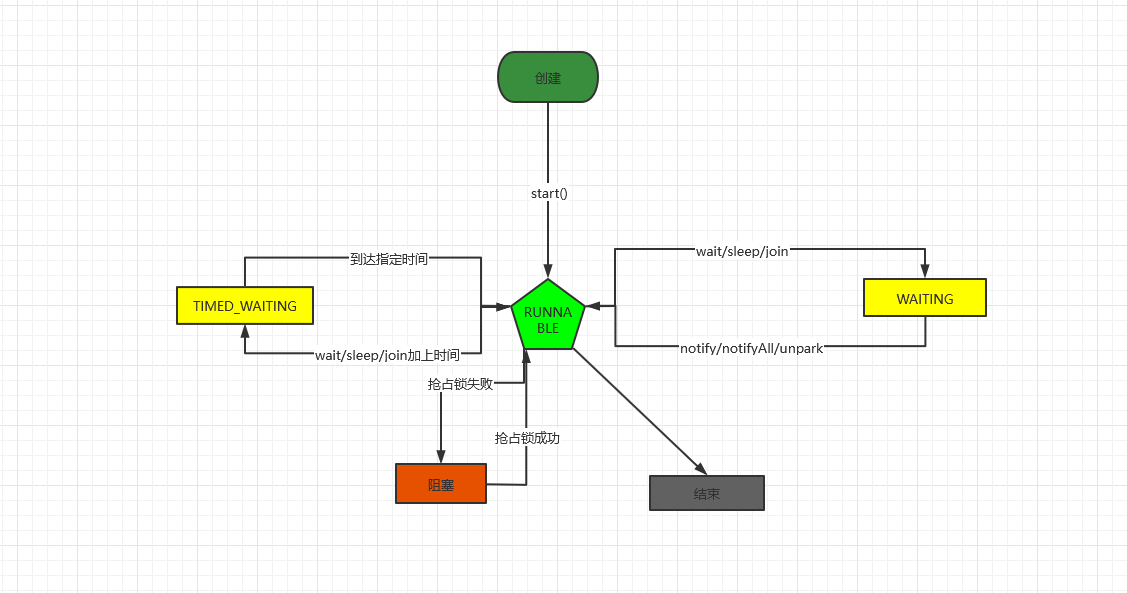
1创建,2就绪,3终止
public class ThreadState {
    public static void main(String[] args) throws InterruptedException {
        Thread myThread=new Thread(()->{
            System.out.println("myThread");
        });
        //创建  NEW
        System.out.println(myThread.getState());
        myThread.start();
        //就绪  RUNNABLE
        System.out.println(myThread.getState());
        Thread.sleep(1000);
        //终止  TERMINATED
        System.out.println(myThread.getState());

    }
}

4等待:使用jps查看当前类运行的进程,jstack根据进程查看线程的状态
public class ThreadStateWait {
public static Object obj=new Object();
    public static void main(String[] args) {
        new Thread(() -> {
            while (true) {
                synchronized (obj) {
                    System.out.println("我是one线程");
                    try {
                        obj.wait();
                    } catch (InterruptedException e) {
                        e.printStackTrace();
                    }

                }
            }
        },"one").start();


        new Thread(() -> {
            while (true) {
                synchronized (obj) {
                    System.out.println("我是two线程");
                    try {
                        Thread.sleep(20000);
                    } catch (InterruptedException e) {
                        e.printStackTrace();
                    }

                }
            }
        },"two").start();
    }
}
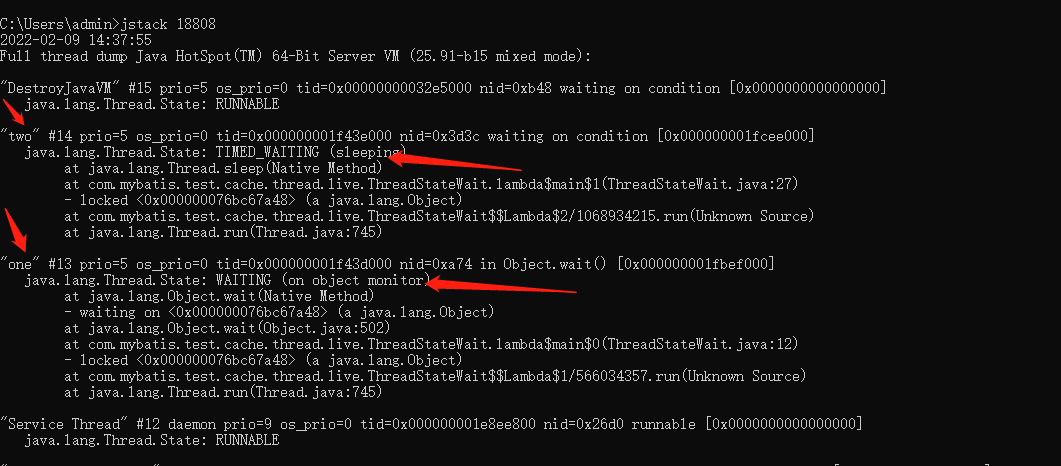
可以看到线程two是TIMED_WAITING,
one是WAITING,
TIMED_WAITING和WAITING状态一样,只是有一个等待时间,
一般调用如下方法时:sleep(),wait(),join(),LockSupport.parkNanos(),LockSupport.parkUntil(),
而且方法带上时间则线程会出现这个状态
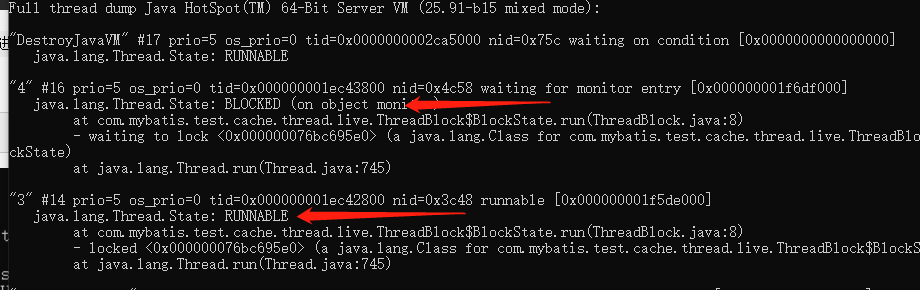
5,阻塞,使用同一把锁,线程3先抢占运行,线程4阻塞
public class ThreadBlock {
    static class BlockState extends Thread{
        @Override
        public void run() {
            synchronized (BlockState.class){
                for (; ; ) {

                }
            }

        }
    }

    public static void main(String[] args) {
         new Thread(new BlockState(),"3").start();
         new Thread(new BlockState(),"4").start();
    }
}
1.interrupt:给线程个中断标识,
2.isInterrupted:如果线程有interrupt时返回true表示当前线程被中断过
3.interrupted:线程如果被中断过则返回true,不过会给线程进行复位,再次调用是就返回true
//实现Runnable接口
public class MyThreadRunnable implements Runnable {
    @Override
    public void run() {
        //非阻塞状态下中断标记
        try {
            Thread.currentThread().interrupt();//做一个中断标记的处理
            boolean interrupted = Thread.currentThread().isInterrupted();
            System.out.println("线程被中true断过:" + interrupted);
//            Thread.sleep(2000);
//            Thread.currentThread().wait(2000);
            Thread.currentThread().join(2000);
            System.out.println("线程被中断过》true复位:" + Thread.currentThread().interrupted());
            System.out.println("线程是否被中断过已经false复位:" + Thread.currentThread().isInterrupted());
            System.out.println("线程再次false复位:" + Thread.currentThread().interrupted());
        } catch (Exception e) {
            boolean isIn = Thread.currentThread().isInterrupted();//这里输出结果为false,这就说明当我们一个休眠/join的线程被中断后,抛出异常的同时也会对线程的中断标记进行复位,退出阻塞状态,且中断标志被清除,重新设置为false,所以此处的isIn为false
            System.out.println("异常复位:"+isIn);
            System.out.println("线程被中断过》false复位:" + Thread.currentThread().interrupted());
            return;
        }

    }
}
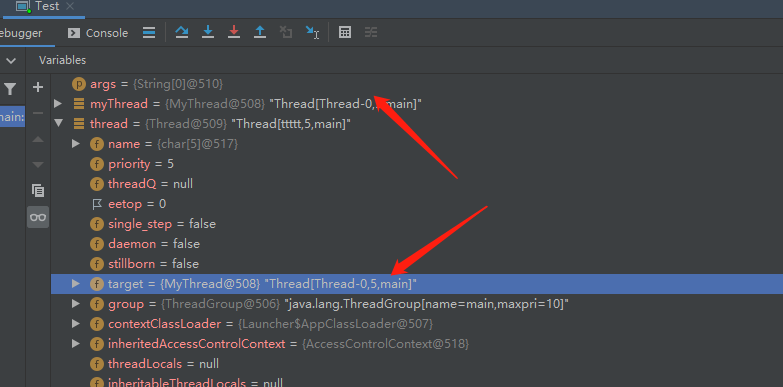
currentThread()和this的区别指代线程

sychronized锁:偏向锁升级为轻量锁
下面BiasedLockingStartUpDelay=4000可以看出默认延迟四秒后启用偏向锁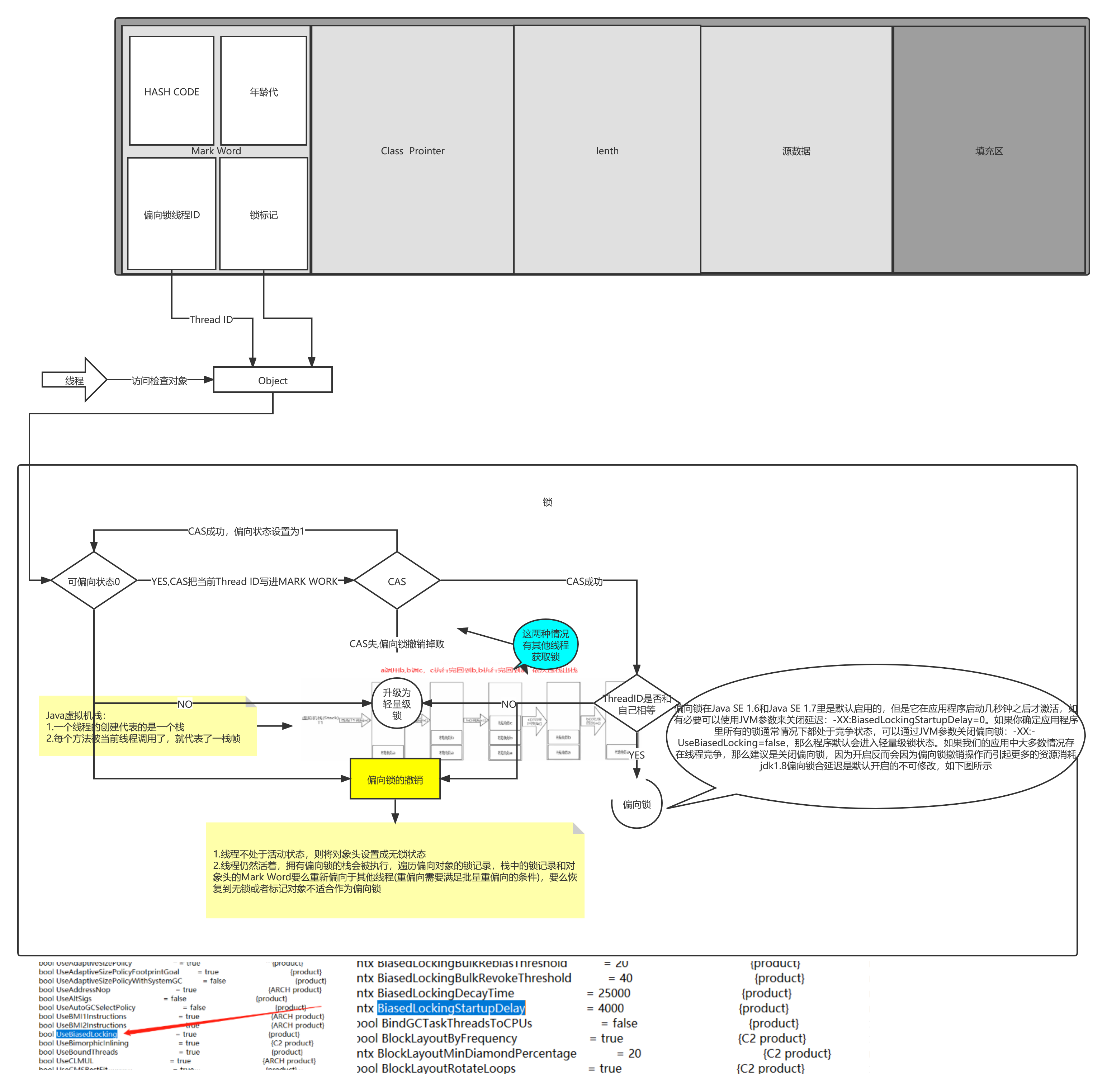
轻量锁升级重量级锁


本文来自博客园,作者:余生请多指教ANT,转载请注明原文链接:https://www.cnblogs.com/wangbiaohistory/p/15874887.html

 浙公网安备 33010602011771号