使用思维导图进行SWOT分析的全面教程
介绍
SWOT分析是一种战略规划工具,用于识别和评估业务或项目中涉及的优势、劣势、机会和威胁。思维导图是一种有效的技术,用于头脑风暴和组织这些因素的视觉表示。本教程将指导您使用思维导图进行SWOT分析,按照结构化模板进行。我们建议使用Visual Paradigm Online,因为它具有强大的支持和功能。
关键概念
SWOT分析
SWOT代表优势(Strengths)、劣势(Weaknesses)、机会(Opportunities)和威胁(Threats)。这一框架帮助组织了解其内部和外部环境,以做出明智的决策。
- 优势:支持成功结果的内部属性和资源。
- 劣势:使成功更难实现的内部因素和资源。
- 机会:组织可以利用或从中受益的外部因素。
- 威胁:可能危及实体成功的外部因素。
思维导图
思维导图是一种视觉思维工具,有助于结构化信息,使您能够更好地分析、理解、综合、回忆和生成新想法。它涉及创建一个带有中心想法(SWOT分析)的图表,并分支到子想法(优势、劣势、机会和威胁)和进一步的子分支。
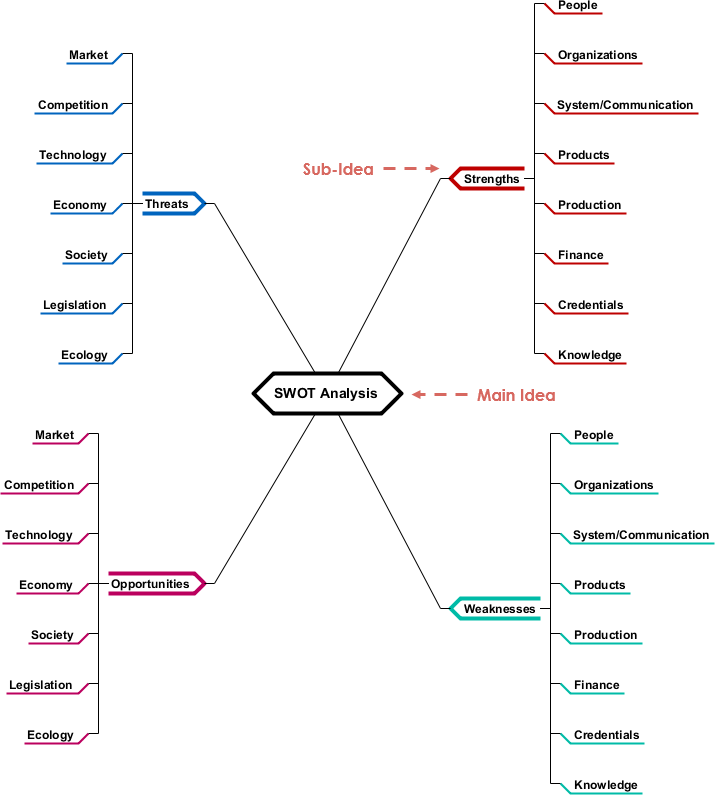
使用思维导图进行SWOT分析的步骤
第1步:定义主要想法
从中心想法“SWOT分析”开始。这将是您思维导图的焦点。
第2步:识别子想法
从中心想法分支出四个主要子想法:优势、劣势、机会和威胁。
第3步:头脑风暴内部因素(优势和劣势)
优势
- 人员:技能劳动力,强大的领导力。
- 组织:有效的团队结构,强大的公司文化。
- 系统/通信:高效的流程,良好的通信渠道。
- 产品:高质量产品,创新功能。
- 生产:高效的制造流程,强大的供应链。
- 财务:强大的财务储备,良好的现金流。
- 资质:行业认证,奖项。
- 知识:专业知识,专有知识。
劣势
- 人员:缺乏技能劳动力,弱领导力。
- 组织:无效的团队结构,差的公司文化。
- 系统/通信:低效的流程,差的通信渠道。
- 产品:低质量产品,缺乏创新。
- 生产:低效的制造流程,弱供应链。
- 财务:弱财务储备,差的现金流。
- 资质:缺乏行业认证,奖项。
- 知识:缺乏专业知识,专有知识。
第4步:头脑风暴外部因素(机会和威胁)
机会
- 市场:增长的市场需求,新的市场细分。
- 竞争:弱竞争对手,市场空白。
- 技术:技术进步,新工具。
- 经济:有利的经济条件,政府激励。
- 社会:消费者偏好的变化,社会趋势。
- 立法:有利的法规,新政策。
- 生态:可持续实践,绿色倡议。
威胁
- 市场:市场需求下降,激烈竞争。
- 竞争:强竞争对手,市场饱和。
- 技术:快速的技术变化,过时。
- 经济:不利的经济条件,衰退。
- 社会:消费者偏好的变化,社会趋势。
- 立法:不利的法规,新政策。
- 生态:环境问题,可持续性挑战。
第5步:使用Visual Paradigm Online
Visual Paradigm Online是一个强大的创建思维导图的工具。它提供了用户友好的界面和各种模板,帮助您入门。以下是使用方法:
- 注册/登录:在Visual Paradigm Online创建账户或登录。
- 创建新思维导图:选择思维导图模板,并从中心想法“SWOT分析”开始。
- 添加子想法:分支到优势、劣势、机会和威胁。
- 头脑风暴:为每个类别添加子分支,按照提供的模板进行。
- 自定义:使用颜色、图标和图像使您的思维导图视觉上更具吸引力和易于理解。
- 协作:与团队成员共享您的思维导图进行协作头脑风暴。
- 分析:查看思维导图以识别关键因素并制定策略。
使用Visual Paradigm Online的好处
- 用户友好界面:即使是初学者也易于使用。
- 协作功能:与团队成员实时协作。
- 可自定义模板:各种模板以满足不同需求。
- 视觉吸引力:使用颜色、图标和图像以增强理解。
- 集成:与其他工具和平台无缝集成。
结论
使用思维导图进行SWOT分析是一种有效的方法,可以视觉上组织和理解影响您业务或项目的内部和外部因素。Visual Paradigm Online提供了一个强大的平台,用于创建和协作思维导图,使过程高效且有趣。
参考文献
- Visual Paradigm Online:一个用于创建思维导图、图表等的全面工具。它提供了用户友好的界面和协作功能。访问Visual Paradigm Online
- SWOT分析教程 - Visual Paradigm Online:本资源指导组织识别产品的优势、劣势、机会和威胁。它包括示例,并讨论了战略决策过程。阅读更多
- 免费UML、BPMN和敏捷教程 - 逐步学习:本页面提供各种教程,包括SWOT分析教程。它提供了特定主题的逐步说明,并定期添加新教程。阅读更多
- Visual Paradigm的SWOT分析全面教程:关于进行SWOT分析的详细指南,包括识别优势、劣势、机会和威胁的步骤。阅读更多
- SWOT分析:Visual Paradigm的全面指南:深入指南,解释SWOT分析的定义、用途以及如何进行,并附有示例。阅读更多
通过遵循本教程并利用Visual Paradigm Online,您可以有效地进行SWOT分析,并制定战略计划以实现您的目标。
Comprehensive Tutorial: Using Mind Maps to Brainstorm SWOT Analysis
Introduction
SWOT analysis is a strategic planning tool used to identify and evaluate the strengths, weaknesses, opportunities, and threats involved in a business or project. Mind mapping is an effective technique for brainstorming and organizing these factors visually. This tutorial will guide you through using mind maps to perform a SWOT analysis, following a structured template. We recommend using Visual Paradigm Online for its robust support and features.
Key Concepts
SWOT Analysis
SWOT stands for Strengths, Weaknesses, Opportunities, and Threats. This framework helps organizations understand their internal and external environments to make informed decisions.
- Strengths: Internal attributes and resources that support a successful outcome.
- Weaknesses: Internal factors and resources that make success more difficult to attain.
- Opportunities: External factors that the organization can capitalize on or take advantage of.
- Threats: External factors that could jeopardize the entity’s success.
Mind Mapping
Mind mapping is a visual thinking tool that helps structure information, allowing you to better analyze, comprehend, synthesize, recall, and generate new ideas. It involves creating a diagram with a central idea (SWOT Analysis) and branching out into sub-ideas (Strengths, Weaknesses, Opportunities, Threats) and further sub-branches.
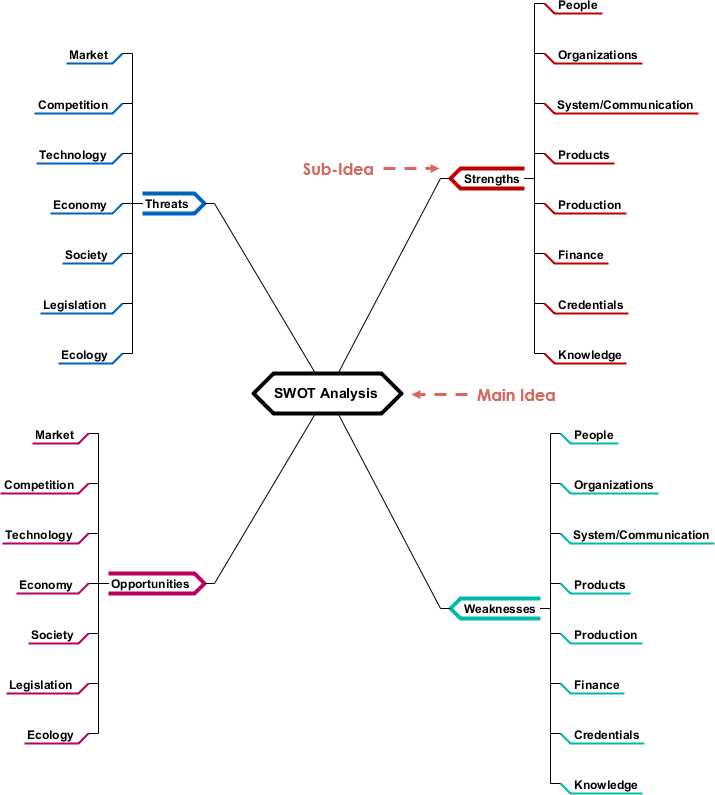
Steps to Perform SWOT Analysis Using Mind Maps
Step 1: Define the Main Idea
Start with the central idea: “SWOT Analysis.” This will be the focal point of your mind map.
Step 2: Identify Sub-Ideas
Branch out from the central idea into four main sub-ideas: Strengths, Weaknesses, Opportunities, and Threats.
Step 3: Brainstorm Internal Factors (Strengths and Weaknesses)
Strengths
- People: Skilled workforce, strong leadership.
- Organizations: Effective team structure, strong company culture.
- System/Communication: Efficient processes, good communication channels.
- Products: High-quality products, innovative features.
- Production: Efficient manufacturing processes, strong supply chain.
- Finance: Strong financial reserves, good cash flow.
- Credentials: Industry certifications, awards.
- Knowledge: Expertise, proprietary knowledge.
Weaknesses
- People: Lack of skilled workforce, weak leadership.
- Organizations: Ineffective team structure, poor company culture.
- System/Communication: Inefficient processes, poor communication channels.
- Products: Low-quality products, lack of innovation.
- Production: Inefficient manufacturing processes, weak supply chain.
- Finance: Weak financial reserves, poor cash flow.
- Credentials: Lack of industry certifications, awards.
- Knowledge: Lack of expertise, proprietary knowledge.
Step 4: Brainstorm External Factors (Opportunities and Threats)
Opportunities
- Market: Growing market demand, new market segments.
- Competition: Weak competitors, market gaps.
- Technology: Advancements in technology, new tools.
- Economy: Favorable economic conditions, government incentives.
- Society: Changing consumer preferences, social trends.
- Legislation: Favorable regulations, new policies.
- Ecology: Sustainable practices, green initiatives.
Threats
- Market: Declining market demand, intense competition.
- Competition: Strong competitors, market saturation.
- Technology: Rapid technological changes, obsolescence.
- Economy: Unfavorable economic conditions, recession.
- Society: Changing consumer preferences, social trends.
- Legislation: Unfavorable regulations, new policies.
- Ecology: Environmental issues, sustainability challenges.
Step 5: Use Visual Paradigm Online
Visual Paradigm Online is a powerful tool for creating mind maps. It offers a user-friendly interface and a variety of templates to help you get started. Here’s how to use it:
- Sign Up/Log In: Create an account or log in to Visual Paradigm Online.
- Create a New Mind Map: Select the mind map template and start with the central idea “SWOT Analysis.”
- Add Sub-Ideas: Branch out into Strengths, Weaknesses, Opportunities, and Threats.
- Brainstorm: Add sub-branches for each category, following the template provided.
- Customize: Use colors, icons, and images to make your mind map visually appealing and easy to understand.
- Collaborate: Share your mind map with team members for collaborative brainstorming.
- Analyze: Review the mind map to identify key factors and develop strategies.
Benefits of Using Visual Paradigm Online
- User-Friendly Interface: Easy to use, even for beginners.
- Collaborative Features: Real-time collaboration with team members.
- Customizable Templates: A variety of templates to suit different needs.
- Visual Appeal: Use of colors, icons, and images to enhance understanding.
- Integration: Seamless integration with other tools and platforms.
Conclusion
Using mind maps to perform a SWOT analysis is an effective way to visually organize and understand the internal and external factors affecting your business or project. Visual Paradigm Online provides a robust platform for creating and collaborating on mind maps, making the process efficient and engaging.
Reference List
- Visual Paradigm Online: A comprehensive tool for creating mind maps, diagrams, and more. It offers a user-friendly interface and collaborative features. Visit Visual Paradigm Online
- SWOT Analysis Tutorial - Visual Paradigm Online: This resource guides organizations in identifying the strengths, weaknesses, opportunities, and threats of a product. It includes examples and discusses the strategic decision-making process. Read more
- Free UML, BPMN and Agile Tutorials - Learn Step-by-Step: This page offers a variety of tutorials, including a SWOT analysis tutorial. It provides step-by-step instructions on specific topics and regularly adds new tutorials. Read more
- Comprehensive Tutorial for SWOT Analysis - Visual Paradigm: A detailed guide on conducting a SWOT analysis, including steps to identify strengths, weaknesses, opportunities, and threats. Read more
- SWOT Analysis: A Comprehensive Guide - Visual Paradigm: An in-depth guide explaining what SWOT analysis is, why it’s used, and how to conduct one, with examples. Read more
By following this tutorial and utilizing Visual Paradigm Online, you can effectively perform a SWOT analysis and develop strategic plans to achieve your goals.
posted on 2025-01-17 17:23 Lynch_Warren 阅读(408) 评论(0) 收藏 举报


 浙公网安备 33010602011771号