

初识Scanner类
Scanner对象
-
Java提供了一个工具类用于获取用户的输入,java.util.Scanner
-
基本语法:
Scanner s = new Scanner(system.in);
-
通过Scanner类的next()和nextLine()方法获取输入的字符串,在读取前我们一般需要用hasNext()与hasNextLine()方法判断是否还有输入的数据
实验
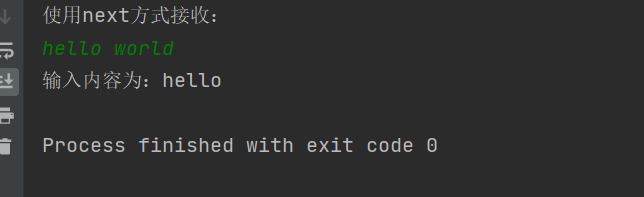
使用next方式接收
public class scanner {
public static void main(String[] args) {
//创建一个扫描器对象,用于接收键盘数据
Scanner s = new Scanner(System.in);
System.out.println("使用next方式接收:");
//判断用户有没有输入字符串
if(s.hasNext()){
//使用next方式接收
String str = s.next();
System.out.println("输入内容为:"+str);
}
//凡是属于IO流的类如果不关闭会已知占用资源
s.close();
}
}
结果

使用nextLine方式接收
public class scanner2 {
public static void main(String[] args) {
Scanner s = new Scanner(System.in);
System.out.println("使用nextLine方式接收:");
//判断用户有没有输入字符串
if(s.hasNextLine()){
//使用nextLine方式接收
String str = s.nextLine();
System.out.println("输入内容为:"+str);
}
s.close();
}
}
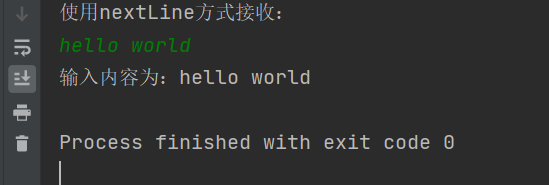
结果:
结论
-
next()
-
一定要读取到有效字符后才可以结束输入。
-
对输入有效字符之前遇到的空白,next()方法会自动将其去掉
-
只有输入有效字符后才将后面输入的空白作为分隔符或者结束符。
-
next()不能得到带有空格的字符串
-
-
nextLine()
-
以Enter作为结束符,也就是说nextLine()方法返回的是输入回车之前的所有字符
-
可以获得空白
-

 浙公网安备 33010602011771号