


JavaScript中instanceof对于不同的构造器可能都返回true
我们知道 instanceof 运算符用来检查对象是否为某构造器的实例。下面列举它返回true的各种情景。
1、对象obj是通过new Constructor创建的,那么 obj instanceof Constructor 为true
|
1
2
3
4
5
6
|
function Person(n, a) { this.name = n; this.age = a;}var p = new Person('John Backus', 82);console.log(p instanceof Person); // true |
2、如果存在继承关系,那么 子类实例 instanceof 父类 也会返回true
|
1
2
3
4
5
6
|
function A(){}function B(){}B.prototype = new A(); // B继承于Avar b = new B();console.log(b instanceof A); // true |
3、由于Object是根类,所有其它自定义类都继承于它,因此 任意构造器的实例 instanceof Object 都返回true
|
1
2
3
4
5
6
7
8
9
|
function A() {}var a = new A();console.log(a instanceof Object); // truevar str = new String('hello');console.log(str instanceof Object); // truevar num = new Number(1);console.log(num instanceof Object); // true |
甚至包括构造器自身
|
1
2
3
4
|
function A() {}console.log(A instanceof Object); // trueconsole.log(String instanceof Object); // trueconsole.log(Number instanceof Object); // true |
4、所有构造器 instanceof Function 返回true
|
1
2
3
4
|
function A() {}console.log(A instanceof Function); // trueconsole.log(String instanceof Function); // trueconsole.log(Number instanceof Function); // true |
以上四点总结为一句话:如果某实例是通过某类或其子类的创建的,那么instanceof就返回true。或者说某构造函数的原型 存在与对象obj的内部原型链上,那么返回true。即instanceof的结果与构造器自身并无直接关系。这在许多语言中都是通用的。
Java中定义了一个类Person,实例p对于Person和Object都返回true
|
1
2
3
4
5
6
7
8
9
10
11
12
13
|
class Person { public String name; public int age; Person (String n, int a) { this.name = name; this.age = a; } public static void main(String[] args) { Person p = new Person("John Backus", 82); System.out.println(p instanceof Person); // true System.out.println(p instanceof Object); // true }} |
Java中如果存在继承关系,那么 子类实例 instanceof 父类 也返回true
|
1
2
3
4
5
6
7
8
9
10
11
12
13
14
15
16
17
18
19
20
21
22
|
// 父类class Person { public String name; public int age; Person (String n, int a) { name = name; age = a; }}// 子类public class Man extends Person{ public String university; Man(String n, int a, String s) { super(n, a); university = s; } public static void main(String[] args) { Man mm = new Man("John Resig", 29, "PKU"); System.out.println(mm instanceof Man); // true System.out.println(mm instanceof Person); // 也是true }} |
知道了这些,JS中以下的表现就不奇怪了
|
1
2
3
4
5
6
7
8
9
10
|
// 定义两个构造器function A(){}function B(){}A.prototype = B.prototype = {a: 1};// 分别创建两个不同构造器的实例var a = new A();var b = new B();console.log(a instanceof B); // trueconsole.log(b instanceof A); // true |
我们看到a, b分别是用A和B创建的,但a instanceof B和 b instanceof A都是true。即a虽然不是用构造器B创建的,但仍然返回true。因为B.prototype存在于a的内部原型链上。
由于JS的动态语言特性,可以在运行时修改原型,因此下面返回false也不足为奇了。因为A.prototype已经不在a的内部原型链中,链条被打断了。
|
1
2
3
4
|
function A(){}var a = new A();A.prototype = {}; // 动态修改原型,注意必须在创建a后console.log(a instanceof A); // false |
注意这么写也打破了上面总结的第一条:对象obj是通过new Constructor创建的,那么obj instanceof Constructor 为true
实际在ECMAScript标准中(以5.1为准),instanceof 内部实现会调用构造器的内部方法[[HasInstance]],描述如下
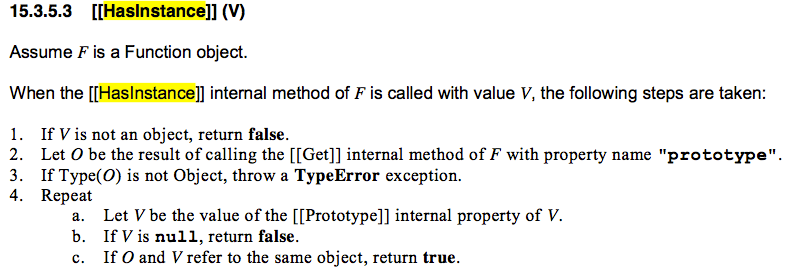
假如F是一个函数对象,当F(V)执行时,以下步骤将发生:
1、如果instanceof左运算元V不是对象类型,直接返回false
|
1
2
3
4
5
|
var a, b = 1, c = true, d = 'hello';console.log(a instanceof Object); // false 这里a值为undefinedconsole.log(b instanceof Object); // falseconsole.log(c instanceof Object); // falseconsole.log(d instanceof Object); // false |
2/3、取构造器F的prototype属性,如果不是对象类型,须抛出TypeError异常,
|
1
2
3
4
|
function A(){}A.prototype = 1; // A的prototype设为非对象类型var a = new A();console.log(a instanceof A); |
各浏览器抛出的异常提示不同,
Firefox18:

Chrome24:

Safari6:

Opera12:

IE10:

4、不断的执行以下逻辑:将V设为内部原型的V,如果V是null则返回false,如果V和O都指向同一个对象,则返回true。

 浙公网安备 33010602011771号