list1 = [10, 20, 4, 45, 99]
list1.sort()

print("最小元素为:", *list1[:1])
![]()
list1 = [10, 20, 1, 45, 99]

print("最小元素为:", min(list1))
![]()
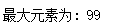
list1 = [10, 20, 4, 45, 99]

list1.sort()

print("最大元素为:", list1[-1])
![]()
list1 = [10, 20, 1, 45, 99]

print("最大元素为:", max(list1))
![]()
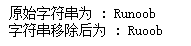
test_str = "Runoob"

# 输出原始字符串
print ("原始字符串为 : " + test_str)

# 移除第三个字符 n
new_str = ""

for i in range(0, len(test_str)):
    if i != 2:
        new_str = new_str + test_str[i]

print ("字符串移除后为 : " + new_str)
![]()
def check(string, sub_str):
    if (string.find(sub_str) == -1):
        print("不存在!")
    else:
        print("存在!")

string = "www.runoob.com"
sub_str ="runoob"
check(string, sub_str)
![]()
str = "runoob"
print(len(str))
![]()
def findLen(str):
    counter = 0
    while str[counter:]:
        counter += 1
    return counter

str = "runoob"
print(findLen(str))
![]()
import re

def Find(string):
    # findall() 查找匹配正则表达式的字符串
    url = re.findall('https?://(?:[-\w.]|(?:%[\da-fA-F]{2}))+', string)
    return url


string = 'Runoob 的网页地址为:https://www.runoob.com,Google 的网页地址为:https://www.google.com'
print("Urls: ", Find(string))
![]()
def exec_code():
    LOC = """
def factorial(num):
    fact=1
    for i in range(1,num+1):
        fact = fact*i
    return fact
print(factorial(5))
"""
    exec(LOC)

exec_code()
![]()
str='Runoob'
print(str[::-1])
![]()
str='Runoob'
print(''.join(reversed(str)))
![]()
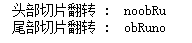
def rotate(input,d):
    Lfirst = input[0 : d]
    Lsecond = input[d :]
    Rfirst = input[0 : len(input)-d]
    Rsecond = input[len(input)-d : ]
    print( "头部切片翻转 : ", (Lsecond + Lfirst) )
    print( "尾部切片翻转 : ", (Rsecond + Rfirst) )

if __name__ == "__main__":
    input = 'Runoob'
    d=2  # 截取两个字符
    rotate(input,d)
![]()
def dictionairy():
    # 声明字典
    key_value ={}

    # 初始化
    key_value[2] = 56
    key_value[1] = 2
    key_value[5] = 12
    key_value[4] = 24
    key_value[6] = 18
    key_value[3] = 323
    print ("按键(key)排序:")
    # sorted(key_value) 返回一个迭代器
    # 字典按键排序
    for i in sorted (key_value) :
        print ((i, key_value[i]), end =" ")

def main():
    # 调用函数
    dictionairy()

# 主函数
if __name__=="__main__":
    main()
![]()
def dictionairy():
    # 声明字典
    key_value ={}
    # 初始化
    key_value[2] = 56
    key_value[1] = 2
    key_value[5] = 12
    key_value[4] = 24
    key_value[6] = 18
    key_value[3] = 323
    print ("按值(value)排序:")
    print(sorted(key_value.items(), key = lambda kv:(kv[1], kv[0])))

def main():
    dictionairy()

if __name__=="__main__":
    main()
![]()
lis = [{ "name" : "Taobao", "age" : 100},
{ "name" : "Runoob", "age" : 7 },
{ "name" : "Google", "age" : 100 },
{ "name" : "Wiki" , "age" : 200 }]

# 通过 age 升序排序
print ("列表通过 age 升序排序: ")
print (sorted(lis, key = lambda i: i['age']) )

print ("\r")

# 先按 age 排序,再按 name 排序
print ("列表通过 age 和 name 排序: ")
print (sorted(lis, key = lambda i: (i['age'], i['name'])) )

print ("\r")

# 按 age 降序排序
print ("列表通过 age 降序排序: ")
print (sorted(lis, key = lambda i: i['age'],reverse=True) )
![]()
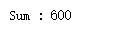
def returnSum(myDict):
    sum = 0
    for i in myDict:
        sum = sum + myDict[i]
    return sum

dict = {'a': 100, 'b':200, 'c':300}
print("Sum :", returnSum(dict))
![]()
test_dict = {"Runoob" : 1, "Google" : 2, "Taobao" : 3, "Zhihu" : 4}

# 输出原始的字典
print ("字典移除前 : " + str(test_dict))

# 使用 del 移除 Zhihu
del test_dict['Zhihu']

# 输出移除后的字典
print ("字典移除后 : " + str(test_dict))

# 移除没有的 key 会报错
#del test_dict['Baidu']
test_dict = {"Runoob" : 1, "Google" : 2, "Taobao" : 3, "Zhihu" : 4}

# 输出原始的字典
print ("字典移除前 : ")
print(test_dict)

# 使用 del 移除 Zhihu
del test_dict['Zhihu']

# 移除没有的 key 会报错
#del test_dict['Baidu']
![]()
def Merge(dict1, dict2):
    return(dict2.update(dict1))

# 两个字典
dict1 = {'a': 10, 'b': 8}
dict2 = {'d': 6, 'c': 4}

# 返回  None
print(Merge(dict1, dict2))

# dict2 合并了 dict1
print(dict2)
![]()
def Merge(dict1, dict2):
    res = {**dict1, **dict2}
    return res

# 两个字典
dict1 = {'a': 10, 'b': 8}
dict2 = {'d': 6, 'c': 4}
dict3 = Merge(dict1, dict2)
print(dict3)
![]()
import time

a1 = "2019-5-10 23:40:00"
# 先转换为时间数组
timeArray = time.strptime(a1, "%Y-%m-%d %H:%M:%S")

# 转换为时间戳
timeStamp = int(time.mktime(timeArray))
print(timeStamp)

# 格式转换 - 转为 /
a2 = "2019/5/10 23:40:00"
# 先转换为时间数组,然后转换为其他格式
timeArray = time.strptime(a2, "%Y/%m/%d %H:%M:%S")
otherStyleTime = time.strftime("%Y/%m/%d %H:%M:%S", timeArray)
print(otherStyleTime)
![]()
import time
import datetime

# 先获得时间数组格式的日期
threeDayAgo = (datetime.datetime.now() - datetime.timedelta(days = 3))
# 转换为时间戳
timeStamp = int(time.mktime(threeDayAgo.timetuple()))
# 转换为其他字符串格式
otherStyleTime = threeDayAgo.strftime("%Y-%m-%d %H:%M:%S")
print(otherStyleTime)
![]()
import time
import datetime

#给定时间戳
timeStamp = 1557502800
dateArray = datetime.datetime.utcfromtimestamp(timeStamp)
threeDayAgo = dateArray - datetime.timedelta(days = 3)
print(threeDayAgo)
![]()
import time

# 获得当前时间时间戳
now = int(time.time())
#转换为其他日期格式,如:"%Y-%m-%d %H:%M:%S"
timeArray = time.localtime(now)
otherStyleTime = time.strftime("%Y-%m-%d %H:%M:%S", timeArray)
print(otherStyleTime)
![]()
import datetime

# 获得当前时间
now = datetime.datetime.now()
# 转换为指定的格式
otherStyleTime = now.strftime("%Y-%m-%d %H:%M:%S")
print(otherStyleTime)
![]()
import time

timeStamp = 1557502800
timeArray = time.localtime(timeStamp)
otherStyleTime = time.strftime("%Y-%m-%d %H:%M:%S", timeArray)
print(otherStyleTime)
![]()
import datetime

timeStamp = 1557502800
dateArray = datetime.datetime.utcfromtimestamp(timeStamp)
otherStyleTime = dateArray.strftime("%Y-%m-%d %H:%M:%S")
print(otherStyleTime)
![]()
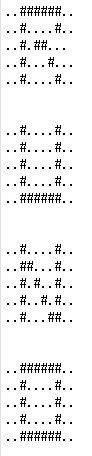
name = "RUNOOB"

# 接收用户输入
# name = input("输入你的名字: \n\n")

lngth = len(name)
l = ""

for x in range(0, lngth):
    c = name[x]
    c = c.upper()

    if (c == "A"):
        print("..######..\n..#....#..\n..######..", end = " ")
        print("\n..#....#..\n..#....#..\n\n")

    elif (c == "B"):
        print("..######..\n..#....#..\n..#####...", end = " ")
        print("\n..#....#..\n..######..\n\n")

    elif (c == "C"):
        print("..######..\n..#.......\n..#.......", end = " ")
        print("\n..#.......\n..######..\n\n")

    elif (c == "D"):
        print("..#####...\n..#....#..\n..#....#..", end = " ")
        print("\n..#....#..\n..#####...\n\n")

    elif (c == "E"):
        print("..######..\n..#.......\n..#####...", end = " ")
        print("\n..#.......\n..######..\n\n")

    elif (c == "F"):
        print("..######..\n..#.......\n..#####...", end = " ")
        print("\n..#.......\n..#.......\n\n")

    elif (c == "G"):
        print("..######..\n..#.......\n..#.####..", end = " ")
        print("\n..#....#..\n..#####...\n\n")

    elif (c == "H"):
        print("..#....#..\n..#....#..\n..######..", end = " ")
        print("\n..#....#..\n..#....#..\n\n")

    elif (c == "I"):
        print("..######..\n....##....\n....##....", end = " ")
        print("\n....##....\n..######..\n\n")

    elif (c == "J"):
        print("..######..\n....##....\n....##....", end = " ")
        print("\n..#.##....\n..####....\n\n")

    elif (c == "K"):
        print("..#...#...\n..#..#....\n..##......", end = " ")
        print("\n..#..#....\n..#...#...\n\n")

    elif (c == "L"):
        print("..#.......\n..#.......\n..#.......", end = " ")
        print("\n..#.......\n..######..\n\n")

    elif (c == "M"):
        print("..#....#..\n..##..##..\n..#.##.#..", end = " ")
        print("\n..#....#..\n..#....#..\n\n")

    elif (c == "N"):
        print("..#....#..\n..##...#..\n..#.#..#..", end = " ")
        print("\n..#..#.#..\n..#...##..\n\n")

    elif (c == "O"):
        print("..######..\n..#....#..\n..#....#..", end = " ")
        print("\n..#....#..\n..######..\n\n")

    elif (c == "P"):
        print("..######..\n..#....#..\n..######..", end = " ")
        print("\n..#.......\n..#.......\n\n")

    elif (c == "Q"):
        print("..######..\n..#....#..\n..#.#..#..", end = " ")
        print("\n..#..#.#..\n..######..\n\n")

    elif (c == "R"):
        print("..######..\n..#....#..\n..#.##...", end = " ")
        print("\n..#...#...\n..#....#..\n\n")

    elif (c == "S"):
        print("..######..\n..#.......\n..######..", end = " ")
        print("\n.......#..\n..######..\n\n")

    elif (c == "T"):
        print("..######..\n....##....\n....##....", end = " ")
        print("\n....##....\n....##....\n\n")

    elif (c == "U"):
        print("..#....#..\n..#....#..\n..#....#..", end = " ")
        print("\n..#....#..\n..######..\n\n")

    elif (c == "V"):
        print("..#....#..\n..#....#..\n..#....#..", end = " ")
        print("\n...#..#...\n....##....\n\n")

    elif (c == "W"):
        print("..#....#..\n..#....#..\n..#.##.#..", end = " ")
        print("\n..##..##..\n..#....#..\n\n")

    elif (c == "X"):
        print("..#....#..\n...#..#...\n....##....", end = " ")
        print("\n...#..#...\n..#....#..\n\n")

    elif (c == "Y"):
        print("..#....#..\n...#..#...\n....##....", end = " ")
        print("\n....##....\n....##....\n\n")

    elif (c == "Z"):
        print("..######..\n......#...\n.....#....", end = " ")
        print("\n....#.....\n..######..\n\n")

    elif (c == " "):
        print("..........\n..........\n..........", end = " ")
        print("\n..........\n\n")

    elif (c == "."):
        print("----..----\n\n")
![]()