

英语_阅读_Water
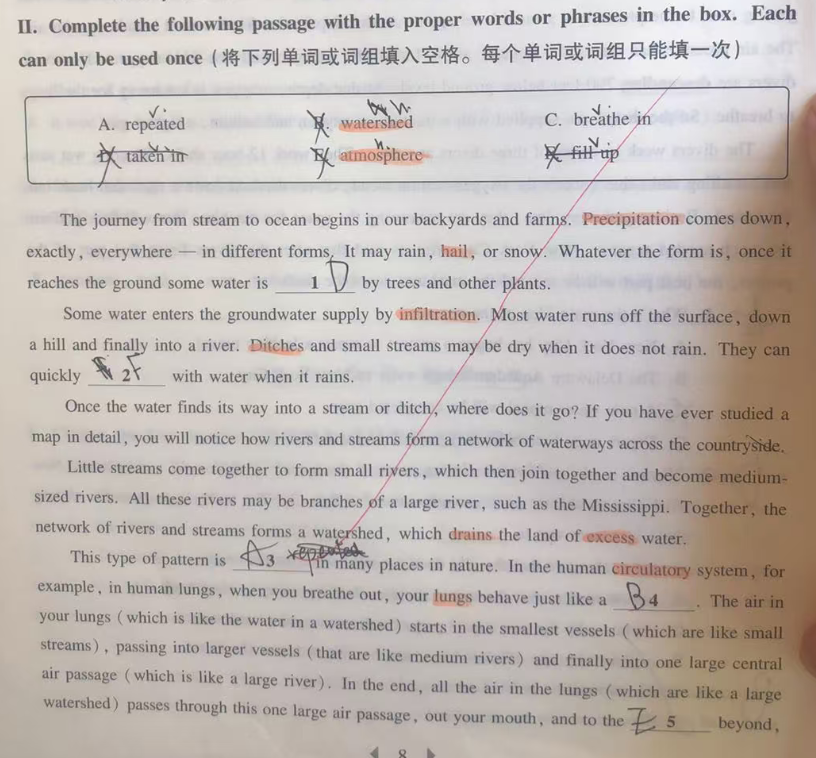

The journey from stream to ocean begins in our backyards and farmg, Precipitation comes down, exactly , everywhere -- in different forms, It may rain, hail, or snow. Whatever the form is , once it reaches the ground some water is taken in by trees and other plants.
从溪流到海洋的旅程始于我们的后院和农田。降水以不同形式降临大地——确切地说,无处不在。可能是雨、冰雹或雪。无论以何种形式,一旦到达地面,部分水分会被树木和其他植物吸收。
Some water enters the groundwater supply by infiltration. Most water runs off the surface , down a hill and finally into a river. Ditches and small streams may be dry when it does not rain. They can quickly fill up with water when it rains.
部分水分通过渗透进入地下水供应系统。大部分水沿地表流动,顺山势而下最终汇入河流。沟渠和小溪在无雨时可能干涸,但降雨时能迅速被水流填满。
Once the water finds its way into a stream or ditch, where does it go? If you have ever studied a map in detail , you will notice how rivers and streams form a network of waterways across the countryside.
当水流进入溪流或沟渠后,将去向何方?若你曾仔细研究地图,会注意到河流与溪流如何交织成遍布乡间的水道网络。
Little streams come together to form small rivers, which then join together and become medium-sized rivers. All these rivers may be branches pf a large river, such as the Mississippi. Together. the network of rivers and streams forms a watershed , which drains the land of excess water.
细小溪流汇聚成小河,小河相互交汇形成中型河流。这些河流可能成为大江(如密西西比河)的支流。整个河网系统共同构成了流域,负责排出陆地上的过剩水量。
This type of pattern is repeated in many places in nature. In the human circulatory system, for example , in human lungs , when you breathe out , your lungs behave just like a watershed.
这种模式在自然界许多地方重复出现。例如人类循环系统中——具体到肺部:当你呼气时,肺部的运作原理与流域完全一致。
The air in your lungs ( which is like the water in a watershed) starts in the smallest vessels ( which are like small streams) , passing into larger vessels ( that are like medium rivers) and finally into one large central air passage ( which is like a large river), ln the end , all the air in the lungs ( which are like a large watershed ) passes through this one large air passage , out your mouth , and to the atmosphere beyond, just as water in a watershed flows out the mouth of a large river and into the ocean! ( Of course rivers don't breathe in.
肺内空气(如同流域中的水)从最细微的管道(类似小溪)开始流动,进入较大管道(相当于中型河流),最终汇入一个中央大气道(宛如大江)。最终所有肺部空气(如同大型流域)都通过这个中央气道经口腔排入外部大气,正如流域中的水流从大河口涌出汇入海洋!(当然河流并不进行吸气动作)
==
The journey from stream to ocean begins in our backyards and farmg, Precipitation comes down, exactly , everywhere -- in different forms, It may rain, hail, or snow. Whatever the form is , once it reaches the ground some water is taken in by trees and other plánts.
Some water enters the groundwater supply by infiltration. Most water runs off the surface , down a hill and finally into a river. Ditches and small streams may be dry when it does not rain. They can quickly fill up with water when it rains.
Once the water finds its way into a stream or ditch, where does it go? If you have ever studied a map in detail , you will notice how rivers and streams form a network of waterways across the countryside.
Little streams come together to form small rivers, which then join together and become medium-sized rivers. All these rivers may be branches pf a large river, such as the Mississippi. Together. the network of rivers and streams forms a watershed , which drains the land of excess water.
This type of pattern is repeated in many places in nature. In the human circulatory system, for example , in human lungs , when you breathe out , your lungs behave just like a watershed.
The air in your lungs ( which is like the water in a watershed) starts in the smallest vessels ( which are like small streams) , passing into larger vessels ( that are like medium rivers) and finally into one large central air passage ( which is like a large river), ln the end , all the air in the lungs ( which are like a large watershed ) passes through this one large air passage , out your mouth , and to the atmosphere beyond, just as water in a watershed flows out the mouth of a large river and into the ocean! ( Of course rivers don't breathe in.

 浙公网安备 33010602011771号