leetcode刷题记录:回溯算法注意事项
leetcode 46题:
给定一个 没有重复 数字的序列,返回其所有可能的全排列。
输入: [1,2,3]
输出:
[
  [1,2,3],
  [1,3,2],
  [2,1,3],
  [2,3,1],
  [3,1,2],
  [3,2,1]
]
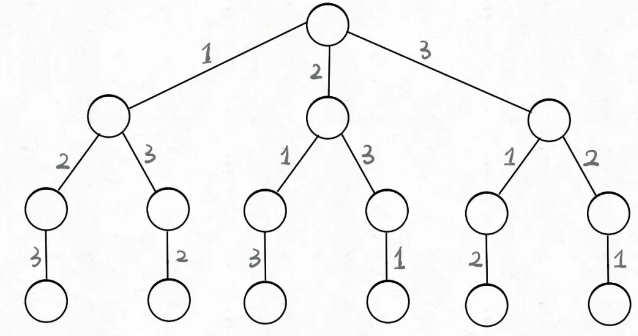
思路就是按照这张图进行穷举 ,对于回溯的问题,画图可以快速找到思路
class Solution {
    private List<List<Integer>> res = new ArrayList<>();
    public List<List<Integer>> permute(int[] nums) {
        List<Integer> path = new ArrayList<>();
        backTrack(path, nums);
        return res;
    }
    private void backTrack(List<Integer> path, int[] nums){
        if(path.size() == nums.length){
            res.add(new ArrayList<>(path));          // 注意要对path进行复制
            return;
        }
        for(int num : nums){
            if(path.contains(num))
                continue;
            path.add(num);
            backTrack(path, nums);
            path.remove(path.size() - 1);
        }
    }
}
代码按照回溯算法的典型框架实现,但是需要注意的是,在递归结束的时候,很容易犯如下错误
if(path.size() == nums.length){
            res.add(path);
            return;
        }
这样的话,代码的输出结果为[[],[],[],[],[],[],[]]
当按照1->2->3这条路线遍历到最底层的时候,path = [1,2,3]确实被存进了res中,但是被忘了存的是path这个指针,在后来的遍历过程中path指向的堆内存的内容会一直修改,因为回溯算法的精髓是通过
path.remove(path.size() - 1)
将路径的最后一个节点删除去返回上一个节点,返回一次删一个,最终返回到最高层的时候,path指向的内容就为空了,所以为了保存遍历的结果,要讲path的内容复制一份。

 浙公网安备 33010602011771号