# 准备utf - 8
# 编码的文本文件file
import jieba
f=open('novels.text','r',encoding='utf-8')
# 2.
# 通过文件读取字符串
str =f.read()
# 5.
# 单词计数字典

dict = {}
for i in str:
    if i in dict:
        dict[i] = dict[i] + 1
    else:
        dict[i] = 1
        print(dict)

# 6.按词频排序 list.sort(key=)
csList = list(dict.items())
csList.sort(key=lambda x:x[1],reverse = True)
print(csList)
# 3.
# 对文本进行预处理
str = jieba.cut(str)
str = jieba.cut(str,cut_all=True)
print(str)
# 4.
# 分解提取单词
strList = jieba.cut_for_search(str)
# 5.
![]()
![]()
#7输出TOP(20)
for i in range(20):
   print(str[i])
#1.准备utf-8编码的文本文件file
f = open("songs.text","r",encoding="utf-8")
# 2.通过文件读取字符串 str
str = f.read()
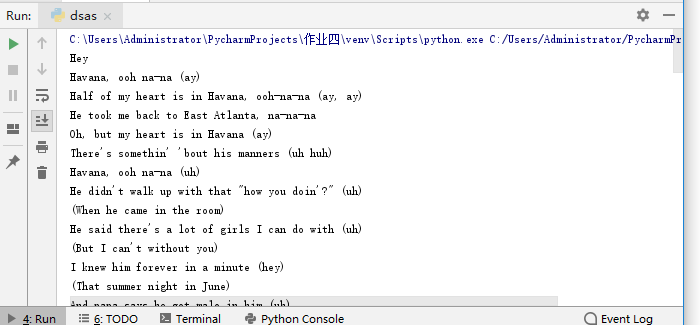
print(str)
# 3.对文本进行预处理
strLower = str.lower()
print(strLower) 结果如下:
![]()
# 4.分解提取单词
# 4.分解提取单词
list strList = list(str)
strList = str.split()
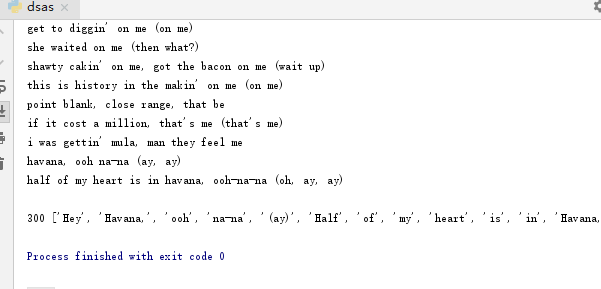
print(len(strList),strList)
![]()
5.单词计数字典 set , dict #集合统计单词的个数
#集合统计个数
strSet = set(strList)
strSet=set(strList)
for word in strSet:
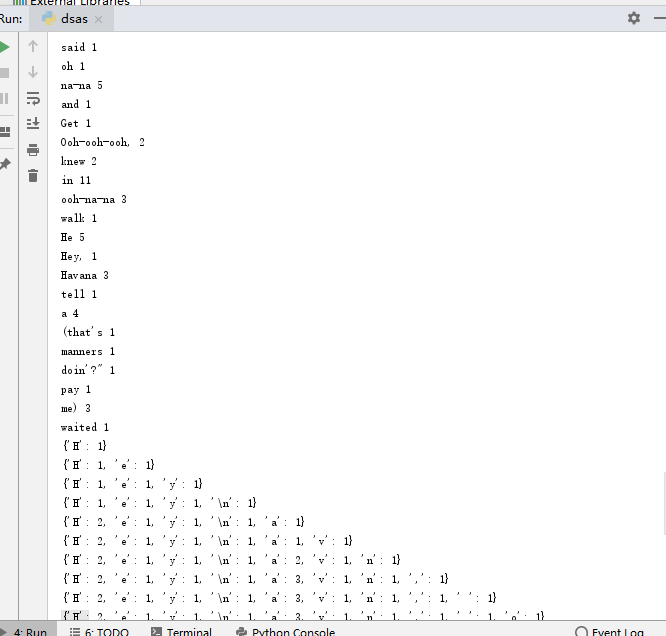
    print(word,strList.count(word))
 #字典统计单词的个数
dict = {}
for i in str:
if i in dict:
dict[i] = dict[i] + 1
else:
       dict[i] = 1
     print(dict)
![]()
# 6.按词频排序
csList = list(dict.items())
csList.sort(key=lambda x:x[1],reverse = True)
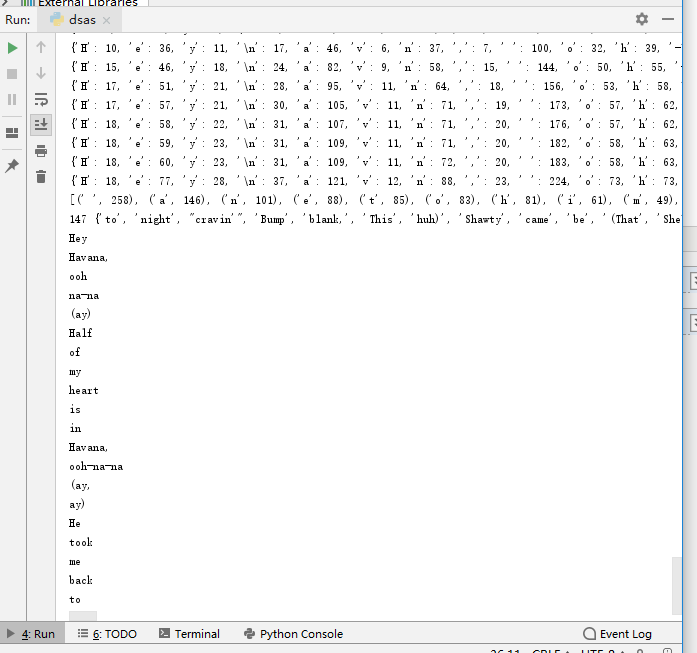
print(csList)
# 7.排除语法型词汇,代词、冠词、连词等无语义
exclude = {'a','the','and','i','you','in'}
strSet = strSet - exclude print(len(strSet),strSet)
# 8.输出TOP(20)
for i in range(20):
  print(strList[i])
![]()




 浙公网安备 33010602011771号