
go channel
模型
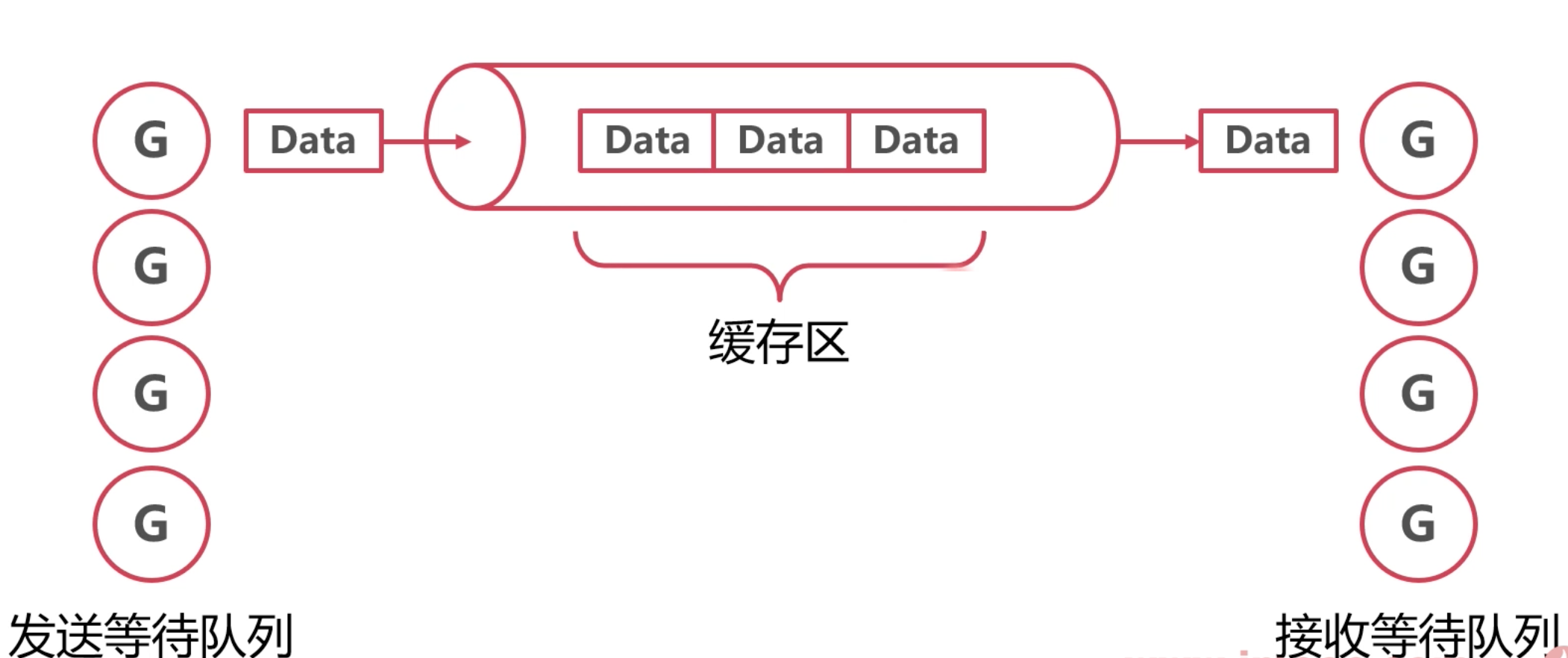
三部分组成:
发送等待队列
接收等待队列
管道 缓存区
定义
在 runtime 的chan.go中
type hchan struct {
qcount uint
dataqsiz uint
buf unsafe.Pointer
elemsize uint16
elemtype *_type // element type
// 上面的这几个组成了一个环形缓存区
closed uint32 // 关闭状态
// 下面4个组成了2个队列 g的
sendx uint // send index
recvx uint // receive index
recvq waitq // list of recv waiters
sendq waitq // list of send waiters
// lock protects all fields in hchan, as well as several
lock mutex // 锁,用于在操作 channel的 元素时候,保证并发安全
}
特殊缓存区
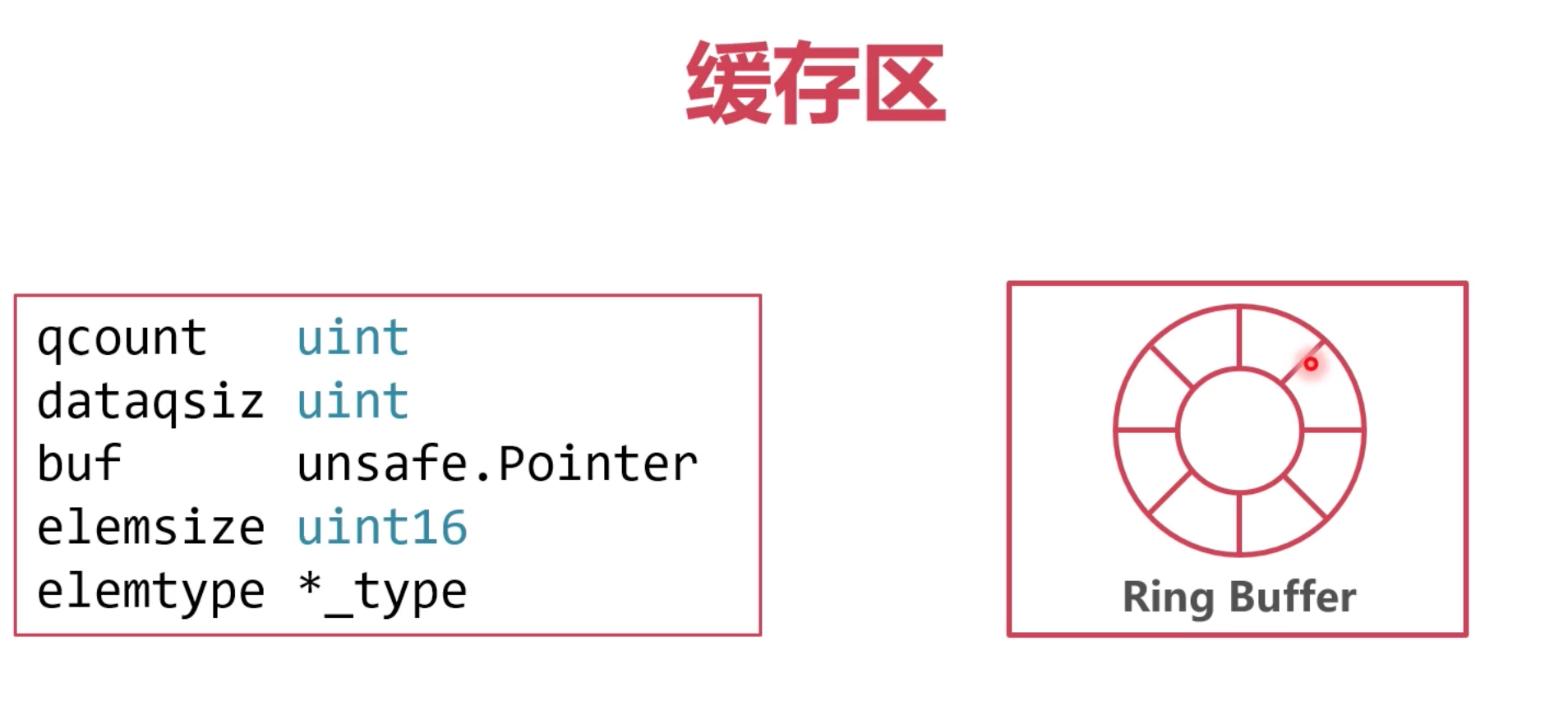
qcount 已经存储的个数
dataqsiz 环形队列缓存的容量,即允许缓存的消息最大个数
buf 指向这个缓存区的地址
elemsize 元素的大小
elemtype 元素的类型
设计成这样,主要目的不需要gc来清理,因为环形机构,会自动把删除数据内存给占了。
环形缓存可以大幅降低GC的开销
两个队列
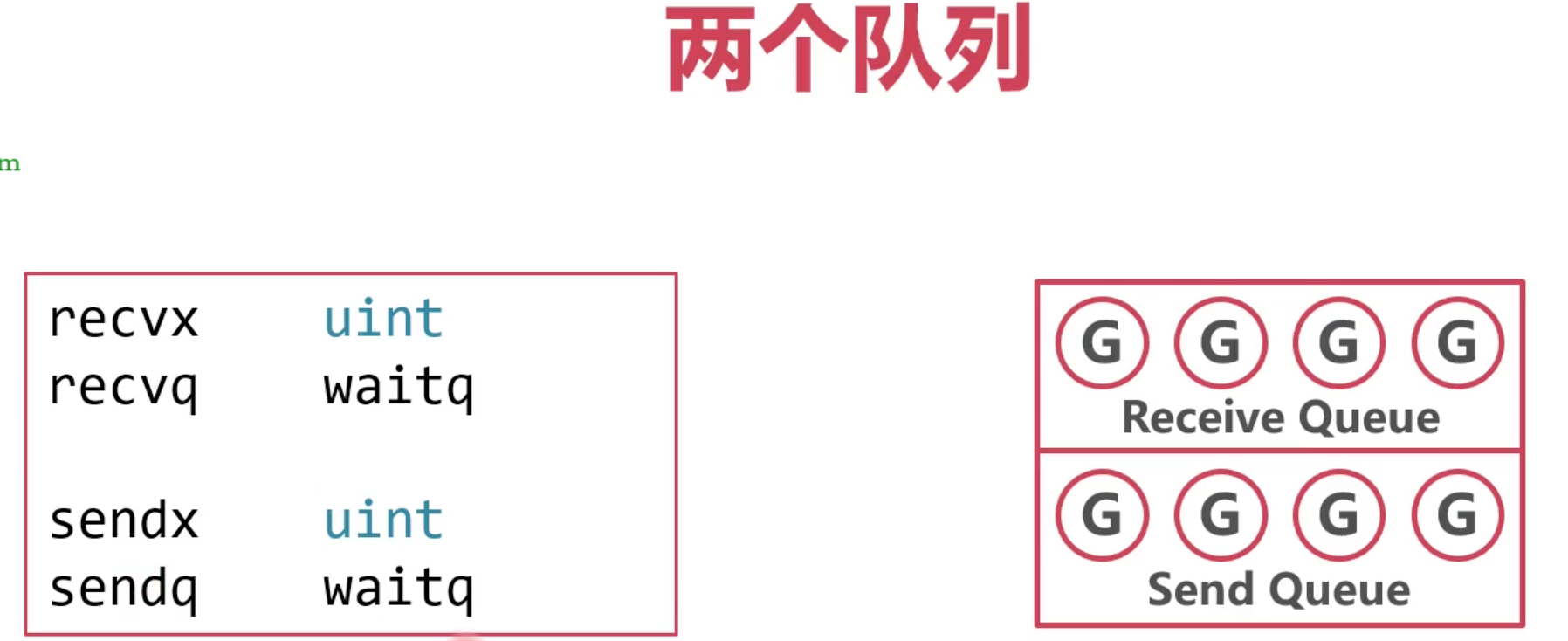
这里还要看下 waitq 的定义
type waitq struct {
first *sudog
last *sudog
}
// 在sema中也有用到,就g结构体的封装
type sudog struct {
g *g
next *sudog
prev *sudog
elem unsafe.Pointer // 接受参数的地址
// 当是接收g时候,如果有缓存中有数据,直接把数据拷贝到这个地址
}
注意:这里的sendx 并不是指向发送队列中的g,而且发送队列应该写入环形缓存区的index,
同理,recvx也是,指向接受数据的g,应该从缓冲区的那个index取数据
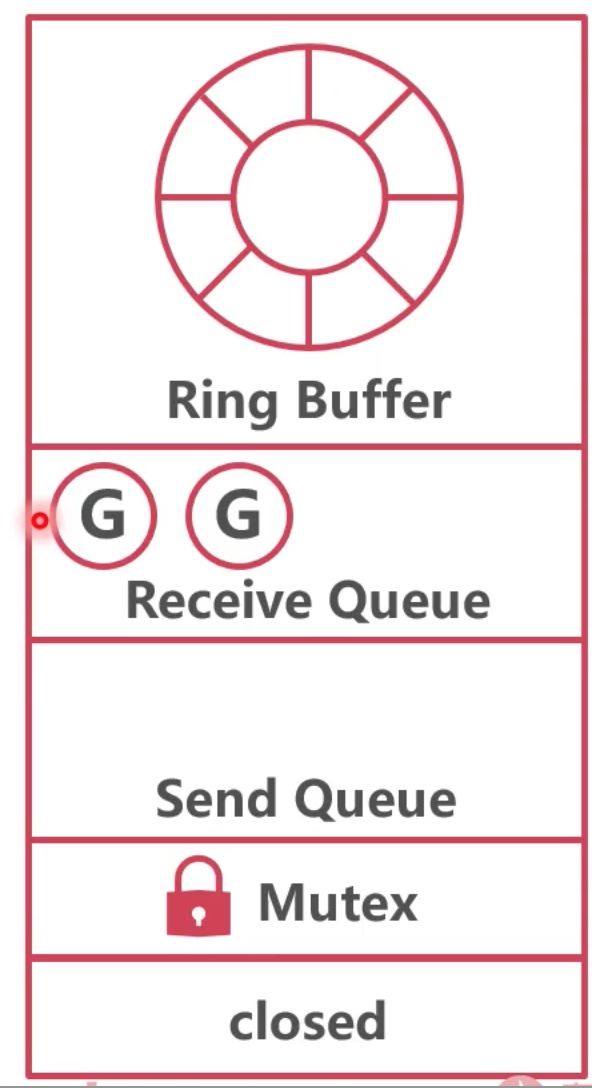
互斥锁
lock mutex
互斥锁并不是排队发送/接收数据
不是让发送和接收队列来排队的,这些发送和接收数据的队列,休眠也不是在锁的sema里
互斥锁保护的hchan结构体本身
所以, Channel并不是无锁的
状态值
closed uint32 // 关闭状态
0为开启、1为关闭
当一个关闭的channel,再往里写或者重复关闭、就会panic。但是可以读。
发送数据
c<- 关键字是一个语法糖
编译阶段,会把C<- 转化为 ruintime.chansend1
chansend1 会调用 chansend0 方法
直接发送 (已经有接收队列在等)
发送数据前,己经有G在休眠等待接收
此时缓存肯定是空的,不用考虑缓存
将数据直接拷贝给G的接收变量,唤醒G
实现
// entry point for c <- x from compiled code.
func chansend1(c *hchan, elem unsafe.Pointer) {
chansend(c, elem, true, getcallerpc())
}
// 部分源码
func chansend(c *hchan, ep unsafe.Pointer, block bool, callerpc uintptr) bool {
//有加锁,如果这时候,再来一个g也发送,就会休眠去 sema队列了
lock(&c.lock)
if c.closed != 0 { // 如果已经关闭,就会报错,上面讲过给一个关闭的chan发送会panic
unlock(&c.lock)
panic(plainError("send on closed channel"))
}
// 从接收队列里面拿一个 g
if sg := c.recvq.dequeue(); sg != nil {
// Found a waiting receiver. We pass the value we want to send
// directly to the receiver, bypassing the channel buffer (if any).
// 上面的注释讲的很清楚,直接把值给接收者,绕过 channel的buffer
send(c, sg, ep, func() { unlock(&c.lock) }, 3)
return true
}
}
func send(c *hchan, sg *sudog, ep unsafe.Pointer, unlockf func(), skip int) {
// 和之前讲的 sudog的elem对上了
if sg.elem != nil {
// 直接把数据拷贝到 接收者的 elem中
sendDirect(c.elemtype, sg, ep)
sg.elem = nil
}
gp := sg.g
unlockf()
gp.param = unsafe.Pointer(sg)
sg.success = true
if sg.releasetime != 0 {
sg.releasetime = cputicks()
}
// 唤醒这个协程 接收者的g
goready(gp, skip+1)
}
步骤:
从队列里取出一个等待接收的G
将数据直接拷贝到接收变量中
唤醒G,接收者的g
放入缓存
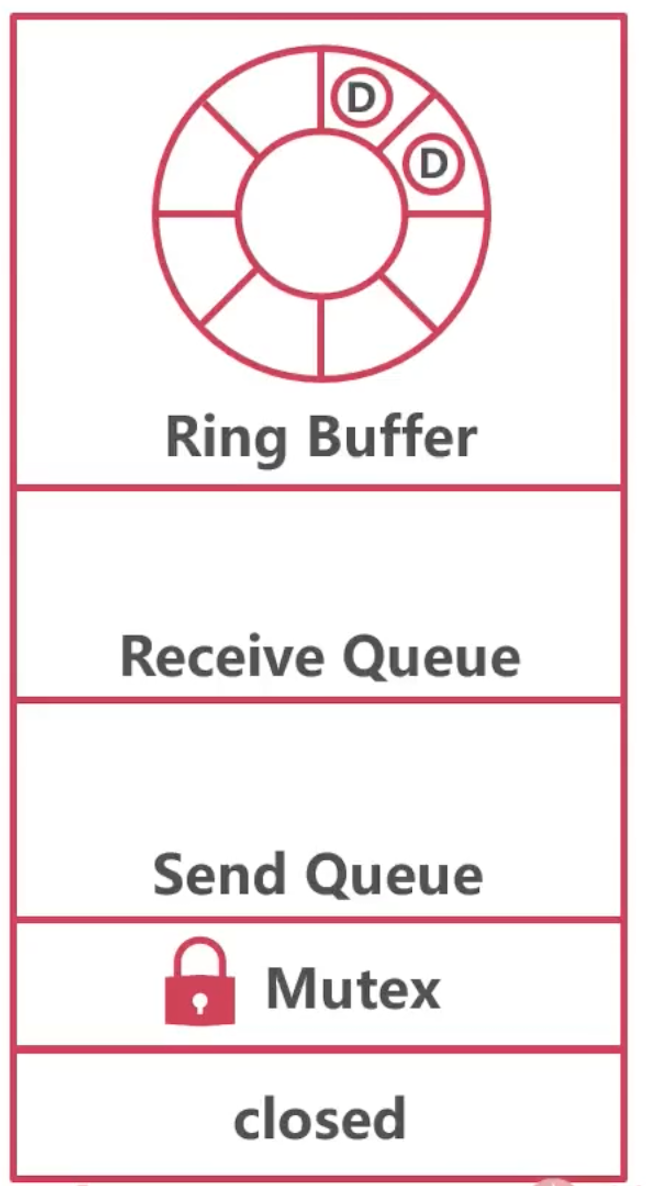
没有G在休眠等待,但是有缓存空间
将数据放入缓存
实现
func chansend(c *hchan, ep unsafe.Pointer, block bool, callerpc uintptr) bool {
// 上面是直接发送的源码,被截除
// 当缓存队列存入的数量 小于 缓存的容量,就是还有缓存空间
if c.qcount < c.dataqsiz {
// 缓存区接受数据的地址
qp := chanbuf(c, c.sendx)
// 将数据拷贝过去
typedmemmove(c.elemtype, qp, ep)
// 指示下一个发送数据,存在那个缓冲区,这里有个逻辑下面讲
c.sendx++
if c.sendx == c.dataqsiz {
c.sendx = 0
}
// 元素个数加1,释放锁并返回
c.qcount++
unlock(&c.lock)
return true
}
}
qp := chanbuf(c, c.sendx)
// chanbuf(c, i) is pointer to the i'th slot in the buffer
// 返回缓冲区的 第几个槽
// 写入缓存区
c.sendx++
意味着这里使用 sendx 来指引下一个发送的数据,写到几个槽,
所以才有下面,如果满了,就从0开始,形成环形
if c.sendx == c.dataqsiz {
c.sendx = 0
}
整个逻辑比较清晰:
获取可存入的缓存地址
存入数据
维护索引
休眠等待
没有G在休眠等待,而旦没有缓存或满了
自己进入发送队列,休眠等待
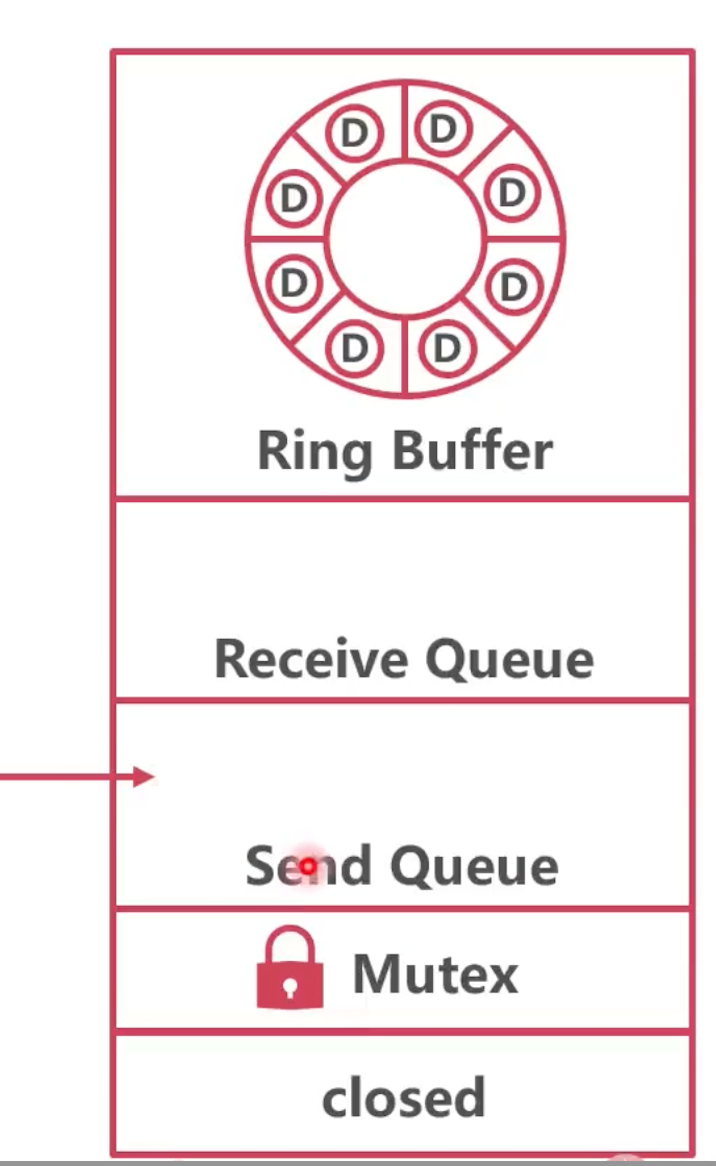
实现
func chansend(c *hchan, ep unsafe.Pointer, block bool, callerpc uintptr) bool {
// 接着 直接放入缓存的代码
// Block on the channel. Some receiver will complete our operation for us.
gp := getg()
mysg := acquireSudog() // 把自己组装成一个 sudog结构体
mysg.releasetime = 0
if t0 != 0 {
mysg.releasetime = -1
}
mysg.elem = ep // 要发送的数据 也是放到这个 elem中的
mysg.waitlink = nil
mysg.g = gp // sudug 的g等于自己的g结构体
mysg.isSelect = false
mysg.c = c
gp.waiting = mysg
gp.param = nil
c.sendq.enqueue(mysg)
gp.parkingOnChan.Store(true)
gopark(chanparkcommit, unsafe.Pointer(&c.lock), waitReasonChanSend, traceBlockChanSend, 2) // 进入waitReasonChanSend 休眠
// 然后去 gopark 休眠了,这个方法在将 协程切换的时候,讲过
// 协程到这里就 休眠了,不继续执行了,直到被唤醒。
}
步骤:
把自己包装成sudog
sudog放入sendq队列
休眠并解锁
被唤醒后,数据已经被取走,维护其他数据 (下面讲 接收时候讲)
发送小结
-
编译阶段,会把<-转化为 runtime.chansend10
-
直接发送时,将数据直接拷贝到目标变量
-
放入缓存时,将数据放入环形缓存,成功返回
-
休眠等待时,将自己包装后放入sendp, 休眠
接收
<-c 关键字
<-c 关键字是一个语法糖
编译阶段,i<-C转化为 runtime.chanrecv()
编译阶段,i, ok<-c转化为 runtime.chanrecv()
最后会调用 chanrecv() 方法
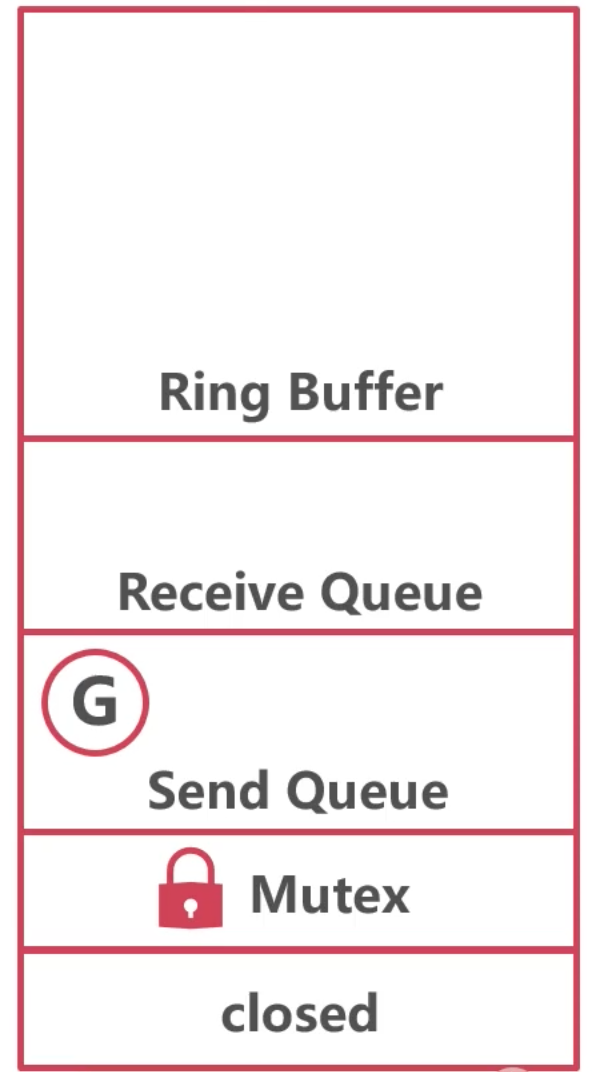
无缓存区、有发送协程在等待
func chanrecv(c *hchan, ep unsafe.Pointer, block bool) (selected, received bool) {
if c == nil { // 如果读一个 block 为true的 channel ,协程会直接休眠,
// 正常读channel这个 block都是 true
if !block {
return
}
gopark(nil, nil, waitReasonChanReceiveNilChan, traceBlockForever, 2)
throw("unreachable")
}
// 中间删了一段 block 为 false的情况
lock(&c.lock)
if c.closed != 0 { // 如果channel已经关闭
if c.qcount == 0 {
if raceenabled {
raceacquire(c.raceaddr())
}
unlock(&c.lock)
if ep != nil {
typedmemclr(c.elemtype, ep) // 有数据 放回数据
}
return true, false // 没数据,返回一个 false
}
} else {
if sg := c.sendq.dequeue(); sg != nil { // 如果发送队列中有g
recv(c, sg, ep, func() { unlock(&c.lock) }, 3) // 调用这个 recv方法
return true, true
}
}
}
func recv(c *hchan, sg *sudog, ep unsafe.Pointer, unlockf func(), skip int) {
if c.dataqsiz == 0 { // 无缓存区
if ep != nil {
// copy data from sender
recvDirect(c.elemtype, sg, ep) // 直接把 传过来的g 的数据取走
}
}
// 给g跟新下参数
sg.elem = nil
gp := sg.g
unlockf()
gp.param = unsafe.Pointer(sg)
sg.success = true
if sg.releasetime != 0 {
sg.releasetime = cputicks()
}
goready(gp, skip+1) // 唤醒g,这时候,发送的数据已经被取走了
}
func recvDirect(t *type, sg *sudog, dst unsafe.Pointer) {
src := sg.elem
typeBitsBulkBarrier(t, uintptr(dst), uintptr(src), t.Size)
memmove(dst, src, t.Size_)
}
步骤:
判断有G 在发送队列等待,进入recv()
判断此 Channel 无缓存
直接从等待的 G 中取走数据,唤醒G
这里有两个地方要注意,代码中也标记了:
如果channel为nil,再去读会直接休眠阻塞。这里只的是 block为 true的读,block为false的情况后面讲,正常channe都是true
如果channel close了, 去读有值返回值,没值返回 false
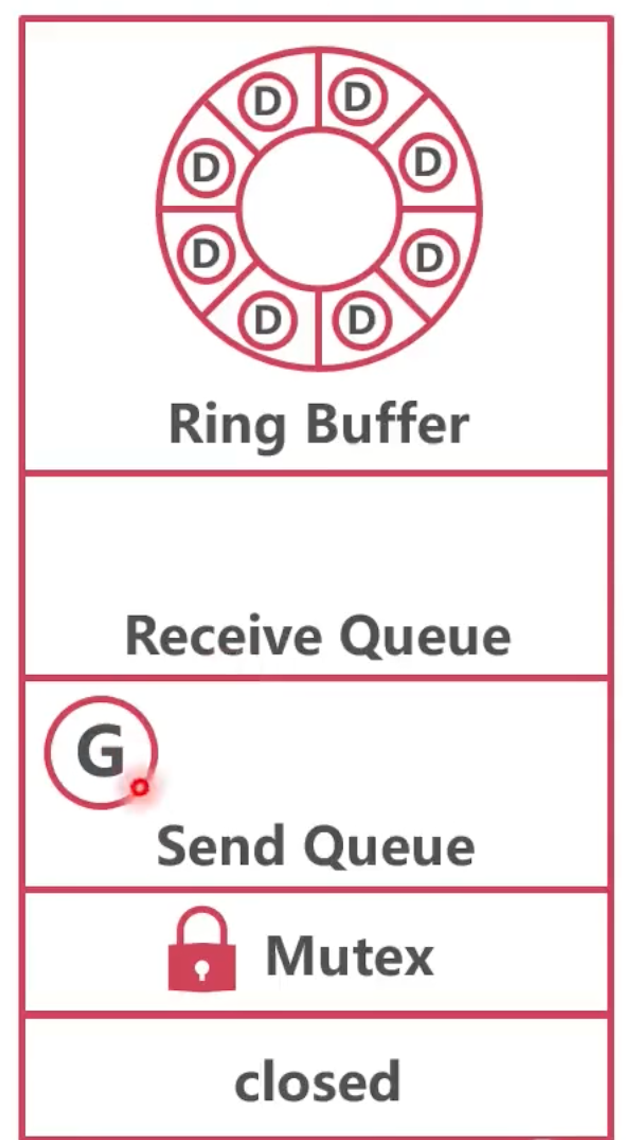
有等待的g,缓存区满了
func recv(c *hchan, sg *sudog, ep unsafe.Pointer, unlockf func(), skip int) {
// 上面是缓存区为0的情况
qp := chanbuf(c, c.recvx) // 取缓存区的数据,用的recvx 标记,和开头的总结对应上了
// ep 就是 a <-c ,这个a的地址,如果a是nil,说明传递的值,没有用,只是要个时机
// ep may be nil, in which case received data is ignored.
if ep != nil {
typedmemmove(c.elemtype, ep, qp)
}
// 将发送队列中休眠的这个g的数据 拷贝到了 缓存去
// copy data from sender to queue
typedmemmove(c.elemtype, qp, sg.elem)
c.recvx++ // 取数据的地址增加
if c.recvx == c.dataqsiz {
c.recvx = 0
}
c.sendx = c.recvx // c.sendx = (c.sendx+1) % c.dataqsiz
// 唤醒了这个 发送数据的g,因为这个g的数据已经放到了缓存区,不用休眠等待了
sg.elem = nil
gp := sg.g
unlockf()
gp.param = unsafe.Pointer(sg)
sg.success = true
if sg.releasetime != 0 {
sg.releasetime = cputicks()
}
goready(gp, skip+1)
}
步骤:
接收数据前,已经有G 在休眠等待发送
而且这个 Channel 有缓存
从缓存取走一个数据
将休眠G 的数据放进缓存,唤醒G
接收缓存,没有发送g在等待
直接从 缓存区拿数据走就行
func chanrecv(c *hchan, ep unsafe.Pointer, block bool) (selected, received bool) {
if c.qcount > 0 {
// Receive directly from queue
qp := chanbuf(c, c.recvx) // 取出数据
if raceenabled {
racenotify(c, c.recvx, nil)
}
// 上面讲过 也许接收的变量为空
if ep != nil {
typedmemmove(c.elemtype, ep, qp) // 数据拷贝过去
}
typedmemclr(c.elemtype, qp)//clr 是 clear的意思 清理缓存区已经取走的这个数据的空间
c.recvx++
if c.recvx == c.dataqsiz {
c.recvx = 0
}
c.qcount--
unlock(&c.lock)
return true, true
}
}
步骤:
判断没有 G 在发送队列等待
判断此 Channel 有缓存
从缓存中取走一个数据
接收阻塞
比较多用在不让协程退出,除非收到 context的cancel消息等。
没有 G 在休眠等待,而旦没有缓存或缓存空
自己进入接收队列,休眠等待
代码实现
func chanrecv(c *hchan, ep unsafe.Pointer, block bool) (selected, received bool) {
// no sender available: block on this channel.
gp := getg()
mysg := acquireSudog() //把自己包装成 sudog
mysg.releasetime = 0
if t0 != 0 {
mysg.releasetime = -1
}
mysg.elem = ep // 接收数据的地址,拷贝到了elem
mysg.waitlink = nil
gp.waiting = mysg
mysg.g = gp
mysg.isSelect = false
mysg.c = c
gp.param = nil
c.recvq.enqueue(mysg) // 加入了等待接收队列
gp.parkingOnChan.Store(true)
gopark(chanparkcommit, unsafe.Pointer(&c.lock), waitReasonChanReceive, traceBlockChanRecv, 2) // 休眠
}
这里和上面的发送时候,已经有等待接收的g,对上了。
步骤:
判断没有 G 在发送队列等待
判断此 Channel 无缓存
将自己包装成 sudog
sudog 放入接收等待队列,休眠
唤醒时,发送的 G 已经把数据拷贝到位
接收总结:
编译阶段,<-C 会转化为 chanrecv()
有等待的G,旦无缓存时,从G 接收
有等待的 G,且有缓存时,从缓存接收
无等待的 G,且缓存有数据,从缓存接收
无等待的 G,且缓存无数据,等待喂数据
看上面代码时候,讲过一般使用时候,那个block是true的,什么情况下block为false,下篇聊。

 浙公网安备 33010602011771号