

自动格式设置2
一.智能标记
先看一张图.
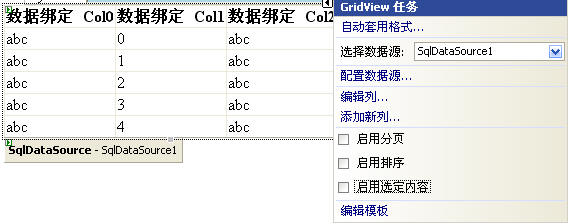
GridView右侧的小三角可以很轻松的帮助我们设置常用的属性,如下面的启动分页,启用排序等,通过这样的方式我们可以很快的完成工作。我们称这样的任务菜单为智能标记.
下面来看看如何实现
1.重写ControlDesigner的ActionLists属性
你必须重写这个属性,返回你自定义的智能标记集合(即DesignerActionListCollection),这里假设CustomControlActionList为自定义的智能
 public class SampleControlDesigner : ControlDesigner
    {
        public SampleControlDesigner()
            : base()
        {
        }

        //创建一个自定义操作列表集合
        public override DesignerActionListCollection ActionLists
        {
            get
            {
                DesignerActionListCollection actionLists = new DesignerActionListCollection();
                actionLists.Add(new CustomControlActionList(this));

                return actionLists;
            }
        }
    }
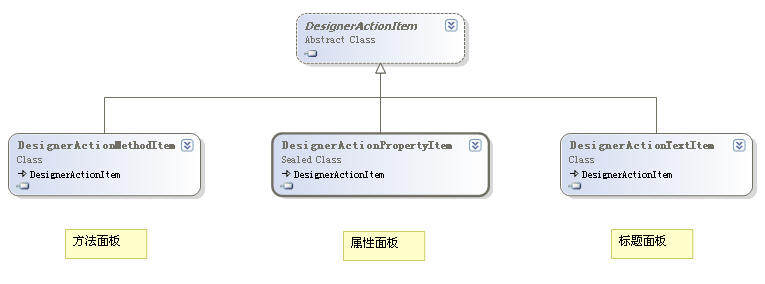
2.1项列表分类
(1)标题面板
(2)属性面板
(3)方法面板
类图如下
看个效果图,你就明白怎么回事了
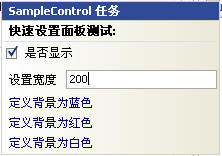
2.2实现
(1)继承DesignerActionList类,重写GetSortedActionItems方法添加自定义项面板集合,即2.1的三种项面板
  public override DesignerActionItemCollection GetSortedActionItems()
        {
            if (items == null)
            {
                items = new DesignerActionItemCollection();
                // 添加标题面板
                items.Add(new DesignerActionHeaderItem("快速设置面板测试:"));
                //添加属性相关面板
                items.Add(new DesignerActionPropertyItem("Visible",
                         "是否显示"));
                items.Add(new DesignerActionPropertyItem("Width",
                        "设置宽度"));
                items.Add(new DesignerActionPropertyItem("Height",
                       "设置高度"));
                // 添加方法相关面板

                items.Add(new DesignerActionMethodItem(this, "FormatBlue", "定义背景为蓝色", true));
                items.Add(new DesignerActionMethodItem(this, "FormatRed", "定义背景为红色", true));
                items.Add(new DesignerActionMethodItem(this, "FormatWhite", "定义背景为白色", true));

            }
            return items;
        }
如果你设置属性的话,则必须在CustomControlActionList定义属性,方法也相同,代码如下
 #region 自定义方法

        public void FormatBlue()
        {
            SampleControl ctrl = (SampleControl)_parent.Component;
            TransactedChangeCallback toCall = new TransactedChangeCallback(DoFormat);
            ControlDesigner.InvokeTransactedChange(ctrl, toCall, "FormatBlue", "FormatBlue");
        }

        public void FormatRed()
        {
            SampleControl ctrl = (SampleControl)_parent.Component;
            TransactedChangeCallback toCall = new TransactedChangeCallback(DoFormat);
            ControlDesigner.InvokeTransactedChange(ctrl, toCall, "FormatRed", "FormatRed");
        }

        public void FormatWhite()
        {
            SampleControl ctrl = (SampleControl)_parent.Component;
            //定义委托
            TransactedChangeCallback toCall = new TransactedChangeCallback(DoFormat);
            ControlDesigner.InvokeTransactedChange(ctrl, toCall, "FormatWhite", "FormatWhite");
        }

        #endregion

        #region 自定义属性

        public bool Visible
        {
            get
            {
                SampleControl ctrl = (SampleControl)_parent.Component;
                return ctrl.Visible;
            }
            set
            {
                    PropertyDescriptor propDesc = TypeDescriptor.GetProperties(_parent.Component)["Visible"];
                    propDesc.SetValue(_parent.Component, value);

            }
        }

        public Unit Width
        {
            get
            {
                SampleControl ctrl = (SampleControl)_parent.Component;
                return ctrl.Width;
            }
            set
            {
                PropertyDescriptor propDesc = TypeDescriptor.GetProperties(_parent.Component)["Width"];
                propDesc.SetValue(_parent.Component, value);
            }
        }

        public Unit Height
        {
            get
            {
                SampleControl ctrl = (SampleControl)_parent.Component;
                return ctrl.Height;
            }
            set
            {
                PropertyDescriptor propDesc = TypeDescriptor.GetProperties(_parent.Component)["Height"];
                propDesc.SetValue(_parent.Component, value);
            }
        }

        #endregion

        public bool DoFormat(object arg)
        {
            SampleControl ctl = (SampleControl)_parent.Component;
            string fmt = (string)arg;

            PropertyDescriptor backColorProp = TypeDescriptor.GetProperties(ctl)["BackColor"];

            switch (fmt)
            {
                case "FormatBlue":
                    backColorProp.SetValue(ctl, Color.Blue);
                    break;
                case "FormatRed":

                    backColorProp.SetValue(ctl, Color.Red);
                    break;
                case "FormatWhite":
                    backColorProp.SetValue(ctl, Color.White);
                    break;
            }

            //刷新设计时html标记
            _parent.UpdateDesignTimeHtml();

            return true;
        }
 [DesignerAttribute(typeof(SampleControlDesigner))]
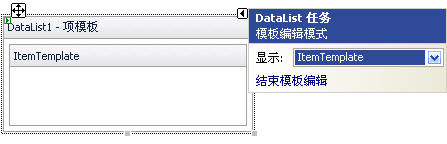
上面的模板编辑界面相信大家都很熟悉吧.设置支持怎么少的了模板呢.设置时模板编辑实现比较简单,下面来看下如何实现
这里自定义的模板控件不再列出
1.重写ControlDesigner类的TemplateGroups返回自定义模板组集合即(TemplateGroupCollection)
添加步骤跟表格的添加类似,td add tr然后table add td
模板则是TemplateGroup add TemplateDefinition 然后TemplateGroupCollection add TemplateGroup
代码如下
public override TemplateGroupCollection TemplateGroups
        {
            get
            {

                if (col == null)
                {
                    col = base.TemplateGroups;

                    TemplateGroup tempGroup;
                    TemplateDefinition tempDef;
                    TemplateGroupsSample ctl;

                    ctl = (TemplateGroupsSample)Component;

                    // 创建模板分组一
                    tempGroup = new TemplateGroup("模板A组");

                    //提供在设置时编辑模板
                    tempDef = new TemplateDefinition(this, "Template A1",
                        ctl, "Template1", false);

                    tempGroup.AddTemplateDefinition(tempDef);


                    tempDef = new TemplateDefinition(this, "Template A2",
                        ctl, "Template2", false);

                    tempGroup.AddTemplateDefinition(tempDef);


                    col.Add(tempGroup);

                    // 创建模板分组二
                    tempGroup = new TemplateGroup("模板B组");
                    tempDef = new TemplateDefinition(this, "Template B1",
                        ctl, "Template3", true);
                    tempGroup.AddTemplateDefinition(tempDef);
                    tempDef = new TemplateDefinition(this, "Template B2",
                        ctl, "Template4", true);
                    tempGroup.AddTemplateDefinition(tempDef);
                    col.Add(tempGroup);
                }

                return col;
            }
        }
2.初始化启用设计时模板编辑
我们还需要在Initialize方法中调用SetViewFlags方法启用设计时模板编辑
  public override void Initialize(IComponent component)
        {

            base.Initialize(component);

            SetViewFlags(ViewFlags.TemplateEditing, true);
        }
如下图,DataList默认情况下给予如下提示
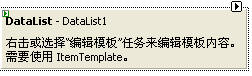
我们可以通过重写GetDesignTimeHtml方法调用CreatePlaceHolderDesignTimeHtml方法创建一个矩形标识符来实现
 public override string GetDesignTimeHtml()
        {
            return CreatePlaceHolderDesignTimeHtml("右击或选择编辑模板面板来编辑模板内容");
        }
先写到这里,估计大家也不会可以留意这方面的东西,平时大家都太忙了,上面功能有跟没有没多大关系,不过常用控件属性和功能,有设计时支持一定会让使用的更加有效. 明天继续写


 浙公网安备 33010602011771号