
C++—— 统计字符
统计字符
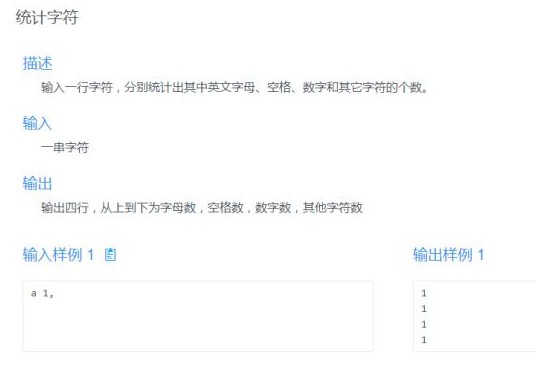
代码如下:
 1 //#include <iostream>
 2 //#include <fstream>
 3 //using namespace std;
 4 //int main()
 5 //{
 6 //    int English_letters,Space,Number,Other;
 7 //    char a[100];
 8 //    cin.get(a[100]);
 9 //    while (a!="\0"){
10 //        if(a>="a" && a<="z"||a>="A" && a<="Z") English_letters++;
11 //        //"C"表示的是一个字符串的地址,注意这里是双引号,而不是单引号
12 //        else if (a>="0"&&a<="9") Number++;
13 //        else if (a==" ") Space++;
14 //        else Other++;
15 //    };
16 //    cout<<English_letters<<endl;
17 //    cout<<Space<<endl;
18 //    cout<<Number<<endl;
19 //    cout<<Other<<endl;
20 //    return 0;
21 //}
22
23 /*
24 1.输入完之后按回车之后不会跳出那个输入那个,还是会在里边???
25   因为我写的是cin>>a[100],100个位置并没有占满
26   所以这种情况的处理是,得先知道一共有多少个字符,要不它永远不会跳出来
27   所以这里就想到了下边的这种方法,把判断的过程写在一个函数中进行封装,判断有多少个字符的工作放在主函数中
28 */
29
30 #include <iostream>
31 #include <fstream>
32 #include <string.h>    //这里必须是.h的,不能是string,会报错的
33 using namespace std;
34
35 void tongji(char*,int);    //函数的前置声明
36
37 int main()
38 {
39     char a[100];
40     gets(a);
41     //cin.get函数  一次只能从输入行中提取一个字符,包括空格和回车键都作为一个输入字符。
42     int n=strlen(a);
43 //    cout<<"n:"<<n<<endl;  这行是用来调试的时候用的,用来看看gets函数是否把所有的字符都传进来了
44     tongji(a,n);
45
46     system("pause");
47     return 0;
48 }
49
50     void tongji(char s[],int s1)    //函数的定义
51 {
52     int num=0,str=0,space=0,other=0;
53     for(int i=0;i<s1;i++)
54     {
55         if((s[i]>='a'&&s[i]<='z')||(s[i]>='A'&&s[i]<='Z'))
56             ++str;
57         else if(s[i]>='0'&&s[i]<='9')
58             ++num;
59         else if(s[i]==' ')
60             ++space;
61         else ++other;
62     }
63     cout<<str<<endl;
64     cout<<space<<endl;
65     cout<<num<<endl;
66     cout<<other<<endl;
67 }
分析与总结:
1、这道题学会就是函数写在主函数之外的思想,把它要判断的过程进行封装
2、还有就是字符串输入,应该怎么输入,用哪个函数进行输入,用这个函数的时候需要包含什么头文件
3、测字符串长度的时候用到哪个函数,需要包含的头文件
写在最后:
哪里有不足或者错误的地方,欢迎小伙伴们进行指教,一起进步哦!
宜将剩勇追穷寇,不可沽名学霸王。

 浙公网安备 33010602011771号