



YOLOv5 RKNN 部署
训练
开发环境
硬件环境
- 自己的电脑
下载显卡驱动 -> 下载python环境 ->训练
从头搞一次要半天,不推荐。 - 云服务器
有腾讯云、阿里云、丹模云等等,根据自己的经济实力选取。
我这里选用的是腾讯云https://ide.cloud.tencent.com/
![image]()
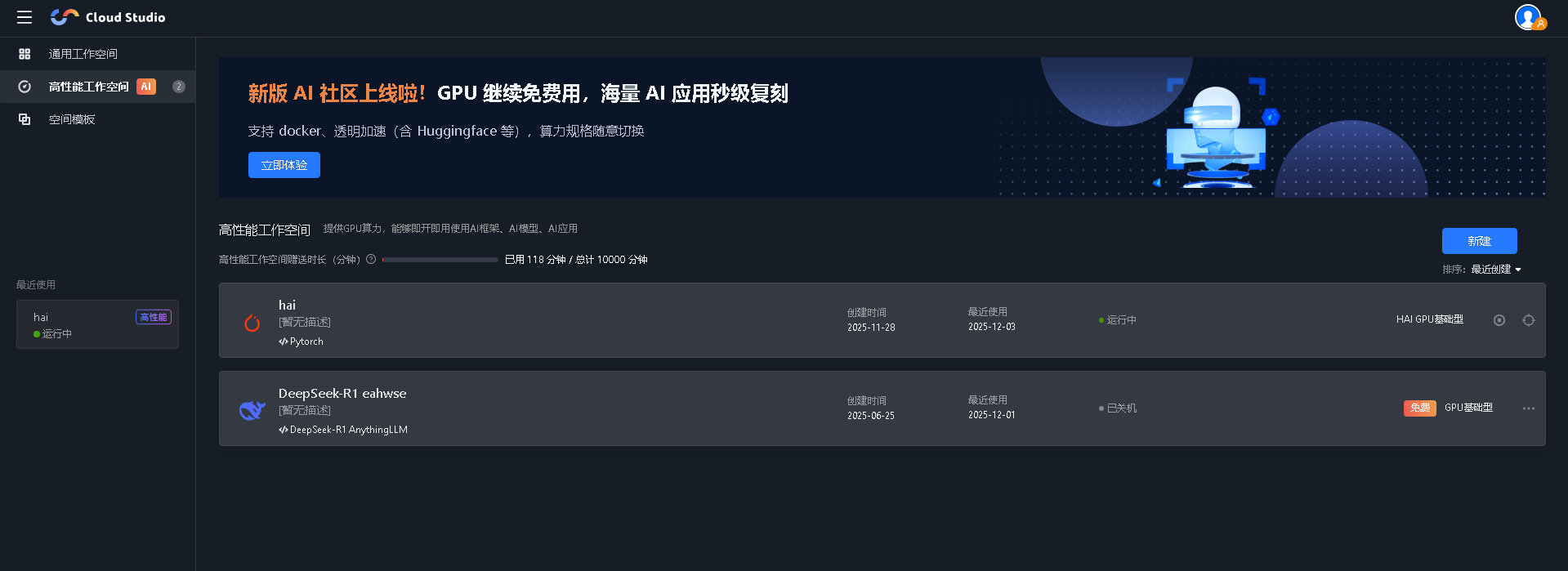
软件环境
环境自带conda 、nvid 驱动、只需要搭建其他一些模型训练要使用的环境就好我们这里以yolo v5作为例子
- 下载yolo v5的环境
git clone https://github.com/airockchip/yolov5.git - 配置conda环境安装相关依赖
#配置python
conda create -n yolov5 python=3.8
#进入环境
conda activate yolov5
#进入源码目录
cd yolov5
#下载依赖
pip install -r requirements.txt
- 训练模型
- 准备数据集
- 改data目录下的yaml文件
- 开始训练
python train.py --data ./data/barcode.yaml --weights yolov5s.pt --epochs 600 --batch-size 64 --img 640 - 导出模型
注意模型不能直接导出,直接导出的模型无法量化,需要进行修改- 修改步骤
- 第一步修改 yolo.py
注意:训练的时候要改回来(注释掉原本的代码)
# def forward(self, x): # z = [] # inference output # for i in range(self.nl): # if getattr(self, 'seg_seperate', False): # c, s = self.m_replace[i](x[i]) # if getattr(self, 'export', False): # z.append(c) # z.append(s) # continue # bs, _, ny, nx = c.shape # c = c.reshape(bs, self.na, -1, ny, nx) # s = s.reshape(bs, self.na, -1, ny, nx) # x[i] = torch.cat([c, s], 2).permute(0, 1, 3, 4, 2).contiguous() # elif getattr(self, 'detect_seperate', False): # z.append(torch.sigmoid(self.m[i](x[i]))) # continue # else: # x[i] = self.m[i](x[i]) # conv # bs, _, ny, nx = x[i].shape # x(bs,255,20,20) to x(bs,3,20,20,85) # x[i] = x[i].view(bs, self.na, self.no, ny, nx).permute(0, 1, 3, 4, 2).contiguous() # if not self.training: # inference # if self.dynamic or self.grid[i].shape[2:4] != x[i].shape[2:4]: # self.grid[i], self.anchor_grid[i] = self._make_grid(nx, ny, i) # if isinstance(self, Segment): # (boxes + masks) # xy, wh, conf, mask = x[i].split((2, 2, self.nc + 1, self.no - self.nc - 5), 4) # xy = (xy.sigmoid() * 2 + self.grid[i]) * self.stride[i] # xy # wh = (wh.sigmoid() * 2) ** 2 * self.anchor_grid[i] # wh # y = torch.cat((xy, wh, conf.sigmoid(), mask), 4) # else: # Detect (boxes only) # xy, wh, conf = x[i].sigmoid().split((2, 2, self.nc + 1), 4) # xy = (xy * 2 + self.grid[i]) * self.stride[i] # xy # wh = (wh * 2) ** 2 * self.anchor_grid[i] # wh # y = torch.cat((xy, wh, conf), 4) # z.append(y.view(bs, self.na * nx * ny, self.no)) # if getattr(self, 'export', False): # return z # return x if self.training else (torch.cat(z, 1),) if self.export else (torch.cat(z, 1), x) def forward(self, x): z = [] # inference output for i in range(self.nl): if os.getenv('RKNN_model_hack', '0') != '0': x[i] = torch.sigmoid(self.m[i](x[i])) # conv return x- 第二步 修改export.py
这个训练的时候可以不用动
添加两行代码import os os.environ['RKNN_model_hack'] = 'npu_2'
- 第一步修改 yolo.py
- 导出onnx的模型
python export.py --weights /workspace/yolov5/runs/train/exp12/weights/best.pt --img 640 --batch 1 --include onnx --opset 12
- 修改步骤
模型转换
rknn的搭建环境略
import os
import urllib
import traceback
import time
import sys
import numpy as np
import cv2
from rknn.api import RKNN

# Model from https://github.com/airockchip/rknn_model_zoo
# ONNX_MODEL = 'yolov5s_relu.onnx'
# RKNN_MODEL = 'yolov5s_relu.rknn'
ONNX_MODEL = 'special_selu.onnx'
RKNN_MODEL = 'special_selu.rknn'
IMG_PATH = './low_Light_qr_108.bmp'
DATASET = './dataset.txt'

QUANTIZE_ON = True

OBJ_THRESH = 0.25
NMS_THRESH = 0.45
IMG_SIZE = 640

CLASSES = ("DM","QR")


def xywh2xyxy(x):
    # Convert [x, y, w, h] to [x1, y1, x2, y2]
    y = np.copy(x)
    y[:, 0] = x[:, 0] - x[:, 2] / 2  # top left x
    y[:, 1] = x[:, 1] - x[:, 3] / 2  # top left y
    y[:, 2] = x[:, 0] + x[:, 2] / 2  # bottom right x
    y[:, 3] = x[:, 1] + x[:, 3] / 2  # bottom right y
    return y


def process(input, mask, anchors):

    anchors = [anchors[i] for i in mask]
    grid_h, grid_w = map(int, input.shape[0:2])

    box_confidence = input[..., 4]
    box_confidence = np.expand_dims(box_confidence, axis=-1)

    box_class_probs = input[..., 5:]

    box_xy = input[..., :2]*2 - 0.5

    col = np.tile(np.arange(0, grid_w), grid_w).reshape(-1, grid_w)
    row = np.tile(np.arange(0, grid_h).reshape(-1, 1), grid_h)
    col = col.reshape(grid_h, grid_w, 1, 1).repeat(3, axis=-2)
    row = row.reshape(grid_h, grid_w, 1, 1).repeat(3, axis=-2)
    grid = np.concatenate((col, row), axis=-1)
    box_xy += grid
    box_xy *= int(IMG_SIZE/grid_h)

    box_wh = pow(input[..., 2:4]*2, 2)
    box_wh = box_wh * anchors

    box = np.concatenate((box_xy, box_wh), axis=-1)

    return box, box_confidence, box_class_probs


def filter_boxes(boxes, box_confidences, box_class_probs):
    """Filter boxes with box threshold. It's a bit different with origin yolov5 post process!

    # Arguments
        boxes: ndarray, boxes of objects.
        box_confidences: ndarray, confidences of objects.
        box_class_probs: ndarray, class_probs of objects.

    # Returns
        boxes: ndarray, filtered boxes.
        classes: ndarray, classes for boxes.
        scores: ndarray, scores for boxes.
    """
    boxes = boxes.reshape(-1, 4)
    box_confidences = box_confidences.reshape(-1)
    box_class_probs = box_class_probs.reshape(-1, box_class_probs.shape[-1])

    _box_pos = np.where(box_confidences >= OBJ_THRESH)
    boxes = boxes[_box_pos]
    box_confidences = box_confidences[_box_pos]
    box_class_probs = box_class_probs[_box_pos]

    class_max_score = np.max(box_class_probs, axis=-1)
    classes = np.argmax(box_class_probs, axis=-1)
    _class_pos = np.where(class_max_score >= OBJ_THRESH)

    boxes = boxes[_class_pos]
    classes = classes[_class_pos]
    scores = (class_max_score* box_confidences)[_class_pos]

    return boxes, classes, scores


def nms_boxes(boxes, scores):
    """Suppress non-maximal boxes.

    # Arguments
        boxes: ndarray, boxes of objects.
        scores: ndarray, scores of objects.

    # Returns
        keep: ndarray, index of effective boxes.
    """
    x = boxes[:, 0]
    y = boxes[:, 1]
    w = boxes[:, 2] - boxes[:, 0]
    h = boxes[:, 3] - boxes[:, 1]

    areas = w * h
    order = scores.argsort()[::-1]

    keep = []
    while order.size > 0:
        i = order[0]
        keep.append(i)

        xx1 = np.maximum(x[i], x[order[1:]])
        yy1 = np.maximum(y[i], y[order[1:]])
        xx2 = np.minimum(x[i] + w[i], x[order[1:]] + w[order[1:]])
        yy2 = np.minimum(y[i] + h[i], y[order[1:]] + h[order[1:]])

        w1 = np.maximum(0.0, xx2 - xx1 + 0.00001)
        h1 = np.maximum(0.0, yy2 - yy1 + 0.00001)
        inter = w1 * h1

        ovr = inter / (areas[i] + areas[order[1:]] - inter)
        inds = np.where(ovr <= NMS_THRESH)[0]
        order = order[inds + 1]
    keep = np.array(keep)
    return keep


def yolov5_post_process(input_data):
    masks = [[0, 1, 2], [3, 4, 5], [6, 7, 8]]
    anchors = [[10, 13], [16, 30], [33, 23], [30, 61], [62, 45],
               [59, 119], [116, 90], [156, 198], [373, 326]]

    boxes, classes, scores = [], [], []
    for input, mask in zip(input_data, masks):
        b, c, s = process(input, mask, anchors)
        b, c, s = filter_boxes(b, c, s)
        boxes.append(b)
        classes.append(c)
        scores.append(s)

    boxes = np.concatenate(boxes)
    boxes = xywh2xyxy(boxes)
    classes = np.concatenate(classes)
    scores = np.concatenate(scores)

    nboxes, nclasses, nscores = [], [], []
    for c in set(classes):
        inds = np.where(classes == c)
        b = boxes[inds]
        c = classes[inds]
        s = scores[inds]

        keep = nms_boxes(b, s)

        nboxes.append(b[keep])
        nclasses.append(c[keep])
        nscores.append(s[keep])

    if not nclasses and not nscores:
        return None, None, None

    boxes = np.concatenate(nboxes)
    classes = np.concatenate(nclasses)
    scores = np.concatenate(nscores)

    return boxes, classes, scores


def draw(image, boxes, scores, classes):
    """Draw the boxes on the image.

    # Argument:
        image: original image.
        boxes: ndarray, boxes of objects.
        classes: ndarray, classes of objects.
        scores: ndarray, scores of objects.
        all_classes: all classes name.
    """
    for box, score, cl in zip(boxes, scores, classes):
        top, left, right, bottom = box
        print('class: {}, score: {}'.format(CLASSES[cl], score))
        print('box coordinate left,top,right,down: [{}, {}, {}, {}]'.format(top, left, right, bottom))
        top = int(top)
        left = int(left)
        right = int(right)
        bottom = int(bottom)

        cv2.rectangle(image, (top, left), (right, bottom), (255, 0, 0), 2)
        cv2.putText(image, '{0} {1:.2f}'.format(CLASSES[cl], score),
                    (top, left - 6),
                    cv2.FONT_HERSHEY_SIMPLEX,
                    0.6, (0, 0, 255), 2)


def letterbox(im, new_shape=(640, 640), color=(0, 0, 0)):
    # Resize and pad image while meeting stride-multiple constraints
    shape = im.shape[:2]  # current shape [height, width]
    if isinstance(new_shape, int):
        new_shape = (new_shape, new_shape)

    # Scale ratio (new / old)
    r = min(new_shape[0] / shape[0], new_shape[1] / shape[1])

    # Compute padding
    ratio = r, r  # width, height ratios
    new_unpad = int(round(shape[1] * r)), int(round(shape[0] * r))
    dw, dh = new_shape[1] - new_unpad[0], new_shape[0] - new_unpad[1]  # wh padding

    dw /= 2  # divide padding into 2 sides
    dh /= 2

    if shape[::-1] != new_unpad:  # resize
        im = cv2.resize(im, new_unpad, interpolation=cv2.INTER_LINEAR)
    top, bottom = int(round(dh - 0.1)), int(round(dh + 0.1))
    left, right = int(round(dw - 0.1)), int(round(dw + 0.1))
    im = cv2.copyMakeBorder(im, top, bottom, left, right, cv2.BORDER_CONSTANT, value=color)  # add border
    return im, ratio, (dw, dh)


if __name__ == '__main__':

    # Create RKNN object
    rknn = RKNN(verbose=True)

    # pre-process config
    print('--> Config model')
    #rk3566
    rknn.config(mean_values=[[0, 0, 0]], std_values=[[255, 255, 255]], target_platform='rv1103')
    print('done')

    # Load ONNX model
    print('--> Loading model')
    ret = rknn.load_onnx(model=ONNX_MODEL)
    if ret != 0:
        print('Load model failed!')
        exit(ret)
    print('done')

    # Build model
    print('--> Building model')
    ret = rknn.build(do_quantization=QUANTIZE_ON, dataset=DATASET)
    if ret != 0:
        print('Build model failed!')
        exit(ret)
    print('done')

    # Export RKNN model
    print('--> Export rknn model')
    ret = rknn.export_rknn(RKNN_MODEL)
    if ret != 0:
        print('Export rknn model failed!')
        exit(ret)
    print('done')

    # Init runtime environment
    print('--> Init runtime environment')
    ret = rknn.init_runtime()
    if ret != 0:
        print('Init runtime environment failed!')
        exit(ret)
    print('done')

    # Set inputs
    img = cv2.imread(IMG_PATH)
    # img, ratio, (dw, dh) = letterbox(img, new_shape=(IMG_SIZE, IMG_SIZE))
    img = cv2.cvtColor(img, cv2.COLOR_BGR2RGB)
    img = cv2.resize(img, (IMG_SIZE, IMG_SIZE))

    # Inference
    print('--> Running model')
    outputs = rknn.inference(inputs=[img])
    np.save('./onnx_yolov5_0.npy', outputs[0])
    np.save('./onnx_yolov5_1.npy', outputs[1])
    np.save('./onnx_yolov5_2.npy', outputs[2])
    print('done')

    # post process
    input0_data = outputs[0]
    input1_data = outputs[1]
    input2_data = outputs[2]

    input0_data = input0_data.reshape([3, -1]+list(input0_data.shape[-2:]))
    input1_data = input1_data.reshape([3, -1]+list(input1_data.shape[-2:]))
    input2_data = input2_data.reshape([3, -1]+list(input2_data.shape[-2:]))

    input_data = list()
    input_data.append(np.transpose(input0_data, (2, 3, 0, 1)))
    input_data.append(np.transpose(input1_data, (2, 3, 0, 1)))
    input_data.append(np.transpose(input2_data, (2, 3, 0, 1)))

    boxes, classes, scores = yolov5_post_process(input_data)

    img_1 = cv2.cvtColor(img, cv2.COLOR_RGB2BGR)
    if boxes is not None:
        draw(img_1, boxes, scores, classes)
        cv2.imwrite('result.jpg', img_1)

    rknn.release()
运行python 脚本 准一平台,以及量化图片的选取。与python环境同目录,需要放一张图片,以及一个txt文件,文件中记载了这个图片的名称。
导出完毕,可以看到模拟结果
后记
- 手中目前有 1126 1103 3588 3576平台他们跑rknn大同小异,不做区分。
- 后期规划
模型部署的优化
模型的强化训练
模型后处理的写法

 浙公网安备 33010602011771号