
第8章 动态SQL
学习目标
● 了解常用的动态SQL元素及其作用
● 掌握动态SQL中主要元素的使用
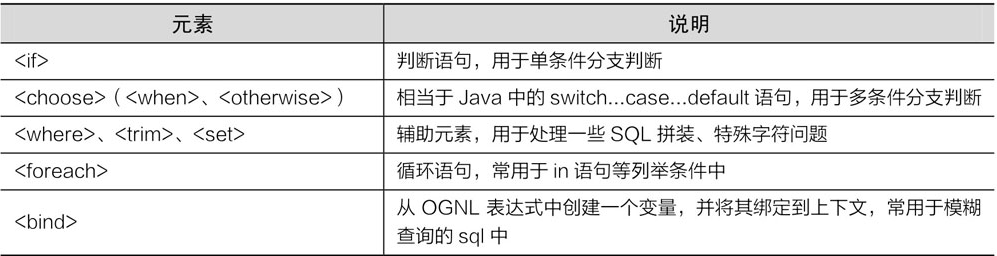
8.1 动态SQL中的元素
MyBatis 3 OGNL的表达式消除了之前版本中需要了解的大多数元素,使用不到原来一半的元素就能完成所需工作
8.2 <if>元素
1.![]()
![]()
2.mapper
<select id="findCustomerByNameAndJobs" parameterType="com.itheima.po.Customer"
resultType="com.itheima.po.Customer">
select * from t_customer where 1=1
<if test="username != null and username !=''">
and username like concat('%',#{username},'%')
</if>
<if test="jobs != null and jobs != '' ">
and jobs = #{jobs}
</if>
</select>
test属性多用于条件判断语句中,用于判断真假,大部分的场景中都是进行非空判断,有时候也需要判断字符串、数字和枚举等
#{xx}写成{#xx}
3.测试类
sqlSession.selectList()不传customer对象就只能查询所有
8.3 <choose>、<when>、<otherwise>元素
<select id="findCustomerByNameOrJobs" parameterType="com.itheima.po.Customer"
resultType="com.itheima.po.Customer">
select * from t_customer where 1=1
<choose>
<when test="username != null and username!= ''">
and username like concat('%',#{username},'%')
</when>
<when test="jobs != null and jobs != ''">
and jobs = #{jobs}
</when>
<otherwise>
and phone is not null
</otherwise>
</choose>
</select>
8.4 <where>、<trim>元素
where 1=1 防止sql语法错误 且 避免了where后面第一个词是and或者or之类的关键词
使用<where>元素对“where 1=1”条件进行了替换
<where>
<if test="username != null and username !=''">
and username like concat('%',#{username},'%')
</if>
<if test="jobs != null and jobs != '' ">
and jobs = #{jobs}
</if>
</where>
<trim prefix="where" prefixOverrides="and">
<if test="username != null and username !=''">
and username like concat('%',#{username},'%')
</if>
<if test="jobs != null and jobs != '' ">
and jobs = #{jobs}
</if>
</trim>
<trim>元素的作用是去除一些特殊的字符串,它的prefix属性代表的是语句的前缀(这里使用where来连接后面的SQL片段),而prefixOverrides属性代表的是需要去除的那些特殊字符串(这里定义了要去除SQL中的and),上面的写法和使用<where>元素基本是等效的。
8.5 <set>元素
让程序只更新需要更新的字段
<set>元素主要用于更新操作,其主要作用是在动态包含的SQL语句前输出一个SET关键字,并将SQL语句中最后一个多余的逗号去除。
<update id="updateCustomer" parameterType="com.itheima.po.Customer">
update t_customer
<set>
<if test="username != null and username !=''">
username=#{username}
</if>
<if test="jobs != null and jobs !=''">
jobs=#{jobs}
</if>
<if test="phone != null and phone !=''">
phone=#{phone}
</if>
</set>
where id = #{id}
</update>
### Cause: org.apache.ibatis.type.TypeException: Could not set parameters for mapping: ParameterMapping{property='username', mode=IN, javaType=class java.lang.String, jdbcType=null, numericScale=null, resultMapId='null', jdbcTypeName='null', expression='null'}. Cause: org.apache.ibatis.type.TypeException: Error setting null for parameter #3 with JdbcType OTHER . Try setting a different JdbcType for this parameter or a different jdbcTypeForNull configuration property. Cause: java.sql.SQLException: Parameter index out of range (3 > number of parameters, which is 2).
原因:mapper文件中的注释没消干净
方法:消除--
在映射文件中使用<set>和<if>元素组合进行update语句动态SQL组装时,如果<set>元素内包含的内容都为空,则会出现SQL语法错误。所以在使用<set>元素进行字段信息更新时,要确保传入的更新字段不能都为空。
8.6 <foreach>元素
<!-- foreach-->
<select id="findCustomerByIds" parameterType="List" resultType="com.itheima.po.Customer">
select * from t_customer where id in
<foreach collection="list" index="index" item="id"
open="(" separator="," close=")">
#{id}
</foreach>
</select>
· item:配置的是循环中当前的元素。
· index:配置的是当前元素在集合的位置下标。
· collection:配置的list是传递过来的参数类型(首字母小写),它可以是一个array、list(或collection)、Map集合的键、POJO包装类中数组或集合类型的属性名等。
· open和close:配置的是以什么符号将这些集合元素包装起来。
· separator:配置的是各个元素的间隔符。
当使用可迭代对象或者数组时,index是当前迭代的次数,item的值是本次迭代获取的元素。当使用字典(或者Map.Entry对象的集合)时,index是键,item是值。
@Test
public void findCustomerByIdsTest(){
SqlSession sqlSession = MybatisUtils.getSession();
ArrayList<Integer> ids = new ArrayList<>();
ids.add(1);
ids.add(2);
List<Customer> customers =sqlSession.selectList("com.itheima.mapper.CustomerMapper.findCustomerByIds", ids);
for (Customer customer1 : customers){
System.out.println(customer1);
}
sqlSession.close();
}
collection属性是必须指定的,而且在不同情况下,该属性的值是不一样的。
(1)传入的是单参数且参数类型是一个数组或者List,collection属性值分别为array和list(或collection)。
(2)传入的参数是多个,collection属性值就为Map的键
(3)传入的参数是POJO包装类,collection属性值就为该包装类中需要进行遍历的数组或集合的属性名
所以在设置collection属性值的时候,必须按照实际情况配置,否则程序就会出现异常。
8.7 <bind>元素
在进行模糊查询编写SQL语句的时候,如果使用“${}”进行字符串拼接,则无法防止SQL注入问题;如果使用concat函数进行拼接,则只针对MySQL数据库有效;如果使用的是Oracle数据库,则要使用连接符号“||”。
MyBatis的<bind>元素可以通过OGNL表达式来创建一个上下文变量,其使用方式如下:
<select id="findCustomerByName1" parameterType="com.itheima.po.Customer"
resultType="com.itheima.po.Customer">
<bind name = "pattern_username" value="'%'+_parameter.getUsername()+'%"/>
select * from t_customer
where
username like #{pattern_username}
</select>
使用<bind>元素定义了一个name为pattern_username的变量,<bind>元素中value的属性值就是拼接的查询字符串,其中_parameter.getUsername()表示传递进来的参数(也可以直接写成对应的参数变量名,如username)
【思考题】
1.请简述MyBatis框架动态SQL中的主要元素及其作用。
select id parameterType resultType
选择标签 id是唯一标志 传入参数类型 返回参数类型×
2.请简述MyBatis框架动态SQL中<foreach>元素collection属性的注意事项。
如果是单个参数,返回array或者list
如果是多个参数,返回map
如果是指定类,返回指定类的集合

 浙公网安备 33010602011771号