
Java面向对象学习(七)包装类
1.定义:Java中的基本数据类型没有方法和属性,包装类就是将基本数据类型加上方法、属性、构造器之后进行封装,产生一个类,目的是为了使基本数据类型实现对象化交互。
包装类是引用数据类型。
2.对应关系
基本数据类型 包装类 继承关系
byte Byte -->Number-->Object
short Short -->Number-->Object
int Integer -->Number-->Object
long Long -->Number-->Object
float Float -->Number-->Object
double Double -->Number-->Object
char Character -->Object
boolean Boolean -->Object
3.Integer详解
1)查看类的源码可知

(1)Integer类由final修饰,说明这个类不能被继承
(2)Integer类继承了Number类,Number继承了Object类
(3)Integer里实现了Comparable<Integer>等接口
2)属性

被static修饰的类可以不用自己创建对象,可以通过类名.属性名调用
1 public static void main(String[] args) {
2         //属性
3         System.out.println(Integer.MAX_VALUE);
4         System.out.println(Integer.MIN_VALUE);
5         //“物极必反”
6         System.out.println(Integer.MAX_VALUE+1);
7         System.out.println(Integer.MAX_VALUE-1);
8     }
运行结果: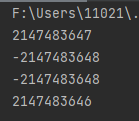
3)构造器:Integer没有空参构造器
查看源码可知,Integer有一个传入int类型参数的构造器,一个传入String类型数据的构造器,但他们最终返回的都是int类型的数据


 1 //构造器
 2         //调用int类型参数构造器:public Integer(int value) {this.value = value;}
 3         Integer i1 = new Integer(10);
 4         System.out.println(i1);
 5         //这里会返回10,因为这个构造器的功能就是将传入的int类型的数据---value=10,传给this.value
 6         //调用String类型参数构造器:这个构造器的parseInt()方法的作用是将String类型的数转换为int类型
 7         // public Integer(String s) throws NumberFormatException {
 8         //        this.value = parseInt(s, 10); //10表示返回的是10进制的数
 9         //    }
10         Integer i2 = new Integer("15");
11         System.out.println(i2);
12         //如果传入的是abc这种字符串,就会报如构造器所抛出的异常NumberFormatException
13         Integer i3 = new Integer("abc");
4)自动装箱和自动拆箱:功能是将基本数据类型和包装类进行快速的类型转换
1 //自动装箱
2         Integer i4 =10;  //10是int类型,但是这里直接把int转换为了Integer类型
3         System.out.println(i4);
4         //自动拆箱
5         Integer i5 = new Integer(10);
6         int num=i5; //i5是Integer类型,这里自动将Integer转换为int类型
7         System.out.println(i5);
可以通过打断点的方式查看到自动装拆箱其实是调用了Integer类中的valueOf这个方法
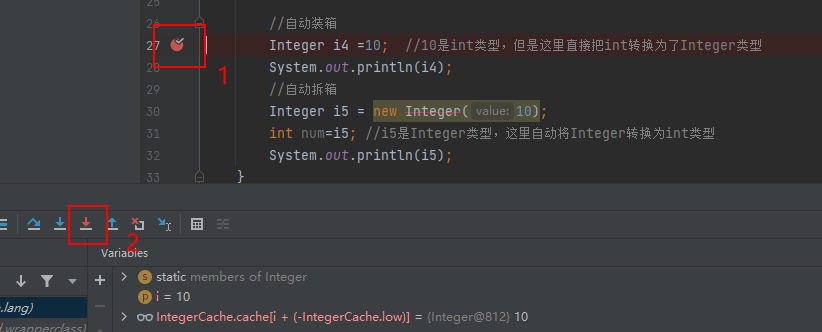
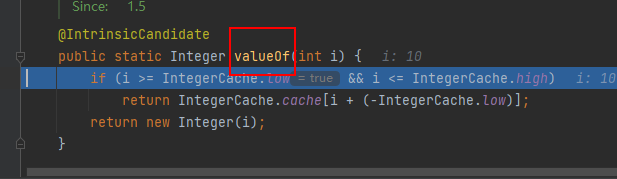
5)常用方法
 1 package com.rzd.wrapperclass;
 2 //包装类:常用方法1
 3 public class Demo02 {
 4     public static void main(String[] args) {
 5         //常用方法
 6         //1.compareTo:在数字上比较两个Integer对象
 7         //追溯源码可以看到compareTo调用了compare方法
 8         Integer a = new Integer(10);
 9         Integer b = new Integer(10);
10         Integer c = new Integer(1);
11
12         System.out.println(a.compareTo(b)); //当a=b,返回0
13         System.out.println(a.compareTo(c)); //当a>b,返回1
14         System.out.println(c.compareTo(a)); //当a<b,返回-1
15
16         //2.equals:比较两个对象
17         System.out.println(a==b);//==比较的是地址,所以一定会返回false
18         System.out.println(a.equals(b));
19         //返回了true,说明重写了Object类中的equals方法,重写为比较两个对象的数字值
20
21         //上面是new创建对象,现在通过自动装箱方式创建对象
22         Integer d1=10;
23         Integer e1=10;
24         System.out.println(d1.equals(e1)); //返回了true
25         System.out.println(d1 == e1); //这里会返回true
26
27         Integer d2=130;
28         Integer e2=130;
29         System.out.println(d2 == e2); //这里会返回false
30         /* 这里可以看到,当自动装箱的值为10时,==比较返回的时true,也就是说比较的是数值。
31         如果自动装箱的值为130,那么返回false,也就是比较的是对象的地址。
32         因为用Integer自动装箱创建的对象,其实是调用了valueOf方法,这里打断点对valueOf源码进行分析。
33          */
34
35
36     }
37 }
valueOf的源码分析:
 1   //1.从alueOf方法跳到IntegerCache类,IntegerCache是Integer的一个内部类
 2     public static Integer valueOf(int i) {
 3         /*6.如果传进来的值在low和high之间,也就是在-128~127之间,就返回cache[]数组里的某一个值。
 4         这里假如传入的是i=10,那么返回的就是cache[10+(-(-128))]--->cache[138],也就是返回的是一个数。
 5         如果i不在-128~127之间,就不走if语句,直接走return new Integer(i);,也就是将i封装为对象。
 6          */
 7         if (i >= Integer.IntegerCache.low && i <= Integer.IntegerCache.high)
 8             return Integer.IntegerCache.cache[i + (-Integer.IntegerCache.low)];
 9         return new Integer(i);
10     }
11
12
13     private static class IntegerCache {
14         static final int low = -128;
15         static final int high;
16         static final Integer[] cache;
17         static Integer[] archivedCache;
18
19         //sttic代码块先执行
20         static {
21             int h = 127;
22             high = h;
23             int size = (high - low) + 1;
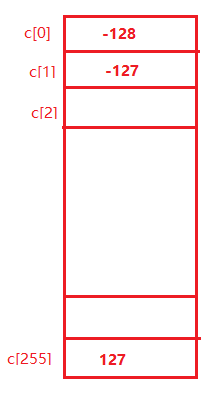
24             //2.上面三行可以看到low=-128,high=127,size也就是数组cache的长度为256
25
26             if (archivedCache == null || size > archivedCache.length) {
27                 //3.定义一个数组c[],长度为256,然后给他赋值
28                 Integer[] c = new Integer[size];
29                 int j = low;    j=-128
30                 for(int i = 0; i < c.length; i++) {
31                     c[i] = new Integer(j++);
32                     /*4.赋值为:
33                     第一次,i=0,c[0]=-128;
34                     第二次,i=1,c[1]=-127;
35                     第三次,i=2,c[2]=-126;
36                     最后,当i=255,c[255]=127;也就是如下图的一个数组。
37                  */
38                 }
39                 archivedCache = c;
40             }
41             cache = archivedCache;//5.cache[]=archivedCache[]=c[]
42         }
43     }
还有一些类型转换的方法:
 1 package com.rzd.wrapperclass;
 2 //包装类:常用方法2
 3 public class Demo03 {
 4     public static void main(String[] args) {
 5         //3.intvalue():将Integer类型转换为int类型
 6         Integer i1=110;
 7         System.out.println(i1);
 8         int i= i1.intValue();
 9         System.out.println(i);
10
11         //4.parseInt():将String类型转换为int类型
12         int i2=Integer.parseInt("123");
13         System.out.println(i2);
14
15         //5.toString():
16         Integer i3=120;
17         System.out.println(i3.toString());
18     }
19 }

 浙公网安备 33010602011771号