
Java面向对象学习(三)面向对象三大特性----多态
6.多态
1)先创建一个父类
1 public class Father {
2
3 }
子类
1 public class Son extends Father {
2
3 }
main方法
 1 import com.rzd.oop.demo10.Father;
 2 import com.rzd.oop.demo10.Son;
 3
 4 public class Application {
 5     public static void main(String[] args) {
 6         //当new Son();时,这个对象的实际类型是确定的,是Son类型
 7         Son s1 = new Son();
 8         //但是这个对象指向的的引用类型是不确定的,这个对象的引用类型可以是任意一个Son的父类型
 9         //这里是父类的引用指向子类
10         Father s2 = new Son();
11         Object s3 = new Son();
12
13     }
14 }
这里可以看到一个对象的实际类型,是在new的时候就确定了的,但是它指向的引用类型,可以是任意的实际类型的父类。
2)如果在父类中添加一个run方法
1 public class Father {
2     public void run(){
3         System.out.println("father run");
4     }
5 }
在子类中添加一个eat方法
1 public class Son extends Father {
2     public void eat(){
3         System.out.println("son eat");
4     }
5 }
在main方法中进行调用
 1 import com.rzd.oop.demo10.Father;
 2 import com.rzd.oop.demo10.Son;
 3
 4 public class Application {
 5     public static void main(String[] args) {
 6         Son s1 = new Son();
 7         Father s2 = new Son();
 8         Object s3=new Son();
 9
10         //对象可以调用的方法由它的引用类型决定
11         s1.run();   //s1的引用类型是Son,可以调用父类Father的方法
12         s2.run();   //s2的引用类型是Father,可以调用Father本身的方法
13         //s3.run();  这里s3的引用类型是Object,是不能调用子类Father的方法的
14
15         s1.eat();   //s1的引用类型是Son,可以调用Son本身的方法
16         //s2.eat();   //同理上面的s3
17     }
18 }
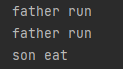
由此可见:一个对象可以调用的方法只能是它的引用类型里面的方法。
3)但是我们如果在子类中重写一个run方法
1 public class Son extends Father {
2     public void eat(){
3         System.out.println("son eat");
4     }
5     public void run(){
6         System.out.println("son run");
7     }
8 }
此时再在main方法中调用的话,就是方法重写,会都调用到子类的方法

小结:
1)多态是方法的多态,与属性无关,重写也是
2)=左边必须是右边的父类,否则会报类型转换异常,ClassCastException
3)多态存在的条件:父子关系、方法重写、父类的引用指向子类 Father f1=new Son()
不能被重写的方法:
1.static修饰的方法,它属于类,不属于实例
2.final修饰的方法:常量
3.private方法:私有的
2.instanceof
X instanceof Y  能否编译通过不报错的前提是X、Y之间有继承关系
           结果能是true的前提是X是Y的子类型
 1 import com.rzd.oop.demo11.Person;
 2 import com.rzd.oop.demo11.Student;
 3 import com.rzd.oop.demo11.Teacher;
 4
 5 public class Application {
 6     public static void main(String[] args) {
 7         //先写个多态
 8         Object object = new Student();  //Object是Student的父类,可以写多态
 9
10         //Object>Person>Student
11         //Object>Person>Teacher
12         //Object>String
13
14         //由于object是Student类型的,那么object是Student及其父类的类型
15         System.out.println(object instanceof Object);   //true
16         System.out.println(object instanceof Student);  //true
17         System.out.println(object instanceof Person);   //true
18         System.out.println(object instanceof Teacher);  //false Student和Teacher是平行的
19         System.out.println(object instanceof String);   //false Student和String无关
20
21         System.out.println("==================================");
22         Person person = new Student();  //这里new出来的person到底是什么类型?
23
24         //person是Person类型的
25         System.out.println(person instanceof Object);   //true
26         System.out.println(person instanceof Student);  //true
27         System.out.println(person instanceof Person);   //true
28         System.out.println(person instanceof Teacher);  //false Person是Teacher的父
29         //System.out.println(person instanceof String);   //instanceof两边的类型没有继承关系就会编译报错
30
31         System.out.println("==================================");
32         Student student = new Student();
33         System.out.println(student instanceof Object);   //true
34         System.out.println(student instanceof Student);  //true
35         System.out.println(student instanceof Person);   //true
36         //System.out.println(student instanceof Teacher);  //instanceof两边的类型没有继承关系就会编译报错
37         //System.out.println(student instanceof String);   //instanceof两边的类型没有继承关系就会编译报错
38     }
39 }
3)类型转换
类型转换:(1)多态----父类引用子类的对象
(2)子类转换为父类---低转高,是向上转型,直接转换;父类转换为子类---高转低,是向下转型,强制转换。
(3)与基本类型强制转换会丢失精度一样,引用类型强制转换会丢失方法
类型转换的作用:方便方法的调用,减少重复的代码
先写三个空的Person、Student、Teacher方法
在main方法中输入
 1 import com.rzd.oop.demo11.Person;
 2 import com.rzd.oop.demo11.Student;
 3 import com.rzd.oop.demo11.Teacher;
 4
 5 public class Application {
 6     public static void main(String[] args) {
 7         //先写个多态
 8         Object object = new Student();  //Object是Student的父类,可以写多态
 9
10         //Object>Person>Student
11         //Object>Person>Teacher
12         //Object>String
13
14         //由于object是Student类型的,那么object是Student及其父类的类型
15         System.out.println(object instanceof Object);   //true
16         System.out.println(object instanceof Student);  //true
17         System.out.println(object instanceof Person);   //true
18         System.out.println(object instanceof Teacher);  //false Student和Teacher是平行的
19         System.out.println(object instanceof String);   //false Student和String无关
20
21         System.out.println("==================================");
22         Person person = new Student();  //这里new出来的person到底是什么类型?
23
24         //person是Person类型的
25         System.out.println(person instanceof Object);   //true
26         System.out.println(person instanceof Student);  //true
27         System.out.println(person instanceof Person);   //true
28         System.out.println(person instanceof Teacher);  //false Person是Teacher的父
29         //System.out.println(person instanceof String);   //false instanceof两边的类型没有继承关系就会编译报错
30
31         Student student = new Student();
32         System.out.println(student instanceof Object);   //true
33         System.out.println(student instanceof Student);  //true
34         System.out.println(student instanceof Person);   //true
35         //System.out.println(student instanceof Teacher);  //false instanceof两边的类型没有继承关系就会编译报错
36         //System.out.println(student instanceof String);   //false instanceof两边的类型没有继承关系就会编译报错
37
38     }
39 }
在多态中,父类要想使用子类的方法,要进行类型转换
基本类型转换:64位>32>16>8 低转高直接转换,高转低需要强制转换
引用类型转换:父--->子 强制转换 子--->父,直接转换
先在子类中写一个方法study()
1 public class Student extends Person{
2     public void study(){
3         System.out.println("Student在学习");
4     }
5 }
在main方法中创建一个父类的obj对象,使用子类的方法
1 //类型转换
2         Person obj = new Student();    //将student类的oj转换为Person类,子--->父,低--->高,是直接转换
3         obj.study();//这行无法运行,报错。
4         // 这里表示,obj本来是Student,是子类,被转换成了父类之后,不能调用本身的study方法了,说明子类转换为父类会丢失自己本来的方法
当子类转换成父类时,会丢失方法。
所以父类使用子类本身的方法, 需要强制转换,将父类转换为子类
 1 public class Application {
 2     public static void main(String[] args) {
 3         //类型转换
 4         Person obj = new Student();    //将student类的oj转换为Person类,子--->父,低--->高,是直接转换
 5         obj.study();//这行无法运行,报错。
 6         // 这里表示,obj本来是Student,是子类,被转换成了父类之后,不能调用本身的study方法了,说明子类转换为父类会丢失自己本来的方法
 7
 8         //父类要想使用子类的方法,还需要类型转换.obj现在是是Person类型,要转换为Student类型,高转低,要强制转换
 9         //先输入(Student)obj;,Alt+回车,选择第二个。
10         //这里就是用一个Student类型的对象student1来接收被强制转换为Student类型的对象obj
11         Student student1 = (Student) obj;
12         //然后student1就可以使用Student的方法
13         student1.study();
14         //上面两行可以简化成
15         ((Student) obj).study();
16     }
17 }

 浙公网安备 33010602011771号