

Global warming
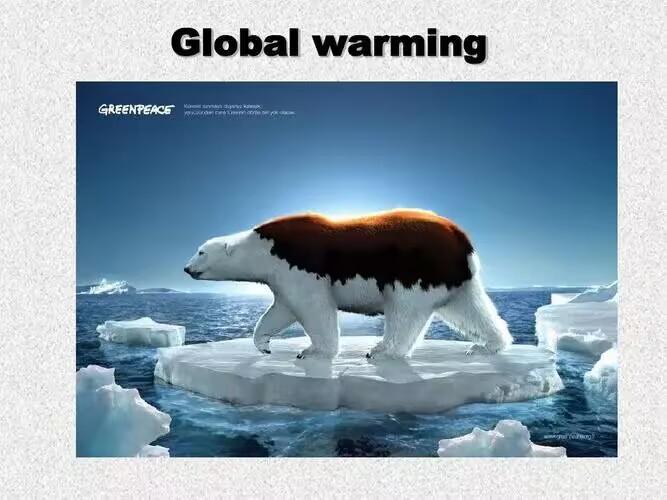
Definition of Global warming:
A sound ecology and environment is not just a natural asset, but also an economic asset, and it affects the potential and momentum of economic and social development. We need to speed up efforts to foster a green way of development and secure a win-win of economic growth and environmental protection, so as to build a homeland of coordinated advancement of economy and the environment.
The cause of global warming:
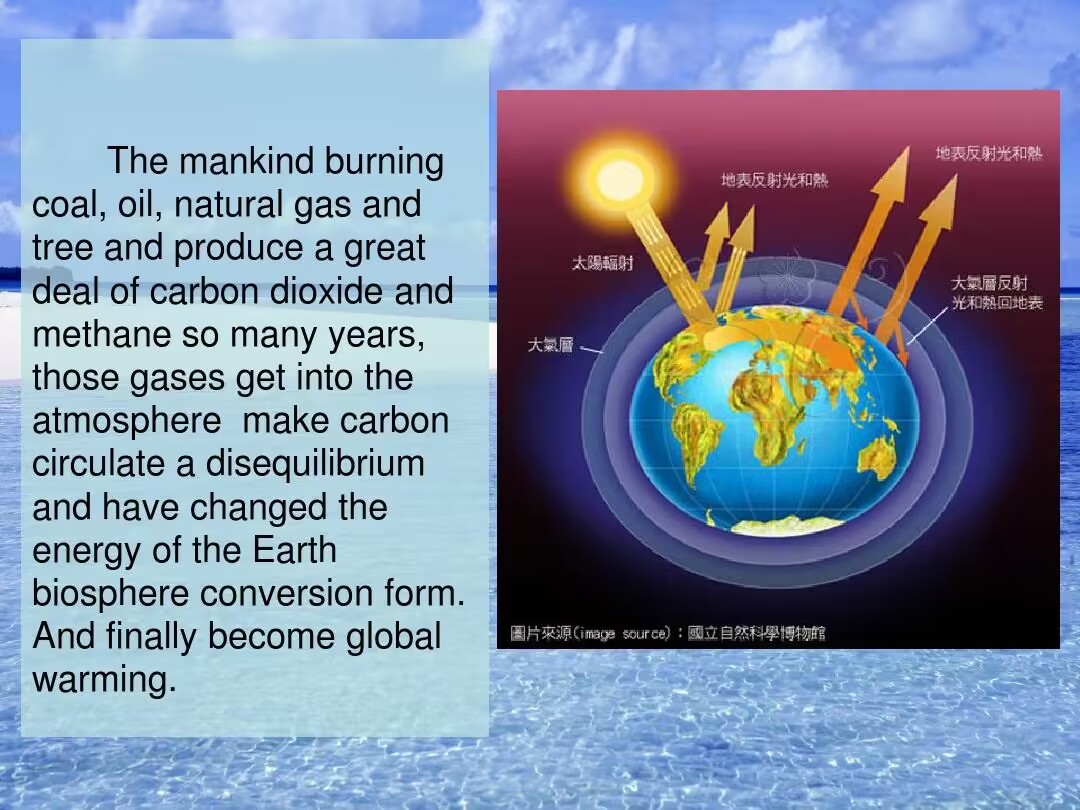
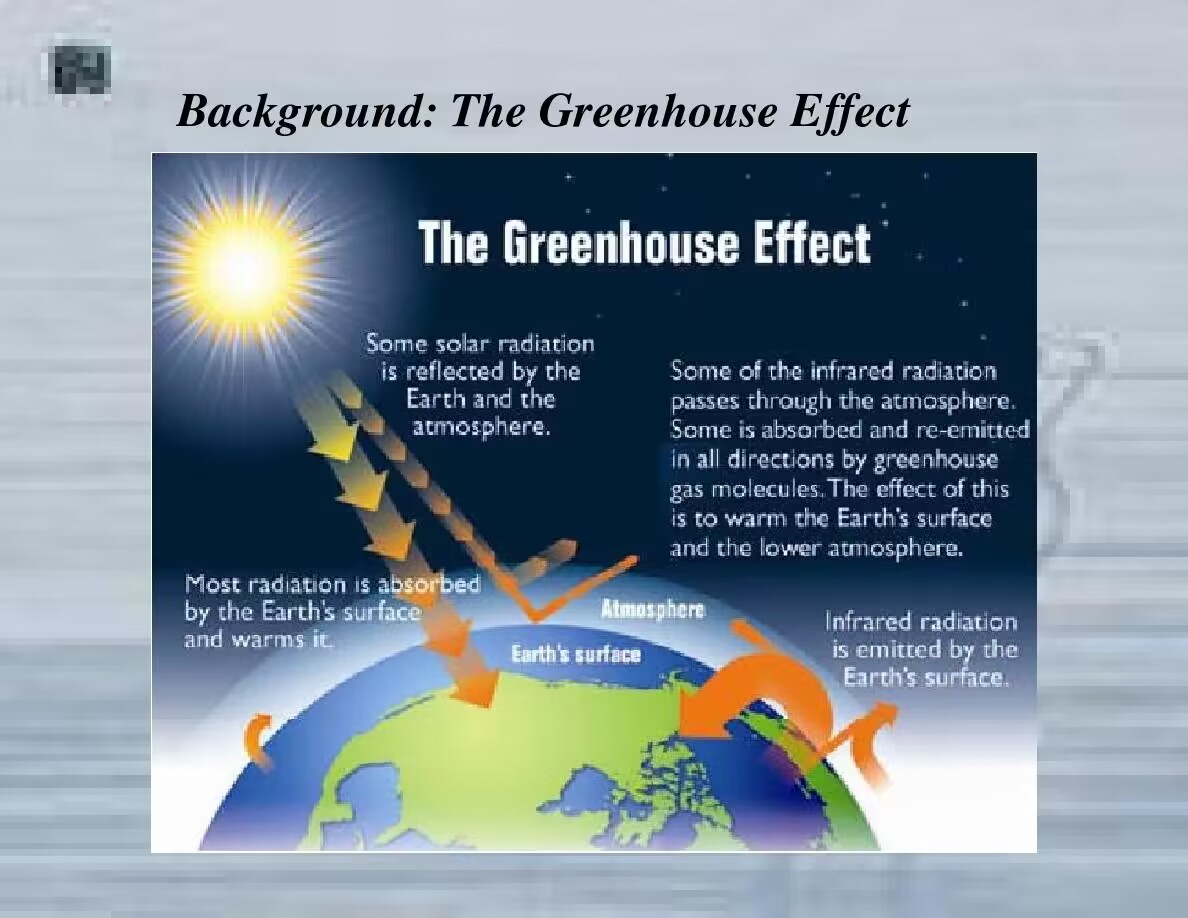
Greenhouse gases such as carbon dioxide, methane, CFCs, nitrous oxide, nitrogen and ozone, which have been released by human activities, have been increasing. The composition of the atmosphere has changed from ruler to man in two. Many scientists claim that if this continues, the accumulation of greenhouse gases is likely to trigger global warming.SlarminS. A warmer global climate melts the ice caps, raising sea levels. What is more, it disturbs weather patterns, causing droughts severe storms, hurricanes . People suffer a lot from disasters relevant to global warming.
The methods for deal with climate changes:
China's emission reduction measures to address climate change: mainly through market means, supplemented by administrative means.
1、Carbon emissions trading
Carbon emissions trading, as an important market tool, regulates the real or implied price of carbon through policies. Policies can stimulate manufacturers and consumers to invest heavily. Low emission products, technologies, and processes can help reduce emissions.
2、Energy Supply Department
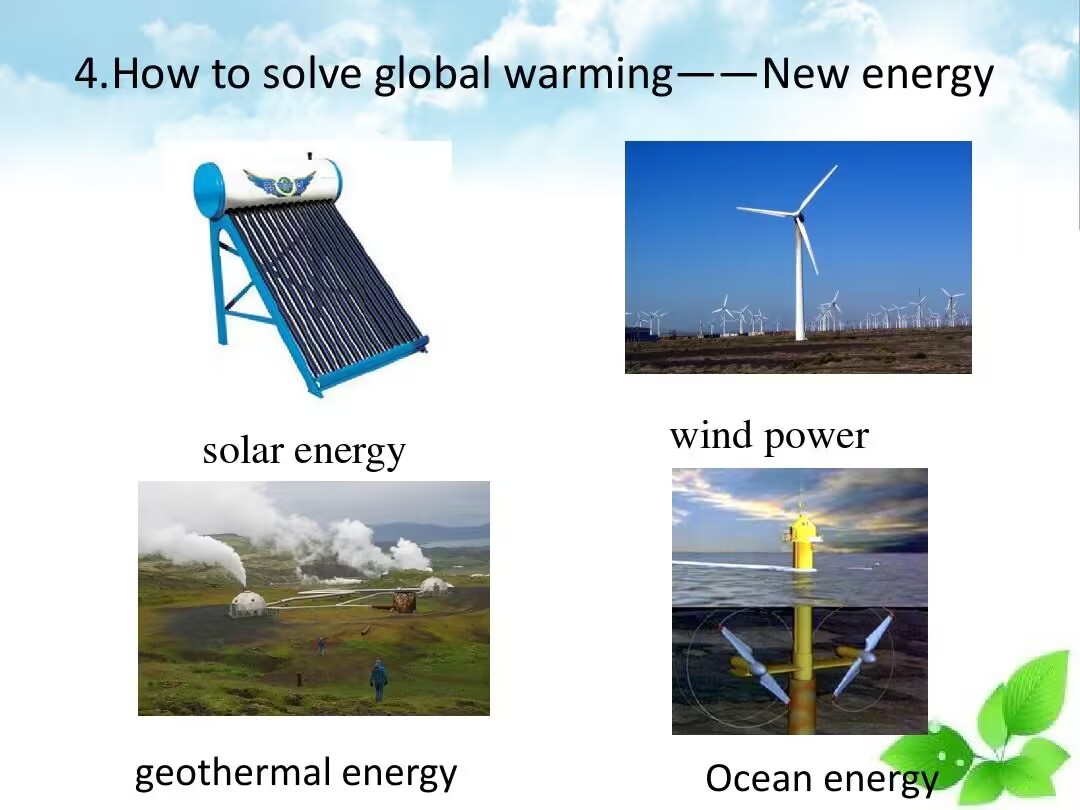
The proportion of zero carbon or low-carbon energy supply, such as renewable energy, nuclear energy, and fossil energy using carbon capture and storage technology (CCS), in the primary energy supply needs to be significantly increased to achieve decarbonization in power generation devices. Coal power that does not use carbon capture and storage technology should be phased out as much as possible.
3、Energy application field
Reduce demand in the energy sector by relying on energy-saving technologies, improved transportation, behavioral changes, improved infrastructure, and urban development; Apply new technologies and knowledge, formulate and issue energy efficiency policies, building regulations and standards, and promote the reduction of energy use in the construction sector; The industrial sector improves energy efficiency, reduces unit energy emissions, recycles materials, and reduces product demand based on existing measures such as technological upgrading and upgrading.
4、Agriculture and Forestry
Afforestation, reducing deforestation, and sustainable forest management are one of the effective means of reducing emissions. The most effective means in the field of agriculture are farmland and pasture management, as well as the restoration of organic soil. Urbanization not only brings income growth, but also high energy consumption and emissions. It is necessary to improve energy efficiency, land planning, and cross departmental collaborative measures to achieve emission reduction.
5、Department collaboration
There is a strong interdependence between energy supply and energy end user departments in terms of emission reduction pace. Early implementation of systematic and cross departmental emission reduction strategies can reduce costs and improve effectiveness.
The effects of global warming:
The temperature of all the world has dramatic increased. Gradually, some disaster such as drought, flood and Glaciers Melting follow.
Warming of the climate system is unequivocal(不含糊的,直率的), and scientists are more than 90% certain that it is primarily(主要的) caused by increasing concentrations(浓度) of greenhouse gases produced by human activities such as the burning of fossil fuels(化石燃料) and deforestation(砍伐森林). These findings are recognized by the national science academies of all major industrialized(工业化的) nations.
Naturally occurring amounts of greenhouse gases have a mean warming effect of about 33 °C . Without the earth's atmosphere the temperature across almost the entire surface of the earth would be below freezing. The major greenhouse gases are water vapor(水蒸气)、 carbon dioxide 、 methane (CH4) and ozone (O3). Clouds also affect the radiation balance through cloud forcing similar to greenhouse gases.
Firstly,human activity since the Industrial Revolution has increased the amount of greenhouse gases in the atmosphere, leading to increased radiative forcing from CO2, methane, tropospheric(对流层) ozone, CFCs(氟氯化碳) and nitrous oxide(C2O)and so on.
Secondly ,fossil fuel burning , including cement production (水泥生产)and gas flaring (废气燃烧器),has produced about three-quarters of the increase in CO2 from human activity over the past 20 years. The rest of this increase is caused mostly by changes in land-use, particularly deforestation.
Finally,the popular media and the public often confuse global warming with ozone depletion(损耗), the destruction of stratospheric ozone (平流层臭氧)by chlorofluorocarbons(含氯氟烃).
Reduced stratospheric ozone has had a slight cooling influence on surface temperatures, while increased tropospheric ozone has had a somewhat larger warming effect.
In a word, the effects of global warming is entensive. All the countries and regions should have a more stable and sustainable development model, and respect natural law to create a more beautifully word. That’s all.

 浙公网安备 33010602011771号