

java toString()方法的使用
1.未重写toString()方法时
如使用下System.out.println()方法打印一个集合中的Student(自定义类型)类型的元素
Student类
package collection;

public class Student {
  private String name;
  private int age;
  public Student(){}

  public Student(String name, int age) {
      this.name = name;
      this.age = age;
  }
//先将重写的toString()注释掉
//    @Override
//    public String toString() {
//        return "Student{" +
//                "name='" + name + '\'' +
//                ", age=" + age +
//                '}';
//    }
}
Demo主类
package collection;

import java.util.ArrayList;
import java.util.Collection;

/**
 * Collection的使用(2)
 * @author qky
 */
public class Demo02 {
    public static void main(String[] args) {
        Collection collection = new ArrayList();
        Student s1 = new Student("张三",12);
        Student s2 = new Student("李四",15);
        collection.add(s1);
        collection.add(s2);
        System.out.println(collection);//说明。当使用sout输出时,执行System.out.println() 这个方法默认就会调用一个继承自Object 类型对象的toString方法,所以这里collection后面加不加toString都一样
}

2.重写toString()方法时
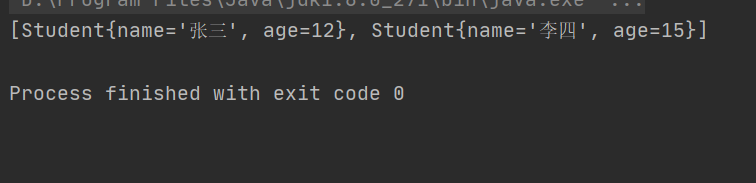
如使用下System.out.println()方法打印一个集合中的Student(自定义类型)类型的元素
Student类
package collection;

public class Student {
  private String name;
  private int age;
  public Student(){}

  public Student(String name, int age) {
      this.name = name;
      this.age = age;
  }
//将重写的toString()恢复
  @Override
  public String toString() {
      return "Student{" +
              "name='" + name + '\'' +
              ", age=" + age +
              '}';
  }
}
Demo主类
package collection;

import java.util.ArrayList;
import java.util.Collection;

/**
 * Collection的使用(2)
 * @author qky
 */
public class Demo02 {
    public static void main(String[] args) {
        Collection collection = new ArrayList();
        Student s1 = new Student("张三",12);
        Student s2 = new Student("李四",15);
        collection.add(s1);
        collection.add(s2);
        System.out.println(collection);//说明。当使用sout输出时,执行System.out.println() 这个方法默认就会调用一个继承自Object 类型对象的toString方法,所以这里collection后面加不加toString都一样
}

 浙公网安备 33010602011771号