


C++线程池
线程池
这是一个基于C++11的线程池
线程池简述
1.是什么
线程池是一种并发编程的设计模式和资源管理技术。它的核心思想是预先创建好一定数量的线程,放入一个“池子”中管理。当有任务需要执行时,不是每次都去创建一个新线程,而是从池子中取出一个空闲线程来执行任务。任务执行完毕后,线程并不销毁,而是返回池中等待执行下一个任务。
简单来说,线程池管理着一组可重用的工作线程(Worker Threads),它们从一个共享的任务队列(Task Queue)中获取任务并执行。
2.解决的问题
首先,线程池的出现,毫无疑问,减少我们以往每次来一个异步任务,都创建->释放一个线程的现状,我们只需要事先创建一个线程池,就可以一直使用线程池中的线程来完成任务,这大大的减少了起线程操作的次数,从而减少了费时费资源操作的次数。
代码实现
ThreadPool.h
#pragma once
#include<vector>
#include<queue>
#include<thread>
#include<functional>
#include<condition_variable>

namespace ll {
	class ThreadPool {
	public:
		ThreadPool(int threadNum = 5) :stopFlag(false) {
			for (int i = 0; i < threadNum; i++) {
				threads.emplace_back([this]() {
					while (1) {
						std::unique_lock<std::mutex>lock(mtx);
						cond.wait(lock, [this]() {
							return !tasks.empty() || stopFlag;
							});
						if (tasks.empty() && stopFlag)return;//注意是&&,队列为空和stopFlag为真时,我们才结束此线程
						std::function<void()>task(std::move(tasks.front()));//移动语义,移动资源
						tasks.pop();
						lock.unlock();
						{
							std::unique_lock<std::mutex>lock(printMtx);
							task();
						}
					}
					});
			}
		}
		~ThreadPool() {
			{
				std::unique_lock<std::mutex>lock(mtx);
				stopFlag = true;
			}
			cond.notify_all();
			for (auto& it : threads) {
				it.join();
			}
		}
		template<class F, class...Args>//可变参数模板
		void enqueue(F&& f, Args&&...args) {
			std::function<void()>task = std::bind(std::forward<F>(f), std::forward<Args>(args)...);//先完美转发,在参数包展开
			{
				std::unique_lock<std::mutex>lock(mtx);
				tasks.emplace(std::move(task));
			}
			cond.notify_one();
		}
	private:
		std::mutex mtx;
		std::mutex printMtx;
		std::condition_variable cond;
		std::vector<std::thread>threads;
		std::queue<std::function<void()>>tasks;
		bool stopFlag;//线程池析构时将stopFlag=true;
	};
}
main.cpp
#include<iostream>
#include"../header/ThreadPool.h"
int main() {
	ll::ThreadPool threadPool(3);
	for (int i = 1; i <= 10; i++) {
		threadPool.enqueue([=]() {
			std::cout << "完成第" << i << "个任务" << std::endl;
			std::this_thread::sleep_for(std::chrono::seconds(1));
			});
	}
	return 0;
}
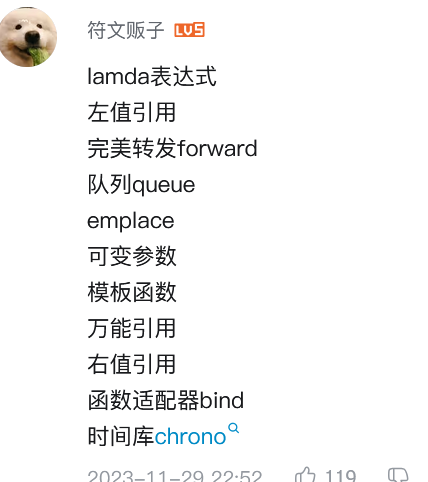
上述代码涉及到的C++知识点如下:

 浙公网安备 33010602011771号