jvm提供的语法糖
一、默认构造方法
如果不写无参构造方法,在编译完的字节码中会自动填上无参构造方法。
二、自动拆箱装箱
    Integer  a = 4;(自动装箱)

    int  b  =  a;(自动拆箱)
三、泛型擦除
在编译期会将所有的泛型去处,在编译后的字节码中一直会以Object类型存在,在调用的时候会使用 jvm 指令 checkcast 将Object类型强制转换为泛型类。
    List<Integer> a = new ArrayList<>();
     a.add(10); //实际上调用的是 a.add(Object o)
    Integer b = a.get(0);  //实际上调用的是 Obejct e = a.get(int index);
                           Integer b = (Integer)e;

    int c = a.get(0);  //实际上调用的是 Obejct e = a.get(int index);
                           int c = (Integer)e.intValue();
但是字节码文件中的局部变量类型表中的泛型不会被擦除,里面存放了参数类型的泛型

四、泛型反射
五、可变参数
jdk1.5添加的新特性
    //方法中的String ... arg 等价于String[]  arg;
    public void get(String ... arg){

    }
六、foreach
   int[] a = {1,2,4};
    for(int b : a){
       System.out.println(b);
    }
编译后的代码如下
   int[] a = new int[]{1,2,4};
    for(int i=0;i < a.length ; i++){
       System.out.println(a[i]);
    }
七、switch可填写String
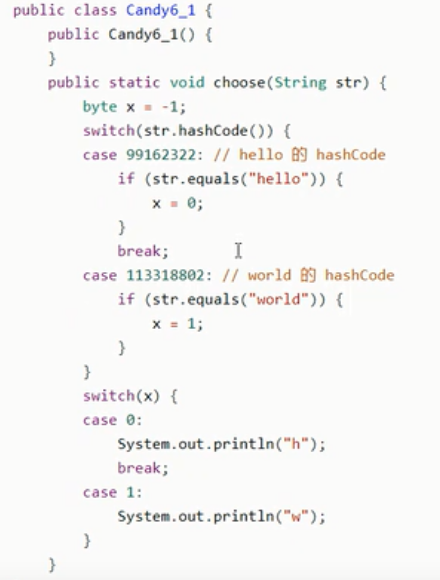
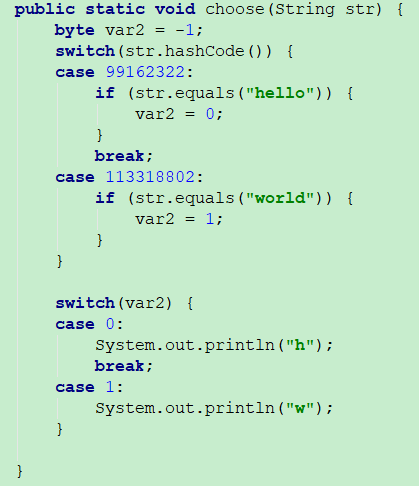
jdk1.7出现的。实际上switch是不支持String的,只不过编译后会计算相应的hashCode,根据相应的hashCode找对应的字符串,为了避免hash冲突,再进行equals对比字符串是否相同。
public static void choose(String str){
    switch(str){
    case "hello" :
      System.out.println("h");
      break;
   case "world":
      System.out.println("w");
      break;
   }
}
编译后的代码如下:
八、switch可填写enum
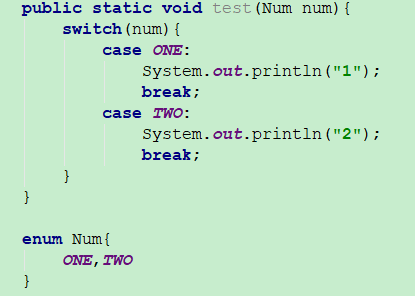
jdk1.7出现的
编译后
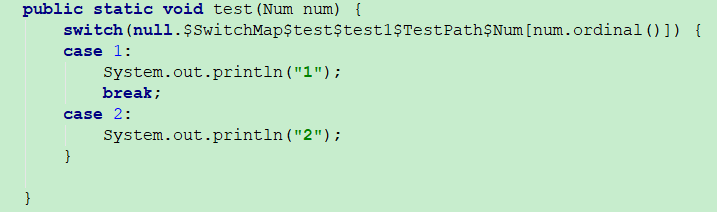
其中的合成类是不可见的拆出来大概如下:
static class $MAP{
    static int[] map = new int[2];
        static {
              map[Num.ONE.ordinal()] = 1;
              map[Num.TWO.ordinal()] = 2;
        }
    }
//null.$SwitchMap$test$test1$TestPath$Num[num.ordinal()]可以替换为如下代码以供参考
  $MAP.map[num.ordinal]
九、枚举
编译后会出现隐藏的 values() 方法,以及 valueOf() 方法,并且有私有的构造方法,也是简易的单例模式。
十、try-with-resources
作用是会自动关闭资源占用,前提是资源对象需要实现AutoCloseable接口,例如InputStream、OutputStream、Connection、Statement等接口都实现了AutoCloseable,使用try-with-resources可以不用写finally语句块,编译器会帮助生成关闭资源代码:
try(资源变量 = 创建资源对象){

}catch(){

}
如下代码:
public static void main(String[] args) {

        try(InputStream is = new FileInputStream("test.txt")){
            System.out.println(is);
        }catch(Exception o){
            o.printStackTrace();
        }
}
编译过后为
public static void main(String[] args) {
    try {
        InputStream is = new FileInputStream("test.txt");
        Throwable var2 = null;
            try {
                System.out.println(is);
            } catch (Throwable var12) {
                var2 = var12;//var2为我们代码出现的异常
                throw var12;
            } finally {
                if (is != null) {//判断资源不为空
                    if (var2 != null) {//判断我们代码是否有异常
                        try {
                            is.close();
                        } catch (Throwable var11) {
                            var2.addSuppressed(var11);//如果close方法出现异常,作为被压制异常添加
                        }
                    } else {
                        is.close();//如果我们代码没有异常,close出现的异常就是最后catch抓住的异常
                    }
                }

            }
        } catch (Exception var14) {
            var14.printStackTrace();
        }

    }

 浙公网安备 33010602011771号