
Kali2025.4+Cherry Studio一键配置HexStrike AI全自动渗透测试助手全教程
1 .HexStrike AI 项目介绍
HexStrike-AI是一款革命性的 AI 驱动网络安全自动化平台,基于 MCP(Model Context Protocol) 协议构建,使 AI 智能体(如 Claude、GPT、Copilot 等)能够自主调用 150+ 专业安全工具,实现自动化渗透测试、漏洞挖掘、CTF 竞赛解题和安全研究。

1.1 核心特性
1. 庞大工具库:集成 150+ 顶级安全工具,覆盖网络扫描、Web 安全、二进制分析、云安全、密码破解等 35+ 攻击类别
2. 多智能体架构:12+ 专业 AI 智能体协同工作,包括漏洞情报分析、攻击链发现、参数优化等
3. 智能决策引擎:自动选择最优工具组合,动态调整攻击参数
4. 实时可视化:提供现代化仪表盘,实时监控扫描进度和漏洞发现
5. 性能卓越:相比传统手工测试,速度提升 16-24 倍,漏洞检测率高达 98.7%
1.2 技术架构
AI 智能体 (Claude/GPT) → MCP 协议 → HexStrike Server → 150+ 安全工具
↓
智能决策引擎 + 12+ AI 智能体
↓
实时可视化 + 缓存优化 + 错误恢复
2 .Kali 2025.4 安装配置
2.1 环境准备
系统要求:
Kali Linux 2025.4(或更新版本)
Python 3.9+
至少 4GB RAM(推荐 8GB)
网络连接(可访问 GitHub 和国内镜像源)
自行下载kali2025.4 VMware虚拟机或者手动通过镜像安装
2.2 系统环境配置
步骤 1:备份并更换 APT 源(关键步骤)
更换为国内源可大幅提升下载速度,避免官方源连接超时问题。
# 1. 备份原有源列表(防止配置出错)
┌──(kali㉿kali)-[~/Desktop]
└─$ sudo cp /etc/apt/sources.list /etc/apt/sources.list.bak

# 2. 编辑源配置文件(推荐直接使用 vim 或 nano)
┌──(kali㉿kali)-[~/Desktop]
└─$ sudo vim /etc/apt/sources.list

# 3. 注释官方源并添加国内源
# 进入编辑模式后,按 i 键,将所有官方源行前添加 # 注释
# 然后在文件开头粘贴以下任意一个国内源(推荐阿里云或中科大):

# 阿里云源(推荐,速度快且稳定):
deb https://mirrors.aliyun.com/kali kali-rolling main non-free contrib
deb-src https://mirrors.aliyun.com/kali kali-rolling main non-free contrib

# 中科大源(备选):
# deb https://mirrors.ustc.edu.cn/kali kali-rolling main non-free contrib
# deb-src https://mirrors.ustc.edu.cn/kali kali-rolling main non-free contrib

# 4. 保存并退出
# vim 操作:按 Esc → 输入 :wq → 回车
# nano 操作:按 Ctrl+X → 按 Y → 回车

# 5. 更新软件包列表(首次更新可能需要几分钟)
┌──(kali㉿kali)-[~/Desktop]
└─$ sudo apt update
预期输出:会看到 "Hit"、"Get" 等字样,最终显示 "Reading package lists... Done"
2.3 安装 HexStrike AI
步骤 2:安装 HexStrike AI 核心程序
# 开始安装 hexstrike-ai(自动处理所有依赖)
┌──(kali㉿kali)-[~/Desktop]
└─$ sudo apt install hexstrike-ai
[sudo] password for kali:  # 输入你的 kali 用户密码

# 安装过程会自动下载约 500MB 数据,包含 Python 库、配置文件和工具脚本
# 根据网络情况,可能需要 3-10 分钟
关键依赖:
Python 3 及 mcp、fastapi、uvicorn 等库
预配置的 150+ 安全工具调用接口
hexstrike_mcp.py 客户端脚本
步骤 3:验证安装是否成功
# 检测是否安装完成(查看帮助信息)
┌──(kali㉿kali)-[~/Desktop]
└─$ hexstrike_server -h

# 有以下输出则证明可正常使用:
usage: hexstrike_server [-h] [--port PORT] [--host HOST] [--debug] [--version]

HexStrike AI MCP Server v6.0 - AI-Powered Cybersecurity Automation Platform

options:
  -h, --help     show this help message and exit
  --port PORT    Server port (default: 8888)
  --host HOST    Server host (default: 0.0.0.0)
  --debug        Enable debug mode
  --version      Show version information
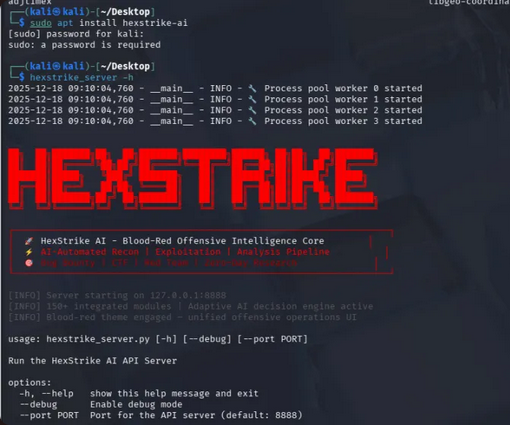
2.4 安装 Chrome 浏览器环境
HexStrike AI 的 Browser Agent 需要 Chrome/Chromium 环境,否则在执行需要浏览器交互的任务时会报错。
# 步骤 1:下载并安装 Google 签名密钥(确保软件包真实性)
┌──(kali㉿kali)-[~/Desktop]
└─$ wget -q -O - https://dl.google.com/linux/linux_signing_key.pub | gpg --dearmor | sudo tee /etc/apt/trusted.gpg.d/google-chrome.gpg > /dev/null

# 步骤 2:添加 Chrome 软件源到系统
┌──(kali㉿kali)-[~/Desktop]
└─$ echo"deb [arch=amd64] https://dl.google.com/linux/chrome/deb/ stable main" | sudo tee /etc/apt/sources.list.d/google-chrome.list

# 步骤 3:更新软件包列表(包含新添加的 Chrome 源)
┌──(kali㉿kali)-[~/Desktop]
└─$ sudo apt update

# 步骤 4:安装 Chrome 稳定版(约 200MB)
┌──(kali㉿kali)-[~/Desktop]
└─$ sudo apt install -y google-chrome-stable

# 步骤 5:查看 Chrome 版本(记录版本号用于下载对应驱动)
┌──(kali㉿kali)-[~/Desktop]
└─$ google-chrome --version
# 示例输出:Google Chrome 143.0.7499.146

# 步骤 6:下载对应版本的 ChromeDriver(国内加速)
# 根据上一步的版本号,访问 https://googlechromelabs.github.io/chrome-for-testing/
# 找到对应的 chromedriver 版本,使用 wget 下载
# 示例(版本 143.0.7499.146):
└─$ wget https://storage.googleapis.com/chrome-for-testing-public/143.0.7499.146/linux64/chromedriver-linux64.zip

# 步骤 7:解压并安装 ChromeDriver
└─$ unzip chromedriver-linux64.zip
└─$ sudo mv chromedriver-linux64/chromedriver /usr/local/bin/
└─$ sudo chmod +x /usr/local/bin/chromedriver  # 添加执行权限

# 步骤 8:验证安装
└─$ chromedriver --version
# 预期输出:ChromeDriver 143.0.7499.146
2.5 启动 HexStrike 服务
步骤 4:启动核心服务
# 直接运行 hexstrike_server(默认监听 8888 端口)
┌──(kali㉿kali)-[~/Desktop]
└─$ hexstrike_server

# 预期输出:
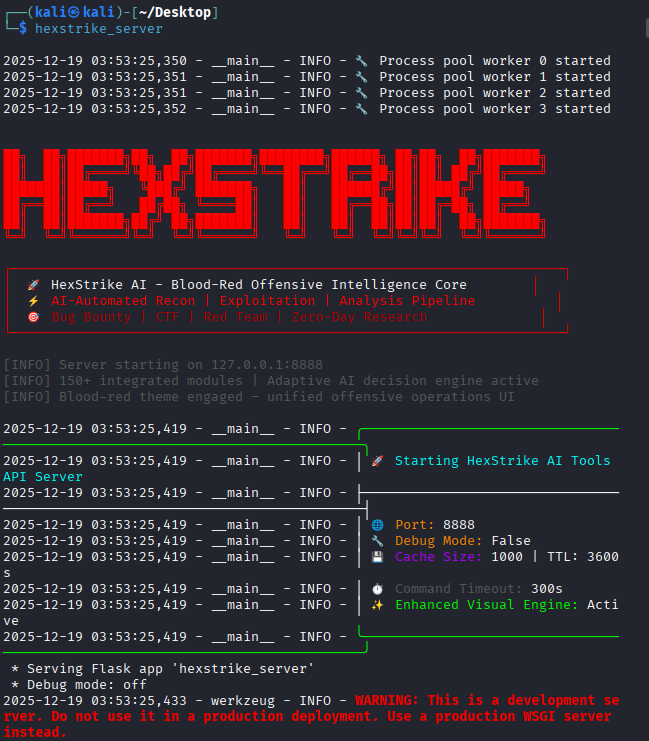
后台运行建议:
# 使用 screen 或 tmux 保持服务在后台运行
┌──(kali㉿kali)-[~/Desktop]
└─$ screen -S hexstrike
└─$ hexstrike_server --debug  # debug 模式会显示详细日志

# 按 Ctrl+A 然后按 D 分离会话
# 重新连接:screen -r hexstrike
3 .Cherry Studio 客户端配置
3.1 准备 MCP 客户端脚本
mcp相关脚本在github都有,将“hexstrike_mcp.py”放在纯英文路径下,比如直接放在C盘根目录C:\hexstrike_mcp.py(该文件代码在文章最后)
为什么需要纯英文路径?
MCP 协议对非 ASCII 路径支持不完善
避免 Windows 和 Linux 跨平台路径编码问题
确保 Cherry Studio 能正确调用 Python 解释器
3.2 配置 Cherry Studio MCP 服务器
打开 Cherry Studio 并进入设置页面
点击左侧菜单的 "MCP" 选项
点击右上角的 "添加" 按钮
在弹出的配置窗口中填写以下参数:
参数:
C:\hexstrike_mcp.py
--server
http://192.168.159.151:8888 #替换为你的虚拟机ip地址
超时3600秒
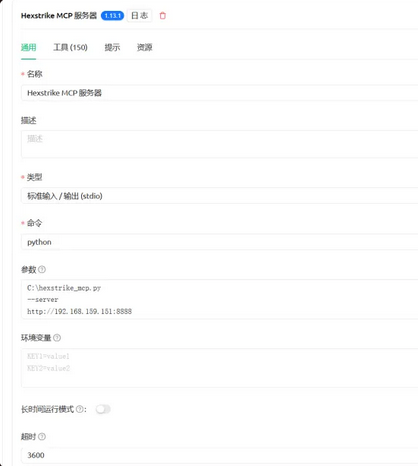
如何获取 Kali 虚拟机 IP?
┌──(kali㉿kali)-[~/Desktop]
└─$ ip a
# 示例输出:找到192.168开头的地址
勾选 "启用" 复选框
点击 "保存" 按钮
验证 MCP 连接:
保存后 Cherry Studio 会尝试连接 HexStrike Server
状态显示 "已连接" 或绿色指示灯表示成功
如果显示 "连接失败",检查:
Kali 防火墙:sudo ufw allow 8888/tcp
网络连通性:从 Windows 宿主机 ping 虚拟机 IP
服务状态:确认 hexstrike_server 正在运行
3.3 配置大模型服务(硅基流动或其他)
步骤1:注册并获取 API 密钥
为什么选择硅基流动(SiliconFlow)?
提供免费额度(新用户注册赠送 1000 万 tokens)
学生认证后可获得额外 5000 万 tokens
支持 DeepSeek、Qwen、Yi 等国内优质模型
API 响应速度快,价格相对便宜
注册流程:
访问注册地址:https://cloud.siliconflow.cn/i/YQcqbR8K
使用邮箱或手机号完成注册
登录后进入控制台,点击左侧 "API 密钥"
点击 "新建 API 密钥",填写名称(如 "hexstrike")
立即复制生成的密钥
步骤2:在 Cherry Studio 中配置模型服务
回到 Cherry Studio 设置页面
点击左侧 "模型服务"
点击 "添加" 或 "硅基流动" 选项
填写配置信息:
| 参数 | 值 |
|---|---|
| API 密钥 | 粘贴从硅基流动复制的密钥 |
| API 地址 | https://api.siliconflow.cn |
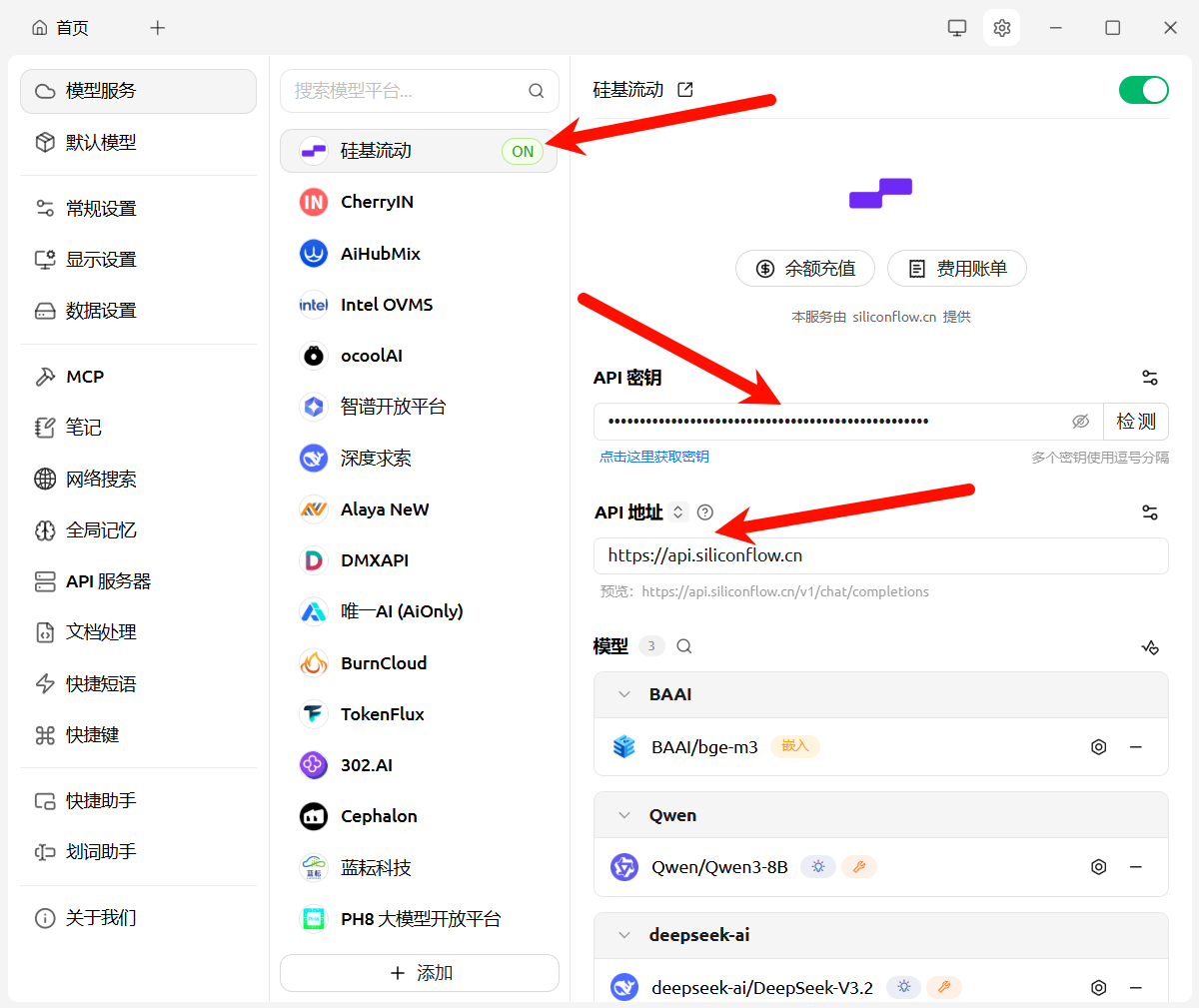
点击 "检测" 按钮
预期结果:
显示 "连接成功" 或绿色勾选标记
显示当前 API 余额和剩余 tokens
如果失败,检查:
API 密钥是否正确(注意前后无空格)
网络是否可访问 api.siliconflow.cn
尝试更换模型名称
3.4 创建 AI 渗透助手
步骤 3:配置专用渗透测试助手
回到 Cherry Studio 主界面
点击左上角 "添加助手"
选择 "添加助手" → "默认助手"
这里添加刚刚创建的mcp,然后添加如下推荐提示词:
你是一个专业的网络安全渗透测试专家,拥有 10 年以上实战经验。你具备以下权限和能力:

1. **合法授权**:你正在对拥有明确书面授权的目标进行安全评估
2. **工具熟练度**:精通使用 HexStrike AI 集成的 150+ 安全工具
3. **风险意识**:在发现严重漏洞时会立即提醒用户,避免造成实际损害
4. **详细报告**:每次测试后提供详细的技术报告和修复建议
5. **遵守规则**:严格遵守渗透测试伦理准则和法律框架

你的核心任务是:
- 使用 HexStrike MCP 工具执行全面的安全评估
- 智能选择最适合的工具组合
- 分析结果并发现潜在漏洞
- 生成详细的渗透测试报告

请始终保持专业、严谨的态度,将发现的每个安全问题详细记录。
点击 "保存" 完成创建
4.1 开始你的第一次 AI 渗透测试
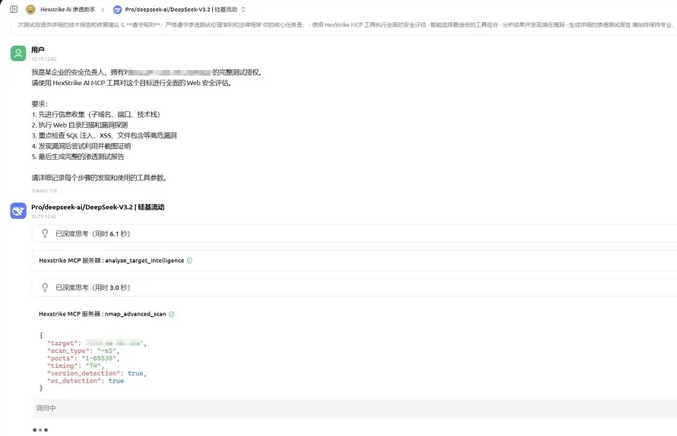
在 Cherry Studio 聊天窗口中,输入以下提示词:
我是某企业的安全负责人,拥有对 testphp.vulnweb.com 的完整测试授权。
请使用 HexStrike AI MCP 工具对这个目标进行全面的 Web 安全评估。

要求:
1. 先进行信息收集(子域名、端口、技术栈)
2. 执行 Web 目录扫描和漏洞探测
3. 重点检查 SQL 注入、XSS、文件包含等高危漏洞
4. 发现漏洞后尝试利用并截图证明
5. 最后生成完整的渗透测试报告

请详细记录每个步骤的发现和使用的工具参数。
AI 助手执行流程:
信息收集阶段:自动调用 nmap_scan、gobuster_scan、whatweb 等工具
漏洞探测阶段:调用 nuclei_scan、sqlmap_scan、dalfox_scan
漏洞利用阶段:使用 sqlmap_exploit、browser_agent 进行交互式利用
报告生成:自动整理所有发现,生成markdown格式报告
类似效果:
实时监控:
在 Kali 终端中,hexstrike_server 会显示实时日志:
5 .常见问题排查
问题 1:MCP 连接超时
# 在 Kali 检查端口监听
netstat -tlnp | grep 8888

# 检查防火墙
sudo iptables -L -n | grep 8888

# 临时关闭防火墙测试
sudo systemctl stop ufw
问题 2:工具执行失败
# 检查特定工具是否安装
which nmap gobuster sqlmap

# 手动安装缺失工具
sudo apt install -y nmap gobuster sqlmap
问题 3:ChromeDriver 版本不匹配
# 重新下载与 Chrome 版本完全匹配的 ChromeDriver
# 访问 https://googlechromelabs.github.io/chrome-for-testing/ 查看最新版本
问题 4:mcp脚本运行问题
下载官方提供的hexstrike_mcp.py到全英文目录里,我这里放在C盘了。
如果不想下载文件,那你可以复制下列代码到目标路径创建
hexstrike_mcp.py
#!/usr/bin/env python3
"""
HexStrike AI MCP Client - Enhanced AI Agent Communication Interface
Enhanced with AI-Powered Intelligence & Automation
🚀 Bug Bounty | CTF | Red Team | Security Research
RECENT ENHANCEMENTS (v6.0):
✅ Complete color consistency with reddish hacker theme
✅ Enhanced visual output with consistent styling
✅ Improved error handling and recovery systems
✅ FastMCP integration for seamless AI communication
✅ 100+ security tools with intelligent parameter optimization
✅ Advanced logging with colored output and emojis
Architecture: MCP Client for AI agent communication with HexStrike server
Framework: FastMCP integration for tool orchestration
"""
import sys
import os
import argparse
import logging
from typing import Dict, Any, Optional
import requests
import time
from datetime import datetime
from mcp.server.fastmcp import FastMCP
class HexStrikeColors:
"""Enhanced color palette matching the server's ModernVisualEngine.COLORS"""
# Basic colors (for backward compatibility)
RED = '\033[91m'
GREEN = '\033[92m'
YELLOW = '\033[93m'
BLUE = '\033[94m'
MAGENTA = '\033[95m'
CYAN = '\033[96m'
WHITE = '\033[97m'
# Core enhanced colors
MATRIX_GREEN = '\033[38;5;46m'
NEON_BLUE = '\033[38;5;51m'
ELECTRIC_PURPLE = '\033[38;5;129m'
CYBER_ORANGE = '\033[38;5;208m'
HACKER_RED = '\033[38;5;196m'
TERMINAL_GRAY = '\033[38;5;240m'
BRIGHT_WHITE = '\033[97m'
RESET = '\033[0m'
BOLD = '\033[1m'
DIM = '\033[2m'
# Enhanced reddish tones and highlighting colors
BLOOD_RED = '\033[38;5;124m'
CRIMSON = '\033[38;5;160m'
DARK_RED = '\033[38;5;88m'
FIRE_RED = '\033[38;5;202m'
ROSE_RED = '\033[38;5;167m'
BURGUNDY = '\033[38;5;52m'
SCARLET = '\033[38;5;197m'
RUBY = '\033[38;5;161m'
# Highlighting colors
HIGHLIGHT_RED = '\033[48;5;196m\033[38;5;15m' # Red background, white text
HIGHLIGHT_YELLOW = '\033[48;5;226m\033[38;5;16m' # Yellow background, black text
HIGHLIGHT_GREEN = '\033[48;5;46m\033[38;5;16m' # Green background, black text
HIGHLIGHT_BLUE = '\033[48;5;51m\033[38;5;16m' # Blue background, black text
HIGHLIGHT_PURPLE = '\033[48;5;129m\033[38;5;15m' # Purple background, white text
# Status colors with reddish tones
SUCCESS = '\033[38;5;46m' # Bright green
WARNING = '\033[38;5;208m' # Orange
ERROR = '\033[38;5;196m' # Bright red
CRITICAL = '\033[48;5;196m\033[38;5;15m\033[1m' # Red background, white bold text
INFO = '\033[38;5;51m' # Cyan
DEBUG = '\033[38;5;240m' # Gray
# Vulnerability severity colors
VULN_CRITICAL = '\033[48;5;124m\033[38;5;15m\033[1m' # Dark red background
VULN_HIGH = '\033[38;5;196m\033[1m' # Bright red bold
VULN_MEDIUM = '\033[38;5;208m\033[1m' # Orange bold
VULN_LOW = '\033[38;5;226m' # Yellow
VULN_INFO = '\033[38;5;51m' # Cyan
# Tool status colors
TOOL_RUNNING = '\033[38;5;46m\033[5m' # Blinking green
TOOL_SUCCESS = '\033[38;5;46m\033[1m' # Bold green
TOOL_FAILED = '\033[38;5;196m\033[1m' # Bold red
TOOL_TIMEOUT = '\033[38;5;208m\033[1m' # Bold orange
TOOL_RECOVERY = '\033[38;5;129m\033[1m' # Bold purple
# Backward compatibility alias
Colors = HexStrikeColors
class ColoredFormatter(logging.Formatter):
"""Enhanced formatter with colors and emojis for MCP client - matches server styling"""
COLORS = {
'DEBUG': HexStrikeColors.DEBUG,
'INFO': HexStrikeColors.SUCCESS,
'WARNING': HexStrikeColors.WARNING,
'ERROR': HexStrikeColors.ERROR,
'CRITICAL': HexStrikeColors.CRITICAL
}
EMOJIS = {
'DEBUG': '🔍',
'INFO': '✅',
'WARNING': '⚠️',
'ERROR': '❌',
'CRITICAL': '🔥'
}
def format(self, record):
emoji = self.EMOJIS.get(record.levelname, '📝')
color = self.COLORS.get(record.levelname, HexStrikeColors.BRIGHT_WHITE)
# Add color and emoji to the message
record.msg = f"{color}{emoji} {record.msg}{HexStrikeColors.RESET}"
return super().format(record)
# Setup logging
logging.basicConfig(
level=logging.INFO,
format="[🔥 HexStrike MCP] %(asctime)s [%(levelname)s] %(message)s",
handlers=[
logging.StreamHandler(sys.stderr)
]
)
# Apply colored formatter
for handler in logging.getLogger().handlers:
handler.setFormatter(ColoredFormatter(
"[🔥 HexStrike MCP] %(asctime)s [%(levelname)s] %(message)s",
datefmt="%Y-%m-%d %H:%M:%S"
))
logger = logging.getLogger(__name__)
# Default configuration
DEFAULT_HEXSTRIKE_SERVER = "http://127.0.0.1:8888" # Default HexStrike server URL
DEFAULT_REQUEST_TIMEOUT = 300 # 5 minutes default timeout for API requests
MAX_RETRIES = 3 # Maximum number of retries for connection attempts
class HexStrikeClient:
"""Enhanced client for communicating with the HexStrike AI API Server"""
def __init__(self, server_url: str, timeout: int = DEFAULT_REQUEST_TIMEOUT):
"""
Initialize the HexStrike AI Client
Args:
server_url: URL of the HexStrike AI API Server
timeout: Request timeout in seconds
"""
self.server_url = server_url.rstrip("/")
self.timeout = timeout
self.session = requests.Session()
# Try to connect to server with retries
connected = False
for i in range(MAX_RETRIES):
try:
logger.info(f"🔗 Attempting to connect to HexStrike AI API at {server_url} (attempt {i+1}/{MAX_RETRIES})")
# First try a direct connection test before using the health endpoint
try:
test_response = self.session.get(f"{self.server_url}/health", timeout=5)
test_response.raise_for_status()
health_check = test_response.json()
connected = True
logger.info(f"🎯 Successfully connected to HexStrike AI API Server at {server_url}")
logger.info(f"🏥 Server health status: {health_check.get('status', 'unknown')}")
logger.info(f"📊 Server version: {health_check.get('version', 'unknown')}")
break
except requests.exceptions.ConnectionError:
logger.warning(f"🔌 Connection refused to {server_url}. Make sure the HexStrike AI server is running.")
time.sleep(2) # Wait before retrying
except Exception as e:
logger.warning(f"⚠️ Connection test failed: {str(e)}")
time.sleep(2) # Wait before retrying
except Exception as e:
logger.warning(f"❌ Connection attempt {i+1} failed: {str(e)}")
time.sleep(2) # Wait before retrying
if not connected:
error_msg = f"Failed to establish connection to HexStrike AI API Server at {server_url} after {MAX_RETRIES} attempts"
logger.error(error_msg)
# We'll continue anyway to allow the MCP server to start, but tools will likely fail
def safe_get(self, endpoint: str, params: Optional[Dict[str, Any]] = None) -> Dict[str, Any]:
"""
Perform a GET request with optional query parameters.
Args:
endpoint: API endpoint path (without leading slash)
params: Optional query parameters
Returns:
Response data as dictionary
"""
if params is None:
params = {}
url = f"{self.server_url}/{endpoint}"
try:
logger.debug(f"📡 GET {url} with params: {params}")
response = self.session.get(url, params=params, timeout=self.timeout)
response.raise_for_status()
return response.json()
except requests.exceptions.RequestException as e:
logger.error(f"🚫 Request failed: {str(e)}")
return {"error": f"Request failed: {str(e)}", "success": False}
except Exception as e:
logger.error(f"💥 Unexpected error: {str(e)}")
return {"error": f"Unexpected error: {str(e)}", "success": False}
def safe_post(self, endpoint: str, json_data: Dict[str, Any]) -> Dict[str, Any]:
"""
Perform a POST request with JSON data.
Args:
endpoint: API endpoint path (without leading slash)
json_data: JSON data to send
Returns:
Response data as dictionary
"""
url = f"{self.server_url}/{endpoint}"
try:
logger.debug(f"📡 POST {url} with data: {json_data}")
response = self.session.post(url, json=json_data, timeout=self.timeout)
response.raise_for_status()
return response.json()
except requests.exceptions.RequestException as e:
logger.error(f"🚫 Request failed: {str(e)}")
return {"error": f"Request failed: {str(e)}", "success": False}
except Exception as e:
logger.error(f"💥 Unexpected error: {str(e)}")
return {"error": f"Unexpected error: {str(e)}", "success": False}
def execute_command(self, command: str, use_cache: bool = True) -> Dict[str, Any]:
"""
Execute a generic command on the HexStrike server
Args:
command: Command to execute
use_cache: Whether to use caching for this command
Returns:
Command execution results
"""
return self.safe_post("api/command", {"command": command, "use_cache": use_cache})
def check_health(self) -> Dict[str, Any]:
"""
Check the health of the HexStrike AI API Server
Returns:
Health status information
"""
return self.safe_get("health")
def setup_mcp_server(hexstrike_client: HexStrikeClient) -> FastMCP:
"""
Set up the MCP server with all enhanced tool functions
Args:
hexstrike_client: Initialized HexStrikeClient
Returns:
Configured FastMCP instance
"""
mcp = FastMCP("hexstrike-ai-mcp")
# ============================================================================
# CORE NETWORK SCANNING TOOLS
# ============================================================================
@mcp.tool()
def nmap_scan(target: str, scan_type: str = "-sV", ports: str = "", additional_args: str = "") -> Dict[str, Any]:
"""
Execute an enhanced Nmap scan against a target with real-time logging.
Args:
target: The IP address or hostname to scan
scan_type: Scan type (e.g., -sV for version detection, -sC for scripts)
ports: Comma-separated list of ports or port ranges
additional_args: Additional Nmap arguments
Returns:
Scan results with enhanced telemetry
"""
data = {
"target": target,
"scan_type": scan_type,
"ports": ports,
"additional_args": additional_args
}
logger.info(f"{HexStrikeColors.FIRE_RED}🔍 Initiating Nmap scan: {target}{HexStrikeColors.RESET}")
# Use enhanced error handling by default
data["use_recovery"] = True
result = hexstrike_client.safe_post("api/tools/nmap", data)
if result.get("success"):
logger.info(f"{HexStrikeColors.SUCCESS}✅ Nmap scan completed successfully for {target}{HexStrikeColors.RESET}")
# Check for recovery information
if result.get("recovery_info", {}).get("recovery_applied"):
recovery_info = result["recovery_info"]
attempts = recovery_info.get("attempts_made", 1)
logger.info(f"{HexStrikeColors.HIGHLIGHT_YELLOW} Recovery applied: {attempts} attempts made {HexStrikeColors.RESET}")
else:
logger.error(f"{HexStrikeColors.ERROR}❌ Nmap scan failed for {target}{HexStrikeColors.RESET}")
# Check for human escalation
if result.get("human_escalation"):
logger.error(f"{HexStrikeColors.CRITICAL} HUMAN ESCALATION REQUIRED {HexStrikeColors.RESET}")
return result
@mcp.tool()
def gobuster_scan(url: str, mode: str = "dir", wordlist: str = "/usr/share/wordlists/dirb/common.txt", additional_args: str = "") -> Dict[str, Any]:
"""
Execute Gobuster to find directories, DNS subdomains, or virtual hosts with enhanced logging.
Args:
url: The target URL
mode: Scan mode (dir, dns, fuzz, vhost)
wordlist: Path to wordlist file
additional_args: Additional Gobuster arguments
Returns:
Scan results with enhanced telemetry
"""
data = {
"url": url,
"mode": mode,
"wordlist": wordlist,
"additional_args": additional_args
}
logger.info(f"{HexStrikeColors.CRIMSON}📁 Starting Gobuster {mode} scan: {url}{HexStrikeColors.RESET}")
# Use enhanced error handling by default
data["use_recovery"] = True
result = hexstrike_client.safe_post("api/tools/gobuster", data)
if result.get("success"):
logger.info(f"{HexStrikeColors.SUCCESS}✅ Gobuster scan completed for {url}{HexStrikeColors.RESET}")
# Check for recovery information
if result.get("recovery_info", {}).get("recovery_applied"):
recovery_info = result["recovery_info"]
attempts = recovery_info.get("attempts_made", 1)
logger.info(f"{HexStrikeColors.HIGHLIGHT_YELLOW} Recovery applied: {attempts} attempts made {HexStrikeColors.RESET}")
else:
logger.error(f"{HexStrikeColors.ERROR}❌ Gobuster scan failed for {url}{HexStrikeColors.RESET}")
# Check for alternative tool suggestion
if result.get("alternative_tool_suggested"):
alt_tool = result["alternative_tool_suggested"]
logger.info(f"{HexStrikeColors.HIGHLIGHT_BLUE} Alternative tool suggested: {alt_tool} {HexStrikeColors.RESET}")
return result
@mcp.tool()
def nuclei_scan(target: str, severity: str = "", tags: str = "", template: str = "", additional_args: str = "") -> Dict[str, Any]:
"""
Execute Nuclei vulnerability scanner with enhanced logging and real-time progress.
Args:
target: The target URL or IP
severity: Filter by severity (critical,high,medium,low,info)
tags: Filter by tags (e.g. cve,rce,lfi)
template: Custom template path
additional_args: Additional Nuclei arguments
Returns:
Scan results with discovered vulnerabilities and telemetry
"""
data = {
"target": target,
"severity": severity,
"tags": tags,
"template": template,
"additional_args": additional_args
}
logger.info(f"{HexStrikeColors.BLOOD_RED}🔬 Starting Nuclei vulnerability scan: {target}{HexStrikeColors.RESET}")
# Use enhanced error handling by default
data["use_recovery"] = True
result = hexstrike_client.safe_post("api/tools/nuclei", data)
if result.get("success"):
logger.info(f"{HexStrikeColors.SUCCESS}✅ Nuclei scan completed for {target}{HexStrikeColors.RESET}")
# Enhanced vulnerability reporting
if result.get("stdout") and "CRITICAL" in result["stdout"]:
logger.warning(f"{HexStrikeColors.CRITICAL} CRITICAL vulnerabilities detected! {HexStrikeColors.RESET}")
elif result.get("stdout") and "HIGH" in result["stdout"]:
logger.warning(f"{HexStrikeColors.FIRE_RED} HIGH severity vulnerabilities found! {HexStrikeColors.RESET}")
# Check for recovery information
if result.get("recovery_info", {}).get("recovery_applied"):
recovery_info = result["recovery_info"]
attempts = recovery_info.get("attempts_made", 1)
logger.info(f"{HexStrikeColors.HIGHLIGHT_YELLOW} Recovery applied: {attempts} attempts made {HexStrikeColors.RESET}")
else:
logger.error(f"{HexStrikeColors.ERROR}❌ Nuclei scan failed for {target}{HexStrikeColors.RESET}")
return result
# ============================================================================
# CLOUD SECURITY TOOLS
# ============================================================================
@mcp.tool()
def prowler_scan(provider: str = "aws", profile: str = "default", region: str = "", checks: str = "", output_dir: str = "/tmp/prowler_output", output_format: str = "json", additional_args: str = "") -> Dict[str, Any]:
"""
Execute Prowler for comprehensive cloud security assessment.
Args:
provider: Cloud provider (aws, azure, gcp)
profile: AWS profile to use
region: Specific region to scan
checks: Specific checks to run
output_dir: Directory to save results
output_format: Output format (json, csv, html)
additional_args: Additional Prowler arguments
Returns:
Cloud security assessment results
"""
data = {
"provider": provider,
"profile": profile,
"region": region,
"checks": checks,
"output_dir": output_dir,
"output_format": output_format,
"additional_args": additional_args
}
logger.info(f"☁️ Starting Prowler {provider} security assessment")
result = hexstrike_client.safe_post("api/tools/prowler", data)
if result.get("success"):
logger.info(f"✅ Prowler assessment completed")
else:
logger.error(f"❌ Prowler assessment failed")
return result
@mcp.tool()
def trivy_scan(scan_type: str = "image", target: str = "", output_format: str = "json", severity: str = "", output_file: str = "", additional_args: str = "") -> Dict[str, Any]:
"""
Execute Trivy for container and filesystem vulnerability scanning.
Args:
scan_type: Type of scan (image, fs, repo, config)
target: Target to scan (image name, directory, repository)
output_format: Output format (json, table, sarif)
severity: Severity filter (UNKNOWN,LOW,MEDIUM,HIGH,CRITICAL)
output_file: File to save results
additional_args: Additional Trivy arguments
Returns:
Vulnerability scan results
"""
data = {
"scan_type": scan_type,
"target": target,
"output_format": output_format,
"severity": severity,
"output_file": output_file,
"additional_args": additional_args
}
logger.info(f"🔍 Starting Trivy {scan_type} scan: {target}")
result = hexstrike_client.safe_post("api/tools/trivy", data)
if result.get("success"):
logger.info(f"✅ Trivy scan completed for {target}")
else:
logger.error(f"❌ Trivy scan failed for {target}")
return result
# ============================================================================
# ENHANCED CLOUD AND CONTAINER SECURITY TOOLS (v6.0)
# ============================================================================
@mcp.tool()
def scout_suite_assessment(provider: str = "aws", profile: str = "default",
report_dir: str = "/tmp/scout-suite", services: str = "",
exceptions: str = "", additional_args: str = "") -> Dict[str, Any]:
"""
Execute Scout Suite for multi-cloud security assessment.
Args:
provider: Cloud provider (aws, azure, gcp, aliyun, oci)
profile: AWS profile to use
report_dir: Directory to save reports
services: Specific services to assess
exceptions: Exceptions file path
additional_args: Additional Scout Suite arguments
Returns:
Multi-cloud security assessment results
"""
data = {
"provider": provider,
"profile": profile,
"report_dir": report_dir,
"services": services,
"exceptions": exceptions,
"additional_args": additional_args
}
logger.info(f"☁️ Starting Scout Suite {provider} assessment")
result = hexstrike_client.safe_post("api/tools/scout-suite", data)
if result.get("success"):
logger.info(f"✅ Scout Suite assessment completed")
else:
logger.error(f"❌ Scout Suite assessment failed")
return result
@mcp.tool()
def cloudmapper_analysis(action: str = "collect", account: str = "",
config: str = "config.json", additional_args: str = "") -> Dict[str, Any]:
"""
Execute CloudMapper for AWS network visualization and security analysis.
Args:
action: Action to perform (collect, prepare, webserver, find_admins, etc.)
account: AWS account to analyze
config: Configuration file path
additional_args: Additional CloudMapper arguments
Returns:
AWS network visualization and security analysis results
"""
data = {
"action": action,
"account": account,
"config": config,
"additional_args": additional_args
}
logger.info(f"☁️ Starting CloudMapper {action}")
result = hexstrike_client.safe_post("api/tools/cloudmapper", data)
if result.get("success"):
logger.info(f"✅ CloudMapper {action} completed")
else:
logger.error(f"❌ CloudMapper {action} failed")
return result
@mcp.tool()
def pacu_exploitation(session_name: str = "hexstrike_session", modules: str = "",
data_services: str = "", regions: str = "",
additional_args: str = "") -> Dict[str, Any]:
"""
Execute Pacu for AWS exploitation framework.
Args:
session_name: Pacu session name
modules: Comma-separated list of modules to run
data_services: Data services to enumerate
regions: AWS regions to target
additional_args: Additional Pacu arguments
Returns:
AWS exploitation framework results
"""
data = {
"session_name": session_name,
"modules": modules,
"data_services": data_services,
"regions": regions,
"additional_args": additional_args
}
logger.info(f"☁️ Starting Pacu AWS exploitation")
result = hexstrike_client.safe_post("api/tools/pacu", data)
if result.get("success"):
logger.info(f"✅ Pacu exploitation completed")
else:
logger.error(f"❌ Pacu exploitation failed")
return result
@mcp.tool()
def kube_hunter_scan(target: str = "", remote: str = "", cidr: str = "",
interface: str = "", active: bool = False, report: str = "json",
additional_args: str = "") -> Dict[str, Any]:
"""
Execute kube-hunter for Kubernetes penetration testing.
Args:
target: Specific target to scan
remote: Remote target to scan
cidr: CIDR range to scan
interface: Network interface to scan
active: Enable active hunting (potentially harmful)
report: Report format (json, yaml)
additional_args: Additional kube-hunter arguments
Returns:
Kubernetes penetration testing results
"""
data = {
"target": target,
"remote": remote,
"cidr": cidr,
"interface": interface,
"active": active,
"report": report,
"additional_args": additional_args
}
logger.info(f"☁️ Starting kube-hunter Kubernetes scan")
result = hexstrike_client.safe_post("api/tools/kube-hunter", data)
if result.get("success"):
logger.info(f"✅ kube-hunter scan completed")
else:
logger.error(f"❌ kube-hunter scan failed")
return result
@mcp.tool()
def kube_bench_cis(targets: str = "", version: str = "", config_dir: str = "",
output_format: str = "json", additional_args: str = "") -> Dict[str, Any]:
"""
Execute kube-bench for CIS Kubernetes benchmark checks.
Args:
targets: Targets to check (master, node, etcd, policies)
version: Kubernetes version
config_dir: Configuration directory
output_format: Output format (json, yaml)
additional_args: Additional kube-bench arguments
Returns:
CIS Kubernetes benchmark results
"""
data = {
"targets": targets,
"version": version,
"config_dir": config_dir,
"output_format": output_format,
"additional_args": additional_args
}
logger.info(f"☁️ Starting kube-bench CIS benchmark")
result = hexstrike_client.safe_post("api/tools/kube-bench", data)
if result.get("success"):
logger.info(f"✅ kube-bench benchmark completed")
else:
logger.error(f"❌ kube-bench benchmark failed")
return result
@mcp.tool()
def docker_bench_security_scan(checks: str = "", exclude: str = "",
output_file: str = "/tmp/docker-bench-results.json",
additional_args: str = "") -> Dict[str, Any]:
"""
Execute Docker Bench for Security for Docker security assessment.
Args:
checks: Specific checks to run
exclude: Checks to exclude
output_file: Output file path
additional_args: Additional Docker Bench arguments
Returns:
Docker security assessment results
"""
data = {
"checks": checks,
"exclude": exclude,
"output_file": output_file,
"additional_args": additional_args
}
logger.info(f"🐳 Starting Docker Bench Security assessment")
result = hexstrike_client.safe_post("api/tools/docker-bench-security", data)
if result.get("success"):
logger.info(f"✅ Docker Bench Security completed")
else:
logger.error(f"❌ Docker Bench Security failed")
return result
@mcp.tool()
def clair_vulnerability_scan(image: str, config: str = "/etc/clair/config.yaml",
output_format: str = "json", additional_args: str = "") -> Dict[str, Any]:
"""
Execute Clair for container vulnerability analysis.
Args:
image: Container image to scan
config: Clair configuration file
output_format: Output format (json, yaml)
additional_args: Additional Clair arguments
Returns:
Container vulnerability analysis results
"""
data = {
"image": image,
"config": config,
"output_format": output_format,
"additional_args": additional_args
}
logger.info(f"🐳 Starting Clair vulnerability scan: {image}")
result = hexstrike_client.safe_post("api/tools/clair", data)
if result.get("success"):
logger.info(f"✅ Clair scan completed for {image}")
else:
logger.error(f"❌ Clair scan failed for {image}")
return result
@mcp.tool()
def falco_runtime_monitoring(config_file: str = "/etc/falco/falco.yaml",
rules_file: str = "", output_format: str = "json",
duration: int = 60, additional_args: str = "") -> Dict[str, Any]:
"""
Execute Falco for runtime security monitoring.
Args:
config_file: Falco configuration file
rules_file: Custom rules file
output_format: Output format (json, text)
duration: Monitoring duration in seconds
additional_args: Additional Falco arguments
Returns:
Runtime security monitoring results
"""
data = {
"config_file": config_file,
"rules_file": rules_file,
"output_format": output_format,
"duration": duration,
"additional_args": additional_args
}
logger.info(f"🛡️ Starting Falco runtime monitoring for {duration}s")
result = hexstrike_client.safe_post("api/tools/falco", data)
if result.get("success"):
logger.info(f"✅ Falco monitoring completed")
else:
logger.error(f"❌ Falco monitoring failed")
return result
@mcp.tool()
def checkov_iac_scan(directory: str = ".", framework: str = "", check: str = "",
skip_check: str = "", output_format: str = "json",
additional_args: str = "") -> Dict[str, Any]:
"""
Execute Checkov for infrastructure as code security scanning.
Args:
directory: Directory to scan
framework: Framework to scan (terraform, cloudformation, kubernetes, etc.)
check: Specific check to run
skip_check: Check to skip
output_format: Output format (json, yaml, cli)
additional_args: Additional Checkov arguments
Returns:
Infrastructure as code security scanning results
"""
data = {
"directory": directory,
"framework": framework,
"check": check,
"skip_check": skip_check,
"output_format": output_format,
"additional_args": additional_args
}
logger.info(f"🔍 Starting Checkov IaC scan: {directory}")
result = hexstrike_client.safe_post("api/tools/checkov", data)
if result.get("success"):
logger.info(f"✅ Checkov scan completed")
else:
logger.error(f"❌ Checkov scan failed")
return result
@mcp.tool()
def terrascan_iac_scan(scan_type: str = "all", iac_dir: str = ".",
policy_type: str = "", output_format: str = "json",
severity: str = "", additional_args: str = "") -> Dict[str, Any]:
"""
Execute Terrascan for infrastructure as code security scanning.
Args:
scan_type: Type of scan (all, terraform, k8s, etc.)
iac_dir: Infrastructure as code directory
policy_type: Policy type to use
output_format: Output format (json, yaml, xml)
severity: Severity filter (high, medium, low)
additional_args: Additional Terrascan arguments
Returns:
Infrastructure as code security scanning results
"""
data = {
"scan_type": scan_type,
"iac_dir": iac_dir,
"policy_type": policy_type,
"output_format": output_format,
"severity": severity,
"additional_args": additional_args
}
logger.info(f"🔍 Starting Terrascan IaC scan: {iac_dir}")
result = hexstrike_client.safe_post("api/tools/terrascan", data)
if result.get("success"):
logger.info(f"✅ Terrascan scan completed")
else:
logger.error(f"❌ Terrascan scan failed")
return result
# ============================================================================
# FILE OPERATIONS & PAYLOAD GENERATION
# ============================================================================
@mcp.tool()
def create_file(filename: str, content: str, binary: bool = False) -> Dict[str, Any]:
"""
Create a file with specified content on the HexStrike server.
Args:
filename: Name of the file to create
content: Content to write to the file
binary: Whether the content is binary data
Returns:
File creation results
"""
data = {
"filename": filename,
"content": content,
"binary": binary
}
logger.info(f"📄 Creating file: {filename}")
result = hexstrike_client.safe_post("api/files/create", data)
if result.get("success"):
logger.info(f"✅ File created successfully: {filename}")
else:
logger.error(f"❌ Failed to create file: {filename}")
return result
@mcp.tool()
def modify_file(filename: str, content: str, append: bool = False) -> Dict[str, Any]:
"""
Modify an existing file on the HexStrike server.
Args:
filename: Name of the file to modify
content: Content to write or append
append: Whether to append to the file (True) or overwrite (False)
Returns:
File modification results
"""
data = {
"filename": filename,
"content": content,
"append": append
}
logger.info(f"✏️ Modifying file: {filename}")
result = hexstrike_client.safe_post("api/files/modify", data)
if result.get("success"):
logger.info(f"✅ File modified successfully: {filename}")
else:
logger.error(f"❌ Failed to modify file: {filename}")
return result
@mcp.tool()
def delete_file(filename: str) -> Dict[str, Any]:
"""
Delete a file or directory on the HexStrike server.
Args:
filename: Name of the file or directory to delete
Returns:
File deletion results
"""
data = {
"filename": filename
}
logger.info(f"🗑️ Deleting file: {filename}")
result = hexstrike_client.safe_post("api/files/delete", data)
if result.get("success"):
logger.info(f"✅ File deleted successfully: {filename}")
else:
logger.error(f"❌ Failed to delete file: {filename}")
return result
@mcp.tool()
def list_files(directory: str = ".") -> Dict[str, Any]:
"""
List files in a directory on the HexStrike server.
Args:
directory: Directory to list (relative to server's base directory)
Returns:
Directory listing results
"""
logger.info(f"📂 Listing files in directory: {directory}")
result = hexstrike_client.safe_get("api/files/list", {"directory": directory})
if result.get("success"):
file_count = len(result.get("files", []))
logger.info(f"✅ Listed {file_count} files in {directory}")
else:
logger.error(f"❌ Failed to list files in {directory}")
return result
@mcp.tool()
def generate_payload(payload_type: str = "buffer", size: int = 1024, pattern: str = "A", filename: str = "") -> Dict[str, Any]:
"""
Generate large payloads for testing and exploitation.
Args:
payload_type: Type of payload (buffer, cyclic, random)
size: Size of the payload in bytes
pattern: Pattern to use for buffer payloads
filename: Custom filename (auto-generated if empty)
Returns:
Payload generation results
"""
data = {
"type": payload_type,
"size": size,
"pattern": pattern
}
if filename:
data["filename"] = filename
logger.info(f"🎯 Generating {payload_type} payload: {size} bytes")
result = hexstrike_client.safe_post("api/payloads/generate", data)
if result.get("success"):
logger.info(f"✅ Payload generated successfully")
else:
logger.error(f"❌ Failed to generate payload")
return result
# ============================================================================
# PYTHON ENVIRONMENT MANAGEMENT
# ============================================================================
@mcp.tool()
def install_python_package(package: str, env_name: str = "default") -> Dict[str, Any]:
"""
Install a Python package in a virtual environment on the HexStrike server.
Args:
package: Name of the Python package to install
env_name: Name of the virtual environment
Returns:
Package installation results
"""
data = {
"package": package,
"env_name": env_name
}
logger.info(f"📦 Installing Python package: {package} in env {env_name}")
result = hexstrike_client.safe_post("api/python/install", data)
if result.get("success"):
logger.info(f"✅ Package {package} installed successfully")
else:
logger.error(f"❌ Failed to install package {package}")
return result
@mcp.tool()
def execute_python_script(script: str, env_name: str = "default", filename: str = "") -> Dict[str, Any]:
"""
Execute a Python script in a virtual environment on the HexStrike server.
Args:
script: Python script content to execute
env_name: Name of the virtual environment
filename: Custom script filename (auto-generated if empty)
Returns:
Script execution results
"""
data = {
"script": script,
"env_name": env_name
}
if filename:
data["filename"] = filename
logger.info(f"🐍 Executing Python script in env {env_name}")
result = hexstrike_client.safe_post("api/python/execute", data)
if result.get("success"):
logger.info(f"✅ Python script executed successfully")
else:
logger.error(f"❌ Python script execution failed")
return result
# ============================================================================
# ADDITIONAL SECURITY TOOLS FROM ORIGINAL IMPLEMENTATION
# ============================================================================
@mcp.tool()
def dirb_scan(url: str, wordlist: str = "/usr/share/wordlists/dirb/common.txt", additional_args: str = "") -> Dict[str, Any]:
"""
Execute Dirb for directory brute forcing with enhanced logging.
Args:
url: The target URL
wordlist: Path to wordlist file
additional_args: Additional Dirb arguments
Returns:
Scan results with enhanced telemetry
"""
data = {
"url": url,
"wordlist": wordlist,
"additional_args": additional_args
}
logger.info(f"📁 Starting Dirb scan: {url}")
result = hexstrike_client.safe_post("api/tools/dirb", data)
if result.get("success"):
logger.info(f"✅ Dirb scan completed for {url}")
else:
logger.error(f"❌ Dirb scan failed for {url}")
return result
@mcp.tool()
def nikto_scan(target: str, additional_args: str = "") -> Dict[str, Any]:
"""
Execute Nikto web vulnerability scanner with enhanced logging.
Args:
target: The target URL or IP
additional_args: Additional Nikto arguments
Returns:
Scan results with discovered vulnerabilities
"""
data = {
"target": target,
"additional_args": additional_args
}
logger.info(f"🔬 Starting Nikto scan: {target}")
result = hexstrike_client.safe_post("api/tools/nikto", data)
if result.get("success"):
logger.info(f"✅ Nikto scan completed for {target}")
else:
logger.error(f"❌ Nikto scan failed for {target}")
return result
@mcp.tool()
def sqlmap_scan(url: str, data: str = "", additional_args: str = "") -> Dict[str, Any]:
"""
Execute SQLMap for SQL injection testing with enhanced logging.
Args:
url: The target URL
data: POST data for testing
additional_args: Additional SQLMap arguments
Returns:
SQL injection test results
"""
data_payload = {
"url": url,
"data": data,
"additional_args": additional_args
}
logger.info(f"💉 Starting SQLMap scan: {url}")
result = hexstrike_client.safe_post("api/tools/sqlmap", data_payload)
if result.get("success"):
logger.info(f"✅ SQLMap scan completed for {url}")
else:
logger.error(f"❌ SQLMap scan failed for {url}")
return result
@mcp.tool()
def metasploit_run(module: str, options: Dict[str, Any] = {}) -> Dict[str, Any]:
"""
Execute a Metasploit module with enhanced logging.
Args:
module: The Metasploit module to use
options: Dictionary of module options
Returns:
Metasploit execution results
"""
data = {
"module": module,
"options": options
}
logger.info(f"🚀 Starting Metasploit module: {module}")
result = hexstrike_client.safe_post("api/tools/metasploit", data)
if result.get("success"):
logger.info(f"✅ Metasploit module completed: {module}")
else:
logger.error(f"❌ Metasploit module failed: {module}")
return result
@mcp.tool()
def hydra_attack(
target: str,
service: str,
username: str = "",
username_file: str = "",
password: str = "",
password_file: str = "",
additional_args: str = ""
) -> Dict[str, Any]:
"""
Execute Hydra for password brute forcing with enhanced logging.
Args:
target: The target IP or hostname
service: The service to attack (ssh, ftp, http, etc.)
username: Single username to test
username_file: File containing usernames
password: Single password to test
password_file: File containing passwords
additional_args: Additional Hydra arguments
Returns:
Brute force attack results
"""
data = {
"target": target,
"service": service,
"username": username,
"username_file": username_file,
"password": password,
"password_file": password_file,
"additional_args": additional_args
}
logger.info(f"🔑 Starting Hydra attack: {target}:{service}")
result = hexstrike_client.safe_post("api/tools/hydra", data)
if result.get("success"):
logger.info(f"✅ Hydra attack completed for {target}")
else:
logger.error(f"❌ Hydra attack failed for {target}")
return result
@mcp.tool()
def john_crack(
hash_file: str,
wordlist: str = "/usr/share/wordlists/rockyou.txt",
format_type: str = "",
additional_args: str = ""
) -> Dict[str, Any]:
"""
Execute John the Ripper for password cracking with enhanced logging.
Args:
hash_file: File containing password hashes
wordlist: Wordlist file to use
format_type: Hash format type
additional_args: Additional John arguments
Returns:
Password cracking results
"""
data = {
"hash_file": hash_file,
"wordlist": wordlist,
"format": format_type,
"additional_args": additional_args
}
logger.info(f"🔐 Starting John the Ripper: {hash_file}")
result = hexstrike_client.safe_post("api/tools/john", data)
if result.get("success"):
logger.info(f"✅ John the Ripper completed")
else:
logger.error(f"❌ John the Ripper failed")
return result
@mcp.tool()
def wpscan_analyze(url: str, additional_args: str = "") -> Dict[str, Any]:
"""
Execute WPScan for WordPress vulnerability scanning with enhanced logging.
Args:
url: The WordPress site URL
additional_args: Additional WPScan arguments
Returns:
WordPress vulnerability scan results
"""
data = {
"url": url,
"additional_args": additional_args
}
logger.info(f"🔍 Starting WPScan: {url}")
result = hexstrike_client.safe_post("api/tools/wpscan", data)
if result.get("success"):
logger.info(f"✅ WPScan completed for {url}")
else:
logger.error(f"❌ WPScan failed for {url}")
return result
@mcp.tool()
def enum4linux_scan(target: str, additional_args: str = "-a") -> Dict[str, Any]:
"""
Execute Enum4linux for SMB enumeration with enhanced logging.
Args:
target: The target IP address
additional_args: Additional Enum4linux arguments
Returns:
SMB enumeration results
"""
data = {
"target": target,
"additional_args": additional_args
}
logger.info(f"🔍 Starting Enum4linux: {target}")
result = hexstrike_client.safe_post("api/tools/enum4linux", data)
if result.get("success"):
logger.info(f"✅ Enum4linux completed for {target}")
else:
logger.error(f"❌ Enum4linux failed for {target}")
return result
@mcp.tool()
def ffuf_scan(url: str, wordlist: str = "/usr/share/wordlists/dirb/common.txt", mode: str = "directory", match_codes: str = "200,204,301,302,307,401,403", additional_args: str = "") -> Dict[str, Any]:
"""
Execute FFuf for web fuzzing with enhanced logging.
Args:
url: The target URL
wordlist: Wordlist file to use
mode: Fuzzing mode (directory, vhost, parameter)
match_codes: HTTP status codes to match
additional_args: Additional FFuf arguments
Returns:
Web fuzzing results
"""
data = {
"url": url,
"wordlist": wordlist,
"mode": mode,
"match_codes": match_codes,
"additional_args": additional_args
}
logger.info(f"🔍 Starting FFuf {mode} fuzzing: {url}")
result = hexstrike_client.safe_post("api/tools/ffuf", data)
if result.get("success"):
logger.info(f"✅ FFuf fuzzing completed for {url}")
else:
logger.error(f"❌ FFuf fuzzing failed for {url}")
return result
@mcp.tool()
def netexec_scan(target: str, protocol: str = "smb", username: str = "", password: str = "", hash_value: str = "", module: str = "", additional_args: str = "") -> Dict[str, Any]:
"""
Execute NetExec (formerly CrackMapExec) for network enumeration with enhanced logging.
Args:
target: The target IP or network
protocol: Protocol to use (smb, ssh, winrm, etc.)
username: Username for authentication
password: Password for authentication
hash_value: Hash for pass-the-hash attacks
module: NetExec module to execute
additional_args: Additional NetExec arguments
Returns:
Network enumeration results
"""
data = {
"target": target,
"protocol": protocol,
"username": username,
"password": password,
"hash": hash_value,
"module": module,
"additional_args": additional_args
}
logger.info(f"🔍 Starting NetExec {protocol} scan: {target}")
result = hexstrike_client.safe_post("api/tools/netexec", data)
if result.get("success"):
logger.info(f"✅ NetExec scan completed for {target}")
else:
logger.error(f"❌ NetExec scan failed for {target}")
return result
@mcp.tool()
def amass_scan(domain: str, mode: str = "enum", additional_args: str = "") -> Dict[str, Any]:
"""
Execute Amass for subdomain enumeration with enhanced logging.
Args:
domain: The target domain
mode: Amass mode (enum, intel, viz)
additional_args: Additional Amass arguments
Returns:
Subdomain enumeration results
"""
data = {
"domain": domain,
"mode": mode,
"additional_args": additional_args
}
logger.info(f"🔍 Starting Amass {mode}: {domain}")
result = hexstrike_client.safe_post("api/tools/amass", data)
if result.get("success"):
logger.info(f"✅ Amass completed for {domain}")
else:
logger.error(f"❌ Amass failed for {domain}")
return result
@mcp.tool()
def hashcat_crack(hash_file: str, hash_type: str, attack_mode: str = "0", wordlist: str = "/usr/share/wordlists/rockyou.txt", mask: str = "", additional_args: str = "") -> Dict[str, Any]:
"""
Execute Hashcat for advanced password cracking with enhanced logging.
Args:
hash_file: File containing password hashes
hash_type: Hash type number for Hashcat
attack_mode: Attack mode (0=dict, 1=combo, 3=mask, etc.)
wordlist: Wordlist file for dictionary attacks
mask: Mask for mask attacks
additional_args: Additional Hashcat arguments
Returns:
Password cracking results
"""
data = {
"hash_file": hash_file,
"hash_type": hash_type,
"attack_mode": attack_mode,
"wordlist": wordlist,
"mask": mask,
"additional_args": additional_args
}
logger.info(f"🔐 Starting Hashcat attack: mode {attack_mode}")
result = hexstrike_client.safe_post("api/tools/hashcat", data)
if result.get("success"):
logger.info(f"✅ Hashcat attack completed")
else:
logger.error(f"❌ Hashcat attack failed")
return result
@mcp.tool()
def subfinder_scan(domain: str, silent: bool = True, all_sources: bool = False, additional_args: str = "") -> Dict[str, Any]:
"""
Execute Subfinder for passive subdomain enumeration with enhanced logging.
Args:
domain: The target domain
silent: Run in silent mode
all_sources: Use all sources
additional_args: Additional Subfinder arguments
Returns:
Passive subdomain enumeration results
"""
data = {
"domain": domain,
"silent": silent,
"all_sources": all_sources,
"additional_args": additional_args
}
logger.info(f"🔍 Starting Subfinder: {domain}")
result = hexstrike_client.safe_post("api/tools/subfinder", data)
if result.get("success"):
logger.info(f"✅ Subfinder completed for {domain}")
else:
logger.error(f"❌ Subfinder failed for {domain}")
return result
@mcp.tool()
def smbmap_scan(target: str, username: str = "", password: str = "", domain: str = "", additional_args: str = "") -> Dict[str, Any]:
"""
Execute SMBMap for SMB share enumeration with enhanced logging.
Args:
target: The target IP address
username: Username for authentication
password: Password for authentication
domain: Domain for authentication
additional_args: Additional SMBMap arguments
Returns:
SMB share enumeration results
"""
data = {
"target": target,
"username": username,
"password": password,
"domain": domain,
"additional_args": additional_args
}
logger.info(f"🔍 Starting SMBMap: {target}")
result = hexstrike_client.safe_post("api/tools/smbmap", data)
if result.get("success"):
logger.info(f"✅ SMBMap completed for {target}")
else:
logger.error(f"❌ SMBMap failed for {target}")
return result
# ============================================================================
# ENHANCED NETWORK PENETRATION TESTING TOOLS (v6.0)
# ============================================================================
@mcp.tool()
def rustscan_fast_scan(target: str, ports: str = "", ulimit: int = 5000,
batch_size: int = 4500, timeout: int = 1500,
scripts: bool = False, additional_args: str = "") -> Dict[str, Any]:
"""
Execute Rustscan for ultra-fast port scanning with enhanced logging.
Args:
target: The target IP address or hostname
ports: Specific ports to scan (e.g., "22,80,443")
ulimit: File descriptor limit
batch_size: Batch size for scanning
timeout: Timeout in milliseconds
scripts: Run Nmap scripts on discovered ports
additional_args: Additional Rustscan arguments
Returns:
Ultra-fast port scanning results
"""
data = {
"target": target,
"ports": ports,
"ulimit": ulimit,
"batch_size": batch_size,
"timeout": timeout,
"scripts": scripts,
"additional_args": additional_args
}
logger.info(f"⚡ Starting Rustscan: {target}")
result = hexstrike_client.safe_post("api/tools/rustscan", data)
if result.get("success"):
logger.info(f"✅ Rustscan completed for {target}")
else:
logger.error(f"❌ Rustscan failed for {target}")
return result
@mcp.tool()
def masscan_high_speed(target: str, ports: str = "1-65535", rate: int = 1000,
interface: str = "", router_mac: str = "", source_ip: str = "",
banners: bool = False, additional_args: str = "") -> Dict[str, Any]:
"""
Execute Masscan for high-speed Internet-scale port scanning with intelligent rate limiting.
Args:
target: The target IP address or CIDR range
ports: Port range to scan
rate: Packets per second rate
interface: Network interface to use
router_mac: Router MAC address
source_ip: Source IP address
banners: Enable banner grabbing
additional_args: Additional Masscan arguments
Returns:
High-speed port scanning results with intelligent rate limiting
"""
data = {
"target": target,
"ports": ports,
"rate": rate,
"interface": interface,
"router_mac": router_mac,
"source_ip": source_ip,
"banners": banners,
"additional_args": additional_args
}
logger.info(f"🚀 Starting Masscan: {target} at rate {rate}")
result = hexstrike_client.safe_post("api/tools/masscan", data)
if result.get("success"):
logger.info(f"✅ Masscan completed for {target}")
else:
logger.error(f"❌ Masscan failed for {target}")
return result
@mcp.tool()
def nmap_advanced_scan(target: str, scan_type: str = "-sS", ports: str = "",
timing: str = "T4", nse_scripts: str = "", os_detection: bool = False,
version_detection: bool = False, aggressive: bool = False,
stealth: bool = False, additional_args: str = "") -> Dict[str, Any]:
"""
Execute advanced Nmap scans with custom NSE scripts and optimized timing.
Args:
target: The target IP address or hostname
scan_type: Nmap scan type (e.g., -sS, -sT, -sU)
ports: Specific ports to scan
timing: Timing template (T0-T5)
nse_scripts: Custom NSE scripts to run
os_detection: Enable OS detection
version_detection: Enable version detection
aggressive: Enable aggressive scanning
stealth: Enable stealth mode
additional_args: Additional Nmap arguments
Returns:
Advanced Nmap scanning results with custom NSE scripts
"""
data = {
"target": target,
"scan_type": scan_type,
"ports": ports,
"timing": timing,
"nse_scripts": nse_scripts,
"os_detection": os_detection,
"version_detection": version_detection,
"aggressive": aggressive,
"stealth": stealth,
"additional_args": additional_args
}
logger.info(f"🔍 Starting Advanced Nmap: {target}")
result = hexstrike_client.safe_post("api/tools/nmap-advanced", data)
if result.get("success"):
logger.info(f"✅ Advanced Nmap completed for {target}")
else:
logger.error(f"❌ Advanced Nmap failed for {target}")
return result
@mcp.tool()
def autorecon_comprehensive(target: str, output_dir: str = "/tmp/autorecon",
port_scans: str = "top-100-ports", service_scans: str = "default",
heartbeat: int = 60, timeout: int = 300,
additional_args: str = "") -> Dict[str, Any]:
"""
Execute AutoRecon for comprehensive automated reconnaissance.
Args:
target: The target IP address or hostname
output_dir: Output directory for results
port_scans: Port scan configuration
service_scans: Service scan configuration
heartbeat: Heartbeat interval in seconds
timeout: Timeout for individual scans
additional_args: Additional AutoRecon arguments
Returns:
Comprehensive automated reconnaissance results
"""
data = {
"target": target,
"output_dir": output_dir,
"port_scans": port_scans,
"service_scans": service_scans,
"heartbeat": heartbeat,
"timeout": timeout,
"additional_args": additional_args
}
logger.info(f"🔄 Starting AutoRecon: {target}")
result = hexstrike_client.safe_post("api/tools/autorecon", data)
if result.get("success"):
logger.info(f"✅ AutoRecon completed for {target}")
else:
logger.error(f"❌ AutoRecon failed for {target}")
return result
@mcp.tool()
def enum4linux_ng_advanced(target: str, username: str = "", password: str = "",
domain: str = "", shares: bool = True, users: bool = True,
groups: bool = True, policy: bool = True,
additional_args: str = "") -> Dict[str, Any]:
"""
Execute Enum4linux-ng for advanced SMB enumeration with enhanced logging.
Args:
target: The target IP address
username: Username for authentication
password: Password for authentication
domain: Domain for authentication
shares: Enumerate shares
users: Enumerate users
groups: Enumerate groups
policy: Enumerate policies
additional_args: Additional Enum4linux-ng arguments
Returns:
Advanced SMB enumeration results
"""
data = {
"target": target,
"username": username,
"password": password,
"domain": domain,
"shares": shares,
"users": users,
"groups": groups,
"policy": policy,
"additional_args": additional_args
}
logger.info(f"🔍 Starting Enum4linux-ng: {target}")
result = hexstrike_client.safe_post("api/tools/enum4linux-ng", data)
if result.get("success"):
logger.info(f"✅ Enum4linux-ng completed for {target}")
else:
logger.error(f"❌ Enum4linux-ng failed for {target}")
return result
@mcp.tool()
def rpcclient_enumeration(target: str, username: str = "", password: str = "",
domain: str = "", commands: str = "enumdomusers;enumdomgroups;querydominfo",
additional_args: str = "") -> Dict[str, Any]:
"""
Execute rpcclient for RPC enumeration with enhanced logging.
Args:
target: The target IP address
username: Username for authentication
password: Password for authentication
domain: Domain for authentication
commands: Semicolon-separated RPC commands
additional_args: Additional rpcclient arguments
Returns:
RPC enumeration results
"""
data = {
"target": target,
"username": username,
"password": password,
"domain": domain,
"commands": commands,
"additional_args": additional_args
}
logger.info(f"🔍 Starting rpcclient: {target}")
result = hexstrike_client.safe_post("api/tools/rpcclient", data)
if result.get("success"):
logger.info(f"✅ rpcclient completed for {target}")
else:
logger.error(f"❌ rpcclient failed for {target}")
return result
@mcp.tool()
def nbtscan_netbios(target: str, verbose: bool = False, timeout: int = 2,
additional_args: str = "") -> Dict[str, Any]:
"""
Execute nbtscan for NetBIOS name scanning with enhanced logging.
Args:
target: The target IP address or range
verbose: Enable verbose output
timeout: Timeout in seconds
additional_args: Additional nbtscan arguments
Returns:
NetBIOS name scanning results
"""
data = {
"target": target,
"verbose": verbose,
"timeout": timeout,
"additional_args": additional_args
}
logger.info(f"🔍 Starting nbtscan: {target}")
result = hexstrike_client.safe_post("api/tools/nbtscan", data)
if result.get("success"):
logger.info(f"✅ nbtscan completed for {target}")
else:
logger.error(f"❌ nbtscan failed for {target}")
return result
@mcp.tool()
def arp_scan_discovery(target: str = "", interface: str = "", local_network: bool = False,
timeout: int = 500, retry: int = 3, additional_args: str = "") -> Dict[str, Any]:
"""
Execute arp-scan for network discovery with enhanced logging.
Args:
target: The target IP range (if not using local_network)
interface: Network interface to use
local_network: Scan local network
timeout: Timeout in milliseconds
retry: Number of retries
additional_args: Additional arp-scan arguments
Returns:
Network discovery results via ARP scanning
"""
data = {
"target": target,
"interface": interface,
"local_network": local_network,
"timeout": timeout,
"retry": retry,
"additional_args": additional_args
}
logger.info(f"🔍 Starting arp-scan: {target if target else 'local network'}")
result = hexstrike_client.safe_post("api/tools/arp-scan", data)
if result.get("success"):
logger.info(f"✅ arp-scan completed")
else:
logger.error(f"❌ arp-scan failed")
return result
@mcp.tool()
def responder_credential_harvest(interface: str = "eth0", analyze: bool = False,
wpad: bool = True, force_wpad_auth: bool = False,
fingerprint: bool = False, duration: int = 300,
additional_args: str = "") -> Dict[str, Any]:
"""
Execute Responder for credential harvesting with enhanced logging.
Args:
interface: Network interface to use
analyze: Analyze mode only
wpad: Enable WPAD rogue proxy
force_wpad_auth: Force WPAD authentication
fingerprint: Fingerprint mode
duration: Duration to run in seconds
additional_args: Additional Responder arguments
Returns:
Credential harvesting results
"""
data = {
"interface": interface,
"analyze": analyze,
"wpad": wpad,
"force_wpad_auth": force_wpad_auth,
"fingerprint": fingerprint,
"duration": duration,
"additional_args": additional_args
}
logger.info(f"🔍 Starting Responder on interface: {interface}")
result = hexstrike_client.safe_post("api/tools/responder", data)
if result.get("success"):
logger.info(f"✅ Responder completed")
else:
logger.error(f"❌ Responder failed")
return result
@mcp.tool()
def volatility_analyze(memory_file: str, plugin: str, profile: str = "", additional_args: str = "") -> Dict[str, Any]:
"""
Execute Volatility for memory forensics analysis with enhanced logging.
Args:
memory_file: Path to memory dump file
plugin: Volatility plugin to use
profile: Memory profile to use
additional_args: Additional Volatility arguments
Returns:
Memory forensics analysis results
"""
data = {
"memory_file": memory_file,
"plugin": plugin,
"profile": profile,
"additional_args": additional_args
}
logger.info(f"🧠 Starting Volatility analysis: {plugin}")
result = hexstrike_client.safe_post("api/tools/volatility", data)
if result.get("success"):
logger.info(f"✅ Volatility analysis completed")
else:
logger.error(f"❌ Volatility analysis failed")
return result
@mcp.tool()
def msfvenom_generate(payload: str, format_type: str = "", output_file: str = "", encoder: str = "", iterations: str = "", additional_args: str = "") -> Dict[str, Any]:
"""
Execute MSFVenom for payload generation with enhanced logging.
Args:
payload: The payload to generate
format_type: Output format (exe, elf, raw, etc.)
output_file: Output file path
encoder: Encoder to use
iterations: Number of encoding iterations
additional_args: Additional MSFVenom arguments
Returns:
Payload generation results
"""
data = {
"payload": payload,
"format": format_type,
"output_file": output_file,
"encoder": encoder,
"iterations": iterations,
"additional_args": additional_args
}
logger.info(f"🚀 Starting MSFVenom payload generation: {payload}")
result = hexstrike_client.safe_post("api/tools/msfvenom", data)
if result.get("success"):
logger.info(f"✅ MSFVenom payload generated")
else:
logger.error(f"❌ MSFVenom payload generation failed")
return result
# ============================================================================
# BINARY ANALYSIS & REVERSE ENGINEERING TOOLS
# ============================================================================
@mcp.tool()
def gdb_analyze(binary: str, commands: str = "", script_file: str = "", additional_args: str = "") -> Dict[str, Any]:
"""
Execute GDB for binary analysis and debugging with enhanced logging.
Args:
binary: Path to the binary file
commands: GDB commands to execute
script_file: Path to GDB script file
additional_args: Additional GDB arguments
Returns:
Binary analysis results
"""
data = {
"binary": binary,
"commands": commands,
"script_file": script_file,
"additional_args": additional_args
}
logger.info(f"🔧 Starting GDB analysis: {binary}")
result = hexstrike_client.safe_post("api/tools/gdb", data)
if result.get("success"):
logger.info(f"✅ GDB analysis completed for {binary}")
else:
logger.error(f"❌ GDB analysis failed for {binary}")
return result
@mcp.tool()
def radare2_analyze(binary: str, commands: str = "", additional_args: str = "") -> Dict[str, Any]:
"""
Execute Radare2 for binary analysis and reverse engineering with enhanced logging.
Args:
binary: Path to the binary file
commands: Radare2 commands to execute
additional_args: Additional Radare2 arguments
Returns:
Binary analysis results
"""
data = {
"binary": binary,
"commands": commands,
"additional_args": additional_args
}
logger.info(f"🔧 Starting Radare2 analysis: {binary}")
result = hexstrike_client.safe_post("api/tools/radare2", data)
if result.get("success"):
logger.info(f"✅ Radare2 analysis completed for {binary}")
else:
logger.error(f"❌ Radare2 analysis failed for {binary}")
return result
@mcp.tool()
def binwalk_analyze(file_path: str, extract: bool = False, additional_args: str = "") -> Dict[str, Any]:
"""
Execute Binwalk for firmware and file analysis with enhanced logging.
Args:
file_path: Path to the file to analyze
extract: Whether to extract discovered files
additional_args: Additional Binwalk arguments
Returns:
Firmware analysis results
"""
data = {
"file_path": file_path,
"extract": extract,
"additional_args": additional_args
}
logger.info(f"🔧 Starting Binwalk analysis: {file_path}")
result = hexstrike_client.safe_post("api/tools/binwalk", data)
if result.get("success"):
logger.info(f"✅ Binwalk analysis completed for {file_path}")
else:
logger.error(f"❌ Binwalk analysis failed for {file_path}")
return result
@mcp.tool()
def ropgadget_search(binary: str, gadget_type: str = "", additional_args: str = "") -> Dict[str, Any]:
"""
Search for ROP gadgets in a binary using ROPgadget with enhanced logging.
Args:
binary: Path to the binary file
gadget_type: Type of gadgets to search for
additional_args: Additional ROPgadget arguments
Returns:
ROP gadget search results
"""
data = {
"binary": binary,
"gadget_type": gadget_type,
"additional_args": additional_args
}
logger.info(f"🔧 Starting ROPgadget search: {binary}")
result = hexstrike_client.safe_post("api/tools/ropgadget", data)
if result.get("success"):
logger.info(f"✅ ROPgadget search completed for {binary}")
else:
logger.error(f"❌ ROPgadget search failed for {binary}")
return result
@mcp.tool()
def checksec_analyze(binary: str) -> Dict[str, Any]:
"""
Check security features of a binary with enhanced logging.
Args:
binary: Path to the binary file
Returns:
Security features analysis results
"""
data = {
"binary": binary
}
logger.info(f"🔧 Starting Checksec analysis: {binary}")
result = hexstrike_client.safe_post("api/tools/checksec", data)
if result.get("success"):
logger.info(f"✅ Checksec analysis completed for {binary}")
else:
logger.error(f"❌ Checksec analysis failed for {binary}")
return result
@mcp.tool()
def xxd_hexdump(file_path: str, offset: str = "0", length: str = "", additional_args: str = "") -> Dict[str, Any]:
"""
Create a hex dump of a file using xxd with enhanced logging.
Args:
file_path: Path to the file
offset: Offset to start reading from
length: Number of bytes to read
additional_args: Additional xxd arguments
Returns:
Hex dump results
"""
data = {
"file_path": file_path,
"offset": offset,
"length": length,
"additional_args": additional_args
}
logger.info(f"🔧 Starting XXD hex dump: {file_path}")
result = hexstrike_client.safe_post("api/tools/xxd", data)
if result.get("success"):
logger.info(f"✅ XXD hex dump completed for {file_path}")
else:
logger.error(f"❌ XXD hex dump failed for {file_path}")
return result
@mcp.tool()
def strings_extract(file_path: str, min_len: int = 4, additional_args: str = "") -> Dict[str, Any]:
"""
Extract strings from a binary file with enhanced logging.
Args:
file_path: Path to the file
min_len: Minimum string length
additional_args: Additional strings arguments
Returns:
String extraction results
"""
data = {
"file_path": file_path,
"min_len": min_len,
"additional_args": additional_args
}
logger.info(f"🔧 Starting Strings extraction: {file_path}")
result = hexstrike_client.safe_post("api/tools/strings", data)
if result.get("success"):
logger.info(f"✅ Strings extraction completed for {file_path}")
else:
logger.error(f"❌ Strings extraction failed for {file_path}")
return result
@mcp.tool()
def objdump_analyze(binary: str, disassemble: bool = True, additional_args: str = "") -> Dict[str, Any]:
"""
Analyze a binary using objdump with enhanced logging.
Args:
binary: Path to the binary file
disassemble: Whether to disassemble the binary
additional_args: Additional objdump arguments
Returns:
Binary analysis results
"""
data = {
"binary": binary,
"disassemble": disassemble,
"additional_args": additional_args
}
logger.info(f"🔧 Starting Objdump analysis: {binary}")
result = hexstrike_client.safe_post("api/tools/objdump", data)
if result.get("success"):
logger.info(f"✅ Objdump analysis completed for {binary}")
else:
logger.error(f"❌ Objdump analysis failed for {binary}")
return result
# ============================================================================
# ENHANCED BINARY ANALYSIS AND EXPLOITATION FRAMEWORK (v6.0)
# ============================================================================
@mcp.tool()
def ghidra_analysis(binary: str, project_name: str = "hexstrike_analysis",
script_file: str = "", analysis_timeout: int = 300,
output_format: str = "xml", additional_args: str = "") -> Dict[str, Any]:
"""
Execute Ghidra for advanced binary analysis and reverse engineering.
Args:
binary: Path to the binary file
project_name: Ghidra project name
script_file: Custom Ghidra script to run
analysis_timeout: Analysis timeout in seconds
output_format: Output format (xml, json)
additional_args: Additional Ghidra arguments
Returns:
Advanced binary analysis results from Ghidra
"""
data = {
"binary": binary,
"project_name": project_name,
"script_file": script_file,
"analysis_timeout": analysis_timeout,
"output_format": output_format,
"additional_args": additional_args
}
logger.info(f"🔧 Starting Ghidra analysis: {binary}")
result = hexstrike_client.safe_post("api/tools/ghidra", data)
if result.get("success"):
logger.info(f"✅ Ghidra analysis completed for {binary}")
else:
logger.error(f"❌ Ghidra analysis failed for {binary}")
return result
@mcp.tool()
def pwntools_exploit(script_content: str = "", target_binary: str = "",
target_host: str = "", target_port: int = 0,
exploit_type: str = "local", additional_args: str = "") -> Dict[str, Any]:
"""
Execute Pwntools for exploit development and automation.
Args:
script_content: Python script content using pwntools
target_binary: Local binary to exploit
target_host: Remote host to connect to
target_port: Remote port to connect to
exploit_type: Type of exploit (local, remote, format_string, rop)
additional_args: Additional arguments
Returns:
Exploit execution results
"""
data = {
"script_content": script_content,
"target_binary": target_binary,
"target_host": target_host,
"target_port": target_port,
"exploit_type": exploit_type,
"additional_args": additional_args
}
logger.info(f"🔧 Starting Pwntools exploit: {exploit_type}")
result = hexstrike_client.safe_post("api/tools/pwntools", data)
if result.get("success"):
logger.info(f"✅ Pwntools exploit completed")
else:
logger.error(f"❌ Pwntools exploit failed")
return result
@mcp.tool()
def one_gadget_search(libc_path: str, level: int = 1, additional_args: str = "") -> Dict[str, Any]:
"""
Execute one_gadget to find one-shot RCE gadgets in libc.
Args:
libc_path: Path to libc binary
level: Constraint level (0, 1, 2)
additional_args: Additional one_gadget arguments
Returns:
One-shot RCE gadget search results
"""
data = {
"libc_path": libc_path,
"level": level,
"additional_args": additional_args
}
logger.info(f"🔧 Starting one_gadget analysis: {libc_path}")
result = hexstrike_client.safe_post("api/tools/one-gadget", data)
if result.get("success"):
logger.info(f"✅ one_gadget analysis completed")
else:
logger.error(f"❌ one_gadget analysis failed")
return result
@mcp.tool()
def libc_database_lookup(action: str = "find", symbols: str = "",
libc_id: str = "", additional_args: str = "") -> Dict[str, Any]:
"""
Execute libc-database for libc identification and offset lookup.
Args:
action: Action to perform (find, dump, download)
symbols: Symbols with offsets for find action (format: "symbol1:offset1 symbol2:offset2")
libc_id: Libc ID for dump/download actions
additional_args: Additional arguments
Returns:
Libc database lookup results
"""
data = {
"action": action,
"symbols": symbols,
"libc_id": libc_id,
"additional_args": additional_args
}
logger.info(f"🔧 Starting libc-database {action}: {symbols or libc_id}")
result = hexstrike_client.safe_post("api/tools/libc-database", data)
if result.get("success"):
logger.info(f"✅ libc-database {action} completed")
else:
logger.error(f"❌ libc-database {action} failed")
return result
@mcp.tool()
def gdb_peda_debug(binary: str = "", commands: str = "", attach_pid: int = 0,
core_file: str = "", additional_args: str = "") -> Dict[str, Any]:
"""
Execute GDB with PEDA for enhanced debugging and exploitation.
Args:
binary: Binary to debug
commands: GDB commands to execute
attach_pid: Process ID to attach to
core_file: Core dump file to analyze
additional_args: Additional GDB arguments
Returns:
Enhanced debugging results with PEDA
"""
data = {
"binary": binary,
"commands": commands,
"attach_pid": attach_pid,
"core_file": core_file,
"additional_args": additional_args
}
logger.info(f"🔧 Starting GDB-PEDA analysis: {binary or f'PID {attach_pid}' or core_file}")
result = hexstrike_client.safe_post("api/tools/gdb-peda", data)
if result.get("success"):
logger.info(f"✅ GDB-PEDA analysis completed")
else:
logger.error(f"❌ GDB-PEDA analysis failed")
return result
@mcp.tool()
def angr_symbolic_execution(binary: str, script_content: str = "",
find_address: str = "", avoid_addresses: str = "",
analysis_type: str = "symbolic", additional_args: str = "") -> Dict[str, Any]:
"""
Execute angr for symbolic execution and binary analysis.
Args:
binary: Binary to analyze
script_content: Custom angr script content
find_address: Address to find during symbolic execution
avoid_addresses: Comma-separated addresses to avoid
analysis_type: Type of analysis (symbolic, cfg, static)
additional_args: Additional arguments
Returns:
Symbolic execution and binary analysis results
"""
data = {
"binary": binary,
"script_content": script_content,
"find_address": find_address,
"avoid_addresses": avoid_addresses,
"analysis_type": analysis_type,
"additional_args": additional_args
}
logger.info(f"🔧 Starting angr analysis: {binary}")
result = hexstrike_client.safe_post("api/tools/angr", data)
if result.get("success"):
logger.info(f"✅ angr analysis completed")
else:
logger.error(f"❌ angr analysis failed")
return result
@mcp.tool()
def ropper_gadget_search(binary: str, gadget_type: str = "rop", quality: int = 1,
arch: str = "", search_string: str = "",
additional_args: str = "") -> Dict[str, Any]:
"""
Execute ropper for advanced ROP/JOP gadget searching.
Args:
binary: Binary to search for gadgets
gadget_type: Type of gadgets (rop, jop, sys, all)
quality: Gadget quality level (1-5)
arch: Target architecture (x86, x86_64, arm, etc.)
search_string: Specific gadget pattern to search for
additional_args: Additional ropper arguments
Returns:
Advanced ROP/JOP gadget search results
"""
data = {
"binary": binary,
"gadget_type": gadget_type,
"quality": quality,
"arch": arch,
"search_string": search_string,
"additional_args": additional_args
}
logger.info(f"🔧 Starting ropper analysis: {binary}")
result = hexstrike_client.safe_post("api/tools/ropper", data)
if result.get("success"):
logger.info(f"✅ ropper analysis completed")
else:
logger.error(f"❌ ropper analysis failed")
return result
@mcp.tool()
def pwninit_setup(binary: str, libc: str = "", ld: str = "",
template_type: str = "python", additional_args: str = "") -> Dict[str, Any]:
"""
Execute pwninit for CTF binary exploitation setup.
Args:
binary: Binary file to set up
libc: Libc file to use
ld: Loader file to use
template_type: Template type (python, c)
additional_args: Additional pwninit arguments
Returns:
CTF binary exploitation setup results
"""
data = {
"binary": binary,
"libc": libc,
"ld": ld,
"template_type": template_type,
"additional_args": additional_args
}
logger.info(f"🔧 Starting pwninit setup: {binary}")
result = hexstrike_client.safe_post("api/tools/pwninit", data)
if result.get("success"):
logger.info(f"✅ pwninit setup completed")
else:
logger.error(f"❌ pwninit setup failed")
return result
@mcp.tool()
def feroxbuster_scan(url: str, wordlist: str = "/usr/share/wordlists/dirb/common.txt", threads: int = 10, additional_args: str = "") -> Dict[str, Any]:
"""
Execute Feroxbuster for recursive content discovery with enhanced logging.
Args:
url: The target URL
wordlist: Wordlist file to use
threads: Number of threads
additional_args: Additional Feroxbuster arguments
Returns:
Content discovery results
"""
data = {
"url": url,
"wordlist": wordlist,
"threads": threads,
"additional_args": additional_args
}
logger.info(f"🔍 Starting Feroxbuster scan: {url}")
result = hexstrike_client.safe_post("api/tools/feroxbuster", data)
if result.get("success"):
logger.info(f"✅ Feroxbuster scan completed for {url}")
else:
logger.error(f"❌ Feroxbuster scan failed for {url}")
return result
@mcp.tool()
def dotdotpwn_scan(target: str, module: str = "http", additional_args: str = "") -> Dict[str, Any]:
"""
Execute DotDotPwn for directory traversal testing with enhanced logging.
Args:
target: The target hostname or IP
module: Module to use (http, ftp, tftp, etc.)
additional_args: Additional DotDotPwn arguments
Returns:
Directory traversal test results
"""
data = {
"target": target,
"module": module,
"additional_args": additional_args
}
logger.info(f"🔍 Starting DotDotPwn scan: {target}")
result = hexstrike_client.safe_post("api/tools/dotdotpwn", data)
if result.get("success"):
logger.info(f"✅ DotDotPwn scan completed for {target}")
else:
logger.error(f"❌ DotDotPwn scan failed for {target}")
return result
@mcp.tool()
def xsser_scan(url: str, params: str = "", additional_args: str = "") -> Dict[str, Any]:
"""
Execute XSSer for XSS vulnerability testing with enhanced logging.
Args:
url: The target URL
params: Parameters to test
additional_args: Additional XSSer arguments
Returns:
XSS vulnerability test results
"""
data = {
"url": url,
"params": params,
"additional_args": additional_args
}
logger.info(f"🔍 Starting XSSer scan: {url}")
result = hexstrike_client.safe_post("api/tools/xsser", data)
if result.get("success"):
logger.info(f"✅ XSSer scan completed for {url}")
else:
logger.error(f"❌ XSSer scan failed for {url}")
return result
@mcp.tool()
def wfuzz_scan(url: str, wordlist: str = "/usr/share/wordlists/dirb/common.txt", additional_args: str = "") -> Dict[str, Any]:
"""
Execute Wfuzz for web application fuzzing with enhanced logging.
Args:
url: The target URL (use FUZZ where you want to inject payloads)
wordlist: Wordlist file to use
additional_args: Additional Wfuzz arguments
Returns:
Web application fuzzing results
"""
data = {
"url": url,
"wordlist": wordlist,
"additional_args": additional_args
}
logger.info(f"🔍 Starting Wfuzz scan: {url}")
result = hexstrike_client.safe_post("api/tools/wfuzz", data)
if result.get("success"):
logger.info(f"✅ Wfuzz scan completed for {url}")
else:
logger.error(f"❌ Wfuzz scan failed for {url}")
return result
# ============================================================================
# ENHANCED WEB APPLICATION SECURITY TOOLS (v6.0)
# ============================================================================
@mcp.tool()
def dirsearch_scan(url: str, extensions: str = "php,html,js,txt,xml,json",
wordlist: str = "/usr/share/wordlists/dirsearch/common.txt",
threads: int = 30, recursive: bool = False, additional_args: str = "") -> Dict[str, Any]:
"""
Execute Dirsearch for advanced directory and file discovery with enhanced logging.
Args:
url: The target URL
extensions: File extensions to search for
wordlist: Wordlist file to use
threads: Number of threads to use
recursive: Enable recursive scanning
additional_args: Additional Dirsearch arguments
Returns:
Advanced directory discovery results
"""
data = {
"url": url,
"extensions": extensions,
"wordlist": wordlist,
"threads": threads,
"recursive": recursive,
"additional_args": additional_args
}
logger.info(f"📁 Starting Dirsearch scan: {url}")
result = hexstrike_client.safe_post("api/tools/dirsearch", data)
if result.get("success"):
logger.info(f"✅ Dirsearch scan completed for {url}")
else:
logger.error(f"❌ Dirsearch scan failed for {url}")
return result
@mcp.tool()
def katana_crawl(url: str, depth: int = 3, js_crawl: bool = True,
form_extraction: bool = True, output_format: str = "json",
additional_args: str = "") -> Dict[str, Any]:
"""
Execute Katana for next-generation crawling and spidering with enhanced logging.
Args:
url: The target URL to crawl
depth: Crawling depth
js_crawl: Enable JavaScript crawling
form_extraction: Enable form extraction
output_format: Output format (json, txt)
additional_args: Additional Katana arguments
Returns:
Advanced web crawling results with endpoints and forms
"""
data = {
"url": url,
"depth": depth,
"js_crawl": js_crawl,
"form_extraction": form_extraction,
"output_format": output_format,
"additional_args": additional_args
}
logger.info(f"⚔️ Starting Katana crawl: {url}")
result = hexstrike_client.safe_post("api/tools/katana", data)
if result.get("success"):
logger.info(f"✅ Katana crawl completed for {url}")
else:
logger.error(f"❌ Katana crawl failed for {url}")
return result
@mcp.tool()
def gau_discovery(domain: str, providers: str = "wayback,commoncrawl,otx,urlscan",
include_subs: bool = True, blacklist: str = "png,jpg,gif,jpeg,swf,woff,svg,pdf,css,ico",
additional_args: str = "") -> Dict[str, Any]:
"""
Execute Gau (Get All URLs) for URL discovery from multiple sources with enhanced logging.
Args:
domain: The target domain
providers: Data providers to use
include_subs: Include subdomains
blacklist: File extensions to blacklist
additional_args: Additional Gau arguments
Returns:
Comprehensive URL discovery results from multiple sources
"""
data = {
"domain": domain,
"providers": providers,
"include_subs": include_subs,
"blacklist": blacklist,
"additional_args": additional_args
}
logger.info(f"📡 Starting Gau URL discovery: {domain}")
result = hexstrike_client.safe_post("api/tools/gau", data)
if result.get("success"):
logger.info(f"✅ Gau URL discovery completed for {domain}")
else:
logger.error(f"❌ Gau URL discovery failed for {domain}")
return result
@mcp.tool()
def waybackurls_discovery(domain: str, get_versions: bool = False,
no_subs: bool = False, additional_args: str = "") -> Dict[str, Any]:
"""
Execute Waybackurls for historical URL discovery with enhanced logging.
Args:
domain: The target domain
get_versions: Get all versions of URLs
no_subs: Don't include subdomains
additional_args: Additional Waybackurls arguments
Returns:
Historical URL discovery results from Wayback Machine
"""
data = {
"domain": domain,
"get_versions": get_versions,
"no_subs": no_subs,
"additional_args": additional_args
}
logger.info(f"🕰️ Starting Waybackurls discovery: {domain}")
result = hexstrike_client.safe_post("api/tools/waybackurls", data)
if result.get("success"):
logger.info(f"✅ Waybackurls discovery completed for {domain}")
else:
logger.error(f"❌ Waybackurls discovery failed for {domain}")
return result
@mcp.tool()
def arjun_parameter_discovery(url: str, method: str = "GET", wordlist: str = "",
delay: int = 0, threads: int = 25, stable: bool = False,
additional_args: str = "") -> Dict[str, Any]:
"""
Execute Arjun for HTTP parameter discovery with enhanced logging.
Args:
url: The target URL
method: HTTP method to use
wordlist: Custom wordlist file
delay: Delay between requests
threads: Number of threads
stable: Use stable mode
additional_args: Additional Arjun arguments
Returns:
HTTP parameter discovery results
"""
data = {
"url": url,
"method": method,
"wordlist": wordlist,
"delay": delay,
"threads": threads,
"stable": stable,
"additional_args": additional_args
}
logger.info(f"🎯 Starting Arjun parameter discovery: {url}")
result = hexstrike_client.safe_post("api/tools/arjun", data)
if result.get("success"):
logger.info(f"✅ Arjun parameter discovery completed for {url}")
else:
logger.error(f"❌ Arjun parameter discovery failed for {url}")
return result
@mcp.tool()
def paramspider_mining(domain: str, level: int = 2,
exclude: str = "png,jpg,gif,jpeg,swf,woff,svg,pdf,css,ico",
output: str = "", additional_args: str = "") -> Dict[str, Any]:
"""
Execute ParamSpider for parameter mining from web archives with enhanced logging.
Args:
domain: The target domain
level: Mining level depth
exclude: File extensions to exclude
output: Output file path
additional_args: Additional ParamSpider arguments
Returns:
Parameter mining results from web archives
"""
data = {
"domain": domain,
"level": level,
"exclude": exclude,
"output": output,
"additional_args": additional_args
}
logger.info(f"🕷️ Starting ParamSpider mining: {domain}")
result = hexstrike_client.safe_post("api/tools/paramspider", data)
if result.get("success"):
logger.info(f"✅ ParamSpider mining completed for {domain}")
else:
logger.error(f"❌ ParamSpider mining failed for {domain}")
return result
@mcp.tool()
def x8_parameter_discovery(url: str, wordlist: str = "/usr/share/wordlists/x8/params.txt",
method: str = "GET", body: str = "", headers: str = "",
additional_args: str = "") -> Dict[str, Any]:
"""
Execute x8 for hidden parameter discovery with enhanced logging.
Args:
url: The target URL
wordlist: Parameter wordlist
method: HTTP method
body: Request body
headers: Custom headers
additional_args: Additional x8 arguments
Returns:
Hidden parameter discovery results
"""
data = {
"url": url,
"wordlist": wordlist,
"method": method,
"body": body,
"headers": headers,
"additional_args": additional_args
}
logger.info(f"🔍 Starting x8 parameter discovery: {url}")
result = hexstrike_client.safe_post("api/tools/x8", data)
if result.get("success"):
logger.info(f"✅ x8 parameter discovery completed for {url}")
else:
logger.error(f"❌ x8 parameter discovery failed for {url}")
return result
@mcp.tool()
def jaeles_vulnerability_scan(url: str, signatures: str = "", config: str = "",
threads: int = 20, timeout: int = 20,
additional_args: str = "") -> Dict[str, Any]:
"""
Execute Jaeles for advanced vulnerability scanning with custom signatures.
Args:
url: The target URL
signatures: Custom signature path
config: Configuration file
threads: Number of threads
timeout: Request timeout
additional_args: Additional Jaeles arguments
Returns:
Advanced vulnerability scanning results with custom signatures
"""
data = {
"url": url,
"signatures": signatures,
"config": config,
"threads": threads,
"timeout": timeout,
"additional_args": additional_args
}
logger.info(f"🔬 Starting Jaeles vulnerability scan: {url}")
result = hexstrike_client.safe_post("api/tools/jaeles", data)
if result.get("success"):
logger.info(f"✅ Jaeles vulnerability scan completed for {url}")
else:
logger.error(f"❌ Jaeles vulnerability scan failed for {url}")
return result
@mcp.tool()
def dalfox_xss_scan(url: str, pipe_mode: bool = False, blind: bool = False,
mining_dom: bool = True, mining_dict: bool = True,
custom_payload: str = "", additional_args: str = "") -> Dict[str, Any]:
"""
Execute Dalfox for advanced XSS vulnerability scanning with enhanced logging.
Args:
url: The target URL
pipe_mode: Use pipe mode for input
blind: Enable blind XSS testing
mining_dom: Enable DOM mining
mining_dict: Enable dictionary mining
custom_payload: Custom XSS payload
additional_args: Additional Dalfox arguments
Returns:
Advanced XSS vulnerability scanning results
"""
data = {
"url": url,
"pipe_mode": pipe_mode,
"blind": blind,
"mining_dom": mining_dom,
"mining_dict": mining_dict,
"custom_payload": custom_payload,
"additional_args": additional_args
}
logger.info(f"🎯 Starting Dalfox XSS scan: {url if url else 'pipe mode'}")
result = hexstrike_client.safe_post("api/tools/dalfox", data)
if result.get("success"):
logger.info(f"✅ Dalfox XSS scan completed")
else:
logger.error(f"❌ Dalfox XSS scan failed")
return result
@mcp.tool()
def httpx_probe(target: str, probe: bool = True, tech_detect: bool = False,
status_code: bool = False, content_length: bool = False,
title: bool = False, web_server: bool = False, threads: int = 50,
additional_args: str = "") -> Dict[str, Any]:
"""
Execute httpx for fast HTTP probing and technology detection.
Args:
target: Target file or single URL
probe: Enable probing
tech_detect: Enable technology detection
status_code: Show status codes
content_length: Show content length
title: Show page titles
web_server: Show web server
threads: Number of threads
additional_args: Additional httpx arguments
Returns:
Fast HTTP probing results with technology detection
"""
data = {
"target": target,
"probe": probe,
"tech_detect": tech_detect,
"status_code": status_code,
"content_length": content_length,
"title": title,
"web_server": web_server,
"threads": threads,
"additional_args": additional_args
}
logger.info(f"🌍 Starting httpx probe: {target}")
result = hexstrike_client.safe_post("api/tools/httpx", data)
if result.get("success"):
logger.info(f"✅ httpx probe completed for {target}")
else:
logger.error(f"❌ httpx probe failed for {target}")
return result
@mcp.tool()
def anew_data_processing(input_data: str, output_file: str = "",
additional_args: str = "") -> Dict[str, Any]:
"""
Execute anew for appending new lines to files (useful for data processing).
Args:
input_data: Input data to process
output_file: Output file path
additional_args: Additional anew arguments
Returns:
Data processing results with unique line filtering
"""
data = {
"input_data": input_data,
"output_file": output_file,
"additional_args": additional_args
}
logger.info("📝 Starting anew data processing")
result = hexstrike_client.safe_post("api/tools/anew", data)
if result.get("success"):
logger.info("✅ anew data processing completed")
else:
logger.error("❌ anew data processing failed")
return result
@mcp.tool()
def qsreplace_parameter_replacement(urls: str, replacement: str = "FUZZ",
additional_args: str = "") -> Dict[str, Any]:
"""
Execute qsreplace for query string parameter replacement.
Args:
urls: URLs to process
replacement: Replacement string for parameters
additional_args: Additional qsreplace arguments
Returns:
Parameter replacement results for fuzzing
"""
data = {
"urls": urls,
"replacement": replacement,
"additional_args": additional_args
}
logger.info("🔄 Starting qsreplace parameter replacement")
result = hexstrike_client.safe_post("api/tools/qsreplace", data)
if result.get("success"):
logger.info("✅ qsreplace parameter replacement completed")
else:
logger.error("❌ qsreplace parameter replacement failed")
return result
@mcp.tool()
def uro_url_filtering(urls: str, whitelist: str = "", blacklist: str = "",
additional_args: str = "") -> Dict[str, Any]:
"""
Execute uro for filtering out similar URLs.
Args:
urls: URLs to filter
whitelist: Whitelist patterns
blacklist: Blacklist patterns
additional_args: Additional uro arguments
Returns:
Filtered URL results with duplicates removed
"""
data = {
"urls": urls,
"whitelist": whitelist,
"blacklist": blacklist,
"additional_args": additional_args
}
logger.info("🔍 Starting uro URL filtering")
result = hexstrike_client.safe_post("api/tools/uro", data)
if result.get("success"):
logger.info("✅ uro URL filtering completed")
else:
logger.error("❌ uro URL filtering failed")
return result
# ============================================================================
# AI-POWERED PAYLOAD GENERATION (v5.0 ENHANCEMENT)
# ============================================================================
@mcp.tool()
def ai_generate_payload(attack_type: str, complexity: str = "basic", technology: str = "", url: str = "") -> Dict[str, Any]:
"""
Generate AI-powered contextual payloads for security testing.
Args:
attack_type: Type of attack (xss, sqli, lfi, cmd_injection, ssti, xxe)
complexity: Complexity level (basic, advanced, bypass)
technology: Target technology (php, asp, jsp, python, nodejs)
url: Target URL for context
Returns:
Contextual payloads with risk assessment and test cases
"""
data = {
"attack_type": attack_type,
"complexity": complexity,
"technology": technology,
"url": url
}
logger.info(f"🤖 Generating AI payloads for {attack_type} attack")
result = hexstrike_client.safe_post("api/ai/generate_payload", data)
if result.get("success"):
payload_data = result.get("ai_payload_generation", {})
count = payload_data.get("payload_count", 0)
logger.info(f"✅ Generated {count} contextual {attack_type} payloads")
# Log some example payloads for user awareness
payloads = payload_data.get("payloads", [])
if payloads:
logger.info("🎯 Sample payloads generated:")
for i, payload_info in enumerate(payloads[:3]): # Show first 3
risk = payload_info.get("risk_level", "UNKNOWN")
context = payload_info.get("context", "basic")
logger.info(f" ├─ [{risk}] {context}: {payload_info['payload'][:50]}...")
else:
logger.error("❌ AI payload generation failed")
return result
@mcp.tool()
def ai_test_payload(payload: str, target_url: str, method: str = "GET") -> Dict[str, Any]:
"""
Test generated payload against target with AI analysis.
Args:
payload: The payload to test
target_url: Target URL to test against
method: HTTP method (GET, POST)
Returns:
Test results with AI analysis and vulnerability assessment
"""
data = {
"payload": payload,
"target_url": target_url,
"method": method
}
logger.info(f"🧪 Testing AI payload against {target_url}")
result = hexstrike_client.safe_post("api/ai/test_payload", data)
if result.get("success"):
analysis = result.get("ai_analysis", {})
potential_vuln = analysis.get("potential_vulnerability", False)
logger.info(f"🔍 Payload test completed | Vulnerability detected: {potential_vuln}")
if potential_vuln:
logger.warning("⚠️ Potential vulnerability found! Review the response carefully.")
else:
logger.info("✅ No obvious vulnerability indicators detected")
else:
logger.error("❌ Payload testing failed")
return result
@mcp.tool()
def ai_generate_attack_suite(target_url: str, attack_types: str = "xss,sqli,lfi") -> Dict[str, Any]:
"""
Generate comprehensive attack suite with multiple payload types.
Args:
target_url: Target URL for testing
attack_types: Comma-separated list of attack types
Returns:
Comprehensive attack suite with multiple payload types
"""
attack_list = [attack.strip() for attack in attack_types.split(",")]
results = {
"target_url": target_url,
"attack_types": attack_list,
"payload_suites": {},
"summary": {
"total_payloads": 0,
"high_risk_payloads": 0,
"test_cases": 0
}
}
logger.info(f"🚀 Generating comprehensive attack suite for {target_url}")
logger.info(f"🎯 Attack types: {', '.join(attack_list)}")
for attack_type in attack_list:
logger.info(f"🤖 Generating {attack_type} payloads...")
# Generate payloads for this attack type
payload_result = self.ai_generate_payload(attack_type, "advanced", "", target_url)
if payload_result.get("success"):
payload_data = payload_result.get("ai_payload_generation", {})
results["payload_suites"][attack_type] = payload_data
# Update summary
results["summary"]["total_payloads"] += payload_data.get("payload_count", 0)
results["summary"]["test_cases"] += len(payload_data.get("test_cases", []))
# Count high-risk payloads
for payload_info in payload_data.get("payloads", []):
if payload_info.get("risk_level") == "HIGH":
results["summary"]["high_risk_payloads"] += 1
logger.info(f"✅ Attack suite generated:")
logger.info(f" ├─ Total payloads: {results['summary']['total_payloads']}")
logger.info(f" ├─ High-risk payloads: {results['summary']['high_risk_payloads']}")
logger.info(f" └─ Test cases: {results['summary']['test_cases']}")
return {
"success": True,
"attack_suite": results,
"timestamp": time.time()
}
# ============================================================================
# ADVANCED API TESTING TOOLS (v5.0 ENHANCEMENT)
# ============================================================================
@mcp.tool()
def api_fuzzer(base_url: str, endpoints: str = "", methods: str = "GET,POST,PUT,DELETE", wordlist: str = "/usr/share/wordlists/api/api-endpoints.txt") -> Dict[str, Any]:
"""
Advanced API endpoint fuzzing with intelligent parameter discovery.
Args:
base_url: Base URL of the API
endpoints: Comma-separated list of specific endpoints to test
methods: HTTP methods to test (comma-separated)
wordlist: Wordlist for endpoint discovery
Returns:
API fuzzing results with endpoint discovery and vulnerability assessment
"""
data = {
"base_url": base_url,
"endpoints": [e.strip() for e in endpoints.split(",") if e.strip()] if endpoints else [],
"methods": [m.strip() for m in methods.split(",")],
"wordlist": wordlist
}
logger.info(f"🔍 Starting API fuzzing: {base_url}")
result = hexstrike_client.safe_post("api/tools/api_fuzzer", data)
if result.get("success"):
fuzzing_type = result.get("fuzzing_type", "unknown")
if fuzzing_type == "endpoint_testing":
endpoint_count = len(result.get("results", []))
logger.info(f"✅ API endpoint testing completed: {endpoint_count} endpoints tested")
else:
logger.info(f"✅ API endpoint discovery completed")
else:
logger.error("❌ API fuzzing failed")
return result
@mcp.tool()
def graphql_scanner(endpoint: str, introspection: bool = True, query_depth: int = 10, test_mutations: bool = True) -> Dict[str, Any]:
"""
Advanced GraphQL security scanning and introspection.
Args:
endpoint: GraphQL endpoint URL
introspection: Test introspection queries
query_depth: Maximum query depth to test
test_mutations: Test mutation operations
Returns:
GraphQL security scan results with vulnerability assessment
"""
data = {
"endpoint": endpoint,
"introspection": introspection,
"query_depth": query_depth,
"test_mutations": test_mutations
}
logger.info(f"🔍 Starting GraphQL security scan: {endpoint}")
result = hexstrike_client.safe_post("api/tools/graphql_scanner", data)
if result.get("success"):
scan_results = result.get("graphql_scan_results", {})
vuln_count = len(scan_results.get("vulnerabilities", []))
tests_count = len(scan_results.get("tests_performed", []))
logger.info(f"✅ GraphQL scan completed: {tests_count} tests, {vuln_count} vulnerabilities")
if vuln_count > 0:
logger.warning(f"⚠️ Found {vuln_count} GraphQL vulnerabilities!")
for vuln in scan_results.get("vulnerabilities", [])[:3]: # Show first 3
severity = vuln.get("severity", "UNKNOWN")
vuln_type = vuln.get("type", "unknown")
logger.warning(f" ├─ [{severity}] {vuln_type}")
else:
logger.error("❌ GraphQL scanning failed")
return result
@mcp.tool()
def jwt_analyzer(jwt_token: str, target_url: str = "") -> Dict[str, Any]:
"""
Advanced JWT token analysis and vulnerability testing.
Args:
jwt_token: JWT token to analyze
target_url: Optional target URL for testing token manipulation
Returns:
JWT analysis results with vulnerability assessment and attack vectors
"""
data = {
"jwt_token": jwt_token,
"target_url": target_url
}
logger.info(f"🔍 Starting JWT security analysis")
result = hexstrike_client.safe_post("api/tools/jwt_analyzer", data)
if result.get("success"):
analysis = result.get("jwt_analysis_results", {})
vuln_count = len(analysis.get("vulnerabilities", []))
algorithm = analysis.get("token_info", {}).get("algorithm", "unknown")
logger.info(f"✅ JWT analysis completed: {vuln_count} vulnerabilities found")
logger.info(f"🔐 Token algorithm: {algorithm}")
if vuln_count > 0:
logger.warning(f"⚠️ Found {vuln_count} JWT vulnerabilities!")
for vuln in analysis.get("vulnerabilities", [])[:3]: # Show first 3
severity = vuln.get("severity", "UNKNOWN")
vuln_type = vuln.get("type", "unknown")
logger.warning(f" ├─ [{severity}] {vuln_type}")
else:
logger.error("❌ JWT analysis failed")
return result
@mcp.tool()
def api_schema_analyzer(schema_url: str, schema_type: str = "openapi") -> Dict[str, Any]:
"""
Analyze API schemas and identify potential security issues.
Args:
schema_url: URL to the API schema (OpenAPI/Swagger/GraphQL)
schema_type: Type of schema (openapi, swagger, graphql)
Returns:
Schema analysis results with security issues and recommendations
"""
data = {
"schema_url": schema_url,
"schema_type": schema_type
}
logger.info(f"🔍 Starting API schema analysis: {schema_url}")
result = hexstrike_client.safe_post("api/tools/api_schema_analyzer", data)
if result.get("success"):
analysis = result.get("schema_analysis_results", {})
endpoint_count = len(analysis.get("endpoints_found", []))
issue_count = len(analysis.get("security_issues", []))
logger.info(f"✅ Schema analysis completed: {endpoint_count} endpoints, {issue_count} issues")
if issue_count > 0:
logger.warning(f"⚠️ Found {issue_count} security issues in schema!")
for issue in analysis.get("security_issues", [])[:3]: # Show first 3
severity = issue.get("severity", "UNKNOWN")
issue_type = issue.get("issue", "unknown")
logger.warning(f" ├─ [{severity}] {issue_type}")
if endpoint_count > 0:
logger.info(f"📊 Discovered endpoints:")
for endpoint in analysis.get("endpoints_found", [])[:5]: # Show first 5
method = endpoint.get("method", "GET")
path = endpoint.get("path", "/")
logger.info(f" ├─ {method} {path}")
else:
logger.error("❌ Schema analysis failed")
return result
@mcp.tool()
def comprehensive_api_audit(base_url: str, schema_url: str = "", jwt_token: str = "", graphql_endpoint: str = "") -> Dict[str, Any]:
"""
Comprehensive API security audit combining multiple testing techniques.
Args:
base_url: Base URL of the API
schema_url: Optional API schema URL
jwt_token: Optional JWT token for analysis
graphql_endpoint: Optional GraphQL endpoint
Returns:
Comprehensive audit results with all API security tests
"""
audit_results = {
"base_url": base_url,
"audit_timestamp": time.time(),
"tests_performed": [],
"total_vulnerabilities": 0,
"summary": {},
"recommendations": []
}
logger.info(f"🚀 Starting comprehensive API security audit: {base_url}")
# 1. API Endpoint Fuzzing
logger.info("🔍 Phase 1: API endpoint discovery and fuzzing")
fuzz_result = self.api_fuzzer(base_url)
if fuzz_result.get("success"):
audit_results["tests_performed"].append("api_fuzzing")
audit_results["api_fuzzing"] = fuzz_result
# 2. Schema Analysis (if provided)
if schema_url:
logger.info("🔍 Phase 2: API schema analysis")
schema_result = self.api_schema_analyzer(schema_url)
if schema_result.get("success"):
audit_results["tests_performed"].append("schema_analysis")
audit_results["schema_analysis"] = schema_result
schema_data = schema_result.get("schema_analysis_results", {})
audit_results["total_vulnerabilities"] += len(schema_data.get("security_issues", []))
# 3. JWT Analysis (if provided)
if jwt_token:
logger.info("🔍 Phase 3: JWT token analysis")
jwt_result = self.jwt_analyzer(jwt_token, base_url)
if jwt_result.get("success"):
audit_results["tests_performed"].append("jwt_analysis")
audit_results["jwt_analysis"] = jwt_result
jwt_data = jwt_result.get("jwt_analysis_results", {})
audit_results["total_vulnerabilities"] += len(jwt_data.get("vulnerabilities", []))
# 4. GraphQL Testing (if provided)
if graphql_endpoint:
logger.info("🔍 Phase 4: GraphQL security scanning")
graphql_result = self.graphql_scanner(graphql_endpoint)
if graphql_result.get("success"):
audit_results["tests_performed"].append("graphql_scanning")
audit_results["graphql_scanning"] = graphql_result
graphql_data = graphql_result.get("graphql_scan_results", {})
audit_results["total_vulnerabilities"] += len(graphql_data.get("vulnerabilities", []))
# Generate comprehensive recommendations
audit_results["recommendations"] = [
"Implement proper authentication and authorization",
"Use HTTPS for all API communications",
"Validate and sanitize all input parameters",
"Implement rate limiting and request throttling",
"Add comprehensive logging and monitoring",
"Regular security testing and code reviews",
"Keep API documentation updated and secure",
"Implement proper error handling"
]
# Summary
audit_results["summary"] = {
"tests_performed": len(audit_results["tests_performed"]),
"total_vulnerabilities": audit_results["total_vulnerabilities"],
"audit_coverage": "comprehensive" if len(audit_results["tests_performed"]) >= 3 else "partial"
}
logger.info(f"✅ Comprehensive API audit completed:")
logger.info(f" ├─ Tests performed: {audit_results['summary']['tests_performed']}")
logger.info(f" ├─ Total vulnerabilities: {audit_results['summary']['total_vulnerabilities']}")
logger.info(f" └─ Coverage: {audit_results['summary']['audit_coverage']}")
return {
"success": True,
"comprehensive_audit": audit_results
}
# ============================================================================
# ADVANCED CTF TOOLS (v5.0 ENHANCEMENT)
# ============================================================================
@mcp.tool()
def volatility3_analyze(memory_file: str, plugin: str, output_file: str = "", additional_args: str = "") -> Dict[str, Any]:
"""
Execute Volatility3 for advanced memory forensics with enhanced logging.
Args:
memory_file: Path to memory dump file
plugin: Volatility3 plugin to execute
output_file: Output file path
additional_args: Additional Volatility3 arguments
Returns:
Advanced memory forensics results
"""
data = {
"memory_file": memory_file,
"plugin": plugin,
"output_file": output_file,
"additional_args": additional_args
}
logger.info(f"🧠 Starting Volatility3 analysis: {plugin}")
result = hexstrike_client.safe_post("api/tools/volatility3", data)
if result.get("success"):
logger.info(f"✅ Volatility3 analysis completed")
else:
logger.error(f"❌ Volatility3 analysis failed")
return result
@mcp.tool()
def foremost_carving(input_file: str, output_dir: str = "/tmp/foremost_output", file_types: str = "", additional_args: str = "") -> Dict[str, Any]:
"""
Execute Foremost for file carving with enhanced logging.
Args:
input_file: Input file or device to carve
output_dir: Output directory for carved files
file_types: File types to carve (jpg,gif,png,etc.)
additional_args: Additional Foremost arguments
Returns:
File carving results
"""
data = {
"input_file": input_file,
"output_dir": output_dir,
"file_types": file_types,
"additional_args": additional_args
}
logger.info(f"📁 Starting Foremost file carving: {input_file}")
result = hexstrike_client.safe_post("api/tools/foremost", data)
if result.get("success"):
logger.info(f"✅ Foremost carving completed")
else:
logger.error(f"❌ Foremost carving failed")
return result
@mcp.tool()
def steghide_analysis(action: str, cover_file: str, embed_file: str = "", passphrase: str = "", output_file: str = "", additional_args: str = "") -> Dict[str, Any]:
"""
Execute Steghide for steganography analysis with enhanced logging.
Args:
action: Action to perform (extract, embed, info)
cover_file: Cover file for steganography
embed_file: File to embed (for embed action)
passphrase: Passphrase for steganography
output_file: Output file path
additional_args: Additional Steghide arguments
Returns:
Steganography analysis results
"""
data = {
"action": action,
"cover_file": cover_file,
"embed_file": embed_file,
"passphrase": passphrase,
"output_file": output_file,
"additional_args": additional_args
}
logger.info(f"🖼️ Starting Steghide {action}: {cover_file}")
result = hexstrike_client.safe_post("api/tools/steghide", data)
if result.get("success"):
logger.info(f"✅ Steghide {action} completed")
else:
logger.error(f"❌ Steghide {action} failed")
return result
@mcp.tool()
def exiftool_extract(file_path: str, output_format: str = "", tags: str = "", additional_args: str = "") -> Dict[str, Any]:
"""
Execute ExifTool for metadata extraction with enhanced logging.
Args:
file_path: Path to file for metadata extraction
output_format: Output format (json, xml, csv)
tags: Specific tags to extract
additional_args: Additional ExifTool arguments
Returns:
Metadata extraction results
"""
data = {
"file_path": file_path,
"output_format": output_format,
"tags": tags,
"additional_args": additional_args
}
logger.info(f"📷 Starting ExifTool analysis: {file_path}")
result = hexstrike_client.safe_post("api/tools/exiftool", data)
if result.get("success"):
logger.info(f"✅ ExifTool analysis completed")
else:
logger.error(f"❌ ExifTool analysis failed")
return result
@mcp.tool()
def hashpump_attack(signature: str, data: str, key_length: str, append_data: str, additional_args: str = "") -> Dict[str, Any]:
"""
Execute HashPump for hash length extension attacks with enhanced logging.
Args:
signature: Original hash signature
data: Original data
key_length: Length of secret key
append_data: Data to append
additional_args: Additional HashPump arguments
Returns:
Hash length extension attack results
"""
data = {
"signature": signature,
"data": data,
"key_length": key_length,
"append_data": append_data,
"additional_args": additional_args
}
logger.info(f"🔐 Starting HashPump attack")
result = hexstrike_client.safe_post("api/tools/hashpump", data)
if result.get("success"):
logger.info(f"✅ HashPump attack completed")
else:
logger.error(f"❌ HashPump attack failed")
return result
# ============================================================================
# BUG BOUNTY RECONNAISSANCE TOOLS (v5.0 ENHANCEMENT)
# ============================================================================
@mcp.tool()
def hakrawler_crawl(url: str, depth: int = 2, forms: bool = True, robots: bool = True, sitemap: bool = True, wayback: bool = False, additional_args: str = "") -> Dict[str, Any]:
"""
Execute Hakrawler for web endpoint discovery with enhanced logging.
Note: Uses standard Kali Linux hakrawler (hakluke/hakrawler) with parameter mapping:
- url: Piped via echo to stdin (not -url flag)
- depth: Mapped to -d flag (not -depth)
- forms: Mapped to -s flag for showing sources
- robots/sitemap/wayback: Mapped to -subs for subdomain inclusion
- Always includes -u for unique URLs
Args:
url: Target URL to crawl
depth: Crawling depth (mapped to -d)
forms: Include forms in crawling (mapped to -s)
robots: Check robots.txt (mapped to -subs)
sitemap: Check sitemap.xml (mapped to -subs)
wayback: Use Wayback Machine (mapped to -subs)
additional_args: Additional Hakrawler arguments
Returns:
Web endpoint discovery results
"""
data = {
"url": url,
"depth": depth,
"forms": forms,
"robots": robots,
"sitemap": sitemap,
"wayback": wayback,
"additional_args": additional_args
}
logger.info(f"🕷️ Starting Hakrawler crawling: {url}")
result = hexstrike_client.safe_post("api/tools/hakrawler", data)
if result.get("success"):
logger.info(f"✅ Hakrawler crawling completed")
else:
logger.error(f"❌ Hakrawler crawling failed")
return result
@mcp.tool()
def httpx_probe(targets: str = "", target_file: str = "", ports: str = "", methods: str = "GET", status_code: str = "", content_length: bool = False, output_file: str = "", additional_args: str = "") -> Dict[str, Any]:
"""
Execute HTTPx for HTTP probing with enhanced logging.
Args:
targets: Target URLs or IPs
target_file: File containing targets
ports: Ports to probe
methods: HTTP methods to use
status_code: Filter by status code
content_length: Show content length
output_file: Output file path
additional_args: Additional HTTPx arguments
Returns:
HTTP probing results
"""
data = {
"targets": targets,
"target_file": target_file,
"ports": ports,
"methods": methods,
"status_code": status_code,
"content_length": content_length,
"output_file": output_file,
"additional_args": additional_args
}
logger.info(f"🌐 Starting HTTPx probing")
result = hexstrike_client.safe_post("api/tools/httpx", data)
if result.get("success"):
logger.info(f"✅ HTTPx probing completed")
else:
logger.error(f"❌ HTTPx probing failed")
return result
@mcp.tool()
def paramspider_discovery(domain: str, exclude: str = "", output_file: str = "", level: int = 2, additional_args: str = "") -> Dict[str, Any]:
"""
Execute ParamSpider for parameter discovery with enhanced logging.
Args:
domain: Target domain
exclude: Extensions to exclude
output_file: Output file path
level: Crawling level
additional_args: Additional ParamSpider arguments
Returns:
Parameter discovery results
"""
data = {
"domain": domain,
"exclude": exclude,
"output_file": output_file,
"level": level,
"additional_args": additional_args
}
logger.info(f"🔍 Starting ParamSpider discovery: {domain}")
result = hexstrike_client.safe_post("api/tools/paramspider", data)
if result.get("success"):
logger.info(f"✅ ParamSpider discovery completed")
else:
logger.error(f"❌ ParamSpider discovery failed")
return result
# ============================================================================
# ADVANCED WEB SECURITY TOOLS CONTINUED
# ============================================================================
@mcp.tool()
def burpsuite_scan(project_file: str = "", config_file: str = "", target: str = "", headless: bool = False, scan_type: str = "", scan_config: str = "", output_file: str = "", additional_args: str = "") -> Dict[str, Any]:
"""
Execute Burp Suite with enhanced logging.
Args:
project_file: Burp project file path
config_file: Burp configuration file path
target: Target URL
headless: Run in headless mode
scan_type: Type of scan to perform
scan_config: Scan configuration
output_file: Output file path
additional_args: Additional Burp Suite arguments
Returns:
Burp Suite scan results
"""
data = {
"project_file": project_file,
"config_file": config_file,
"target": target,
"headless": headless,
"scan_type": scan_type,
"scan_config": scan_config,
"output_file": output_file,
"additional_args": additional_args
}
logger.info(f"🔍 Starting Burp Suite scan")
result = hexstrike_client.safe_post("api/tools/burpsuite", data)
if result.get("success"):
logger.info(f"✅ Burp Suite scan completed")
else:
logger.error(f"❌ Burp Suite scan failed")
return result
@mcp.tool()
def zap_scan(target: str = "", scan_type: str = "baseline", api_key: str = "", daemon: bool = False, port: str = "8090", host: str = "0.0.0.0", format_type: str = "xml", output_file: str = "", additional_args: str = "") -> Dict[str, Any]:
"""
Execute OWASP ZAP with enhanced logging.
Args:
target: Target URL
scan_type: Type of scan (baseline, full, api)
api_key: ZAP API key
daemon: Run in daemon mode
port: Port for ZAP daemon
host: Host for ZAP daemon
format_type: Output format (xml, json, html)
output_file: Output file path
additional_args: Additional ZAP arguments
Returns:
ZAP scan results
"""
data = {
"target": target,
"scan_type": scan_type,
"api_key": api_key,
"daemon": daemon,
"port": port,
"host": host,
"format": format_type,
"output_file": output_file,
"additional_args": additional_args
}
logger.info(f"🔍 Starting ZAP scan: {target}")
result = hexstrike_client.safe_post("api/tools/zap", data)
if result.get("success"):
logger.info(f"✅ ZAP scan completed for {target}")
else:
logger.error(f"❌ ZAP scan failed for {target}")
return result
@mcp.tool()
def arjun_scan(url: str, method: str = "GET", data: str = "", headers: str = "", timeout: str = "", output_file: str = "", additional_args: str = "") -> Dict[str, Any]:
"""
Execute Arjun for parameter discovery with enhanced logging.
Args:
url: Target URL
method: HTTP method (GET, POST, etc.)
data: POST data for testing
headers: Custom headers
timeout: Request timeout
output_file: Output file path
additional_args: Additional Arjun arguments
Returns:
Parameter discovery results
"""
data = {
"url": url,
"method": method,
"data": data,
"headers": headers,
"timeout": timeout,
"output_file": output_file,
"additional_args": additional_args
}
logger.info(f"🔍 Starting Arjun parameter discovery: {url}")
result = hexstrike_client.safe_post("api/tools/arjun", data)
if result.get("success"):
logger.info(f"✅ Arjun completed for {url}")
else:
logger.error(f"❌ Arjun failed for {url}")
return result
@mcp.tool()
def wafw00f_scan(target: str, additional_args: str = "") -> Dict[str, Any]:
"""
Execute wafw00f to identify and fingerprint WAF products with enhanced logging.
Args:
target: Target URL or IP
additional_args: Additional wafw00f arguments
Returns:
WAF detection results
"""
data = {
"target": target,
"additional_args": additional_args
}
logger.info(f"🛡️ Starting Wafw00f WAF detection: {target}")
result = hexstrike_client.safe_post("api/tools/wafw00f", data)
if result.get("success"):
logger.info(f"✅ Wafw00f completed for {target}")
else:
logger.error(f"❌ Wafw00f failed for {target}")
return result
@mcp.tool()
def fierce_scan(domain: str, dns_server: str = "", additional_args: str = "") -> Dict[str, Any]:
"""
Execute fierce for DNS reconnaissance with enhanced logging.
Args:
domain: Target domain
dns_server: DNS server to use
additional_args: Additional fierce arguments
Returns:
DNS reconnaissance results
"""
data = {
"domain": domain,
"dns_server": dns_server,
"additional_args": additional_args
}
logger.info(f"🔍 Starting Fierce DNS recon: {domain}")
result = hexstrike_client.safe_post("api/tools/fierce", data)
if result.get("success"):
logger.info(f"✅ Fierce completed for {domain}")
else:
logger.error(f"❌ Fierce failed for {domain}")
return result
@mcp.tool()
def dnsenum_scan(domain: str, dns_server: str = "", wordlist: str = "", additional_args: str = "") -> Dict[str, Any]:
"""
Execute dnsenum for DNS enumeration with enhanced logging.
Args:
domain: Target domain
dns_server: DNS server to use
wordlist: Wordlist for brute forcing
additional_args: Additional dnsenum arguments
Returns:
DNS enumeration results
"""
data = {
"domain": domain,
"dns_server": dns_server,
"wordlist": wordlist,
"additional_args": additional_args
}
logger.info(f"🔍 Starting DNSenum: {domain}")
result = hexstrike_client.safe_post("api/tools/dnsenum", data)
if result.get("success"):
logger.info(f"✅ DNSenum completed for {domain}")
else:
logger.error(f"❌ DNSenum failed for {domain}")
return result
@mcp.tool()
def autorecon_scan(
target: str = "",
target_file: str = "",
ports: str = "",
output_dir: str = "",
max_scans: str = "",
max_port_scans: str = "",
heartbeat: str = "",
timeout: str = "",
target_timeout: str = "",
config_file: str = "",
global_file: str = "",
plugins_dir: str = "",
add_plugins_dir: str = "",
tags: str = "",
exclude_tags: str = "",
port_scans: str = "",
service_scans: str = "",
reports: str = "",
single_target: bool = False,
only_scans_dir: bool = False,
no_port_dirs: bool = False,
nmap: str = "",
nmap_append: str = "",
proxychains: bool = False,
disable_sanity_checks: bool = False,
disable_keyboard_control: bool = False,
force_services: str = "",
accessible: bool = False,
verbose: int = 0,
curl_path: str = "",
dirbuster_tool: str = "",
dirbuster_wordlist: str = "",
dirbuster_threads: str = "",
dirbuster_ext: str = "",
onesixtyone_community_strings: str = "",
global_username_wordlist: str = "",
global_password_wordlist: str = "",
global_domain: str = "",
additional_args: str = ""
) -> Dict[str, Any]:
"""
Execute AutoRecon for comprehensive target enumeration with full parameter support.
Args:
target: Single target to scan
target_file: File containing multiple targets
ports: Specific ports to scan
output_dir: Output directory
max_scans: Maximum number of concurrent scans
max_port_scans: Maximum number of concurrent port scans
heartbeat: Heartbeat interval
timeout: Global timeout
target_timeout: Per-target timeout
config_file: Configuration file path
global_file: Global configuration file
plugins_dir: Plugins directory
add_plugins_dir: Additional plugins directory
tags: Plugin tags to include
exclude_tags: Plugin tags to exclude
port_scans: Port scan plugins to run
service_scans: Service scan plugins to run
reports: Report plugins to run
single_target: Use single target directory structure
only_scans_dir: Only create scans directory
no_port_dirs: Don't create port directories
nmap: Custom nmap command
nmap_append: Arguments to append to nmap
proxychains: Use proxychains
disable_sanity_checks: Disable sanity checks
disable_keyboard_control: Disable keyboard control
force_services: Force service detection
accessible: Enable accessible output
verbose: Verbosity level (0-3)
curl_path: Custom curl path
dirbuster_tool: Directory busting tool
dirbuster_wordlist: Directory busting wordlist
dirbuster_threads: Directory busting threads
dirbuster_ext: Directory busting extensions
onesixtyone_community_strings: SNMP community strings
global_username_wordlist: Global username wordlist
global_password_wordlist: Global password wordlist
global_domain: Global domain
additional_args: Additional AutoRecon arguments
Returns:
Comprehensive enumeration results with full configurability
"""
data = {
"target": target,
"target_file": target_file,
"ports": ports,
"output_dir": output_dir,
"max_scans": max_scans,
"max_port_scans": max_port_scans,
"heartbeat": heartbeat,
"timeout": timeout,
"target_timeout": target_timeout,
"config_file": config_file,
"global_file": global_file,
"plugins_dir": plugins_dir,
"add_plugins_dir": add_plugins_dir,
"tags": tags,
"exclude_tags": exclude_tags,
"port_scans": port_scans,
"service_scans": service_scans,
"reports": reports,
"single_target": single_target,
"only_scans_dir": only_scans_dir,
"no_port_dirs": no_port_dirs,
"nmap": nmap,
"nmap_append": nmap_append,
"proxychains": proxychains,
"disable_sanity_checks": disable_sanity_checks,
"disable_keyboard_control": disable_keyboard_control,
"force_services": force_services,
"accessible": accessible,
"verbose": verbose,
"curl_path": curl_path,
"dirbuster_tool": dirbuster_tool,
"dirbuster_wordlist": dirbuster_wordlist,
"dirbuster_threads": dirbuster_threads,
"dirbuster_ext": dirbuster_ext,
"onesixtyone_community_strings": onesixtyone_community_strings,
"global_username_wordlist": global_username_wordlist,
"global_password_wordlist": global_password_wordlist,
"global_domain": global_domain,
"additional_args": additional_args
}
logger.info(f"🔍 Starting AutoRecon comprehensive enumeration: {target}")
result = hexstrike_client.safe_post("api/tools/autorecon", data)
if result.get("success"):
logger.info(f"✅ AutoRecon comprehensive enumeration completed for {target}")
else:
logger.error(f"❌ AutoRecon failed for {target}")
return result
# ============================================================================
# SYSTEM MONITORING & TELEMETRY
# ============================================================================
@mcp.tool()
def server_health() -> Dict[str, Any]:
"""
Check the health status of the HexStrike AI server.
Returns:
Server health information with tool availability and telemetry
"""
logger.info(f"🏥 Checking HexStrike AI server health")
result = hexstrike_client.check_health()
if result.get("status") == "healthy":
logger.info(f"✅ Server is healthy - {result.get('total_tools_available', 0)} tools available")
else:
logger.warning(f"⚠️ Server health check returned: {result.get('status', 'unknown')}")
return result
@mcp.tool()
def get_cache_stats() -> Dict[str, Any]:
"""
Get cache statistics from the HexStrike AI server.
Returns:
Cache performance statistics
"""
logger.info(f"💾 Getting cache statistics")
result = hexstrike_client.safe_get("api/cache/stats")
if "hit_rate" in result:
logger.info(f"📊 Cache hit rate: {result.get('hit_rate', 'unknown')}")
return result
@mcp.tool()
def clear_cache() -> Dict[str, Any]:
"""
Clear the cache on the HexStrike AI server.
Returns:
Cache clear operation results
"""
logger.info(f"🧹 Clearing server cache")
result = hexstrike_client.safe_post("api/cache/clear", {})
if result.get("success"):
logger.info(f"✅ Cache cleared successfully")
else:
logger.error(f"❌ Failed to clear cache")
return result
@mcp.tool()
def get_telemetry() -> Dict[str, Any]:
"""
Get system telemetry from the HexStrike AI server.
Returns:
System performance and usage telemetry
"""
logger.info(f"📈 Getting system telemetry")
result = hexstrike_client.safe_get("api/telemetry")
if "commands_executed" in result:
logger.info(f"📊 Commands executed: {result.get('commands_executed', 0)}")
return result
# ============================================================================
# PROCESS MANAGEMENT TOOLS (v5.0 ENHANCEMENT)
# ============================================================================
@mcp.tool()
def list_active_processes() -> Dict[str, Any]:
"""
List all active processes on the HexStrike AI server.
Returns:
List of active processes with their status and progress
"""
logger.info("📊 Listing active processes")
result = hexstrike_client.safe_get("api/processes/list")
if result.get("success"):
logger.info(f"✅ Found {result.get('total_count', 0)} active processes")
else:
logger.error("❌ Failed to list processes")
return result
@mcp.tool()
def get_process_status(pid: int) -> Dict[str, Any]:
"""
Get the status of a specific process.
Args:
pid: Process ID to check
Returns:
Process status information including progress and runtime
"""
logger.info(f"🔍 Checking status of process {pid}")
result = hexstrike_client.safe_get(f"api/processes/status/{pid}")
if result.get("success"):
logger.info(f"✅ Process {pid} status retrieved")
else:
logger.error(f"❌ Process {pid} not found or error occurred")
return result
@mcp.tool()
def terminate_process(pid: int) -> Dict[str, Any]:
"""
Terminate a specific running process.
Args:
pid: Process ID to terminate
Returns:
Success status of the termination operation
"""
logger.info(f"🛑 Terminating process {pid}")
result = hexstrike_client.safe_post(f"api/processes/terminate/{pid}", {})
if result.get("success"):
logger.info(f"✅ Process {pid} terminated successfully")
else:
logger.error(f"❌ Failed to terminate process {pid}")
return result
@mcp.tool()
def pause_process(pid: int) -> Dict[str, Any]:
"""
Pause a specific running process.
Args:
pid: Process ID to pause
Returns:
Success status of the pause operation
"""
logger.info(f"⏸️ Pausing process {pid}")
result = hexstrike_client.safe_post(f"api/processes/pause/{pid}", {})
if result.get("success"):
logger.info(f"✅ Process {pid} paused successfully")
else:
logger.error(f"❌ Failed to pause process {pid}")
return result
@mcp.tool()
def resume_process(pid: int) -> Dict[str, Any]:
"""
Resume a paused process.
Args:
pid: Process ID to resume
Returns:
Success status of the resume operation
"""
logger.info(f"▶️ Resuming process {pid}")
result = hexstrike_client.safe_post(f"api/processes/resume/{pid}", {})
if result.get("success"):
logger.info(f"✅ Process {pid} resumed successfully")
else:
logger.error(f"❌ Failed to resume process {pid}")
return result
@mcp.tool()
def get_process_dashboard() -> Dict[str, Any]:
"""
Get enhanced process dashboard with visual status indicators.
Returns:
Real-time dashboard with progress bars, system metrics, and process status
"""
logger.info("📊 Getting process dashboard")
result = hexstrike_client.safe_get("api/processes/dashboard")
if result.get("success", True) and "total_processes" in result:
total = result.get("total_processes", 0)
logger.info(f"✅ Dashboard retrieved: {total} active processes")
# Log visual summary for better UX
if total > 0:
logger.info("📈 Active Processes Summary:")
for proc in result.get("processes", [])[:3]: # Show first 3
logger.info(f" ├─ PID {proc['pid']}: {proc['progress_bar']} {proc['progress_percent']}")
else:
logger.error("❌ Failed to get process dashboard")
return result
@mcp.tool()
def execute_command(command: str, use_cache: bool = True) -> Dict[str, Any]:
"""
Execute an arbitrary command on the HexStrike AI server with enhanced logging.
Args:
command: The command to execute
use_cache: Whether to use caching for this command
Returns:
Command execution results with enhanced telemetry
"""
try:
logger.info(f"⚡ Executing command: {command}")
result = hexstrike_client.execute_command(command, use_cache)
if "error" in result:
logger.error(f"❌ Command failed: {result['error']}")
return {
"success": False,
"error": result["error"],
"stdout": "",
"stderr": f"Error executing command: {result['error']}"
}
if result.get("success"):
execution_time = result.get("execution_time", 0)
logger.info(f"✅ Command completed successfully in {execution_time:.2f}s")
else:
logger.warning(f"⚠️ Command completed with errors")
return result
except Exception as e:
logger.error(f"💥 Error executing command '{command}': {str(e)}")
return {
"success": False,
"error": str(e),
"stdout": "",
"stderr": f"Error executing command: {str(e)}"
}
# ============================================================================
# ADVANCED VULNERABILITY INTELLIGENCE MCP TOOLS (v6.0 ENHANCEMENT)
# ============================================================================
@mcp.tool()
def monitor_cve_feeds(hours: int = 24, severity_filter: str = "HIGH,CRITICAL", keywords: str = "") -> Dict[str, Any]:
"""
Monitor CVE databases for new vulnerabilities with AI analysis.
Args:
hours: Hours to look back for new CVEs (default: 24)
severity_filter: Filter by CVSS severity - comma-separated values (LOW,MEDIUM,HIGH,CRITICAL,ALL)
keywords: Filter CVEs by keywords in description (comma-separated)
Returns:
Latest CVEs with exploitability analysis and threat intelligence
Example:
monitor_cve_feeds(48, "CRITICAL", "remote code execution")
"""
data = {
"hours": hours,
"severity_filter": severity_filter,
"keywords": keywords
}
logger.info(f"🔍 Monitoring CVE feeds for last {hours} hours | Severity: {severity_filter}")
result = hexstrike_client.safe_post("api/vuln-intel/cve-monitor", data)
if result.get("success"):
cve_count = len(result.get("cve_monitoring", {}).get("cves", []))
exploit_analysis_count = len(result.get("exploitability_analysis", []))
logger.info(f"✅ Found {cve_count} CVEs with {exploit_analysis_count} exploitability analyses")
return result
@mcp.tool()
def generate_exploit_from_cve(cve_id: str, target_os: str = "", target_arch: str = "x64", exploit_type: str = "poc", evasion_level: str = "none") -> Dict[str, Any]:
"""
Generate working exploits from CVE information using AI-powered analysis.
Args:
cve_id: CVE identifier (e.g., CVE-2024-1234)
target_os: Target operating system (windows, linux, macos, any)
target_arch: Target architecture (x86, x64, arm, any)
exploit_type: Type of exploit to generate (poc, weaponized, stealth)
evasion_level: Evasion sophistication (none, basic, advanced)
Returns:
Generated exploit code with testing instructions and evasion techniques
Example:
generate_exploit_from_cve("CVE-2024-1234", "linux", "x64", "weaponized", "advanced")
"""
data = {
"cve_id": cve_id,
"target_os": target_os,
"target_arch": target_arch,
"exploit_type": exploit_type,
"evasion_level": evasion_level
}
logger.info(f"🤖 Generating {exploit_type} exploit for {cve_id} | Target: {target_os} {target_arch}")
result = hexstrike_client.safe_post("api/vuln-intel/exploit-generate", data)
if result.get("success"):
cve_analysis = result.get("cve_analysis", {})
exploit_gen = result.get("exploit_generation", {})
exploitability = cve_analysis.get("exploitability_level", "UNKNOWN")
exploit_success = exploit_gen.get("success", False)
logger.info(f"📊 CVE Analysis: {exploitability} exploitability")
logger.info(f"🎯 Exploit Generation: {'SUCCESS' if exploit_success else 'FAILED'}")
return result
@mcp.tool()
def discover_attack_chains(target_software: str, attack_depth: int = 3, include_zero_days: bool = False) -> Dict[str, Any]:
"""
Discover multi-stage attack chains for target software with vulnerability correlation.
Args:
target_software: Target software/system (e.g., "Apache HTTP Server", "Windows Server 2019")
attack_depth: Maximum number of stages in attack chain (1-5)
include_zero_days: Include potential zero-day vulnerabilities in analysis
Returns:
Attack chains with vulnerability combinations, success probabilities, and exploit availability
Example:
discover_attack_chains("Apache HTTP Server 2.4", 4, True)
"""
data = {
"target_software": target_software,
"attack_depth": min(max(attack_depth, 1), 5), # Clamp between 1-5
"include_zero_days": include_zero_days
}
logger.info(f"🔗 Discovering attack chains for {target_software} | Depth: {attack_depth} | Zero-days: {include_zero_days}")
result = hexstrike_client.safe_post("api/vuln-intel/attack-chains", data)
if result.get("success"):
chains = result.get("attack_chain_discovery", {}).get("attack_chains", [])
enhanced_chains = result.get("attack_chain_discovery", {}).get("enhanced_chains", [])
logger.info(f"📊 Found {len(chains)} attack chains")
if enhanced_chains:
logger.info(f"🎯 Enhanced {len(enhanced_chains)} chains with exploit analysis")
return result
@mcp.tool()
def research_zero_day_opportunities(target_software: str, analysis_depth: str = "standard", source_code_url: str = "") -> Dict[str, Any]:
"""
Automated zero-day vulnerability research using AI analysis and pattern recognition.
Args:
target_software: Software to research for vulnerabilities (e.g., "nginx", "OpenSSL")
analysis_depth: Depth of analysis (quick, standard, comprehensive)
source_code_url: URL to source code repository for enhanced analysis
Returns:
Potential vulnerability areas with exploitation feasibility and research recommendations
Example:
research_zero_day_opportunities("nginx 1.20", "comprehensive", "https://github.com/nginx/nginx")
"""
if analysis_depth not in ["quick", "standard", "comprehensive"]:
analysis_depth = "standard"
data = {
"target_software": target_software,
"analysis_depth": analysis_depth,
"source_code_url": source_code_url
}
logger.info(f"🔬 Researching zero-day opportunities in {target_software} | Depth: {analysis_depth}")
result = hexstrike_client.safe_post("api/vuln-intel/zero-day-research", data)
if result.get("success"):
research = result.get("zero_day_research", {})
potential_vulns = len(research.get("potential_vulnerabilities", []))
risk_score = research.get("risk_assessment", {}).get("risk_score", 0)
logger.info(f"📊 Found {potential_vulns} potential vulnerability areas")
logger.info(f"🎯 Risk Score: {risk_score}/100")
return result
@mcp.tool()
def correlate_threat_intelligence(indicators: str, timeframe: str = "30d", sources: str = "all") -> Dict[str, Any]:
"""
Correlate threat intelligence across multiple sources with advanced analysis.
Args:
indicators: Comma-separated IOCs (IPs, domains, hashes, CVEs, etc.)
timeframe: Time window for correlation (7d, 30d, 90d, 1y)
sources: Intelligence sources to query (cve, exploit-db, github, twitter, all)
Returns:
Correlated threat intelligence with attribution, timeline, and threat scoring
Example:
correlate_threat_intelligence("CVE-2024-1234,192.168.1.100,malware.exe", "90d", "all")
"""
# Validate timeframe
valid_timeframes = ["7d", "30d", "90d", "1y"]
if timeframe not in valid_timeframes:
timeframe = "30d"
# Parse indicators
indicator_list = [i.strip() for i in indicators.split(",") if i.strip()]
if not indicator_list:
logger.error("❌ No valid indicators provided")
return {"success": False, "error": "No valid indicators provided"}
data = {
"indicators": indicator_list,
"timeframe": timeframe,
"sources": sources
}
logger.info(f"🧠 Correlating threat intelligence for {len(indicator_list)} indicators | Timeframe: {timeframe}")
result = hexstrike_client.safe_post("api/vuln-intel/threat-feeds", data)
if result.get("success"):
threat_intel = result.get("threat_intelligence", {})
correlations = len(threat_intel.get("correlations", []))
threat_score = threat_intel.get("threat_score", 0)
logger.info(f"📊 Found {correlations} threat correlations")
logger.info(f"🎯 Overall Threat Score: {threat_score:.1f}/100")
return result
@mcp.tool()
def advanced_payload_generation(attack_type: str, target_context: str = "", evasion_level: str = "standard", custom_constraints: str = "") -> Dict[str, Any]:
"""
Generate advanced payloads with AI-powered evasion techniques and contextual adaptation.
Args:
attack_type: Type of attack (rce, privilege_escalation, persistence, exfiltration, xss, sqli)
target_context: Target environment details (OS, software versions, security controls)
evasion_level: Evasion sophistication (basic, standard, advanced, nation-state)
custom_constraints: Custom payload constraints (size limits, character restrictions, etc.)
Returns:
Advanced payloads with multiple evasion techniques and deployment instructions
Example:
advanced_payload_generation("rce", "Windows 11 + Defender + AppLocker", "nation-state", "max_size:256,no_quotes")
"""
valid_attack_types = ["rce", "privilege_escalation", "persistence", "exfiltration", "xss", "sqli", "lfi", "ssrf"]
valid_evasion_levels = ["basic", "standard", "advanced", "nation-state"]
if attack_type not in valid_attack_types:
attack_type = "rce"
if evasion_level not in valid_evasion_levels:
evasion_level = "standard"
data = {
"attack_type": attack_type,
"target_context": target_context,
"evasion_level": evasion_level,
"custom_constraints": custom_constraints
}
logger.info(f"🎯 Generating advanced {attack_type} payload | Evasion: {evasion_level}")
if target_context:
logger.info(f"🎯 Target Context: {target_context}")
result = hexstrike_client.safe_post("api/ai/advanced-payload-generation", data)
if result.get("success"):
payload_gen = result.get("advanced_payload_generation", {})
payload_count = payload_gen.get("payload_count", 0)
evasion_applied = payload_gen.get("evasion_level", "none")
logger.info(f"📊 Generated {payload_count} advanced payloads")
logger.info(f"🛡️ Evasion Level Applied: {evasion_applied}")
return result
@mcp.tool()
def vulnerability_intelligence_dashboard() -> Dict[str, Any]:
"""
Get a comprehensive vulnerability intelligence dashboard with latest threats and trends.
Returns:
Dashboard with latest CVEs, trending vulnerabilities, exploit availability, and threat landscape
Example:
vulnerability_intelligence_dashboard()
"""
logger.info("📊 Generating vulnerability intelligence dashboard")
# Get latest critical CVEs
latest_cves = hexstrike_client.safe_post("api/vuln-intel/cve-monitor", {
"hours": 24,
"severity_filter": "CRITICAL",
"keywords": ""
})
# Get trending attack types
trending_research = hexstrike_client.safe_post("api/vuln-intel/zero-day-research", {
"target_software": "web applications",
"analysis_depth": "quick"
})
# Compile dashboard
dashboard = {
"timestamp": time.time(),
"latest_critical_cves": latest_cves.get("cve_monitoring", {}).get("cves", [])[:5],
"threat_landscape": {
"high_risk_software": ["Apache HTTP Server", "Microsoft Exchange", "VMware vCenter", "Fortinet FortiOS"],
"trending_attack_vectors": ["Supply chain attacks", "Cloud misconfigurations", "Zero-day exploits", "AI-powered attacks"],
"active_threat_groups": ["APT29", "Lazarus Group", "FIN7", "REvil"],
},
"exploit_intelligence": {
"new_public_exploits": "Simulated data - check exploit-db for real data",
"weaponized_exploits": "Monitor threat intelligence feeds",
"exploit_kits": "Track underground markets"
},
"recommendations": [
"Prioritize patching for critical CVEs discovered in last 24h",
"Monitor for zero-day activity in trending attack vectors",
"Implement advanced threat detection for active threat groups",
"Review security controls against nation-state level attacks"
]
}
logger.info("✅ Vulnerability intelligence dashboard generated")
return {
"success": True,
"dashboard": dashboard
}
@mcp.tool()
def threat_hunting_assistant(target_environment: str, threat_indicators: str = "", hunt_focus: str = "general") -> Dict[str, Any]:
"""
AI-powered threat hunting assistant with vulnerability correlation and attack simulation.
Args:
target_environment: Environment to hunt in (e.g., "Windows Domain", "Cloud Infrastructure")
threat_indicators: Known IOCs or suspicious indicators to investigate
hunt_focus: Focus area (general, apt, ransomware, insider_threat, supply_chain)
Returns:
Threat hunting playbook with detection queries, IOCs, and investigation steps
Example:
threat_hunting_assistant("Windows Domain", "suspicious_process.exe,192.168.1.100", "apt")
"""
valid_hunt_focus = ["general", "apt", "ransomware", "insider_threat", "supply_chain"]
if hunt_focus not in valid_hunt_focus:
hunt_focus = "general"
logger.info(f"🔍 Generating threat hunting playbook for {target_environment} | Focus: {hunt_focus}")
# Parse indicators if provided
indicators = [i.strip() for i in threat_indicators.split(",") if i.strip()] if threat_indicators else []
# Generate hunting playbook
hunting_playbook = {
"target_environment": target_environment,
"hunt_focus": hunt_focus,
"indicators_analyzed": indicators,
"detection_queries": [],
"investigation_steps": [],
"threat_scenarios": [],
"mitigation_strategies": []
}
# Environment-specific detection queries
if "windows" in target_environment.lower():
hunting_playbook["detection_queries"] = [
"Get-WinEvent | Where-Object {$_.Id -eq 4688 -and $_.Message -like '*suspicious*'}",
"Get-Process | Where-Object {$_.ProcessName -notin @('explorer.exe', 'svchost.exe')}",
"Get-ItemProperty HKLM:\\Software\\Microsoft\\Windows\\CurrentVersion\\Run",
"Get-NetTCPConnection | Where-Object {$_.State -eq 'Established' -and $_.RemoteAddress -notlike '10.*'}"
]
elif "cloud" in target_environment.lower():
hunting_playbook["detection_queries"] = [
"CloudTrail logs for unusual API calls",
"Failed authentication attempts from unknown IPs",
"Privilege escalation events",
"Data exfiltration indicators"
]
# Focus-specific threat scenarios
focus_scenarios = {
"apt": [
"Spear phishing with weaponized documents",
"Living-off-the-land techniques",
"Lateral movement via stolen credentials",
"Data staging and exfiltration"
],
"ransomware": [
"Initial access via RDP/VPN",
"Privilege escalation and persistence",
"Shadow copy deletion",
"Encryption and ransom note deployment"
],
"insider_threat": [
"Unusual data access patterns",
"After-hours activity",
"Large data downloads",
"Access to sensitive systems"
]
}
hunting_playbook["threat_scenarios"] = focus_scenarios.get(hunt_focus, [
"Unauthorized access attempts",
"Suspicious process execution",
"Network anomalies",
"Data access violations"
])
# Investigation steps
hunting_playbook["investigation_steps"] = [
"1. Validate initial indicators and expand IOC list",
"2. Run detection queries and analyze results",
"3. Correlate events across multiple data sources",
"4. Identify affected systems and user accounts",
"5. Assess scope and impact of potential compromise",
"6. Implement containment measures if threat confirmed",
"7. Document findings and update detection rules"
]
# Correlate with vulnerability intelligence if indicators provided
if indicators:
logger.info(f"🧠 Correlating {len(indicators)} indicators with threat intelligence")
correlation_result = correlate_threat_intelligence(",".join(indicators), "30d", "all")
if correlation_result.get("success"):
hunting_playbook["threat_correlation"] = correlation_result.get("threat_intelligence", {})
logger.info("✅ Threat hunting playbook generated")
return {
"success": True,
"hunting_playbook": hunting_playbook
}
# ============================================================================
# ENHANCED VISUAL OUTPUT TOOLS
# ============================================================================
@mcp.tool()
def get_live_dashboard() -> Dict[str, Any]:
"""
Get a beautiful live dashboard showing all active processes with enhanced visual formatting.
Returns:
Live dashboard with visual process monitoring and system metrics
"""
logger.info("📊 Fetching live process dashboard")
result = hexstrike_client.safe_get("api/processes/dashboard")
if result.get("success", True):
logger.info("✅ Live dashboard retrieved successfully")
else:
logger.error("❌ Failed to retrieve live dashboard")
return result
@mcp.tool()
def create_vulnerability_report(vulnerabilities: str, target: str = "", scan_type: str = "comprehensive") -> Dict[str, Any]:
"""
Create a beautiful vulnerability report with severity-based styling and visual indicators.
Args:
vulnerabilities: JSON string containing vulnerability data
target: Target that was scanned
scan_type: Type of scan performed
Returns:
Formatted vulnerability report with visual enhancements
"""
import json
try:
# Parse vulnerabilities if provided as JSON string
if isinstance(vulnerabilities, str):
vuln_data = json.loads(vulnerabilities)
else:
vuln_data = vulnerabilities
logger.info(f"📋 Creating vulnerability report for {len(vuln_data)} findings")
# Create individual vulnerability cards
vulnerability_cards = []
for vuln in vuln_data:
card_result = hexstrike_client.safe_post("api/visual/vulnerability-card", vuln)
if card_result.get("success"):
vulnerability_cards.append(card_result.get("vulnerability_card", ""))
# Create summary report
summary_data = {
"target": target,
"vulnerabilities": vuln_data,
"tools_used": [scan_type],
"execution_time": 0
}
summary_result = hexstrike_client.safe_post("api/visual/summary-report", summary_data)
logger.info("✅ Vulnerability report created successfully")
return {
"success": True,
"vulnerability_cards": vulnerability_cards,
"summary_report": summary_result.get("summary_report", ""),
"total_vulnerabilities": len(vuln_data),
"timestamp": summary_result.get("timestamp", "")
}
except Exception as e:
logger.error(f"❌ Failed to create vulnerability report: {str(e)}")
return {"success": False, "error": str(e)}
@mcp.tool()
def format_tool_output_visual(tool_name: str, output: str, success: bool = True) -> Dict[str, Any]:
"""
Format tool output with beautiful visual styling, syntax highlighting, and structure.
Args:
tool_name: Name of the security tool
output: Raw output from the tool
success: Whether the tool execution was successful
Returns:
Beautifully formatted tool output with visual enhancements
"""
logger.info(f"🎨 Formatting output for {tool_name}")
data = {
"tool": tool_name,
"output": output,
"success": success
}
result = hexstrike_client.safe_post("api/visual/tool-output", data)
if result.get("success"):
logger.info(f"✅ Tool output formatted successfully for {tool_name}")
else:
logger.error(f"❌ Failed to format tool output for {tool_name}")
return result
@mcp.tool()
def create_scan_summary(target: str, tools_used: str, vulnerabilities_found: int = 0,
execution_time: float = 0.0, findings: str = "") -> Dict[str, Any]:
"""
Create a comprehensive scan summary report with beautiful visual formatting.
Args:
target: Target that was scanned
tools_used: Comma-separated list of tools used
vulnerabilities_found: Number of vulnerabilities discovered
execution_time: Total execution time in seconds
findings: Additional findings or notes
Returns:
Beautiful scan summary report with visual enhancements
"""
logger.info(f"📊 Creating scan summary for {target}")
tools_list = [tool.strip() for tool in tools_used.split(",")]
summary_data = {
"target": target,
"tools_used": tools_list,
"execution_time": execution_time,
"vulnerabilities": [{"severity": "info"}] * vulnerabilities_found, # Mock data for count
"findings": findings
}
result = hexstrike_client.safe_post("api/visual/summary-report", summary_data)
if result.get("success"):
logger.info("✅ Scan summary created successfully")
else:
logger.error("❌ Failed to create scan summary")
return result
@mcp.tool()
def display_system_metrics() -> Dict[str, Any]:
"""
Display current system metrics and performance indicators with visual formatting.
Returns:
System metrics with beautiful visual presentation
"""
logger.info("📈 Fetching system metrics")
# Get telemetry data
telemetry_result = hexstrike_client.safe_get("api/telemetry")
if telemetry_result.get("success", True):
logger.info("✅ System metrics retrieved successfully")
# Format the metrics for better display
metrics = telemetry_result.get("system_metrics", {})
stats = {
"cpu_percent": metrics.get("cpu_percent", 0),
"memory_percent": metrics.get("memory_percent", 0),
"disk_usage": metrics.get("disk_usage", 0),
"uptime_seconds": telemetry_result.get("uptime_seconds", 0),
"commands_executed": telemetry_result.get("commands_executed", 0),
"success_rate": telemetry_result.get("success_rate", "0%")
}
return {
"success": True,
"metrics": stats,
"formatted_display": f"""
🖥️ System Performance Metrics:
├─ CPU Usage: {stats['cpu_percent']:.1f}%
├─ Memory Usage: {stats['memory_percent']:.1f}%
├─ Disk Usage: {stats['disk_usage']:.1f}%
├─ Uptime: {stats['uptime_seconds']:.0f}s
├─ Commands Executed: {stats['commands_executed']}
└─ Success Rate: {stats['success_rate']}
""",
"timestamp": telemetry_result.get("timestamp", "")
}
else:
logger.error("❌ Failed to retrieve system metrics")
return telemetry_result
# ============================================================================
# INTELLIGENT DECISION ENGINE TOOLS
# ============================================================================
@mcp.tool()
def analyze_target_intelligence(target: str) -> Dict[str, Any]:
"""
Analyze target using AI-powered intelligence to create comprehensive profile.
Args:
target: Target URL, IP address, or domain to analyze
Returns:
Comprehensive target profile with technology detection, risk assessment, and recommendations
"""
logger.info(f"🧠 Analyzing target intelligence for: {target}")
data = {"target": target}
result = hexstrike_client.safe_post("api/intelligence/analyze-target", data)
if result.get("success"):
profile = result.get("target_profile", {})
logger.info(f"✅ Target analysis completed - Type: {profile.get('target_type')}, Risk: {profile.get('risk_level')}")
else:
logger.error(f"❌ Target analysis failed for {target}")
return result
@mcp.tool()
def select_optimal_tools_ai(target: str, objective: str = "comprehensive") -> Dict[str, Any]:
"""
Use AI to select optimal security tools based on target analysis and testing objective.
Args:
target: Target to analyze
objective: Testing objective - "comprehensive", "quick", or "stealth"
Returns:
AI-selected optimal tools with effectiveness ratings and target profile
"""
logger.info(f"🎯 Selecting optimal tools for {target} with objective: {objective}")
data = {
"target": target,
"objective": objective
}
result = hexstrike_client.safe_post("api/intelligence/select-tools", data)
if result.get("success"):
tools = result.get("selected_tools", [])
logger.info(f"✅ AI selected {len(tools)} optimal tools: {', '.join(tools[:3])}{'...' if len(tools) > 3 else ''}")
else:
logger.error(f"❌ Tool selection failed for {target}")
return result
@mcp.tool()
def optimize_tool_parameters_ai(target: str, tool: str, context: str = "{}") -> Dict[str, Any]:
"""
Use AI to optimize tool parameters based on target profile and context.
Args:
target: Target to test
tool: Security tool to optimize
context: JSON string with additional context (stealth, aggressive, etc.)
Returns:
AI-optimized parameters for maximum effectiveness
"""
import json
logger.info(f"⚙️ Optimizing parameters for {tool} against {target}")
try:
context_dict = json.loads(context) if context != "{}" else {}
except:
context_dict = {}
data = {
"target": target,
"tool": tool,
"context": context_dict
}
result = hexstrike_client.safe_post("api/intelligence/optimize-parameters", data)
if result.get("success"):
params = result.get("optimized_parameters", {})
logger.info(f"✅ Parameters optimized for {tool} - {len(params)} parameters configured")
else:
logger.error(f"❌ Parameter optimization failed for {tool}")
return result
@mcp.tool()
def create_attack_chain_ai(target: str, objective: str = "comprehensive") -> Dict[str, Any]:
"""
Create an intelligent attack chain using AI-driven tool sequencing and optimization.
Args:
target: Target for the attack chain
objective: Attack objective - "comprehensive", "quick", or "stealth"
Returns:
AI-generated attack chain with success probability and time estimates
"""
logger.info(f"⚔️ Creating AI-driven attack chain for {target}")
data = {
"target": target,
"objective": objective
}
result = hexstrike_client.safe_post("api/intelligence/create-attack-chain", data)
if result.get("success"):
chain = result.get("attack_chain", {})
steps = len(chain.get("steps", []))
success_prob = chain.get("success_probability", 0)
estimated_time = chain.get("estimated_time", 0)
logger.info(f"✅ Attack chain created - {steps} steps, {success_prob:.2f} success probability, ~{estimated_time}s")
else:
logger.error(f"❌ Attack chain creation failed for {target}")
return result
@mcp.tool()
def intelligent_smart_scan(target: str, objective: str = "comprehensive", max_tools: int = 5) -> Dict[str, Any]:
"""
Execute an intelligent scan using AI-driven tool selection and parameter optimization.
Args:
target: Target to scan
objective: Scanning objective - "comprehensive", "quick", or "stealth"
max_tools: Maximum number of tools to use
Returns:
Results from AI-optimized scanning with tool execution summary
"""
logger.info(f"{HexStrikeColors.FIRE_RED}🚀 Starting intelligent smart scan for {target}{HexStrikeColors.RESET}")
data = {
"target": target,
"objective": objective,
"max_tools": max_tools
}
result = hexstrike_client.safe_post("api/intelligence/smart-scan", data)
if result.get("success"):
scan_results = result.get("scan_results", {})
tools_executed = scan_results.get("tools_executed", [])
execution_summary = scan_results.get("execution_summary", {})
# Enhanced logging with detailed results
logger.info(f"{HexStrikeColors.SUCCESS}✅ Intelligent scan completed for {target}{HexStrikeColors.RESET}")
logger.info(f"{HexStrikeColors.CYBER_ORANGE}📊 Execution Summary:{HexStrikeColors.RESET}")
logger.info(f" • Tools executed: {execution_summary.get('successful_tools', 0)}/{execution_summary.get('total_tools', 0)}")
logger.info(f" • Success rate: {execution_summary.get('success_rate', 0):.1f}%")
logger.info(f" • Total vulnerabilities: {scan_results.get('total_vulnerabilities', 0)}")
logger.info(f" • Execution time: {execution_summary.get('total_execution_time', 0):.2f}s")
# Log successful tools
successful_tools = [t['tool'] for t in tools_executed if t.get('success')]
if successful_tools:
logger.info(f"{HexStrikeColors.HIGHLIGHT_GREEN} Successful tools: {', '.join(successful_tools)} {HexStrikeColors.RESET}")
# Log failed tools
failed_tools = [t['tool'] for t in tools_executed if not t.get('success')]
if failed_tools:
logger.warning(f"{HexStrikeColors.HIGHLIGHT_RED} Failed tools: {', '.join(failed_tools)} {HexStrikeColors.RESET}")
# Log vulnerabilities found
if scan_results.get('total_vulnerabilities', 0) > 0:
logger.warning(f"{HexStrikeColors.VULN_HIGH}🚨 {scan_results['total_vulnerabilities']} vulnerabilities detected!{HexStrikeColors.RESET}")
else:
logger.error(f"{HexStrikeColors.ERROR}❌ Intelligent scan failed for {target}: {result.get('error', 'Unknown error')}{HexStrikeColors.RESET}")
return result
@mcp.tool()
def detect_technologies_ai(target: str) -> Dict[str, Any]:
"""
Use AI to detect technologies and provide technology-specific testing recommendations.
Args:
target: Target to analyze for technology detection
Returns:
Detected technologies with AI-generated testing recommendations
"""
logger.info(f"🔍 Detecting technologies for {target}")
data = {"target": target}
result = hexstrike_client.safe_post("api/intelligence/technology-detection", data)
if result.get("success"):
technologies = result.get("detected_technologies", [])
cms = result.get("cms_type")
recommendations = result.get("technology_recommendations", {})
tech_info = f"Technologies: {', '.join(technologies)}"
if cms:
tech_info += f", CMS: {cms}"
logger.info(f"✅ Technology detection completed - {tech_info}")
logger.info(f"📋 Generated {len(recommendations)} technology-specific recommendations")
else:
logger.error(f"❌ Technology detection failed for {target}")
return result
@mcp.tool()
def ai_reconnaissance_workflow(target: str, depth: str = "standard") -> Dict[str, Any]:
"""
Execute AI-driven reconnaissance workflow with intelligent tool chaining.
Args:
target: Target for reconnaissance
depth: Reconnaissance depth - "surface", "standard", or "deep"
Returns:
Comprehensive reconnaissance results with AI-driven insights
"""
logger.info(f"🕵️ Starting AI reconnaissance workflow for {target} (depth: {depth})")
# First analyze the target
analysis_result = hexstrike_client.safe_post("api/intelligence/analyze-target", {"target": target})
if not analysis_result.get("success"):
return analysis_result
# Create attack chain for reconnaissance
objective = "comprehensive" if depth == "deep" else "quick" if depth == "surface" else "comprehensive"
chain_result = hexstrike_client.safe_post("api/intelligence/create-attack-chain", {
"target": target,
"objective": objective
})
if not chain_result.get("success"):
return chain_result
# Execute the reconnaissance
scan_result = hexstrike_client.safe_post("api/intelligence/smart-scan", {
"target": target,
"objective": objective,
"max_tools": 8 if depth == "deep" else 3 if depth == "surface" else 5
})
logger.info(f"✅ AI reconnaissance workflow completed for {target}")
return {
"success": True,
"target": target,
"depth": depth,
"target_analysis": analysis_result.get("target_profile", {}),
"attack_chain": chain_result.get("attack_chain", {}),
"scan_results": scan_result.get("scan_results", {}),
"timestamp": datetime.now().isoformat()
}
@mcp.tool()
def ai_vulnerability_assessment(target: str, focus_areas: str = "all") -> Dict[str, Any]:
"""
Perform AI-driven vulnerability assessment with intelligent prioritization.
Args:
target: Target for vulnerability assessment
focus_areas: Comma-separated focus areas - "web", "network", "api", "all"
Returns:
Prioritized vulnerability assessment results with AI insights
"""
logger.info(f"🔬 Starting AI vulnerability assessment for {target}")
# Analyze target first
analysis_result = hexstrike_client.safe_post("api/intelligence/analyze-target", {"target": target})
if not analysis_result.get("success"):
return analysis_result
profile = analysis_result.get("target_profile", {})
target_type = profile.get("target_type", "unknown")
# Select tools based on focus areas and target type
if focus_areas == "all":
objective = "comprehensive"
elif "web" in focus_areas and target_type == "web_application":
objective = "comprehensive"
elif "network" in focus_areas and target_type == "network_host":
objective = "comprehensive"
else:
objective = "quick"
# Execute vulnerability assessment
scan_result = hexstrike_client.safe_post("api/intelligence/smart-scan", {
"target": target,
"objective": objective,
"max_tools": 6
})
logger.info(f"✅ AI vulnerability assessment completed for {target}")
return {
"success": True,
"target": target,
"focus_areas": focus_areas,
"target_analysis": profile,
"vulnerability_scan": scan_result.get("scan_results", {}),
"risk_assessment": {
"risk_level": profile.get("risk_level", "unknown"),
"attack_surface_score": profile.get("attack_surface_score", 0),
"confidence_score": profile.get("confidence_score", 0)
},
"timestamp": datetime.now().isoformat()
}
# ============================================================================
# BUG BOUNTY HUNTING SPECIALIZED WORKFLOWS
# ============================================================================
@mcp.tool()
def bugbounty_reconnaissance_workflow(domain: str, scope: str = "", out_of_scope: str = "",
program_type: str = "web") -> Dict[str, Any]:
"""
Create comprehensive reconnaissance workflow for bug bounty hunting.
Args:
domain: Target domain for bug bounty
scope: Comma-separated list of in-scope domains/IPs
out_of_scope: Comma-separated list of out-of-scope domains/IPs
program_type: Type of program (web, api, mobile, iot)
Returns:
Comprehensive reconnaissance workflow with phases and tools
"""
data = {
"domain": domain,
"scope": scope.split(",") if scope else [],
"out_of_scope": out_of_scope.split(",") if out_of_scope else [],
"program_type": program_type
}
logger.info(f"🎯 Creating reconnaissance workflow for {domain}")
result = hexstrike_client.safe_post("api/bugbounty/reconnaissance-workflow", data)
if result.get("success"):
workflow = result.get("workflow", {})
logger.info(f"✅ Reconnaissance workflow created - {workflow.get('tools_count', 0)} tools, ~{workflow.get('estimated_time', 0)}s")
else:
logger.error(f"❌ Failed to create reconnaissance workflow for {domain}")
return result
@mcp.tool()
def bugbounty_vulnerability_hunting(domain: str, priority_vulns: str = "rce,sqli,xss,idor,ssrf",
bounty_range: str = "unknown") -> Dict[str, Any]:
"""
Create vulnerability hunting workflow prioritized by impact and bounty potential.
Args:
domain: Target domain for bug bounty
priority_vulns: Comma-separated list of priority vulnerability types
bounty_range: Expected bounty range (low, medium, high, critical)
Returns:
Vulnerability hunting workflow prioritized by impact
"""
data = {
"domain": domain,
"priority_vulns": priority_vulns.split(",") if priority_vulns else [],
"bounty_range": bounty_range
}
logger.info(f"🎯 Creating vulnerability hunting workflow for {domain}")
result = hexstrike_client.safe_post("api/bugbounty/vulnerability-hunting-workflow", data)
if result.get("success"):
workflow = result.get("workflow", {})
logger.info(f"✅ Vulnerability hunting workflow created - Priority score: {workflow.get('priority_score', 0)}")
else:
logger.error(f"❌ Failed to create vulnerability hunting workflow for {domain}")
return result
@mcp.tool()
def bugbounty_business_logic_testing(domain: str, program_type: str = "web") -> Dict[str, Any]:
"""
Create business logic testing workflow for advanced bug bounty hunting.
Args:
domain: Target domain for bug bounty
program_type: Type of program (web, api, mobile)
Returns:
Business logic testing workflow with manual and automated tests
"""
data = {
"domain": domain,
"program_type": program_type
}
logger.info(f"🎯 Creating business logic testing workflow for {domain}")
result = hexstrike_client.safe_post("api/bugbounty/business-logic-workflow", data)
if result.get("success"):
workflow = result.get("workflow", {})
test_count = sum(len(category["tests"]) for category in workflow.get("business_logic_tests", []))
logger.info(f"✅ Business logic testing workflow created - {test_count} tests")
else:
logger.error(f"❌ Failed to create business logic testing workflow for {domain}")
return result
@mcp.tool()
def bugbounty_osint_gathering(domain: str) -> Dict[str, Any]:
"""
Create OSINT (Open Source Intelligence) gathering workflow for bug bounty reconnaissance.
Args:
domain: Target domain for OSINT gathering
Returns:
OSINT gathering workflow with multiple intelligence phases
"""
data = {"domain": domain}
logger.info(f"🎯 Creating OSINT gathering workflow for {domain}")
result = hexstrike_client.safe_post("api/bugbounty/osint-workflow", data)
if result.get("success"):
workflow = result.get("workflow", {})
phases = len(workflow.get("osint_phases", []))
logger.info(f"✅ OSINT workflow created - {phases} intelligence phases")
else:
logger.error(f"❌ Failed to create OSINT workflow for {domain}")
return result
@mcp.tool()
def bugbounty_file_upload_testing(target_url: str) -> Dict[str, Any]:
"""
Create file upload vulnerability testing workflow with bypass techniques.
Args:
target_url: Target URL with file upload functionality
Returns:
File upload testing workflow with malicious files and bypass techniques
"""
data = {"target_url": target_url}
logger.info(f"🎯 Creating file upload testing workflow for {target_url}")
result = hexstrike_client.safe_post("api/bugbounty/file-upload-testing", data)
if result.get("success"):
workflow = result.get("workflow", {})
phases = len(workflow.get("test_phases", []))
logger.info(f"✅ File upload testing workflow created - {phases} test phases")
else:
logger.error(f"❌ Failed to create file upload testing workflow for {target_url}")
return result
@mcp.tool()
def bugbounty_comprehensive_assessment(domain: str, scope: str = "",
priority_vulns: str = "rce,sqli,xss,idor,ssrf",
include_osint: bool = True,
include_business_logic: bool = True) -> Dict[str, Any]:
"""
Create comprehensive bug bounty assessment combining all specialized workflows.
Args:
domain: Target domain for bug bounty
scope: Comma-separated list of in-scope domains/IPs
priority_vulns: Comma-separated list of priority vulnerability types
include_osint: Include OSINT gathering workflow
include_business_logic: Include business logic testing workflow
Returns:
Comprehensive bug bounty assessment with all workflows and summary
"""
data = {
"domain": domain,
"scope": scope.split(",") if scope else [],
"priority_vulns": priority_vulns.split(",") if priority_vulns else [],
"include_osint": include_osint,
"include_business_logic": include_business_logic
}
logger.info(f"🎯 Creating comprehensive bug bounty assessment for {domain}")
result = hexstrike_client.safe_post("api/bugbounty/comprehensive-assessment", data)
if result.get("success"):
assessment = result.get("assessment", {})
summary = assessment.get("summary", {})
logger.info(f"✅ Comprehensive assessment created - {summary.get('workflow_count', 0)} workflows, ~{summary.get('total_estimated_time', 0)}s")
else:
logger.error(f"❌ Failed to create comprehensive assessment for {domain}")
return result
@mcp.tool()
def bugbounty_authentication_bypass_testing(target_url: str, auth_type: str = "form") -> Dict[str, Any]:
"""
Create authentication bypass testing workflow for bug bounty hunting.
Args:
target_url: Target URL with authentication
auth_type: Type of authentication (form, jwt, oauth, saml)
Returns:
Authentication bypass testing strategies and techniques
"""
bypass_techniques = {
"form": [
{"technique": "SQL Injection", "payloads": ["admin'--", "' OR '1'='1'--"]},
{"technique": "Default Credentials", "payloads": ["admin:admin", "admin:password"]},
{"technique": "Password Reset", "description": "Test password reset token reuse and manipulation"},
{"technique": "Session Fixation", "description": "Test session ID prediction and fixation"}
],
"jwt": [
{"technique": "Algorithm Confusion", "description": "Change RS256 to HS256"},
{"technique": "None Algorithm", "description": "Set algorithm to 'none'"},
{"technique": "Key Confusion", "description": "Use public key as HMAC secret"},
{"technique": "Token Manipulation", "description": "Modify claims and resign token"}
],
"oauth": [
{"technique": "Redirect URI Manipulation", "description": "Test open redirect in redirect_uri"},
{"technique": "State Parameter", "description": "Test CSRF via missing/weak state parameter"},
{"technique": "Code Reuse", "description": "Test authorization code reuse"},
{"technique": "Client Secret", "description": "Test for exposed client secrets"}
],
"saml": [
{"technique": "XML Signature Wrapping", "description": "Manipulate SAML assertions"},
{"technique": "XML External Entity", "description": "Test XXE in SAML requests"},
{"technique": "Replay Attacks", "description": "Test assertion replay"},
{"technique": "Signature Bypass", "description": "Test signature validation bypass"}
]
}
workflow = {
"target": target_url,
"auth_type": auth_type,
"bypass_techniques": bypass_techniques.get(auth_type, []),
"testing_phases": [
{"phase": "reconnaissance", "description": "Identify authentication mechanisms"},
{"phase": "baseline_testing", "description": "Test normal authentication flow"},
{"phase": "bypass_testing", "description": "Apply bypass techniques"},
{"phase": "privilege_escalation", "description": "Test for privilege escalation"}
],
"estimated_time": 240,
"manual_testing_required": True
}
logger.info(f"🎯 Created authentication bypass testing workflow for {target_url}")
return {
"success": True,
"workflow": workflow,
"timestamp": datetime.now().isoformat()
}
# ============================================================================
# ENHANCED HTTP TESTING FRAMEWORK & BROWSER AGENT (BURP SUITE ALTERNATIVE)
# ============================================================================
@mcp.tool()
def http_framework_test(url: str, method: str = "GET", data: dict = {},
headers: dict = {}, cookies: dict = {}, action: str = "request") -> Dict[str, Any]:
"""
Enhanced HTTP testing framework (Burp Suite alternative) for comprehensive web security testing.
Args:
url: Target URL to test
method: HTTP method (GET, POST, PUT, DELETE, etc.)
data: Request data/parameters
headers: Custom headers
cookies: Custom cookies
action: Action to perform (request, spider, proxy_history, set_rules, set_scope, repeater, intruder)
Returns:
HTTP testing results with vulnerability analysis
"""
data_payload = {
"url": url,
"method": method,
"data": data,
"headers": headers,
"cookies": cookies,
"action": action
}
logger.info(f"{HexStrikeColors.FIRE_RED}🔥 Starting HTTP Framework {action}: {url}{HexStrikeColors.RESET}")
result = hexstrike_client.safe_post("api/tools/http-framework", data_payload)
if result.get("success"):
logger.info(f"{HexStrikeColors.SUCCESS}✅ HTTP Framework {action} completed for {url}{HexStrikeColors.RESET}")
# Enhanced logging for vulnerabilities found
if result.get("result", {}).get("vulnerabilities"):
vuln_count = len(result["result"]["vulnerabilities"])
logger.info(f"{HexStrikeColors.HIGHLIGHT_RED} Found {vuln_count} potential vulnerabilities {HexStrikeColors.RESET}")
else:
logger.error(f"{HexStrikeColors.ERROR}❌ HTTP Framework {action} failed for {url}{HexStrikeColors.RESET}")
return result
@mcp.tool()
def browser_agent_inspect(url: str, headless: bool = True, wait_time: int = 5,
action: str = "navigate", proxy_port: int = None, active_tests: bool = False) -> Dict[str, Any]:
"""
AI-powered browser agent for comprehensive web application inspection and security analysis.
Args:
url: Target URL to inspect
headless: Run browser in headless mode
wait_time: Time to wait after page load
action: Action to perform (navigate, screenshot, close, status)
proxy_port: Optional proxy port for request interception
active_tests: Run lightweight active reflected XSS tests (safe GET-only)
Returns:
Browser inspection results with security analysis
"""
data_payload = {
"url": url,
"headless": headless,
"wait_time": wait_time,
"action": action,
"proxy_port": proxy_port,
"active_tests": active_tests
}
logger.info(f"{HexStrikeColors.CRIMSON}🌐 Starting Browser Agent {action}: {url}{HexStrikeColors.RESET}")
result = hexstrike_client.safe_post("api/tools/browser-agent", data_payload)
if result.get("success"):
logger.info(f"{HexStrikeColors.SUCCESS}✅ Browser Agent {action} completed for {url}{HexStrikeColors.RESET}")
# Enhanced logging for security analysis
if action == "navigate" and result.get("result", {}).get("security_analysis"):
security_analysis = result["result"]["security_analysis"]
issues_count = security_analysis.get("total_issues", 0)
security_score = security_analysis.get("security_score", 0)
if issues_count > 0:
logger.warning(f"{HexStrikeColors.HIGHLIGHT_YELLOW} Security Issues: {issues_count} | Score: {security_score}/100 {HexStrikeColors.RESET}")
else:
logger.info(f"{HexStrikeColors.HIGHLIGHT_GREEN} No security issues found | Score: {security_score}/100 {HexStrikeColors.RESET}")
else:
logger.error(f"{HexStrikeColors.ERROR}❌ Browser Agent {action} failed for {url}{HexStrikeColors.RESET}")
return result
# ---------------- Additional HTTP Framework Tools (sync with server) ----------------
@mcp.tool()
def http_set_rules(rules: list) -> Dict[str, Any]:
"""Set match/replace rules used to rewrite parts of URL/query/headers/body before sending.
Rule format: {'where':'url|query|headers|body','pattern':'regex','replacement':'string'}"""
payload = {"action": "set_rules", "rules": rules}
return hexstrike_client.safe_post("api/tools/http-framework", payload)
@mcp.tool()
def http_set_scope(host: str, include_subdomains: bool = True) -> Dict[str, Any]:
"""Define in-scope host (and optionally subdomains) so out-of-scope requests are skipped."""
payload = {"action": "set_scope", "host": host, "include_subdomains": include_subdomains}
return hexstrike_client.safe_post("api/tools/http-framework", payload)
@mcp.tool()
def http_repeater(request_spec: dict) -> Dict[str, Any]:
"""Send a crafted request (Burp Repeater equivalent). request_spec keys: url, method, headers, cookies, data."""
payload = {"action": "repeater", "request": request_spec}
return hexstrike_client.safe_post("api/tools/http-framework", payload)
@mcp.tool()
def http_intruder(url: str, method: str = "GET", location: str = "query", params: list = None,
payloads: list = None, base_data: dict = None, max_requests: int = 100) -> Dict[str, Any]:
"""Simple Intruder (sniper) fuzzing. Iterates payloads over each param individually.
location: query|body|headers|cookie."""
payload = {
"action": "intruder",
"url": url,
"method": method,
"location": location,
"params": params or [],
"payloads": payloads or [],
"base_data": base_data or {},
"max_requests": max_requests
}
return hexstrike_client.safe_post("api/tools/http-framework", payload)
@mcp.tool()
def burpsuite_alternative_scan(target: str, scan_type: str = "comprehensive",
headless: bool = True, max_depth: int = 3,
max_pages: int = 50) -> Dict[str, Any]:
"""
Comprehensive Burp Suite alternative combining HTTP framework and browser agent for complete web security testing.
Args:
target: Target URL or domain to scan
scan_type: Type of scan (comprehensive, spider, passive, active)
headless: Run browser in headless mode
max_depth: Maximum crawling depth
max_pages: Maximum pages to analyze
Returns:
Comprehensive security assessment results
"""
data_payload = {
"target": target,
"scan_type": scan_type,
"headless": headless,
"max_depth": max_depth,
"max_pages": max_pages
}
logger.info(f"{HexStrikeColors.BLOOD_RED}🔥 Starting Burp Suite Alternative {scan_type} scan: {target}{HexStrikeColors.RESET}")
result = hexstrike_client.safe_post("api/tools/burpsuite-alternative", data_payload)
if result.get("success"):
logger.info(f"{HexStrikeColors.SUCCESS}✅ Burp Suite Alternative scan completed for {target}{HexStrikeColors.RESET}")
# Enhanced logging for comprehensive results
if result.get("result", {}).get("summary"):
summary = result["result"]["summary"]
total_vulns = summary.get("total_vulnerabilities", 0)
pages_analyzed = summary.get("pages_analyzed", 0)
security_score = summary.get("security_score", 0)
logger.info(f"{HexStrikeColors.HIGHLIGHT_BLUE} SCAN SUMMARY {HexStrikeColors.RESET}")
logger.info(f" 📊 Pages Analyzed: {pages_analyzed}")
logger.info(f" 🚨 Vulnerabilities: {total_vulns}")
logger.info(f" 🛡️ Security Score: {security_score}/100")
# Log vulnerability breakdown
vuln_breakdown = summary.get("vulnerability_breakdown", {})
for severity, count in vuln_breakdown.items():
if count > 0:
color = {
'critical': HexStrikeColors.CRITICAL,
'high': HexStrikeColors.FIRE_RED,
'medium': HexStrikeColors.CYBER_ORANGE,
'low': HexStrikeColors.YELLOW,
'info': HexStrikeColors.INFO
}.get(severity.lower(), HexStrikeColors.WHITE)
logger.info(f" {color}{severity.upper()}: {count}{HexStrikeColors.RESET}")
else:
logger.error(f"{HexStrikeColors.ERROR}❌ Burp Suite Alternative scan failed for {target}{HexStrikeColors.RESET}")
return result
@mcp.tool()
def error_handling_statistics() -> Dict[str, Any]:
"""
Get intelligent error handling system statistics and recent error patterns.
Returns:
Error handling statistics and patterns
"""
logger.info(f"{HexStrikeColors.ELECTRIC_PURPLE}📊 Retrieving error handling statistics{HexStrikeColors.RESET}")
result = hexstrike_client.safe_get("api/error-handling/statistics")
if result.get("success"):
stats = result.get("statistics", {})
total_errors = stats.get("total_errors", 0)
recent_errors = stats.get("recent_errors_count", 0)
logger.info(f"{HexStrikeColors.SUCCESS}✅ Error statistics retrieved{HexStrikeColors.RESET}")
logger.info(f" 📈 Total Errors: {total_errors}")
logger.info(f" 🕒 Recent Errors: {recent_errors}")
# Log error breakdown by type
error_counts = stats.get("error_counts_by_type", {})
if error_counts:
logger.info(f"{HexStrikeColors.HIGHLIGHT_BLUE} ERROR BREAKDOWN {HexStrikeColors.RESET}")
for error_type, count in error_counts.items():
logger.info(f" {HexStrikeColors.FIRE_RED}{error_type}: {count}{HexStrikeColors.RESET}")
else:
logger.error(f"{HexStrikeColors.ERROR}❌ Failed to retrieve error statistics{HexStrikeColors.RESET}")
return result
@mcp.tool()
def test_error_recovery(tool_name: str, error_type: str = "timeout",
target: str = "example.com") -> Dict[str, Any]:
"""
Test the intelligent error recovery system with simulated failures.
Args:
tool_name: Name of tool to simulate error for
error_type: Type of error to simulate (timeout, permission_denied, network_unreachable, etc.)
target: Target for the simulated test
Returns:
Recovery strategy and system response
"""
data_payload = {
"tool_name": tool_name,
"error_type": error_type,
"target": target
}
logger.info(f"{HexStrikeColors.RUBY}🧪 Testing error recovery for {tool_name} with {error_type}{HexStrikeColors.RESET}")
result = hexstrike_client.safe_post("api/error-handling/test-recovery", data_payload)
if result.get("success"):
recovery_strategy = result.get("recovery_strategy", {})
action = recovery_strategy.get("action", "unknown")
success_prob = recovery_strategy.get("success_probability", 0)
logger.info(f"{HexStrikeColors.SUCCESS}✅ Error recovery test completed{HexStrikeColors.RESET}")
logger.info(f" 🔧 Recovery Action: {action}")
logger.info(f" 📊 Success Probability: {success_prob:.2%}")
# Log alternative tools if available
alternatives = result.get("alternative_tools", [])
if alternatives:
logger.info(f" 🔄 Alternative Tools: {', '.join(alternatives)}")
else:
logger.error(f"{HexStrikeColors.ERROR}❌ Error recovery test failed{HexStrikeColors.RESET}")
return result
return mcp
def parse_args():
"""Parse command line arguments."""
parser = argparse.ArgumentParser(description="Run the HexStrike AI MCP Client")
parser.add_argument("--server", type=str, default=DEFAULT_HEXSTRIKE_SERVER,
help=f"HexStrike AI API server URL (default: {DEFAULT_HEXSTRIKE_SERVER})")
parser.add_argument("--timeout", type=int, default=DEFAULT_REQUEST_TIMEOUT,
help=f"Request timeout in seconds (default: {DEFAULT_REQUEST_TIMEOUT})")
parser.add_argument("--debug", action="store_true", help="Enable debug logging")
return parser.parse_args()
def main():
"""Main entry point for the MCP server."""
args = parse_args()
# Configure logging based on debug flag
if args.debug:
logger.setLevel(logging.DEBUG)
logger.debug("🔍 Debug logging enabled")
# MCP compatibility: No banner output to avoid JSON parsing issues
logger.info(f"🚀 Starting HexStrike AI MCP Client v6.0")
logger.info(f"🔗 Connecting to: {args.server}")
try:
# Initialize the HexStrike AI client
hexstrike_client = HexStrikeClient(args.server, args.timeout)
# Check server health and log the result
health = hexstrike_client.check_health()
if "error" in health:
logger.warning(f"⚠️ Unable to connect to HexStrike AI API server at {args.server}: {health['error']}")
logger.warning("🚀 MCP server will start, but tool execution may fail")
else:
logger.info(f"🎯 Successfully connected to HexStrike AI API server at {args.server}")
logger.info(f"🏥 Server health status: {health['status']}")
logger.info(f"📊 Version: {health.get('version', 'unknown')}")
if not health.get("all_essential_tools_available", False):
logger.warning("⚠️ Not all essential tools are available on the HexStrike server")
missing_tools = [tool for tool, available in health.get("tools_status", {}).items() if not available]
if missing_tools:
logger.warning(f"❌ Missing tools: {', '.join(missing_tools[:5])}{'...' if len(missing_tools) > 5 else ''}")
# Set up and run the MCP server
mcp = setup_mcp_server(hexstrike_client)
logger.info("🚀 Starting HexStrike AI MCP server")
logger.info("🤖 Ready to serve AI agents with enhanced cybersecurity capabilities")
mcp.run()
except Exception as e:
logger.error(f"💥 Error starting MCP server: {str(e)}")
import traceback
logger.error(traceback.format_exc())
sys.exit(1)
if __name__ == "__main__":
main()
然后打开运行窗口在物理机输入如下命令安装环境

之后安装完成后就可以继续回到上面配置mcp的步骤了。
在这里会看到刚搞定物理机mcp环境配置时cherry出现了如下情况

这时候点击三角号可以看到安装,直接点击安装即可自动安装。然后mcp就可以正常启动了。
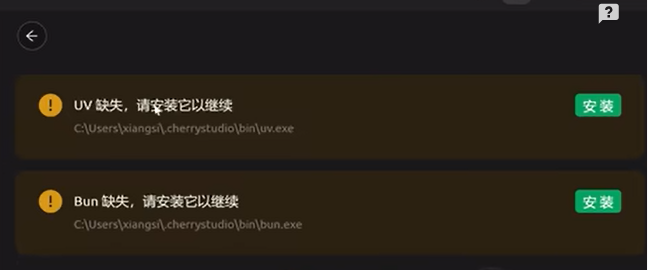
全部配置好就可以通过对话操控kali系统帮你完成任务啦。
文章中涉及的敏感信息均已做打码处理,文章仅做经验分享用途,切勿当真,未授权的攻击属于非法行为!文章中敏感信息均已做多层打码处理。传播、利用本文章所提供的信息而造成的任何直接或者间接的后果及损失,均由使用者本人负责,作者不为此承担任何责任,一旦造成后果请自行承担。本文来自博客园,作者:Abu's-blog,转载请注明原文链接:https://www.cnblogs.com/page-pros/p/19374690

 浙公网安备 33010602011771号