
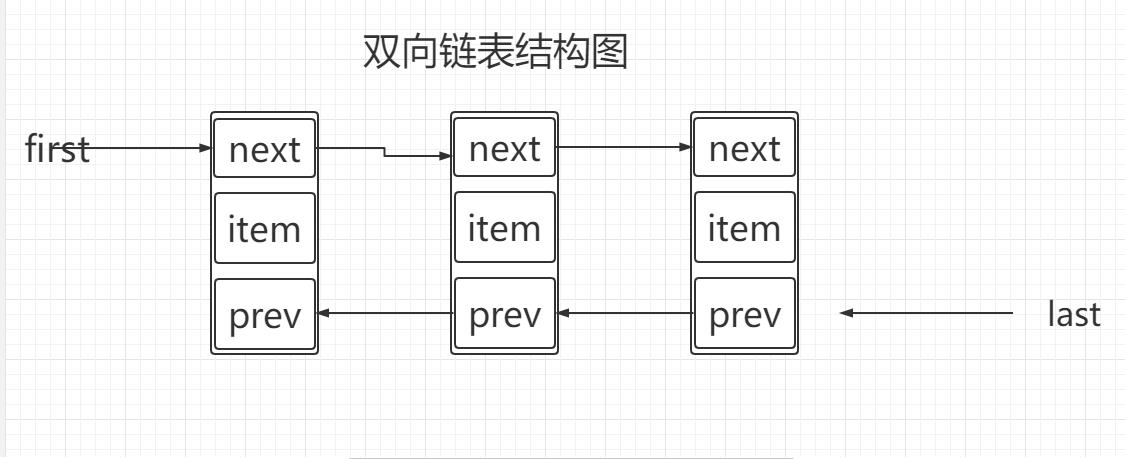
LinkedList双向链表
package Collection;

public class LinkedList01 {
    public static void main(String[] args) {
        //模拟简单的双向链表
        Node jack = new Node("jack");
        Node tom = new Node("tom");
        Node mark = new Node("mark");
        //连接三个节点,形成双向链表
        //jack指向tom,tom指向mark,
        jack.next = tom;
        tom.next = mark;
        mark.prev = tom;
        tom.prev = jack;
        //first指向jack,做为双向链表的头节点;
        //last直系那个mark,做为双向链表的尾节点;
        Node first = jack;
        Node last = mark;
        System.out.println("从头到尾进行遍历==========");
        //从头到尾进行遍历
        while (true) {
            if (first == null){
               break;
            }
            //输出信息
            System.out.println(first);
            first= first.next;
        }
        System.out.println("从尾到头进行遍历========");
        //从尾到头进行遍历
        while (true) {
            if (last == null){
                break;
            }
            //输出信息
            System.out.println(last);
            last= last.prev;
        }

        System.out.println("添加一个smith数据===============");

        //要求在双向链表中添加一个对象/数据,如在jack和Tom之间添加smith
        //先添加一个node对象,名字为smith
        Node smith = new Node("smith");
        jack.next = smith;
        tom.prev= smith;
        smith.next= tom;
        smith.prev=jack;

         first = jack;
        //从头到尾进行遍历
        while (true) {
            if (first == null){
                break;
            }
            //输出信息
            System.out.println(first);
            first= first.next;
        }
            last =mark;
        System.out.println("从尾到头进行遍历======================");
        //从尾到头进行遍历
        while (true) {
            if (last == null){
                break;
            }
            //输出信息
            System.out.println(last);
            last= last.prev;
        }


    }
}

//定义一个node类,node对象表示双向链表的一个节点
class Node {
    public Object item;//存放非数据
    public Node next;
    public Node prev;

    //创建一个构造器
    public Node(Object item) {
        this.item = item;
    }

    @Override
    public String toString() {
        return "Node name=" + item;
    }
}
想多了都是问题,做多了才是答案

 浙公网安备 33010602011771号