
阶段作业1:完整的中英文词频统计
1·英文小说,词频统计
#读取文件字符串
fo=open('nihao.txt','r',encoding='utf-8')
str=fo.read().lower()
fo.close()

#对文件预处理
sep=""",./?!";'"""
for word in sep:
    str=str.replace(word,"")
print(str)

#排除无意义词
li=str.split()
strset=set(li)
exclude={'a','the','and','i','you','in'}
strset=strset-exclude

#单词计数
dict={}
for word in strset:
    dict[word]=li.count(word)
print(len(dict),dict)

wclist=list(dict.items())
#print(wclist)

#按词频排序
wclist.sort(key=lambda x:x[1],reverse=True)
#print(wclist)

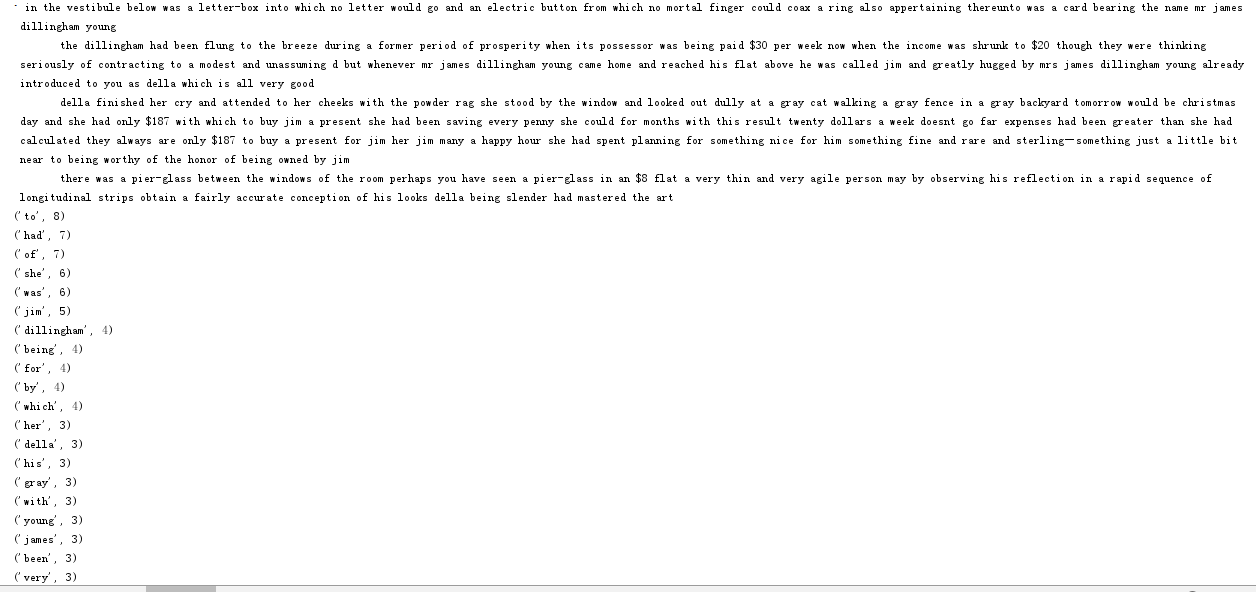
#输出pop(20)
for i in range(20):
    #print(wclist[i])


运行截图
2、中文小说,词频统计
import jieba
import jieba.posseg as psg

#通过文本处理文件

with open("nihao.txt", 'r') as fo:
    str=fo.read()
fo.close()

#汉字文本的预处理
for ch in str:
    if ch.isalpha() is False:
        str = str.replace(ch, "")


 # 分词并转成一个列表
strList = [x.word for x in psg.cut(str) if x.flag.startswith('n')]

 # 词频统计,用字典保存,排序
mySet = set(strList)

keyList = []
valueList = []

for word in mySet:
    keyList.append(word)
    valueList.append(strList.count(word))

wordCount = dict(zip(keyList, valueList))
# 字典排序函数(并取top20):


def sortDict(myDict):
    tempList = list()
    for i in myDict.items():
         tempList.append(i)
    tempList.sort(key=lambda x: x[1], reverse=True)
    myDict = dict(tempList[0:21])
    return myDict

wordCount = sortDict(wordCount)

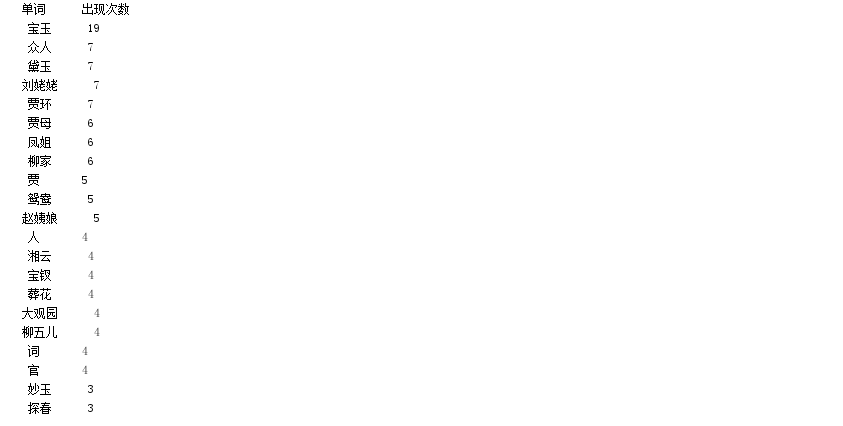
# 输出
print("     单词      出现次数".center(13))
for word in wordCount.keys():
    print(word.center(13), wordCount[word])
运行截图:


 浙公网安备 33010602011771号