MySQL刷题记录
1.
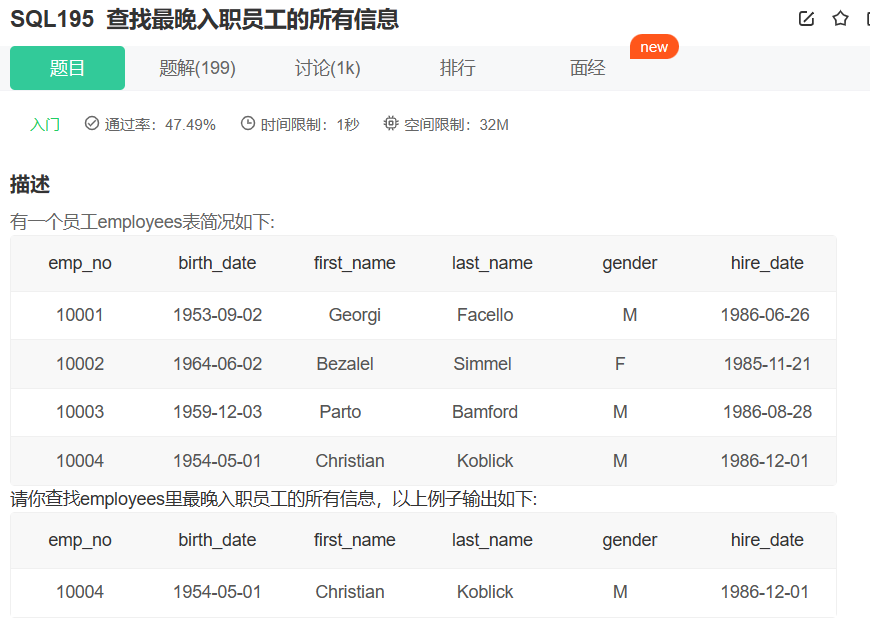
select* from employees order by hire_date desc limit 1;
笔记:
limit 0,1;使用limit关键字 从第0条记录 向后读取一个,也就是第一条记录
2.select * from test LIMIT 3 OFFSET 1;(在mysql 5以后支持这种写法)当 limit和offset组合使用的时候,limit后面只能有一个参数,表示要取的的数量,offset表示要跳过的数量 使用子查询
select* from employees where hire_date=(select max(hire_date) from employees);
查找入职员工时间排名倒数第三的员工所有信息
select * from employees where hire_date=(
select distinct hire_date
from employees
order by hire_date desc
limit 1 offset 2
);
可能有相同时间入职的员工,所以下面这种只考虑到了一个员工
select * from employees order by hire_date desc limit 1,2;
不行
SQL语句:
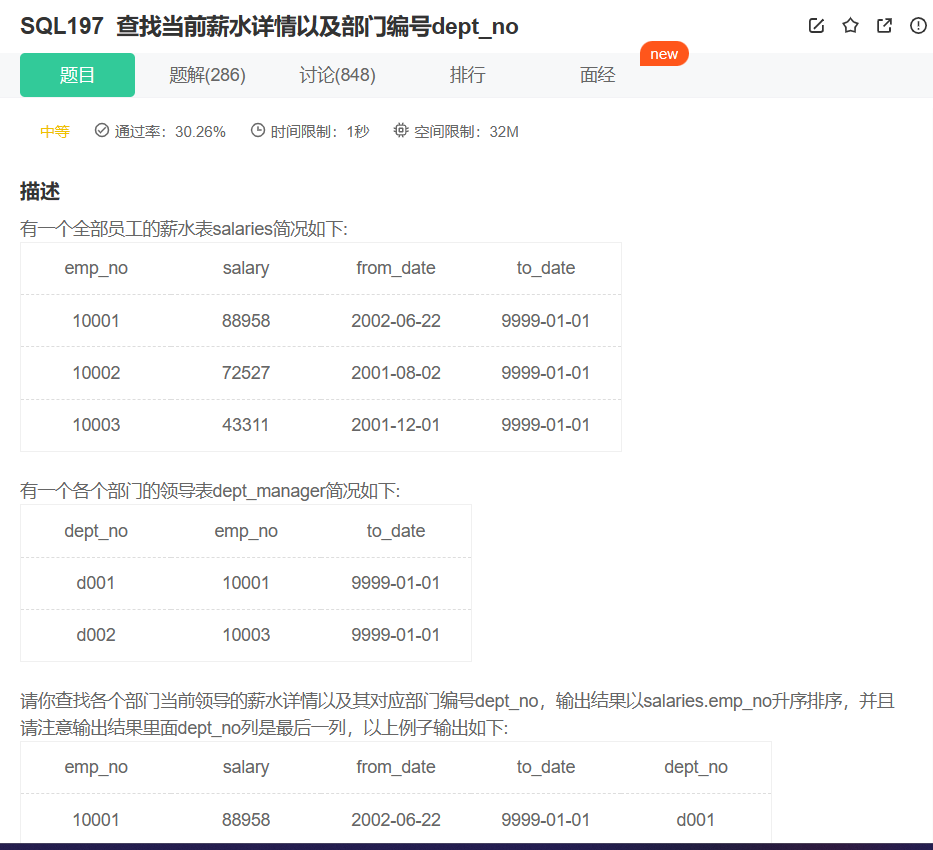
select x.emp_no,x.salary,x.from_date,x.to_date,y.dept_no
from salaries as x,dept_manager as y
where x.emp_no=y.emp_no order by x.emp_no asc;
注意:属性名那里要用表明区分一下
SQL语句:
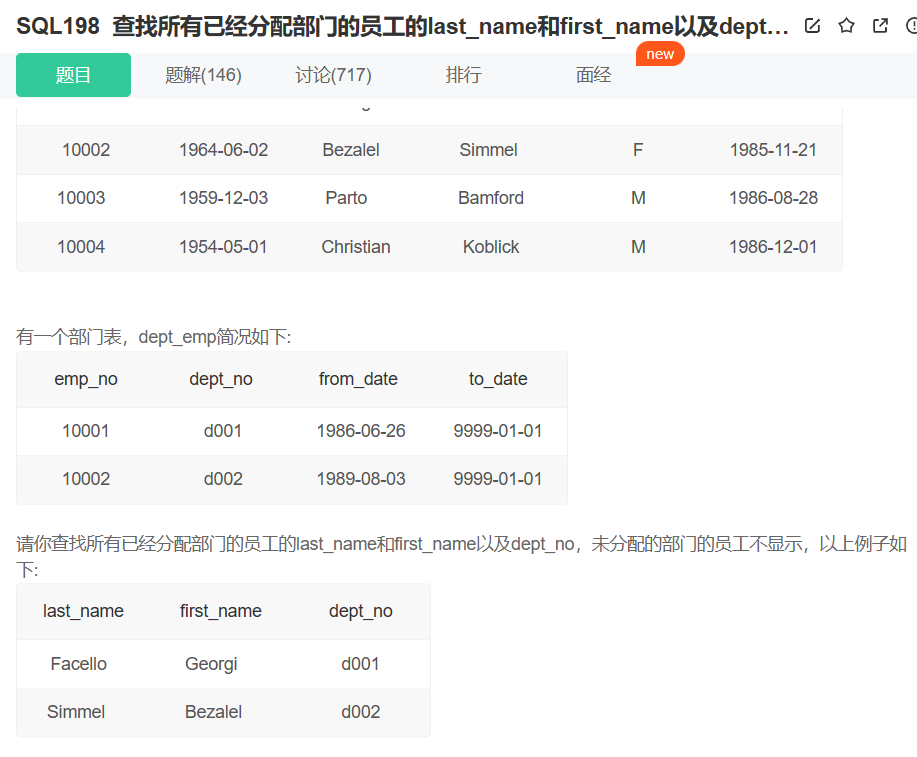
select x.last_name,x.first_name,y.dept_no from employees x,dept_emp y
where x.emp_no=y.emp_no and dept_no is not null;
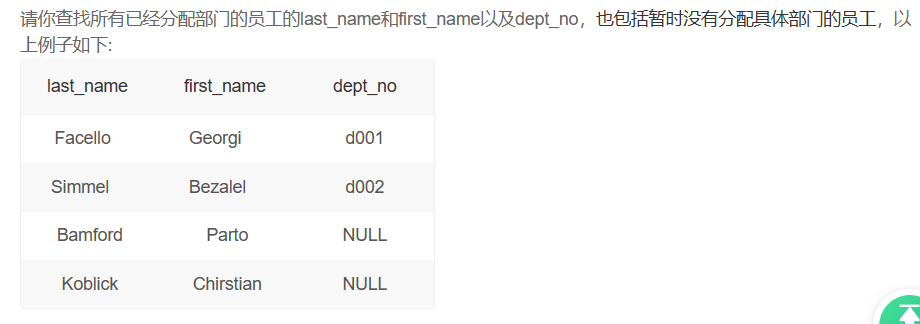
左外连接:
select
x.last_name,
x.first_name,
y.dept_no
from
employees x
left outer join
dept_emp y
on x.emp_no=y.emp_no;

SQL:
select emp_no,count(emp_no) as t from salaries group by emp_no having t>15;
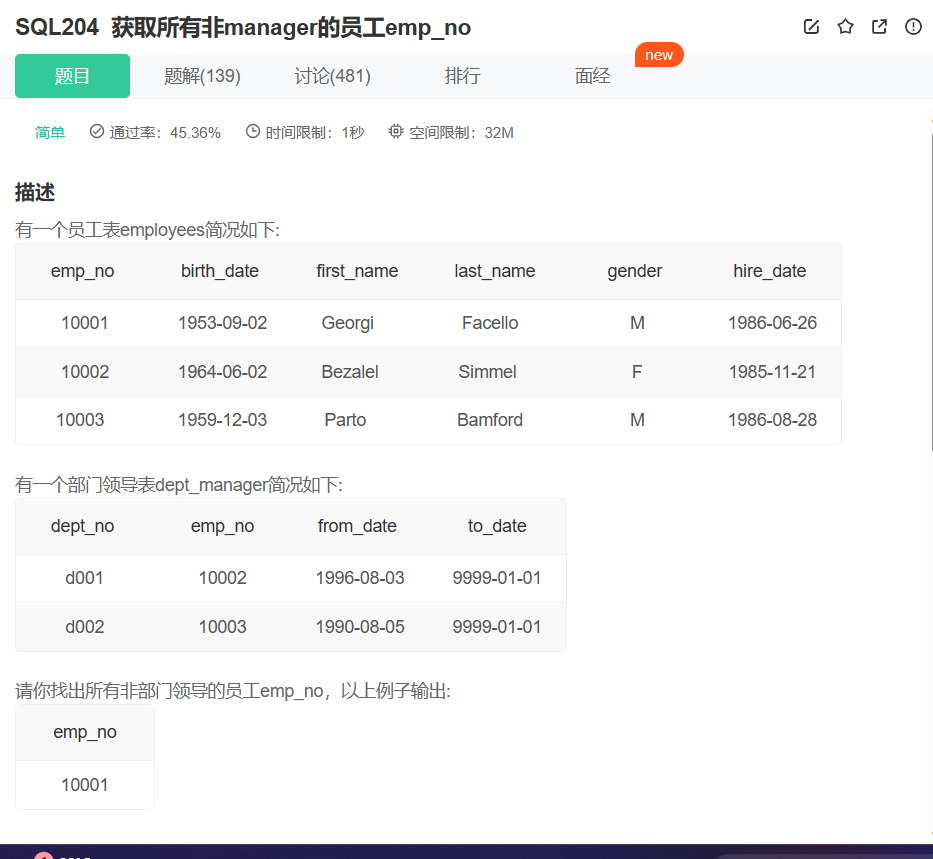
SQL:
select x.emp_no from employees x
where x.emp_no not in (
select emp_no from dept_manager
)
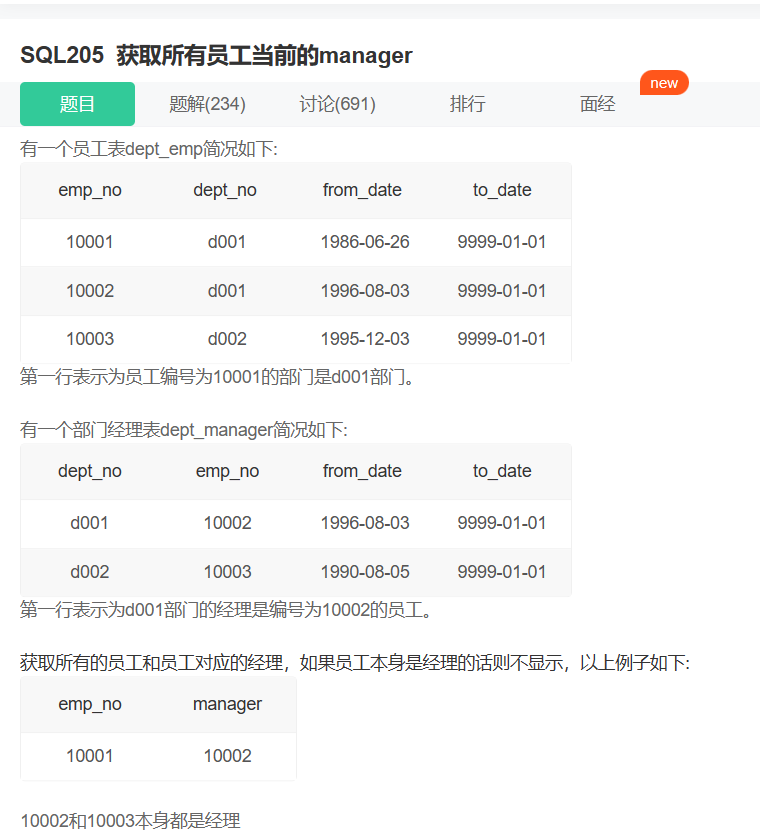
SQL:
select x.emp_no,y.emp_no as manager from dept_emp x,dept_manager y
where x.dept_no=y.dept_no and x.emp_no !=y.emp_no;

把两个表连接起来,把各个部门的最高薪资查询出来,再把符合条件这个最高薪资的员工编号求出来
select x.dept_no,x.emp_no,y.salary as maxSalary
from dept_emp x,salaries y
where x.emp_no=y.emp_no and (x.dept_no,y.salary) in (
select
h.dept_no,
max(z.salary)
from
dept_emp h,
salaries z
where
h.emp_no = z.emp_no
group by
h.dept_no
)
order by x.dept_no asc
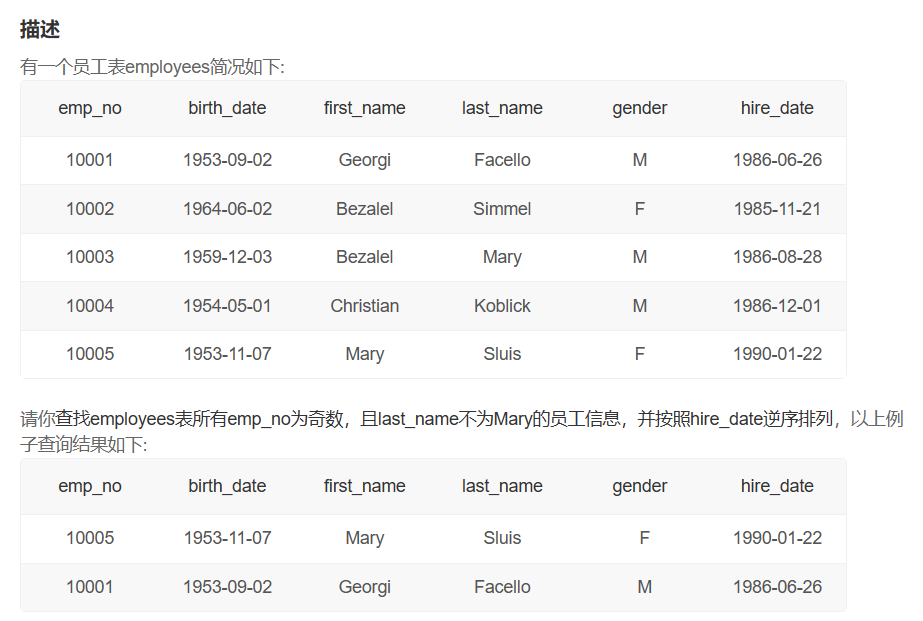
判断数字是否为奇数,用mod(字段,2)=1,为奇数,=0为偶数
select emp_no,birth_date,first_name,last_name,gender,hire_date from employees
where mod(emp_no,2)=1 and last_name not like "Mary" order by hire_date desc;

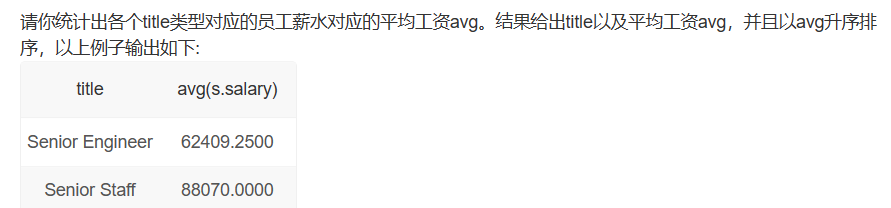
select title,avg(s.salary)
from titles x,salaries s
where x.emp_no=s.emp_no
group by x.title
order by avg(s.salary) asc;
SQL:
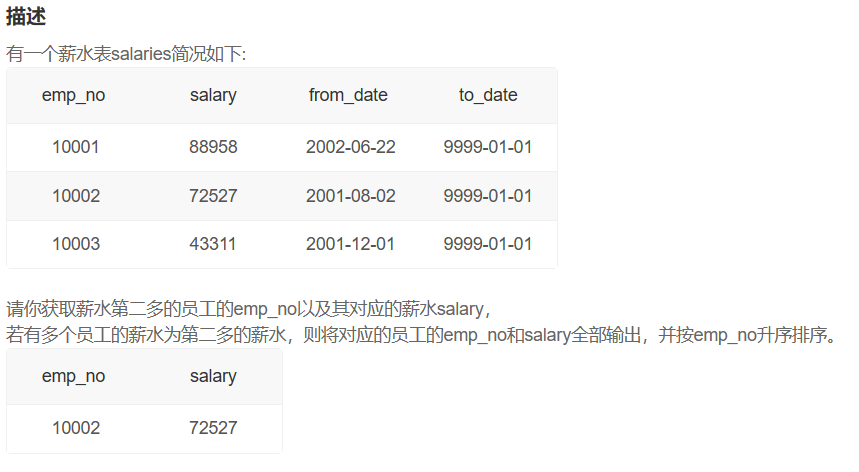
select emp_no,salary
from salaries
where salary=(select salary from salaries order by salary desc limit 1 offset 1 )
order by emp_no
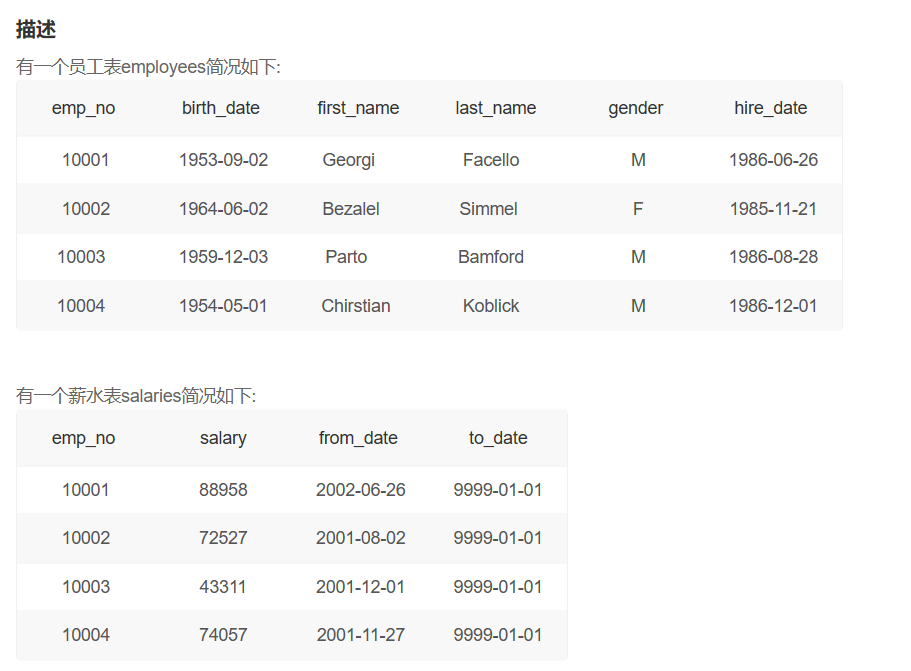
先把第二大求出来
select max(salary) from salaries
where salary !=(select max(salary) from salaries)
再求该第二多薪资的全部信息查询出来
SQL:
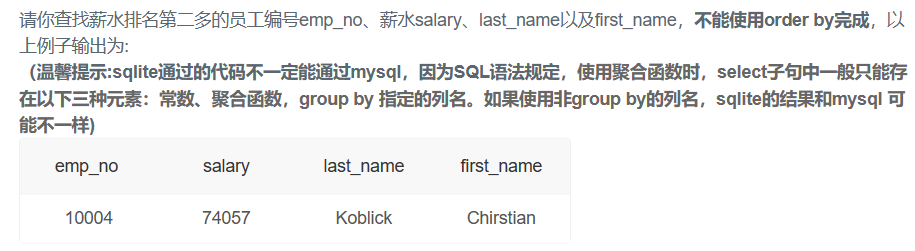
select x.emp_no,y.salary,x.last_name,x.first_name
from employees x,salaries y
where x.emp_no=y.emp_no and y.salary=(
select max(salary) from salaries
where salary !=(select max(salary) from salaries)
)
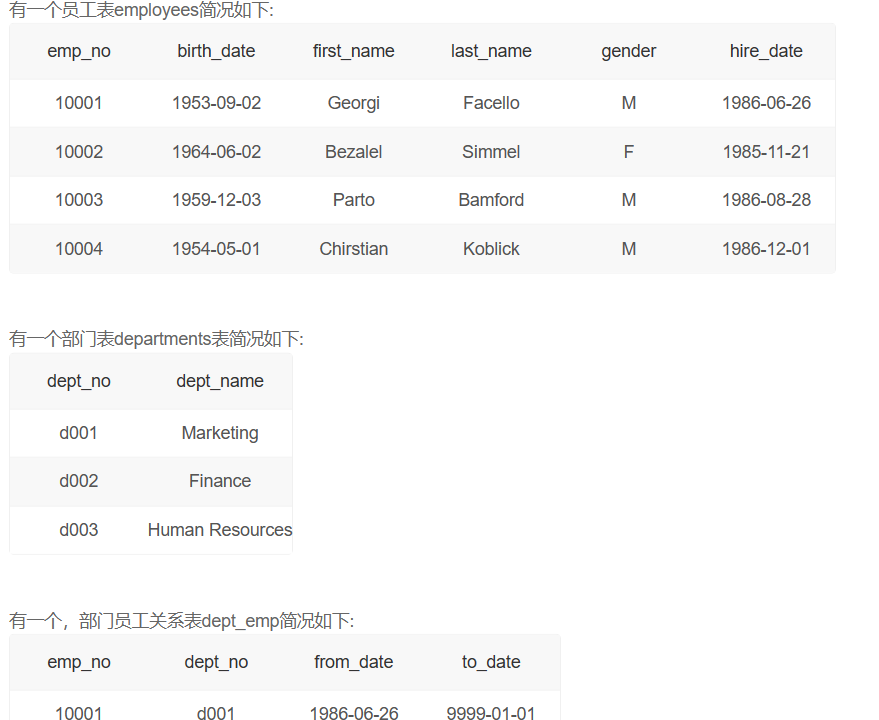
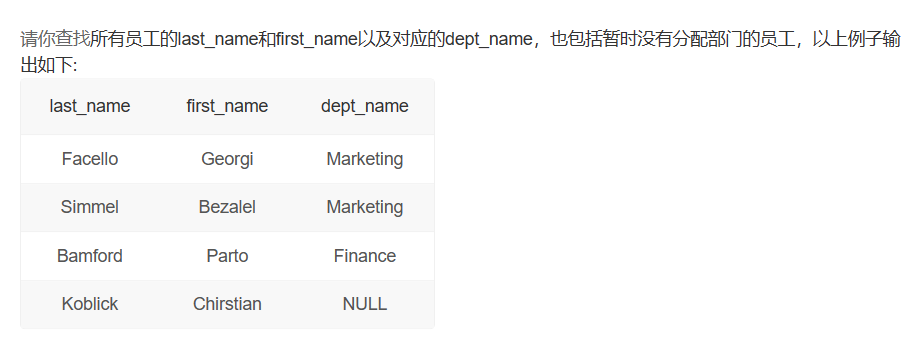
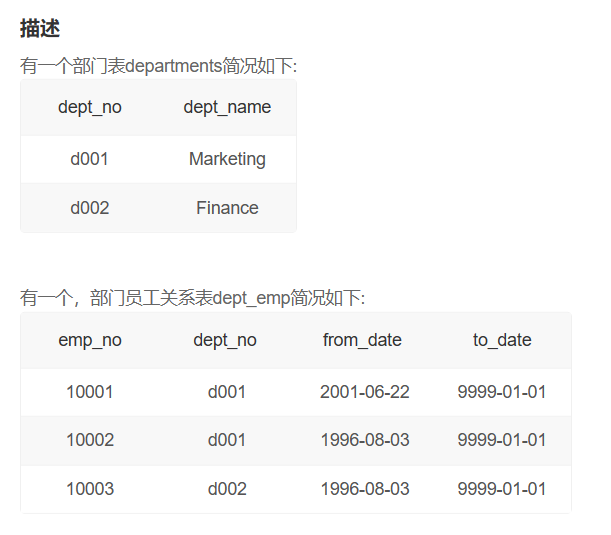
先左连接员工和雇佣关系模式,再左连接部门关系模式
SQL:
select last_name,first_name,dept_name
from (
select last_name,first_name,dept_no
from employees
left join dept_emp
on employees.emp_no=dept_emp.emp_no
) as a
left join departments
on a.dept_no=departments.dept_no
SQL:
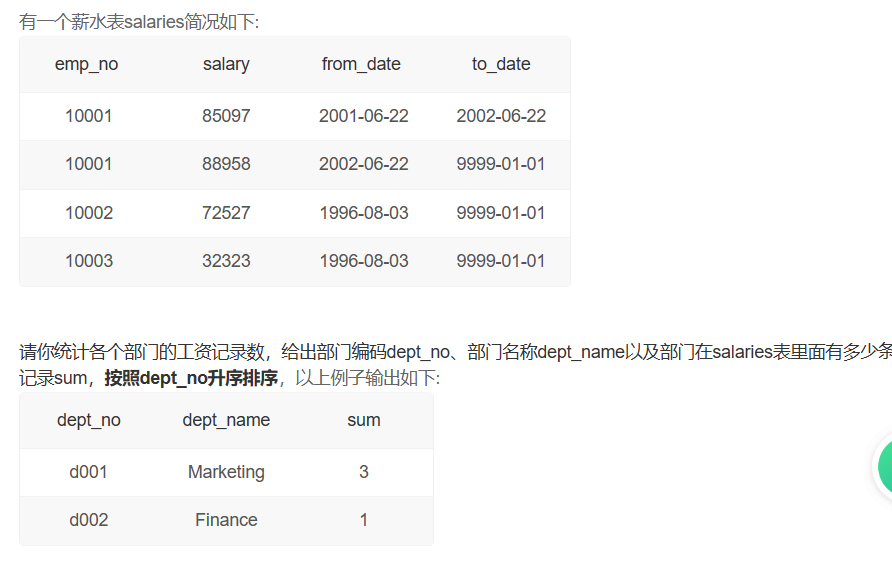
select y.dept_no ,y.dept_name,count(x.salary) as sum
from dept_emp z,salaries x,departments y
where x.emp_no=z.emp_no and y.dept_no=z.dept_no
group by z.dept_no order by z.dept_no
SQL:
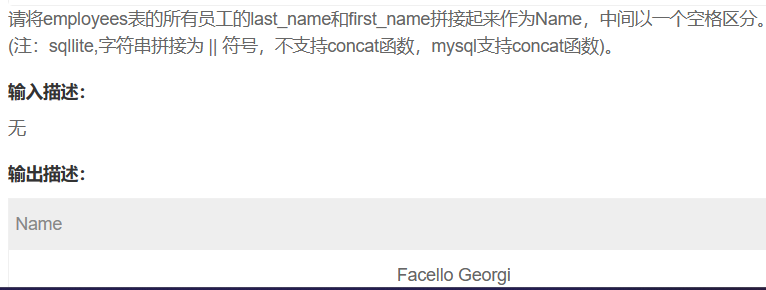
select concat(last_name," ",first_name) Name from employees
批量插入数据:
insert into actor(actor_id,first_name,last_name,last_update)
values(1,"PENELOPE","GUINESS","2006-02-15 12:34:33"),
(2,"NICK","WAHLBERG","2006-02-15 12:34:33");
更新列表两列内容:
update titles_test set to_date=null ,from_date="2001-01-01" where to_date="9999-01-01"
利用replace更新数据
10005替换10001
update titles_test set id=replace(id,5,5),emp_no=replace(emp_no,10001,10005) where id=5 and emp_no=10001
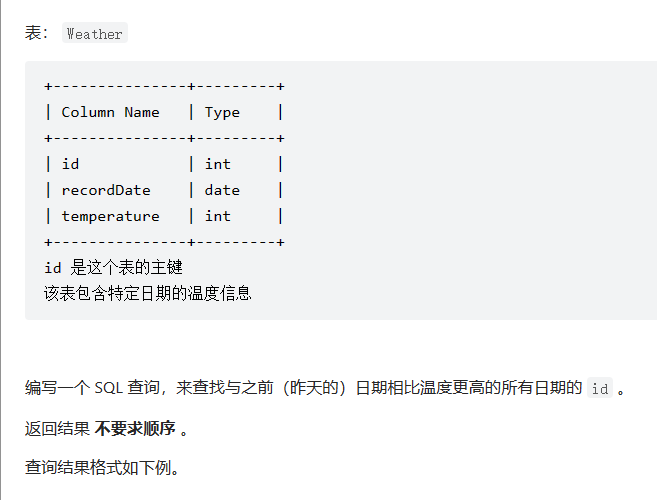
select a.id from Weather a,Weather b where
DATEDIFF(a.recordDate,b.recordDate)=1
and a.Temperature>b.Temperature;
使用函数判断两者差一天
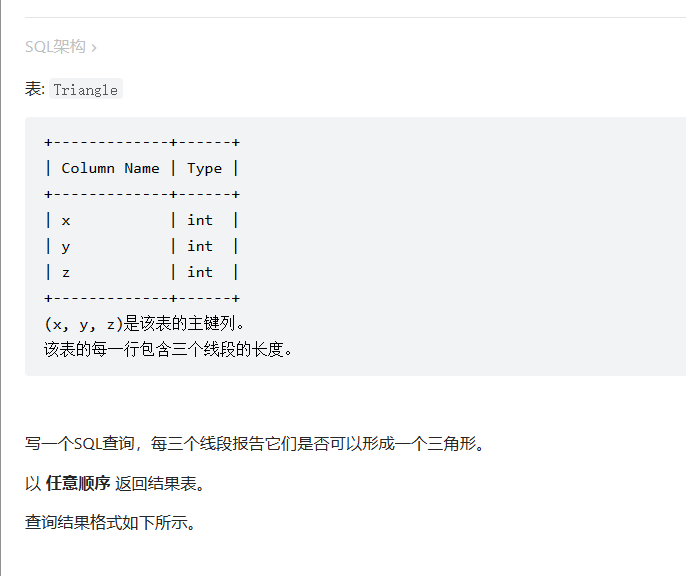
select x,y,z,
case when x+y>z and x+z>y and y+z>x then "Yes"
ELSE "No"
END as "triangle"
from Triangle;
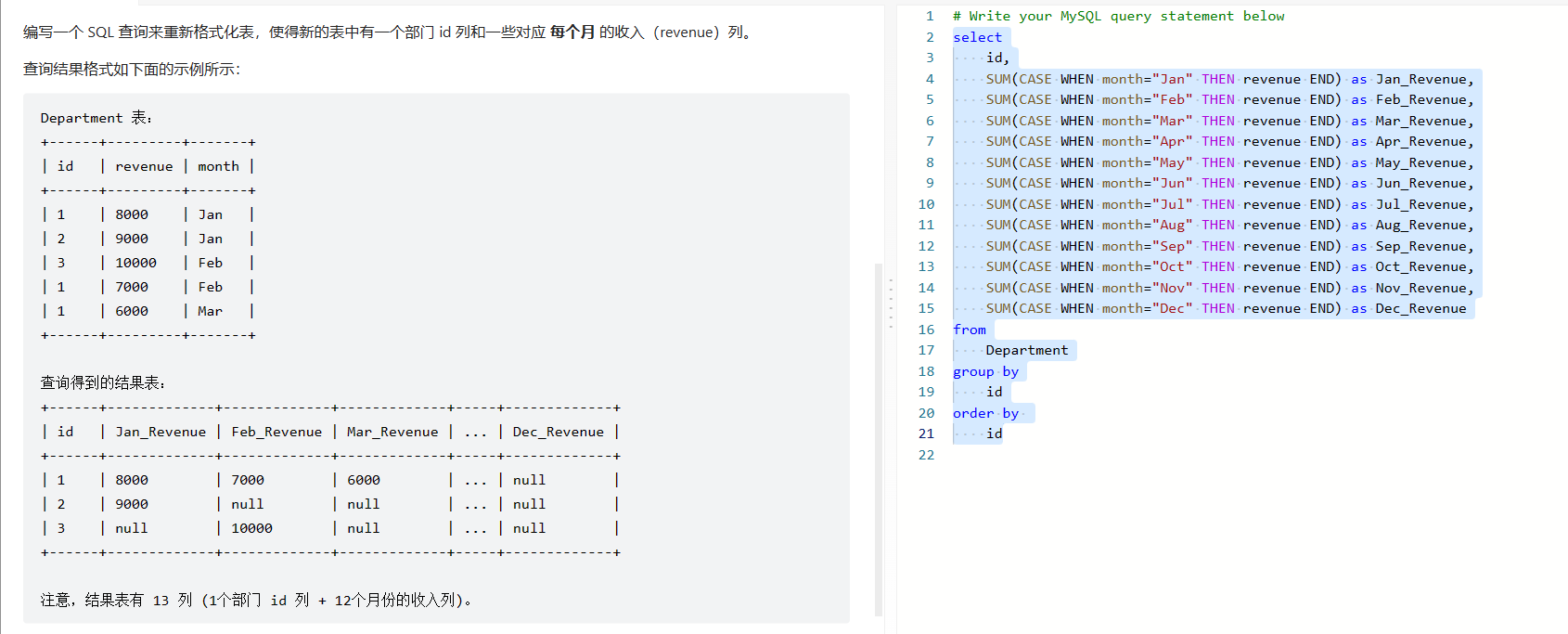
sum相当于遍历的作用。

 浙公网安备 33010602011771号